Quotulatiousness

August 26, 2023

The Cloward-Piven strategy in action

David Solway outlines the “playbook” apparently being followed in the ongoing dismantling of western civilization:

The malignant playbook of the contemporary left is generally considered to be Saul Alinsky’s 1989 Rules for Radicals, and there is certainly much truth to the story of the book’s destructive influence. But the source text for social and political upheaval is Richard Cloward and Francis Fox Piven’s far more detailed and authoritative 1997 manual, The Breaking of the American Social Compact.

The Cloward-Piven strategy seeks to hasten the fall of the free market and the republican structure of government by overloading the administrative apparatus with an avalanche of impossible demands, thus pushing society into crisis mode and eventual economic collapse. Choking the welfare rolls, for example, would serve to generate a political and financial meltdown, break the budget, jam the bureaucratic gears, and bring the system crashing down. The fear, turmoil, and violence accompanying such a debacle would provide the perfect conditions for fostering radical change.

We see the strategy in action today, forging a situation that was unnecessary from the start via a series of tactical steps, among which: the campaign against productive farming; the so-called 15-minute city herding people into condo-congested urban centers where they are readily supervised and mastered; open borders allowing for a refugee tsunami to alter the character of the nation; a censoring and disinformative media rendered corrupt to the core; the mandating of useless masks or plausibly toxic vaccines; and the implementation of a digital currency in which citizens’ spending can be monitored, restricted, or even frozen. Such phenomena have no basis in even the remotest necessity but are essential in order to prepare the ground for an imminent totalitarian state.

This is the rationale for the so-called COVID pandemic and the bugbear of “Climate Change”. A bad flu season affecting mainly the elderly with comorbidities is not a viral pandemic, as Dr. Vernon Coleman ironically shows. The climate is always changing as a matter of course — the term “climate change” is a gross oxymoron; the thesis of anthropogenic forcing obscures the fact that carbon is material for life and nitrogen for farming. COVID and Climate are tactical phantoms that have nothing to do with reality and everything to do with social control. The Clowardly rePivening put in place by the Democrat Party has only one aim: to create a crisis out of thin air and then seek to defuse it by creating a real crisis that advantages only the Party. It is the diabolical form of creation ex nihilo.

Thus, a ginned-up pandemic is a perfect excuse for mail-in ballots and ballot harvesting, especially if the voter rolls have been flooded with uncountable and counterfeit names and the voting stations have been commandeered. There is no immigration chaos unless a chain system is entrenched and the border is left wide open. There is no such thing as “white supremacy” unless it is apodictically proclaimed and false-flag operations are carried out. There is no need for costly, largely ineffective, and harmful renewable energy installations unless drilling has been rendered illegal and the oil pipelines have been shut down to avoid a bogus climate catastrophe. The bible of the Democrat left begins: Let there be a crisis. And there was a crisis.

H/T to Blazing Cat Fur for the link.

OSS “Bigot” 1911 dart-firing pistol

Filed under: History, Military, USA, Weapons, WW2 — Tags: , , , , , — Nicholas @ 02:00

Forgotten Weapons
Published 2 Apr 2012

The “Bigot” was a modification of an M1911 .45 caliber pistol developed by the Office of Strategic Services during WW2. The OSS was a clandestine operations service, the predecessor of the CIA. The Bigot was intended as a way for commandos to quietly eliminate sentries — although we are not sure what advantage it might have had over a silenced pistol. Questionable utility doesn’t prevent it from being a pretty interesting piece of equipment, though, and we had the opportunity to take a look at one up close recently.

http://www.forgottenweapons.com/oss-b…

QotD: The psychological value of “making”

Filed under: Economics, Health, Quotations — Tags: , , , , — Nicholas @ 01:00

The Domestic Revolution is a fascinating tour of the ways relatively minor changes snowball, changing the way people interact with the material world and with one another, but it’s also a tremendous pleasure for its lucid, practical explanations of how these things actually work. Goodman is deeply familiar with her tools and materials in a way that’s quite unusual today. Of course anyone who really makes things will have this familiarity — ask a software engineer about programming languages or his favourite text editor — but in most walks of life actually making things has become increasingly optional. Of the objects I interact with on a daily basis, the only ones I can really be said to have made (my kids don’t count) are the things I cook and the chairs I refinished and upholstered.1 Beyond that there’s the garden I planted with seeds and perennials I bought at a nursery, the furniture I assembled out of pieces some nice Swedish man machined for me, and the various bits of plumbing I’ve swapped out, but none of that is really “making” so much as it is “assembling things other people have made”. It’s mostly the productive equivalent of last mile delivery — nothing to sneeze at, but a far cry from the sort of deep involvement with the material world that was common only a few centuries ago.

This makes perfect sense, of course: I don’t have a deep and intimate knowledge of these things because I don’t need one. Still, though, it’s important to have a certain very basic familiarity with how the things around you work — enough, say, to know what to Google when something breaks and how to put the results into practice, or to turn fifteen feet of arching blackberry cane into an actual bush — because it gives you power over your world. The particular powers don’t really matter (it’s easy enough to pay someone else to fix your plumbing or grow your berries); the key is the patterns of thought they engender. There are, for example, apparently some enormous number of people who don’t change the batteries in their beeping smoke detectors. I have no idea whether it’s drug-induced apathy, ignorance of how things work (in the same way that drilling a hole in your wall to hang something seems scary if you don’t know that your wall is a lie just painted drywall in front of empty space between the studs), or simply a pathological lack of personal agency, but it’s hard to believe you can change anything dissatisfactory about your life if you can’t change a 9V battery.

Making and doing things, even when you don’t have to, is practice in believing that you can change your own world. It’s weightlifting for agency. You can outsource the making of your physical world, but social worlds — the arrangement of your family life, your personal relationships, the organizations and institutions you’re involved in — must be created by the participants themselves. A good society would be one where the default “builder-grade” scripts lead to human flourishing, but unfortunately that isn’t ours, so you have to be able to decide on your own changes. Start practicing now: find one little thing about your physical environment that annoys you and fix it. Put the new toilet paper roll actually on the holder. Replace the burned-out lightbulb. Hang the artwork that’s listing drunkenly against the wall. Pull some weeds. And then, once you’ve warmed up a little bit, go and make something new.

Jane Psmith, “REVIEW: The Domestic Revolution by Ruth Goodman”, Mr. and Mrs. Psmith’s Bookshelf, 2023-05-22.


    1. They’re oak dining chairs, probably (judging by the construction) about a hundred years old, and they looked a lot better on Facebook Marketplace than in real life. When I showed up to buy them, the sellers turned out to be an elderly couple moving to assisted living in six hours; they admired my baby and showed me pictures of their grandchildren and explained they had inherited the chairs from the wife’s mother, who in turn had gotten them from her friend’s mother, and by this point I couldn’t really say “yeah I can tell” and leave, so home they came. When I took apart the seats to recover them I discovered the original horsehair padding and some extremely questionable techniques applied over the years, but anyway now my chairs have eight-way hand-tied springs and I have some new calluses.

August 25, 2023

Only an extreme right-wing bigot would say that “BDSM is not for four-year-olds”

Filed under: Books, Education, Health, Media, Politics, USA — Tags: , , , — Nicholas @ 05:00

Noted extreme right-wing arch-conservative Brendan O’Neill somehow seems to think that the full panoply of LGBT sexual identities are not appropriate for the pre-school set:

This may not be an accurate portrayal of the book in question, by way of Blazing Cat Fur.

BDSM is not for four-year-olds. Apparently, that’s a controversial statement these days. Only a bigot would want to protect little kids from images of old blokes in fetish gear snogging the faces off each other in public. If you think under-fives should be reading books about hungry caterpillars or tigers coming for tea, not books featuring pictures of ageing men in dog collars and studded leather underwear, you’re a queerphobe and you need to pipe down.

Truly we have reached the seventh circle of woke lunacy. This week it was reported that a mum and dad in Hull in the north of England pulled their four-year-old daughter from a pre-school after she was shown a book called Grandad’s Pride which contains illustrations of “men who are partially naked in leather bondage gear”. The pre-school’s response? According to the mum and dad, it branded them “bigots”. Yes, who else but a hateful phobe would want to stop a toddler from seeing a tattooed, half-naked, grey-bearded homosexual kissing his boyfriend?

Grandad’s Pride is written by Harry Woodgate, an award-winning children’s author who uses they / them pronouns. Of course he does. Or of course they do. Whatever. It tells the story of a girl called Milly, who is playing in her gramps’ attic one day when she happens upon an old Pride flag. She asks what it is and grandad suggests they organise their own Pride march in the village. As you do. Then come the iffy illustrations: old men in fetish gear; a “trans man” (ie, woman) with mastectomy scars under her nipples; an activist in a spiked dog collar waving a placard that says: “Break the cis-tem”. And you thought Where the Wild Things Are was scary.

You don’t have to be a prude to think this is ridiculous bordering on sinister. My view is that consenting adults should do whatever they want. Wear chafing leather trousers, pierce your cock, whip your friends in dim-lit dungeons. It’s not my cup of tea, but knock yourselves out. But it’s not for kids! No four-year-old should be looking at illustrations of a mutilated woman who now identifies as a “man” or of pensioners in leather suspenders. And it doesn’t make you Mary Whitehouse to say so. When you read to little kids, you want them to ask questions like, “Can we have a tiger over for tea?”, not: “Why does that man have stitches on his chest?”

One of the most frustrating things for freedom-lovers like me is that when we raise questions about age-inappropriate woke crap in schools, we get lumped with the religious right or PC fanatics who previously waged war on classic texts like Judy Blume’s Are You There God? It’s Me, Margaret (too much talk about menstruation, apparently) and John Steinbeck’s Of Mice and Men (too many utterances of the n-word). Nonsense. Of course schoolkids should read Blume and Steinbeck. Teens in particular should be expected to engage with challenging texts, even ones that contain racial epithets or girls eagerly awaiting their first period. Schools should err on the side of being open with literature, though let’s hope they don’t start stocking American Psycho or The 120 Days of Sodom.

Shrinking traffic “is always a bad sign – but especially if your technology is touted as the biggest breakthrough of the century”

Filed under: Business, Media, Technology — Tags: , , — Nicholas @ 04:00

I don’t know about anyone else, but with every site I visit these days seeming to be eager that I try out their new AI, I’m deep in AI-fatigue. Ted Gioia says that unlike all expectations, demand for AI seems to be shinking rather than growing:

The AI hype is collapsing faster than the bouncy house after a kid’s birthday. Nothing has turned out the way it was supposed to.

For a start, take a look at Microsoft — which made the biggest bet on AI. They were convinced that AI would enable the company’s Bing search engine to surpass Google.

They spent $10 billion dollars to make this happen.

And now we have numbers to measure the results. Guess what? Bing’s market share hasn’t grown at all. Bing’s share of search It’s still stuck at a lousy 3%.

In fact, it has dropped slightly since the beginning of the year.

What’s wrong? Everybody was supposed to prefer AI over conventional search. And it turns out that nobody cares.

What makes this especially revealing is that Google search results are abysmal nowadays. They have filled them to the brim with garbage. If Google was ever vulnerable, it’s right now.

But AI hasn’t made a dent.

Of course, Google has tried to implement AI too. But the company’s Bard AI bot made embarrassing errors at its very first demo, and continues to do bizarre things—such as touting the benefits of genocide and slavery, or putting Hitler and Stalin on its list of greatest leaders.

So it’s no surprise that many people are now doing searches at Reddit or TikTok, instead of conventional search engines. This could have been Bing’s great opportunity, but instead its AI bot is turning into the next Clippy.

Consumers don’t want grotesque AI responses filled with errors and outrageous claims. Who could have guessed it?

The same decline is happening at ChatGPT’s website. Site traffic is now shrinking. This is always a bad sign — but especially if your technology is touted as the biggest breakthrough of the century.

If AI really delivered the goods, visitors to ChatGPT should be doubling every few weeks.

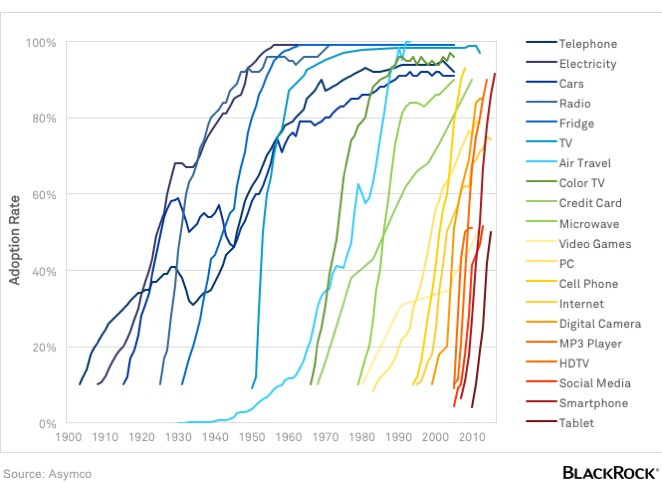
This is what a demand pattern for real innovation looks like.

How key innovations grew
(source)

I used to study this stuff for a living — some people even called me the “King of the S-Curves” back then. (Hey, I’ve been called worse.)

As you can see, a real tech breakthrough grows at a ridiculously rapid pace in its early days. Look at how fast people adopted radio or the smartphone or electricity. And these required huge investments by consumers.

But they’re giving AI away for free at Bing — and it’s not growing at all.

This is not how consumers respond to transformative technology. The current demand pattern resembles, instead, what we would call a fad or craze.

And this is just one warning sign among many.

The German Democratic Republic, aka East Germany

Filed under: Books, Germany, Government, History — Tags: , , , , , — Nicholas @ 03:00

Ed West visited East Berlin as a child and came away unimpressed with the grey, impoverished half of Berlin compared to “the gigantic toy shop that was West Berlin”. The East German state was controlled by the few survivors of the pre-WW2 Communist leaders who fled to the Soviet Union:

Occupation zone borders in Germany, 1947. The territories east of the Oder-Neisse line, under Polish and Soviet administration/annexation, are shown in cream as is the likewise detached Saar protectorate. Berlin is the multinational area within the Soviet zone.
Image based on map data of the IEG-Maps project (Andreas Kunz, B. Johnen and Joachim Robert Moeschl: University of Mainz) – www.ieg-maps.uni-mainz.de, via Wikimedia Commons.

In my childish mind there was perhaps a sense that East Germany, the evil side, was in some way the spiritual successor both to Prussia and the Third Reich – authoritarian, militaristic and hostile. Even the film Top Secret, one of the many Zucker, Abrahams and Zucker comedies we used to enjoy as children, deliberately confused the two, the American rock star stuck in communist East Germany then getting caught up with the French resistance. The film showed a land of Olympic female shot put winners with six o’clock shadows, crappy little cars you had to wait a decade for, and a terrifying wall to keep the prisoners in – and compared to the gigantic toy shop that was West Berlin, I was not sold.

I suppose that’s how the country is largely remembered in the British imagination, a land of border fences and spying, The Lives of Others and Goodbye Lenin. When the British aren’t comparing everything to Nazi Germany, they occasionally stray out into other historic analogies by comparing things to East Germany, not surprising in a surveillance state such as ours (these rather dubious comparisons obviously intensified under lockdown).

This is no doubt grating to East Germans themselves, but perhaps more grating is the sense of disdain often felt in the western half of Germany; for East Germans, their country simply ceased to exist in 1990 as it was gobbled up by its larger, richer, more glamorous neighbour, and has been regarded as a failure ever since. For that reason, [Katja] Hoyer’s book [Beyond the Wall] is both enjoyable holiday reading and an important historical record for an ageing cohort of people who lived under the old system. To have one’s story told, in a sense, is to avoid annihilation.

Despite the similarities between the two totalitarian systems, East Germany almost defined itself as the anti-fascist state, and its origins lie in a group of communist exiles who fled from Hitler to seek safety in the Soviet Union. Inevitably, their story was almost comically bleak; 17 senior German Marxists in Russia ended up being executed by Stalin, suspected by the paranoid dictator of secretly working for Germany. Even some Jewish communists were accused of spying for the Nazis — which seems to a rational observer unlikely. As Hoyer writes, “More members of the KPD’s executive committee died at Stalin’s hands than at Hitler’s”.

Only two of the nine-strong German politburo survived life in Russia, one of these being Walter Ulbricht, the goatee-bearded veteran of the failed 1919 German revolution and communist party chairman in Berlin in the years before the Nazis came to power.

The war had brutalised the eastern part of Germany far more than the West. It suffered the revenge of the Red Army, including the then largest mass rape in history, and the forced expulsion of millions of Germans from further east (including Hoyer’s grandfather, who had walked from East Prussia). The country was utterly shattered.

From the start the Soviet section had huge disadvantages, not just in terms of raw materials or industry – western Germany has historically always been richer — but in having a patron in Russia. While the Americans boosted their allies through the Marshall Plan, the Soviets continued to plunder Germany; when they learned of uranium in Thuringia they simply turned up and took it, using locals as forced labour.

“In total, 60 per cent of ongoing East German production was taken out of the young state’s efforts to get on its feet between 1945 and 1953,” Hoyer writes: “Yet its people battled on. As early as 1950, the production levels of 1938 had been reached again despite the fact that the GDR had paid three times as much in reparations as its Western counterpart.”

After the war, so-called “Antifa Committees” formed across the Soviet zone, “made up of a wild mix of individuals, among them socialists, communists, liberals, Christians and other opponents of Nazism”. Inevitably, a broad and eclectic left front was taken over by communists who soon crushed all opposition.

And as with many regimes, state oppression grew worse over time. “By May 1953, 66,000 people languished in East German prisons, twice as many as the year before, and a huge figure compared to West Germany’s 40,000. The General Secretary’s revival of the ‘class struggle’, officially announced in the summer of 1952 as part of the state’s ‘building socialism’ programme, had escalated into a struggle against the population, including the working classes.” The party was also becoming dominated by an educated elite, as happened in pretty much all revolutionary regimes.

Protests began at the Stalinallee in Berlin on 16 June 1953, where builders marched towards the House of Ministries and “stood there in their work boots, the dirt and sweat of their labour still on their faces; many held their tools in their hands or slung over their shoulders. There could not have been a more fitting snapshot of what had become of Ulbricht’s dictatorship of the proletariat. The angry crowd chanted, ‘Das hat alles keinen Zweck, der Spitzbart muss weg!’ – ‘No point in reform until Goatee is gone!'”

The 1953 protests were crushed, the workers smeared as fascists, but three years later came Khrushchev’s famous denunciation of Stalin, which caused huge trauma to communists everywhere. “The shaken German delegation went back to their rooms to ponder the implications of what they had just learned.” By breakfast time, “Ulbricht had pulled himself together”, and decreed the new party line. Stalin, it was announced “cannot be counted as a classic of Marxism”.

Fortress Britain with Alice Roberts S01E03

Fortress Britain with Alice Roberts
Published 16 Apr 2023

QotD: Passive-aggressive “fashion”

Filed under: Humour, Quotations — Tags: , , , — Nicholas @ 01:00

In places where half the population is the size of a beached whale, people dress in such a way that emphasizes rather than disguises or makes dignified their size. They love tight fits and bright shades — shocking pink and apple green, for example — as if challenging passersby to take notice of them and utter an insult, so that they can then feel aggrieved. In fact, it is they who are aggressive: They know both that one cannot fail to find them grotesque and that one is prevented by social convention and the desire to be polite from demonstrating either by word or facial expression that one finds them grotesque. It must be the same with the photos of themselves that they show. There is no physical exercise that can compare to that of holding one’s tongue.

This is why the doctrine of multiculturalism, far from making people behave better and more sensitively to the feelings of others, allows them to behave worse and less sensitively to the feelings of others. It is almost normal or instinctive human behaviour when in unfamiliar social surroundings to look around and see how other people are behaving, estimate what might offend them, and adjust one’s own conduct accordingly. Of course, one sometimes gets it wrong, but at least one tries. However, if multiculturalism is the demand that we accept the conduct of others, it is at least as much the demand that they accept our conduct, whatever it might be. And therefore there is no need for us to adjust it merely for their comfort.

Theodore Dalrymple, “Suit Yourselfie”, Taki’s Magazine, 2017-09-16.

August 24, 2023

“Facebook has made a calculated business decision about the value of its fucks. These fucks are expensive. So they won’t give any.”

In The Line, Jen Gerson fought the good fight as long as she could, but finally had to load up the old shotgun and share both barrels with the participants in the ongoing clusterfarce over the Online News Act (the artist formerly known as Bill C-18):

Look, I’ve largely said my piece on the Online News Act: it’s poorly conceived legislation that risked terrible outcomes. It’s pointless, now, with those terrible outcomes unfolding, to say “I told you so”.

But the response to the news that Meta has decided to continue blocking news — even in the face of devastating wildfires in B.C. and the Northwest Territories — has been such disingenuous dumbfuckery from every corner that I have failed to bestill my cursed fingertips.

Let’s start with this quote from Prime Minister Justin Trudeau, who at a recent press conference, said: “Right now in an emergency situation where up-to-date local information is more important than ever, Facebook’s putting corporate profits ahead of people’s safety, ahead of supporting quality local journalism … This is not the time for that”.

Wait, a major global corporation that has been labelled as actually literally evil by both progressives and conservatives in recent years is putting its own profits and self-interest ahead of the priorities and values of politicians and pundits?

Sir, surely thou art in jest.

Is this government only now figuring out that major global corporations exist to extract profits; that whatever social corporate responsibility roles they may choose to enact, they aren’t a public service? Is Trudeau shocked — shocked, I say! — to just this very moment discover that Meta isn’t actually some combination of the Red Cross and Reuters?

I mean … welcome to the adult world, I guess, and please leave your copy of Adbusters near the coat check at the door.

But if Meta is as evil as all that, why did so few politicos or pundits anticipate that the company would follow through on its explicit threat to block news if C-18 were passed? This is like watching an Allied general who says: “I think these Nazi fellows are the baddies!” and then gets flustered when the guys with skulls on their caps pull out their guns and start shooting in the midst of afternoon trench tea. “Well, I never. That’s hardly sporting!” This is some Black Adder comedy, friends, and we may be on the side of the angels, but our angels also happen to be a little slow in the head.

Oh, but surely Meta wouldn’t block news to put their own self interest “ahead of people’s safety”, hmmmm?

With advance apologies, but is our antipathy toward Meta so intense that we’re going to straight-face pretend that AM radio, FM radio, emergency text alerts and broadcasts, municipal and provincial emergency websites, formal and informal social media networks and chat groups, and local news broadcasts with websites that can be accessed directly through web browsers all just ceased to exist, simultaneously, the very moment that CBC stopped being able to post news links to Instagram?

If Facebook is actually putting lives in danger, that’s an admission of impotence and incompetence from our entire communications infrastructure, including government, private and public media. It is an incredible and embarrassing self-own.

Life and Death at the heart of Nazism – On the Homefront 018

Filed under: Germany, History, Military, WW2 — Tags: , , , , — Nicholas @ 04:00

World War Two
Published 22 Aug 2023

The Nazis love to spread the myth that they have transformed the German capital from a city of sin, unemployment, and Marxist street violence to the centre of a glorious new Reich. But the reality is that right now, Berliners are trapped between the Allied bombing and the Nazi regime’s tightening grip. And yet, the men and women of Berlin continue to support this war. For them, it’s a war of survival.
(more…)

Speaking of Just-so stories, here’s “a simple story of fetish formation”

Filed under: Health, Technology — Tags: , , , , , — Nicholas @ 03:00

Scott Alexander ventures far from shore in this extended discussion of the notion that fetish research can help us understand more about artificial intelligence:

“Cologne BDSM 07” by CSD2006 is licensed under CC BY-SA 3.0 .

We try to explain AI alignment by analogy to human alignment. Evolution “created” humans. Its “goal” is for humans to spread their genes by (approximately) having as many children as possible. It couldn’t directly communicate that goal to humans – partly because it’s an abstract concept that can’t talk, and partly because for most of biological history it was working with lemurs and ape-men who couldn’t understand words anyway. Instead, it tried to give us instincts that align us with that goal. The most relevant instinct is sex: most humans want to have sex, an action that potentially results in pregnancy, childbearing, and genes being spread to the next generation. This alignment strategy succeeded well enough that humans populations remain high as of 2023.

We’ve talked before about a major failure: humans can invent contraception. Evolution’s main alignment strategy was totally unprepared for this. It made us interested in a certain type of genital friction, which was a good proxy for its goal in the ancestral environment. But once we became smarter, we got new out-of-training-distribution options available, and one of those was inventing contraception so that we could get the genital friction without the kids. This is a big part of why average-children-per-couple is declining from 8+ in eg pioneer times to ~1.5 in rich countries today, even though modern rich people have more child-rearing resources available than the pioneers.

Another major alignment failure is porn. Giving evolution a little more credit, it didn’t just make people want genital friction – if that had been the sole imperative, we would have died out as soon as someone inventing the dildo/fleshlight. People want genital friction associated with attractive people and certain emotions relating to complex relationships. But now we can take pictures of attractive people and write stories that evoke the complex emotions, while using a dildo/fleshlight/hand to provide the genital friction, and that does substitute for sex pretty well. There’s still debate over whether porn makes people less likely to go out and form real relationships, but it’s at least plausibly another factor in the rich-country fertility decline. At the very least it doesn’t scream “well-thought-out alignment strategy robust to training-vs-deployment differences”.

But these are boring examples. These are like 2015-level alignment concerns, from back when we thought the big problem was AIs seizing control of their reward centers or something. I think we might genuinely be able to avoid problems shaped like these. Unlike evolution, which had to work with lemurs, even weak GPT-level modern AIs are able to understand language and complicated concepts; we can tell them to want children instead of using genital friction as a proxy. 2023 alignment concerns are more about failed generalization – that is, about fetishes.


Evolution’s alignment problem isn’t just that humans have learned to satiate their libido in ways other than procreative sex. It’s that some humans’ libidos are fundamentally confused. For example, some men, instead of wanting to have sex with women, mostly want to spank them, or be whipped by them, or kiss their feet, or dress up in their clothes. None of these things are going to result in babies! You can’t trivially blame this on the shift from training to deployment (ie the environment of evolutionary adaptedness to the modern world) – women had feet in the ancestral environment too. This is a different kind of failure.

Here’s a simple story of fetish formation: evolution gave us genes that somehow unfold into a “sex drive” in the brain. But the genome doesn’t inherently contain concepts like “man”, “woman”, “penis”, or “vagina”. I’m not trying to make a woke point here: the genome is just a bunch of the nucleotides A, T, C, and G in various patterns, but concepts like “man” and “woman” are learned during childhood as patterns of neural connections. We assume that the nucleotides are a program telling the body to do useful things, but that has to be implemented through deterministic pathways of proteins and the brain’s neural connections are too complex to trivially influence that way (see here for more). The genome probably contains some nucleotides that are supposed to refer to the concepts “man” and “woman” once the brain gets them, but there’s are a lot of fallible proteins in between those two levels.

So the simple story of fetish formation is that the genome contains some message written in nucleotides saying “have procreative sex with adults of the opposite sex as you”, some galaxy-brained Rube Goldberg plan for translating that message into neural connections during childhood or adolescence, and sometimes the plan fails. Here are some zero-evidence just-so-story speculations for how various fetishes might form, more to give you an idea what I’m talking about than because I claim to have useful knowledge on this topic:

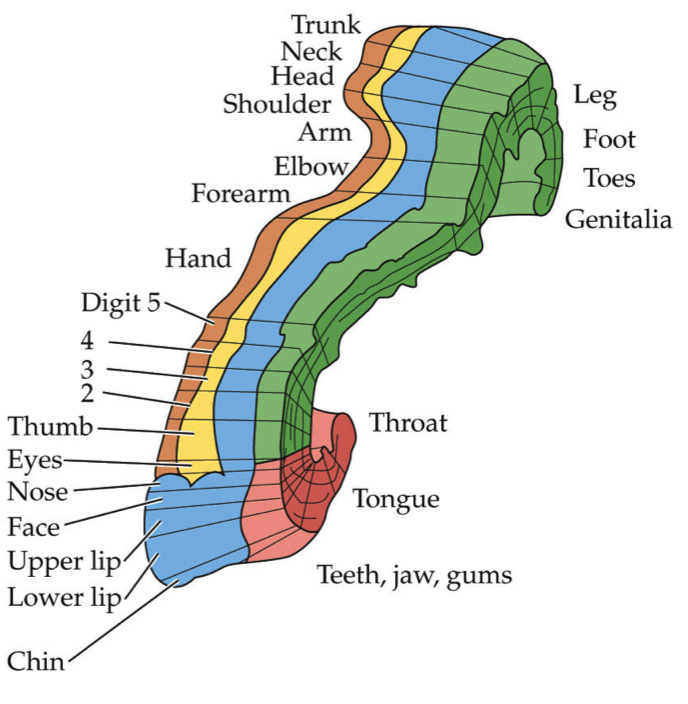
  • Foot fetish: On the somatosensory cortex, the area representing the feet is right next to the area representing the genitalia. If the genome includes an “address” for the genitalia, plus the instructions “have sexual urges towards this”, then getting the address slightly wrong will land you in the feet.
  • A reasonable next question would be “what’s on the other side of the genitalia, and do people also have fetishes about that one?” The answer is “the somatosensory cortex is a line with the genitalia at the far end, because God is merciful and didn’t want there to be a second thing like foot fetishes.”
    (source for cortex image)

  • Spanking: From the male point of view, penetrative PIV sex involves applying force to the bottom half of a woman, at rhythmic intervals, in a way that causes her very intense emotions and makes her make moan and scream. Spanking is exactly like this, and most kids encounter spanking at a very early age and sex only after they’re much older. If the evolutionary message is something like “find the concept that looks vaguely like this, then be into it”, spanking is the first concept like that most people will find; by the time they learn about actual sex, spanking might be a trapped prior.
  • Sadomasochism: Sex is painful for virgins, can be mildly painful even for some non-virgins, and when it’s pleasurable, it still looks a lot like pain (screams, intense emotions). Imagine you are a little boy/girl who stumbles in on your parents having sex. Your father is impaling the most sensitive part of your mother’s body, and your mother is moaning and squealing. A natural generalization might be “sex is the thing where a man causes a woman pain”.
  • Latex/rubber: Plausibly the evolutionary specification includes details about attractiveness. Attractive people (ie those you should be most interested in having babies with) should be young and healthy (characteristics associated with better pregnancy outcomes, especially in the high-risk ancestral environment). The simplest sign of youth and good health is smooth skin, so the evolutionary message might say something about preferring sex with smooth-skinned people. Latex is a superstimulus for smooth skin, and maybe if you see it at the right time, in the right situation, it can totally overwhelm the rest of the message.
  • Urine/scat: Procreative sex involves a sticky substance that comes out of the genitals, it doesn’t take much misgeneralization to get to other sticky substances that come out of the genitals or nearby regions.
  • Bondage/domination/submission: Okay, I admit I don’t have a good just-so explanation for this one. Maybe it’s more psychological – people who have been told that sex is shameful can only fully appreciate it if they feel like a victim who’s been forced into it (and so carries no guilt). And people who have been told they’re undesirable and nobody could ever really love them can only fully appreciate it if their partner is a victim who has no choice in the matter.
  • Furries: This has to be because of all the cute cartoon animals, right? But why do some people sexually imprint on them? I found this article on worshippers of the 1990s cartoon mouse Gadget helpful here. Gadget obviously has many desirable characteristics — she’s a very cute nerdy woman who sometimes ends up in damsel-in-distress situations. Maybe she is the most sexualized being that some six-year-old boys have encountered. When I watched Rescue Rangers as a six-year old, I could feel my brain trying to figure out whether to have a crush on her before deciding that no, it was too deep in latency stage. I assume most people who get their first crushes on Gadget or some other desirable cartoon character end up with their brains later generalize properly to “I like cute nerdy women in damsel-in-distress situations”, but a small minority misgeneralize to “nope, I’m only attracted to mice now, that’s where I’m going to go with this.”

Combine this with equivalent animal “fetishes” — things like beetles species where the females have red dots on their backs, and the males try to mate with anything that has a red dot — and you get a picture where evolution tries to communicate a lot of contingent features of sex in the hopes that one of them will stick, then tells you to be attracted to whatever is most associated with those features. At least for men, I think the features communicated in the genomic message are simple things like curves and thrusting and genitals and smooth skin, plus something that somehow picks out the concept of “woman” (except in 3% of the male population, where it picks out the concept of “men” instead, plus another 3% where it doesn’t pick out a sex at all).

Real procreative sex usually matches enough of features of the genomic message to be attractive to most people, but if the original triggers were associated with some contingent characteristics, the brain might misinterpret that as part of the target — for example, if it was a cartoon animal, the brain might think the target includes cartoon animals.

Other times, something that isn’t procreative sex matches the genomic message closely enough to be misinterpreted as the center of the target (eg getting whipped); usually procreative sex is somewhere in the target space, but maybe not the exact center, and a few people have such strong fetishes that procreative sex doesn’t register as erotic at all.

The process of forming the category “sexually attractive things” is just a special case of the process of forming categories at all. I discuss the formation of categories like “happiness” and “morality” in The Tails Coming Apart As Metaphor For Life. Society feeds us some labeled data about what is good or bad — for example, we might see someone commit murder on TV, and our parents tell us “No! That’s bad! Don’t do that!” (and the other TV characters hate and punish that character). Then we try to extrapolate such incidents to a broader moral system. If we’re philosophers, we might go further and try to formally describe that moral system, eg Kantianism, utilitarianism, divine command theory, natural law, etc. All of these correctly predict the training data (eg “murder is bad”) while having different opinions on out-of-distribution environments. Which one you choose is just a function of some kind of mysterious intellectual preference for how to generalize inherently ungeneralizeable things — what I previously described as “extrapolating a three-dimensional shape from its two-dimensional reinforcement-learning shadow”.

Fetishes are the same way. Here the evolutionary message provides semi-labeled data, giving people weird feelings when they see certain kinds of curvy, smooth-skinned people. Then people try to generalize that into an idea of what’s sexy. Usually their category is centered (in the sense that the category “bird” is centered around “sparrow” and not “ostrich”) around something close to procreative heterosexual sex. Other times they generalize in some very unexpected way, and are only attracted to cartoon mice. I think if we understood the laws of generalization, this would make sense. It would seem like a reasonable mistake that someone using Occam’s Razor and all the rest of the information-theoretic toolkit for generalization could make. But we don’t really understand those laws beyond faint outlines, so instead we’re reduced to YKINMKBYKIOK.

There Will Be ⚡️Pain⚡️(A Book Update)

Filed under: Books, Business, Humour, Media — Tags: , — Nicholas @ 02:00

Jill Bearup
Published 15 May 2023

I’m just saying, One Crisis at a Time is our motto as well as our title. Have a Fantasy Heroine book update for your delectation and delight.

#fantasyheroine #onecrisisatatime

QotD: Apparatchiks of the perma-bureaucracy

Filed under: Books, Bureaucracy, Government, History, Quotations, USA — Tags: , , , — Nicholas @ 01:00

… in Tocqueville’s day the American government was almost inconceivably weak by our standards. For “magistrate”, then, read “bureaucrat”. Though of course American congress-critters do have “a vast deal of arbitrary power”, most of the real damage is done by unelected, unaccountable, indeed unknown bureaucrats. It’s the perma-bureaucracy, the Apparat, as the Soviets called it, who really run things. If you need examples, just google “Hawaiian judge meme”. That’s the Apparat, in all its glory, and exactly the kind of thing Tocqueville was discussing as the precursor of tyranny.

Being unelected, and therefore unaccountable, the Apparat works solely for the benefit of apparatchiks – and, obviously, vice versa. This is the mechanism by which Conquest’s famous “second law” operates: “Any organization not explicitly right-wing sooner or later becomes left-wing”. This has nothing to do with “philosophical” orientation, since as we’ve discussed, the terms “left” and “right” are essentially meaningless when it comes to modern politics. Rather, Conquest’s law works because bureaucrats always prioritize the bureaucracy’s continued existence over its ostensible mission, whatever that happens to be. Pick any do-gooder organization: The “end hunger” bureaucrats of the Feed-the-World NGO would be out of a job if the world actually got fed; ergo, you’ll soon enough find the world-feeders disinterested in, and eventually openly sabotaging, the organization’s efforts to feed anyone.

Severian, “Anticipations and Objections (I)”, Founding Questions, 2020-12-16.

August 23, 2023

From “hunter-gatherer” to “settled farmer” as a Just-so story

Filed under: Books, History — Tags: , , , — Nicholas @ 04:00

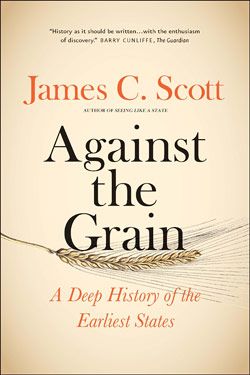
The latest book review at Mr. and Mrs. Psmith’s Bookshelf is James C. Scott’s Against the Grain: A Deep History of the Earliest States by Jane Psmith:

Okay, stop me if you’ve heard this one already. So, there are these hunter-gatherers, right, and one of the things they like to gather, while they’re roaming around the hilly flanks of Anatolia following herds of gazelles, is the large, carbohydrate-rich seeds of local grasses. Then one day some bright soul gets the idea of planting the seeds on purpose, people selectively replant the ones that have exciting mutations like “have really big seeds” and “don’t shatter your stalk and scatter your really big seeds everywhere when they’re ripe, just hang out and wait to be reaped,” and they all start staying in one place to tend their fields. They quickly discover that agriculture can create a lot more calories than foraging, so all of a sudden they have a nice surplus that can go towards supporting non-food-producing specialists like dedicated craftsmen, priests, bureaucrats (but I repeat myself) and kings to expedite and organize all that agricultural labor, and, hey presto! you have civilization.

Oh, cool, you read Guns, Germs, and Steel in high school too?

Only James C. Scott is here to tell you that’s not how it happened. And while you might be excused for thinking (especially if you’ve read our review of The Art of Not Being Governed) that this is Scott doing his contrarian “ooh, look, I’m turning the accepted narrative on its head” thing, you would be wrong. (Don’t worry, though, we definitely will get to the point where he does that.) He’s just offering a summary of the new scholarly consensus: the transition from mobile bands of hunter-gatherers to sedentary agriculturalists didn’t follow that neat logical progression, and it was far patchier, more tenuous, and more bidirectional than generally assumed. In fact, practically since the moment in the late 1920s that V. Gordon Childe coined the term “Neolithic revolution“, archaeological evidence has been accumulating that complicates every aspect of the story I just told you, from agriculture to sedentism to state formation.

To begin with, what constitutes agriculture? Back in the 1960s, paleobotanist Jack Harlan used a flint sickle to harvest enough wild Anatolian wheat in just three weeks to feed a family for an entire year. Now, we can probably agree that just harvesting a stand of wild wheat and storing the grain doesn’t really count as agriculture, but what about pulling up the non-wheat interlopers from a half-ripe stand you hope to harvest later in the year? What about saving some seeds and tossing them on a welcoming plot of soil next spring? What about digging up or burning other plants to make that welcoming plot? And then it turns out that all the harvesting and processing tools — those sickles, winnowing baskets, grindstones, and even purpose-built granaries — seem to have existed before there was any intentional cultivation, suggesting wandering tribes who came together only at harvest time but spent most of the year apart. Also, it seems all like those exciting morphological changes that make grain agriculture so efficient (big seeds and non-brittle rachis) come hundreds and hundreds of years after agriculture was established.1 Our simple story is already getting complicated! But it gets worse.

Archaeologists used to assume that sedentism — that is, people staying in one place year-round — and agriculture necessarily went together. In one direction this is obvious, because once you’re feeding your family from a particular plot of ground you probably want to stick around to weed and water it and keep away any animals (or other people) who might swoop in at the last minute and take your harvest. But it goes the other way, too: we generally assume that pickings as a hunter-gatherer are slim enough that your group needs to keep moving around to find more food. (Or, in the immortal words of the Minnesota Educational Computing Consortium: “if you continue to hunt in this area, game will become scarce.”) This is actually true at higher trophic levels: large animals tend to migrate throughout the year, so people whose subsistence strategies depend heavily on hunting them will follow the herds. But hunter-gatherer mobility is a tendency, not an iron law, and the archaeological (and even historical) record is full of non-agricultural peoples who lived in one place year-round because their environment was rich enough to support it. This was common among the tribes of the Pacific Northwest, who created quite socially and materially complex cultures without agriculture, but it also shows up plenty of other places. The earliest sedentary culture we know about, the Natufians, flourished along the coast of what is now Israel more than thirteen thousand years ago, largely by gathering wild grains and hunting gazelles.

Do note, though, that it would be a mistake to call these non-agricultural environments “natural”, because humans have been actively managing our landscapes for at least a million years. The main tool before the widespread adoption of agriculture was fire, which can be used to stampede prey animals into a trap or to remove unwanted vegetation and make way for the grasses and shrubs that we, or our preferred prey, like to eat. “The game they subsequently bagged,” Scott writes, “represented a kind of harvesting of prey animals they had deliberately assembled by carefully creating a habitat they would find enticing”. It’s even been suggested that the Little Ice Age of the early modern period was due to the sudden cessation of burning activity (and its CO2 emissions) in the Americas when newly-introduced Old World pathogens killed off most of the people who did the burning.

Against the Grain focuses on the region archaeologists call Southwest Asia, people who like reading books about archaeology call the Fertile Crescent, and everyone else calls the Near and Middle East, but it zeroes in specifically on southern Mesopotamia. This wasn’t the first place to host year-round settlements, nor was it the site of the original crop domestications, but it is the home of the third element of the traditional story of the birth of civilization: the state. Scott is unwilling to define the state precisely, describing it instead as an “institutional continuum” where something can be more or less state-like, but he writes that “a polity with a king, specialized administrative staff, social hierarchy, a monumental center, city walls, and tax collections and distribution is certainly a ‘state’ in the strong sense of the term”. It was here, near the mouth of the Euphrates on the Persian Gulf, that the earliest “statelets” arose, and it’s here, once again, that Scott brings up recent archaeological evidence that undermines the usual narrative. This time, the abandoned theory is that the region was as arid at the dawn of agriculture as it is today; an agricultural population might have succeeded in the oases and river valleys, but as numbers swelled they would need to undertake massive irrigation projects, which would in turn require “the mobilization of labor to dig and maintain the canals, which implied the existence of a public authority capable of assembling and disciplining that labor force”. In short, agriculture was assumed to have required a state. But it didn’t.

Scott’s argument draws heavily on the work of Jennifer Pournelle, who reconstructed the landscape of the southern Mesopotamian alluvium in the seventh and sixth centuries BC using a combination of remote sensing, ancient sediments, and climatological history, and concluded that, far from the arid landscape of today, the land between the rivers was in fact an “intricate deltaic wetland.”

    The inhabitants of these marshes lived on what are called “turtlebacks,” small patches of slightly higher ground, comparable to cheniers in the Mississippi delta, often no more than a meter or so above the high-water mark. From these turtlebacks, inhabitants exploited virtually all the wetland resources within reach: reeds and sedges for building and food, a great variety of edible plants (club rush, cattails, water lily, bulrush), tortoises, fish, mollusks, crustaceans, birds, waterfowl, small mammals, and migrating gazelles that provided a major source of protein. The combination of rich alluvial soils with an estuary of two great rivers teeming with nutrients, dead and alive, made for an exceptionally rich riparian life that in turn attracted huge number of fish, turtles, birds, and mammals — not to mention humans! — preying on creatures lower on the food chain.

Moreover, the first settlements in the area were right on the border between the brackish water of the coastal estuary and the freshwater ecology upstream, and on the incredibly flat floodplain of the lower Euphrates (the gradient is less than two inches per mile) that seam moved great distances with the tides. “Thus,” Scott writes, “for a large number of communities, the two ecological zones moved across the landscape while they remained stationary, taking sustenance from both”. They didn’t need to roam in search of new food sources; the food came to them. Agriculture — of the flood-retreat form, where seeds are sown in nutrient-rich new soils deposited by the retreating river, and which is the least labor-intensive type possible — was just another of their many diverse and overlapping subsistence strategies. The shift between wet and dry season, with its pulse of migrating animals and harvest of whatever seeds they had sown, can be considered moving zones on a longer timescale: a new habitat arriving on their doorstep to be added to the mosaic of available options. By 6000 BC, Scott says, they were “already agriculturalists and pastoralists as well as hunter-gatherers. It’s just that so long as there were abundant stands of wild foods they could gather and annual migrations of waterfowl and gazelles they could hunt, there was no earthly reason they would risk relying mainly, let along exclusively, on labor-intensive farming and livestock rearing.”

Thus do we, with James C. Scott, reject the old model in which agriculture leads almost at once to both sedentism and the state. Instead, we see sedentism arise in particularly favorable ecological niches as early as 12,000 BC, with most of the main founder crops and animals domesticated between 8000 and 6000 BC, and then a gap of almost four thousand years before the appearance of the state. A naively Whiggish view of history might ask, “What took so long?” But James C. Scott, being James C. Scott (yes, here we’re coming to the “turn it on its head” bit), thinks the more accurate question might be, “What went wrong?”



Frustration as a key driver in motivating mass unrest

Filed under: Books, History, Politics — Tags: , , , — Nicholas @ 03:00

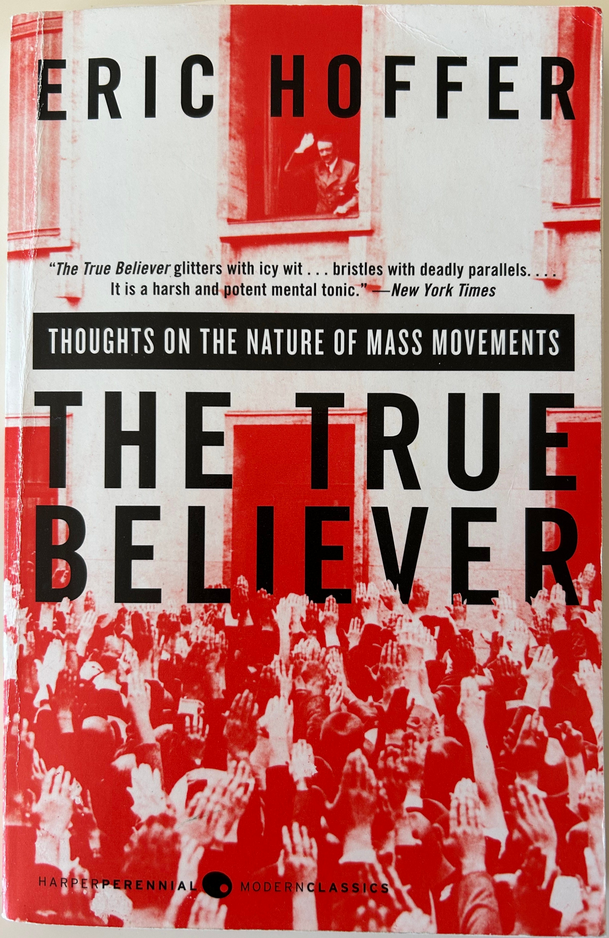
Rob Henderson reviews the old classic The True Believer by Eric Hoffer:

Eric Hoffer made the case that if you peel back the layers of any mass movement, you will find that frustration is their driving force.

Frustration, though, doesn’t arise solely from bleak material conditions. The dockyard philosopher argued that “Our frustration is greater when we have much and want more than when we have nothing and want some. We are less dissatisfied when we lack many things than when we seem to lack but one thing.”

He points out in the years leading up to both the French and Russian Revolutions, life had in fact been gradually improving for the masses. He concludes, “It is not actual suffering but the taste of better things which excites people to revolt” and that “The intensity of discontent seems to be in inverse proportion to the distance from the object fervently desired.”

Personally, I saw this when I first arrived at Yale. I recall being stunned at how status anxiety pervaded elite college campuses. Internally, I thought, “You’ve already made it, what are you so stressed out about?” Hoffer, though, would say these students believed they had almost made it. That is why they were so aggravated. The closer they got to realizing their ambitions, the more frustrated they became about not already achieving them.

Hoffer’s conceptions of frustration highlight how if your conditions improve, but not as much or as quickly as you’d like, you will be vulnerable to recruitment by mass movements that promise to make your dreams come true.

In Democracy in America, Alexis de Tocqueville wrote, “When inequality is the general law of society, the most blatant inequalities escape notice. When everything is virtually on a level, the slightest variations cause distress. That is why the desire for equality becomes more insatiable as equality extends to all.” For Hoffer, this insatiability cultivates frustration — a nebulous, simmering emotional state that can be harnessed by any ideology.

He describes what has now become known as the “Tocqueville effect”: A revolution is most likely to occur after an improvement in social conditions. As circumstances improve, people raise their expectations. Societal reforms raise reference points to a level that is usually not matched, eliciting rage and frustration.

« Newer PostsOlder Posts »

Powered by WordPress