
Toldinstone Footnotes
Published Jul 5, 2024On this episode of the Toldinstone Podcast, Dr. Federica Nicolardi and I discuss the challenges of reading scrolls charred and buried by the eruption of Vesuvius in 79 AD.
Chapters:
00:00 Discovery of the scrolls
03:23 Opened and unopened
05:17 How to handle charred papyrus
09:11 New texts
13:17 Philodemus of Gadara
16:04 Epicurean philosophy
20:20 The library in the Villa of the Papyri
24:05 The Vesuvius Challenge
25:56 Progress so far …
28:44 The newest text
30:06 What comes next
34:20 What’s still buried?
October 27, 2024
Reading the Herculaneum Papyri
Comments Off on Reading the Herculaneum Papyri
QotD: Puritans, predestination, and the Ranters
The third problem with Puritan wokeness is that it sinister echoes in the history of predestination. When the creed reached its zenith in the seventeenth century, the logical hole at its centre became insanely obvious. If it does not matter to God how you behave, because your salvation was pre-determined at birth, why not behave however the hell you want to?
The outpourings of radical thought in the English Civil Wars included sects who came to exactly this conclusion. The Ranters, at least by reputation, advocated a lifestyle of Dionysiac excess. If orgies and boozing, gluttony and blasphemy did not have any material impact on whether you were going to heaven or hell, then why not shag, indulge and curse the Lord as much as you want?
The extent of their membership is disputed and the fear of the Ranters was strong among the Puritans, partly, I suspect, because the logical fallacy of the original tenet is so glaringly obvious. Many of the theological arguments espoused by the men who were labelled Ranters were more textured and complicated than a license to loucheness. But the essential point remains: if you are already damned, your actions and intent are irrelevant.
The Puritan response was a horrified recoil. If God has made you one of the elect, you have a responsibility to Him to behave as if you are elect. A rare few came to believe they were not elect, and tortured themselves with it. If this sounds familiar, you have probably met an apologetic white male ally of the woke.
Antonia Senior, “Identity politics is Christianity without the redemption”, UnHerd, 2020-01-20.
Comments Off on QotD: Puritans, predestination, and the Ranters
October 26, 2024
Thank goodness somebody finally had the courage to say that Trump is a fascist
I mean it’s been obvious since his supporters have been goose-stepping around the Reichstag the White House in their brown shirts, red armbands, and constant chanting of the “Horst Wessel Lied“. How have the mainstream media managed to avoid seeing the clear inspiration of Trump’s Kampf and reporting it to credulous flyover state cretins Americans?

This week Kamala Harris described Donald Trump as a “fascist” who seeks “unchecked power”. Conservative commentators have expressed outrage at this absurd strategy, one which will doubtless backfire. And yet they appear to have forgotten that Trump has repeatedly referred to Harris as a “fascist” and, one on occasion, called her a “Marxist, communist, fascist, socialist”.
We have grown accustomed to the tactics of social media, the online crèche where those who bawl the loudest are rewarded with treats. What has become known as “Godwin’s Law” states that the longer an online discussion continues, the higher the probability that a comparison with the Nazis or Hitler will take place. Even Godwin has succumb to Godwin’s Law, penning an article for the Washington Post last December with the headline: “Yes, it’s okay to compare Trump to Hitler. Don’t let me stop you.”
If this election is going to be reduced to each candidate shouting “fascist” at the other, we may as well give up hope. I have never been more convinced of the growing infantilism of political discourse than in the last few weeks, or that the US is now divided – perhaps irreparably – between two groups who see the world in entirely incommensurable ways. With sensible discussion now seemingly impossible, the election has descended into a battle of memes.
Harris’s campaign team, for instance, gleefully embraced the “Brat” identity bestowed upon their candidate by Charli XCX. I must confess that I have no idea who Charli XCX might be. Her surname in Roman numerals means 100 – 10 + 10, so I can only assume she’s a classical scholar making a sardonic point about the philosophical principle of eternal recurrence.
Likewise, Trump’s now infamous reference to the eating of cats and dogs in Springfield, Ohio, has been remixed multiple times and shared more widely than any campaign statement. All of which is very funny, but one might be forgiven for yearning that the election of the leader of the free world should be a generally humourless affair. International conflicts are not best resolved through a series of “yo momma” jokes.
This week I wrote a piece for the Washington Post about George Orwell’s essays, and the lessons that might still be gleaned from them. Specifically, I pointed out that Orwell continually cautioned against tribal thinking, and is still despised today in certain left-wing circles for reminding his readers that authoritarianism can occur on both sides of the political aisle. I quoted Orwell’s essay “Notes on Nationalism” (1945), in which he identified “the habit of identifying oneself with a single nation or unit, placing it beyond good and evil and recognizing no other duty than that of advancing its interests.” I also quoted his dismay that the word “fascist” is so commonly misused. The piece can be read here.
I don’t often read the comments under my articles (except for here on Substack, of course), but I was interested to see how the overwhelmingly Democrat-supporting readership of the Washington Post might react. The comments are extremely revealing, given that most of those wading in seem determined to prove my point. I have rarely seen such unthinking and flagrant tribalism on display. Apparently, Trump is a literal “fascist”, and Orwell would have been the first to identify him as such. Orwell, of course, took up arms against actual fascists in Spain and was shot in the throat for his troubles. Would these commentators argue that if Orwell were alive today he would have packed up his gun and headed for the US in the run-up to this election? If not, why not?
Comments Off on Thank goodness somebody finally had the courage to say that Trump is a fascist
Our solar energy future – “In September alone, Germany paid 2.6 billion Euro to renewables producers for electricity that had a market value of a mere 145 million Euro”
Checking in with what’s been happening in Germany, eugyppius explains why solar power is far from the cost-free energy source that politicians and scam artists try to claim:

Photovoltaic panels on a roof, 28 April, 2015.
Photo by Antonio Chaves, via Wikimedia Commons.
Climatism in Germany is attended by all manner of naive ideas and bright pink fairytale slogans. Among the latter is a dubious proverb proclaiming that “The sun doesn’t send any bills” (in German: “Die Sonne schickt keine Rechnung“). Such proverbs always seem initially plausible (is there anything freer and more democratic than sunshine?) while proving to be basically the opposite of the truth. In fact, the energy transition has landed German taxpayers in the position of paying billions of Euros for the sun to shine. It is becoming an unmitigated disaster, and what is worse, the more we expand solar capacity, the more we will have to pay. For something that does not send any bills, sunshine has sure become very expensive here in the Federal Republic.
Welt calls it “the solar trap,” and it works like this: Our Renewable Energy Sources Act (EEG) pledges to pay renewables producers fixed tariffs for every kilowatt hour of electricity their installations feed into the grid. Whether you are an ordinary climate-conscious person with solar panels on your house or you run massive solar farms, the EEG entitles you to receive these fixed “feed-in tariffs” for a period of twenty years. The EEG also requires grid operators to accept your electricity regardless of demand and to sell it on the electricity exchange.
Now the sun, although it may not charge for its services, turns out to have this naughty habit of shining in many places all at once. When this happens, electricity supply often exceeds electricity demand and exchange prices fall. They can fall all the way to zero, or in extreme situations of excessive sunshine they can even go negative. Negative prices mean that you have to actually pay “buyers” to take the excess power off your hands. Whether the prices are merely very low, or zero, or negative, the German taxpayer has obligated himself, via the EEG, to pay these producers of unwanted if extremely green and climate-friendly electricity their fixed feed-in tariffs anyway. That is, we are on the hook for the difference between the actual exchange value of excess electricity and the feed-in tariffs promised to producers. In this way we have ended up literally paying for the sun to shine.
In September alone, Germany paid 2.6 billion Euro to renewables producers for electricity that had a market value of a mere 145 million Euro. Our sunny autumn is destroying our already-fragile government budget. Federal number-crunchers had originally allocated 10.6 billion Euros for feed-in tariffs in 2024, but already the government owes 15 billion and the year is not yet over. Scholz’s cabinet are thus trying to allocate an additional 8.8 billion Euro for the rest of the year. The parliament have yet to approve the additional funds, though, and also the damned sun will just not stop fucking shining, and so probably even this supplementary allocation won’t be enough. We’re bleeding money, all for a sun that doesn’t send any bills.
This problem will get worse before it gets better. The more solar panels we install, the greater oversupply we’ll face when the sun shines, and the larger the spread between the fixed feed-in tariffs and the actual market value of this green electricity. In 2024, as I said, the government projected that feed-in tariffs would cost 10.6 billion Euros, but they’ll probably end up costing 20 billion at least. Next year, the costs are projected to be even higher, and the year after that, they will be higher still. As Welt report, the German government plans to triple our solar capacity to 215 gigawatts over the next six years – “the equivalent of 215 nuclear power plants” every time the sun emerges from behind a blessed cloud.
The energy transitioners know they messed up. The new plan is to change the rules for solar subsidies. When prices go negative, larger producers won’t receive their fixed tariffs, and they’ll also have to sell their electricity themselves. In this way, they will become newly sensitive to market demand and stop overproducing electricity when nobody wants it. It is almost like creating a blind system totally oblivious to market incentives was a bad idea. Unfortunately, the new rules will apply only to new solar installations. The German government will still have to honour its insane agreement to pay the operators of older solar plants for years to come. We will light billions on fire for nothing.
Comments Off on Our solar energy future – “In September alone, Germany paid 2.6 billion Euro to renewables producers for electricity that had a market value of a mere 145 million Euro”
The coming Hundred Days (?)
In spite of everything, I still lean toward optimism, so I can’t say that I agree with Kulak’s take here:

January 6th, 2021 — A protest that got out of hand or the worst act of insurrection since 1861, depending on your political preference.
There are decades when weeks happens, and weeks in which decades happen
– Variously attributed to Marx, Lenin, Stalin, Robespierre, Napoleon, and Steve BannonAs of writing it is 18 days to the election on Nov 5th, and 94 days to Inauguration Day on Jan 20th.
Maybe the most knowledgeable meta-historian/Commentator alive today, whatifalthist, has predicted a civil conflict in which over 1000 Americans die will begin in this period …
And I’d put the odds of “A Conflict” in which over 1 million die involving the US overlapping with this period at something like 70-80%. If it doesn’t happen then Biden will have somehow played the perfect drunken master and embodied the Trifecta of God favouring “fools, drunkards, and the United States of America”.
That is a major American conflict: beginning, continuing, or dramatically ending within this period.
Civil War or “Troubles” is still slightly below a 50% likelihood … But that’s because I think The Ukraine or Israel wars going nuclear, a hot war with Iran, A Chinese move towards Taiwan, or what’s increasingly looking like a possible foreign backed Cartel-War on US soil (see Aurora) … might suck the oxygen out of a final domestic reckoning between America’s two political factions (Trump and Swamp) … at least until 2028 or 2032.
However America’s domestic instability is what’s driving the risk of escalation, miscalculation and uncertainty everywhere else and that will be the focus of this piece …
I am unprepared for what I think is coming … I’ve maybe thought about such an outcome for a decade now, I lived through 2020 and the Canadian Lockdowns with outrage and totalitarian anxiety (remember Canada was the testing ground for what they wanted to everywhere else, we got what Alex Jones only prophesied), and I’ve been a amateur and semi-professional war and preparedness commentator for 2 and a half years now … and it’s hit me how unprepared I am.
I’m more prepared than most, but, setting aside the political implications, I would trade A LOT for another 4 year election cycle of 2023 conditions to make money, network, buy kit, develop skills, read books, write articles, prepare, plot …
I’m doubtful I’ll get it.
I’m also painfully aware that a very large percentage of people and institutions would not financially or morally survive a long Biden “normalcy” … and that that desperation is driving a lot of the instability.
But ya, I’m already starting to intuitively anticipate/feel that hard times — things moving too fast — reactive loss of initiative feeling that I’ve only really felt when a relationship was imploding, during that one very rough exam season in Uni, at the height of the 2020 election-2021 Canadian Lockdowns, or those months when the doctors discussed amputation as an possibility …
And depending on who you are and your personal situation, you’re either keenly feeling that as well or blissfully unaware.
Comments Off on The coming Hundred Days (?)
Secrets of the Herculaneum Papyri
toldinstone
Published Jul 5, 2024The Herculaneum papyri, scrolls buried and charred by Vesuvius, are the most tantalizing puzzle in Roman archaeology. I recently visited the Biblioteca Nazionale in Naples, where most of the papyri are kept, and discussed the latest efforts to decipher the scrolls with Dr. Federica Nicolardi.
My interview with Dr. Nicolardi: https://youtu.be/gs1Z-YN1aQMChapters:
0:00 Introduction
0:40 Opening the scrolls
1:47 A visit to the library
2:38 A papyrologist at work
4:00 The Vesuvius Challenge
4:46 What the scrolls say
5:40 Contents of the unopened scrolls
6:28 The other library
7:12 An interview with Dr. Nicolardi
(more…)
Comments Off on Secrets of the Herculaneum Papyri
QotD: Henry VIII
Leaving all of Henry’s personal quirks aside — and his was a very strong, distinctive personality — that’s got to affect you.
So many of the changes in Henry’s reign, then, must have been driven in part by the fact that it was the same man, reflecting on a lifetime’s experience in a job he was never expected to have, wasn’t really prepared for, and didn’t seem to want (aside from the lifestyle). There’s been lots of pop-historical theorizing about what was “wrong” with the later Henry — senility, syphilis, the madness of power — but more naturalistic explanations of his later actions must take into account simple age. A man nearing the end of his life, knowing that his succession was very much in doubt and fearing for the state of his soul, will do things differently than a young man in the prime of life.
[…]
Life was hard back then, and cheap. When every other child dies before the age of five and the average life expectancy is 35, I imagine, you live your life cranked to 11 every waking moment. Accounts of grown men weeping like little girls at the theater aren’t an exaggeration; the whole age was given to extreme outbursts. And that’s just the baseline! Now consider that a guy like Henry never had a moment to himself, and I do mean never — not once, in his entire life. He even had a guy with him on the crapper, who would wipe his ass for him. The relationship between Henry and a guy like Wolsey, then — to say nothing of his relationship with the Groom of the Stool — must’ve been intimate in a way we can’t possibly grasp. Compared to that, you and your wife are barely on speaking terms. If Henry seemed sometimes to set policy just because he was pissed at Wolsey, we must consider the possibility that that’s exactly what happened.
The best you can do, then, is imagine yourself back there as best you can, and make your interpretations in that light, acknowledging your biases as best you can (I’m not a medievalist, obviously, but I’m a much better read amateur than most, and though Henry VIII is a very hard guy to like, he’s equally hard not to admire). Most of all — and this, I think, is the hardest thing for academic historians, more even than recognizing their presentist biases — you have to keep your humility. Perhaps Henry’s decision about ___ was part of a gay little frenemies spat with Wolsey. That’s sure what it seems like, knowing the man, and having no contrary evidence …
… but contrary evidence might always emerge. It might not have been the optimal decision, but it might’ve been a much better one than you thought, because Henry had information you didn’t, but now do. It makes for some restless nights, knowing that your life’s work could be overturned by some grad student finding some old paper at a yard sale somewhere, but … there it is.
Severian, “Writing Real History”, Rotten Chestnuts, 2021-08-18.
Comments Off on QotD: Henry VIII
October 25, 2024
The “party of youth” is led by decrepit, doddering wrecks and time-serving political hacks
You can tell a lot about a political party by looking not at its current leadership but at its “bench” … the next couple of generations of potential leaders. In the United States, the Republicans actually don’t look too bad for future leaders, but the Democrats are facing a bench of already-too-old and never-will-be-ready-for-primetime hacks, as the “groovy fossils” have been clinging on to power right to the bitter end and drive away competent potential successors:
Thirty years ago, Democratic politicians were people you disagreed with, but they were from and of the body of the people. They were us, our brothers and sisters who saw things differently. I lived in California when Jerry Brown was the governor, twice, and I liked him. He was a brilliant crank, colorful and interesting. Whatever else he was, he was never dumb. If you remember the 1992 Democratic primaries — yes, this is a deep reach — the campaign season was full of distinctly likeable people, with the exception of the one who prevailed. Paul Tsongas used to say, often, that he was socially liberal but absolutely certain that federal transfer payments were on an unsustainable trajectory. His best line in the primaries was, “I’m not Santa Claus.” He was an unorthodox Democrat, when it was still possible to be one of those.
The current cultural model of the Democratic Party has produced a generation of politicians who are nakedly stupid and empty.
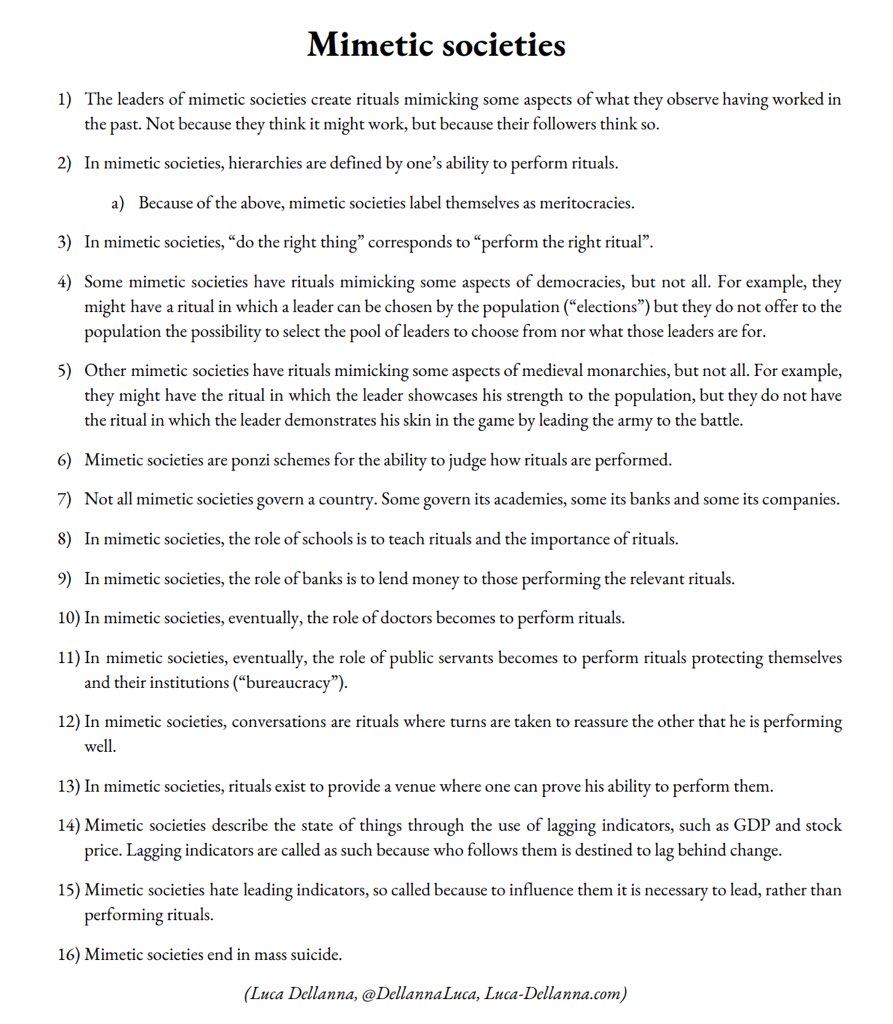
I’ve compared the Biden years to the Brezhnev years, with the army of handlers covering up the decline of the old party hack who’s been elevated beyond his ability. What we’re seeing now is the generation of dismal, time-serving party hacks that comes after the old decaying party hack. Democrats have credentialed their leaders on their ability to fit themselves tightly to the ritual grooves carved into the discourse. When asked about transgender issues, they say, “Trans women are women”. They have the whole list of correct slogans available for the moments when the machine is expected to push those slogans through the slot. Hate has no home here! (applause) They above all do not say things that are not the slogans. It’s time for the billionaires to pay their fair share!
And so we get Kamala Harris, and holy cow please help me. This may be the first person in the history of the world who has never answered a question. She seems programmed in her core functions to turn away from the actual substance of anything that anyone might ever ask, like she was brainwashed after that one combat patrol that ended vaguely.
[…]
This isn’t an accident. A generation of Democratic politicians have been culturally trained into a deflective and hollow discourse. It’s fascinating to watch them sort JD Vance, who talks like a person, into the category of “weird”.
Comments Off on The “party of youth” is led by decrepit, doddering wrecks and time-serving political hacks
How a Soviet Clerk Took Down a Spy Network
World War Two
Published 24 Oct 2024Igor Gouzenko, a Soviet cipher clerk in Canada, defected in 1945, bringing with him documents that revealed a massive Soviet espionage network in the West. His actions forced the world to confront Soviet infiltration, shifting global politics and igniting early Cold War tensions. This episode uncovers how one man’s bravery exposed a hidden war.
(more…)
Comments Off on How a Soviet Clerk Took Down a Spy Network
Diversity at all costs
In the National Post, Harry Rakowski explains why Toronto Generic University — sorry, I mean “Toronto Metropolitan University” — is reserving 75% of available enrolment in their new medical school for more diverse candidates, even if they wouldn’t normally qualify by their grades:

We have a critical shortage of doctors and nurses in Canada. Almost a quarter of our population can’t find a family doctor. Wait times for seeing a specialist, getting medical imaging and surgical dates continue to climb, with only Band-Aid solutions being proposed by the federal and provincial governments. We desperately need to expand medical schools and the licensing of highly qualified foreign medical graduates.
So it was welcome news to hear that 94 undergraduate medical students and 105 postgraduate students (residents) will be entering the newly established Toronto Metropolitan University School of Medicine when it opens in September 2025. The city of Brampton, Ont. donated a former civic centre along with $20 million in funding for renovations in order to make the school happen.
However, it was highly disturbing to learn that admissions to the new facility will be driven by a culture-war philosophy that will dilute the quality of medical practice.
There’s no doubt that diversity in medicine helps to optimize care and provide better outcomes for the differing needs of Canada’s highly diverse population, which includes many individuals disadvantaged by their geography as well as racial and economic inequality. But TMU is going about it the wrong way. Its admissions policy will focus on DEI (diversity, equity and inclusion) rather than quality.
TMU’s plan is to reserve 75 per cent of its enrolment slots for “equity-deserving” students — Black and Indigenous applicants and others who meet “equity-deserving” criteria including students who identify as members of the 2SLGBTQ+ community, those who are “racialized” and individuals “with lived experiences of poverty or low socio-economic status.” It will accept a minimum grade point average (GPA) of 3.3 (B+) — or even less for select Black and Indigenous applicants — and then use GPA only as an application criterion, not as a selection criterion. By comparison, the University of Toronto’s Temerty Faculty of Medicine requires a minimum GPA average of 3.6 for undergraduate applicants (although average acceptance is now 3.95).
Comments Off on Diversity at all costs
How to Make a Simple Picture Frame | Episode 2
Paul Sellers
Published Jun 21, 2024This is a uniquely different way to make a picture frame, but Paul designed it specifically to work with hand tools.
Sizing the eight components with the level of precision needed can be tricky, but two guides make the whole process quick and simple. We have dispensed with the mitres normally associated with picture frames altogether, giving these frames an assembly process and look you’ve never seen before.
It’s a step-by-step process with accuracy and we walk you through every step.
(more…)
Comments Off on How to Make a Simple Picture Frame | Episode 2
QotD: The treason of the music critics
Freddie deBoer, “A Few Indisputable Points About Poptimism and Then I Give Up”, Freddie deBoer, 2024-07-22.
Comments Off on QotD: The treason of the music critics
October 24, 2024
It’s called “piercing the corporate veil” and it’s a terrible idea
Tim Worstall explains why the EU’s latest brain fart is not just a bad idea in its own right, but a truly horrific precedent for the future:
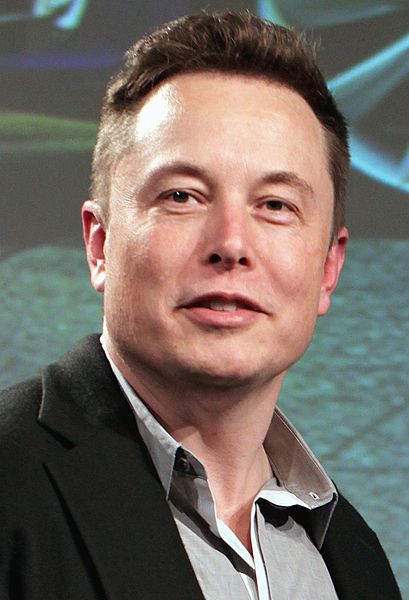
Elon Musk at the 2015 Tesla Motors annual meeting.
Photo by Steve Jurvetson via Wikimedia Commons.
… But now, this, now this is even more important than that. We can deal with free speech by the judicious use of lampposts. This is worse:
The European Union has warned X that it may calculate fines against the social-media platform by including revenue from Elon Musk’s other businesses, including Space Exploration Technologies Corp. and Neuralink Corp., an approach that would significantly increase the potential penalties for violating content moderation rules.
Under the EU’s Digital Services Act, the bloc can slap online platforms with fines of as much as 6% of their yearly global revenue for failing to tackle illegal content and disinformation or follow transparency rules.
In English law that’s known as “piercing the corporate veil”. It’s also something we don’t do. Because that corporate veil is the very thing, the only thing, that makes large scale economic activity possible.
It has actually been said — and not just by me — that the invention of the limited company is the third grand invention of all time. Agriculture, the scientific method, the limited company.
Before the limited co everything was done through partnerships. Every individual involved in the ownership of something was liable for all of the debts of that thing. Which, when you’ve got 5 or 10 blokes trading isn’t that bad an incentive upon them to be honest.
Now think of large scale activity. We want a blast furnace — plenty of folk say Britain should have one after all. £3 to £5 billion these days. OK. No one’s got that much. So, we need to mobilise the savings of many thousands of people to go build it. But without limited liability that means all of those thousands are liable for all the debts — off into the future — of that blast furnace.
“Invest £500 in the new, new British Steel. And if we fuck up then in 10 years’ time they’ll come and take your house.”
Err, yes.
Large scale economic activity depends upon being able to separate the debts of one specific activity from the general economic life of all its backers. If this is not true then no one will invest in large scale economic activity. Therefore we won’t have large scale economic activity. Which would, you know, be bad.
Comments Off on It’s called “piercing the corporate veil” and it’s a terrible idea
The colonization of academia
Lorenzo Warby decries what he calls “the systematic attack on sense-making”, especially the galloping credentialization of everything in sight partly through the long-running takeover of the universities:

University College, University of Toronto, 31 July, 2008.
Photo by “SurlyDuff” via Wikimedia Commons.
The disastrous dysfunction of our universities is nowhere more obvious than in the Education Faculties and Departments, which have been invaded by systems of toxic nonsense that not only have no pedagogical value, they are actively pedagogically destructive. Ideas that manifest in pedagogical “theories” and “techniques” that not only lack evidence, but actively go against the evidence, yet allow adherents to flatter themselves as noble Social Justice activists.
In 2004, psychologist Richard E. Mayer published in American Psychologist the paper “Should There Be a Three-Strikes Rule Against Pure Discovery Learning?: The Case for Guided Methods of Instruction”. In it, he decried the way Education academics kept re-packaging ideas that have been shown, again and again, not to work.
Fast forward to 2023 and the National Assessment Program – Literacy and Numeracy (NAPLAN) results show that about a third of Australian school children have inadequate literacy. The Australian Education Minister announces a A$12bn package to, among other things, essentially bribe the public school systems to bring in explicit instruction — an effective approach to pedagogy in line with what psychologists have shown across decades to work. This would replace the — yet again repackaged — notions pushed by Education academics that do not work and which appear to be on their fourth or fifth iteration. So, no, three strikes were not enough.1
Sympathetic reviews of Isaac Gottesman’s The Critical Turn in Education applaud the sets of ideas he discusses as flowing through Education academe. Yet they are all sets of ideas not only without pedagogical value, but that are actively pedagogically toxic.
All of this colonising of Education Faculties — and then of school systems — of pedagogically disastrous ideas has been done on the basis of massive bad faith. This process of colonisation pushed ideas that did not remotely reflect the view of the citizens that were paying for all this and who entrusted their children to ideologically-colonised school systems.
Ideas that have no evidentiary basis worth mentioning to support them: indeed, went systematically against the available evidence. Ideas, moreover, that actively seek to increase social dysfunction so that the oppressive “dross” of contemporary societies can be burnt away and the transformational future can emerge like gold from the ashes: i.e., social alchemy theory.
Hence the systematic attack on the mechanisms for adjudicating facts, and on mechanisms of accountability.
Much of the anti “disinformation” push — also coming out of the universities — is about protecting preferred ways of looking at the world from inconvenient criticism and inconvenient concerns. Fake news, even on a broad definition, is a tiny proportion (0.15 per cent) of US daily media consumption, and is dwarfed by consumption of mainstream news. It is a prop of convenience.
The convenient-moral-panic campaigns to block “disinformation” also go against both historical and scholarly evidence that censorship tends to promote conspiracism and entrench views among the censored. The hate speech laws of Weimar Germany enabled prosecuted Nazis to play the martyr game.
Cargo cult grant structures
There is a lot one could say about the institutional problems that gave rise to all this academic dysfunction. For instance, the innovation cargo cult that has led to spurious academic “innovation” funded by grants. Grant structures that have had many invidious effects — including, via daft citation metrics2 and straightforward financial interest, the replication crisis — and massive waste of public funds on toxic nonsense.
Universities and mainstream media want to maintain their authority, while evading responsibility for what they have done to destroy that authority.
1. Australia has had public schools since the 1850s. Apparently, they still have not yet learnt to reliably teach students adequate literacy. Let that sink in. (In reality, it is worse than that, their performance has regressed.)
2. Citation metrics that replace what is useful — good teaching — with what is public while also enabling idea laundering.
Comments Off on The colonization of academia
Did the Media Lose the Vietnam War?
Real Time History
Published Jun 21, 2024In late April 1975, dramatic images from Saigon are beamed across the world. North Vietnamese troops proclaimed final victory. Just how did the US lose the Vietnam War?
(more…)
Comments Off on Did the Media Lose the Vietnam War?


