
On the social media site formerly known as Twitter, Voices of WW2 note the location of the Wehrmacht‘s furthest advance in the Soviet Union:
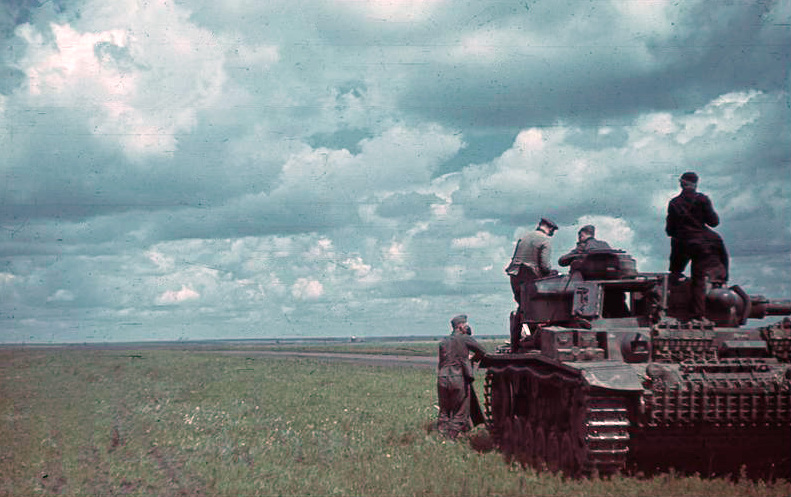
In the first days of November 1942, German tanks ground to a halt in the mountains of the Caucasus, at the very edge of a city called Ordzhonikidze, and could go no farther. This was the high-water mark of Hitler’s entire war, the farthest point his armies ever reached, and here, far to the south of Stalingrad, the great drive for the oil that was supposed to fuel the Reich’s victory failed within sight of its goal.
People remember Stalingrad, but Stalingrad was only half of the German plan for 1942. The whole southern offensive, Case Blue, had a deeper purpose: oil. Germany was chronically short of oil, the lifeblood of a mechanized war, and the great oilfields of the Caucasus, at Maikop, Grozny, and above all Baku on the Caspian Sea, were among the richest in the world. Hitler became obsessed with seizing them, convinced that the oil of the Caucasus would solve Germany’s fuel crisis and cripple the Soviet war effort, which also depended heavily on that oil. So while one German army drove on Stalingrad, another, under the operation named Edelweiss, drove south into the Caucasus toward the oil.
For a time it swept forward spectacularly. The Germans advanced hundreds of miles into the Caucasus, took the lesser oilfield at Maikop, though the Soviets had wrecked it before retreating, planted their flag on the highest peak of the Caucasus mountains, and pushed on toward the great prize of Grozny and Baku beyond. It was an enormous advance, carrying German troops farther from home than they had ever been, deep into the mountains between the Black Sea and the Caspian.
But the deeper they went, the harder it got. The Germans were now operating at the very end of impossibly long supply lines, across vast distances, into rough mountain country ideal for defense, against stiffening Soviet resistance. Their strength ebbed with every mile. And then, in the first days of November, the spearheads reached Ordzhonikidze, also called Vladikavkaz, a city guarding the route to Grozny and the Caspian oil. There, around the 1st to the 5th, the leading panzer divisions were stopped, held at the very outskirts of the city, and then struck by Soviet counterattacks that threw them back and threatened to cut them off. On the 4th, the Germans suspended their offensive operations in the Caucasus. They could go no farther.
That was the limit. Ordzhonikidze was the high-water mark of the German advance, not just in the Caucasus but in the entire war, the farthest geographical point Hitler’s armies ever reached in any direction, east, west, north, or south. And they had failed. The great oilfields of Grozny and Baku, the whole point of the southern campaign, were never taken. The Germans had reached toward the oil and been stopped just short, their tanks, ironically, running low on the very fuel they had come to seize.
And then the whole position collapsed. Just weeks later, the Soviets launched their great counteroffensive at Stalingrad, encircling the German Sixth Army, and that catastrophe to the north put the German forces deep in the Caucasus in mortal danger of being cut off entirely, their line of retreat threatened. They had to pull back, abandoning everything they had gained, retreating out of the Caucasus in the dead of winter to escape the trap. All the ground won in that spectacular advance was given up in a hurried withdrawal.
The high tide at Ordzhonikidze, in early November, was the moment Hitler’s conquest reached its absolute furthest extent and then began, everywhere, to recede. From here on, in the east and soon in every theater, the story of the war was one of the Axis being pushed back. The farthest reach of the Reich was a city in the Caucasus mountains that the Germans could see but could not take, where the drive for the oil died, just before the disaster at Stalingrad turned the whole tide of the war.


