Quotulatiousness

July 23, 2020

Pattern 1913 Enfield Trials Rifle

Filed under: Britain, History, Military, Weapons, WW1 — Tags: , , , — Nicholas @ 02:00

Forgotten Weapons
Published 28 Apr 2016

http://www.patreon.com/ForgottenWeapons

Sold at auction for $6,325.

One of the lessons learned by the British military in the aftermath of the Boer War was that modern Mauser rifles were superior to their Lee-action rifles and carbines. In response, British ordnance began experimenting with a Mauser-pattern rifle, ultimately finalized as the Pattern 1913. This rifle would also leave behind the obsolescent .303 rimmed cartridge, in favor of a new rimless .276 Enfield round.

The Pattern 13 rifle itself was excellent — it balanced and handled well, it had very good sights, and a smooth and fast bolt throw. However, the .276 Enfield cartridge was really more potent than it needed to be, and caused problems. The cartridge threw a 165 grain bullet at just under 2800fps, pretty close to the ballistics of today’s 7mm Remington Magnum. Loaded with Cordite propellent, this led to excessive barrel wear and unpleasant recoil, along with some parts breakage. However, as final testing was being done in the first half of 1914, the Great War broke out.

At this point, plans for using a new cartridge were abandoned. The rifle itself was redesigned in the .303 cartridge, to be manufactured in large numbers by American firms under contract. It would also be refitted for the .30-06 cartridge and used in large numbers by the American armed forces as the M1917 Enfield rifle. According to General Julian Hatcher (who ought to know), it was the best rifle of the First World War.

July 14, 2020

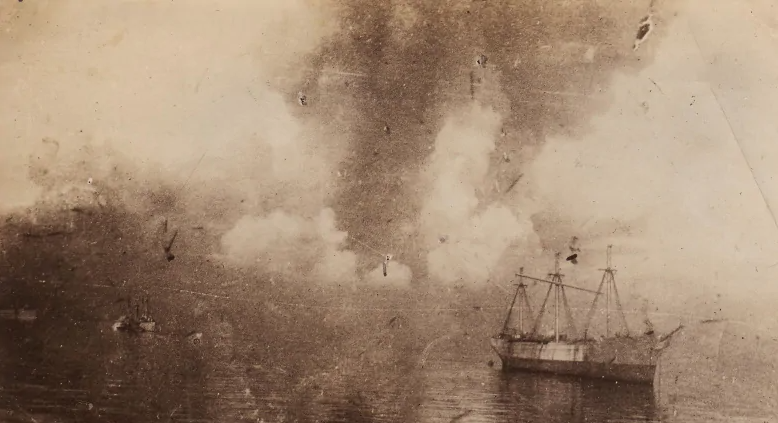
A previously unpublished photo of the 1917 Halifax explosion

Filed under: Cancon, History, WW1 — Tags: , , , — Nicholas @ 05:00

I’ve posted a few items about the Halifax explosion, so Colby Cosh linking to this CBC News article caught my attention:

Previously unpublished photo of the Halifax explosion in December 1917 taken by Mate Reg Stevens, RCN.
Original image from the Community Archives of Belleville and Hastings County, via CBC News.

“The photo has the look of a very troubling dream,” Dan Conlin says as he studies an old black-and-white image.

Conlin is a transportation historian who’s spent a lifetime studying images of ships, trains and aircraft. He’s also a former curator of Halifax’s Maritime Museum of the Atlantic, which houses a large collection of materials from the 1917 Halifax Explosion.

The image he’s studying surfaced recently on Reddit with a user from Halifax, England, wondering if it was a “new” image of the 1917 disaster.

“You have these tranquil little wavelets in the foreground and some stately, anchored vessels — including a sailing ship,” Conlin said. “But in the background there are these awful, nightmarish clouds, including a horrible column that is rising into the sky. It looks like a surreal nightmare.”

When Conlin first looked at it, the crisp details of the foreground and the blurry background raised his skeptical eyebrows. “There was quite a tradition in the World War I era of faking photos by doing composite photos, where you layer one image on top of another,” he said.

One well-known photo of the explosion taken from McNabs Island was later suspected to have been doctored by a company. They seem to have added clouds for dramatic effect — and to sell more postcards.

But Conlin thinks in the nightmarish photo, it’s more likely that the clouds are moving from the force of the explosion, while the ships were untroubled by any winds. The disaster killed nearly 2,000 people and badly hurt thousands more. It levelled the Richmond district in the north end.

“It’s carnage and destruction out of Dante at the base of that cloud. People are dying and fires are starting and this awful event has hit Halifax in the distance,” he said.

“That angry cloud gives you an idea of the violence and tragedy that is unfolding even as the shutter clicks. It’s really rare and that photo, as far as I can tell, has never been published.”

July 1, 2020

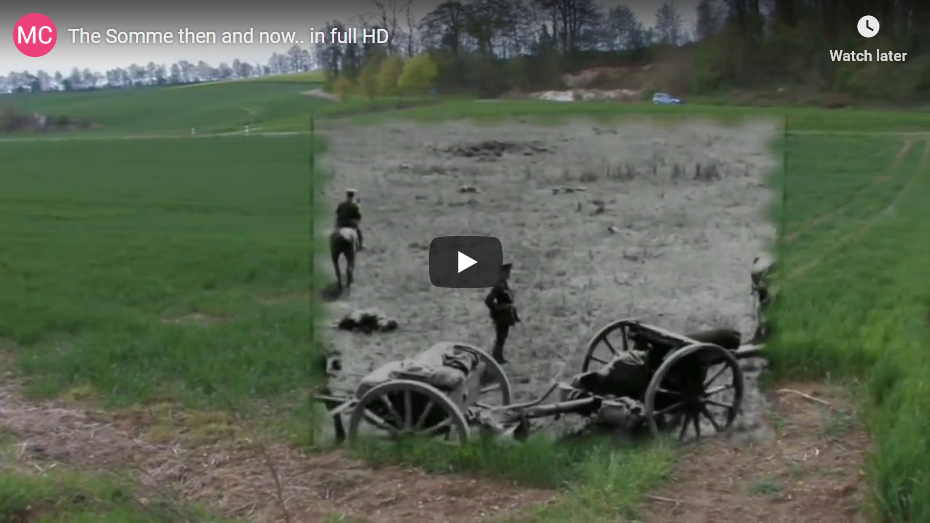
The Somme then and now … in full HD

Filed under: Britain, Europe, France, History, Military, WW1 — Tags: , , — Nicholas @ 02:00

MC C
Published 1 Aug 2016

100 years ago Malins and McDowell exposed their film to the light capturing a moment in time.

It’s very difficult to understand and watch the original film as they were very limited by technology and the danger. Malins risked his life on several occasions making this film, being right on the front line with a huge box camera sticking out above the trench. After watching the film many times, over many years, I wanted to find these locations and stand in their foot prints and re-film.

Some locations were easy to find, some took much research and some I haven’t yet been able to locate, but all the ones in this documentary are within yards to feet of where they filmed originally, none are guesses or just possibilities. I hope you enjoy watching and it helps you to understand please leave comments this is worth more to me than earning money I ask for nothing but love remarks.

June 14, 2020

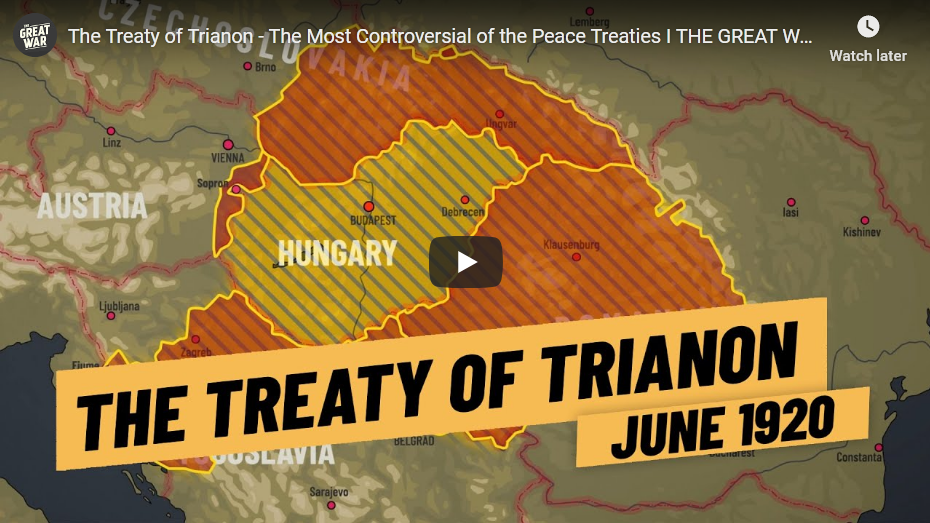
The Treaty of Trianon – The Most Controversial of the Peace Treaties I THE GREAT WAR 1920

The Great War
Published 13 Jun 2020

Sign up for Curiosity Stream and get Nebula bundled in: https://curiositystream.com/thegreatwar

The last of the big peace treaties signed in Paris that finalized the borders in Europe was the Treaty of Trianon. Even at the time, Hungarians considered it a historic injustice while nations such as Czechoslovakia, Romania and Yugoslavia were quite happy with the result. We examine how the treaty was signed and negotiated.

» SUPPORT THE CHANNEL
Patreon: https://www.patreon.com/thegreatwar
Merchandise: https://shop.spreadshirt.de/thegreatwar/

» SOURCES
Isaiah Bowman, The New World-Problems in Political Geography, (Yonkers-on-Hudson: World Book Company, 1921)

Francis Deák & Dezsó Ujváry, Paper and Documents Relating to the Foreign Relations of Hungary, Volume 1; 1919-1920, (Budapest: Royal Hungarian Ministry of Foreign Affairs, 1939)

Conan Fischer, Europe between democracy and dictatorship, 1900-1945, (Chichester: Malden, MA: Wiley-Blackwell, 2011)

Mike Gyula (ed.), Magyar Statisztikai Zsebkönyv, 1940 [Hungarian Statistical Pocket Book 1940], (Központi Statisztikai Hivatal: Budapest, 1940)

Róbert Győri & Charles W.J. Withers, “Trianon and its aftermath: British geography and
the ‘dismemberment’ of Hungary, c.1915-c.1922”, Scottish Geographical Journal, 135:1-2 (2019)

Michael Károlyi, Memoirs of Michael Károlyi: Faith Without Illusion (London: Jonathan Cape, 1956)

Jörn Leonhard, Der überforderte Frieden: Versailles und die Welt 1918-1923, (Bonn: bpp, Bundeszentrale für Politische Bildung, 2019)

C.A. Macartney, Hungary and her successors: the treaty of Trianon and its consequences 1919-1937, (London: Oxford University Press, 1937)

Margaret MacMillan, Paris 1919: Six Months That Changed the World, (London: Macmillan, 2019)

Arnold Suppan, The Imperialist Peace Order in Central Europe: Saint-Germain and Trianon, 1919–1920, (Vienna: Austrian Academy of Sciences Press, 2019)

Miklós Zeidler; Thomas J. DeKornfeld; Helen DeKornfeld, “Ideas on Territorial Revision in Hungary, 1920-1945”, East European Monographs, 717, (2010)
Miklós Zeidler, Trianon, (Budapest, Osiris, 2003.)

» SOCIAL MEDIA
Instagram: https://instagram.com/the_great_war
Twitter: https://twitter.com/WW1_Series
Reddit: https://reddit.com/r/TheGreatWarChannel

»CREDITS
Presented by: Jesse Alexander
Written by: Jesse Alexander
Director: Toni Steller & Florian Wittig
Director of Photography: Toni Steller
Sound: Toni Steller
Editing: Toni Steller
Mixing, Mastering & Sound Design: http://above-zero.com
Maps: Daniel Kogosov (https://www.patreon.com/Zalezsky)
Research by: Jesse Alexander
Fact checking: Florian Wittig

Channel Design: Alexander Clark
Original Logo: David van Stephold

A Mediakraft Networks Original Channel

Contains licensed material by getty images
All rights reserved – Real Time History GmbH 2020

June 9, 2020

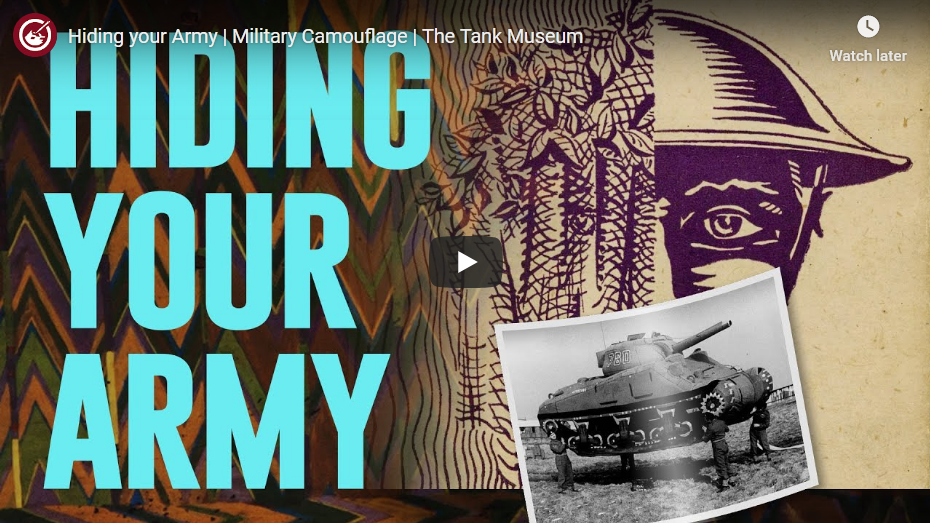
Hiding your Army | Military Camouflage | The Tank Museum

Filed under: Britain, France, Germany, History, Military, Russia, USA, WW1, WW2 — Tags: , , , , , , — Nicholas @ 04:00

The Tank Museum
Published 10 May 2020

Curator David Willey talks to you about military camouflage, from home! He takes a look at military uniform and vehicles.

https://tankmuseumshop.org/

Support the work of The Tank Museum on Patreon: ► https://www.patreon.com/tankmuseum
Visit The Tank Museum SHOP & become a Friend: ► https://tankmuseumshop.org/

Twitter: ► https://twitter.com/TankMuseum
Instagram: ► https://www.instagram.com/tankmuseum/
Tiger Tank Blog: ► http://blog.tiger-tank.com/
Tank 100 First World War Centenary Blog: ► http://tank100.com/

May 30, 2020

The Spanish Flu Influenza Pandemic 1918 – 1920 I THE GREAT WAR 1920

The Great War
Published 29 May 2020

Sign up for Curiosity Stream and get Nebula bundled in: https://curiositystream.com/thegreatwar

It was far deadlier than even the global war that had preceded it: The Influenza pandemic or Spanish Flu that hit the world between 1918 and 1920 in multiple waves.

» SUPPORT THE CHANNEL
Patreon: https://www.patreon.com/thegreatwar
Merchandise: https://shop.spreadshirt.de/thegreatwar/

» SOURCES
Barry, John M. The Great Influenza: The Story of the Deadliest Pandemic in History, (New York : Penguin Books, 2018)
Byerly, Carol R. ‘The U.S. Military and the Influenza Pandemic of 1918–1919’ Public Health Reports; 125 Supplement 3 (Apr. 2010)
Crosby, Alfred W, America’s forgotten pandemic : the influenza of 1918, (Cambridge : Cambridge University Press, 2003)
Hoover, Irwin Hood, Forty-two years in the White House, (New York : Houghton Mifflin Co., 1934)
Killingray, David & Phillips, Howard, (eds.) The Spanish Influenza Pandemic of 1918-19: New Perspectives, (London : Routledge, 2011)
Johnson, NP & Mueller J, ‘Updating the accounts: global mortality of the 1918-1920 “Spanish” influenza pandemic’ Bulletin of the History of Medicine. 76(1) (Spring 2002)
Dock, Lavinia et al., History of American Red Cross Nursing (1922)
Macdonald L. The Roses of No Man’s Land. (London : Penguin Books, 1993)
Robertson, John Dill, ‘Spanish Influenza — The Flu’ The Public Health Journal Vol. 9, No. 10 (Oct 1918)
Rosner, David, ‘”Spanish flu, or whatever it is…”: The paradox of public health in a time of crisis’ Public Health Reports, 125 Supplement 3, (Apr. 2010)
Stanford University, ‘The Influenza Pandemic of 1918’ https://virus.stanford.edu/uda/
“Surgeon General’s Advice to Avoid Influenza”: Washington Evening Star, (Sept. 22, 1918)
Wever, Peter C & van Bergen, Leo, ‘Death from 1918 pandemic influenza during the First World War: a perspective from personal and anecdotal evidence’ Influenza Other Respiratory Viruses, 8(5), (Sept 2014)
https://www.lefigaro.fr/livres/2008/1…

» SOCIAL MEDIA
Instagram: https://instagram.com/the_great_war
Twitter: https://twitter.com/WW1_Series
Reddit: https://reddit.com/r/TheGreatWarChannel

»CREDITS
Presented by: Jesse Alexander
Written by: Jesse Alexander
Director: Toni Steller & Florian Wittig
Director of Photography: Toni Steller
Sound: Toni Steller
Editing: Toni Steller
Mixing, Mastering & Sound Design: http://above-zero.com
Maps: Daniel Kogosov (https://www.patreon.com/Zalezsky)
Research by: Jesse Alexander
Fact checking: Florian Wittig

Channel Design: Alexander Clark
Original Logo: David van Stephold

A Mediakraft Networks Original Channel

Contains licensed material by getty images
All rights reserved – Real Time History GmbH 2020

May 27, 2020

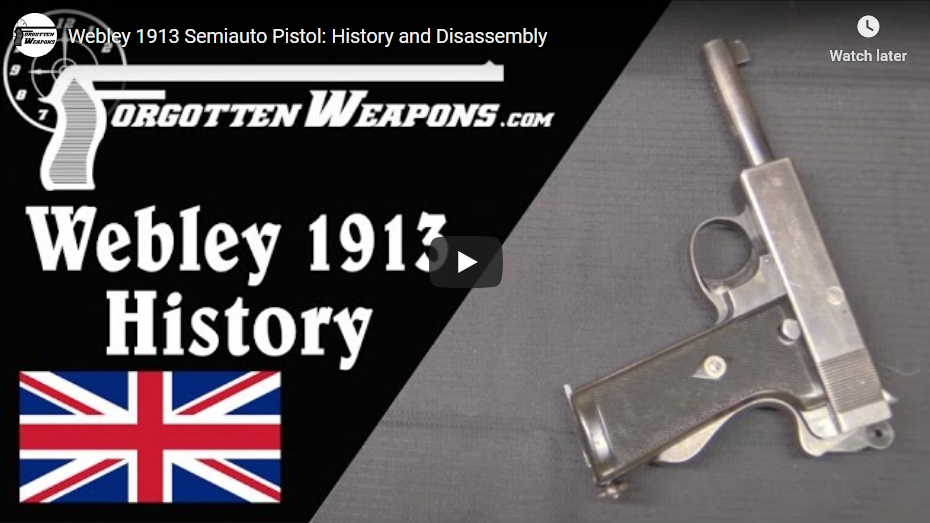
Webley 1913 Semiauto Pistol: History and Disassembly

Filed under: Britain, History, Military, Weapons, WW1 — Tags: , , , — Nicholas @ 02:00

Forgotten Weapons
Published 25 May 2017

William Whiting and the Webley company had high hopes for their self-loading pistols being adopted by the British military — but they never got the success they were hoping for.

After the poor performance of the Webley 1904 (https://www.youtube.com/watch?v=-hT38…) at trials, William Whiting decided to make sure his next attempt would be fully developed before he put it in the hands of the military. He did very well at that too, as the gun which would become the Model 1913 Webley did very well from its very first military tests. The Royal Navy was, in fact, quite enthusiastic about it, although the Army was not. The Navy would ultimately adopt the gun and purchase about 8,000 of them during World War One, while the Army acquired just a couple hundred and preferred to stick to its revolvers.

Thanks to Mike Carrick of Arms Heritage magazine for loaning me these pistols to bring to you!

Cool Forgotten Weapons merchandise! http://shop.bbtv.com/collections/forg...

http://www.patreon.com/ForgottenWeapons

If you enjoy Forgotten Weapons, check out its sister channel, InRangeTV! http://www.youtube.com/InRangeTVShow

May 22, 2020

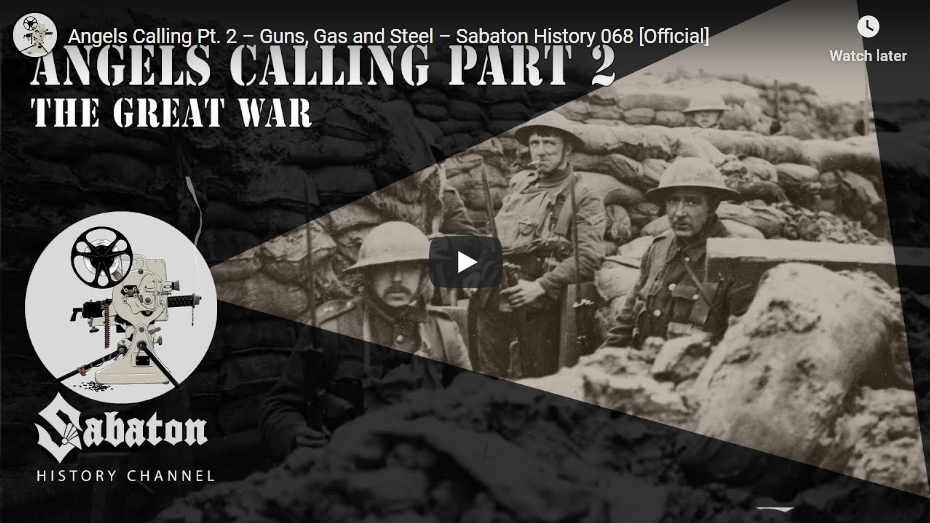
“Angels Calling” Pt. 2 – Guns, Gas and Steel – Sabaton History 068 [Official]

Filed under: Britain, Europe, France, Germany, History, Media, Military, WW1 — Tags: , , , , — Nicholas @ 04:00

Sabaton History
Published 21 May 2020

The shadow of trench warfare is a long one. In fact the soldiers at the front did not just rely on their guns and grenades alone, but on a wartime industry to keep them fighting. Everything had to be produced in the millions. Not only rifles, cartridges and shells, but boots, helmets, spades and everything else that was used on a daily basis. The Great War was a war that thrived on a nation-wide war-economy, the likes of which had never been seen or tried before.

We would like to thank the World of Tanks team for their contribution and help with the video filming. If you’re not yet a World of Tanks player, join the game and get your hands on cool in-game stuff for free via the link: https://redir.wargaming.net/w7fwclmx/…

Support Sabaton History on Patreon: https://www.patreon.com/sabatonhistory

Listen to “Angels Calling” on the album Attero Dominatus:
CD: http://bit.ly/AtteroDominatusStore
Spotify: http://bit.ly/AtteroDominatusSpotify
Apple Music: http://bit.ly/AtteroDominatusAppleMusic
iTunes: http://bit.ly/AtteroDominatusiTunes
Amazon: http://bit.ly/AtteroDominatusAmzn
Google Play: http://bit.ly/AtteroDominatusGooglePlay
Drücken Sie zum Aktivieren des Screenreaders ⌘+Wahltaste+Z. Informationen zu Tastaturkürzeln erhalten Sie, indem Sie ⌘Schrägstrich drücken.

Watch the Official Video of “Angels Calling” here:
https://www.youtube.com/watch?v=JyZ8w…

Check out the trailer for Sabaton’s new album The Great War right here: https://www.youtube.com/watch?v=HCZP1…

Listen to Sabaton on Spotify: http://smarturl.it/SabatonSpotify
Official Sabaton Merchandise Shop: http://bit.ly/SabatonOfficialShop

Hosted by: Indy Neidell
Written by: Markus Linke and Indy Neidell
Directed by: Astrid Deinhard and Wieke Kapteijns
Produced by: Pär Sundström, Astrid Deinhard and Spartacus Olsson
Creative Producer: Joram Appel
Executive Producers: Pär Sundström, Joakim Broden, Tomas Sunmo, Indy Neidell, Astrid Deinhard, and Spartacus Olsson
Post-Production Director: Wieke Kapteijns
Edited by: Karolina Dołęga
Sound Editing by: Marek Kaminski
Maps by: Eastory – https://www.youtube.com/c/eastory

Archive by: Reuters/Screenocean https://www.screenocean.com
Music by Sabaton.

Sources:
Imperial War Museum: (E(AUS) 1497),(Q 87945), (HU_91107), (Q 109611), (IWM Q 3001), (Q 69229), (Q 14945), (Q 5855), (Q 110355), (Q30009), (Q 9340), (Q 10450), (Q 70680)
Bundesarchive
National Archives NARA
Library of Scotland
Internet Archive Book Images
Bulgarian Archive State Agency
The icons from Noun Project by: Creative Mania, Chanut is Industries, Ben Davis, Vichanon Chaimsuk, Assyifa Art, chiccabubble, Nociconist, Vectors Marke, lastspark, faisal, Nun, Setyo Ari Wibowo, Mohamad Arif Prasetyo, Nibras@design,Creative Stall, Bruno Bosse, ghufronagustian, Karla Design,Gan Khoon Lay, Eucalyp, Anton, Marta Botter, Iconic, Daniel Turner, Naufal Hudallah, Phạm Thanh Lộc, Ruben Vh, Vectorstall, Icon Lauk, Mahmure Alp, Luke Anthony, Deemak Daksina, Sergey Krivoy, Andrejs Kirma, Rflor, Andrejs Kirma, Shovel by David, ProSymbols, Jake Dunham, noSimon Child, Wonmo Kang, Nubaia Karim Barsha, Nikita Kozin, Dolly Holmes, Collicon, Made by Made & Graphic Enginer
Flag of Spain recreated by HansenBCN and SanchoPanzaXXI

An OnLion Entertainment GmbH and Raging Beaver Publishing AB co-Production.

© Raging Beaver Publishing AB, 2019 – all rights reserved.

May 17, 2020

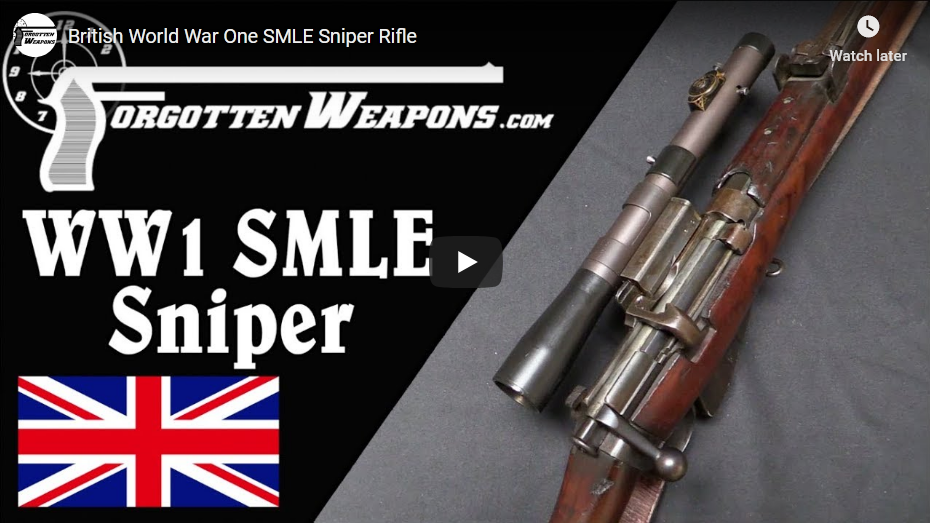
British World War One SMLE Sniper Rifle

Filed under: Britain, History, Military, Weapons, WW1 — Tags: , , — Nicholas @ 02:00

Forgotten Weapons
Published 17 Nov 2018

https://www.forgottenweapons.com/brit…

http://www.patreon.com/ForgottenWeapons

Cool Forgotten Weapons merch! http://shop.bbtv.com/collections/forg…

The British started World War One without a sniper program, but were quick to develop one once faced with the threat of well-trained German snipers. The initial equipment used by the British was a motley collection of commercial hunting rifles, but by 1915 the government was issuing contract to mount mostly 3x and 4x telescopes on SMLE and Pattern 1914 rifles. About 10,000 scoped sniper rifles were issued in total during the war using a variety of scopes and mount types (a standardized pattern would not be adopted until 1918). The example we have here today is the most common type; an SMLE with an offset Periscopic Prism Company scope using a 5-screw mount assembled by the same company. Later in the war the offset mounts would slowly fall out of favor to the center-mounted scopes, which allowed better shooting at the cost of being able to use stripper clips.

Contact:
Forgotten Weapons
PO Box 87647
Tucson, AZ 85754

May 15, 2020

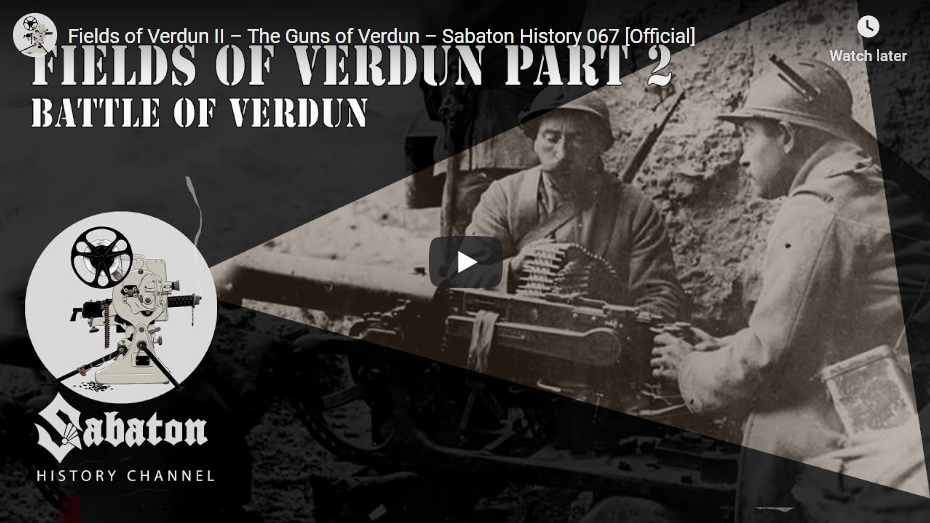
“Fields of Verdun” II – The Guns of Verdun – Sabaton History 067 [Official]

Filed under: France, History, Media, Military, WW1 — Tags: , , , , — Nicholas @ 04:00

Sabaton History
Published 14 May 2020

The Meat-Grinder. Dead Man’s Hill. The Bone-Mill. Verdun has many names, as it went down into history as a place of death and destruction. Never before did so many light and heavy artillery guns fire on such a small battlefield. It was the end of the classical field battle and instead turned into a 10 month siege that was fought not by flesh and blood, but by steel and chemistry.

We would like to thank the World of Tanks team for their contribution and help with the video filming. If you’re not yet a World of Tanks player, join the game and get your hands on cool in-game stuff for free via the link: https://redir.wargaming.net/w7fwclmx/…

Support Sabaton History on Patreon: https://www.patreon.com/sabatonhistory

Listen to “Fields of Verdun” on the album The Great War
CD: http://nblast.de/SabatonTheGreatWar
Spotify: https://sabat.one/TheGreatWarSpotify
Apple Music: https://sabat.one/TheGreatWarAppleMusic
iTunes: https://sabat.one/TheGreatWarItunes
Amazon: https://sabat.one/TheGreatWarAmazon
Google Play: https://sabat.one/TheGreatWarGooglePlay

Watch the Official Video of Fields of Verdun here:
https://youtu.be/xP8G-LwWNn0

Check out the trailer for Sabaton’s new album The Great War right here: https://www.youtube.com/watch?v=HCZP1…

Listen to Sabaton on Spotify: http://smarturl.it/SabatonSpotify
Official Sabaton Merchandise Shop: http://bit.ly/SabatonOfficialShop

Hosted by: Indy Neidell
Written by: Markus Linke and Indy Neidell
Directed by: Astrid Deinhard and Wieke Kapteijns
Produced by: Pär Sundström, Astrid Deinhard and Spartacus Olsson
Creative Producer: Joram Appel
Executive Producers: Pär Sundström, Joakim Broden, Tomas Sunmo, Indy Neidell, Astrid Deinhard, and Spartacus Olsson
Post-Production Director: Wieke Kapteijns
Edited by: Iryna Dulka
Sound Editing by: Marek Kaminski
Maps by: Eastory – https://www.youtube.com/c/eastory

Archive by: Reuters/Screenocean https://www.screenocean.com
Music by Sabaton.

Sources:
– Imperial War Museum: Q 23892, Q 87441, Q 23760, Q 88017, Q 78041, Art.IWM BUTE 290, Q 27526, Q 108345, Q 56987, Q 58386, Q 87945, Q 56546, Q 69971
– Bibliothèque nationale de France

An OnLion Entertainment GmbH and Raging Beaver Publishing AB co-Production.

© Raging Beaver Publishing AB, 2019 – all rights reserved.

May 14, 2020

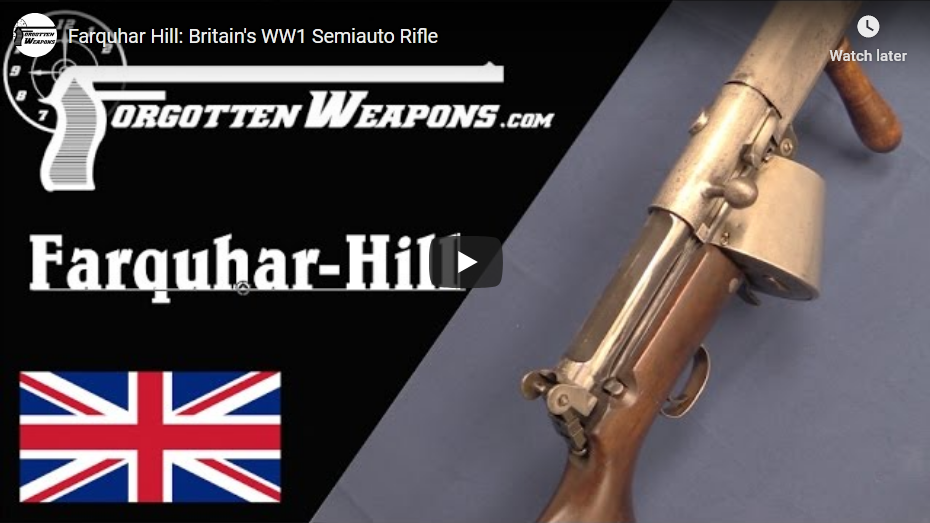
Farquhar Hill: Britain’s WW1 Semiauto Rifle

Filed under: Britain, History, Military, Weapons, WW1 — Tags: , , — Nicholas @ 02:00

Forgotten Weapons
Published 20 Feb 2017

The Farquhar-Hill was a semiauto rifle developed in Britain prior to World War 1. It was the idea of Birmingham gunsmith Arthur Hill, and financed by Aberdeen industrialist Mowbray Farquhar. The design began as a long-recoil system, but that was replaced with a unique spring-buffered gas operated mechanism before production began.

Basically, a gas port in the barrel taps gas off to a piston, which moved about 3 inches rearward and was then caught and held by a latch. At that point, the other end of the spring would be released to move backward, pushing on the bolt and bolt carrier, unlocking and cycling the action. This gave the rifle a very light felt recoil impulse, and also buffered the bolt from potential over-pressure cartridges.

The Farquhar-Hill was chambered for the .303 British cartridge, and in its military form fed from 19-round drum magazines. A large order for 100,000 rifles was placed by the British military, but cancelled when WW1 ended. A small number of the rifles were sold in the military pattern as well as in box magazine-fed sporting patterns, but Farquhar was more interested in pursuing military contracts, and would continue to work with machine gun designs going into the 1920s.

Thanks to the Institute of Military Technology for giving me access to these two rifles: http://www.instmiltech.com
http://www.patreon.com/ForgottenWeapons

Cool Forgotten Weapons merch! http://shop.bbtv.com/collections/forg…
If you enjoy Forgotten Weapons, check out its sister channel, InRangeTV! http://www.youtube.com/InRangeTVShow

May 9, 2020

History Summarized: The Meiji Restoration

Overly Sarcastic Productions
Published 8 May 2020

Japan may well have the record for World’s Speediest Industrialization, but how did they accomplish so much so fast without falling victim to Europe’s favorite 19th century pastime of “Colonization”? And how did Japan build up a Pan-Asian empire so darn quickly? All that and more in this deep-dive into the Meiji Restoration!

SOURCES & Further Reading:
Modern Japan: A Very Short Introduction by Goto-Jones.
The Japanese Empire: Grand Strategy from the Meiji Restoration to the Pacific War by Paine.
Bushido: The Soul of Japan by Nitobe.

THAT WACKY POLITICAL CARTOON: “Japan Makes Her Debut Under Columbia’s Auspicies” https://tile.loc.gov/storage-services…

This video was edited by Sophia Ricciardi AKA “Indigo”. https://www.sophiakricci.com/

Our content is intended for teenage audiences and up.

PATREON: https://www.Patreon.com/OSP

DISCORD: https://discord.gg/h3AqJPe

MERCH LINKS: https://www.redbubble.com/people/OSPY…

OUR WEBSITE: https://www.OverlySarcasticProductions.com
Find us on Twitter https://www.Twitter.com/OSPYouTube
Find us on Reddit https://www.Reddit.com/r/OSP/

May 3, 2020

How To… Drink Tea in a Tank | The Tank Museum

Filed under: Britain, Food, History, Military, Weapons, WW1, WW2 — Tags: , , — Nicholas @ 06:00

The Tank Museum
Published 30 Apr 2020

In the 1st episode of The Tank Museum’s brand new “How To” series, Wargaming’s Richard Cutland and historian James Holland explore how British tank crews managed to drink tea, while in a tank!

Download World of Tanks for free and claim your exclusive £15 starter kit: https://tanks.ly/2SiJPje
You can also share the invite code 1TANKIE with your friends.
Starter kit: Matilda Black Prince Tier V tank, 7 days of World of Tanks premium account & T-34-85M rental. Valid for new players only.

Using a WW1, WW2 and modern tank from The Tank Museum’s collection, the duo will discover how tea was made while soldiers were at war.

Support the work of The Tank Museum on Patreon: ► https://www.patreon.com/tankmuseum
Visit The Tank Museum SHOP & become a Friend: ► https://tankmuseumshop.org/

Twitter: ► https://twitter.com/TankMuseum
Instagram: ► https://www.instagram.com/tankmuseum/
Tiger Tank Blog: ► http://blog.tiger-tank.com/
Tank 100 First World War Centenary Blog: ► http://tank100.com/

April 30, 2020

Browning M1917: America’s World War One Heavy Machine Gun

Filed under: History, Military, USA, Weapons, WW1 — Tags: , , , — Nicholas @ 02:00

Forgotten Weapons
Published 14 Mar 2018

When the United States entered World War One, its military has a relatively tiny handful of machine guns, and they were divided between four different types, as the military budget was small and machine guns were not given much priority. However, since the failure of his gas-operated 1895 machine gun design to become a popular military item, John Browning had been working on a recoil-operated machine gun to replace it. This work became serious in 1910, and by 1915 Browning had met with Colt and agreed to give them exclusive license to his new design — and they began to work with him to refine and perfect it.

When the United States realized that it would be fighting in Europe and would need machine guns in 1917, it held an open trial for designs which Colt and Browning entered. The Browning gun was the undisputed star of the show, firing 40,000 rounds with only one parts breakage and no malfunctions that were not the fault of ammunition or belts. The gun was almost immediately adopted and pushed into production. Ultimately, Colt would allow the manufacture of its guns by Remington and New England Westinghouse, and Browning himself would accept a lump-sum royalty payment from the government for its use, which was about 3.5 million dollars less than he was contractually entitled to — out of patriotism and a desire not to profit too much from the war.

Browning 1917 machine guns would see only brief combat use in World War One, first tasting action in September of 1918. They would remain a staple of US military armament through World War Two, however, improved after the Armistice to the M1917A1 pattern. The gun we are looking at today is an original WW1 M1917, mounted on an equally rare M1917 original tripod.

http://www.patreon.com/ForgottenWeapons

Cool Forgotten Weapons merch! http://shop.bbtv.com/collections/forg…

If you enjoy Forgotten Weapons, check out its sister channel, InRangeTV! http://www.youtube.com/InRangeTVShow

April 27, 2020

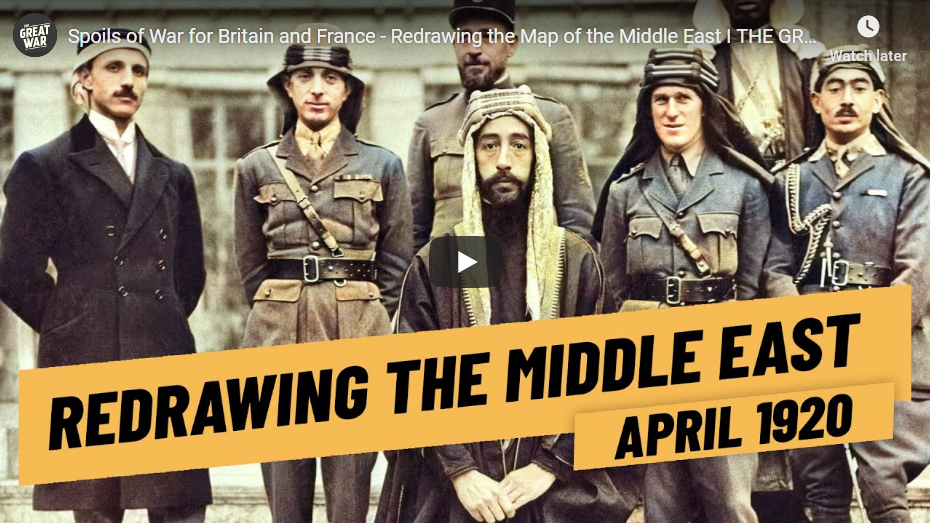
Spoils of War for Britain and France – Redrawing the Map of the Middle East I THE GREAT WAR 1920

The Great War
Published 25 Apr 2020

Sign up for Curiosity Stream and Nebula – and get 40% off annual plans right now: https://curiositystream.com/thegreatwar

100 years ago at the conference of San Remo, one thing became clear: Great Britain and France wanted control over the Middle East. Justified by the fighting in the previous years and painted as “liberators” of the Middle Eastern minorities, the new map of the Middle East emerged – under the cover of the League of Nations Mandate system.

» SUPPORT THE CHANNEL
Patreon: https://www.patreon.com/thegreatwar
Merchandise: https://shop.spreadshirt.de/thegreatwar/

» SOURCES
Karsh, Efraim & Karsh, Inari, Empires of the Sand: The Struggle for Mastery in the Middle East 1789-1923, (Cambridge, MA : Harvard University Press, 1999)

“Dans Le Levant” Le Temps, August 31, 1919 issue, https://gallica.bnf.fr/ark:/12148/bpt…

Lloyd George, David, Memoirs of the Peace Conference, (New Haven : Yale University Press, 1939) vol. 2

“Mounted Rifles Units” New Zealand History, https://nzhistory.govt.nz/war/aucklan…

Paris, Timothy J. Britain, The Hashemites and Arab Rule 1920-1925, (London : Frank Cass, 2003)

Provence, Michael, The Last Ottoman Generation and the Making of the Modern Middle East, (Cambridge : Cambridge University Press, 2017)

O’Neill, Robert, Official History of Australia in the War of 1914–1918, Volume VII – The Australian Imperial Force in Sinai and Palestine, 1914–1918, (Australian War Memorial, 1941)

“King-Crane Commission Digital Collection” Oberlin College Library. http://dcollections.oberlin.edu/cdm/s…

» SOCIAL MEDIA
Instagram: https://instagram.com/the_great_war
Twitter: https://twitter.com/WW1_Series
Reddit: https://reddit.com/r/TheGreatWarChannel

»CREDITS
Presented by: Jesse Alexander
Written by: Jesse Alexander
Director: Toni Steller & Florian Wittig
Director of Photography: Toni Steller
Sound: Toni Steller
Editing: Toni Steller
Mixing, Mastering & Sound Design: http://above-zero.com
Maps: Daniel Kogosov (https://www.patreon.com/Zalezsky)
Research by: Jesse Alexander
Fact checking: Florian Wittig

Channel Design: Alexander Clark
Original Logo: David van Stephold

A Mediakraft Networks Original Channel

Contains licensed material by getty images
All rights reserved – Real Time History GmbH 2020

« Newer PostsOlder Posts »

Powered by WordPress