
Popular Woodworking
Published on 2 Feb 2017Learn how to process rough stock by hand and make it project ready – it’s not as difficult as you might think. (Excerpted from “Build a Hand-Crafted Bookcase,” by Christopher Schwarz – available at ShopWoodworking.com as a video download or DVD.)
February 8, 2018
Stock Prep by Hand – Christopher Schwarz
Comments Off on Stock Prep by Hand – Christopher Schwarz
January 25, 2018
What Can You Do With a Miter Saw? Should You Get One? | WOODWORKING BASICS
Steve Ramsey – Woodworking for Mere Mortals
Published on 28 Jul 2017Learn what you need to know to get started using a miter saw for woodworking.
Comments Off on What Can You Do With a Miter Saw? Should You Get One? | WOODWORKING BASICS
January 23, 2018
Paul Sellers on the fascination of working with hand tools
Snipped from a longer post by Paul Sellers, discussing how he developed his woodworking beyond just sharing skills in person:
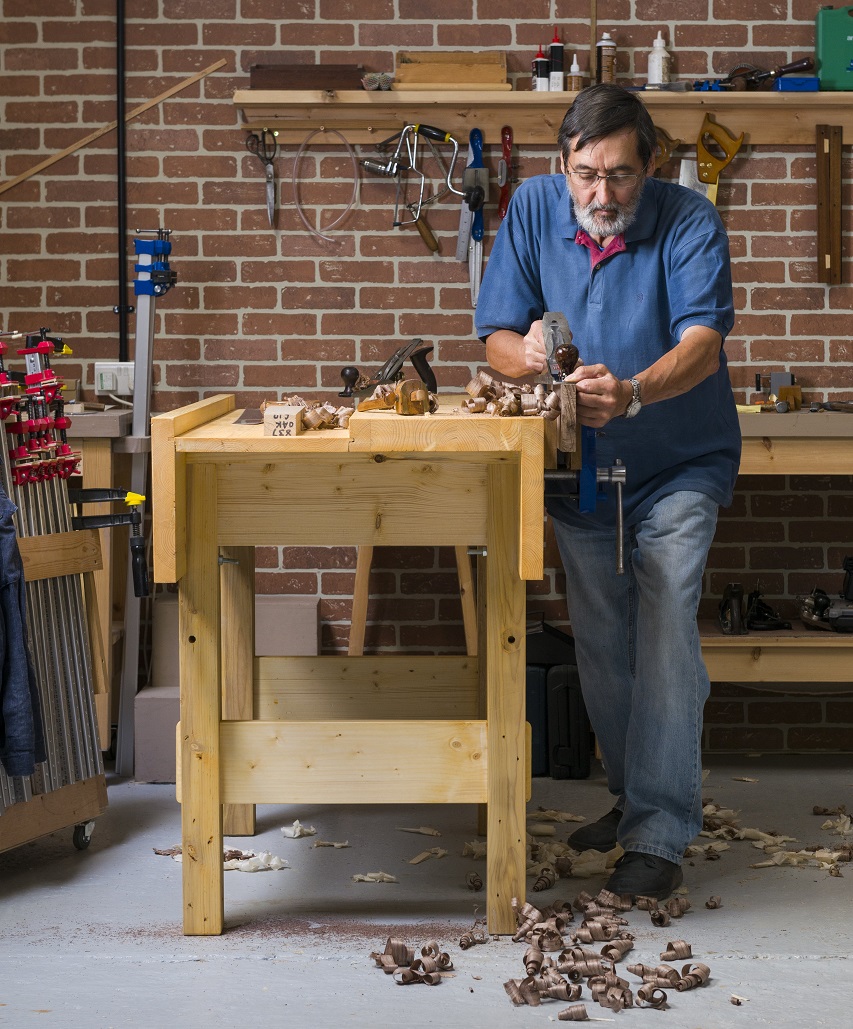
When I’m working in my shop, picking up tools, flipping wood and twisting a plane to a more effective cut, the response to my working with my hands has been something I mostly took for granted. But I became gradually aware of others watching me. I mean sometimes you just catch someone innocently watching somewhere, perhaps in a cafe or something. You glance up and catch them and they, embarrassed, look away. I became ever more conscious that people watched me working with a sort of silent fascination you to me my work was just ordinary work that I did all the time. Suddenly I realised that, ah! they’ve never seen such as this before. I saw then that people in the past three decades would be most unlikely to see such things. Even carpenters may never see or have seem a man like me recess hinges or plane the edge of a door, let alone dovetail a box corner or shape a mould to the edge of a mantle shelf with a block of wood holding a blade. Whereas it is till hard for me to imagine such a thing, it’s become a reality that 99.9% of people living in the world have never in their life seen a man like me working with his hands and working with hand tools instead of machines. To them such a thing has become as if they were watching something, well, magic. A shaving rises from the throat of a plane as if from some secretive place and by some special device and it twists away as a ribbon might flutter in a gentle breeze. It’s a spell plucked from a sorcerer’s hand book causing ribbons of pine to rise skyward before their very eyes. I might take such things for granted because I do see hundreds if not thousands of these things happen in a given day or week. They on the other hand never saw such as this before. If you’ve watched an experienced chef dice up onions with a knife live you’ll know what I mean. So it is with a chisel cut and a smoothing plane, a plough plane and a router plane.
The birth of new-genre woodworkers
When I first began my work training others, my own apprentices, young students and such, children too, it wasn’t at all that I needed more staff but that I couldn’t help myself. It’s always been the same. I never taught to make income because I always earned my income and then taught from my abilities as a producing craftsman. That’s the truth. Because I responded to the yearning of others to become crafting artisans, the outcome led to a new life. Of course they were always adult men who approached me. They wanted me to help them become one kind of woodworker or another. They would stay working with or alongside me for a year or two until they gained a level of proficiency they needed to function well and then they’d move on. Mostly there was some reciprocal gain, mostly it was always tipped in their favour not mine. In fact I would always lose money on the deal because money and making personal gain was never the reason I did it. But it was when I began teaching smaller children through to teenagers that I began seeing the deeper issues. Remember, I wasn’t a teacher being paid for the many evenings I invested in holding classes year in year out. Hundreds of children came to my classes several nights a week for two decades. I never charged a penny and let them use my own tools and supplied the wood until they acquired their own. It was a lot of work but it was such fun too. Dads and lads stood at benches from 7 till 9.30 each night and it was here that I began to see more deeply into the future possibilities of the yet unborn woodworkers be that the kids or their parents. This was an unexpected trip up. A sort of punctuation mark in my history if you will.
Mostly it was dads who came with their boys and it was here that I began to see a latent penchant in dads as they helped their sons to sharpen up chisels or reset a bumped plane. Somehow it was the need of their sons that pulled something out of the dads. You know what it’s like: something goes wrong with your child and you just can’t help yourself but pull out all of the stops to make it right. I would see the dads struggle to find an answer knowing that they might not have the answer at all, but try they might! I had to find the solution and find it I did. I started holding classes for adults so that they could reach the children that I couldn’t. People came to classes from all over the US and then they started flying in from other countries too. On the one hand it was ideal to have face to face contact this way, but on the other I knew the audience was much wider but that I could never reach them without some exponential changes being made.
So anyway, in my own small way I became something of a solution. By the end of two decades I had personally trained 5,000 woodworkers from 5 year olds to ancients through hands-on classes in beginning woodworking. It was and always has been hand tool woodworking and no one else had done such a thing on so wide a scale at that time. I knew I could steer dads to guide their sons and be a bridge for them to continue growing closer through the work in hand. Something that in my view had become increasingly lacking and today is getting far worse. Ultimately, my teaching the children meant also that the dads were gaining the same insights the kids were. Their maturer years combined with experience and strength meant that they could stay ahead of their children to help them. The outcome is more evident today than ever.
Comments Off on Paul Sellers on the fascination of working with hand tools
January 11, 2018
5 Tips For A Small Wood Workshop – making the most of your space
Rag ‘n’ Bone Brown
Published on 30 Jul 2016Five tips for making the most of the space in your small workshop.
Here are links to the other workshop project videos I mentioned:
Making a stand/mobile base for the electric planer http://www.youtube.com/watch?v=VP0X7F…
Making a workbench http://goo.gl/Z521Dk
Making a mitre saw station part 1 http://goo.gl/s4vtvC
Making a mitre saw station part 2 http://goo.gl/4N4iX5Thanks for watching! Please subscribe!
Comments Off on 5 Tips For A Small Wood Workshop – making the most of your space
January 5, 2018
Screws: What You Need to Know
Essential Craftsman
Published on 27 Jun 2017Screws are one of the greatest fasteners available. There is a screw for almost every application. I cover some of the basics necessary for understanding the advantages of the modern screw.
I can’t find my parachute bag on amazon. The one there appears to be a cheap knock/off of sorts……would love it if some one could find out if the real ones are still available somewhere. I’ll try and get some pictures up!
Comments Off on Screws: What You Need to Know
December 29, 2017
How to make a Rag-in-a-can Oiler | Paul Sellers
Paul Sellers
Published on 8 Feb 2017Paul demonstrates how to make a Rag-in-a-can Oiler. A useful accessory for smoothing cuts with saws and planes.
For more information on these topics, see https://paulsellers.com or https://woodworkingmasterclasses.com
Comments Off on How to make a Rag-in-a-can Oiler | Paul Sellers
December 11, 2017
French Cleats – How to hang Wall Cupboards
Greg Virgoe
Published on 23 Apr 2017In this video we explain how to hang your wall cupboards using a French Cleat system. We demonstrate how the french cleat works and go on to hang the cupboards we made in the previous video.
Comments Off on French Cleats – How to hang Wall Cupboards
November 21, 2017
Which Plane Should I Buy First? | Paul Sellers
Paul Sellers
Published on 10 Nov 2017Which plane should I buy first? A common question for beginner woodworkers. Paul goes through a few different models to show where he would recommend most.
For more information on these topics, see https://paulsellers.com or https://woodworkingmasterclasses.com
Comments Off on Which Plane Should I Buy First? | Paul Sellers
November 18, 2017
The Best Way to Set Up a Bandsaw!
The Wood Whisperer
Published on 6 Jul 2017Back in 2007, I posted a video on Bandsaw Setup. The method I demonstrated was one I learned from other woodworkers as well as numerous books and manuals. While the method works perfectly, it overcomplicates things and employs a couple of unnecessary steps, namely achieving coplanarity of the wheels and eliminating drift. Four years later, I became aware of a video from The Woodworking Shows featuring Alex Snodgrass and his simpler (and nearly foolproof) method for bandsaw tuneup. I have since become friendly with Alex and asked him if he’d be willing to come out to my shop to film his setup method. He agreed and here we are! I can say without a doubt that this is the BEST way to set up a bandsaw.
Align the Blade
Install the blade and apply just enough tension to keep the blade securely on the wheels. Use the tracking adjustment while turning the wheel by hand to line up the deepest part of the gullet with the center of the top wheel.
Tension the Blade
You can usually ignore the tenon meter on most bandsaws as they are notoriously inaccurate. Instead, tension the blade until your finger is only able to deflect the blade by about 1/4″. This test should be done at the back of the saw where nothing can get in the way of the blade. The amount of pressure you apply to the blade shouldn’t result in turning your finger white. If that happens, you’re pushing too hard. After the tension is set, make sure the blade is still tracking properly with the gullet in the center of the top wheel.
Side Guides (Front to Back)
The front of the side guides should be located about 1/16″ back from the deepest part of the blade gullets. You don’t want the side guides to contact the cutting teeth of the blade since the teeth flare out at a slight angle. This adjustment is made to both the top and bottom guides.
Thrust Bearings
Adjust the thrust bearings carefully so that they do NOT rotate while the blade moves, but they DO begin to rotate as soon as light pressure is applied to the blade. Spend the necessary time to get this adjustment just right. Of course, you’ll do this adjustment to both the top and bottom guides.
Side Guides (Side to Side)
Just like the thrust bearing adjustment, the side guides should be as close to the blade as possible without actually touching. So when the blade moves the bearings should be stationary. When a slight amount of pressure is applied to the blade as its moving, the bearings should spin.
Square the Table
Using a 2×4 or 2×6, make a partial cut into the face of the board. Turn the saw off, flip the board around and try to get the blade to slide into the cut slot. If it slides in easily and without resistance, we know the table is 90 degrees to the blade. If it doesn’t slide in, make adjustments to the table and cut/test again. The wider the board is, the more accurate this test will be.
Align the Fence
The fence can be aligned parallel with the body of the blade using nothing more than a ruler. Be sure the ruler is resting on the body of the blade between the teeth. With a long enough ruler you can easily align the fence by eye. Alex shows us the F.A.S.T system which is a simple and convenient way to do this same task.
Test Cut
Since the overall goal of this setup process is to prepare for resawing, a good test is to slice off a thin veneer from a jointed and planed board. In our first test cut we were able to slice off a piece that was .016″ or just over 1/64″. This is way thinner than anything I’d ever need but it’s pretty cool to see that the saw is capable of making such a delicate cut.
Special thanks to Alex Snodgrass and Carter Products for helping make this video possible. Happy bandsawing!
Comments Off on The Best Way to Set Up a Bandsaw!
November 7, 2017
How To: Make French Cleat Storage
Make It Now
Published on 22 Dec 2016Today I’m going to be adding some storage options for the French cleat wall I built a little while back. If you haven’t seen that video, check it out and then come back to this one.
Comments Off on How To: Make French Cleat Storage
October 27, 2017
How to Make Small Dovetail Boxes | Episode 3 | Paul Sellers
Paul Sellers
Published on 16 Oct 2017This is one of our very early Woodworking Masterclasses series from 2013. In the third episode of this dovetail series Paul finishes the simple chisel tray. Watch it carefully. This episode shows quite simple steps but it contains some great, and quite complicated, planing techniques.
Comments Off on How to Make Small Dovetail Boxes | Episode 3 | Paul Sellers
October 23, 2017
It’s legal to sell 2×4 lumber that’s not actually 2″ by 4″
Not only is it legal, that’s the way construction lumber has been marketed and sold for decades. A recent Illinois case against US DIY chain Menards was dismissed recently:
A federal judge has slammed the door on the Illinois lumber shoppers who sued Menards claiming it deceived them about the size of its 4x4s.
Saying no reasonable consumer would regard Menards’ descriptions of its lumber the way plaintiffs Michael Fuchs and Vladislav Krasilnikov said they did, the judge last week dismissed the would-be class action lawsuit against the Wisconsin-based home-improvement chain.
The decision by U.S. District Judge Edmond Chang throws out a case in which Menards was accused of deception because it marketed and labeled its 4x4s without specifying that the boards measure 3½ by 3 ½ inches.
So-called dimensional lumber — 2x4s, 4x4s, 2x6s and such — is commonly sold by names that do not specify the measurements of the pieces. The longstanding industry convention is recognized by the U.S. Department of Commerce, which distinguishes between the “nominal” designations for pieces of lumber and their actual size. The department says a 2×4, for example, can measure 1½ inches thick by 3½ inches wide.
The distinction between the name and the actual dimensions stems from the fact that lumber, when it is produced, typically is trimmed to smooth it after the initial rough cut, Chang said in his decision.
Comments Off on It’s legal to sell 2×4 lumber that’s not actually 2″ by 4″
October 22, 2017
IKEA’s strengths and weaknesses, from a consumer point of view
Paul Sellers posted an article on his woodworking blog, reacting to some British journalists praising IKEA’s “democratisation of design”:
Visually neat and relatively cheap at first glance, but they are basic and they resolve the need in a new and young family for storage. The pinnacle of three-dimensional cubism!
(photo from PaulSellers.com)Yup! a couple of newspaper writers (maybe more, knowing British journalism) reported the same thing in a short space of time, both hailing IKEA as a ‘democratising’ force revolutionising people’s perspectives on furniture design. Both articles were interesting in the way some articles can be, you know, not contributing much to society really, but time filling on a lazy Sunday. What actually struck me most between their somewhat opposing points of views was the unifying thread in their use of the terms “democratisation of design” and “democratising design and the theme of creating affordable, non-fusty furniture for the masses.” As far as I have seen through the years it is not so much IKEA’s ability to design but more their ability to produce zero- or minimalist-design products that seem less to be concepts of style, shape or form but mostly the selling of square-edged, styleless, plank-type items in the form of very, very plain boxes. Yes, I do understand the needs of young families for low cost storage and first year students to furnish their rooms, but democratisers of design!
Unpretentious though their lines are, you can hardly say they are designs so much as meagre assemblies and of course assemblies you generally have to take care in the way they are used because the selling points are their lightweight cheapness, transportability, dismantle-ability and simple (or complex) self-assembly products. You might be better to strike out into similar fashion statements rejecting the classics of old and adopt an equally classless line of unimagination by using old scaffold planks for dining tables and benches or, say, a shipping pallet coffee table on commercial galvanised swivel casters.

Elizabeth and I used to enjoy visiting a furniture store up in Peterborough, but about a year or so back, they stopped carrying the kind of furniture we liked and started stocking exactly the sort of stuff Paul is talking about. Industrial chic is all very well, but these pieces looked like they’d been thrown together at the last possible second as a student project for a college design course: the industrial fittings were cobbled together as crudely and as shoddily as possible, with no eye to either aesthetics or sturdiness. They were literally props that might appear in the background of a Victorian or Edwardian shop floor scene in an off-, off-, off-Broadway kind of production.
I’m far from a curmudgeon on the topic of home decor and furniture, but the pieces in that store were expensive crap. You can do the industrial chic look, or more modern variations using cast-offs from all sorts of places. My friend Brendan, in his first couple of apartments, had no spare cash at all so he scrounged up pretty much all of his furniture from around town. He had the weirdest collection of decades-old store signs, former display cabinets from different eras, and I don’t know what else, but he has a great eye for design, so no matter how eclectic it all was, he managed to make it look appealing and (somehow) integrated. That was clearly the ideal for the owners of the Peterborough furniture store, but they missed the mark by a very large amount.
I never liked lazy, press-release type journalism (as we are used to in British woodworking magazines) because it can be the same as lazy design work; both lacking any true imagination. But the two authors, each celebrating IKEA’s birth for opposite and then too the same reasons, seemed more focussed on this issue of IKEA somehow ‘democratising’ something rather than considering what could be in essence more a diktat. I question whether IKEA makes products that people actually want or makes people want what they make by virtue of cheapness and driving out competition, but then what do I know? I know this though, IKEA only sells what it wants you to buy, sells stuff so cheap that no one else can compete, and devalues the market by forcing down prices to a level that promotes mainly quite dumbed down designs. I don’t ever recall much in IKEA’s selling centres that I would describe as at all imaginative. People buy there because it’s cheap. To zone in on the reporting world, on Beeb 4 a day later a reporter interviewed some head of IKEA UK and allowed way too much waffling claptrap boasting IKEA’s products were now no longer going into the landfill after a short lifespan as the reporter suggested, which is of course absolutely true, but onto the secondhand market, which IKEA wants to include in its ‘widening circle of circulation’.
[…]
On the one hand Rhiannon Cosslett article in the Guardian describes IKEA accurately as the “symbol of impermanence”, but she also follows the same track as India Knight in stating that this IKEA is enabling people to shed their ties with “snobbery regarding middle-class home decoration”. The woman reporting in the Times, India Knight, describes the pretension of owning a semi (duplex, USA) and adding furniture that emulates the chintz (a word used in the two articles) of the rich and famed owners living in UK mansions past as a kind of mindless hypocrisy. I agree to some degree, but then there are those millions of others who follow the IKEA trending in equally mindless ways buying into its philosophies purely on the basis that it’s IKEA, as though IKEA holds the keys to concepts of good design. This, in my mind at least, shows how lacking we can become in discerning just what a good design is. I might liken IKEA designs to all the nations County Councils use of standardised street and buildings signage. Yes, they work effectively, but only because they have a created dull and unimaginative examples that stand out because of dullness. The main difference here of course is that for safety reasons the County Councils have a get out clause. I have yet to walk through an IKEA store without thinking (smelling too) MDF, pressed fibreboard, resins and plastic but how is it even possible that any company could put so much effort into creating so much artificiality.
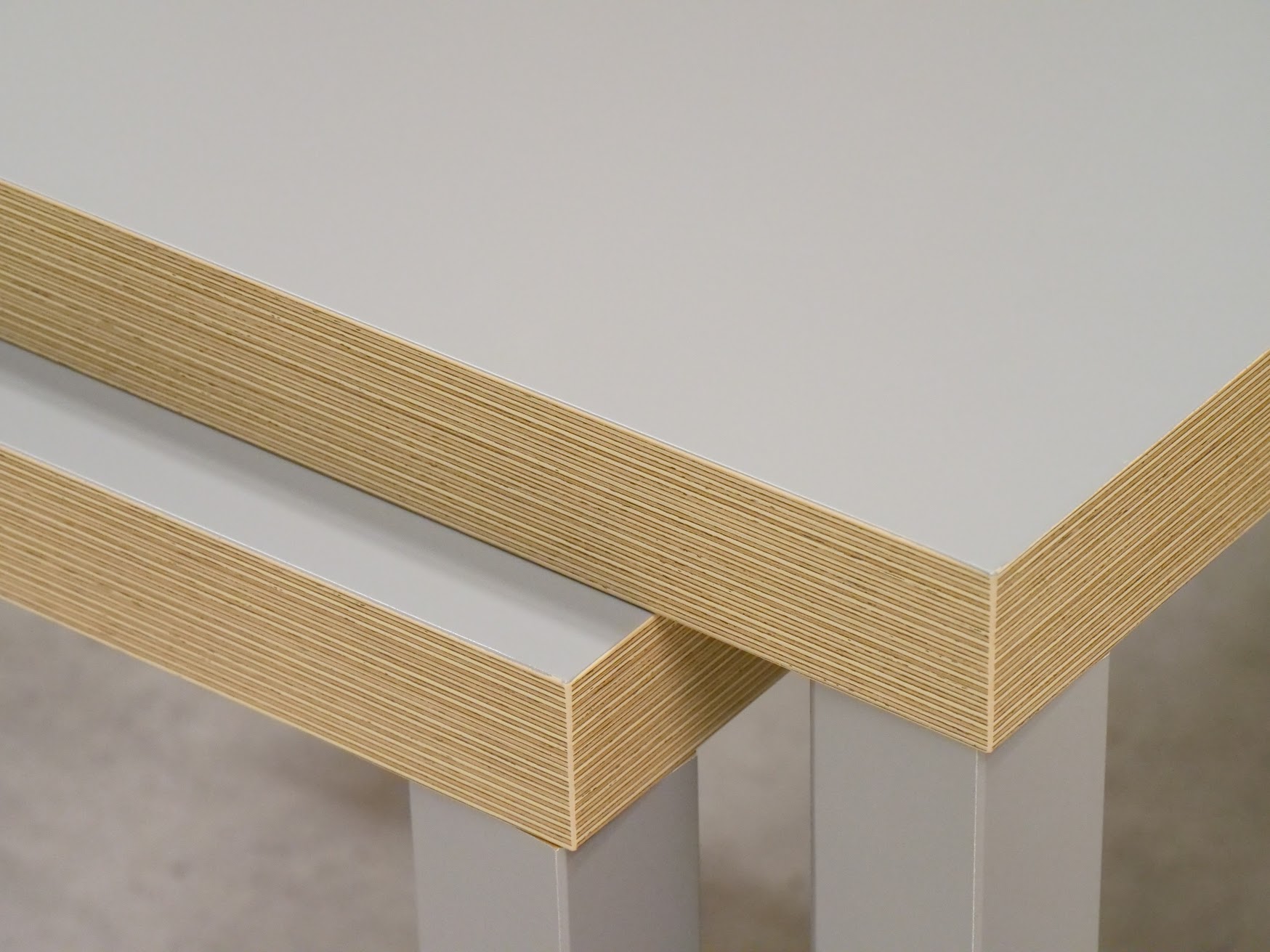
Nope, not plywood, faux ply ‘engineered hollow core particle board.’
(Photo from PaulSellers.com)
Comments Off on IKEA’s strengths and weaknesses, from a consumer point of view
October 20, 2017
How to Make Small Dovetail Boxes | Episode 2 | Paul Sellers
Paul Sellers
Published on 9 Oct 2017This is one of our very early Woodworking Masterclasses series from 2013. In this second episode Paul continues to show how to cut the dovetail and also shows how to prepare the box for glue-up. This requires a few hand plane tricks that will prove helpful in future projects and are well worth watching! Enjoy!
For more information on these topics, see https://paulsellers.com or https://woodworkingmasterclasses.com
Comments Off on How to Make Small Dovetail Boxes | Episode 2 | Paul Sellers
October 12, 2017
How to Make Small Dovetail Boxes | Episode 1 | Paul Sellers
Paul Sellers
Published on 2 Oct 2017In this first episode of one of our first Woodworking Masterclasses series, Paul shows how to prepare the wood and cut the tails for the dovetails. These steps will be repeated for other boxes in this series. It will show how the basics can be adapted to more complex projects.
For more information on these topics, see https://paulsellers.com or https://woodworkingmasterclasses.com
Comments Off on How to Make Small Dovetail Boxes | Episode 1 | Paul Sellers


