
World War Two
Published 2 Feb 2023Poland, occupied, abandoned or even threatened by her allies is left to fight her own war. A war that under the influence of internal and external forces looks more and more like a full blown civil war inside the world war.
(more…)
February 4, 2023
Poland’s Descent into Civil War – War Against Humanity 097
Comments Off on Poland’s Descent into Civil War – War Against Humanity 097
“Ghost Riders In The Sky”
Audio Saurus
Published 30 Oct 2015Neil LeVang in 1961 on The Lawrence Welk Show.
Comments Off on “Ghost Riders In The Sky”
QotD: Leftists against humanity
Yesterday in a group, a friend said what is obvious about the left is that they seriously oppose human reproduction and longevity. Ultimately human life, I guess.
Here’s the list as to why:
NOT AN EXHAUSTIVE LIST:
1) Pushing to maximize abortion
2) Pushing to maximize homosexuality
3) Multiple different initiatives to make child rearing more difficult and expensive including
a) Ramping up the intensity of social services scrutiny, effectively necessitating high intensity “helicopter parenting”
b) Turning schools into indoctrination factories that don’t prepare children to function independently but do prepare them to have constant fights with their parents over their indoctrination
c) Making healthcare more expensive through constantly ramping regulation, making the actual having of children more difficult and prohibitively expensive
d) Pushing to nationalize healthcare, granting them further power over who lives or dies – allowing limitation of IVF, and also
e) legitimizing legal euthanasia while also pushing to make healthcare decisions for the public (see Canada right now)4) Pushing from other regulatory angles to make the de facto standard a two-income family, ensuring children are raised in daycares and further pushing family budgets to the brink
5) Using the student loan system to turn the bulk of reproductive age, upwardly mobile people into collateral in a deal that passes billions of dollars directly from the US government to the same system that then indoctrinates those kids to the point of full societal dysfunction; encouraging, as much as possible, the use of sex as entertainment ONLY
6) Turning sterilizing yourself into the hot new fad for kids
7) Turning the simple identification of gender into a minefield so that even sex between people who aren’t mutilating themselves is suddenly difficult to even consider
8) Willfully manipulating nursing homes into putting elderly people in a position where they are MOST LIKELY to die during COVID
9) Adopting COVID policies which foreseeably shut down cancer diagnostics and treatment for almost two years, which is the most likely cause of the 10 fold increase in the rate of cancers since the COVID lockdowns (although I can’t entirely discount that the vaccines themselves are partially responsible because, sing it with me now, you can’t ensure the long term safety of something that hasn’t been around long enough to have long term safety data, which is why we do clinical trials and not mass experiments on the general public. I note in passing that the drug companies are so trustworthy they demanded legal indemnity as a condition of participating, while swearing blind that the product was safe and effective even though it was physically fucking impossible for them to have data to back that up due to minor problems like the requisite quantity of time not passing.)
Sarah Hoyt, “I Don’t Believe in Aliens”, According to Hoyt, 2022-10-31.
Comments Off on QotD: Leftists against humanity
February 3, 2023
A spectre is haunting Ontario politics: the spectre of [Shock! Horror!] American-style healthcare!
Everyone in Canada has heard alarming stories of people in the United States being presented with five- or six-figure bills for hospital care, and any hint that one of our provincial healthcare systems might move in that direction scares the pants off almost everyone. Politicians know this well, and salivate at the chance of deploying charges that their opponents favour “American-style” changes to our system because it’s a guaranteed vote-winner. None of it has to be true — very few Canadians know much about US systems aside from the horror stories — but it’s always effective.
In The Line, Harrison Ruess makes the sensible point that there are more healthcare systems in the western world than those of Canadian provinces and our closest neighbour:

Toronto General Hospital in 2005.
Photo via Wikimedia Commons.
First, to be emphatic on this point, we need to be realistic about where our system ranks globally.
It is truly bewildering to me the lengths that otherwise smart and empathetic Canadians will go to to defend the status-quo approach to health care in Canada. The results we get, versus the money we spend, is simply not brag-worthy. The argument that our system works great, if only we threw more money at it, doesn’t stand up to scrutiny.
Is our health care okay? Sure. Decent? Probably. Is it great? Hardly. Could we do better? Yes, much. Do we need to spend more? Maybe a tad, but not likely much, if any. To wit:
According to OECD data, on life expectancy Canada ranks 16th. On mortality rates from avoidable causes, we’re 23rd. On cancer survival rates we range from 13th down to 18th, depending on the cancer type. On the number of one-year-olds vaccinated for diphtheria, tetanus and pertussis, we rank an abysmal 37th (even the U.S. is higher here at 27th. Gulp.). One area where we do rank closer to the top is spending as a proportion of GDP, where we sit seventh.
World Health Organization (WHO) data wasn’t any more flattering, where Canada’s health care ranked 30th in overall performance despite being 10th in spending. The Commonwealth Fund ranks Canada 10th out of 11 in performance and 6th out of 11 in spending. In report after report Canadians aren’t getting the outcomes we need or want based on the money we’re spending on our current system.
Besides for reasons of nostalgia, why would anyone spend their energy defending these sorts of results? “We’re 16th! We’re 16th!” is hardly a chant you’d hear at a rally. It’s time to do better. And I get the feeling most people recognize this – certainly when you get onto Main Street.
Ipsos polling from December 2021 reported that 55 per cent of Canadians are “somewhat satisfied” with their health care, alongside 22 per cent that are “somewhat dissatisfied.” I.e. three quarters of Canadians find themselves in the middle of the road on the quality of our health care. This seems about right — mediocre support for mediocre health care. (The strongly satisfied and strongly dissatisfied were about even, at 12 per cent and 10 per cent respectively.)
But today Canadians are also, rightly, very worried. Leger polling in January 2023 showed that 86 per cent of Canadians are worried about the state of our health care.
Comments Off on A spectre is haunting Ontario politics: the spectre of [Shock! Horror!] American-style healthcare!
QotD: Democracy
Democracy always devolves into ochlocracy, as some Dead White Male said, but since the last Dead White Male died centuries before Twitter, he didn’t realize that ochlocracy was just a pit stop on the way to kakistocracy.
“Democracy” only works — if, in fact, it does work, which is a very fucking open question — in a stakeholder society. When Madison and the boys pledged their lives, fortunes, and sacred honor to each other, they meant all of that literally — Washington could well have died a pauper, Alexander Hamilton ordered his cannon to fire on his own house, and so on. They had skin in the game, which is why they were so public-spirited — if they screwed up, they personally would have to live with the consequences. These days, of course, getting “elected” — or even selected to run for “election” — is a free pass to Easy Street. The rules apply only to the plebs, and only so long — and, insh’allah, the day is soon coming — as we have to pretend to let them “vote” on stuff.
Severian, “The Stakeholder State”, Rotten Chestnuts, 2020-01-22.
February 2, 2023
Gerry Rafferty’s “Baker Street” lyrics
When I first subscribed to Ted Gioia’s Honest Broker substack, I figured I’d find one or two posts a month that I found interesting enough to share on the blog … I have to be careful not to link to several of his posts every week. He writes a lot about the music industry, so when this popped up in my inbox, I assumed it was Ted and got to the point of scheduling it before I realized it was Jon Miltimore instead:
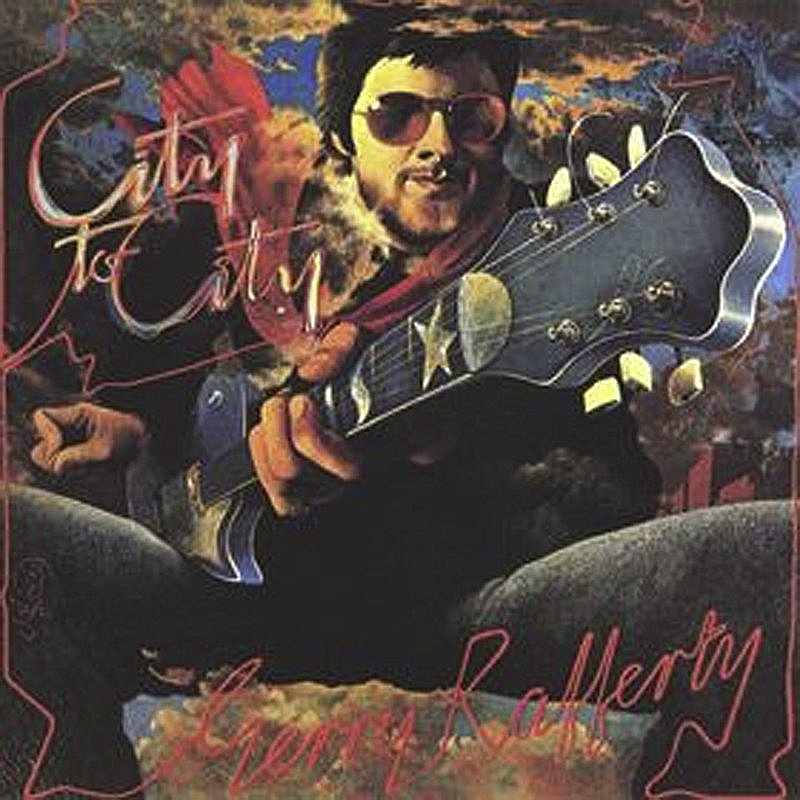
I was recently in a bar having dinner with a friend when Gerry Rafferty’s hit 1978 song “Baker Street” came on. When my friend mentioned that he loved the song, I agreed and noted the song’s powerful lyrics.
“Really?” he responded. “I never paid much attention to the lyrics.”
Most people, of course, remember “Baker Street” for its wailing saxophone, and my friend was no different. Nor was I, for many years. But at some point—I don’t know when—I began to pay attention to the song’s lyrics. They go like this:
Winding your way down on Baker Street
Light in your head and dead on your feet
Well, another crazy day
You’ll drink the night away
And forget about everythingThis city desert makes you feel so cold
It’s got so many people, but it’s got no soul
And it’s taken you so long
To find out you were wrong
When you thought it held everythingYou used to think that it was so easy
You used to say that it was so easy
But you’re trying, you’re trying now
Another year and then you’d be happy
Just one more year and then you’d be happy
But you’re crying, you’re crying nowWay down the street there’s a light in his place
He opens the door, he’s got that look on his face
And he asks you where you’ve been
You tell him who you’ve seen
And you talk about anythingHe’s got this dream about buying some land
He’s gonna give up the booze and the one-night stands
And then he’ll settle down
In some quiet little town
And forget about everythingBut you know he’ll always keep moving
You know he’s never gonna stop moving
‘Cause he’s rolling, he’s the rolling stone
And when you wake up, it’s a new morning
The sun is shining, it’s a new morning
And you’re going, you’re going homeThe lyrics — in contrast to the seductive sax and upbeat strings and keyboard — are rather dark. It’s not your typical rock/pop song about finding or losing love.
I’ve never heard “Baker Street” explained, but my take on the song is this: It’s about two lonely people in a city. They find comfort in booze, chemicals, and (occasionally) each other. The relationship is probably dysfunctional, but they are struggling to change. Struggling to grow. Struggling to find meaning.
“Baker Street” peaked at #3 in the UK and held the #2 spot in the U.S. for six consecutive weeks. I think part of the reason the song was such a success is because the lyrics touched on something a little deeper than most rock tunes, something that resonated with audiences. And though the song is 40 years old now, I have a hunch it resonates even more now than it did then.
February 1, 2023
It’s the job of the music critic to be loudly and confidently wrong as often as possible
Ted Gioia points out that a lot of musical criticism does not pass the test of time … and sometimes it’s shown to be wrong before the ink is dry:
When I was in my twenties, I embarked on writing an in-depth history of West Coast jazz. At that juncture in my life, it was the biggest project I’d ever tackled. Just gathering the research materials took several years.
There was no Internet back then, and so I had to spend weeks and months in various libraries going through old newspapers and magazines — sometimes on microfilm (a cursed format I hope has disappeared from the face of the earth), and occasionally with physical copies.
At one juncture, I went page-by-page through hundreds of old issues of Downbeat magazine, the leading American jazz periodical founded back in 1934. And I couldn’t believe what I was reading. Again and again, the most important jazz recordings — cherished classics nowadays — were savagely attacked or smugly dismissed at the time of their initial release.
The opinions not only were wrong-headed, but they repeatedly served up exactly the opposite opinion of posterity.
Back in my twenties, I was dumbfounded by this.
I considered music critics as experts, and hoped to learn from them. But now I saw how often they got things wrong — and not just by a wee bit. They were completely off the mark.
Nowadays, this doesn’t surprise me at all. I’m painfully aware of all the compromised agendas at work in reviews — writers trying to please an editor, or impress other critics, or take a fashionable pose, or curry favor with the tenure committee, or whatever. But there is also something deeper at play in these huge historical mistakes in critical judgments, and I want to get to the bottom of it.
Let’s consider the case of the Beatles.
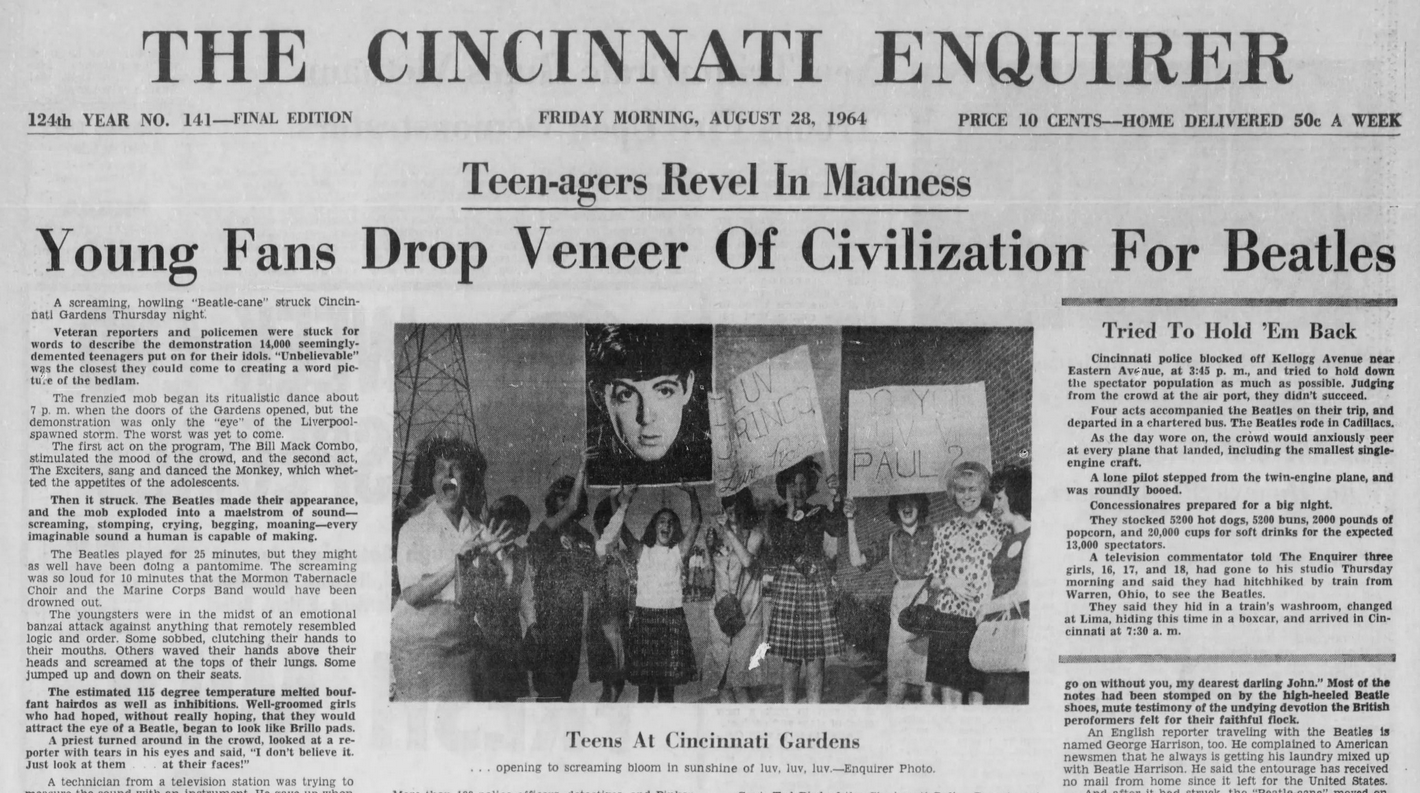
When the Beatles went on the road, stories like this followed them everywhere
On the 50th anniversary of Sgt. Pepper’s Lonely Hearts Club Band, the New York Times bravely reprinted the original review that ran in the newspaper on June 18, 1967. I commend the courage of the decision-makers who were willing to make Gray Lady look so silly. But it was a wise move — if only because readers deserve a reminder of how wrong critics can be.
“Like an over-attended child, ‘Sergeant Pepper’ is spoiled,” critic Richard Goldstein announced. And he had a long list of complaints. The album was just a pastiche, and “reeks of horns and harps, harmonica quartets, assorted animal noises and a 91-piece orchestra”. He mocks the lyrics as “dismal and dull”. Above all the album fails due to an “obsession with production, coupled with a surprising shoddiness in composition”. This flaw doesn’t just destroy the occasional song, but “permeates the entire album”.
Goldstein has many other criticisms — he gripes about dissonance, reverb, echo, electronic meandering, etc. He concludes by branding the entire record as an “undistinguished collection of work”, and even attacks the famous Sgt. Pepper’s cover — lauded today as one of the most creative album designs of all time — as “busy, hip, and cluttered”.
The bottom line, according to the newspaper of record: “There is nothing beautiful on ‘Sergeant Pepper’. Nothing is real and there is nothing to get hung about.”
How could he get it so wrong?
Comments Off on It’s the job of the music critic to be loudly and confidently wrong as often as possible
January 31, 2023
The Allied Flying Aces of World War Two – Documentary Special
World War Two
Published 30 Jan 2023Young, daring, and handsome, the Allied fighter aces of World War Two have captivated the public with their thrilling exploits. Join us as we take a look at the top scorers! Thanks to Curiosity Stream for sponsoring today’s video.
(more…)
Comments Off on The Allied Flying Aces of World War Two – Documentary Special
“Thorstein Veblen’s famous ‘leisure class’ has evolved into the ‘luxury belief class'”
Rob Henderson had a particularly difficult childhood, but thanks to his own efforts ended up going to Yale after leaving the military. He discovered a very different world when he began his studies:

I was bewildered when I encountered a new social class at Yale four years ago: the luxury belief class. My confusion wasn’t surprising given my unusual background. When I was three years old, my mother was addicted to drugs and my father abandoned us. I grew up in multiple foster homes, was then adopted into a series of broken homes, and then experienced a series of family tragedies. Later, after a few years in the military, I went to Yale on the GI Bill. On campus, I realized that luxury beliefs have become fashionable status symbols. Luxury beliefs are ideas and opinions that confer status on the rich at very little cost, while taking a toll on the lower class.
In the past, people displayed their membership in the upper class with their material accoutrements. But today, luxury goods are more affordable than before. And people are less likely to receive validation for the material items they display. This is a problem for the affluent, who still want to broadcast their high social position. But they have come up with a clever solution. The affluent have decoupled social status from goods, and re-attached it to beliefs.
[…]
You might think that rich students at elite universities would be happy because they are in the top 1% of income earners. But remember, they’re surrounded by other members of the 1%. Their social circle, their Dunbar number, consists of 150 baby millionaires. Jordan Peterson has discussed this phenomenon. Citing figures from his experience teaching at Harvard in the 1990s, Peterson noted that a substantial proportion of Ivy League graduates go on to obtain a net worth of a million dollars or more by age 40. And yet this isn’t enough for them. Not only do top university graduates want to be millionaires-in-the-making, they also want the image of moral righteousness. Elite graduates desire high status not only financially, but morally as well.
For our affluent social strivers, luxury beliefs offer them a new way to gain status.
Thorstein Veblen’s famous “leisure class” has evolved into the “luxury belief class”. Veblen, an economist and sociologist, made his observations about social class in the late nineteenth century. He compiled his observations in his classic work, The Theory of the Leisure Class. A key idea is that because we can’t be certain of the financial standing of other people, a good way to size up their means is to see whether they can afford to waste money on goods and leisure. This explains why status symbols are so often difficult to obtain and costly to purchase. These include goods such as delicate and restrictive clothing, like tuxedos and evening gowns, or expensive and time-consuming hobbies like golf or beagling. Such goods and leisurely activities could only be purchased or performed by those who did not live the life of a manual laborer and could spend time learning something with no practical utility. Veblen even goes so far as to say, “The chief use of servants is the evidence they afford of the master’s ability to pay.” For Veblen, butlers are status symbols, too.
Converging on these sociological observations, the biologist Amotz Zahavi proposed that animals evolve certain displays because they are so costly. The most famous example is the peacock’s tail. Only a healthy bird is capable of growing such plumage while managing to evade predators. This idea might extend to humans, too. More recently, the anthropologist and historian Jared Diamond has suggested that one reason why humans engage in displays such as drinking, smoking, drug use, and other physically costly behaviors, is because they serve as fitness indicators. The message is “I’m so healthy that I can afford to poison my body and continue to function.” Get hammered while playing a round of golf with your butler, and you will be the highest status person around.
Comments Off on “Thorstein Veblen’s famous ‘leisure class’ has evolved into the ‘luxury belief class'”
January 30, 2023
“… say what you want about the good old Bulletin of the Atomic Scientists, but at least its crappy clock is behaving like a clock these days”
Colby Cosh congratulates the Bulletin of the Atomic Scientists for at least getting their clock moving in the normal direction once again:

Atomic cloud over Hiroshima, taken from “Enola Gay” flying over Matsuyama, Shikoku, 6 August, 1945.
US Army Air Force photo via Wikimedia Commons.
On Tuesday, the Bulletin of the Atomic Scientists (really a foundation that publishes a famous magazine by that name) announced that it would be scooching the minute hand of its renowned “Doomsday Clock” forward. The clock will now read 11:58:30 p.m., midnight minus 90 seconds. The Bulletin does this once a year — at a time, by pure coincidence, when newspaper editors are notoriously starved for copy.
The Doomsday Clock was originally (in 1947) a one-off magazine cover design by Martyl Langsdorf (1917-2013), a landscape artist who was married to one of the Manhattan Project physicists. She happened to set the clock at about seven minutes to midnight, but the visual metaphor was irresistible. As the arms race and nuclear proliferation began, the editors of the Bulletin started rearranging Langsdorf’s clock face as an index of the danger from nuclear exchange.
Even by saying this much I am intruding somewhat on the turf of a colleague, Tristin Hopper, who is eternally preoccupied with the pure stupidity of the Doomsday Clock. As T-Hop never tires of pointing out, you have really lost track of the clock metaphor if you manually wiggle the minute hand backward or forward annually.
Moreover, the face of the clock can at best be considered a lagging indicator. The year 1947 was probably the moment at which the danger of a pre-emptive nuclear strike was greatest. Intellectuals and strategists needed a few years to think through the implications of nuclear weapons: the logic of a first strike was compelling, and might have won the argument in any country that developed nukes until the equilibrium of mutually assured destruction was both established and theorized.
The Bulletin of the Atomic Scientists moved the clock closer to midnight as the world was learning to live with nukes and nuclear proliferation. Eventually the hand was moved backward in 1960 — practically in time for the frightening Cuban Missile Crisis.
Comments Off on “… say what you want about the good old Bulletin of the Atomic Scientists, but at least its crappy clock is behaving like a clock these days”
QotD: Teaching … back in the day
Of course, this was so long ago that students used to be unsure how to address me. Most professors had gone “hip” and had students call them by first name, but there were enough crusty old codgers around who insisted on “Dr. So-and-So” that they didn’t assume. After which I started telling them “you can call me whatever you want, but as a general rule life runs smoother if we respect each other’s station. If you know someone has a title, it’s best to use it unless they specifically tell you otherwise, and it’s always good to respect the social distance between yourself and someone who has something you want. So, choose accordingly.” 20 years ago, most of them got it, and addressed me by my title. 15 years ago, I started getting lots of puzzled puppy dog looks (“what’s a ‘social station’?”). 10 years ago, they all just assumed first names were fine, and before I retired I counted myself lucky if I got so much as a “hey dude”.
Meanwhile, as far as the students were concerned, my job went from “trying to teach them something” to “the annoying meat puppet whose presence we have to tolerate until he puts the A+ in the gradebook for record-keeping purposes”.
Severian, responding to a comment on “Movies Made On Mars”, Rotten Chestnuts, 2019-02-04.
Comments Off on QotD: Teaching … back in the day
January 29, 2023
Anzio Begins – Allies Already Pinned Down – Week 231 – January 28, 1944
World War Two
Published 28 Jan 2023Some big news is the Allies amphibious offensive to hit the Germans behind their lines at Anzio in Italy, some other big news is that after nearly two and a half years, the Soviets have broken the siege of Leningrad and their twin northern offensives keep pushing back the enemy. Yet more big news is that the Soviets have managed to surround and cut off over 50,000 Axis troops near Korsun. This is one big week of action!
(more…)
Comments Off on Anzio Begins – Allies Already Pinned Down – Week 231 – January 28, 1944
D.C. Public Schools – “if this were a corporation, it would be in liquidation. If it were a house, it would be condemned”
Andrew Sullivan on the latest PR campaign by the disaster that is the DC Public School system:
In my web-reading this week, I stumbled across two statistics that made me sit up straight. The first came from a devastating story last September about my home city’s public schools. I had just watched a slick new video from DC Public Schools about their new “equity” push, which aims to go “beyond students’ academics” and “call out inequities”. The video is full of vague-sounding pabulum — they never define what they mean by “equity”, for example, apart from invoking Ibram X Kendi’s term “antiracism” — but the message is very clear: “equity” is now the central focus of the school district. And it’s a bright new day!
Now check out the data on how the DC Public School system is faring. A key metric is what they call “proficiency rates” — a test of whether the kids are passing the essentials of reading and math at every stage of their education. Overall, only 31 percent of DC students have proficiency in reading and just 19 percent have proficiency in math. Drill down further in the racial demographics and the picture is even worse: among African-American kids, the numbers are 20 percent and 9 percent, respectively. Among black boys, it’s 15 percent and 9 percent. Which means to say that DC Public Schools graduate kids who are overwhelmingly unable to do the most basic reading and math that any employer would need.
This is not a function of money. In the most recent federal analysis: DC spends far more per student — $30,000 a year — than any other state, double the amount in many states across the country.
Let’s put it this way: if this were a corporation, it would be in liquidation. If it were a house, it would be condemned. But since it’s a public school system, it can avoid this catastrophic failure by emphasizing “equity”!
Call this the woke dodge. As they fail to educate kids in the very basics, they brandish a shiny object over there — “Diversity! Equity! Inclusion!” — to distract us. Or they claim that these scores are caused by “white supremacy” or “systemic racism”. Or they argue that now, they are educating “the whole child”. From the DCPS video: “The racial equity lens is a critical component of ‘whole child’ for us because being a whole child means thinking about all of your identities, but certainly the racial identity is a gap in what we’re discussing as a country.” Anything but do the basic job of teaching math and reading as they are supposed to do.
The truth is: they obviously can’t teach those subjects successfully. I’m sure many are good teachers doing their best, and some manage to rescue some of these kids, who often face terrible trauma in their homes and neighborhoods. But the data overall are damning. Imagine spending $30K a year on a student, any kid, in any country, and after 12 years, he still can’t spell or do basic math. It must be really hard to pull that off. And as a reward, you get a shitload of money from the city and the feds to keep it up. Criticize them? You’re a “white supremacist”.
Then there’s the other stat that blew my mind — on the post-BLM surge in murders of African-Americans, including many children. The rise in homicide has cooled off somewhat, as Robert Verbruggen notes. But check this out:
Between the 2018–2019 and 2020–2021 periods, the black homicide rate went up by about 40 percent and the white one by 15 percent — already a glaring disparity. But since the black homicide rate started out so much higher than the white one, this translated to an increase of just 0.4 per 100,000 for whites and 9.7 per 100,000 for blacks — nearly 25 times as large. The increase in the black homicide rate was greater than the total homicide rate for the nation as a whole.
Read that last sentence again.
Comments Off on D.C. Public Schools – “if this were a corporation, it would be in liquidation. If it were a house, it would be condemned”
January 28, 2023
QotD: Allied anti-semitism in WW2
The following leaflet (printed) was passed to an acquaintance of mine in a pub:
LONG LIVE THE IRISH!The first American soldier to kill a Jap was Mike Murphy.
The first American pilot to sink a Jap battleship was Colin Kelly.
The first American family to lose five sons in one action and have a naval vessel named after them were the Sullivans.
The first American to shoot a Jap plane was Dutch O’Hara.
The first coastguardsman to spot a German spy was John Conlan.
The first American soldier to be decorated by the President was Pat Powers.
The first American admiral to be killed leading his ship into battle was Dan Callahan.
The first American son-of-a-bitch to get four new tyres from the Ration Board was Abie Goldstein.The origin of this thing might just possibly be Irish, but it is much likelier to be American. There is nothing to indicate where it was printed, but it probably comes from the printing-shop of some American organization in this country. If any further manifestos of the same kind turn up, I shall be interested to hear of them.
George Orwell, “As I Please”, Tribune, 1944-12-08.
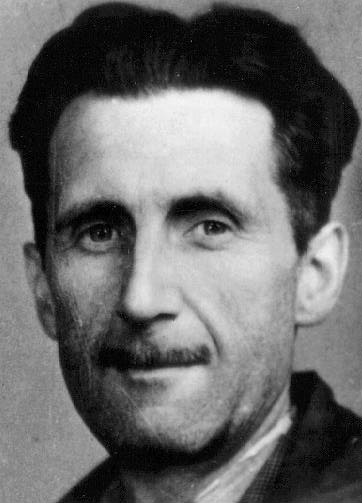
Orwell’s press card portrait, 1943
Comments Off on QotD: Allied anti-semitism in WW2
January 27, 2023
The return of the revenge of the bride of the Doomsday Clock
It’s amazing how much free publicity you can get by pulling out the hoary old Cold War propaganda tools, as Andrew Potter explains with the re-re-re-introduction of the Doomsday Clock bullshit:
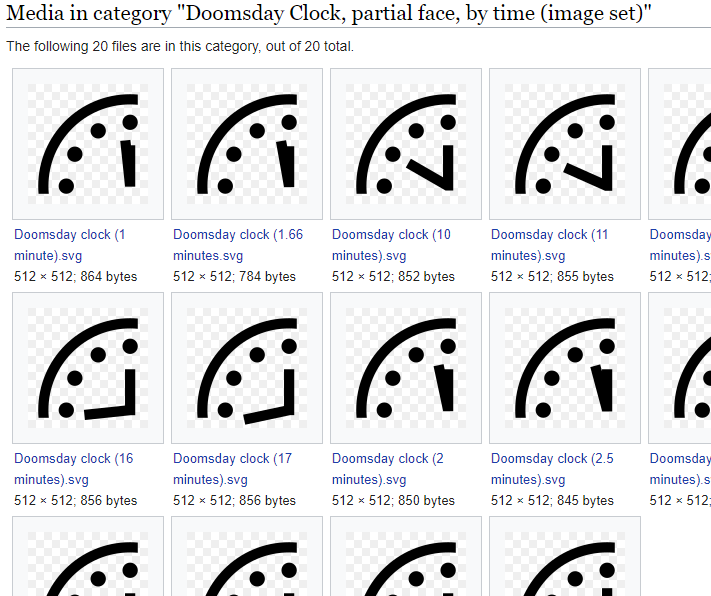
Earlier this week, the Bulletin of the Atomic Scientists moved the hands of its Doomsday Clock ahead by ten seconds, to 90 seconds to midnight. This is the closest the clock has ever been to midnight, and, according to the press release announcing the move: “Never in the Doomsday Clock’s 76-year history have we been so close to global catastrophe.”
If you’re under, say, 40 years of age or so, that paragraph is probably pure gobbledygook, the written equivalent of the squawk of a 2400 baud modem going through its handshaking protocols. But for those of us in the ever-dwindling cohorts of Gen-Xers and Baby Boomers, hearing about the movement of the Doomsday Clock is to be jerked back into a time marked by both profound moral clarity and deep existential anxiety.
A bit of background on the Doomsday Clock might help. It was a creature of the Cold War, founded in 1947 by some of the scientists who had worked on the Manhattan Project to raise public awareness of the threat of nuclear weapons. As the Bulletin puts it, the clock uses “the imagery of apocalypse (midnight) and the contemporary idiom of nuclear explosion (countdown to zero) to convey threats to humanity and the planet”. The decision to move or leave the minute hand of the Clock in place is made each year by the various trustees of the Bulletin, based on their evaluation of the world’s vulnerability to catastrophe.
The clock was initially set at a nice and relaxed seven minutes to midnight, and over the following few decades it was moved closer in response to clear nuclear threats, things like ramped-up testing of new bombs, nuclear proliferation, or rising Cold War tensions. During periods of detente or after the signing of arms reductions treaties, the minute hand would retreat. In 1991, it was moved back to 17 minutes to midnight after the dissolution of the Soviet Union.
For most of the second half of the 20th century, the Doomsday Clock was a healthy reminder of the most salient geopolitical fact of the era, which is that two superpowers were pointing thousands of nuclear weapons at one another.
But like many Cold War relics, the demise of the U.S.S.R. left it scrambling for a raison d’etre. In a bit of clever PR entrepreneurialism, the executive of the Bulletin of the Atomic Scientists turned the clock into a more generalized warning against war, climate change and other ecological or technological threats. The nadir of this shift in mission came on January 23rd 2020, when the Bulletin moved the clock’s hands to 100 seconds to midnight.
As the press release accompanying the ticking of the clock noted at the time, this put humanity “closer than ever” to catastrophe. Given that the clock had kept watch over our drive for self-destruction through the Suez Crisis, the Cuban Missile Crisis, the sabre-rattling Reagan administration, and the terrorist attacks of September 11, 2001, it makes one wonder just what happened in early 2020 to merit such a fearful move.
Comments Off on The return of the revenge of the bride of the Doomsday Clock


