
Forgotten Weapons
Published on 24 Aug 2015http://www.patreon.com/ForgottenWeapons
Hammer Price: $3,750
Pretty much every major military had an antitank rifle in service when WW2 kicked off, and the British example was the Boys rifle, named after the Captain Boys who designed it. It was a bolt action .55 caliber rifle with 5-round detachable magazines. If was obsolete by 1943 and replaced by the more effective but equally unpleasant PIAT.
October 4, 2017
British Boys Anti-Tank Rifle
Comments Off on British Boys Anti-Tank Rifle
October 3, 2017
Primitive Technology: Mud Bricks
Primitive Technology
Published on 22 Sep 2017(Turn on captions [CC] in the lower right corner for more information while viewing.)
I made a brick mold that makes bricks 25 x 12.5 x 7.5 cm from wood. A log was split and mortise and tenon joints were carved using a stone chisel and sharp rocks. The mold was lashed together with cane to prevent it from coming apart when used.Next, I made a mixture of mud and palm fiber to make the bricks. This was then placed into the mold to be shaped and taken to a drying area. 140 bricks were made.
When dry, the bricks were then assembled into a kiln. 32 roof tiles were then made of mud and fired in the kiln. It only took 3 hours to fire the tiles sufficiently. The mud bricks and tiles were a bit weaker than objects made from my regular clay source because of the silt, sand and gravel content of the soil. Because of this, I will look at refining mud into clay in future projects instead of just using mud.
Interestingly, the kiln got hot enough so that iron oxide containing stones began to melt out of the tiles. This is not metallic iron, but only slag (iron oxide and silica) and the temperature was probably not very high, but only enough to slowly melt or soften the stones when heated for 3 hours.
The kiln performed as well as the monolithic ones I’ve built in the past and has a good volume. It can also be taken down and transported to other areas. But the bricks are very brittle and next time I’d use better clay devoid of sand/silt, and use grog instead of temper made of plant fiber which burns out in firing. The mold works satisfactorily. I aim to make better quality bricks for use in furnaces and buildings in future.
WordPress: https://primitivetechnology.wordpress.com
Patreon page: https://www.patreon.com/user?u=2945881
I have no face book page, instagram, twitter etc. Beware of fake pages.
Comments Off on Primitive Technology: Mud Bricks
October 1, 2017
When network security intersects teledildonics
At The Register, John Leyden warns anyone using an internet-of-things sex toy that their device can be easily detected and exploited by (I kid you not) “screwdrivers” (below the fold, just in case you’re extra-concerned for potentially NSFW content):
Comments Off on When network security intersects teledildonics
The Grand Tour Cast on Amazon vs the BBC, cars, and being recognized in Syria
British GQ
Published on 19 Sep 2017Jeremy Clarkson, James May and Richard Hammond discuss how they feel waking up as cultural icons, where they have (and haven’t) been spotted across the world and what to expect from The Grand Tour season 2. The Grand Tour are GQ’s TV Personalities of the year at the 2017 Men of the Year awards.
Comments Off on The Grand Tour Cast on Amazon vs the BBC, cars, and being recognized in Syria
September 29, 2017
Blockchain primer – blockchain as a ledger
At Catallaxy Files, Sinclair Davidson provides some background knowledge of blockchain technology as a modern evolution of the simple ledger:
The blockchain is a digital, decentralised, distributed ledger.
Most explanations for the importance of the blockchain start with Bitcoin and the history of money. But money is just the first use case of the blockchain. And it is unlikely to be the most important.
It might seem strange that a ledger — a dull and practical document associated mainly with accounting — would be described as a revolutionary technology. But the blockchain matters because ledgers matter.
Ledgers all the way down
Ledgers are everywhere. Ledgers do more than just record accounting transactions. A ledger consists simply of data structured by rules. Any time we need a consensus about facts, we use a ledger. Ledgers record the facts underpinning the modern economy.
Ledgers confirm ownership. Property title registers map who owns what and whether their land is subject to any caveats or encumbrances. Hernando de Soto has documented how the poor suffer when they own property that has not been confirmed in a ledger. The firm is a ledger, as a network of ownership, employment and production relationships with a single purpose. A club is a ledger, structuring who benefits and who does not.
Ledgers confirm identity. Businesses have identities recorded on government ledgers to track their existence and their status under tax law. The register of Births Deaths and Marriages records the existence of individuals at key moments, and uses that information to confirm identities when those individuals are interacting with the world.
Ledgers confirm status. Citizenship is a ledger, recording who has the rights and is subject to obligations due to national membership. The electoral roll is a ledger, allowing (and, in Australia, obliging) those who are on that roll a vote. Employment is a ledger, giving those employed a contractual claim on payment in return for work.
Ledgers confirm authority. Ledgers identify who can validly sit in parliament, who can access what bank account, who can work with children, who can enter restricted areas.
At their most fundamental level, ledgers map economic and social relationships.
Agreement about the facts and when they change — that is, a consensus about what is in the ledger, and a trust that the ledger is accurate — is one of the fundamental bases of market capitalism.
[…]
The evolution of the ledger
For all its importance, ledger technology has been mostly unchanged … until now.
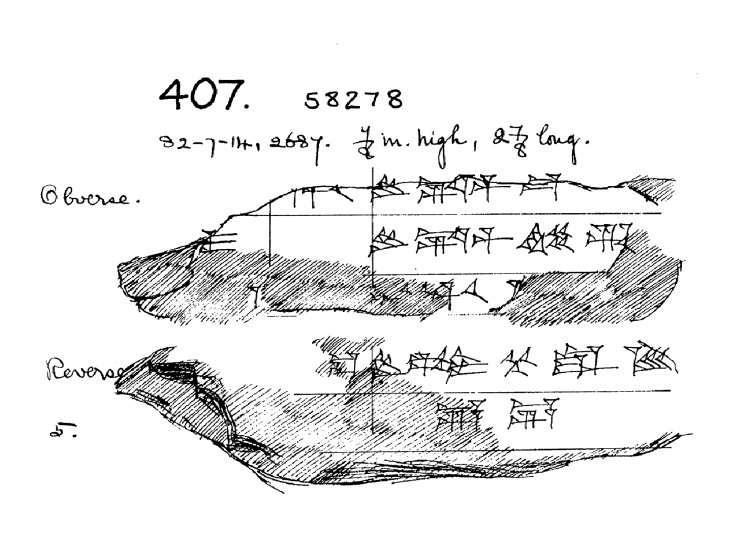
Ledgers appear at the dawn of written communication. Ledgers and writing developed simultaneously in the Ancient Near East to record production, trade, and debt. Clay tablets baked with cuneiform script detailed units of rations, taxes, workers and so forth. The first international ‘community’ was arranged through a structured network of alliances that functioned a lot like a distributed ledger.
A fragment of a late Babylonian cuneiform ledger, held by the British Museum, 58278
The first major change to ledgers appeared in the fourteenth century with the invention of double entry bookkeeping. By recording both debits and credits, double entry bookkeeping conserved data across multiple (distributed) ledgers, and allowed for the reconciliation of information between ledgers.
The nineteenth century saw the next advance in ledger technology with the rise of large corporate firms and large bureaucracies. These centralised ledgers enabled dramatic increases in organisational size and scope, but relied entirely on trust in the centralised institutions.
In the late twentieth century ledgers moved from analog to digital ledgers. For example, in the 1970s the Australian passport ledger was digitised and centralised. A database allows for more complex distribution, calculation, analysis and tracking. A database is computable and searchable.
But a database still relies on trust; a digitised ledger is only as reliable as the organisation that maintains it (and the individuals they employ). It is this problem that the blockchain solves. The blockchain is a distributed ledgers that does not rely on a trusted central authority to maintain and validate the ledger.
Comments Off on Blockchain primer – blockchain as a ledger
September 28, 2017
More than you want to know about the Panzer III
Lindybeige
Published on 8 Jun 2017Panzer IIIs were common German tanks in WW2, and here I talk about them, and make a few general points.
Another video (there will be more) from ‘The Tank Museum’ at Bovington. Why they changed the name is beyond me. I’d like to meet the branding guru who came up with that idea and administer several hard slaps. It’s like changing ‘Wimbledon’ to ‘The Tennis Competition’.
Anyway, here, in its particular shade of beige, is the tank (with a brief shot of one of its cousins), and I ramble on about various bits of it. It’s all right for you – you just have to watch it once, but I had to edit this, which involves seeing each bit several times, and wading through all the footage of me droning on and on.
I use the word ‘burn’ to describe a H.E.A.T. round’s penetrating a tank, and as several people have pointed out, this is not technically the correct word. They are right, although the word is often used in this context, and the temperatures involved are very high, but yes, I admit it: I should not have used the word ‘burn’.
Yes, I am aware that the links on the end plate come in late. This is because YouTube has changed the system, which used to be flexible, to one that relies on limited templates. It doesn’t enable the user to put picture links in except in the last twenty seconds of a video, and so because I added a little shot at the end, the links all start late. Possibly the new system is supposed to be more idiot-resistant than the old one. Unfortunately, this makes it an obstacle for the intelligent.
Here’s a link to the tank museum’s site: http://www.tankmuseum.org/home
Comments Off on More than you want to know about the Panzer III
September 26, 2017
Steve Chapman – “The Unabomber had a point”
In his Chicago Tribune column, Steve Chapman does his very best “grumpy old man yelling at a cloud” imitation, while the headline writer goes one step further:
The iPhone X proves the Unabomber was right
The introduction of the new iPhone X — which features wireless charging, facial recognition and a price tag of $999 — appears to be a minor event in the advance of technology. But it’s an excellent illustration of something that has long gone unrecognized: The Unabomber had a point.
Not about blowing people up in an effort to advance his social goals. Ted Kaczynski’s campaign to kill and maim chosen victims with explosives was horrific in the extreme and beyond forgiveness. But his 35,000-word manifesto, published in 1995, provided a glimpse of the future we inhabit, and his foresight is a bit unsettling.
“The Industrial Revolution and its consequences have been a disaster for the human race,” it begins. Among the ills he attributes to advances in technology are that they promise to improve our lives but end up imposing burdens we would not have chosen.
He cites the automobile, which offered every person the freedom to travel farther and faster than before. But as cars became more numerous, they became a necessity, requiring great expense, bigger roads and more regulations. Cities were designed for the convenience of drivers, not pedestrians. For most people, driving is no longer optional.
Smartphones have followed the same pattern. When cellphones first appeared, they gave people one more means of communication, which they could accept or reject. But before long, most of us began to feel naked and panicky anytime we left home without one
He also comes up with a non-Unabomber book that kinda-sorta supports the point he’s trying to make, I think:
The problem is hardly a new one. In his book Sapiens: A Brief History of Humankind, Yuval Noah Harari argues that the agricultural revolution that took place 10,000 years ago was “history’s biggest fraud.”
In the preceding 2.5 million years, when our ancestors lived as hunter-gatherers they worked less, “spent their time in more stimulating and varied ways, and were less in danger of starvation and disease” than afterward.
Farming boosted the population but chained humans to the land and demanded ceaseless drudgery to plant, tend, harvest and process food — while making us more vulnerable to famine, disease and war. People who had evolved over eons for one mode of life were pushed into a different mode at odds with many of their natural instincts.
Our distant pre-agricultural ancestors may have worked less than their post-agricultural descendants, but they hardly could be said to have lived lives of leisure and plenty. They lived in very small family groups because without advanced technology they were limited to what could be hunted or gathered in a small region and had very few portable possessions because they generally had to move frequently as the availability of food dictated. Once a group switched from a nomadic to a fixed lifestyle, “work” became how most members of that group would live the vast majority of their lives. Lives of hunter-gatherers were not stunted by the work that farmers had to put in, and hunter-gatherers had no fixed territory to defend, so they had no need of a warrior class or caste to help them protect the land they farmed, and no king or chief or overlord to “protect” them from other groups’ kings or chiefs or overlords. The advantage of the farmers over the nomads was that farmers could build up a surplus of food to tide them over when food was normally scarce – nomads would have to move on to find new hunting grounds.
Comments Off on Steve Chapman – “The Unabomber had a point”
September 24, 2017
Brilliant job on the Kalashnikov statue, Tovarisch, but what’s that weapon right there?
The Guardian reports on some emergency fix-ups required to a brand new statue honouring Mikhail Kalashnikov:
Workers have removed part of a new monument to Mikhail Kalashnikov, the inventor of the Soviet Union’s AK-47 assault rifle, after eagle-eyed Russians noticed that it mistakenly depicted a German second world war weapon.
The monument to the creator of one of Russia’s best known export brands was unveiled in central Moscow three days ago to much fanfare.
A metal bas-relief behind a statue of Kalashnikov depicts the AK-47 and other weapons all supposedly designed by the engineer, who died in 2013.
But embarrassed sculptor Salavat Shcherbakov had to admit that among them was the Sturmgewehr 44 (StG 44) assault rifle used by Nazi troops.
“We will rectify this,” Shcherbakov said in comments broadcast by state-run Rossiya 24 channel. “It looks like this [mistake] sneaked in from the internet.”
By Friday evening a square hole gaped where the German rifle had been depicted in the bas-relief.
Kalashnikov’s weapon, created in 1947, does have a striking resemblance to German arms designer Hugo Schmeisser’s StG 44 rifle, created in 1942, although they have major design differences.

MP44 (Sturmgewehr 44), Germany. Caliber 8x33mm Kurz- From the collections of Armémuseum (Swedish Army Museum), Stockholm. (via Wikimedia)

Kalashnikov АК-47 with bayonet attached (via Wikimedia)
Comments Off on Brilliant job on the Kalashnikov statue, Tovarisch, but what’s that weapon right there?
GE Steam Turbine Locomotives – 1938 Educational Documentary – WDTVLIVE42
Published on 30 May 2017
The General Electric steam turbine locomotives were two steam turbine locomotives built by General Electric (GE) for Union Pacific (UP) in 1938. This newsreel style promotional film shows construction of the locomotives while highlighting their expected capabilities.
Comments Off on GE Steam Turbine Locomotives – 1938 Educational Documentary – WDTVLIVE42
September 23, 2017
The Very First Troop Trials SMLE Rifles
Published on 4 Apr 2017
1902 A Pattern: Sold for $31,625 – http://jamesdjulia.com/item/1647-396/
1902 B Pattern: Sold for $31,625 – http://jamesdjulia.com/item/1648-396/One of the British lessons from the Boer War was that the distinction between infantry rifles and cavalry carbines was becoming obsolete. In 1902, they would initiate troop trials on a new short rifle pattern, intermediate in length between the old rifles and carbines, and intended to be issued universally to all troops. This would become the much-loved SMLE – Short, Magazine, Lee Enfield rifle – but first a few choices had to be made.
The 1902 trials rifles were a bit remarkable in being widely liked by the different troops that used them – only a few changes were to be made before formal adoption took place. However, there were two different patterns of the trials rifles, with different models of rear sight. The B pattern used a friction-locked range adjuster, which was found to migrate during firing (not good). The A pattern had a much more secure set of spring loaded locking notched, and would be chosen as the better of the two.
Despite a thousand of these rifles being produced for the trials, these two are the only known surviving examples. The remainder were converted to .22 caliber training guns around 1907, as their non-standard nature made them unsuitable for issue after the formal adoption of the SMLE MkI (later to be retroactively redesignated the Rifle No1 MkI.
Comments Off on The Very First Troop Trials SMLE Rifles
September 21, 2017
The Paul Sellers’ Mortise & Tenon Method | Paul Sellers
Published on 11 Sep 2017
Paul has developed his own system for cutting mortise and tenon joints using a conventional hand router plane to create perfectly sized mortise and tenons that are accurately aligned. This system will revolutionise the way you think about mortise and tenon joinery.
Comments Off on The Paul Sellers’ Mortise & Tenon Method | Paul Sellers
September 20, 2017
Tiger Day VIII at The Tank Museum
The Mighty Jingles
Published on 19 Sep 2017It’s Tiger Day once again at The Tank Museum in deepest, darkest Bovington! This time I actually managed to get there and I wasn’t disappointed…
The Tank museum: http://www.tankmuseum.org/home
Comments Off on Tiger Day VIII at The Tank Museum
QotD: Government meddling stifles innovation in energy
It is unfortunately the case that government meddling on a global scale has massively distorted energy markets through pervasive subsidies, mandates, and price controls. The result is retarded innovation in the technologies of energy generation. A big first step toward renovating our energy supply systems would be to eliminate those impediments to understanding the real comparative benefits and costs of the production and use of energy. Ultimately, the better and far more effective way to ameliorate and avert future climate change is to mobilize human ingenuity through market processes to drive down the costs of no-carbon energy sources. Despite the constraints on innovation caused by government interference, notable advances in no-carbon energy generation technologies have already been made, ranging from innovative nuclear reactor designs to more efficient and cheaper solar panels. New technologies and wealth produced by human creativity will spark a vast environmental renewal in this century.
Ronald Bailey, The End of Doom: Environmental Renewal in the Twenty-first Century, 2015.
Comments Off on QotD: Government meddling stifles innovation in energy
September 17, 2017
But is it full of eels? If not, feel free to visit the British Hovercraft Museum
In their continuing series of “Geeks’ Guide to Britain”, The Register takes a trip to the former HMS Daedalus, a Fleet Air Arm seaplane training base that is now home to the Hovercraft Museum:
Did you know that the word “hovercraft” was once patented? And did you know that Great Britain is a world leader in the design and manufacture of the floaty transporters, and has been for half a century?
These and other surprising facts – including that some of the largest commercial hovercraft ever to be used in revenue service spent their lives shuttling booze cruisers back and forth across the English Channel – can be found at the Hovercraft Museum, at Lee-on-Solent in the south of England.
A century ago, what is now the site of the museum was known as HMS Daedalus and used as a Fleet Air Arm seaplane base. Back in the early days of aviation, and especially naval aviation, the station was at the forefront of naval and aviation technology alike. Seaplanes and skilled pilots were in great demand by the Royal Navy for anti-submarine patrols, and a new training base had to be set up to fill the service’s demand.
Thus came about the “temporary” Naval Seaplane Training School at Lee-on-Solent, with the new training school being based around a large local property, Westcliffe House. Slipways and hangars were duly erected, with the former leading down into the waters of the Solent itself; of the latter, one of the original J-class hangars, capable of being erected by just 15 men, survives to this day.
[…]
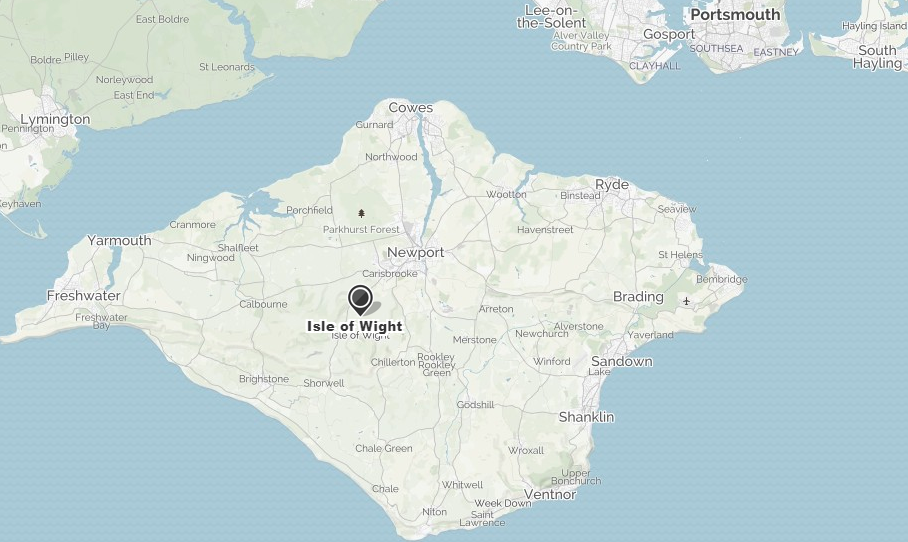
To truly appreciate the hovercraft, one should actually ride one of the things. This is easily done by a short journey along the coast from Lee-on-Solent to Britain’s only scheduled hovercraft service, which operates between Portsmouth and the Isle of Wight.
Operated by Hovertravel, whose sister company Griffon Hoverwork also builds the craft operated by the company, the service runs about every half an hour during the day, with more frequent services during the morning rush hour and a gradual winding-down into the evening.
Comments Off on But is it full of eels? If not, feel free to visit the British Hovercraft Museum
September 15, 2017
Will Google’s quasi-monopoly last as long as AOL’s did?
In the big picture, I’m concerned with Google’s current market power and their ability to quash online freedom of speech almost at will (if not directly, through pressure on other companies to co-operate, or else: “Nice little business you’ve got here, Mr. Forbes. It’d be a shame if something happened to its Google search results…”). Google is huge and has fingers in an unimaginable number of pies, but it is still subject to market forces, as was an earlier behemoth of the online world:
The film [You’ve Got Mail] was released in 1998. Amazon was founded in 1994 and had its IPO in 1997. It was about to crush big discount bookstores — does anyone still remember the other big chain, Borders? — and nobody had a clue. There isn’t a single mention in the film of Amazon or online sales.
But the Internet is mentioned. It’s right there in the title of the movie. You’ve Got Mail, for those who are old enough to remember, was a tagline for America Online, the largest Internet service provider in the dial-up era of the 1990s. For millennials, let me explain: we had to connect our computers to a phone line, and an internal modem would place a phone call to a local data center from which it could download information at impossibly slow speeds. […]
AOL is there in the film’s title, because that’s how our protagonists are communicating: by trading e-mails on their dial-up AOL connections.
AOL’s high point was its merger with Time Warner in 2000. It was all downhill, rapidly, from there. Dial-up was quickly surpassed by broadband, and as the Web developed, nobody needed a “Web portal” any more. Again, for younger readers, let me explain. When you managed to get to this exciting new thing called the World Wide Web, how did you know what sites to go to or how to access information? Before the Google search, before Facebook, before Twitter, you went to a Web portal, a launching off point that gathered links and directed you to various sources for news, entertainment, shopping, etc. These Web portals had a huge amount of influence — until they didn’t.
Now here’s the fun part. At the same time nobody was paying much attention to Amazon because Barnes and Noble was going to crush all competitors and control the book business, there was widespread panic about the unstoppable monopoly power of AOL.
AOL was going to gain a monopoly because of its death grip on instant messaging. The “computer editor” for The Guardian worried that this was putting AOL “on its way to world domination.” The AOL-Time Warner deal raised “concerns that its merger would create a media powerhouse that would level competitors, dominate the Internet, and control consumer choice.”
A Wired podcast talked about fears of a Sun-AOL monopoly, but they didn’t call that sort of thing a “podcast” yet because the iPod hadn’t been invented. The audio clip was an MP3 file, and they suggested you listen to it on a Sonique MP3 player from Lycos. The Sonique stopped being produced about a year later. Lycos was a major Web portal, and according to Wikipedia, it was “the most visited online destination in the world in 1999.” It was bought by a multinational conglomerate for $12.5 billion at the peak of the dot-com bubble.
Whatever is left of Lycos was last sold for $36 million in 2010, though that deal seems to have collapsed in acrimony later on. Sic transit gloria mundi.
Comments Off on Will Google’s quasi-monopoly last as long as AOL’s did?


