Quotulatiousness

September 7, 2020

Public compliance with masking rules

Filed under: Bureaucracy, Cancon, Government, Health — Tags: , , , , — Nicholas @ 03:00

David Warren on the temptation for public health officials to treat the citizenry as slightly dim children who need direct supervision by enlightened public health officials:

“Covid 19 Masks” by baldeaglebluff is licensed under CC BY-SA 2.0

The present danger — the Red Chinese Wuhan Laboratory Batflu — is visible everywhere thanks to state-mandated muzzles or batmasks. We are now in the sixth month of “fifteen days to flatten the curve,” and I’ve noticed that these filthy mouth-pieces have become another urban environmental blight, on a scale even worse than the sidewalk basketball bouncers I recently decried. I spotted four discarded Batflu-spreaders on the sidewalk during a walk of less than one city block yesterday, to a deadbeat “supermarket” to fetch milk for my tea.

I’m sure these cloth garottes are choking our Blanding’s Turtles — already considered endangered by our provincial bureaucracy because less than one in a thousand of their eggs ever hatch, and then the adults try to cross country roads. Call up a picture of one on the Internet, and gentle reader will see that they are all apparently wearing yellow batmasks on their chins, in compliance with guvmint regulations. For if they took them off, they would risk being confused with another turtle species that might not be Protected.

But while my affection for Blanding’s Turtles, and empathy in light of their persecution by Ontario motorists, is of long standing — a friend proposes that we found a Blanding Lives Movement — I am even more concerned about the fate of our children. The Batflu has been discouragement enough, to those who may never reach maturity, but the spectacular success of the Nanny State effort to keep them socially atomized and in muzzles, portends innumerable (fake) “pandemics” to come. For what faceless time-server, “dressed in a little authority,” can resist an opportunity to treat the general population as if they were retarded children? Especially now, that the general population has shown it will comply?

According to an item that somehow slipped into the New York Times, only a tiny fraction of the much-publicized Batflu deaths were attributed to the Batflu alone, on death certificates sampled from across the Natted States. By this focus, the “pandemic” toll is reduced from the official number of 187,777 (I just checked this morning), to about 9,200. Of course, the commie and never-Trumper meejah have gone splenetic to “cancel” this interesting fact. It is as bad as the French study which showed that your one-in-ten-thousand chance of dying with the Batflu in that country is cut a further five times if you happen to smoke. Or the Hydroxychloroquine scandal, in which Mister Trump suggested (correctly) that a simple anti-malaria drug, already mass-produced and dirt cheap because long out of patent, can cut it by a few times more.

September 5, 2020

Kareem Shaheen on the shame of mask-shaming

In The Line, Kareem Shaheen — who is a mask-wearer and was one before they were made mandatory — explains why shaming anti-maskers is a terrible way to encourage compliance, but a great way to virtue-signal:

“Covid 19 Masks” by baldeaglebluff is licensed under CC BY-SA 2.0

The mask shaming mirrors the way social media has warped our culture. The Twitter and ‘gram “in crowd” flaunt its mask use to demonstrate an ostensibly superior grasp of morals and science — and to bully those who don’t follow its cues. Those who perceive themselves to be on the outside of this circle can’t help but cringe at the manipulation and grandstanding behind these seemingly well-intentioned gestures.

Mask resistance, then, becomes a virtue signal of its own.

And, of course, Twitter itself has been a cesspool of counter-productive shame. Back in July, the hashtag #NoMasks trended, which gave the illusion of a groundswell of opposition against mandatory masking laws. But an analysis by First Draft, a nonprofit based in the United Kingdom, examined 8,000 Twitter accounts that used the hashtag. It found that the majority of people who tweeted #NoMasks were actually pro-mask. Their condemnation of the supposed anti-mask contingent actually boosted #NoMasks, bringing more people in contact with related conspiracy theories and arguments against wearing masks.

The moralizing is all the more galling because our own governments were forced to do an embarrassing about-face on their efficacy.

In the early weeks of the pandemic, health agencies in Canada and the United States recommended against wearing masks because there was insufficient evidence that they could prevent the spread of the virus, remember? They said that masks would provide a sense of false security, and suggested that we were all too dumb to know how to wear them properly.

This despite widespread use of masks in Asia, and while there was a growing consensus in hard-hit parts of Europe that they were effective and necessary.

With so much confused messaging, it’s no mystery that so many people are now skeptical about wearing masks. Sure, some of the most ardent mask-haters are also Q-Anon-spouting, anti-vaxxer crystal-healing masks-are-fascism conspiracy theorist kooks. But not all them fit that description.

And the problem with all of this is that if you’re actually trying to convince people to wear masks — as opposed to merely demonstrating your own superior morality via the veil — shame is one of the least effective methods of persuasion.

September 1, 2020

QotD: The “envy of the world”, Britain’s NHS

No good crisis, including the present COVID-19 epidemic, should go to waste. In this respect, the high priests of Britain’s secular religion, its highly centralised National Health Service, have certainly not been sitting on their hands. There has been so much propaganda in favour of the Service during the epidemic that one might have believed that it was under central direction.

One morning, for example, I received an e-mail advertisement from a chain of bookstores (a near-monopoly in the British bookstore trade) of which I am an occasional customer, for an anthology of stories specially written in praise of the NHS titled Dear NHS: 100 Stories to Say Thank You. An anthology of poetry, These Are the Hands: Poems from the Heart of the NHS has also just been published. I will pass over in silence the emotional kitschiness of all this.

These books, of course, deliberately confound the NHS itself with the devotion and skill of the people working within it. They are not the same thing — very far from it — and it might well be that good results are often achieved despite the system rather than because of it.

The propaganda in favour of the NHS has been more or less continuous since its foundation in 1948, though it has become ever shriller, as propaganda tends to do, as it departs further and further from reality. Indeed, one might surmise that the purpose of propaganda in general is to forestall any proper examination of reality in favour of simplistic slogans convenient to political power.

I grew up, for example, in the inculcated belief that the National Health Service was, according to the slogan of the time, “the envy of the world.” Millions of people believed this, and indeed it was an assertion heard for many years whenever the subject of health care came up. The slogan was last wheeled out in any force in 2008 for the 60th anniversary of its founding.

Theodore Dalrymple, “Worshipping the NHS”, Law & Liberty, 2020-05-04.

August 29, 2020

QotD: Britain’s most sacred of sacred cows

If it is possible to kowtow to a sacred cow, that is exactly what Boris Johnson did on leaving St Thomas’ Hospital after he had been treated there for Covid-19. The NHS, he said, was “Britain’s greatest national asset”, as if, had he fallen ill in any country other than Britain, he would not have been treated so well or simply left to die.

This was an unintended insult to the doctors and nurses of other countries, as if in their benighted lands without the NHS they did not work with skill or devotion. The NHS is neither necessary nor sufficient for medical and nursing staff to show devotion. The parents of a well-taught schoolchild do not thank the Ministry of Education.

No doubt the prime minister’s praise of the NHS was politically shrewd — one casts no doubt on the perfection of the Koran in Mecca — but in the long run such praise does no service to the nation, which at some time or other ought to face up to the fact that its healthcare system is at best mediocre by comparison with that of other countries at a similar level of economic development, and that being ill and seeking treatment is a more unpleasant experience in Britain than in it is many civilised countries.

Untold numbers of people receive excellent care under the NHS. One must neither exaggerate nor catastrophise. But there is another side to the coin as well, and it is surely not a coincidence that no one in Europe would choose Britain as their country of medical care, rather the reverse. If a German were to say, “For God’s sake, get me to the NHS!”, a psychiatrist would be called.

Theodore Dalrymple, “Empire of conformists”, The Critic, 2020-04-29.

August 25, 2020

The Bronze Age Changes with Archeological Evidence

Filed under: Architecture, History, Middle East, Science, Technology — Tags: , , , , — Nicholas @ 04:00

The Cynical Historian
Published 22 Feb 2019

Check out the full collaboration playlist here: https://www.youtube.com/playlist?list…

Up until the 19th century, the Bronze Age was merely a time of legends, where the Bible and Iliad told fantastic tales of brutality and triumph. But archeology changed that, and that’s what I want to talk about today, how the Bronze Age was rescued from legend.
————————————————————
references:
Stephen L. Dyson, “Archaeology and Ancient History,” in A Companion to Ancient History, edited by Andrew Erskine (Malden, Mass.: Blackwell Publishers, 2002), 59-66. https://amzn.to/2PCf04X

Marie-Henriette Gates, “Archeology and the Ancient Near East: Methods and Limits,” in A Companion to the Ancient Near East, edited by Daniel C. Snell (Malden, Mass.: Blackwell Publishers, 2005), 65-79. https://amzn.to/2BrsBqO

Alan B. Lloyd, “Chronology,” in A Companion to Ancient Egypt, vol. 1, edited by Alan B. Lloyd (Malden, Mass.: Blackwell Publishers, 2010), xxxii-xliii. https://amzn.to/2LqGZnM

John Marincola, “Historiography,” in A Companion to Ancient History, edited by Andrew Erskine (Malden, Mass.: Blackwell Publishers, 2002), 13-22. https://amzn.to/2PCf04X

John Van Seters, “Historiography in Ancient Israel,” in A Companion to Western Historical Thought, edited by Lloyd Kramer and Sarah Maza (Malden, Mass.: Blackwell Publishers, 2002), 15-34. https://amzn.to/2PAC5Vz

Tim Whitmarsh, “Ancient History through Ancient Literature,” in A Companion to Ancient History, edited by Andrew Erskine (Malden, Mass.: Blackwell Publishers, 2002), 77-86. https://amzn.to/2PCf04X
————————————————————
Support the channel through PATREON:
https://www.patreon.com/CynicalHistorian
or pick up some merchandise at SpreadShirt:
https://shop.spreadshirt.com/cynicalh…

LET’S CONNECT:
Discord: https://discord.gg/Ukthk4U
Twitter: https://twitter.com/Cynical_History
————————————————————
Wiki: The Bronze Age is a historical period characterized by the use of bronze, and in some areas proto-writing, and other early features of urban civilization. The Bronze Age is the second principal period of the three-age Stone-Bronze-Iron system, as proposed in modern times by Christian Jürgensen Thomsen, for classifying and studying ancient societies.

An ancient civilization is defined to be in the Bronze Age either by producing bronze by smelting its own copper and alloying with tin, arsenic, or other metals, or by trading for bronze from production areas elsewhere. Bronze itself is harder and more durable than other metals available at the time, allowing Bronze Age civilizations to gain a technological advantage.

Copper-tin ores are rare, as reflected in the fact that there were no tin bronzes in Western Asia before trading in bronze began in the third millennium BC. Worldwide, the Bronze Age generally followed the Neolithic period, with the Chalcolithic serving as a transition. Although the Iron Age generally followed the Bronze Age, in some areas (such as Sub-Saharan Africa), the Iron Age intruded directly on the Neolithic.

Bronze Age cultures differed in their development of the first writing. According to archaeological evidence, cultures in Mesopotamia (cuneiform script) and Egypt (hieroglyphs) developed the earliest viable writing systems
————————————————————
Hashtags: #history #TheBronzeAge #archeology #BronzeBonanza

August 23, 2020

Trudeau’s hopes for re-election hinge on promising “an organic chicken in every pot and a solar panel on every shed”

The Line wonders who the hell the Liberals think they are:

It may have been easy to miss amid the news coming out of Ottawa, but as the government lost its finance minister, appointed Chrystia Freeland to yet another job, prorogued parliament, halted testimony into its latest scandal, prepared for the announcement of a new Conservative Party of Canada leader and braced for a likely second wave of COVID-19, the prime minister promised to announce a transformative agenda. One that promises sweeping social change, and a wholesale re-invention of our economy in line with the greenest ambitions. We here at The Line have but one question.

Who the hell do these people think they are?

It is obvious to anyone who has been reading the news and possesses even residual brain function why the prime minister would like to be talking about a plan for transformative change. Talking about all the amazing things he could do for Canadians with borrowed money beats talking about his government’s bumbling of the WE file and the departure of now-former finance minister Bill Morneau.

Promising an organic chicken in every pot and a solar panel on every shed is obviously more appealing to Trudeau than repeating the last month. But it is astonishing to us — as jaded as we have undeniably become — that the government is talking about this instead of the necessary steps needed to shore up this country ahead of a likely second wave of COVID-19.

This government has a mandate to respond to the emergency, by mere unlucky virtue of being in power at the moment the virus hit. It is the duty of every Canadian government to safeguard the wellbeing of the population, full stop. But the emergency, contrary to what you may believe if you’ve been reading Liberal Party HQ memos, is not over. We have an urgent need to secure more medical equipment, to harden our long-term care facilities, to prevent any further lockdowns from derailing a fragile economic recovery, to ensure the resiliency of critical supply chains, and to shore up our health-care system. This is what every Canadian official should be focused on right now.

[…]

But can anyone maintain faith that the Liberals will stick to their knitting when we hear buzzwords like “transformative” social change? Sweeping climate-change reforms? Engineering a new green economy? They are all fine notions — let’s put them to the people and vote on them. Until calling that election is feasible (mid-pandemic, it is not) this government simply does not have the mandate to undertake such far-reaching efforts.

It’s easy to forget now, but only nine months ago this government was reduced to a minority of seats in parliament. The Liberals lost the popular vote, and saw one million of their own prior voters abandon them. They are only in government because the Conservatives, to the surprise of no one, found several novel and exciting new ways to fail.

August 22, 2020

Debra Soh’s new book is “a cancel-culture grenade”

Filed under: Books, Health, Media, Politics — Tags: , , , , , , — Nicholas @ 05:00

Jen Gerson knows that any positive mention of Debra Soh’s The End of Gender: Debunking Myths About Sex and Identity has a strong resemblance to square-dancing in a minefield. Cancellations may fall like raindrops on the career of anyone so unenlightened as to even acknowledge the existence of such a work:

For that, at its heart, is what Soh’s book is: a lucid discussion of the best science we have to date on the nature of gender and sex, written for a lay audience. What gives the title its sizzle is not the content, but rather the cultural climate in which it is being published.

It maps the depth, scope and scale of current Culture War trenches in this particular theatre of battle. The End of Gender stomps on tripwires like the gender binary, whether transgender women are women, autogynephilia, Rapid Onset Gender Dysphoria, bathroom bans, and more.

It’s a cancel-culture grenade.

That’s not because these subjects ought to be contentious. Soh’s approach and tone are largely neutral. Rather, the controversy the book will inevitably incite is a reflection of a culture that has been warped into a state of existential terror by the very notion that these ideas can be responsibly discussed.

Soh begins by defining her terms.

So much of the debate around the most difficult topics of sex and gender stem from the simple fact that we are misusing the basic language. For example, sex and gender are not interchangeable concepts, even though they are often treated as such.

Sex is a term of biology. One’s sex, Soh argues, is determined by his or her gametes. With the exception of rare intersex disorders, 99 per cent of the population has a clearly defined biological sex that slots into one of two dimorphic categories: male or female.

Gender is more complicated. It’s now popular to state that there are more than two genders, but Soh disputes this. She argues that gender — or the set of characteristics that signal one’s sex to society — is also dimorphic. For 99 per cent of the population, gender correlates with sex. Further, even when expressions of gender are at odds with one’s biological sex, this, too, is mediated by biology. Whether one presents as gender typical or gender atypical is the result of prenatal testosterone exposure.

Soh notes that claiming to be gender non-binary, or gender fluid — or any one of a thousand variations that transcend the limiting concepts of male and female — is increasingly trendy, especially among teenagers and young adults. It seems to be the latest form of identity experimentation.

There are two reasons for this trend.

The first is that seeing the world through an intersectional framework encourages progressives to reverse the traditional hierarchies of race, sex and power. Therefore, claiming a marginalized identity — like genderqueer non-binary unicorn — accrues status within progressive peer circles.

The second is that the culture has undergone a massive awakening to transgender rights over the past decade. This has contributed expressive categories and vocabularies for people who otherwise might have struggled to find the language to explore their most authentic selves. As the cues, like cosmetics and dress, that we used to signal our gender are socially constructed, gender expression is limited only by our creativity.

QotD: Sex-differentiated status hierarchies

Filed under: Health, Politics, Quotations, USA — Tags: , , , , , — Nicholas @ 01:00

Jordan Peterson had this to say about sex-differentiated status hierarchies:

    Girls can win by winning in their own hierarchy — by being good at what girls value, as girls. They can add to this victory by winning in the boys’ hierarchy. Boys, however, can only win by winning in the male hierarchy. They will lose status, among girls and boys, by being good at what girls value. It costs them in reputation among the boys, and in attractiveness among the girls. Girls aren’t attracted to boys who are their friends, even though they might like them, whatever that means. They are attracted to boys who win status contests with other boys.

“whatever that means”. Heh. Shivvy way to say, “which means nothing”.

When JP discusses sex differences, he could be reading CH posts. Whatever one thinks of the criticisms leveled against him (some are valid), he does have a decent grasp of the sexual market and how men and women navigate divergent routes through an ocean of mate prospects to get what they want.

However, this is one of the rare instances when I disagree with his premise. He’s generally correct that, at least within the bounds of our current cultural arrangement, women have two status hierarchies available to them while men only have one. Our gynarcho-tyranny not only encourages but aggressively impresses upon women the urgency and even moral duty of succeeding in male domains (leaning in), while simultaneously encouraging men to sacrifice their status within their own male domains to make way for more women (and consequently rendering themselves less sexually attractive to women who are now their equal or higher in social status).

Women who do succeed in the man’s world can expect to ascend the intrafemale status ladder (more precisely, the intra-feminist status ladder), but where JP is wrong is assuming these women don’t also suffer an SMV status loss the near-equivalent of the SMV status loss suffered by men who succeed at girlie games of one-uppance.

Just as girls aren’t attracted to effeminate males, and other men are repulsed by nancyboys, the inverse is as true: men aren’t attracted to masculine, status-striving girls, and other women don’t subconsciously look up to mouthy careerist shrikes with the same mix of envy and admiration that they look up to physically beautiful women.

CH, “Sex-Based Status”, Chateau Heartiste, 2018-06-04.

August 21, 2020

QotD: Our overprotective culture

Filed under: Health, Quotations — Tags: , , , , — Nicholas @ 01:00

Our society has become an overprotective mother. If you protect people, you reduce their competence.

There’s a rule of thumb for dealing with elderly people in old age homes: Never do anything for anyone that they can do for themselves. It sounds cruel, but it’s not cruel.

This is one of the pathologies of our culture. A major pathology, and this is associated with a kind of immaturity and a kind of fear and this Oedipal mother problem, which is, “I don’t want you to suffer any distress right now.” Fine, but what about tomorrow and next week and next month? You might have to suffer a lot of distress right now so that you’re better next week and next month.

Jordan Peterson, “Christie Blatchford Sits Down With ‘Warrior For Common Sense’ Jordan Peterson”, National Post, 2018-02-07.

August 18, 2020

Don’t worry your pretty little heads, normies, the enlightened ones are planning “The Great Reset” for 2021

Mark Steyn on how the great and the good of the world are figuring out the road ahead of us:

… most of the chaps who matter in this world are people you’ve never heard of — by which I mean they are other than the omnipresent pygmies of the political scene: In a settled democratic society such as Canada, for example, if you wind up with an electoral contest between a woke mammy singer with a banana in his pants and a hollow husk less lifelike than his CBC election-night hologram whose only core belief is that he has no core beliefs other than that party donations should pay for his kids’ schooling, you can take it as read that the real action must be elsewhere.

A lot of those chaps you’ve never heard of turn up in this video from the “World Economic Forum” — ie, the Davos set. After five months of Covid lockdown, you’ll be happy to hear that all the experts have decided that 2021 will be the year of “The Great Reset”:

I see my chums at the Heartland Institute headline this the “World Leaders’ ‘Great Reset’ Plan“. But, if by “leader” you mean an elected head of government accountable to the people, there is a total dearth. Indeed, it’s a melancholy reflection on the state of “world leadership” that the nearest to anyone accountable to the people in this video is HRH The Prince of Wales, in whom one day in the hopefully extremely far distant future the executive authority of the United Kingdom, Canada, Australia, etc will be nominally vested but which cannot be exercised without the consent of the people’s representatives. Yet even that token accountability is, as noted, in the future. So right now he’s just another guy who’s a “world leader” because he gets invited to Davos and you don’t — and, even if you were minded to show up anyway, you’d need a private jet because all the scheduled flights have been Covid-canceled and the world’s airports are ghost towns.

As is the custom among our big thinkers, the blather is very generalized. “Now is the time to think about what history would say about this crisis,” says the head of the IMF. If you say so. Personally, I was thinking that now is the time to eat a meal in a restaurant, if they weren’t closed.

But, why is it history’s job to say something about this crisis? Why, don’t you “world leaders” of the here and now say anything about it? “It is imperative that we reimagine, rebuild, redesign, re-invigorate and re-balance our world,” declares the UN Secretary-General.

That’s almost a full set, but he forgot “redefined”. “Possibilities are being redefined each and every day,” says the chief exec of British Petroleum, who as is his wont sounds like he’s in any business other than petroleum.

There is, of course, an inscrutable Oriental, who is chairman of something called the “China Green Finance Committee”. He’s there as a not so subtle reminder not even to bring up the subject of China, whose lies amplified by their sock puppet at the WHO are the sole cause of the present crisis – and whose death-grip on our future is the thing that most urgently needs to be reimagined, rebuilt, re-balanced and redefined. As I’ve mentioned many times over the spring and summer, twenty years ago we were told to forget about manufacturing — from widgets to “These Colors Don’t Run” T-shirts, that’s never coming back; from now on, we’re going to be “the knowledge economy”. Yet mysteriously, with the 5G and the Huawei and all the rest, China seems to have snaffled all that, too.

August 16, 2020

This is a “hockey stick” graph you can believe

Filed under: Economics, Health, History — Tags: , , , , , — Nicholas @ 03:00

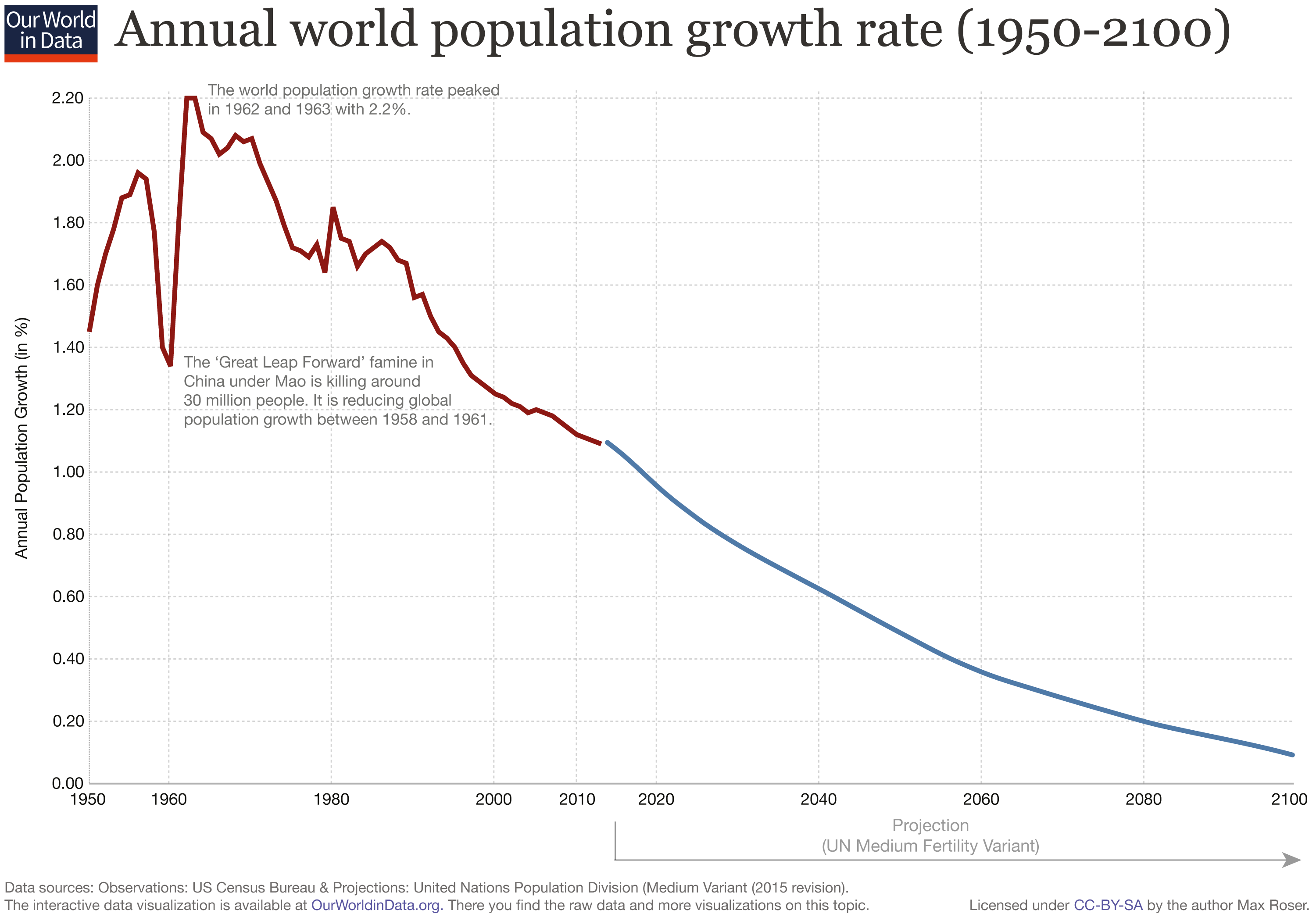
Brian Micklethwait says this graph, unlike the more famous (debunked) “hockey stick”, shows one of the most important moments in human history:

If that graph, or another like it, is not entirely familiar to you, then it damn well should be. It pinpoints the moment when our own species started seriously looking after its own creature comforts. This was, you might say, the moment when most of us stopped being treated no better than farm animals, and we began turning ourselves into each others’ pets.

Patrick Crozier and I will be speaking about this amazing moment in the history of the human animal in our next recorded conversation. That will, if the conversation happens as we hope and the recording works as we hope, find its way to here.

I’m not usually one for podcasts, in the same way that I’m not an audiobook user: I find I’m unable to do other things while listening to the spoken word, and it’s always far faster to read a text than to have it read to you. In this particular case, I might try to make an exception, and give up hope of doing anything else productive while I listen.

August 15, 2020

QotD: The worth of a human being

Filed under: Economics, Media, Quotations, Science — Tags: , , — Nicholas @ 01:00

A lot of things happened, more than half a century ago; suddenly I’m among the shrinking number who recall this. For today’s Idlepost, I will remember an article I read in a popular science magazine, back then. I’ve forgotten both the title of the publication, and the date of the number. I can, however, say that I was in high school then.

According to this article, the worth of a human being was 98 cents. The authors showed how their figure was arrived at. They had combined current market prices for the materials in an average human frame of 130 pounds. (Details like this I remember.) A sceptic, even then, I recall noting that they excluded hat, mid-season clothing, and shoes, from their total; and that they didn’t mention whether they were citing wholesale or retail values on the flesh and chemicals. Most pointedly, while accompanying my mother to a supermarket, I checked the prices for beef, pork, and broiler chicken, choosing the lowest grades. All were over 10 cents a pound; and so I concluded that the overall price of the meat alone, per human, would exceed their estimate.

Given background inflation rates, I think the total value in 2020 may approach twenty dollars, or even twenty-five. I’d have to recheck chemical prices, to be sure. Though perhaps the total might be reduced, closer to one dollar again, for babies.

David Warren, “Virtual March for Life”, Essays in Idleness, 2020-05-14.

August 13, 2020

QotD: The discovery of anaesthesia and antisepsis

Filed under: Health, History, Quotations, Science — Tags: , , — Nicholas @ 01:00

The first demonstration of the ether gas was performed at Massachusetts General Hospital in October, 1846, by a Boston dentist, William T. G. Morton. For the first time, surgical operations could be performed painlessly. Within two months, the invention was known and being applied in every capital of Europe, and in little more time it became commonplace internationally. The number of surgical operations vastly increased, as it was no longer necessary to hold patients down, and act very quickly.

Joseph Lister first used carbolic acid (phenol) to perform sterile surgery at the Glasgow Royal Infirmary, in August, 1865. This would have the effect of vastly increasing the survival rate from these now commonplace surgical operations. But the news took years to circulate, and by the twentieth century surgeons were still working with infected equipment in filthy environments. Indeed, I have read accounts of the horrors of battlefield medicine in the First World War: men with survivable injuries, lost by the hundred thousands from ignorant, unnecessarily unhygienic medical procedures.

As Dr Gawande points out — in passing — both advances made life easier on patients. But the second saved lives on a — vastly — greater scale. The first was unique, in making life easier for doctors, who no longer had to operate on screaming, writhing customers. This also, incidentally, hugely increased their trade, and thus their income. Washing up, effectively, only added nuisance.

I already knew this history — my mommy was a ward matron, after all — but until the comparison was spelt out, the full significance was lost on me. I had read the “official” versions in several standard medical histories. They assume the slow spread of antisepsis was a problem of communications. Gentle reader will note that this is a lie. Methods of communication did not slow in the generation between the two inventions.

David Warren, “Heaven, Hell, & Alder Hey”, Essays in idleness, 2018-05-09.

August 12, 2020

QotD: The circle of recycled life

Filed under: Business, Economics, Environment, Quotations, USA — Tags: , — Nicholas @ 01:00

1. Somewhere in this great land, a concerned and responsible corporation is having their twice-weekly colorful and compelling advertising supplement printed on 100% recycled paper.

2. As soon as they are completed millions of these colorful and compelling 100% recyclable advertising supplements are shipped by truck to the various regional receiving centers of the U.S. Post Office.

3. From those centers, any number of allocated pallets of these colorful and compelling 100% recyclable advertising supplements are broken out, put on U.S. Post Office trucks and delivered to local postal carrier destinations inside northern California.

4. My personal Paradise postal carrier and hundreds of others report for work at local postal carrier centers throughout northern California and load up their vans with enough of these colorful and compelling 100% recyclable advertising supplements to deliver one or more to each and every house on their route.

5. My very polite personal Paradise postal carrier parks her van at the end of my block and loads her sack with these colorful and compelling 100% recyclable advertising supplements.

6. She comes up my walk, up the porch stairs, and deposits my full share of these colorful and compelling 100% recyclable advertising supplements into my mailbox with a clang every day between one and three in the afternoon.

7. Hearing the clang I sigh and wend my weary way to the front door and open my mailbox and pluck out said colorful and compelling 100% recyclable advertising supplements.

8. With a heavier sigh I go back in, trudge through my house, out my back door to the alley, and place the colorful and compelling 100% recyclable advertising supplements into my Recycling bin with the rest of the week’s mound.

9. Tomorrow the huge, lumbering Paradise Waste Management Recycling garbage truck will stop and empty my Recycling bin into its maw and haul all the colorful and compelling 100% recyclable advertising supplements off to the Chico California Recycling and Brand New Mountain of Garbage center.

10. The collected colorful and compelling 100% recyclable advertising supplements will then be shipped, by truck, to the center for turning recyclable paper into … recycled paper which will then be used by a concerned and responsible corporation for their twice-weekly colorful and compelling advertising supplements printed on 100% recycled paper.

Wash. Rinse. Repeat. Next year, as sure as spring brings septic system failures to Paradise, postage will increase because the U.S. Postal Colorful and compelling 100% recyclable advertising supplements “Service” will need more money to keep The Recycled Circle of life going.

Gerard VanderLeun, “The Circle of Recycled Life”, American Digest, 2018-06-01.

August 11, 2020

The Vanishing Aral Sea

The History Guy: History Deserves to Be Remembered
Published 22 May 2017

The History Guy examines the Aral Sea and the confluence of geography and history.

The History Guy uses images that are in the Public Domain. As photographs of actual events are often not available, I will sometimes use photographs of similar events or objects for illustration.

Patreon: https://www.patreon.com/TheHistoryGuy

The History Guy: Five Minutes of History is the place to find short snippets of forgotten history from five to fifteen minutes long. If you like history too, this is the channel for you.

Awesome The History Guy merchandise is available at:
teespring.com/stores/the-history-guy

The episode is intended for educational purposes. All events are presented in historical context.

#history #thehistoryguy #worldhistory

« Newer PostsOlder Posts »

Powered by WordPress