Quotulatiousness

October 12, 2021

The Southwest canary in the coal mine?

Filed under: Business, Government, Health, Liberty, USA — Tags: , , , , — Nicholas @ 03:00

Jim Treacher wonders, based reactions from the self-imagined elites, if they consider airline pilots to be slaves now:

I’m one of the pesky minority of Americans who are both pro-vaccine and against vaccine mandates. The evidence overwhelmingly proves that these vaccines are effective against the coronavirus, and I will continue to encourage everyone to get vaccinated. And, also, in addition to that, vaccine mandates are not only un-American but counterproductive. In addition to all the other dishonest, lame-brained, self-negating messaging we’ve heard during this pandemic, telling Americans what to do just doesn’t work. That’s not how we’re built.

And just on principle, vaccination is your decision as an individual. That’s how it’s supposed to work in this country. This is still a republic, if you can keep it.

Which is why it’s interesting that now this is happening:

Southwest is the only airline cancelling so many flights. Is that because the employees, including the pilots who are needed to fly the planes, are refusing to comply with the company’s new vaccine mandate?

The airline is saying otherwise:

“Disruptive weather”? Wouldn’t that affect all the airlines, not just one?

In any case, the smart fellers seem to think it’s about the vaccine. And they ain’t happy:

Oh, is that how it works? Those pilots are no longer individual human beings, with individual thoughts and opinions? They must subsume themselves into the corporation? The government throws money at everything in sight, and therefore all that stuff is owned by the government? All those people are owned by the government?

And these clowns call us fascists?

Airline pilots aren’t slaves. If they don’t want to work because of an employer’s mandate, that’s between them and the employer. If they get fired, that’s their problem. But nobody owns them, let alone entitled @$$holes like Andrew Ross Sorkin.

Of course, you can always trust The Babylon Bee (America’s Most Trusted News Source™) to get to the heart of the matter:

October 9, 2021

You need to ask yourself “Am I the crazy one?” (and hope you don’t hear yourself answering…)

Filed under: Health, Media — Tags: , , , , , , — Nicholas @ 05:00

In The Line, Jen Gerson considers the widely predicted epidemic of mental health issues the experts thought would follow the Wuhan Coronavirus pandemic as it faded:

That warning doesn’t seem to have panned out, exactly. As this more recent op-ed in the Atlantic pointed out, rates of depression and anxiety spiked at the beginning of the pandemic, but then receded. Rates of life satisfaction are near pre-pandemic norms. And the suicide rate has actually declined for reasons no one can quite pin.

“The pandemic has been a test of the global psychological immune system, which appears more robust than we would have guessed. When familiar sources of enjoyment evaporated in the spring of 2020, people got creative. They participated in drive-by birthday parties, mutual-assistance groups, virtual cocktail evenings with old friends, and nightly cheers for health-care workers. Some people got really good at baking,” the authors wrote, optimistically.

I think they’re wrong. Or, rather, I think we proved to be resilient in all the ways that the authors were looking at, and far more fragile in the ways they weren’t.

I think we’re in the middle of the mental-health pandemic right now; I think we’re in it so deep that we can’t even see it anymore. And I think we can’t see it because the crisis is not taking the form we expected it to take.

We expected the post-pandemic mental-health crisis to look the way they used to look — invisible. The depressed sister who hasn’t called for months. The anxiety-ridden best friend who drowns her tics in pills and alcohol. For the majority of the population that doesn’t suffer from a diagnosable mental-health issue, mental-health crises are often hidden. We expected a traumatic post-pandemic mental-health crisis to look a lot like this — another person’s problem — but on a grander scale.

This assumption leaves our entire framework with a missing link. A mental-health pandemic isn’t necessarily going to show up on a self-reported survey about anxiety and depression levels.

It’s going to show up in behaviour — and often behaviour that can be rationalized.

Because crazy people don’t think they’re crazy. You can’t see it when you’re in it.

Look around; are people acting normal lately? Think of the protests we saw during the election, or the anti-vaccine marches through our downtown cores. Think of the mom wearing two masks who screamed because your kid got too close on the playground — was that rational, grounded, sane behaviour?

Something is happening to a lot of people, and you see it in both the COVID deniers and also those who have made a religion out of the dangers of the disease. There are people out there that still can’t collect the mail without taking “precautions”. How about the people who are still sanitizing their groceries? That might have been reasonable in the Spring of 2020, when we weren’t sure how COVID spread. Now it looks a lot more like OCD.

Have you not noticed that some of the most brilliant people, after spending months devoid of much human contact, are now acting like raving loons on outlets like Twitter? Increased dependency on a gamified and polarizing social media for socialization during periods of extended isolation seems to have broken the ability to think clearly or behave civilly. This is hard to quantify, but I can’t be the only one to feel as if social media has grown palpably worse over the last year.

The London Gin Craze and Beyond

Filed under: Britain, Europe, Health, History, USA — Tags: , , , , , — Nicholas @ 02:00

Tasting History with Max Miller
Published 26 Jan 2021

Help Support the Channel with Patreon: https://www.patreon.com/tastinghistory
Tasting History Merchandise: crowdmade.com/collections/tastinghistory

Follow Tasting History here:
Instagram: https://www.instagram.com/tastinghist…
Twitter: https://twitter.com/TastingHistory1
Tiktok: TastingHistory
Reddit: r/TastingHistory
Discord: https://discord.gg/d7nbEpy
Ketchup with Max: https://www.youtube.com/channel/UC1DL3SXDAdrQs2WE4AMD4Sw

LINKS TO SOURCES**
Gin: The Much-lamented Death of Madam Geneva by Patrick Dillon: https://amzn.to/39VxZU7
Gin: A Global History by Lesley Solmonson: https://amzn.to/3c8sJzc
The Diary of Samuel Pepys: https://amzn.to/391W64u
The Fable of Bees by Bernard Mandeville: https://amzn.to/3c13Eq8
Sketches by Boz by Charles Dickens: https://amzn.to/3sTMUar

**Amazon offers a small commission on products sold through their affiliate links, so each purchase made from this link, whether this product or another, will help to support this channel with no additional cost to you.

Subtitles: Jose Mendoza

MUSIC
“Divertissement” by Kevin MacLeod is licensed under a Creative Commons Attribution 4.0 license. https://creativecommons.org/licenses/…
Source: http://incompetech.com/music/royalty-…
Artist: http://incompetech.com/

#tastinghistory #gin #cocktail #gincraze

October 8, 2021

QotD: Coping with the Karens

Filed under: Health, Humour, Quotations — Tags: , , , — Nicholas @ 01:00

You saw this all the time with COVID. Karen obviously didn’t give a crap about the actual science, but she loved Teh Science (TM), by which she meant “I get to boss you around.” Even though I knew better, I still tried arguing with Karen back in the early days. And then it dawned on me: Not only is arguing with her not changing her mind, she’s actually, almost literally, getting off on it. She hadn’t had this much attention in years!!

So then I changed tactics. Even the most draconian jurisdictions had mask exemptions for certain kinds of disability, so I became “disabled”. When Karen started shouting at me, I simply replied, calmly and quietly: “I have a disability; I’m exempt.” That worked 95% of the time. But for the hardcore Karens, I had to break out the big guns. Some of them were bitchy enough to actually ask me “what disability?”, and that’s when it was time to take sweet, sweet revenge.

See, as Martinian notes, the coin of the realm with Karen is attention. She wants fawning adulation, of course, but she’ll happily take negative attention, because as I’ve written many times re: The BCG, having “h8rz” on social media just confirms how awesome and fascinating you are. The only kind of attention Karen can’t stand is the kind that cuts her off from the group. “Disability” is the perfect way to flip that on her. For your information, I have PTSD. I watched my buddies die in my arms at Chung King and Chow Mein and Al-Kahaliq and Fuckaduckabad. How dare you dishonor my sacrifice, Karen? How dare you?!?

It’s grossly undignified on both sides, but all’s fair in civil war.

Severian, “R-E-S-P-E-C-T”, Rotten Chestnuts, 2021-06-23.

October 7, 2021

Houses and Herms: Private Life in Classical Athens

Filed under: Europe, Greece, History, Religion, Science — Tags: , , , , — Nicholas @ 04:00

Thersites the Historian
Published 6 Oct 2021

In this video, I look private life in classical Athens with a focus on material culture.

Patreon link: https://www.patreon.com/thersites

PayPal link: paypal.me/thersites

Discord: https://discord.gg/QCaXXFr

Brave Browser: https://brave.com/noa557

Twitter link: https://twitter.com/ThersitesAthens

Minds.com link: https://www.minds.com/ThersitestheHis…

Steemit/dtube link: https://steemit.com/@thersites/feed

BitChute: https://www.bitchute.com/channel/jbyg…

October 6, 2021

Did Penicillin Win World War Two? – WW2 Special

Filed under: Britain, Health, History, Military, Science, USA, WW2 — Tags: , , , , — Nicholas @ 04:00

World War Two
Published 5 Oct 2021

We all know that penicillin is a wonder drug, it shortened the war, and assured Allied victory. Or did it, is that just a myth? The Allies are certainly much further ahead than the Axis, but even with accelerated wartime development, will it come into service quick enough to make a difference?
(more…)

October 2, 2021

This Is Sparta: The Material Remains of a Warrior Polis

Filed under: Europe, Greece, History, Science — Tags: , , — Nicholas @ 04:00

Thersites the Historian
Published 1 Oct 2021

A video about the material remains to be found at Sparta, or perhaps more precisely, why there isn’t more to see given the obvious importance of Sparta.

Patreon link: https://www.patreon.com/thersites

PayPal link: paypal.me/thersites

Discord: https://discord.gg/QCaXXFr

Brave Browser: https://brave.com/noa557

Twitter link: https://twitter.com/ThersitesAthens

Minds.com link: https://www.minds.com/ThersitestheHis…

Steemit/dtube link: https://steemit.com/@thersites/feed

BitChute: https://www.bitchute.com/channel/jbyg…

I was unaware that Sparta, after its final military defeat by Roman forces in 192 BC, was effectively turned into a full-time “Living History” theme park for the benefit of tourists … subsidized by the Roman state.

October 1, 2021

QotD: Raising your daughter to be “premium dating fodder”

Filed under: Education, Health, Quotations, USA — Tags: , , , , — Nicholas @ 01:00

Let’s start with the fact that apparently there are so many women getting “ghosted” (abandoned by men after brief romantic encounters) that they now constitute a demographic cohort big enough to be a presidential voting bloc.

Which is surprising, because for the last twenty years or so, American girls have been raised from birth to be premium dating fodder, primed from the first whiff of puberty to be Available for Sex on Saturday Night. So why are they being ghosted in droves? Abandoned and left to die alone, clutching their pets and Warren for President signs?

You’d think these girls would be experts at snagging a mate. Years of sex ed, birth control pills, and permission to date early and often with no judgement from the grownups should have guaranteed they’d have suitors dangling from their every finger, lines outside the door, dates every night, so many engagement rings shoved under their noses they’d be blinded by the shimmering sight of all those diamonds nestled against black velvet.

What happened?

Parenting: The New Sex Trafficking

Munchausen by proxy is a mental illness in which the mother (it’s almost always the mother) injures or sickens her own child on purpose for attention and sympathy. Grooming is a crime in which an adult nurtures a child over a long period of time to be open to receiving sexual advances.

American parenting is starting to resemble a terrifying combination of both.

How else to explain why girls are being turned out — groomed for extreme antisocial sexual behavior from a young age — not by pimps, but by their parents and teachers?

When it comes to sex ed, I believe in the screenwriting theory known as Chekhov’s gun: if you show a gun in the first act, it must be fired by the third. If you show kids the sex toys (and worse) in the first grade, the sex toys will be used by high school.

Recently, NPR published “What Your Teen Wishes You Knew About Sex Education”. In the article, we meet Electra McGrath-Skrzydlewski, who made a point of telling her fourth-grade daughter Lily, well, everything. “She was very open from the get-go, even before those were things that I needed to know about,” her daughter recounts.

Lily came out as pansexual at age 12.

At an institutional level, we are creating a cursed generation of females expert at every imaginable permutation of sex with an infinite number of partners, while largely shunning the other thing, the main thing, the only thing still emitting any heat in the cold, merciless hearth of contemporary life: the dream of forming a family.

Because the shocking truth is: No one wants to wife a sex expert.

Peachy Keenan, “Big Pimping: How American Parents Turn Their Daughters Out”, The American Mind, 2020-03-05.

September 29, 2021

QotD: Lizard people

Filed under: Health, Media, Quotations, USA — Tags: , , , , — Nicholas @ 01:00

Many years ago I read a penetrating analysis of UFOlogy arguing that the reports of people who believed themselves UFO contactees or witnesses were expressing the same sorts of psychological drama that in past centuries would gave been coded as religious experiences – eruptions of nigh-incomprehensible powers into the mundane world.

In this telling, to understand UFO reports and the weird little subculture that has grown up around their believers, you need to understand that for those people the imagery of the cheesiest sort of B-movie science fiction has taken up the same receptors in their minds that religious mythology does for the conventionally devout. What they are really grappling with is mystical experience – altered states of consciousness, mindstorms that are very real phenomena in themselves but one which they lack any context to understand in a rational and generative way.

When I remembered this, I found a fruitful question to ask. That is, what is it about their experience of reality that believers in lizard people are coding in this cheesy SFnal imagery? What are they actually trying to talk about?

The answer came to me almost immediately once I managed to formulate the question. That was the moment at which I realized that, barring one unimportant detail, lizard-people theory is actually true.

The unimportant detail is the part about the lizard people being actual extraterrestrials. But let’s look at the rest of it. The believer says: Our elites behave as though they are heavily infiltrated by beings hostile to the interests of ordinary humans. They hide behind a mask of humanity but they have alien minds. They are predators and exploiters, cunning at hiding their nature – but sometimes the mask slips.

Nothing about this is in any way wrong, once you realize that “lizard” is code for “sociopath”. Sociopaths do, differentially, seek power over others, and are rather good at getting it. The few studies that have dared to look have found they are concentrated in political and business elites where drive and ruthlessness are rewarded.

“Lizard” is actually a rather clever code, if you happen to know your evolutionary neuroanatomy. Oversimplifying a little, humans have an exceptionally elaborate neocortex wrapped around a monkey brain wrapped around a lizard brain. The neocortex does what we are pleased to consider higher cognitive functions, the monkey brain does emotions and social behavior, and the lizard brain does territoriality/aggression/dominance.

What is wrong with sociopaths (and psychopaths – these categories are not clearly distinguished) is not entirely clear, but it is certain that their ability to experience emotions is damaged. The monkey brain is compromised; sociopaths live more in their lizard brain and display a lizard-like ability to go from flat affect to aggressive violence and back again in two blinks of an eye.

So, yeah, aliens. We have a live conspiracy theory because a lot of people can sense the alienness in their sociopathic/psychopathic bosses and politicians – and sometimes the mask slips. Not having any grasp of the language of abnormal psychology, they reach for the nearest metaphor handy. There’s a close relative of lizard-people theory in which which many of our elites are held to be members of an ancient Satanic conspiracy and have become demon-ridden; this is different language carrying the same freight.

Eric S. Raymond, “The reality of the lizard people”, Armed and Dangerous, 2020-02-15.

September 28, 2021

“Eating healthy”? You’re doing it wrong

Filed under: Europe, Food, Government, Health — Tags: , , , — Nicholas @ 05:00

Joanna Blythman pulls some useful tasty tidbits out of a recent Swedish study that contradicts much of what western governments have been pushing as “healthy” eating habits for the last fifty-plus years:

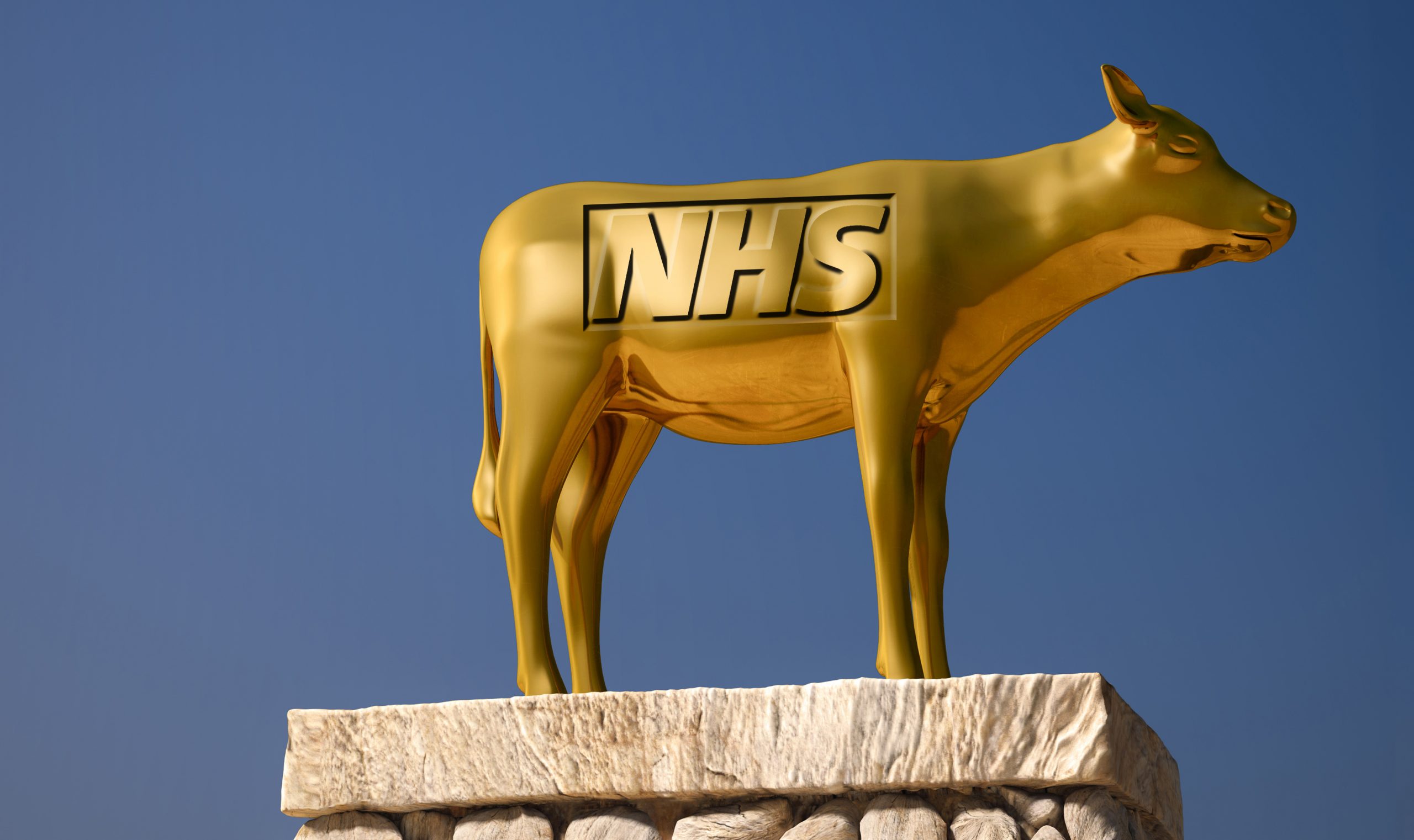
The NHS Eatwell Guide, fondly known to its critics as the Eat badly guide, still tells us to choose lower-fat products, such as 1% fat milk, reduced-fat cheese, or low-fat yoghurt. This is based on the inadequately evidenced postwar belief that saturated fat is bad for your heart.

How embarrassing, then, for government dietetic gurus, that a major study of 4,150 Swedes, followed over 16 years, has last week reported that a diet rich in dairy fat may lower, not raise your risk of cardiovascular disease.

This Swedish study echoes the findings of a 2018 meta-analysis of 29 previous studies, which also found that consumption of dairy products protects against heart disease and stroke.

A body of research also suggests that consumption of dairy fat is protective against type 2 diabetes.

[…]

Five a day
A slogan invented to shift more fruit and veg, but not one to live your life by

This catchy slogan, now a central plank of government eating advice, came out of a 1991 meeting of fruit and veg companies in California.

Five a day logos now appear on many ultra-processed foods, from baked beans to ready meals, imbuing them with a questionable aura of health.

But other than as a marketing tool, any justification for this slogan is thin.

[…]

The health case against meat is predicated on cherry-picked evidence from low-quality, unreliable, observational studies that fail to draw a distinction between meat in its unprocessed form and multi-ingredient, chemically altered, ultra-processed meat products, such as hotdogs.

Association doesn’t mean causation. Confounding factors exist; someone who eats bacon butties daily might also be eating too much sugar, be consuming lots of additive-laden bread, be under stress, or smoke – the list goes on.

The International Agency for Research on Cancer’s 2015 claim that red meat is “probably carcinogenic” has never been substantiated.

In fact, a subsequent risk assessment concluded that this is not the case.

September 27, 2021

Why Were Things So Terrible In the 17th Century – General Crisis Theory

Kings and Generals
Published 26 Sep 2021

💻 Go to https://NordVPN.com/kingsandgenerals and use code kingsandgenerals to get a 2-year plan with a huge discount plus 4 additional months for free. Protect yourself online today!

Kings and Generals animated historical documentary series on early modern history and economic history continue with a video on the general crisis theory, as we try to deduce why the 17th century events were so terrible and why so many wars, rebellions, and upheavals happened in this period

Support us on Patreon: http://www.patreon.com/KingsandGenerals or Paypal: http://paypal.me/kingsandgenerals. We are grateful to our patrons and sponsors, who made this video possible: https://docs.google.com/document/d/1o…

The video was made by EdStudio while the script was researched and written by Turgut Gambar. Narration by Officially Devin (https://www.youtube.com/user/OfficiallyDevin)

✔ Merch store ► teespring.com/stores/kingsandgenerals
✔ Podcast ► http://www.kingsandgenerals.net/podcast/
✔ Twitter ► https://twitter.com/KingsGenerals
✔ Instagram ► http://www.instagram.com/Kings_Generals

Production Music courtesy of Epidemic Sound: http://www.epidemicsound.com

#Documentary #EarlyModern #GeneralCrisis

Britain’s electricity grid facing the inevitable result of over-dependence on “renewable” generation

Filed under: Britain, Economics, Environment, Government — Tags: , , — Nicholas @ 03:00

Peter Hitchens on the grim choices ahead for Britain, as the choice to switch to carbon-free electricity generation has left the country with a less reliable and more expensive grid:

These worrying signs came just after we learned that nothing, apart from luck and prayer, stands between us and a shutdown of our power grid. Our gas reserves are almost gone. We have blown up our coal-fired power stations. We have failed to build new gas-powered plants that should have replaced them. Our ancient nuclear power system is fast wearing out.

So we must rest our hopes on wind that does not always blow and on foreign power that may not arrive when we need it.

Can we even begin to imagine what will happen to us if this all goes wrong? We are far more reliant on electricity than ever before. The computers that govern all we do cannot run on anything else, and if they crash cannot be instantly switched on again.

In response, our allegedly conservative Prime Minister praises the green policies that have created this disaster, and pledges to continue them. And he is applauded for doing so.

We may not be facing The Day Of The Triffids, but we face the Day Of The Nitwits, when 30 years of relentless green zealotry send us spinning into the Third World.

There, we’ll be the only Third World country with a submarine-launched nuclear deterrent – Burkina Faso with rockets, as an old joke about the USSR went.

Once again, I saw this coming. Arguing with the Greta Thunberg lot is like arguing with the Spanish Inquisition. The only thing they want to hear from me is a full confession before they burn me at the stake, using carbon-free fuel.

So rather than contesting their faith, I suggested that our best future lies in non-polluting nuclear power. As long ago as 2006, I urged: “Building nuclear power stations, and making ourselves independent in energy, is at least as important as maintaining a nuclear bomb.” I also pointed out, rather before this was fashionable, that “the Russian threat is to our energy”.

Now, I don’t fantasise about being Prime Minister. The job seems to me to be unrewarding, unhealthy, physically exhausting and surprisingly powerless. But on this occasion I have to say that if I could have seen this in 2006, so could the Government and the Civil Service.

And if serious action had been taken then, we could now have a fleet of modern nuclear power stations that would make us secure in energy, and probably turn us into a power exporter.

Instead, leaders of both parties chose the path of vanity, an unusable Cold War superpower weapon, maintained at impossible cost long after the Cold War ended, and even longer after we ceased to be a superpower.

And they chose the pursuit of green policies – the most all-embracing, dimwit wooden-headed dogma since the death of Communism, without enough sense to take any precautions in case it did not work out.

Update: Link was broken.

September 25, 2021

Samizdat from “Ozcatraz”

Through some miracle of invisible ink, blind mail drops, and all the necessary modern cloak-and-dagger technical equivalents, James Morrow manages to get some news out of locked-down-to-the-nth-degree Australia:

You really have to feel for the poor people at Tourism Australia.

Having spent decades happily if not particularly creatively pitching their product to the world with the time honoured formula of “beaches, Opera House, outback, crocs”, they now have to figure out how to sell a country that looks more and more like a tropical North Korea.

That is, of course, if the federal government ever lets visitors in again without forcing them to first spend a week or two quarantined in some prefab hotel or desert facility in the name of “keeping Australians safe”.

The question thus becomes, both for those of us trapped here in Ozcatraz as well as bemused outside onlookers, how did a free and easy land of opportunity become gripped by a neurotic covid puritanism that truly believes any sort of fun or joy or sociability is deadly, and a place where protesters and cops are having pitched battles in the street over mandatory vaccinations?

If you don’t believe me, consider that in Melbourne — ground zero for Australia’s covid madness, the city just crossed the line to become the most locked-down city in the world — the state premier ordered playgrounds shut and had concrete bollards hoisted into skate parks to stop kids from riding their bikes.

A few weeks ago, after some wags took advantage of a loophole that allowed bars to offer takeaway cocktails and organised an al fresco pub crawl, outdoor consumption of alcohol was banned always and everywhere.

Even a tiny loosening of restrictions there to allow beleaguered residents to meet up for a brief, vaccinated, socially distanced picnics left the prohibition on alcohol in place, all in the name of the Holy Blessed Science.

In Sydney, which is comparatively sane and where there is at least a decent plan to get back to some sort of vague simulacrum of normal over the next few months, everyone still has to “mask up” when outdoors, even if not around anyone else. The only socialising allowed is under very limited outdoor circumstances, among the fully vaccinated, who are not allowed to travel too far to meet up with one another.

What makes it most bizarre is that even the state’s health minister recently admitted outdoors was the safest place to be and everyone understands that the mask rule was imposed largely to shut up a depressingly totalitarian press gallery that wasn’t going to shut up until everyone was welded into their homes Wuhan-style.

Yet, as Sydney moves into summer, every weekend sees Twitter flooded with photos of sunbakers on local beaches asking WHY IS THIS ALLOWED? and demanding police action.

On any given Monday in the local park where I exercise my spaniel, my very earnest bourgeoise-left neighbours grumble about it all not being “in the spirit” of the health orders while rabbinically parsing whatever latest decree has just come down from the Temple, er, Ministry of Health.

Update: Alex Berenson confirms much of the situation in Oz (h/t to SDA for the link).

Americans have the wrong idea about Australia.

Thanks to some brilliant tourism branding and Crocodile Dundee, we think of it as rough-n-ready frontier country, Montana with bigger beer cans. The dingo ate my baby!

In reality it’s Canada with a mean streak. The Karens are in charge and they are mad.

[…]

So when Covid rolled in, the Australian government (and lots of Aussies) saw it as just another ugly export from China that needed to be beaten back at all costs. To its credit, Australia pushed hard for an independent investigation of the origins of Sars-Cov-2 last year (the Chinese pushed back, going so far as to call for a boycott of Australia’s delicious wine).

But Australia also went cray-cray — the technical term — for the fantasy of zero Covid. It effectively closed its borders not just to other countries but to its own citizens. For most of the last two years, they have had a hard time coming home — and an even harder time leaving.

[…]

Until the last couple of months, the frogs were not just luxuriating in the pot but asking for a little more heat! Australians were so pleased to be Covid-free — for the entire first half of 2021, they had only one Covid death — that the majority happily tolerated these restrictions.

Yes, a few rabble-rousers complained, but even videos of police arresting people inside their homes or attacking (truly) peaceful protestors didn’t dent support for the creeping police state.

But in the last couple of months, and especially the last few days, the equilibrium has shifted. And — inevitably — the response of Australia’s fearless leaders has been to try even harder to stamp down unrest. As a result, the situation is increasingly unstable.

Will Mars become the equivalent to Earth that India and the East Indies once were for Europe?

Filed under: Economics, Europe, History, India, Space — Tags: , , , , , — Nicholas @ 03:00

In the latest Age of Invention newsletter, Anton Howes goes a long way in both time and space away from his normal Industrial Revolution beat to consider what might happen as humans attempt to colonize Mars:

The first true-colour image generated using the OSIRIS orange (red), green and blue colour filters. The image was acquired on 24 February 2007 at 19:28 CET from a distance of about 240 000 km; image resolution is about 5 km/pixel.
Photo taken by the ESA Rosetta spacecraft during a planetary flyby.

The other week I attended an unconference, which had a session on the implications of establishing colonies on other planets. Although this was largely meant to be about the likely impact on Earth’s natural environment — what will be the impact of extracting raw materials from asteroids and other planets? — some of the discussion reminded me of the challenges faced by the long-distance explorers, merchants, and colonists of four hundred years ago. There are quite a few parallels I can see between travelling to Mars, say, in a hundred years’ time, and travelling between continents in the age of sail.

For a start, there’s the seasonality and duration of the voyages. European ships headed for the Indian Ocean had to time their voyages around the monsoon season; trips across the Atlantic were limited to just half the year because of hurricanes. Round-trips took years. Similarly, the departure window for a voyage from Earth to Mars only comes around once every 26 months, and even the most optimistic estimates place eventual journey times at about 4-6 months. Supposing that Mars can be permanently settled, any colony there will likely be extremely dependent on the regular arrival of resupply craft. There’s only so long that any group can survive in a hostile environment on their own.

[…]

The Portuguese had once been the only Europeans to trade directly into the Indian Ocean, but the structure of their trade — essentially a state-run monopoly with some licensed private merchants — was unable to compete with the arrival of the Dutch. The initial Dutch forays into the Indian Ocean in the 1590s had originally been financed by lots of different companies, often associated with particular cities — similar to the proliferation of billionaire-led space exploration companies today. But the Dutch soon recognised that such a high-risk trade would only be able to survive if it came with correspondingly high rewards — rewards that could only be guaranteed by eliminating domestic competitors (and if possible, foreign ones too). They therefore amalgamated all of the smaller concerns into a single company with a state-granted monopoly on all of the nation’s trade with the region. In this, they actually copied the English model, but then outdid them in terms of the organisation and financing of that company […].

Are we likely to see a similar move towards state-granted monopoly corporations when it comes to space colonisation? I suspect it depends on the potential rewards, and on the strength of the competition. There is certainly precedent for incentivising risky and innovative ventures in this way, through the granting of patent monopolies. Patents for inventions in the English tradition originally even had their roots in patents for exploration. I would not be surprised if such policies end up being used again by countries that are late-comers to the space race, perhaps by granting domestic monopolies over the extraction of resources from particular planets or moons. Although direct state funding can help in being first, like they did for Spain and Portugal in the fifteenth and sixteenth centuries, state-granted monopolies for private actors may again end up being the ideal catch-up tool for laggards, as they were for the English and the Dutch.

How the monopolies are managed will also matter. The English East India Company, for example, was initially more focused on rewarding its shareholders than it was on investing in the full infrastructure with which to dominate a trade route. The Dutch company, by contrast, from the get-go was part of a more coordinated imperial strategy — one that sought to systematically rob the Portuguese of their factories and forts, to project force with the aid of the state. Indeed, if there’s one big lesson for the geopolitics of space, it’s that far-flung empires can be extremely fragile, with plenty of opportunities for late-arriving interlopers to take them over.

Although it’s difficult to imagine space colonies being able to become self-sufficient any time soon, it seems likely that those controlled by particular companies or countries may occasionally be persuaded — by bribes or by force — to defect. What’s to stop them when they’re hundreds of millions of kilometres away from any punishment or help? Ill-provisioned factors, forts, or colonies happily switched sides to whoever might provision them better. As I mentioned last week, such problems curtailed the ambitions of other would-be colonial powers, like the Duchy of Courland and Semigallia. When the Dutch turned up in the Indian Ocean, many of the Portuguese forts they threatened simply surrendered.

I bow to Anton’s far greater historical knowledge in most things, but state monopolies in the 16th to 19th centuries were very different creatures than their potential modern equivalents, and the much more comprehensive degree of state control of the economy now would probably mean that a state monopoly over extraterrestrial activities would be a worst-possible outcome. The greater the powers in the hands of the state, in almost every case, the worse all state-controlled activities have become. The incentives of civil servants are vastly different than those of individuals or businesses and are farcically incompatible with the risk-taking necessary on a dangerous frontier.

September 24, 2021

From Handmaid’s Tale cosplay to eco-terrorism

Filed under: Britain, Environment, Media, Politics — Tags: , , , , — Nicholas @ 05:00

Connor Tomlinson outlines the many performative and disruptive projects of Roger Hallam:

Insulate Britain gluing themselves to the M25 for a week has already produced a four-car collision, with victims airlifted to hospital, and delayed a mother’s treatment, leaving her paralysed by a stroke. Despite these events, activists claim they “don’t accept that we put lives at risk”. It’s vital that legal and cultural action is taken to insulate Britons from this dangerous brand of eco-extremism.

As Dan Wootton’s interview with activist Liam Norton explained, the endangerment of lives to exercise political pressure would classify Insulate Britain as ecological terrorists. The action Insulate Britain wishes to force government to take is “to produce within four months a legally binding national plan to fully fund” the insulation of all Britain’s 29 million homes with taxpayer cash. Essentially, they’re sitting in the motorway, blocking your work commute, so the state can take and spend more of your pay-check.

Insulate Britain is another in a long line of activist vanity projects engineered to make headlines by founder Roger Hallam. Starting with “Stop Killing Londoners” in 2017, Hallam went on to co-create Extinction Rebellion; before being ousted over his comments concerning the Holocaust. But Hallam’s alarmist and extremist rhetoric preceded this insensitive remark. In, 2019, Hallam said “forcing the governments to act” or “bring[ing] them down and create[ing] a democracy fit for purpose” will require “some [to] die in the process”. This “democracy” would, paradoxically, be a “socialist project”, with Hallam in the ideological driving seat.

Hallam’s prior protests demonstrated a similar indifference to human suffering. Hallam was arrested at Heathrow Airport for aiming to fly drones into active airspace and ground commercial flights. His “Heathrow Pause” protests constituted a terror threat, in that drones could cause flights to be grounded or collide and crash. Again, Hallam was willing to risk lives to make headlines.

All of these movements claim the sole solutions to apocalyptic emergencies are the appointment of Hallam himself to a position of public power which lets him implement whichever solutions he deems necessary. His PhD at Kings College on “civil disobedience” exposes Hallam’s own egoism in comparing himself to MLK and Gandhi. This was also an indictment of modern university radicalism; echoed by Dr. Charlie Gardner of the University of Kent making the same comparison in a lecture, calling himself “a hero of our times”, and refusing to disavow Hallam when I challenged him on it.

When I first heard of the M25 protests, I thought they’d be allowed to carry on for a token amount of time to get their actions into the media and then they’d be cleared off by the police. I was quite astonished to find that they were permitted to stay in place for several hours and that the police were being quite solicitous of their health and protecting them from any attempt at counter-protest by the stranded motorists. I’m now worried that the next time they try this, the motorists will have learned that the police aren’t there to enforce the law and be tempted to take it into their own hands.

« Newer PostsOlder Posts »

Powered by WordPress