
Marx thought the Proletariat would develop class consciousness — that is, solidarity based on their mutual exploitation by the “capitalists” and “bourgeoisie” — and from that all else would flow. Lenin modified that, arguing that The Proletariat would never achieve class consciousness without a “Vanguard Party”. That’s why it’s Marxism-Leninism to this day. Lenin was closer to correct, but with this crucial difference: Instead of leading the Laboring Masses to Socialism, the Vanguard Party has decided “hey fuck the Laboring Masses, we’re getting ours“.
Marx called religion “the opiate of the masses” for a reason — by dulling their pain, it prevented them from realizing their true class position, thus achieving class consciousness, thus sparking The Revolution. What religion really does, of course, is satisfy a deep yearning in the human soul. There is more to life than shit, shoes, and bread. Karl Marx didn’t want to hear that, because his religious yearning was satisfied by his substitute god, Dialectical Materialism, and the half-assed (but very real) ceremonial it produced. Again, there’s a reason every Leftwinger practically from the French Revolution looked like [this]
I don’t know how you say “fake and gay” in Russian, but every single thing in that photograph is fake and gay. A pose. An affectation. And as with their look, so with their behavior. Leftwingers are, and always have been, famously boorish. They have no idea how longshoremen actually act, but they sure think they know, and so that’s how they act — like the worst caricature of a crude, illiterate, drunken longshoreman.
(I don’t know any longshoremen either, but I do know some folks who make a living from the sweat of their brows, and they’d turn Lenin’s head around for him if he came to their neighborhood and started acting like that. The Laboring Masses might indeed be “rude mechanicals” in Shakespeare’s sense — meaning, without too much formal education — but they’re surely not rude in the behavioral sense, because in their world, running your mouth gets you punched in it).
Dressing and acting like that is, quite literally, a religious ceremony for them … and ceremonial can only take place in a designated space, a liminal space that the community respects. A priest can indeed hold a mass on a street corner, but only if the passersby have enough residual respect for the institution of religion not to beat and rob the worshipers while their backs are turned.
The intelligentsia never understood that consciously. They sure as hell understood it unconsciously, though, which is why they immediately self-segregated — getting “sent down to the countryside, to reconnect with the laboring masses” was one of the worst punishments Mao’s boys could dish out to one of their mandarins, and again, there’s a reason for that. The upshot is, the intelligentsia, the Apparat, the Cloud People, whatever you want to call them, are the only ones who developed “class consciousness” in the Marxist-Leninist revolutionary sense …
… and their class consciousness is entirely oppositional. They are not us. That’s their sole criterion for virtue. Whatever we like, they dislike. Whatever we do, they must not do; and whatever we eschew, they must embrace.
Severian, “On Losing the Cold War”, Founding Questions, 2022-07-02.
August 13, 2026
QotD: Marx was right about “class consciousness”
August 6, 2026
QotD: John Nicholson, a Muslim saint who really hated India
[…]
[The First Anglo-Afghan War (1838-1842)] began with the British efforts to replace Afghan Emir Dost Muhammad with a more pliant leader, which in a pattern seen from the days of Alexander onward, involved an invasion, an attempt at a pacification, followed by a grim and growing awareness that the place is full of some of the most brutal and fractious people on Earth and is simply ungovernable, which terminates in a costly retreat, the country itself returning to its customary barbarism, efforts to change it having had all the effect of flinging an encyclopedia into a chimp enclosure. For the British, this meant early success, then an overwinter occupation in which their position deteriorated, then a mass uprising, whereupon they negotiated with the locals for a peaceful exit upon surrendering their arms. The retreating British were of course betrayed and massacred. One man made it out.
Nicholson, serving as an adjutant officer with a native regiment, had earlier been taken prisoner, and endured horrific conditions as such. He watched as his Hindu soldiers refused — to a man — to convert to Islam, and were executed one after the other. After having been released, he discovered that his younger brother Alexander had been murdered and mutilated by the Afghans while retreating with the rest of the army. The entire effort had been a great traumatic waste.
One might expect that Nicholson would hate the Afghans and perhaps revise upward his estimation of the brave Indian soldiers who had served under him. But while he did indeed revile the Pashtun tribesmen (“the most vicious and bloodthirsty race in existence”) he actually seems to have disliked them slightly less than the Hindus, perhaps on the grounds that no one that eager to kill Indians can be all bad. Indeed, he seems to have learned there some harsh lessons concerning what it would take to actually accomplish anything in the subcontinent, doctrines he would apply fastidiously and thoroughly. In many ways, he went a bit more native than he would have cared to admit.
After the war, Nicholson was promoted and given a series of administrative jobs, where he became well-acquainted with the chaotic political situation in the Punjab region. Mostly under the control of the Sikh Empire, the area had long been contested ground between that new faith and Islamic invasions from the Mughals to the southeast and the Afghans through the Khyber Pass to the west, not to mention restive Hindu Rajputs and Marathas to the south. The unstable (then and now) region of Kashmir lay to the north, and the whole of the region was plagued by innumerable bandits and warlords. The BEIC ruled through direct administration, client kings, and various alliances, the latter two of which its political officers (“politicals”) had to interact with on a regular basis. It was very much a situation out of George R. R. Martin’s fever dreams, constant betrayals, perversions of every kind, and even a Ramsey Bolton-esque Sikh despot who flayed men alive for amusement.
Nicholson was in charge of the Bannu area, where he rapidly made a name for himself as a local administrator. The whole of the Bannu was infested with bandits of all kinds, from jihadis to Hindu cultists to normal brigands, and the people lived in constant fear of their depredations. Nicholson had no real interest in bettering lives, but he had even less interest in allowing any Indian, anywhere, to challenge his authority. So he set about fixing the problem as only he could.
Nicholson arrested and executed scores of bandits, rapidly processing them through his very efficient court system. The idea of impartially dispensing justice without respect to person or affiliation was quite new to the area, but Nicholson made sure the locals adjusted quickly, tolerating not even the slightest hint of disrespect from anyone, no matter who he was. When a local Muslim leader casually spit on the ground in front of him, Nicholson made him kneel and lick it up. Anyone who failed to display prompt obedience to his commands he had flogged immediately, and was the bane of servants, who were often the causal recipients of hurled cups and dishes. He was a very hands-on leader, not the least hesitant to get them dirty in a quite literal sense. At one point, when his local police were unwilling to pursue a dangerous gang leader, Nicholson rode alone to the man’s village, approached him on the street, and killed him with his sword after the suspect failed to submit to arrest. Nicholson kept his severed head on his desk pour encourager les autres.
Interestingly, such draconian brutality seems to have actually made Nicholson popular. He was harsh, unyielding, and wholly indifferent to their culture, but that very indifference made him unassailable to anything but his sense of duty. He was unbribable, as the people of India had absolutely nothing he wanted, and his complete contempt for their social norms meant that Hindu, Muslim, or Sikh, Brahmin or outcast, Aryan or Dravidian, all got the exact same treatment, prompt and thorough. His mad fearlessness meant that he was similarly immune to threats. Criminals, whoever they were, received savage punishment, but the law-abiding were left in peace; Nicholson had no desire to “improve” them or their society like his contemporary Macaulay. In a real sense, for the first time, the diverse people of the area were free, under Nicholson’s rule, to live as they wished without the violent misery that had previously characterized the region. It was a multicultural success story, festooned with the occasional decapitated head.
This being India, the people expressed their feelings towards him in particular ways. A body of wild Pashtun raiders, admiring Nicholson’s capacity for ruthless violence and his grim charisma, attached themselves to him as a personal guard, fedaykin to his Muad’Dib, serving without pay and loyal only to him. In a theologically fecund area with a strong tradition of syncretism and cults of personality, Nicholson naturally became the object of worship for a group of fanatical devotees. He in turn naturally despised this, having his worshipers flogged as public nuisances, but this only served to increase their devotion to their inscrutable, violent deity. In some parts of India, the Cult of Nikal Seyn survived as a Shia devotional movement, with Nicholson cast as a Muslim saint bringing justice to a war torn land. The last member died in 2004.
Librarian of Celaeno, “The Man Who Hated India”, The Library of Celaeno, 2026-05-04.
July 30, 2026
Intramural conflict in the progressive “big tent”
On the social media site formerly known as Twitter, L. Wayne Mathison identifies some of the major fault lines among the temporary coalition-of-convenience on “the left”:
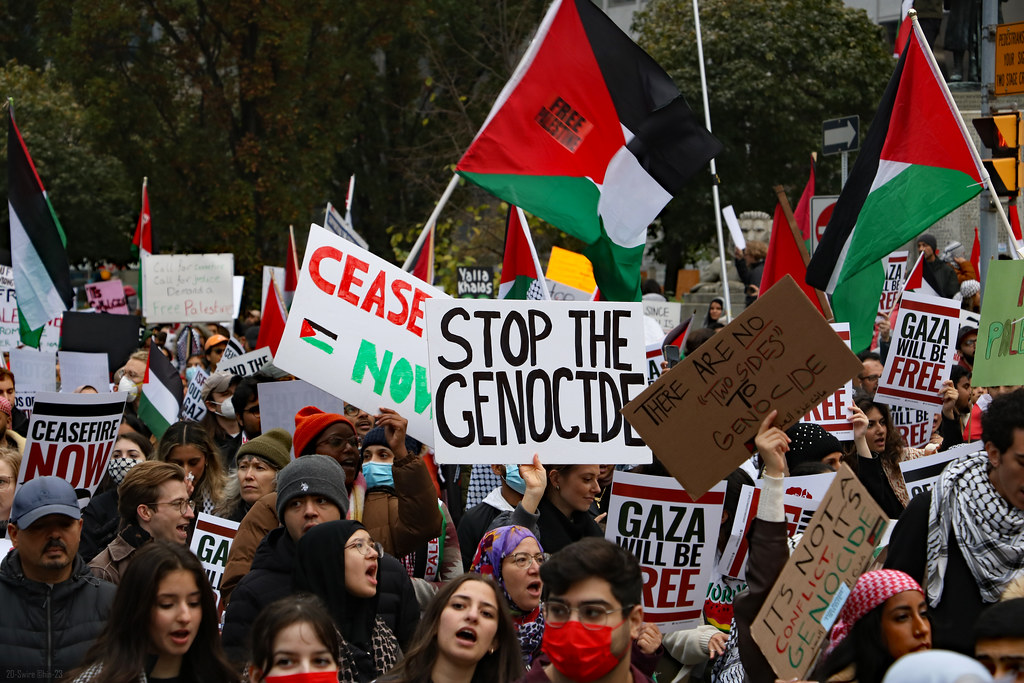
“Free Palestine/Anti-Israel protest” by Can Pac Swire is licensed under CC BY-SA 2.0 

 .
.
The modern woke worldview keeps colliding with reality because it sorts people into fixed moral categories: oppressed people are presumed good, while designated oppressors are presumed guilty. Once that framework takes hold, facts become secondary.
That is why some progressives can condemn “Christian nationalism” before breakfast, then struggle to name radical Islam when an Islamist attacks the very people they claim to defend.
The contradiction is obvious. Radical Islam is deeply hostile to homosexuality, women’s equality, free expression and secular liberalism. Pretending otherwise does not make anyone tolerant. It makes society dishonest and vulnerable.
This does not mean every Muslim is dangerous, nor does it justify collective blame. It means an ideology should be judged by what it teaches, what its extremists do, and whether its institutions openly confront the problem. The same standard should apply to every religion and political movement.
The woke response is usually predictable: redirect attention toward the far right, blame Western society, or accuse anyone raising the issue of hatred.
That protects the ideology, but it does nothing to protect ordinary people. Compassion without boundaries becomes negligence.
A healthy society needs openness, but openness is not the absence of judgment. Immigration, asylum and multiculturalism require enforceable limits, cultural confidence and a clear expectation that newcomers accept the laws and basic freedoms of the country receiving them.
You cannot build social trust by demanding that citizens ignore obvious conflicts. You cannot defend gay people while excusing movements that despise them. You cannot defend women while tolerating misogyny from politically protected groups.
Reality does not care which side has the approved slogans. Eventually, contradictions collect a human cost.
July 27, 2026
The shambolic Fifth Crusade, or “Waiting for Fredot”
In The Critic, Anatoly Grablevsky reviews a new book on one of the less well-known attempts to wrest control of the Holy Land from the Islamic conquerors:
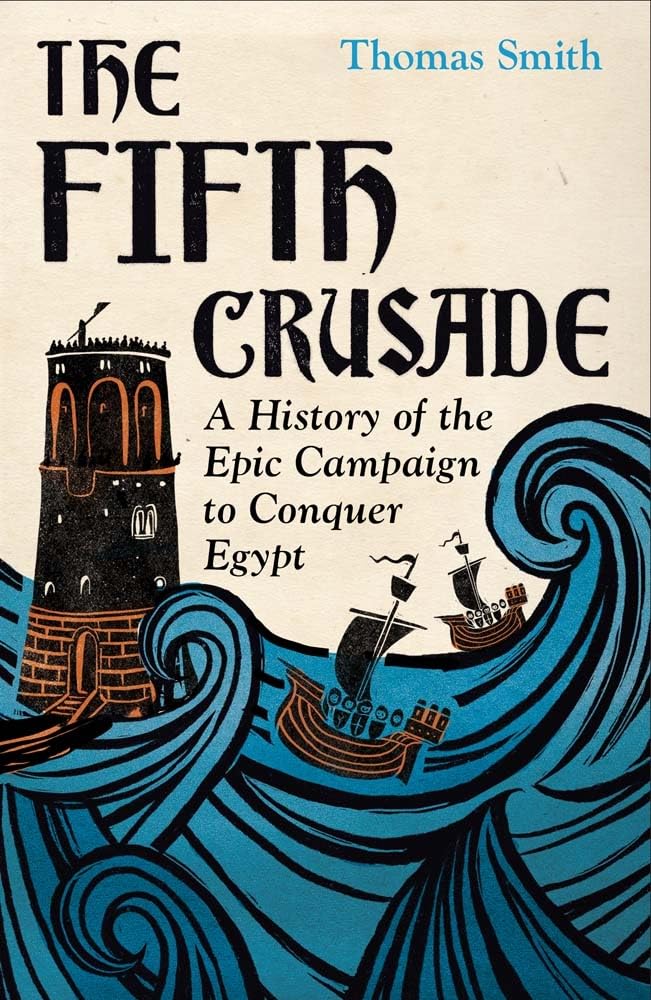
By the early 13th century, the military and geopolitical situation of the Crusader Kingdom of Jerusalem was dire. After the Third Crusade (1189-92) had failed to retake Jerusalem, the Frankish realm in the Holy Land was reduced to a thin coastal strip centred on the heavily fortified city of Acre. The rest of the Near East was in the hands of the Ayyubids, the successors of Saladin.
In response to Ayyubid encroachment, in 1213 Pope Innocent III called for a new holy war to reinforce the Kingdom of Jerusalem and reclaim the Holy City for Christendom. The bulk of the expedition was recruited in the Holy Roman Empire, whose young emperor, Frederick II, the wonder of the world himself, ostentatiously took up the cross. He was, however, in no hurry to join his countrymen in the east.
Learning from their bitter past experiences, this time around the Crusaders adopted a novel strategy. Instead of focusing their efforts on the Holy Land, the Christians targeted Egypt, the political and economic heartland of the Ayyubids.
The Crusader army’s first port of call was the coastal city of Damietta, which, after a lengthy siege, fell in 1219. This was a major victory for Christendom: Crusaders had not captured a city of Damietta’s size, wealth and strategic importance since the fall of Jerusalem in 1099.
The Ayyubid Sultan Al-Kamil, under pressure from Mongol attacks at the rear, now offered attractive peace terms that included the return of Jerusalem to the Christians. The Crusaders, overconfident and under orders from the absentee emperor, rebuffed Al-Kamil and instead decided to march on the Ayyubid capital of Cairo.
Here, the crusade took a shambolic turn. The Christians wasted precious months awaiting the arrival of Frederick II, but the emperor never bothered to show up (Smith might have called his book “Waiting for Fredot”). By the time the Crusaders finally began the march south, Al-Kamil had gathered his strength, and the Franks were quickly outmanoeuvred by the Sultan, who used his superior knowledge of the Nile’s flooding patterns to trap them against the river.
The Crusaders reacted by launching an all-out assault on their substantial wine provisions so that, when the Muslims attacked, the Christian army disintegrated in a drunken rout.
In the ensuing peace deal, Al-Kamil regained Damietta, in return for giving safe passage back to Europe to the Christian survivors.
July 20, 2026
Eight Great Powers Invade China: the Boxer Uprising 1900-1901
Real Time History
Published 20 Feb 2026After the defeat in the 1st Sino-Japanese War, the Qing Dynasty is under pressure: Some are calling for domestic reforms and ousting Western influence, while the Great Powers want to further open up China for their businesses. Violence erupts when the so called Boxer movement kills several Westerners.
(more…)
June 29, 2026
King Charles disclaims the title “Defender of the Faith”
His Majesty has been hinting of his preference for Islam since at least his thirties … becoming formal head of the Church of England fits poorly with his likely personal beliefs. This isn’t really a surprise, as the Church of England has been drifting a long way from its roots for generations now, but symbolically it is quite important, as Donna-Louise Flowers writes on Substack Notes:
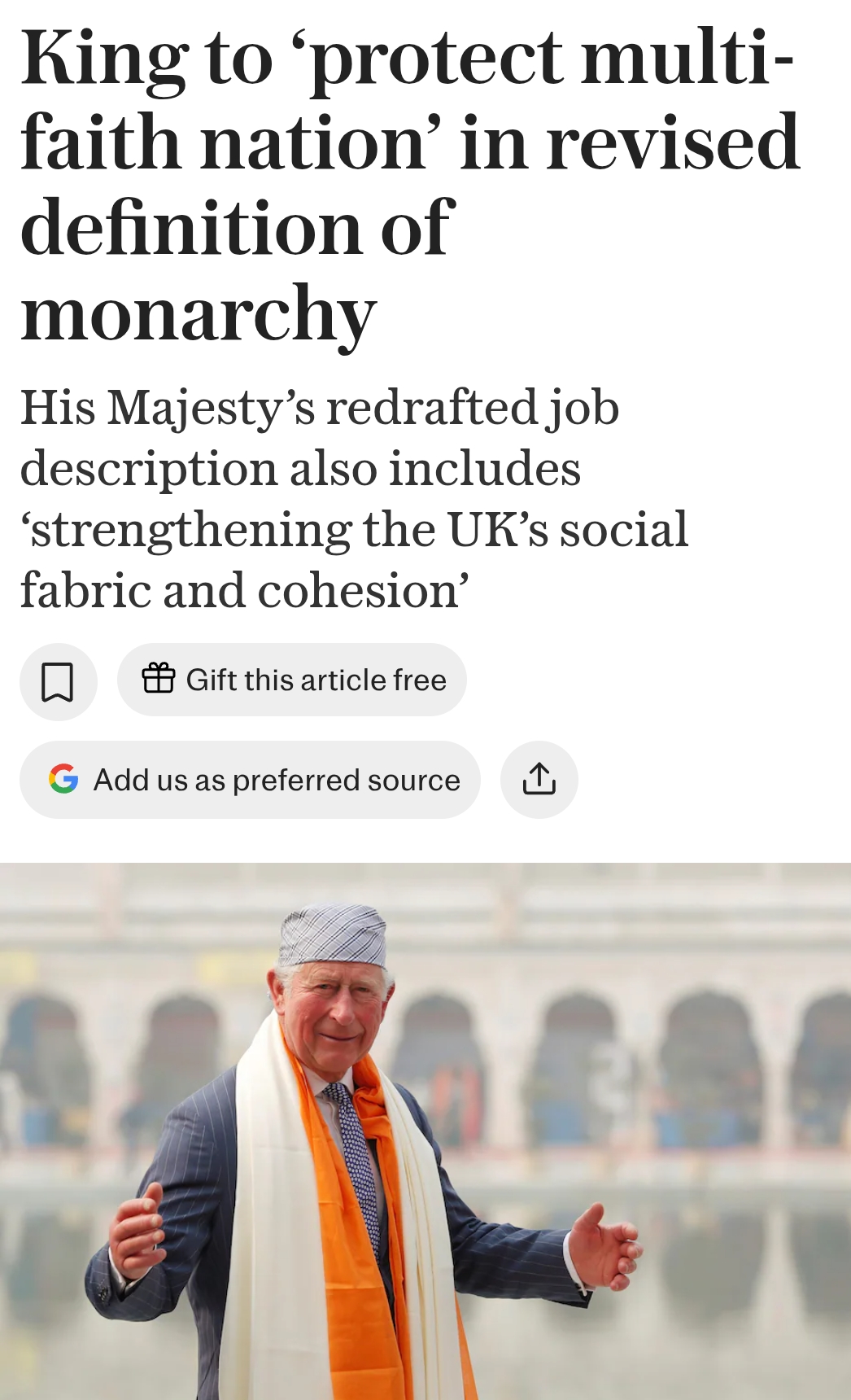
This Is the End of Britain: King Charles Just Formalised the Surrender
This is absolutely shocking. It is an absolute outrage. And it feels like the beginning of the end for Britain as we have known it.
In the latest Sovereign Grant report, Buckingham Palace has ditched the ancient title “Defender of the Faith”. No more defending the Christian foundation of this realm. Instead the King is now described as protecting “the space for Faith within the multi-faith nation”. What utter nonsense. Britain is a Christian country. That is not up for debate or negotiation. If the monarch abandons that core duty, then the institution itself has abandoned the British people.
Other faiths exist here, yes. But their presence does not require the Head of State and Supreme Governor of the Church of England to water down his role into some vague, multi-faith referee. His job is to defend the Christian faith of this nation. Full stop. Not to bend over backwards for every new arrival.
King Charles has spent decades signalling exactly this shift — praising interfaith dialogue, building ties across communities, and even calling Islam a religion of peace. Now it is baked into official Palace language. While we watch our Christian heritage eroded, churches close, and British identity dissolve, the monarchy chooses accommodation over duty.
This is more than infuriating. It is a profound betrayal. We see the reality on the ground: halal meat quietly served in the NHS and in schools to everyone — often without proper consent or even basic awareness. Islamic practices are increasingly imposed on the wider population while native Britons are expected to stay silent and pay for it. Everything is tilting. Sharia norms creep in, demands multiply, and our own traditions are treated as optional extras.
We do not fly to Saudi Arabia, Pakistan or anywhere else and demand they rewrite their entire way of life, abandon their religion, and serve us bacon sandwiches in their institutions. Why then must Britain endlessly accommodate, dilute, and apologise for existing as a Christian country? Why are we expected to change everything while others refuse any compromise?
This multi-faith rebranding is not progress. It is cultural surrender dressed up in polite language. A monarch who stands for everything stands for nothing. Britain had a specific, Christian character that allowed it to become the tolerant society it once was. Hollow that out and you do not get harmonious diversity — you get the slow erasure of the host culture.
I am deeply offended. Millions of ordinary Britons are deeply offended. This feels like the end of Britain as a coherent nation with its own history, faith and identity. The King’s role was never to manage a neutral spiritual marketplace. It was to defend the faith of this realm.
Enough of the euphemisms and the quiet capitulation. Call it what it is: a disgraceful abandonment of duty at the very top. If this continues, there will be nothing left worth defending. Britain deserves better.
Amusingly, the title “Defender of the Faith” was granted to King Henry VIII by Pope Leo X for a book (almost certainly co-written if not ghostwritten) refuting Martin Luther. King Henry “forgot” to disclaim the title when he broke with Rome a few years later …
June 7, 2026
Those “decorations” or “doodles” on medieval manuscripts
In this week’s Substack Post of links they included this gem from weird medieval guys providing lots of illuminated explanations of the visual additions to pages of handwritten text generated in monasteries all over Europe during the Middle Ages:
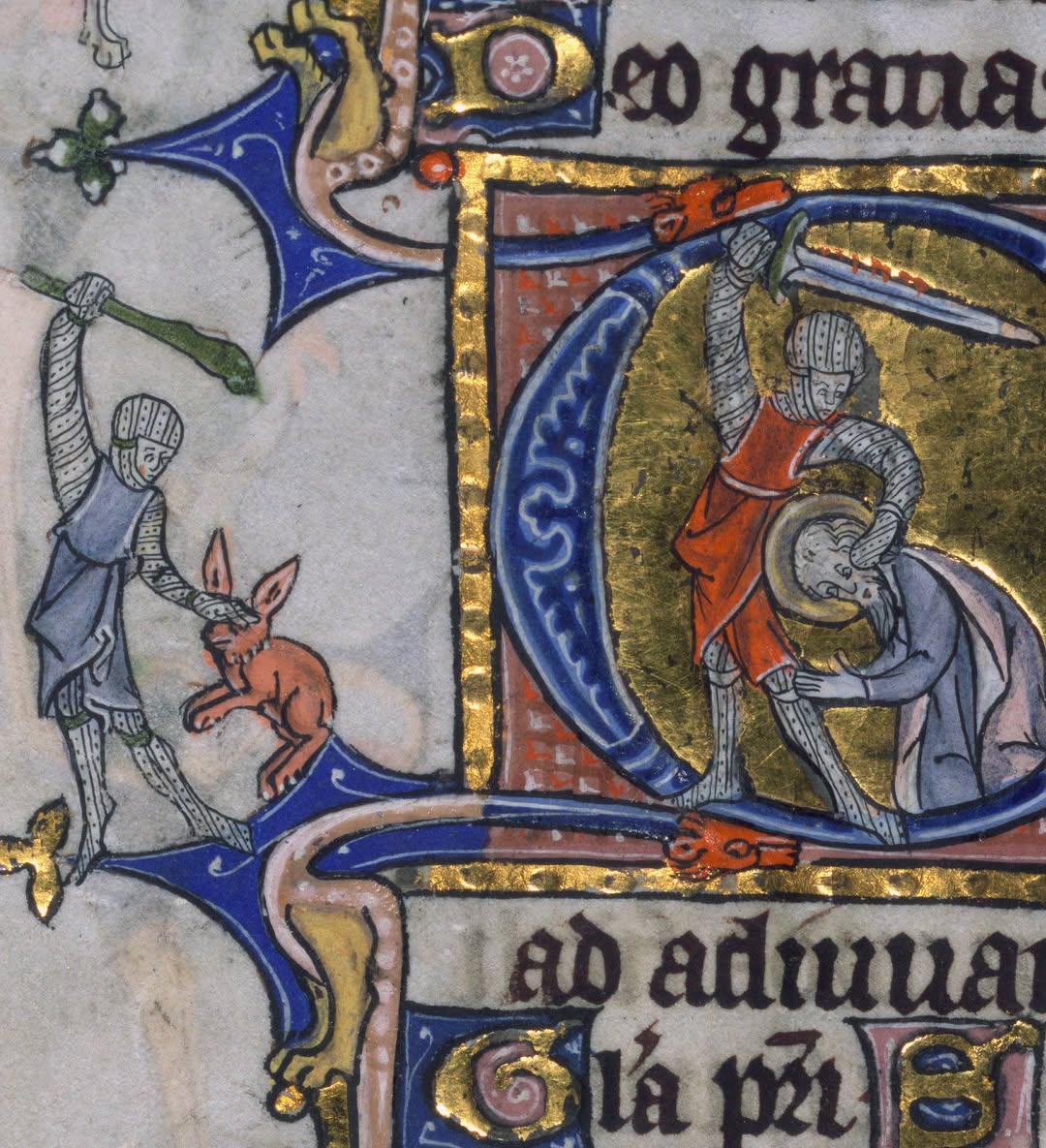
After perhaps my 9,000th time seeing someone describe medieval marginalia as “doodles” or the product of “boredom”, I thought it might be nice to put together a brief guide to some of the themes and ideas that recur in the margins of manuscripts, hopefully helping to showcase the fact that these drawings were usually anything but “random”! In fact, far more interestingly, these little characters and scenes were part of a complex and visually dense world rooted in religion, pop culture, humour, and folklore. This is just a whistle-stop tour, but I’d love to add a second part soon.
Context matters
Illuminated manuscripts were essentially always written first and illustrated second in the late Middle Ages. The scribes would add their writing to unbound, empty pages, working carefully around blank fields where painted miniatures and initials would later be added by a separate artist or artists. We do not know exactly what sort of education these artists would have obtained. However, they almost certainly would have had a degree of literacy in their native tongue and a familiarity with the scriptures they were illustrating, even if this did not extend to a firm grasp of written Latin.
Understanding this is crucial for pushing back on the idea of medieval marginalia as “random”, since it opens up the possibility of considering marginal drawings in relation to the rest of the page and manuscript as a whole — crucial context that is often neglected when we encounter marginalia as isolated snippets online. Artists were not simply filling in blank voids but adding adornment to a canvas already rich with meaning imparted by the scribe. Thus, the first step to understanding a piece of marginalia should always be to trace it back to its source, if possible. Have a look through the entire work and see what themes and images recur.
Works like the 13th century English prayerbook known as the Rutland Psalter show extensive evidence of the marginal artists playing on specific words and lines from the scriptures featured on the same page. I highly recommend Betsy Chunko Dominguez’ fantastic paper “Playing on Timbrels: The Margins of the Rutland Psalter” for a more complete exposition, but I will go over a couple examples here.
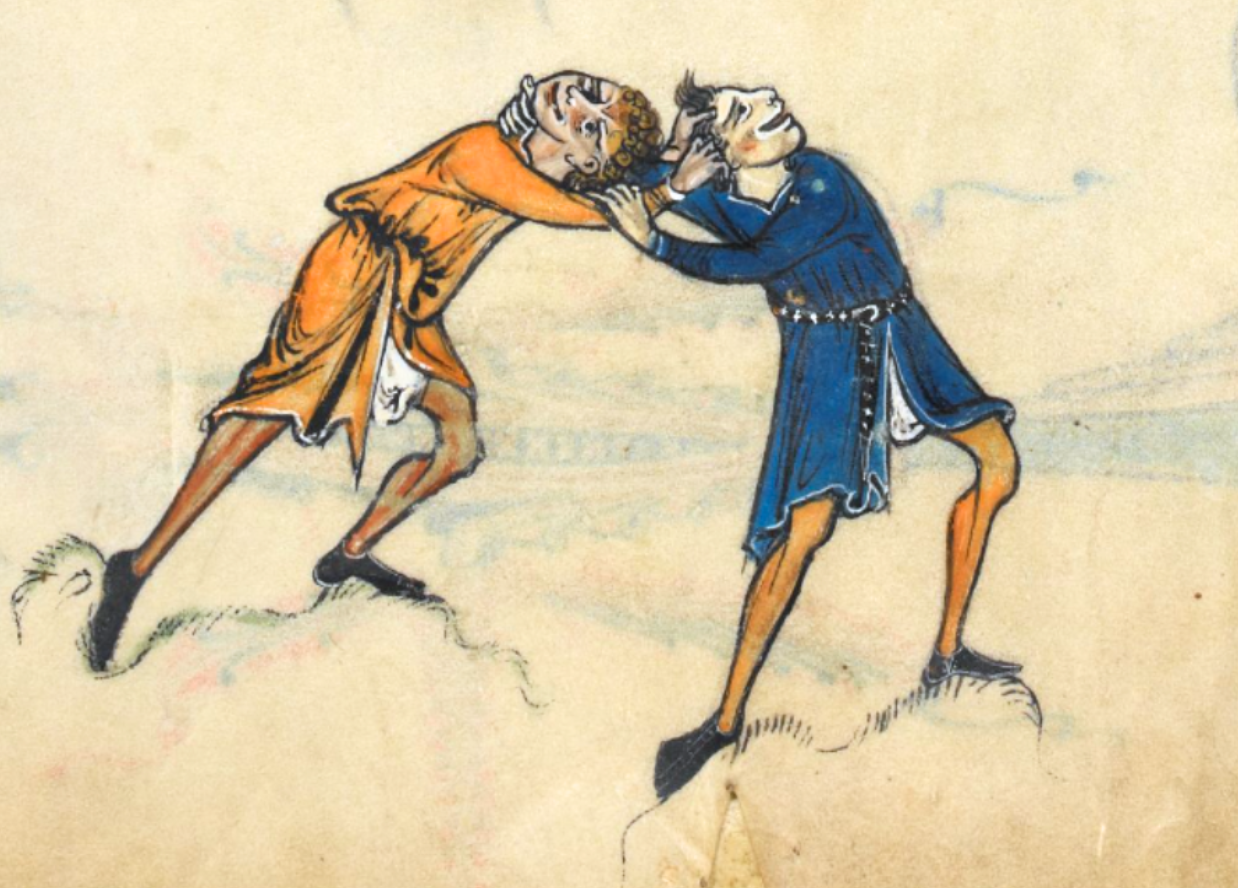
In the lower margin of folio 11r of the Psalter, two men seem to be engaged in a fierce struggle, with one of them apparently trying to rip off the other’s ear. Moving their eyes back up to the start of the opposite page, a reader would have been greeted by the following line from Psalm 5:
Verba mea auribus percipe Domine intellege clamorem meum.
Give ear, O Lord, to my words, understand my cry.
Thus, our marginal brawl becomes a clever pun on the notion of “giving ear” — perhaps a way of making the text more engaging and memorable for its reader.
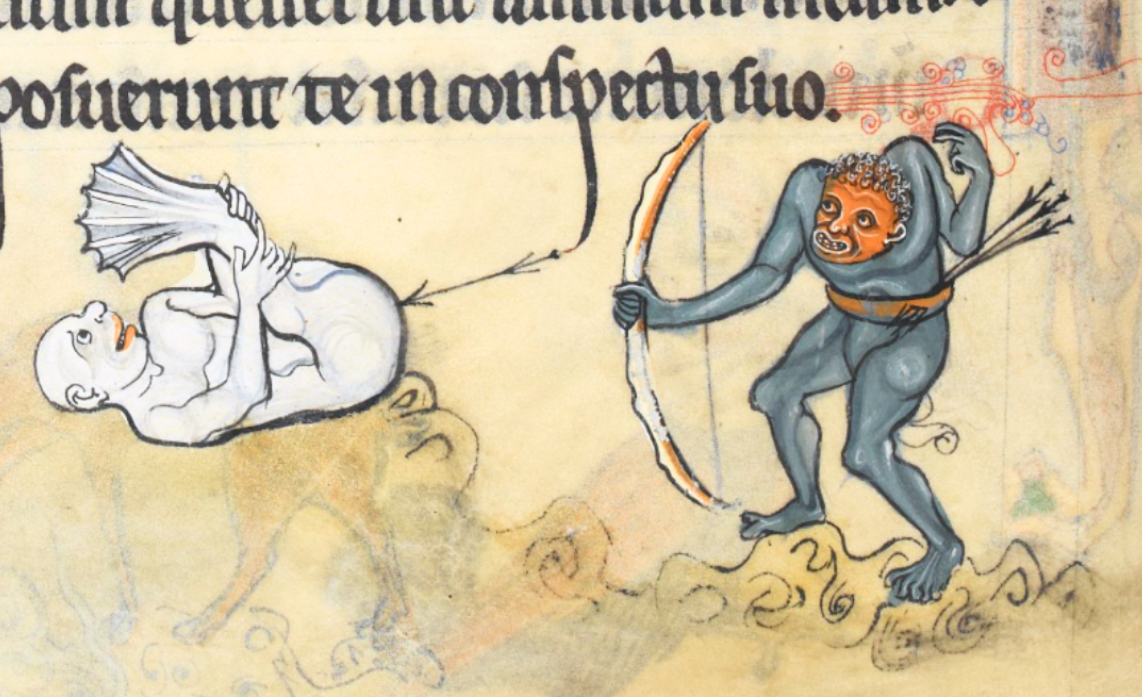
On folio 87v, the artist has extended the letter p from the word conspectu in Psalm 86 (85 in the Vulgate) into an arrow fired from the bow of one monster into the rear end of another.
Conspectu means “to behold” or “to consider”, and the famous medieval scholar Michael Camille connected the arrow’s placement to the notion of gaze as a type of visual penetration. One might also consider the entire verse from the Psalm, which reads:
Deus, iniqui insurrexerunt super me, et synagoga potentium quaesierunt animam meam: et non proposuerunt te in conspectu suo.
Arrogant men are rising up against me, O God; a violent mob seeks my life; they do not keep you before their eyes.
In redirecting the word for “gaze” into the supine creature’s rear end, the artist has perhaps emphasised the evils of turning one’s eyes away from God, connecting the two monsters with the violent mob evoked in the text above.
For those who lack an education in Latin, this type of wordplay can be tricky to identify. What may be easier to find are visual parallels between different drawings in a manuscript: the margins could function as a sort of antithesis to the “orthodox” miniatures and initials in the centre of the page. In one 14th century French book of hours, the martyrdom of St Paul in an initial D is reenacted directly to the left by a soldier about to club a rabbit — a humorous elevation of lapine suffering that perhaps emphasises Paul’s innocence.
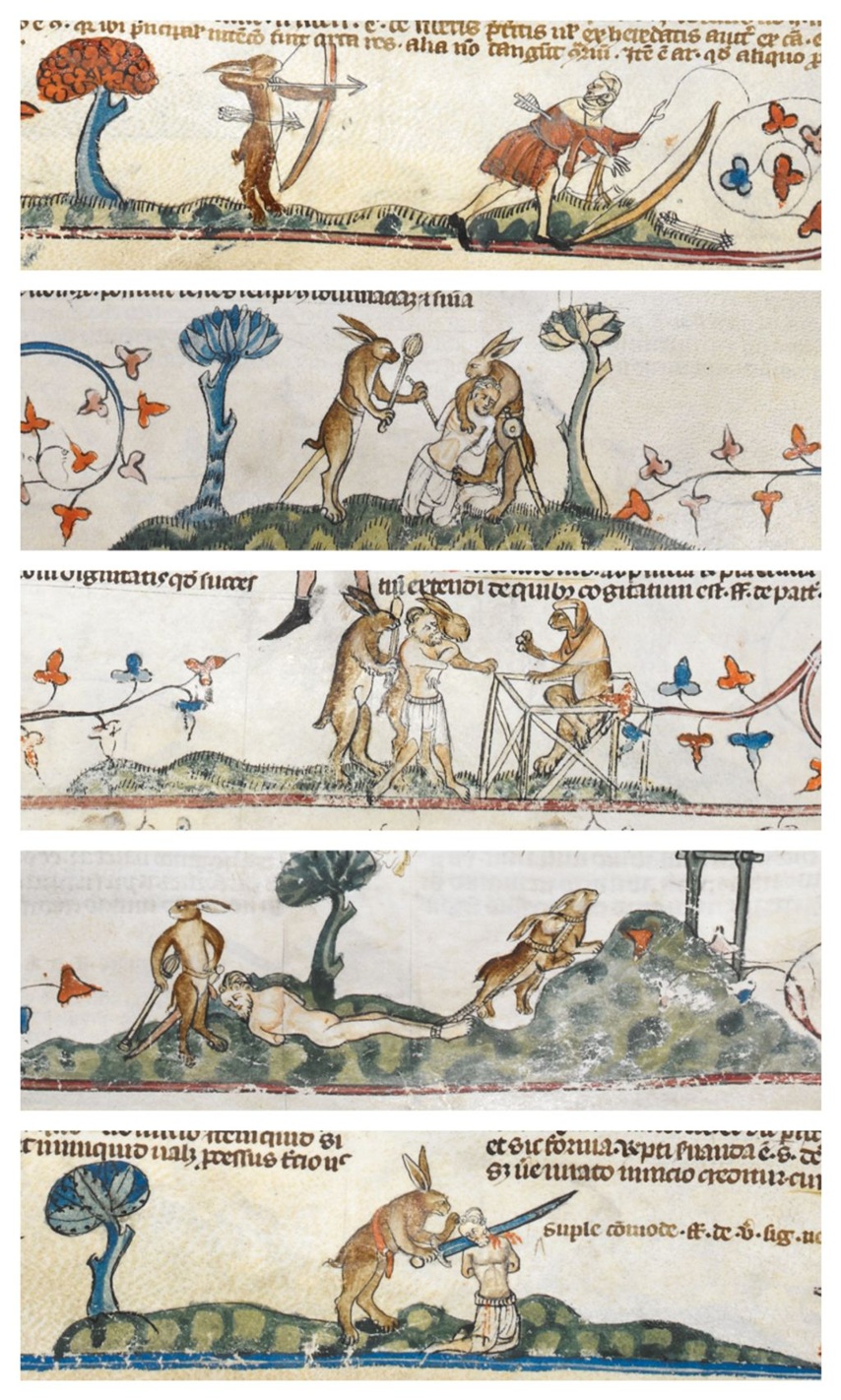
Other manuscripts show narratives playing out in the margins across multiple pages in a comic-book fashion. The 14th century Smithfield Decretals contains more than a dozen multi-page stories, including those of several saints, naughty priests, henpecked husbands, and a group of rabbits who capture, try, convict, and execute a hunter for his crimes against their kind.
British Library, Royal MS 10 E IV
May 22, 2026
QotD: The cargo cults of New Guinea
You may remember that Guns, Germs, and Steel is framed as a reply to a man named Yali, a “remarkable local politician” whom Diamond encountered while walking on the beach in New Guinea in July of 1972. (Back before Diamond’s second career as a pop-science public intellectual, he was an ornithologist focusing on the birds of northern Melanesia.)1 They chatted for a while about the prospects for New Guinean independence, and local birds, and then Yali asked a question that Diamond spends a couple of paragraphs boiling down to something like, “Why did human development proceed at such different rates on different continents?” (Which is of course what Guns, Germs, and Steel tries to answer.) But that’s not actually the way Yali put it, and his real question — indeed, his whole story, which is fascinating in its own right — suggests a whole ‘nother set of answers
Yali should be better-known.2 He may have been from a backwards backwater, but he’s one of the true Player Characters of history. If we lived in a better world, he would be the subject of a prestige cable drama3 — or maybe a Robert Eggers film, because the values and assumptions of his society are incredibly foreign to a Western audience. And so to really understand and appreciate Yali’s story (and the question he asked an American ornithologist on the beach one day) you need some background about the tribal cultures of the New Guinea coast and their reaction to contact with Europeans. Which is to say, you need to understand cargo cults! Because what Yali actually asked (per Diamond’s recollection twenty-odd years later) was: “Why is it that you white people developed so much cargo and brought it to New Guinea, but we black people had little cargo of our own?”
“Cargo” is the catchall word for Western material culture in Pidgin English,4 the lingua franca of New Guinea’s many language isolates, and New Guineans were understandably obsessed: before European contact, they were living in the literal Stone Age. It would be an exaggeration to say that they hadn’t made any technological progress since their ancestors settled the island 50,000 years earlier, since they domesticated several local plants (taro, yams, and the cooking banana) and got pigs plus a little admixture from some passing Austronesians about 1500 BC, but they were solidly Neolithic and had been since time immemorial. So of course as soon as they encountered cargo — especially steel tools, tinned meat and dried rice, and cotton cloth — they wanted it desperately. And they almost universally believed they could get it by ritual activity.
The prescribed rituals varied. One set, recorded in secret by an American Lutheran missionary in the late 1930s, involved the locals setting up tables in front of the local cemetery and decorating them with flowers, food, and tobacco. Then they danced wildly until dawn in twitching, trembling fits so uncontrolled that some devotees continued to sway and shake for days or weeks afterward. Those lucky people were believed to have a special connection to the ancestors that would let them receive dream messages about the cargo shipments their tables and dancing would surely bring. A different cult was led by a man who had a long piece of iron he claimed brought him messages from the future. He told his followers that if they set out all their food in cemeteries as offerings to their ancestors, handed all their Western goods and money to him for safekeeping, and renamed Tuesday to Sunday, they could expect a god to send them airplanes full of cargo flown by the spirits of the dead disguised as Japanese servicemen. These spirits would bring them rifles, tanks, and other materiel and help them drive out the white people, and then the god would change the natives’ skin from black to white. Oh, and also there would be storms and earthquakes of unimaginable violence.
Forget everything you think you know about cargo cults. (Especially forget those pictures you may have seen of “decoy” airplanes or satellite dishes made out of straw and wood: one popular airplane photo is from a Japanese straw festival, another is a Soviet wind tunnel model, and the radio telescope is just one advertisement from a British ice cream company.)5 Nowadays we use “cargo cult” as a lazy shorthand for “copying what someone successful seems to be doing without really knowing why and hoping you get the same result,” but that’s not what was happening at all. If the New Guinea natives built airstrips, it wasn’t out of a belief that airstrips attract cargo planes like planting milkweed brings Monarch butterflies — that would be seem silly but basically understandable from our frame of reference. No, it’s much weirder than that. They built airstrips for exactly the same reason anyone else does: because they thought cargo planes were coming. They just thought the planes were coming because of the dancing.
This is a story about epistemology. And also about Jesus sending you a case of Spam in the mail.
Jane Psmith, “REVIEW: Road Belong Cargo, by Peter Lawrence”, Mr. and Mrs. Psmith’s Bookshelf, 2025-04-21.
- Okay, fine, it’s actually his third career — he was a specialist in cell membrane biophysics before he started publishing on birds.
- Kudos to commenter Gary Mar, who did his part in this project by alerting me to this book in the first place.
- Just in case anyone reading this has contacts in showbiz, my other idea for a cable drama is the story of Charles V, Philip II, and William of Orange. The emperor of half the known world, the son and heir raised far away, the beloved ward who betrayed him… It would win twelve Emmys.
- Which is not actually a pidgin but a creole! Nowadays it’s more often called Tok Pisin (etymologically, obviously, from “talk pidgin”). Most Tok Pisin vocabulary comes from English, but the grammar and pronunciation are very different and the orthography makes it hard to read. Still, if you try saying it out loud you can sometimes get the gist: “Wetman noken haitim samting moa” pretty easily becomes “white man no can hide’em something more”, and actually means something like “the white man will not keep anything secret from us any longer”.
- Credit for tracking down the sources of those images goes to Ken Shirriff in this blog post, which Gwern kindly sent me when I started talking about this book review.
May 20, 2026
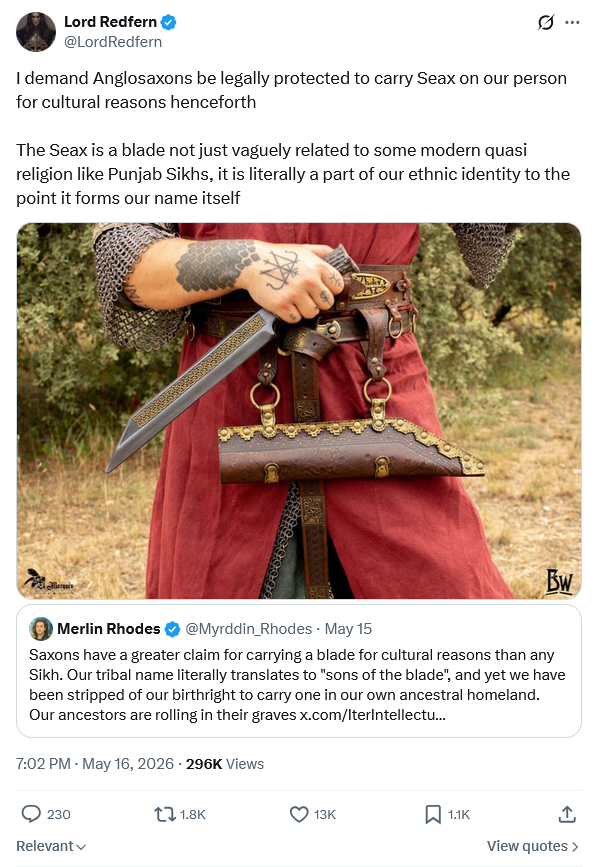
The seax as an English ethno-national equivalent to the kirpan
As most will know, the UK government has been steadily working to prevent UK citizens from carrying weapons of any time … except the religious exception for Sikhs to carry the kirpan, which is part of their faith. John Carter claims that the case for the Saxons to carry the seax is at least as strong:
Infamously, as one of its many assaults upon British tradition – the latest of which is the end of jury trials, a right Englishmen have enjoyed since the Magna Carta – the decline’s managers disarmed the British people. The right of (Protestant) Englishmen to keep and bear arms was enshrined in the Glorious Revolution’s 1689 Bill of Rights. The Second Amendment of the American Constitution’s Bill of Rights is essentially a reiteration of this ancient right of Englishmen; indeed, one of the complaints of the revolutionary colonists was that their rights as Englishmen were not being respected by the English crown. The right to bear arms was first expressed in the 1689 Bill of Rights, but its origin is much older, in the ancient Germanic understanding that a free man is an armed man, and that only slaves are prohibited the means of assuring their personal security. Britain’s managerial regime spent the twentieth century patiently gnawing away at the right to bear arms. It began its assault with licensing requirements in 1920, finally escalating to absolute bans following the 1988 Hungerford massacre and the 1996 Dunblane massacre.
As with all of its petty oppressions, the excuse for banning firearms has always been public safety, which the Yookish regime claims to prize much more highly than public liberty, which it does not claim to prize at all, that being the only honest thing about it. The sincerity of these invocations of safety is rendered dubious by the simultaneous premium Westminster, Whitehall, Number 10 Downing, and Buckingham Palace place upon the uninterrupted mass importation of humanoid dross from the most violently dysfunctional countries on the planet, which (notably) started in earnest at almost exactly the same time that the British people were disarmed.
It was not enough to take away the tools of self-defence. The principle of self-defence was also effectively eliminated: if a private citizen injures or kills a criminal in the course of defending himself against criminal predation, he will be charged as a criminal himself. The British people are expected to outsource their personal defence to police who refuse to defend them, in a country to which their government deliberately imports as many dangerous men as it can. Notably, defence against dangerous men of diversity is particularly frowned upon, because this is racist; indeed, even to complain about diversity danger is treated as a worse crime than rape, robbery, assault, or murder. The Yookay arrests more people for speechcrime than any other country on the planet.
Since firearms are banned, Britain’s criminal element has turned to knives, leading to a long-standing hysteria over knife crime. “Zombie-style knives” and “ninja swords” were banned in 2024 and 2025, while online knife sales now require 2-step age verification. There have even been calls to ban knives with sharp points, which would present certain challenges to the culinary arts. Meanwhile the stop-and-search policies intended to control knife crime on the streets are routinely derided as racist, as it is (surprise!) overwhelmingly young black men who are caught with concealed knives, which of course they conceal because their intent is to use them in the commission of robbery, assault, and murder. Which the British people are not permitted to defend themselves from, and which the Yookish police refuse to do anything about.
All of this raises the question of why, precisely, Digwa was walking around with a big knife.
The answer to this is that Digwa is a Sikh, and Sikhs have a special carve-out for the kirpan, a ceremonial knife which their religion mandates they carry with them at all times, as (if I understand correctly) a symbol of resistance to oppression and their readiness to always be prepared to defend the weak from injustice. Symbolic or not, the kirpan is a very real knife, with a very real edge.
The special religious dispensation granted Britain’s Sikhs is merely the most visible double-standard when it comes to keeping weapons. We saw another example during the Southport riots, when large numbers of Muslims turned out on the streets with machetes. Rather than arresting the lot of them (which the Yookish authorities couldn’t do, as they were busy filling the prisons with British protesters), the law enforcement officers on the scene advised them to hide their weapons in their mosque, which out of respect for the delicate sensibilities of the vibrant Islamic community the police would certainly never even dream of searching. One wonders just how many mosques are hiding caches of weapons.
Unlike the benevolently blind eye the Yookish authorities cast upon their treasured Muslims, however, the Sikh exemption is actually written into law.
As the Nowak case broke across social media a few days ago, a lot of people called for an end to this double standard. If whites are disarmed, then everyone else should be as well. There should be no special treatment on account of their heathen gods.
This is an understandable position, but I think it’s the wrong one. It is the thought pattern of The Raped.
Rather than wanting to drag Sikhs down to the subbasement of slavish cuckery into which they’ve been pressed, Anglo-Saxons should instead demand that they, too, be allowed to arm themselves.
The Sikh argument is that their faith requires that they be armed at all time.
The Saxon argument is similar to the Sikh, but if anything it is even more fundamental.
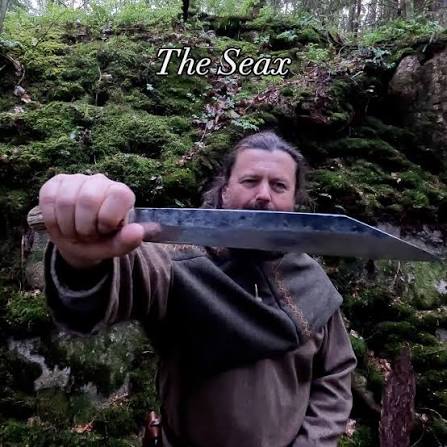
The name Saxon derives from the seax, the characteristic short sword carried by the Germanic invaders who made England their home in the 5th century. “Saxon” literally means “the sons of the knife”, “the people of the blade”, or “the swordsmen”.
The very identity of our tribe is intertwined with privately held armaments. This is pre-political; it’s pre-religious; for the Saxon, armaments are an identitarian symbol that goes to the very core of what a Saxon is. To remove the seax from the Saxon is to strip him of his identity. Which, of course, is the avowed goal of the Fabian social engineers who have laboured for generations to reconstitute the definite form of the Anglo-Saxon into a pliable mush of generic, vaguely-defined, ahistorical, and universally extensible “values” that no Anglo-Saxon had even heard of until five minutes ago.
The same principle obviously applies to knife crime. Criminals are opportunistic predators. They avoid hard prey. There’s profit in jacking up easy meat to get a free iPhone, but not so much in getting stabbed into fresh meat yourself. If every Saxon wore a seax, street crime would very rapidly become a non-issue.
Of course, from the perspective of the Yookish governing apparat, the powerlessness of its subjects against criminal predation is quite an insignificant price to pay in exchange for ensuring the powerlessness of the autochthonous helotry against the apparat itself. If anything it’s a bonus. The regular humiliation of being forced to endure low-level criminality encourages a feeling of helplessness. The rainbow communists will therefore never “allow” the Saxon to rearm himself.
But what if the Saxon wore the seax without permission?
May 11, 2026
QotD: The cultural importance of the church in early Medieval Europe
The very first thing to note is that the Church (in this case, both the Latin West and the Greek East) pre-dated the Middle Ages themselves. The Church arrived in the Middle Ages as relic of the Roman Imperial past. It inherited Roman Imperial organization – the diocese, for instance, derived from the boundaries of Roman super-provinces called dioceses (Greek: διοίκησις). Unlike the new medieval aristocracy, which tended to rule from fortified estates in the countryside, the Church remained centered in towns and cities, many of which had been major centers under the Romans. As the Roman provincial administration collapsed, it largely fell to the Church – as one of the few surviving literate institutions – to replace some of the core functions, like record keeping and the preservation of literature and learning. This was less true [in] Scandinavia and Eastern Europe, places where the Church was a relative late-comer, but for most of Western Europe, the Church was not some new institution grafted on to a pre-existing society (as it had been under the Romans), but rather part of the bedrock cultural foundation upon which that new society was constructed (fellow pedants! – please note carefully the phrase part of in the previous sentence; I am aware there were other things).
That said, the institutional power of the Church (and here we really do mean what would be the Roman Catholic Church) begins to change dramatically in the 11th century, right as we enter the High Middle Ages, and continues for the next several centuries (keeping in mind that Game of Thrones and A Song of Ice and Fire really evoke the High and Late Middle Ages, rather than the Early period). In short, the institutional heft of the Church grows dramatically. Quite a few things begin happening which are linked together: the Popes begin trying to wrest control over the Church’s hierarchy (specifically, the investiture of bishops) from secular rulers. Clerical celibacy was more stringently enforced. The Church intruded into warfare (as we’ve discussed with the Peace of God / Truce of God movements). It began to more directly attempt to regulate marriage, especially among the powerful (marriage was a made a sacrament in 1184). By the 1300s, this included keeping detailed records in many parts of France about births, deaths and marriages, in part to ensure no one married a close relative.
(And, of course, for those of you thinking, “wait, isn’t this also the period of the Crusades – military expeditions called by and at least nominally (but not in practice) under the auspices of the Pope?” Yes, it is, and that’s not an accident either).
In my experience teaching this, it is the next step that baffles my students the most. This vast increase in the institutional power of the Church was made possible, not by armies or shrewd real-politic (though both were involved), but by belief. The primary weapon wielded by Popes in this effort was the threat of excommunication, which (under Catholic doctrine) cut off the excommunicated individual or community from salvation, potentially damning them for all eternity. But of course that threat is only real if you believe the Pope has that power. And therein is the key point: most of Europe did believe. As I tell my students, it is safe to assume, as a general matter, that people in the past believed their own religion. Of course there are exceptions, but the general rule remains.
In the conflicts that arose – because, as you might imagine, secular rulers were unwilling to give up their prerogatives – it did not actually much matter if the king or emperor believed in the power of excommunication, because no one rules alone. Thus when the Holy Roman Emperor Henry IV was excommunicated by Pope Gregory VII in 1076, the audience for this act wasn’t Henry himself (who had already declared Gregory illegitimate anyway). It was directed at all of Henry’s vassals and supporters, releasing them from their oaths of allegiance and essentially saying, “stick with this guy, and he’ll take you to hell with him”. It worked, sparking a major rebellion and forcing Henry to humiliatingly apologize the following year.
(History note: this would be “round 1” in a multi-round fight that wasn’t settled until 1122 with the Concordat of Worms; in the end the Papacy mostly won, sharply limiting the Holy Roman Emperors’ power over their bishops).
Bret Devereaux, “New Acquisitions: How It Wasn’t: Game of Thrones and the Middle Ages, Part II”, A Collection of Unmitigated Pedantry, 2019-06-04.
April 24, 2026
Britain’s Green Party … not your weird cousin’s old Green Party
The Green Party have been more of a punchline than a party for decades in British politics, but the Green Party of today shares only a name with its earlier incarnations (the old UK party is now split into three separate Green Parties for England and Wales, Scotland, and Northern Ireland). Now, it’s become a significant threat to the Labour Party thanks to its unlikely fusion of socialist and green policies with strong support from Britain’s growing Muslim community:

The Green Party is a growing force in British politics. In February, they gained the Parliamentary constituency of Gorton and Denton in a by-election — a supposedly “safe” seat for the Labour Party. Local elections in May see them set to make big gains — perhaps sweeping to power in several town halls in London, perhaps including Camden, where Sir Keir Starmer is one of the local MPs. Opinion polls often show them roughly level with Labour and the Conservatives.
This is quite a change from previous decades when they were indulged as eccentrics on the political fringe. The Green Party (or the Ecology Party, as it was earlier named) were the sandal-wearing, muesli-munching environmentalists who wanted to go back to nature. They opposed economic growth — but their supporters tended to be affluent enough that they could afford to do so. Its leader was the aristocrat Sir Jonathon Porritt.
They were the breed George Orwell was thinking of when he wrote: “One sometimes gets the impression that the mere words ‘Socialism’ and ‘Communism’ draw towards them with magnetic force every fruit-juice drinker, nudist, sandal-wearer, sex-maniac, Quaker, ‘Nature Cure’ quack, pacifist, and feminist in England”.
Great fun. But there was a darker side to the quackery then and now. A totalitarian mentality which, as Orwell also vividly described, proves horrific when it prevails.
Increasingly, the Green Party has shifted its focus away from the environment. In the few towns and cities where it has gained power locally, such as in Bristol and Brighton, it has proved ineffective at practical work in this respect. Typical behaviour would be to pass a motion declaring a “climate emergency” but then perform lamentably when it comes to recycling or tree planting or any of the relevant matters they have the power to deal with.
There was always a distortion in its supposed concern for sustainability in that it was really an excuse to denounce capitalism. The Property and Environment Research Center, a US think tank which champions free-market environmentalism, has shown a more enlightened approach. Their work has included a comparison of privately-owned and state-owned forests. Another applies property rights to marine assets. But the role of property rights as a means of good stewardship of our planet is dismissed by the Green Party out of hand.
In any case, much of the campaigning by the Green Party now is on non-green issues. Its leadership talks a lot about foreign policy and a broader economic pitch focusing on class war rhetoric and an extreme programme of state control. Taxing the rich is always seen as the panacea, despite the reality that many entrepreneurs are already fleeing the United Kingdom due to its hostile fiscal environment.
Its Manifesto for the last election two years ago proposed a Wealth Tax, a pensions tax, and a big increase in Capital Gains Tax. A £90 billion carbon tax would have closed down much of British industry, which was probably the idea.
April 17, 2026
The Chronicles of Riddick: a Treatise on Political Machinery
Feral Historian
Published 28 Nov 2025The Chronicles of Riddick probably isn’t on anyone’s “top 10 science fiction” list, but it’s a remarkably astute study of how ideologies lead to systems, and how those systems co-opt people within them.
And of course it has a great cast that seems to have had fun with their roles.
00:00 Intro
01:04 Perception of Enemies
03:12 The Underverse
04:59 Plotting and Scheming
07:47 Superposition
08:20 Institutional Inertia
(more…)
April 7, 2026
“The Eight Hundred Years of Oppression”
On Substack, Upper Canadian Cavalier examines “The Irish Question”:
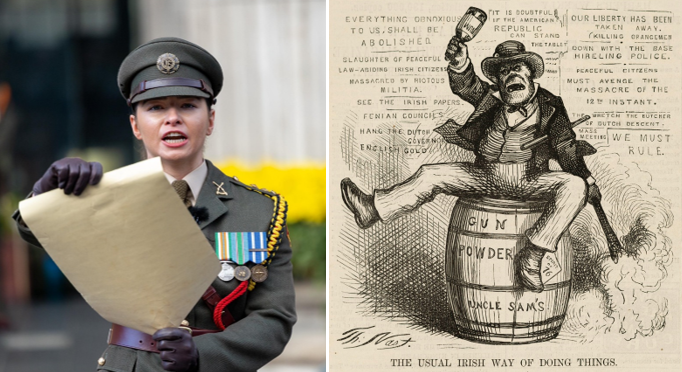
Every confidence scheme requires three things. A mark who is sympathetic. A grievance real enough to be credible. And an operator whose entire livelihood depends on ensuring the grievance is never actually resolved. Resolution ends the game. The operator does not want justice. He wants the next fundraising dinner.
Irish nationalism, in its mature institutional form, is one of the longest-running confidence schemes in the history of democratic politics. This is not to say the underlying grievances were invented. English rule in Ireland produced genuine catastrophes, and anyone who tells you otherwise has not read much history. The point is not that the wounds were fake. The point is that a very specific class of people discovered, sometime in the nineteenth century, that a bleeding wound is worth considerably more than a healed one, and they have been salting it professionally ever since.
The operators of this scheme are not a conspiracy in any tidy sense. They do not meet in a room. They are, rather, an ecosystem: the Sinn Féin political class, the Irish-American fundraising establishment, the Gaelic cultural bureaucracy with its language boards and arts councils and grant committees, and undergirding all of it for most of its history, the Catholic Church, which managed the remarkable trick of positioning itself as the spiritual soul of Irish resistance while simultaneously running the country’s schools, hospitals, orphanages, and laundries with the administrative efficiency of a medium-sized colonial power. They share no common mailing list. They share something considerably more durable: a common interest in a people who define themselves entirely by what was done to them, because such a people will always need someone to explain what it means.
That someone, naturally, has a salary. Sometimes several.
Part One: The Invoice That Never Clears
The foundational text of Irish identity is not a poem or a legal document or a philosophical treatise. It is an invoice. The Eight Hundred Years of Oppression, presented at every available occasion, never stamped paid, accruing interest at a rate that defies actuarial calculation. It is invoked at pub tables and university seminars and Boston fundraisers and Sinn Féin press conferences with the solemn regularity of a liturgical response, which is appropriate, since it has become one.
Eight hundred years. Let us sit with that number for a moment, because it deserves scrutiny rather than reverence.
The Poles were partitioned entirely out of existence for a hundred and twenty-three years, absorbed simultaneously by three empires, had their language banned, their nobility liquidated, their clergy persecuted, and their country removed from the map of Europe with a finality that the Irish situation never approached. They rebuilt it. They were then invaded again from both sides at once within living memory, occupied by The Nazis and Soviets losing somewhere between five and six million citizens in six years. They do not, as a general rule, organize their entire national identity around the experience. They built things instead.
The Armenians experienced something so total it required the coinage of an entirely new word to describe it. The Acadians were physically deported. The Welsh had their language suppressed for centuries by a state apparatus that regarded Welsh-speaking children as candidates for corrective intervention, which is considerably more systematic than anything the Penal Laws produced. The Greeks spent nearly four centuries under actual Ottoman administration, not the notional suzerainty that characterized much of the Anglo-Irish relationship, and emerged and got on with being Greeks.
None of them made Eight Hundred Years into a brand.
What distinguishes the Irish accounting of oppression is not the severity of the oppression, which was real but not historically singular, but the extraordinary care with which it has been packaged, maintained, and exported. The Famine, which ended in the 1850s, is still discussed in certain Irish-American circles as a recent bereavement requiring ongoing condolences and, more usefully, ongoing donations. The emotional statute of limitations has never been permitted to run. Each generation receives the invoice freshly printed, as though the debt were personally owed to them and personally owed by someone who can still be made to feel bad about it.
April 5, 2026
“Easter remains one of the major annual high holy days of confectionery derangement”
At The Freeman, Nicole James remembers her early chocolate obsessions:

Roald Dahl’s chocolate river was the economic policy of my childhood. Dripping with glossy abundance, and available to any enterprising glutton with a low sense of self-preservation. I never looked at Augustus Gloop and thought, “There goes a cautionary tale about excess”. I thought, “There goes a boy with initiative”. I wanted the river. I wanted the factory. I wanted an Oompa Loompa or two, ideally unionized and living in a tasteful outbuilding, making me truffles on demand. I wanted a world in which everything was edible and slightly mad. While everyone else was apparently learning moral lessons, I was busy fantasizing about a life in which I could plunge both arms into a molten tributary of cacao and come up glistening, like some sort of deranged dessert otter.
Easter seemed to offer the nearest thing to this ideal. It was the one annual moment when adults, in a dramatic collapse of judgment, agreed that children should be handed industrial quantities of wrapped chocolate and told to go hard. Easter had tiny eggs hidden in pot plants and larger ones with enough packaging to survive atmospheric re-entry. It was capitalism in a bunny suit.
Then adulthood arrived, lugging excellent literary references. Along came Like Water for Chocolate, with its sexy sorrow and culinary melodrama, and suddenly chocolate was not just a childhood frenzy but a vehicle for yearning and seduction. It could communicate things one would never dream of saying aloud at a suburban dinner party. Chocolate had range.
And this is why the present state of it feels so personally offensive because what is happening to chocolate is a slow-motion mugging. Cocoa is being shaved out. Bars are shrinking. Prices are soaring. Palm oil and vegetable fats are barging into flavor. Chocolate flavor. Not real chocolate, but a cheap mockery of the original deity.
And yet Easter remains one of the major annual high holy days of confectionery derangement. According to Cargill, in the United States, people are expected to plough through around 73 million pounds of chocolate over the Easter season. Around 90 million chocolate bunnies are produced, with — fun fact — 78% being devoured from the ears first.
Easter spending in the US has in recent years hovered around the $23 billion mark, with candy doing much of the heavy lifting. Chocolate, marshmallow Peeps, baskets, flowers, brunches, the whole pastel circus. Christianity may supply the headline act, but the event itself has clearly been workshopped by a mall.
But beneath the cellophane gaiety lies an increasingly grubby truth. Cocoa prices have surged, largely because harvests in West Africa have been hammered. Ghana and Côte d’Ivoire, which together produce the bulk of the world’s cocoa, have been clobbered by poor weather, crop disease, supply chain fragility, deforestation, and the sort of labor abuses that make any cheerful Easter ad feel criminal. The global appetite for chocolate remains immense, but the cacao tree itself is having a nervous collapse.
Update, 19 April: To the surprise of many who’ve latched on to the “woe, woe, mankind bad” chorus, there are now reports of a bumper crop of cocoa and the market prices are dropping:
It all seemed to kick off in March 2024 with the BBC’s chief climate headbanger Justin Rowlatt noting that “climate change” was one of the reasons for chocolate Easter eggs getting more expensive. Experts are said to have claimed that “human-induced” climate change had made extreme heat “10 times more likely” in the main cocoa bean-growing areas of West Africa. The story has had excellent fearmongering legs with a couple of years of bad weather-related harvests sending the world price of cocoa soaring. As late as October last year, the New York Times was stating that higher cocoa prices pushed up by climate change had led to companies changing their chocolate confectionary concoctions. Alas, sadly missing in recent chocolate climate claptrap is that an improved recent harvest (no weather-adjusting humans thought to be involved) has led to a massive 75% slump in global cocoa prices from the peak reached in January last year.
Like coral, polar bears and Arctic ice, any narrative-disturbing news is ignored. The media barkers promoting the Net Zero fantasy simply move onto the next promising climate porn project that can be ramped up to Armageddon level. The Great Choccy Catastrophe is a classic of its kind, but it is just the latest in a long and increasingly tedious line of crying wolf climate tantrums.
[…]
They get a lot of weather in the tropics, particularly in countries like Ivory Coast which accounts for up to 45% of world cocoa bean production. Dry periods alternate with wetter conditions, and there is some short-term variability in decadal temperatures. But according to World Bank climate figures, the average temperature since 1900 has risen just 1°C, while rainfall totals have remained remarkably stable. The average annual total since 1900 is around 1,354 mm. This is nearly identical to the 1,283 mm recorded in 2023, and similar to the 1,239 mm that fell in the supposedly drought conditions in 2024. Neighbouring Ghana is the world’s second largest cocoa producer and its 125 year precipitation average is 1,236 mm. This is a little higher than the 2024 ‘drought’ total of 1,181 mm, and a tad lower than the 1,278 mm in 2023.
The tropics have provided good pickings for climate and Net Zero agitators. Temperatures and rainfall can vary widely over individual years and decades. For instance, Ghana had record low rainfall in 1983 of 851 mm compared with a record high of 1,775 mm in 1968. As we have repeatedly seen over the last few years, any departure from the norm becomes the basis for a politicised junk science prediction that the climate is in crisis.
April 3, 2026
Hot Cross Buns – Mother Goose Would Love These
Food Wishes
Published 12 Apr 2017Pretty much all I know about hot cross buns, I learned from the nursery rhyme, but thanks to a recipe I found on Anson Mills, I was still able to make a fairly decent batch. Including real crosses, not to be confused with dinner rolls on which an icing cross has been piped.
In addition to its eye-catching appearance, the dough-based “cross” provides an interesting textual contrast, as it gets sort of chewy, and crispy edged.
Like I said in the video, any sweet dough will work with this easy technique, especially rich, and fragrant examples, like our Italian Easter Bread dough. Times may vary, but regardless of the dough, simply wait for the dough to double in size, and proceed.
If you want to get all your buns the same size, weigh your dough in grams before dividing, and then divide by 16. Then, weight each of your dough balls to that exact amount, and boom, your tray of buns will look like the ones you saw on that magazine cover. Or, just eyeball it and take your chances. Either way, I really hope you give this a try soon. Enjoy!


