
And then we have toxic masculinity. Is there toxic masculinity? Of course there is. Well, there is toxic and it can have a masculine expression. Because of obvious biological differences, the most toxic of women will have issues beating up people or raping them. It can be done, but it won’t be common.
Is masculinity toxic? Not more than femininity. The latest insistence on doing everything the feminine way has got us “feminine business” and “feminine politics” where everything is run on image, innuendo and gossip: the female version of toxicity. You’re either with the group or out, and if you’re out we’ll demonize you.
So blaming everything on men is bad-crazy.
I have a friend who has been trying to defend the Gillette ad as in “But they’re giving to causes that help raise boys who are fatherless” etc. I love her to death, but no. While that might be laudable, the fact is that that add is another brick in the wall of “If you’re a woman and your life isn’t perfect it’s a man’s fault.”
This bad crazy not only destroys marriages, it destroys GIRLS. You see that thing above “to succeed you must sacrifice?” If you infect females with the idea that they’re owed success and if they don’t get it, it’s men’s fault, you’re both undermining them and turning them into rage-filled screeching monkeys, who are exactly zero use to society. (Oh, but they vote for Marxists, so I guess there’s that.)
Worse, this bad crazy is riding on other bad crazy. Which like most bad crazy since the twentieth century has its origins on the insane crazy of Marx.
The question is, WHY was this ad made at all? It certainly doesn’t sell razors. So, why?
Because for decades we’ve taught our children their most important role in life is the crazy cakes “change the world” or “make a difference” and the difference they’re supposed to make is in the class-war (or race war, or sex war now) sense of bringing about the Marxist paradise. We tell them they’re supposed to speak for the voiceless, then tell them the voiceless are the “designated victim classes” (whom frankly we can’t get to SHUT UP.) We tell them this is what gives meaning to life. We tell them through school, through entertainment, through news narratives, through the people who are being lionized.
And this is bad crazy. Really bad crazy. By itself it is a wrench that will take society apart. We have publishers, writers, journalists, and probably taxi drivers, policemen, engineers and who knows what, increasingly convinced their highest calling is not doing their job, but “educating” or “improving” or “raising the consciousness of” other people.
Even for a credo that worked with humanity — say Christianity — when a society becomes convinced pushing the idea is more important than doing their job, the wheels come off. BUT when the credo is neo-Marxism, or actually “increasingly elaborate excuses as for the only thing Marxism brings about is death” it’s exponentially worse.
It’s also the explanation for why the wheels come off every field that gets taken over by the left: because the people in those fields stop understanding what their actual job is.
And it’s everywhere. At such a deep level that most people — even those mad at Gillette — didn’t see that the actual problem is that no one involved in the damn ad understood it had NOTHING to do with SELLING the product.
It’s bad crazy. There’s a lot of bad crazy running in the world. And we must stop it — and build under, build over, build around — or it will kill society.
Sarah Hoyt, “Bad Crazy”, Libertarian Enterprise, 2019-01-20.
February 23, 2019
QotD: “Toxic masculinity”
February 21, 2019
Food rituals and observances among the very woke
Americans in the 21st century are far less religious than their parents’ or grandparents’ generations, at least as far as formal, organized, traditional religion is concerned. In the place of old-fashioned religion, many have adopted a replacement that functions very much as religion used to:
Muslims eat halal. Jews eat kosher. Devout Catholics and Orthodox Christians abstain from meat on Friday and certain holy days. Hindus are vegetarian. But you will never see food practices take on religious intensity like they do in the more politically blue/left-wing bastions of the United States. This food intensity has been a gold mine of joke material for comedians like JP Sears.
Spend some time with vegan, gluten-free, and paleo devotees and you will realize that a fish filet on Friday can never match the cultlike seriousness these food fads take on. (And if you should ever be trapped at a restaurant table with somebody who is both vegan and gluten-free, run like the wind.)
Studies show left-leaning individuals are less likely to identify themselves as religious. But the truth is they have merely replaced well-known western religious traditions with more rigid ones. If you move to a politically blue part of the country, you will experience the cultural shift the minute your kids enter preschool. School picnics, snack time and birthday parties can become an anxiety-inducing strain as you try to determine what you can bring that all the children can eat. The parents are generally nice people who would never expect you to consider their dietary rules, but you will nonetheless feel a twinge of guilt if you bring that batch of traditionally-made cupcakes and accidentally feed it to a kid who is not allowed to experience it.
[…]
The popular food fetishes of these cultural enclaves often go hand-in-glove with a neo-pagan mishmash of Gaia-worship, 4th century Gnosticism, and rejuvenated new age/occult practices. Every religion has its food rituals. The left is no exception.
Now I know there are valid reasons to be concerned with the mistreatment of animals on factory farms and there are legitimate medical reasons that some must reduce gluten. Paleo eaters can have points about unnecessary additives in contemporary foods. But the reality remains that the food habits of contemporary leftists have the ritualistic feel of dogma, with many of its followers being far more rigid than the most fundamentalist religious believer.
We tend to have a lot of gluten-free meals here, but it’s a medical necessity, not a food-religion observance, as two of the three of us suffer from gluten-intolerance. One outcome of the “fashionability” of gluten-free dining, there has been a substantial increase in the availability of gluten-free foods which has been welcome. Unfortunately, as a lot of the demand has been due to fashion rather than necessity, some restaurants have been remarkably casual when gluten-free dishes are ordered, where the main dish may be safe, but it’s been covered with a sauce or glaze that isn’t gluten-free.
QotD: Nuisance shareholders
Stock ownership has become politicized. Many shareholders own stock in publicly-owned corporations for the sole purpose of advancing the shareholders’ own social or political agendas, while simultaneously assailing the corporations’ legitimate business operations. These activist shareholders are “nuisance shareholders.”
A primary tool of nuisance shareholders is the submission of non-binding precatory (advisory) proposals for discussion and vote at annual meetings of shareholders. Proposals from nuisance shareholders can coerce management into making decisions not in the best interests of the Company and its bona fide shareholders, and turn the annual meeting into a media-activist circus.
Steve Milloy, “I fought ExxonMobil management on climate — and I won”, JunkScience.com, 2017-03-13.
February 20, 2019
QotD: Conservakids
For some unfathomable reason, conservatives always seem to get excited when a moderately articulate post-puberty pundit comes along and parrots some simulacrum of conservative doctrine – except it almost always ends up like when my retriever-corgi mix tries to walk on her stubby back legs and we gasp in delight, “Look, Bitey thinks she’s people!”
This is not a criticism of young people; it’s a criticism of us grown-ups, and a recognition of reality that keeps biting us on the Jeb. We need to dispense with the cute kid conservative novelty acts and understand that our ideology – unlike liberalism – is not based on feelings and preferences but is instead drawn from a wisdom and understanding of human nature that comes only from hard-won life experience. That’s not to say young people should sit down and shut up – far from it. They have valuable insights we need to hear, especially from worlds they uniquely inhabit, like colleges or the company-level military. Sometimes they have done in-depth study and reporting on specific issues, including writing books. That’s earned expertise, not some mere knack for viral ranting, and that’s not what we are talking about here.
It’s our own fault for letting them represent us to the world – maybe we do it because they flatter us by offering a dim reflection of what we believe. But when they recite conservative chapter and verse for us, that’s all they’re doing – reciting. It’s not ingrained, it’s not seared into them through study and experience. It’s a stunt, a parlor trick. One of several reasons we conservatives need to stop putting them out there is because most conservatives have a youthful liberal phase and the kid who delights us today by mimicking our views will likely take a misguided off-ramp or two along the road to adulthood.
Kurt Schlicter, “Enough of the Precocious Conservakids!”, Townhall.com, 2017-03-23.
February 19, 2019
QotD: Internal contradictions of political correctness
… there was an article in the magazine arguing, on what might loosely be called philosophical grounds, for an end to the separation of men and women in sports. Women tennis players, for example, should compete against men, even if this means (as it does) that no woman could ever again make a living as a tennis player. In the name of equality of the sexes, one sex should be eliminated from a whole field of endeavor. Presumably, also, there should be no concessions for the handicapped, who would be forced to compete not against those similarly handicapped but against the fully fit.
Though this be madness, yet there is method in it: For the greater political correctness’ violation of common sense, the better — at least if its goal is power over men’s minds and conduct. In this sense it is like Communist propaganda of old: The greater the disparity between the claims of that propaganda and the everyday experience of those at whom it was directed, the greater the humiliation suffered by the latter, especially when they were obliged to repeat it, thus destroying their ability to resist, even in the secret corners of their heart. That is why the politically correct insist that everyone uses their language: Unlike what the press is supposed to do, the politically correct speak power to truth.
One of the strange things about the politically correct is that they never seem to become bored with their own thoughts. And this leads to a dilemma for those who oppose political correctness, for to be constantly arguing against bores is to become a bore oneself. On the other hand, not to argue against them is to let them win by default. To argue against rubbish is to immerse oneself in rubbish; not to argue against rubbish is to allow it to triumph. All that is necessary for humbug to triumph is for honest men to say nothing.
Theodore Dalrymple, “Two Forms of Mass Hysteria”, Taki’s Magazine, 2017-03-11.
February 17, 2019
Lyndon LaRouche, RIP
When I was first active in the Ontario and federal Libertarian parties in the mid-1970s, I’d sometimes get accused of being a follower of Lyndon LaRouche. Not by fellow Libertarians, I hasten to add, but by random members of the public. At that time I’d never heard of LaRouche, and I have no idea why some Canadians thought he had anything at all to do with libertarian philosophy or politics. He was, as Jesse Walker points out, pretty much the definition of an ANTI-libertarian in US politics:
Ordinarily I’m fond of cranks, maybe excessively so. You say extremist; I say charmingly kooky freethinker. You say cult; I say fascinating young religion. You say lunatic conspiracy theory; I say spooky new addition to America’s homegrown mythology. But even my tolerance has its limits, and one of those limits is Lyndon LaRouche.
LaRouche, who died Tuesday at age 96, was a despicable old fraud, and the warmest feeling I’ve ever been able to conjure for his devotees is pity. Fiercely authoritarian in both his political ideals and his personal life, LaRouche fed his followers a stream of lies, psychological abuse, and paranoid fantasies. Those fantasies featured a big cast of villains, from the queen of England to Aristotle to “Dope, Inc.” to gay people, not to mention whichever follower or ex-follower was the designated scapegoat of the moment. One such scapegoat, Ken Kronberg, committed suicide after the denunciations turned his way.LaRouche didn’t limit his abuse to the people who chose to cast their lot with him. He aimed it outwards too — most infamously during “Operation Mop-Up,” when his followers in several cities used fists, bats, chains, and nunchuks to attack members of the Communist Party and other leftist groups. When those assaults began in 1973, LaRouche considered himself a part of the radical left; Operation Mop-Up, he hoped, would establish his “hegemony” over the competition. But a few years later he was aligning himself with Klansmen and the far-right Liberty Lobby. He had a habit of flipping positions like that.
He also had a habit of running for president — first as the 1976 nominee of the U.S. Labor Party, then as a recurring contender for the Democratic nomination. His biggest successes came in the North Dakota primary of 1992 and the Michigan primary of 2000, when he managed to outpoll everyone else on the ballot. This sounds less impressive when you learn that (a) in both cases, for quirky reasons, none of the major candidates were actually on the ballot, and (b) LaRouche still managed to lose both primaries. In North Dakota he was beaten handily by some write-in votes for Ross Perot, and in Michigan he was outvoted by “uncommitted.”
Most people’s direct encounters with LaRouchism came in one of two ways. The first was to stumble on one of the candidate’s prime-time infomercials, in which he’d inform viewers that Walter Mondale is a Soviet agent, that the government should “quarantine” people with AIDS, or whatever other idea had caught his fancy at the moment. (LaRouche pushed his AIDS idea with a front group called — I swear I am not making this up — PANIC, for the Prevent AIDS Now Initiative Committee.) The second was to run into his followers as they handed out literature in public places. My most memorable encounter with LaRouchie leafletters was in Ann Arbor in the early ’90s, where they had made a big sign that said “EATING ARAB BABIES ISN’T KOSHER.” (I’ve heard people call LaRouche a “coded” anti-Semite. In that case you didn’t have to work hard to crack the code.)
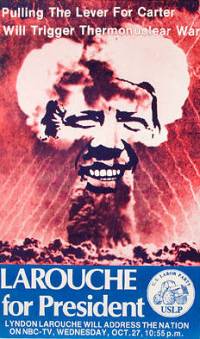
So, LaRouche’s ideas were all over the authoritarian map, but he must have been a really dynamic, engaging speaker to fascinate so many different people for so many years, right? One of those orators that just grabs the attention and plays on it like a fine musical instrument?
There are LaRouche TV specials that consist of nothing but LaRouche himself talking, but I didn’t want to inflict one of those on you. You know why? Because when he’s not saying something utterly crazy, the man is boring. Lyndon LaRouche was a child of the American Weird, but he was too dull to excel even at raving like a lunatic.
February 16, 2019
The state of play in the SNC-Lavalin affair
If you happen to have misplaced your Libranos scorecard, Daniel Bordman has a quick summary to bring you up to date:

So here is how the accusation stands: The PMO put pressure on the AG to the benefit of SNC-Lavalin, she refused and was shuffled out of the AG position.
This led to a massive public outcry from the Conservatives, NDP and the 10 or so Journalists left in the mainstream media. The original plan was for the new AG, David Lametti, to explain to the public why this story is overblown and there was no need to look any further into the allegations.
His plan: he went on TV and explained to the public that he had spoken to Justin Trudeau and he had denied the allegations, so no investigation was needed. Brilliant! If only Bruce MacArthur and Alexander Bissonnette had known of this expert legal strategy of denying what you were caught doing, they could have escaped justice.
It is also important to note that the Prime Minister admits to having “rigorous conversations” with Jody Wilson Raybould over the SNC-Lavalian case.
After the Shaggy “it wasn’t me” defence failed to convince anyone outside of the CBC editorial board of Justin Trudeau’s innocence, a new plan was formed.
Plan B seemed to be, have everyone smear Jody Wilson-Raybould and act like it was her scandal not the PMO’s.
While she was remaining silent due to attorney-client privilege (which is a debatable position), Trudeau continued to speak for her. Again, it should be pointed out that Trudeau could have waived this at anytime to let her tell her side of the story, he didn’t.
This all came to a head when Trudeau claimed that “her presence in the cabinet speaks for itself”. The next day she resigned.
Off to Plan C, which seems to have been concocted by new Liberal strategist, Kim Jong Un.
A committee will be constructed to investigate these accusations, which of course will have a majority of Liberals and be headed by Liberal MP, Anthony Housefather, who has already added his flare to the investigation suggesting the reason that Jody Wilson Raybould was shuffled out of the AG position was because she didn’t speak French.
Remember, he is the impartial leader of Liberals investigating an allegation of Liberal corruption. It is also important to point out that both of the ministers in charge of immigration matters, Ahmed Hussain and Bill Blair, can’t speak a word of French between them.
February 14, 2019
We’re all shocked, shocked to hear allegations of Liberal Party corruption (again)
At Blazing Cat Fur, surprise is expressed that anyone is surprised that corruption in the federal Liberal Party is again in the news. As I commented on Gab last week, “But this has been ‘business as usual’ for the Natural Governing Party for generations. Why is it suddenly not okay now?” It’s no wonder that veteran Liberal politicos are shocked that anyone even cares at this late stage.
Paul Wells of MacLean’s has written Canada, the show in which he professes surprise and disappointment at the back-room dealings exposed in the SNC-Lavalin affair, why he’s almost in shock! Shock I tell you! – “You thought this government was about family benefits and boil-water advisories? The Lavalin affair offers a glimpse of the real scene — maybe the real Canada.”
Seriously? Is anyone over age 8 shocked to learn that Canada is run for the benefit of the Liberal Party and its crony capitalist backers?
I mean besides the media cheerleaders who helped elect the cardboard cutout known as Justin Trudeau.
You shouldn’t be surprised at the antics of a Liberal party whose moral universe dictates no strings attached abortion on demand and the demonization of its opponents. Or whose “leader” experiences sexual assault differently than his victim.
A brokerage party that has weaponized “diversity and multiculturalism” to implement a divisive mass immigration policy that benefits – Surprise! Our corporate welfare class.
The antics of a party that labels citizens who object to their mass-immigration Ponzi-scheme as intolerant, racists, islamophobes & Nazis has surprised you with its shady dealings? Really?
February 13, 2019
California mercifully kills the High Speed Train project
In Reason, Scott Shackford reports on the sudden acceptance that California’s high speed train dream is dead:

Construction of the Fresno River Viaduct in January 2016. The bridge was the first permanent structure constructed as part of California High-Speed Rail. The BNSF Railway bridge is visible in the background.
Photo by the California High-Speed Rail Authority via Wikimedia Commons.
California’s wasteful, expensive, and likely doomed-to-fail statewide bullet train project is getting killed. Today, Democratic Gov. Gavin Newsom said he’s abandoning the plan as “too costly.”
Newsom made the announcement in his State of the State address this morning. As the Associated Press reports:
Newsom said Tuesday in his State of the State address it “would cost too much and take too long” to build the line long championed by his predecessor, Jerry Brown. Latest estimates pin the cost at $77 billion and completion in 2033.
Newsom says he wants to continue construction of the high-speed link from Merced to Bakersfield in California’s Central Valley. He says building the line could bring economic transformation to the agricultural region.
And he says abandoning that portion of the project would require the state to return $3.5 billion in federal dollars.
Newsom also is replacing Brown’s head of the board that oversee the project and is pledging to hold the project’s contractors more accountable for cost overruns.
Newsom actually turned against the bullet train project years ago but then went quiet about it when he began his plans to run for governor. He declined to discuss what he saw as the train’s future on the campaign trail, but after he was elected he suggested some sort of cutback was coming, possibly eliminating the bottom half of the project, making it a train from San Francisco to the Central Valley of California.
Now it looks like he’s scaling even that back. Californians are just going to be left with a train in the middle of some of the more rural parts of the state because the Newsom administration doesn’t want to have to repay the federal funding.
Whatever may come next, this is happy news for most California citizens. Voters approved a ballot initiative in 2008 that set aside a $10 billion bond to begin the project of building a high-speed rail line from Los Angeles to San Francisco with the promise that more funding would come through from the feds or from private sources, that the train would not require subsidies to operate, and that it would help fight climate change.
February 9, 2019
The price tag for Alexandria Ocasio-Cortez’s renewable energy dream
At Reason, Ronald Bailey looks at how much it would cost to implement Alexandria Ocasio-Cortez’s post-fossil-fuel plans:
There’s a lot to consider in this resolution, but let’s for the time being focus on the goal of “meeting 100 percent of the power demand in the United States through clean, renewable, and zero-emission energy sources” by 2030. The resolution is light on fiscal details, so let’s consider the question of how achieving this goal would cost.
As it happens, a team of Stanford engineers led by Mark Jacobson outlined just such a plan back in 2015. Jacobson’s repowering plan would involve installing 335,000 onshore wind turbines; 154,000 offshore wind turbines; 75 million residential photovoltaic systems; 2.75 million commercial photovoltaic systems; 46,000 utility-scale photovoltaic facilities; 3,600 concentrated solar power facilities with onsite heat storage; and an extensive array of underground thermal storage facilities.
Assuming steep declines in the costs of each form of renewable electric power generation, just running the electrical grid using only renewable power would still cost roughly $7 trillion by 2030. The Information Technology and Innovation Foundation calculated that the total cost of an earlier version of Jacobson’s scheme would amount to $13 trillion. And based on how fast it has taken to install energy generation infrastructure in the past, Jacobson’s repowering plan would require a sustained installation rate that is more than 14 times the U.S. average over the last 55 years and more than six times the peak rate.
The cost — $7 trillion — would be spent to save … how much?
..global warming at or above 2 degrees Celsius beyond preindustrialized levels will cause— (A) mass migration from the regions most affected by climate change; (B) more than $500,000,000,000 in lost annual economic output in the United States by the year 2100;
$500 billion a year isn’t a lot in the context of the US economy. It’s currently around $20 trillion in size, so we’re talking about 2.5% of the economy being lost. But of course we’re also predicting that the economy will grow between now and then. Actually, we think the US economy will be about $100 trillion a year by 2100. So we’re talking about 0.5% of that economy. Or about the change in size of the US economy between September and December last year. Think how much richer we did feel over those few months. And how much poorer we’d be if it hadn’t happened, that growth.
Oh, and to avoid that loss AOC is suggesting that we spend $7 trillion now? That just doesn’t pass the cost benefit test. It doesn’t even pass at the Stern Review’s special discount rate.
Which is, of course, what all the economists have been trying to tell us all about dealing with climate change. Don’t do it by central planning, do it by using market incentives. Have a carbon tax. Don’t try and do it too quickly – William Nordhaus gained his Nobel in part for saying this – but do it more gradually over time. Don’t junk what we’ve got that already works, instead when the normal time comes to replace it then make sure it’s non-carbon emitting. Finally, don’t do it the expensive way, do it the cheap way. For the cheaper we make it to solve it then the more of the problem we’ll solve. You know, humans usually doing less of the expensive things and more of the cheap?
The most bizarre passage in the Green New Deal is the admission that after they've junked every car in America, replaced every power plant, and renovated every single building within the space of a decade, they might not get around to slaughtering all the cows by their deadline.
— Megan McArdle (@asymmetricinfo) February 7, 2019
February 6, 2019
The “Green New Deal” of Alexandria Ocasio-Cortez won’t work
Tim Worstall predicts — well in advance of hearing any details of Alexandria Ocasio-Cortez’s Green New Deal — that it won’t work:
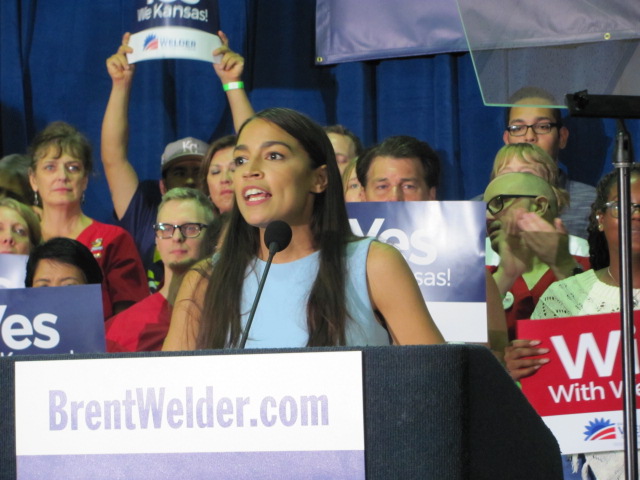
Alexandria Ocasio-Cortez speaking at the Reardon Convention Center in Kansas City, on 20 July 2018.
Photo by Mark Dillman via Wikimedia Commons.
Alexandria Ocasio-Cortez is to reveal the details of her Green New Deal in the next few days – the one thing we absolutely know about this being that it won’t work. This isn’t a commentary upon climate change nor the desirability of doing something about it. This is just a simple statement of fact about the universe we inhabit. As with the climate the economy is a complex, even chaotic, thing. Plans to substantially reform it therefore don’t work, no matter how egghead the planners nor pure in motive the instigators.
All of this being why the very reports which tell us we should do something about climate change – say, the Stern Review – tell us that we shouldn’t try to have those detailed plans for what we’ll do and how we’ll do it. Instead we’ve got to use the only management technique we’ve got for something this complex, markets and prices. Which is why near every economist who has even thought about the problem advocates either cap and trade or a carbon tax.
This is, of course, just a rerun of Friedrich Hayek’s point in his Nobel Lecture, “The Pretence of Knowledge”. That universe out there is a complicated place. There’s just no manner that the planner can gain enough information about it, in anything like real time, to be able to plan it. We’ve thus got to use other methods to bend that reality to our will. We can jam a crowbar into prices with a carbon tax for example, but we can’t start planning who should be taking how many car journeys in what sort of vehicles powered in what manner.
So, the Green New Deal from Alexandria Ocasio-Cortex, it fails at this first and basic hurdle. She’s using the wrong method to try to solve the agreed upon problem. Central planning just doesn’t work.
[…]
The reason we want cheap solutions to climate change is that this justifies producing more of a solution. Again, the justification of doing something about climate change is that it will be expensive. So, we should spend up to the amount of the damage to prevent it. Say it will cost $100, then we’re willing to spend up to $99.99 to stop it. This makes us one cent better off. We’re not willing to spend $200 to stop those $100 damages, that would make us poorer.
And more – we should spend that $99.99 as efficiently as we can because that means we’ll stop more climate change for our dollars. That also makes us richer.
Don’t forget, we’ve all already agreed that we’re going to have some climate change. Our arguments are over how much and how much are we willing to do to stop how much of it?
February 5, 2019
February 4, 2019
A thumbnail sketch of Mad Max and the PPC
Anthony Daoud, in an article examining the political loyalty implications of party defections, floor crossings, and resignations, provides a quick outline of Maxime Bernier and his new-but-growing party:
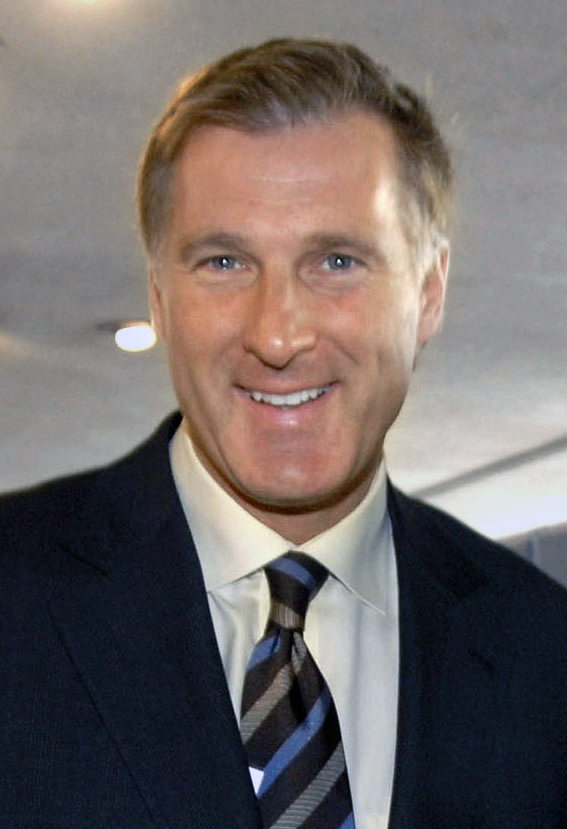
Does Bernier even need an introduction? It seems like everybody in Canada knows about him, and his popularity will undoubtedly grow after appearing on the Rubin Report, a libertarian Youtube show.
He left the Conservative Party and created the People’s Party of Canada, which advocates for smaller government, lower levels of immigration, and more free-markets (including abolishing supply management) according to the party’s website.
In a email to supporters, the PPC proudly proclaimed that it reached its first million dollars in total donations since the party’s founding in September.
Whether Bernier’s party will win any electoral district other than Beauce (his own) is incredibly unlikely, but he can definitely do some damage to the Conservatives’ prospect of victory, since he is already polling at nearly 3%.
What may be the most intense conflict in politics right now is not even taking place in parliament but between the CBC’s Wendy Mesley and the PPC leader. In an interview, she miserably failed at her attempt to link Bernier to a Koch brothers’ conspiracy.
Even more recently, the Quebec politician took the “beef” up a notch when he called for Mesley to be fired after she said Christians in Canada are attempting to sway political landscape, as if they were some sort of foreign interference in our democracy.
Truthfully, the PPC may never come establish themselves as a long-standing party, but more than anything, it could mean that politicians will begin to feel like they can simply leave the party they were elected to represent and literally “do their own thing” once in parliament.


