
The Study of Antiquity and the Middle Ages
Published on 12 Mar 2018In this brief video I discuss the five different forms of writing in Ancient Egypt!
April 2, 2018
The Five Forms of Ancient Egyptian Writing!
Comments Off on The Five Forms of Ancient Egyptian Writing!
March 17, 2018
QotD: Translation error?
Here are two more facts known to many educated people:
1. The Christians did not begin to arrive at a settlement of the question of the divinity of Jesus until surprisingly late – the council of Nicaea in AD 325, and important controversies remained live until the Third Council of Constantinople in 680.
2. The original Aramaic-speaking Christians of Palestine having been effectively wiped out in the aftermath of the Bar Kokba revolt in AD 70, Christianity was re-founded by Paul of Tarsus among speakers of Koine Greek. The entire New Testament is written in Koine Greek.
Now here are two facts generally known only among a handful of specialist scholars. I picked them up through omnivorous reading and did not fully realize their significance for a long time.
3. In other Aramaic sources roughly contemporary with the New Testament, the phrase “Son of God” occurs as an idiom for “guru” or “holy man”. Thus, if Jesus refers to himself as “the son of God”, the Aramaic sense is arguably “the boss holy man”.
4. The Koine Greek of the period, on the other hand, did not have this idiom.
Now, imagine a Koine speaker reading the lost Aramaic source documents of which the Gospels are redactions, with only an indifferent command of the latter language He does not know that “Son of God” is an idiom…
Yes, that’s right. I’m suggesting that Jesus got deified by a translation error!
(Correction: The Bar Kokba revolt was AD 132; I was confusing it with the revolt of AD 70 in which the Temple at Jerusalem was destroyed.)
Eric S. Raymond, “Translation Errors”, Armed and Dangerous, 2009-02-12.
Comments Off on QotD: Translation error?
March 10, 2018
Invasions of the Sea Peoples: Egypt & The Late Bronze Age Collapse
History Time
Published on 3 Sep 2017*****This was one of the first videos I ever made.******Subscribe for much better narration on the newer videos and tons more historical awesomeness*****
The years between around 1500 and 1200 BC are often cited as some of the most prosperous that the world had ever seen. The Eastern Mediterranean world inhabited by the Egyptians, the Hittites and the Minoans, as well as numerous smaller states around them, was a truly cosmopolitan system rarely seen in world history. Greek and Hittite trade goods regularly show up in archaeological sites in Egypt, whereas Egyptian hieroglyphs and trade goods are found in places such as the island of Crete and Mycenae. One shipwreck off the coast of Turkey carried goods from nine different states aboard.
As evidenced by substantial diplomatic communications as well as trade, the world of the Late Bronze Age was a vast interconnected system. The culmination of an unbroken cultural line which had existed since the first cities three thousand years before. Little did the inhabitants of these lands know however that from around 1200 BC their world would catastrophically and violently fall apart in a decades long cataclysm known as the Late Bronze Age Collapse.
Significant archaeological evidence relates that a huge number of cities and settlements were violently destroyed during the period 1210-1130 BC. In Asia Minor the mighty Hittite Empire collapsed. In Greece and the Mediterranean, the kingdoms and city states of the Mycenaean Greeks and the Minoans similarly fell apart. In Canaan and Syria vast and ancient city states were razed, with half written SOS messages written in cuneiform left to be discovered thousands of years later. In scenes reminiscent of the fall of the Western Roman Empire vast numbers of people throughout the eastern Mediterranean fled from their settlements by the shore to take refuge on fortified hill tops.
Just one of the great civilisations of the late Bronze age survived the collapse and told the tale of what happened. Egypt. Led by the Pharoah Ramesses III, often regarded as the last of the great Egyptian Pharaohs, and certainly the last New Kingdom ruler to wield any substantial authority. Inscriptions written during his reign tell of a vast coalition of warlike peoples who descended upon the civilised world during his reign, destroying it entirely and leaving just Egypt to stand alone against the coming enemy. Those enemies are known today as the Sea Peoples, and they remain one of the greatest enigmas of history.
Comments Off on Invasions of the Sea Peoples: Egypt & The Late Bronze Age Collapse
QotD: The beginnings of archaeology
It is now forty-five summers since, at age eighteen, I stood myself in the ruins of Ninevah — across the Tigris from Mosul in post-modern Iraq, the seat of Christian Assyria. Gentle reader may be aware that the Assyrians, Yazidis, Armenians, Turkmen, Shabaki, and for that matter, a portion of the Arabs who once lived around that town have been slaughtered or exiled over the last two years by the Daesh. The self-styled “Islamic Caliphate” has also made a show of demolishing Mosul’s remarkable Museum, and the more celebrated ancient monuments, starting with the purported tombs of Jonah and several other Old Testament prophets.
How one wishes that the French and British, rivals for archaeological glory from the early Victorian age, had succeeded in floating more of the treasures they had uncovered, on great rafts down the Mesopotamian rivers to Basrah and the sea — and then by ship to safe new homes in the Louvre and British Museum. That was the heroic age of “Orientalism,” when under the burning sun, and the noses of Ottoman administrators, and in the face of Arab raids and depredations — goaded by an excited popular interest in the recovery of deep Biblical history — the lost kingdoms and empires of the Near and Middle East were being rediscovered. Not only the tireless spadework, but the ingenious decoding of ancient tablets found in subterranean libraries of clay, extended our detailed knowledge of the human past by thousands of years.
This was a gentleman’s contest, and I am struck by the way, without rules or treaties, the French and the British (later joined by Germans, and eventually Americans, Poles, Italians, and even Canadians) peacefully recognized each other’s stakeholdings and claims, and honoured each other’s adventurers and scholars. So much of what we now reflexively condemn as “European Imperialism” was conducted at a level of civilization that is unimaginable today. We ritually sneer at digging practices that were primitive and inexact, forgetting that our own “modern methods” were being devised by these men, as they went along, starting only from rumour and wild surmise.
David Warren, “With Layard to Ninevah”, Essays in Idleness, 2016-07-05.
Comments Off on QotD: The beginnings of archaeology
February 22, 2018
Curse of the FRIDAY THE 13TH I IT’S HISTORY
IT’S HISTORY
Published on 21 Feb 2018On today’s episode we are going to talk about the end of the Templar Order and the famous curse of Jacques de Molay.
Comments Off on Curse of the FRIDAY THE 13TH I IT’S HISTORY
February 4, 2018
Khosrau Anushirawan – Lies – Extra History
Extra Credits
Published on 3 Feb 2018Why did we refer to Khosrau’s empire as Iran, not Persia? Did Mazdak really exist, or was his proto-communist movement pure propaganda? Dan (narrator) and Soraya (writer) tackle these questions and address the large issue of how perspective can shape one’s idea of the truth.
Comments Off on Khosrau Anushirawan – Lies – Extra History
Sword Bayonets – German Casualties – Jerusalem Occupation I OUT OF THE TRENCHES
The Great War
Published on 3 Feb 2018Check our Podcast: http://bit.ly/MedievalismWW1Podcast
Chair of Wisdom Time! This week we talk about possibly fabricated German casualty numbers, the unwieldy WW1 bayonets and the reaction to the occupation of Jerusalem.
Comments Off on Sword Bayonets – German Casualties – Jerusalem Occupation I OUT OF THE TRENCHES
February 3, 2018
Saladin – the Sword of Islam – IT’S HISTORY
IT’S HISTORY
Published on 2 Feb 2018Saladin was the famous Muslim leader during the time of the Crusades.
Comments Off on Saladin – the Sword of Islam – IT’S HISTORY
January 22, 2018
Khosrau Anushirawan: On Top of the World – Extra History – #5
Extra Credits
Published on 20 Jan 2018Plague had brought an end to Khosrau’s war against Justinian, but Justinian’s nephew soon reignited the rivalry. Khosrau was at the peak of his political power and eager to crush this young upstart personally… but old age had also crept up on him.
Comments Off on Khosrau Anushirawan: On Top of the World – Extra History – #5
January 15, 2018
Khosrau Anushirawan: Trolling Justinian – Extra History – #4
Extra Credits
Published on 13 Jan 2018Iran and Rome had agreed to an Eternal Peace, but tensions between them proved too great and Khosrau decided to invade while Justinian’s guard was down. His army swept into Rome practically unopposed, and he made a mockery of Justinian at every opportunity while treating himself to a grand old time pillaging and parading across the Roman border.
Comments Off on Khosrau Anushirawan: Trolling Justinian – Extra History – #4
January 2, 2018
The Defence of Baku – The Adventures of Dunsterforce Part 2 I THE GREAT WAR Special
The Great War
Published on 1 Jan 2018In part two of the Adventures of Dunsterforce, we follow the Hush Hush Army on their travels through the Caucasus. Picking up where we left off, the Dunsterforce leave Enzeli, clash with Jangalis en route, and head for Baku. They had to journey through territory controlled by warlords, cossacks and bolshevik soviets and when they arrived during the Siege of Baku, Dunsterville and his men meet the five dictators that make up the Centrocaspian Dictatorship.
Comments Off on The Defence of Baku – The Adventures of Dunsterforce Part 2 I THE GREAT WAR Special
December 31, 2017
A contrarian view of hijabs, niqabs, and burqas
Western views of full-coverage clothing, including hijabs, niqabs, and burqas, may be concealing a hidden benefit to those who choose to wear such clothes voluntarily:
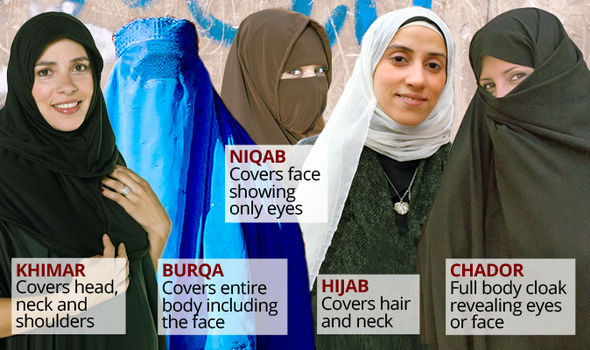
Hijabs, niqabs, and burqas — different sorts of coverings worn by Islamic women — are divisive apparel in the West, associated with patriarchal oppression, cultural outsiders, and even suicide bombers. Yet few accounts actually discuss the experiences of the women wearing the veils, and the freedom and anonymity coverings can afford if worn voluntarily.
Born in Pakistan and educated in America, Rafia Zakaria is the author of Veil, a new book which explores the history and shifting meanings of female coverings in Islamic countries and Western secular society. In a wide-ranging conversation, she talks with Reason‘s Nick Gillespie about the theological underpinnings of veils, their use as a means of controlling female sexuality, and how they have become markers of socio-economic status and virtue signaling.
Veils present a particular conflict for Western feminists. On the one hand, veils — especially burqas — are emblematic of regimes that are particularly oppressive to women. Feminists and others have moved to ban the wearing of veils in public in the name of female empowerment. But if a Muslim women wants to wear one, is she endorsing patriarchy and setting back the women’s rights movement or simply owning her own choices, especially in a culture that might itself be anti-Islamic?
December 26, 2017
The Hush Hush Army – The Adventures of Dunsterforce Part 1 I THE GREAT WAR Special
The Great War
Published on 25 Dec 2017Dunsterforce Book: http://amzn.to/2BA5IRM
The Dunsterforce was a small British military mission under Colonel Dunsterville. Its goal was to prevent the spread of German influence in the South Caucasus and Caspian Sea. The soldiers soon find themselves in the complicated and violent post-revolutionary Caucasus where no one can really be trusted.
Comments Off on The Hush Hush Army – The Adventures of Dunsterforce Part 1 I THE GREAT WAR Special
Khosrau Anushirawan: The Immortal Soul – Extra History – #3
Extra Credits
Published on 23 Dec 2017Once the chaos settled, Khosrau enjoyed an unprecedented era of peace. He brought reform to the army and the economy, invested in a great center of learning, imported knowledge from around the world, and earned his new title of “The Immortal Soul.”
Comments Off on Khosrau Anushirawan: The Immortal Soul – Extra History – #3
Midwinter celebrations, historically speaking
In the most recent Libertarian Enterprise, L. Neil Smith tries to track down where our traditional Christmas celebrations originated:
Each and every one of those cultures has had a different way, of course, of dignifying what is essentially a middle finger in the face of nature. The earliest such I could find was Zagmuk, the ancient Mesopotamian celebration of the triumph of Marduk over the forces of Chaos.
Or whatever. I suspect the Mesopotamians would have decreed a celebration if it had been Chaos that had won in the second, by a knock-out. Nearby cultures picked the idea up and celebrated their own versions.
All this happened about 4000 years ago.
The Romans had a midwinter holiday, Saturnalia, which involved feasting and giving gifts. Later on, the word became a synonym for abandon and debauchery, but the Romans, by and large, were a pretty puritanical bunch, given to grim tales such as that of Lucius Junius Brutus who had his own sons executed because they sold out to the Etruscans, and Mucius Scaevola who burned his own hand off to prove that Romans… well, would burn their own hands off given half a chance. Nobody ever needed a festive midwinter holiday worse than they did.
Saturnalia started around the eighth century, B.C.
Hanukkah is interesting. I learned about it when I wrote The Mitzvah with Aaron Zelman. These days a lot is made of the “Festival of Lights” and the miracle that occurred when the Jews retook their Temple from a pack of Hellenized Syrians who had left only enough lamp oil behind for a single day. The oil miraculously burned eight days, instead, and that’s what all that ceremony with the Menorah is all about.
There’s another Hanukkah story, of a victory of the Maccabees (a nickname, meaning “hammer” — see Charles Martel) over those same Hellenized Syrians, which is how the Jews got their Temple back. Jews argue over which story is more significant, but it’s pretty obvious to me. It’s equally obvious that they’d find something else to celebrate in the middle of the winter, even if they’d never gotten their Temple back.
Which happened in 165 B.C.
Christmas probably wasn’t celebrated, as such, for a couple of hundred years after the presumed birth of Christ. I say “presumed”, because the whole story — no room in the inn, born in a manger with animals on the watch, shepherds coming to worship, a star shining overhead — was shoplifted, directly from another religion popular in Rome at the time of the early Christians, worship of the warrior-god Mithras.
Speaking of sticky fingers, holidaywise, the Yule log and the Christmas tree were “borrowed” from the norsemen, who were accustomed to hanging dead male animals and male slaves from a tree to decorate it.
Yuck.
There is a midwinter holiday that has come along more recently than Christmas. I have to confess that, to me, Kwanzaa (Est. 1966) represents one of the lamest, most transparent inventions a con-man ever foisted on any segment of the public. It’s basically a holiday for black people who don’t want to celebrate the white peoples’ holiday. On the other hand it’s no lamer than any other excuse for a holiday.
Comments Off on Midwinter celebrations, historically speaking


