
You know what I’d like to see?
Red Flag laws for Congress.
Any Congresscritter says or does, something unConstitutional, anyone should be able to file a Red Flag violation and have that politician’s powers to write bills, attend sessions of Congress, vote, draw a taxpayer-funded paycheque, live in a mansion in Washington DC, or anything else tied to the job of being a Congresscritter immediately suspended.
There would be a hearing within fourteen days before a judge in their home district, where the Representative or Senator would be given the opportunity to show where in the Constitution what they said, or the law they proposed, or the action they did, was explicitly authorised, and if they can show that, their rights to all the goodies of being an elected representative of the People would be restored.
If they can’t, then they can sit at home for a year and twiddle their thumbs. Not allowed into the Capitol, no drawing a paycheque, no voting, no proposing bills, nothing added to their pension funds, zip, zero, NADA to do with being an elected official.
And their party doesn’t get to fill that slot. Their party doesn’t get to vote on their behalf. Their party doesn’t get to help them with re-election.
No, that Congresscritter, and the seat they occupy, goes into the penalty box for a year.
After a year, if their term in office hasn’t expired, they can take up their duties again.
Unless, and until, they mention violating the Constitution again, and someone files another Red Flag complaint.
Lawdog, “Sauce for the goose…”, The Lawdog Files, 2019-08-06.
September 20, 2019
QotD: Red Flag laws for politicians
September 19, 2019
“[T]he Indian Act is a benign form of apartheid”
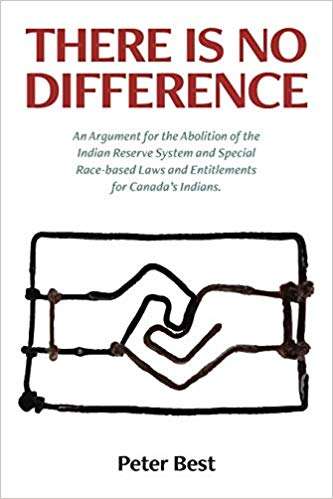
In the National Post, Barbara Kay discusses a recent book on the key legislation that regulates relations between the Canadian federal government and the various First Nations groups:
Few and far between are disinterested scholars of Canada’s Aboriginal history who have the tough hide and principled will to publicly depart from the approved Indigenous “nation-to-nation” narrative that keeps the guilt and money flowing, but perpetuates a dysfunctional status quo on many reserves. Most of the dissenters are university academics. But Best is simply an intelligent man with a passion for his subject, a deep impatience with political correctness, and unremitting determination to weather whatever storms afflict him as he shepherds his views to a public market.
I’ve written before in the National Post and elsewhere about Best’s lonely battles with our society’s forces of repression. There Is No Difference began its public life as a post on a dedicated online site in 2014, copied to his legal firm’s. Shortly afterward, complaints were filed against him with the Law Society of Upper Canada (now the Law Society of Ontario), asking that Best be “disbarred or suspended” and that he be forced to apologize for using his law practice “to disseminate racist materials.”
After two years of stressful limbo, the Law Society graciously allowed that the excerpts submitted by the (unnamed) complainant were “not enough to merit a finding of any form of professional misconduct on their face.” (The last three words telegraph the ardent wish that they had been; apart from a dissenting group of new benchers, the Law Society’s board has increasingly demonstrated worrying Thought Police tendencies.)
Best believes the Indian Act is a benign form of apartheid, and advocates for the integration model of equal citizenship for all, a model promoted, for example, by Pierre Elliott Trudeau (who called the system “apartheid”), and the late Aboriginal lawyer William Wuttunee, author of Ruffled Feathers, who was marginalized and discredited as an “apple,” red on the outside, white on the inside.
Best believes the federal government must be the ultimate master in its own house for Canada to function as a healthy nation. He is fiercely critical of the Supreme Court’s 2004 emphasis on the “honour of the Crown” concept in its Haida Nation vs. British Columbia ruling, with key words “to consult and where appropriate, accommodate the Aboriginal interest” virtually decreeing a devolution of Crown sovereignty to Aboriginals, and effectively turning Indigenous bands into a third order of government with the power arbitrarily to advance or restrict Canada’s economic fortunes.
It’s easy for Indigenous activists to bash a white historian, or even an Aboriginal dissident without special standing like Wuttunee. But it will be more difficult to dismiss the opinion of a former Supreme Court justice. Best just came in for an unexpected stroke of luck. Former Supreme Court justice Jack Major (1992-2005) has given the book his endorsement in a letter discussed in an article by the Frontier Centre for Public Policy (FCPP).
September 18, 2019
The Canadian Charter of Rights and Freedoms* (*not all sections apply in Quebec)
Andrew Coyne on the disgraceful habit of the federal government (and nine provincial governments) to look the other way when Quebec decides that some of the guarantees in the Charter don’t apply in La Belle Province:

For many observant persons, particularly Muslims, Sikhs and orthodox Jews, this amounts to a religious hiring bar: the wearing of the hijab, the turban and the kippa are key requirements of their faith, and as such core elements of their identity. To demand that they work uncovered is, in effect, to post a sign saying Muslims, Sikhs and Jews need not apply.
We should be clear on this. It’s not just a dress code, or an infringement of religious freedom, or religious discrimination, or those other abstract phrases you hear tossed about. We are talking about a law barring employment in much of the public sector — not just police and judges, but government lawyers and teachers — to certain religious minorities.
Existing workers may have been grandfathered, but only so long as they remain in their current jobs. Should they ever move, or seek a promotion, they will face the same restrictions. The signal to the province’s religious and, let’s say it, racial minorities, vulnerable as they will be feeling already after the mounting public vitriol to which they have been exposed in the name of the endless “reasonable accommodation” debate, is unmistakable: you are not wanted here. Not surprisingly, many are getting out — out of the public service, out of Quebec.
That this is actually happening, in 2019, in a province of Canada — members of religious minorities being driven from their jobs, and for no reason other than their religion — is sickening, and shameful. That shame is not reserved to Premier Francois Legault or his CAQ government, the people responsible for designing and implementing this disgraceful exercise in segregation, this manifestly cruel attempt to cleanse the province’s schools and courts of religious minorities. It is no less shaming to the rest of us, everywhere across Canada, so long as we permit it to continue.
That is, so far as we are capable of feeling it. But experience has taught us to look the other way when it comes to Quebec, to tell ourselves that it is none of our affair, that we must not raise a fuss when the province explicitly elevates the interests of its ethnic and linguistic majority over those of its minorities, or threatens the country’s life for long years at a time — the beloved “knife at the throat” strategy — to back its escalating fiscal and constitutional demands. We dare not. We cannot. For then Quebec would leave.
September 17, 2019
“How did staging dinner-theatre raids to seize eleven grand’s worth of knock-off NFL merchandise become an ICE priority?”
Mark Steyn on a recent you’ve-got-to-be-kidding-me raid by ICE:
Because AOC and the open-borders left want to abolish ICE (US Immigration and Customs Enforcement), the right is obliged to defend it. This is a pity, because ICE is a deeply weird agency with, to put it mildly, increasingly curious and eccentric priorities.
Last week, for example, under crack agent Tatum King, ICE’s Homeland Security Investigations unit staged (that seems the appropriate word) a raid in Oakland of the Oakland Raiders game:
ICE targeted vendors of unauthorized T-shirts, hats, caps and bandannas. The agency said the raid was done in partnership with NFL brand security representatives and state and local law enforcement. The Oakland Police Department said it was not involved.
Officials said they seized about $11,000 worth of illegal swag — undoubtedly, most of it silver and black — during the ‘Monday Night Football’ game and its pre- and postgame tailgate parties.
Tatum King, special agent in charge of the San Francisco Homeland Security Investigations unit, said about 400 pieces of merchandise were seized but no one was arrested. NFL brand officials issued warning letters and may be pursuing civil action, he said.
As they should — and in small claims court, if eleven grand is the best a no-expense-spared federal-state-local raid with everyone in the full Robocop can come up with.
But what business is it of ICE’s “Homeland Security Investigations” division? This arrest-less “raid” and its attendant publicity ballyhoo undoubtedly cost US taxpayers more than the barely five figures’ worth of Oakland Raiders swag they’re now passing round the office.
Like ICE, HSI was created post-9/11 — to enforce four hundred laws “combating terrorism and enhancing national security”. How did staging dinner-theatre raids to seize eleven grand’s worth of knock-off NFL merchandise become an ICE priority? Which it undoubtedly is:
King said the agency is committed to ensuring the public purchases ‘legitimate products’ instead of cheaper knockoffs often sold outside stadiums like the Coliseum.
[…]
Tatum King appears to be the usual showboating tosspot in this regard. The picture above shows him after a previous raid netted him some Golden State Warriors merchandise. Agent King can’t keep actual MS-13 warriors out of the Golden State, but he can crack down on underpriced baseball caps and sweatshirts.
The President has declared, repeatedly, that there is an emergency at the southern border. I agree with that. He has also said that, therefore, he needs more resources. That’s harder to agree with when a rogue bureaucracy refuses to act as if there’s an emergency and deploy its existing resources accordingly.
In fact, I’m not sure the left’s alleged war on ICE isn’t just their usual sly deflection, intended to provide a bit of useful cover for a subversive immigration bureaucracy to carry on doing as it’s done for a generation now and refuse to enforce existing immigration law — at least for anything that matters.

September 15, 2019
Explaining Brexit to liberal Americans
Andrew Sullivan tries to put the Brexit debate into terms that coastal, urban Americans can understand:

One of the frustrating aspects of reading the U.S. media’s coverage of Brexit is that you’d never get any idea why it happened in the first place. Brexit is treated, automatically, as some kind of pathology, a populist act of wanton self-harm, an absurd idea, etc etc. And from the perspective of an upstanding member of the left-liberal media establishment, that’s all true. If your idea of Britain is formed by jetting in and out of London, a multicultural, global metropolis that is as lively and European as any city on the Continent, you’d think that E.U. membership is a no-brainer. Now that the full hellish economic consequences of exit are in full view, what could possibly be the impulse to stick with it?
I get this. I would have voted Remain. I find London to be far more fun now than it was when I left the place. But allow me to suggest a parallel version of Britain’s situation — but with the U.S. The U.S. negotiated with Canada and Mexico to create a free trade zone called NAFTA, just as the U.K. negotiated entry to what was then a free trade zone called the “European Economic Community” in 1973. Now imagine further that NAFTA required complete freedom of movement for people across all three countries. Any Mexican or Canadian citizen would have the automatic right to live and work in the U.S., including access to public assistance, and every American could live and work in Mexico and Canada on the same grounds. This three-country grouping then establishes its own Supreme Court, which has a veto over the U.S. Supreme Court. And then there’s a new currency to replace the dollar, governed by a new central bank, located in Ottawa.
How many Americans would support this? How many votes would a candidate for president get if he or she proposed it? The questions answer themselves. It would be unimaginable for the U.S. to allow itself to be governed by an entity more authoritative than its own government. It would signify the end of the American experiment, because it would effectively be the end of the American nation-state. But this is precisely the position the U.K. has been in for most of my lifetime. The U.K. has no control over immigration from 27 other countries in Europe, and its less regulated economy has attracted hundreds of thousands of foreigners to work in the country, transforming its culture and stressing its hospitals, schools and transportation system. Its courts ultimately have to answer to the European Court. Most aspects of its economy are governed by rules set in Brussels. It cannot independently negotiate any aspect of its own trade agreements. I think the cost-benefit analysis still favors being a member of the E.U. But it is not crazy to come to the opposite conclusion.
More to the point, the European Economic Community has evolved over the years into something far more ambitious. Through various treaties — Maastricht and Lisbon, for example — what is now called the European Union (note the shift in language) has embarked on a process of ever-greater integration: a common currency, a common foreign policy and now, if Macron has his way, a common central bank. It is requiring the surrender and pooling of more and more national sovereignty from its members. And in this series of surrenders, Britain is unique in its history and identity. In the last century, every other European country has experienced the most severe loss of sovereignty a nation can experience: the occupation of a foreign army on its soil. Britain hasn’t. Its government has retained control of its own island territory now for a thousand years. More salient: this very resistance has come to define the character of the country, idealized by Churchill in the country’s darkest hour. Britain was always going to have more trouble pooling sovereignty than others. And the more ambitious the E.U. became, the more trouble the U.K. had.
September 14, 2019
Good and bad news on the RCMP
The good news: someone in the RCMP was actively working on foreign intelligence.
The bad news: that someone was allegedly working for foreign intelligence:

According to sources, RCMP HQ Director General of the intelligence unit, Cameron Ortis was arrested in Ottawa under the secrets act for alleged espionage by foreign powers.
The arrest occurred on September 12 in Ottawa after an extensive national security investigation.
One insider called the allegations “serious spy s**t.”
The RCMP allege that Ortis allegedly had stolen “large quantities of information, which could compromise an untold number of investigations.”
September 8, 2019
Boris may have a viable escape hatch after all
It could not only untangle the current mess in Parliament but have the almost equally attractive feature of sending his opponents into paroxysms of rage:
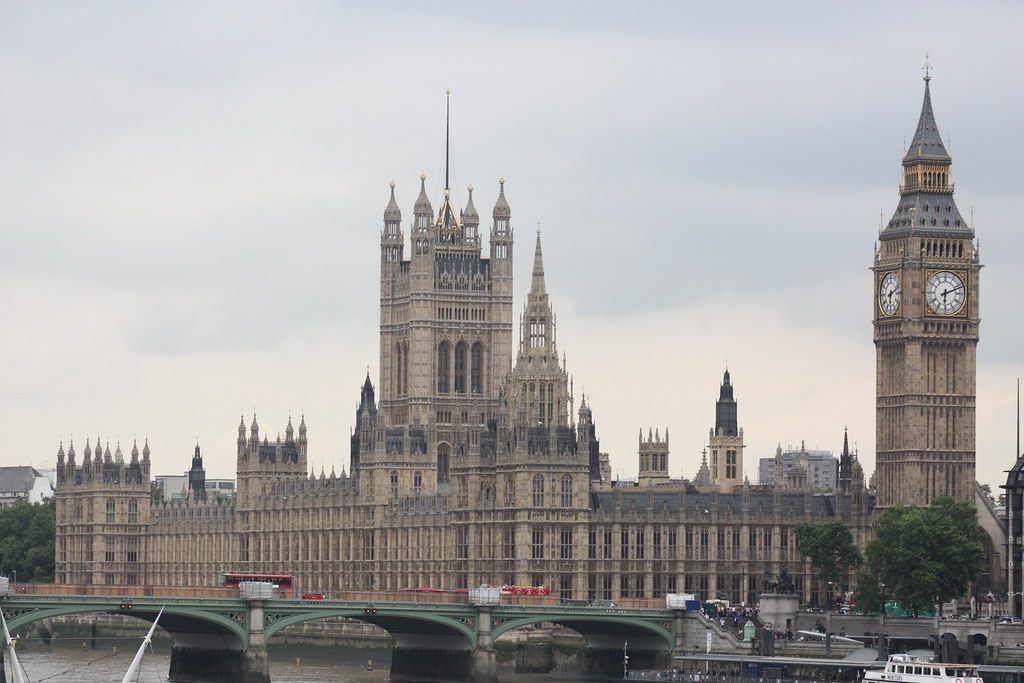
“Palace of Westminster”by michaelhenley is licensed under CC BY-NC-SA 2.0


The consensus is that the Government is trapped in an iron vice that will now be tightened till it cracks. The truth, however, is that this vice is less of iron than of hot air.
The Civil Contingencies Act 2004 is a constitutional outrage. It allows a government to declare an emergency, and then to rule by decree. It should never have been made. But it was made; and it can now be used as an instrument of liberation.
The Act defines “emergency” as just about anything the authorities may dislike. One possible definition is “an event or situation which threatens serious damage to human welfare in a place in the United Kingdom.” (s.1(1)) This sounds a promising excuse. It seems to cover what the Opposition claims would be the effect of a No-Deal Brexit.
Triggering the Act requires no more than “a senior Minister of the Crown” – that is, Boris Johnson – to announce an Emergency. This done, he can make, alter or suspend almost any law he likes. (s.22) He can do this for a period of thirty days. (s.26) All he has to do is preface his decree with a statement that he “is satisfied that the regulations contain only provision which is appropriate for the purpose of preventing, controlling or mitigating an aspect or effect of the emergency in respect of which the regulations are made.” (s.20(5)(b)(ii))
He cannot change the Act itself, or the Human Rights Act. He cannot set up concentration camps for his opponents, or put them before a firing squad. But the Fixed Term Parliament Act is fair game. He could suspend that. Then he could dissolve Parliament in the traditional way.
He must, “as soon as is reasonably practicable,” lay his decrees before Parliament. (s.27(1)(a)) No doubt, the Parliament we have would punish him with an Act of Attainder. But this Parliament would no sooner reassemble after the prorogation than it would be dissolved. The Speaker would barely have time to open his mouth. Assuming the general election went as hoped, the next Parliament would not be inclined to dispute the circumstances of its birth.
All the opposition parties would go screaming mad. But, as said, we are not talking about concentration camps and firing squads. The only use of the Emergency would be to give a voice to the people. Who could legitimately deny that? As for sharp practice in general, the opposition parties have spent this year turning the Constitution upside down. Who could complain if the Government now joined in the fun?
September 2, 2019
What You Didn’t Know About the 1968 Machine Gun Amnesty
Forgotten Weapons
Published on 11 Oct 2017Sold for $23,000.
When the 1968 machine gun amnesty was announced in the US, it was treated with widespread suspicion among gun collectors. Some thought it would merely a pretense to find and arrest owners of unregistered machine guns. Others though it was just the first step in a prohibition and confiscation of machine guns. Both of these groups would prove to be wrong, however and the amnesty was in fact a true amnesty.
In fact, the amnesty was even more substantial than people recognize even today. It was not just an amnesty for possession of an unregistered machine gun, but also pretty much any crime associated with the gun. For example, it would legalize guns that had been stolen from military property rooms, and guns with defaced serial numbers. In fact, it even allowed felons to register machine guns, and retain the legal right to own them to this very day.
http://www.patreon.com/ForgottenWeapons
Cool Forgotten Weapons merch! http://shop.bbtv.com/collections/forg…
If you enjoy Forgotten Weapons, check out its sister channel, InRangeTV! http://www.youtube.com/InRangeTVShow

QotD: The abolition conspiracy of the 1850s
But there was another conspiracy afoot in the 1850s: The abolition conspiracy. You don’t hear about this one in high school history because the victors write the textbooks, but it was quite real. And this one really was a conspiracy, in that they had a clear goal: The end of chattel slavery. And it was a conspiracy in a more fundamental sense, in that it was illegal. The so-called “slave power conspiracy” was obstructionist to the bone, but it’s perfectly legal for legislators to vote against proposed legislation. It’s not legal to advocate armed insurrection but that’s what the abolitionists did.
On October 16, 1859, a lunatic abolitionist named John Brown led a partisan band in an attack on the Federal arsenal at Harper’s Ferry, Virginia. He wanted to distribute the stolen guns to local slaves, thus sparking a race war. We know this because Brown was captured alive, and the great state of Virginia put him on trial, as they were legally required to do. Being a fanatic, and knowing that he was a dead man already, Brown took the opportunity to advertise his cause to the world …
At which point it became obvious that not only did Brown have the financial backing of several prominent Northerners, but he had the moral backing of a large segment of the Northern population. Brown became a martyr, literally — he was frequently compared to Jesus Christ in Northern periodicals. The important thing to note is this: Brown was captured in armed insurrection against the United States, and lots of the country was ok with it. This man simply decided that the legal processes could never result in the outcome he deemed morally necessary, so he took the law into his own hands — with the active connivance of prominent Northern financiers and intellectuals, and the avid approval of many Northern citizens.
Remember that, and Southern belligerency makes a whole lot more sense. The North was obviously ready to go to the gun in 1861, because they’d already gone to the gun in 1859. The “John Brown Moment,” then, is the point at which violence becomes inevitable, because one significant, influential segment of the country not only passively tolerates it, but actively cheers it.
Severian, “The John Brown Moment”, Rotten Chestnuts, 2019-07-16.
August 30, 2019
EFF sues Homeland Security over illegal GPS vehicle trackers
Kieren McCarthy on a recent lawsuit by the Electronic Frontiers Foundation:

The Electronic Frontier Foundation (EFF) has sued the US Department of Homeland Security to find out more about a program where, it is claimed, officers secretly stick GPS trackers on vehicles they are suspicious of as they come through the border.
The EFF has made repeated freedom of information act (FoIA) requests about the program’s policies but has been stonewalled, with Homeland Security’s responses claiming any information would contain “sensitive information” that could lead to “circumvention of the law.”
The foundation’s main concern is that Homeland Security is carrying out its secret tracking without a warrant, or even anything beyond a single officer’s suspicion. And it points to a recent US Supreme Court decision where it ruled that warrantless GPS tracking was unconstitutional under the Fourth Amendment.
Details of the program came to light last year when customs officers revealed in court filings that they had used GPS trackers without a warrant at the border. Since then the EFF has tried to find out what the policies and procedures are for deciding when a vehicle can be tagged. The relevant authorities have not been keen to go into any detail.
There’s another legal precedent too: a California court ruled that government officials’ use of GPS devices to track two suspected drug dealers without getting a warrant violated the Supreme Court decision, made in 2012, and was government misconduct.
August 25, 2019
QotD: Bipartisan authoritarianism
Some Democrats want to double down on their party’s shameful Drug War history. Massachusetts Rep. Stephan Hay [D-Fitchfield] has introduced House Bill 1266, which treats the existence of “a hidden compartment” in a vehicle as “prima facie evidence that the conveyance was used intended for use in and for the business of unlawfully manufacturing, dispensing, or distributing controlled substances.”
This means that if a cop stops you and finds no drugs or other contraband, but decides that part of your car is a “hidden compartment,” that cop can subject your car to civil asset forfeiture — that is, they can steal it, and force you to sue them to get it back.
The role of the Democratic Party is often to take the Republicans’ stupidest, red-meat-for-the-base policies, sloppily designed and doomed to collapse under their own weight, and operationalize them, putting them on the kind of sound bureaucratic footing that they need to have real staying power. Exhibit A is the drug war, but see also Obama’s perfection of GWB’s mess of a mass-surveillance apparatus, turning it into an immortal and pluripotent weapon that Donald Trump now gets to wield.
Cory Doctorow, “Proposed Massachusetts law would let cops steal your car if it had a ‘hidden compartment'”, Boing Boing, 2017-07-16.
August 22, 2019
August 18, 2019
The SNC-Lavalin affair was “unethical and contrary to law”, but “relatively above board”
The initial affair itself, that is. Andrew Coyne:

It is the element of deception that raises the conduct described in the ethics commissioner’s report from the merely unlawful to the potentially criminal.
Until now what we had thought we were dealing with was only a sustained and mounting campaign, by the prime minister and by those acting at his direction, to pressure the former attorney general of Canada to set aside the prosecution of SNC-Lavalin, a company with a long history of corruption and even longer history of contributing to the Liberal party, for reasons that explicitly included considerations of partisan advantage.
All of this was vastly improper on its own. Prosecutorial independence is one of the bedrock principles of our system of law, as fundamental as judicial independence. It is settled law that the attorney general, in consideration of a particular prosecution, may not be pressured by anyone, least of all the prime minister, for any reason, least of all partisan gain. Yet Jody Wilson-Raybould was, repeatedly, to the point of being threatened with dismissal if she did not capitulate.
Still, if unethical and contrary to law, this was relatively above board, in so far as the pressure on the attorney general was direct and undisguised: a scandal, to be sure, and grounds for more resignations than those submitted to date, but not, as the cliché has it, a crime. That, of course, is not the standard we should expect of public office holders — that they should merely avoid committing crimes — but it is at least a standard.
Whereas the conduct unearthed by the ethics commissioner may have fallen below even that line. What we have learned is that senior government officials were not just pressuring the former attorney general to interfere in a criminal proceeding, by the unprecedented means of overturning a decision of the independent director of public prosecutions: they were deceiving her.
They did so not only by keeping important information from her, but by providing her with misleading information. They acted, not only in concert with each other, but with officials at SNC-Lavalin, and they carried on this conspiracy to, in the commissioner’s words, “circumvent, undermine and ultimately attempt to discredit” the authority of the attorney general even as the company’s appeal of the DPP’s ruling was before Federal Court — a proceeding to which the attorney general, via the DPP, was a party.
August 14, 2019
Hong Kong’s struggle with the Chinese government
Andrew Coyne on the desperate situation of the Hong Kong protests:
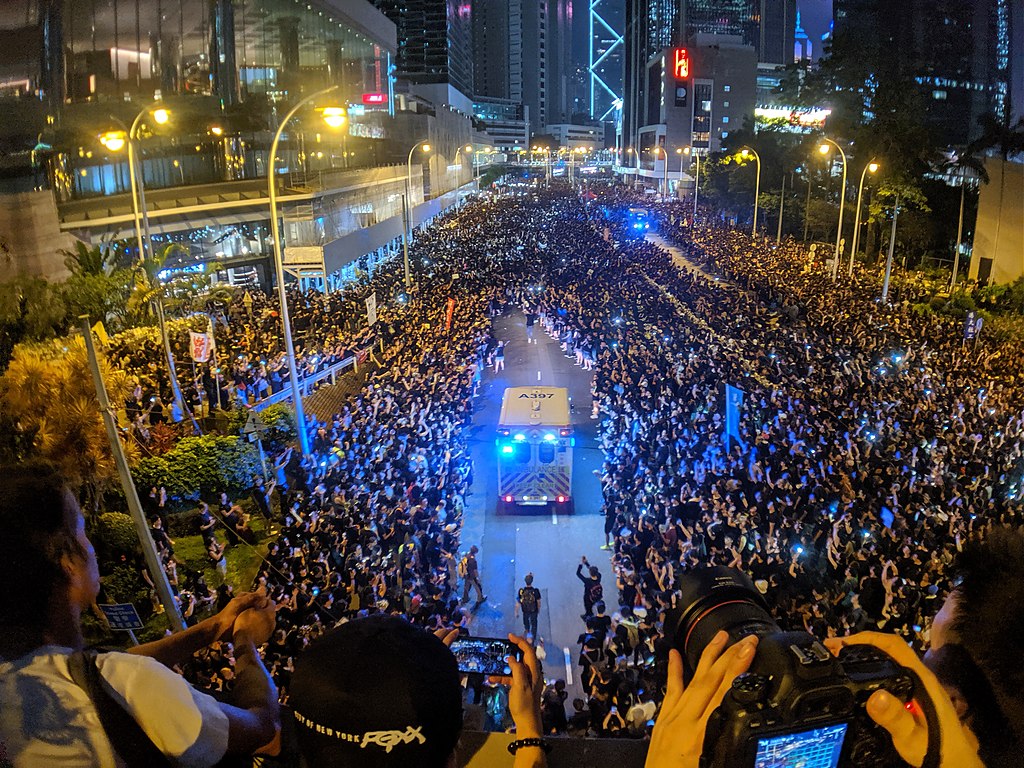
2019 Hong Kong anti-extradition law protest on 16 June, captured by Studio Incendo from Flickr.
Photo via Wikimedia Commons
A sickening pall of inevitability hangs over the protests in Hong Kong, now in their tenth week. Neither side can afford to back down – the protesters, because their way of life, indeed their very lives, are at stake; the Beijing-backed government, for the precedent it would set, and the hope it would inspire.
As the violence mounts — most of it, to date, on the part of the police, or in some cases the Triad gangs hired to beat and intimidate the protesters — so does the likelihood of mass bloodshed, a reprise of the Tienanmen massacre of 30 years ago. Some of the protesters may indeed hope to tempt Beijing into such an appalling overstep; however horrific the prospect, or improbable their chances, it is difficult to blame them.
For as the people of the world’s freest city fend off being swallowed by one of the world’s most repressive dictatorships, they do so largely alone. Fifty-six years ago, when West Berlin faced a similar threat from the Eastern Bloc, the democratic world rallied to its cause – because its cause, they knew, was their cause. President John F. Kennedy went to Berlin to give his great, moving “ich bin ein Berliner” speech, declaring before the world that “all free men, wherever they may live, are citizens of Berlin.” These were not just words — it was NATO policy to defend the city with arms, if necessary.
And today? The president of the United States refers to the protesters as “rioters,” the Beijing-approved term. Should President Xi Jinping decide to suppress the unrest in Hong Kong by force, he seems to be signalling, he would be willing to look the other way — perhaps for reasons of state (what are a few hundred or even thousand lives if it helps close a trade deal?), or perhaps just out of his habitual admiration for dictators. But the government of Canada — 300,000 of whose citizens, let us remember, live in the city — has been scarcely more robust in their defence; neither have most western governments.
August 9, 2019
What’s happening in Jammu and Kashmir?
Pieter J. Friedrich reports on recent events concerning the unique constitutional status of Jammu and Kashmir within the Republic of India:
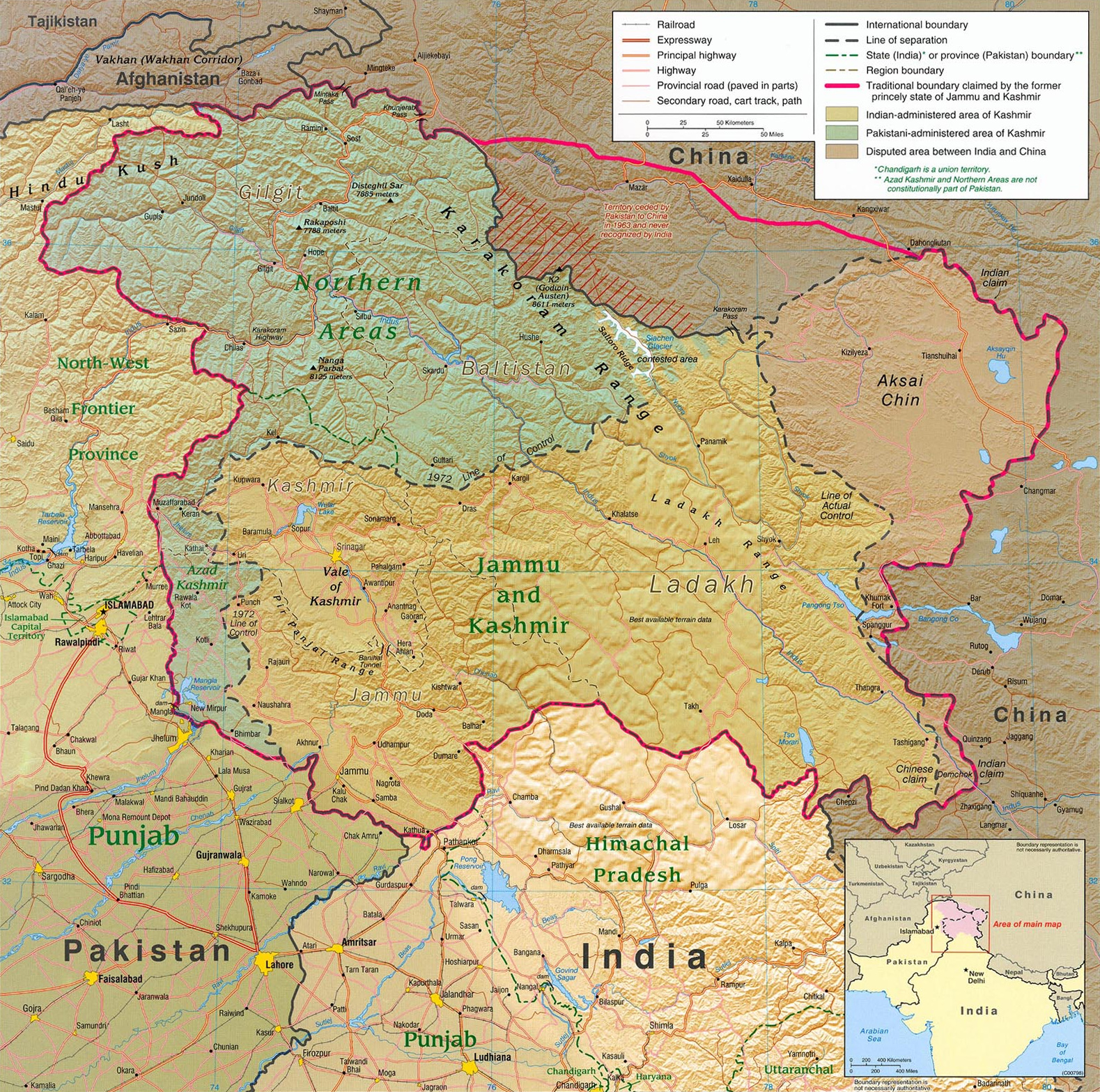
CIA map of the Kashmir Region in 2004.
Via Wikimedia Commons. Click image to see full-sized map.
Terror grips the most militarized zone in the world after India’s Central Government terminated Jammu and Kashmir’s 70-year-old “special status” as the first step towards stripping the disputed region of statehood entirely.
Internationally infamous as the world’s hottest potential nuclear flashpoint, J&K originally acceded to India in 1947 only on the condition that the newly-formed country be restricted from interfering in the domestic affairs of the mountainous northern region. The agreement was sealed between the last king of J&K, Maharaja Hari Singh Dogra, and the representative of the British crown, Governor-General Lord Mountbatten. In 1949, when passage of the constitution formed the Republic of India, the Maharaja’s conditions for accession were enshrined in Article 370.
The crux of the article – in combination with Article 35A of 1954 – was that, while J&K accepted India’s handling of issues like defense and foreign policy, the state otherwise reserved the right to autonomy in handling its domestic affairs. Kashmiris, thus, lived under their own distinct laws. Notably, citizens of other parts of India were prohibited from settling permanently or owning property in Kashmir. In the eyes of many Kashmiris, this prevented settler colonialism. On August 5, 2019, the President of India abolished this “special status” by decree.
Simultaneously, Home Minister Amit Shah – charged with India’s internal security – introduced a bill in the upper house of parliament to strip J&K of statehood, downgrade it to a “Union Territory,” and partition the region.
As Shah did this, the Central Government shut down Kashmir. It imposed a virtual curfew, banning movement of the public, shuttering educational institutions, and barring all public assemblies or meetings. It severed communications, cutting off phone and internet access. And it conducted arrests of mainstream Kashmiri political leaders – such as former chief ministers Mehbooba Mufti and Omar Abdullah – on unknown charges.
India’s ruling Bharatiya Janata Party, which was just re-elected in May, campaigned on promises to scrap J&K’s “special status.” The BJP’s manifesto alleged that it was “an obstacle in the development of the state,” while Shah insisted it stood in the way of of Kashmir becoming an “integral party of India permanently” and was necessary for “national security.” Indeed, the tumultuous region has suffered a significant influx in violence in recent years.
Since 2014, when Prime Minister Modi’s regime first came to power, terrorist incidents in J&K have nearly tripled and security forces deaths have nearly doubled. According to a July 2019 UN report, independent bodies documented 159 security forces deaths in 2018 – a figure comparable to US troop fatalities in Iraq in 2009. The latest round of escalating tensions traces back to at least 2010, when mass protests erupted over an “encounter killing” of three civilians by Indian Army troops. Protests again erupted in 2016. During suppression efforts, security forces killed hundreds of protesters.
The Central Government has responded by flooding J&K with more and more soldiers. The small region – slightly smaller than the United Kingdom – is already occupied by a bare minimum of 500,000 troops. Since late July 2019, India has deployed nearly another 50,000.
Delhi has additionally responded by repeatedly dissolving J&K’s elected state government, imposing direct rule three times since 2015. The last time was in June 2018, after India’s ruling BJP withdrew from a coalition with then J&K Chief Minister Mufti – apparently because she advocated “reconciliation” instead of a “muscular security policy” as the most effective solution to the Kashmir conflict. Elections have not been allowed since 2014.
The ongoing occupation as well as the long-term use of direct rule – imposed for approximately ten of the past 42 years – contribute to the perception of Kashmiris that they are nothing more than vassals within the Republic of India.


