
The Great War
Published on 24 Feb 2018Ask your questions here: http://outofthetrenches.thegreatwar.tv
February 25, 2018
Amphibious Landing Craft – Widow Compensation – Repatriation I OUT OF THE TRENCHES
Comments Off on Amphibious Landing Craft – Widow Compensation – Repatriation I OUT OF THE TRENCHES
Feature History – Russo-Japanese War
Feature History
Published on 28 May 2017Hello and welcome to Feature History, featuring a Russian and Japanese disagreement, and why you don’t record when sick.
Comments Off on Feature History – Russo-Japanese War
February 23, 2018
Cuban Missile Crisis – Eyeball to Eyeball – Extra History – #2
Extra Credits
Published on 22 Feb 2018Sponsored by DomiNations: https://smarturl.it/CubanMissile1
After President Kennedy’s television address, tensions are rising. Fidel Castro is getting annoyed at the US and Soviet Union alike, and everyone else has their own ideas on what retaliation looks like.
Comments Off on Cuban Missile Crisis – Eyeball to Eyeball – Extra History – #2
Timothy Sandefur’s Frederick Douglass: Self-Made Man
Jonathan Bean responds to a negative review of Sandefur’s new biography in the New York Times:
Frederick Douglass, whose bicentennial birthday fell on Valentine’s Day, is one of the great figures in American history, a hero whose legacy is celebrated even by those who might otherwise contest his actual ideas.
Illustrating this truth, the New York Times marked the occasion by publishing a largely negative review of Timothy Sandefur’s new biography, Frederick Douglass: Self-Made Man — a book that depicts the African-American ex-slave and social reformer as a classical liberal who championed individual liberty based upon natural rights, self-reliance, and Rule of Law.
The book reviewer, Yale University historian David W. Blight, criticizes Sandefur and other “conservatives” for “co-opting” Douglass. (Sandefur is a self-described libertarian, but in Blight’s mind, ‘libertarian’ and ‘conservative’ are distinctions without a difference.) In making this complaint, Blight demonstrates his confusion as to the meaning of “the Right” and classical liberalism.
Blight concedes that Douglass was a “radical thinker and a proponent of classic 19th-century political liberalism” who “loved the Declaration of Independence” and “the natural-rights tradition.” On these issues, Blight’s view is consistent with Sandefur’s libertarian interpretation of Douglass.
Yet, Blight goes on to protest that the libertarians (or conservatives — he conflates the two groups) are wrong to co-opt Douglass because the great abolitionist “believed that freedom was safe only with the state and under law.”
But this view of freedom’s security is not one that libertarians would dispute. To say otherwise is to make a classic straw man argument.
[…]
Blight’s review gets two things about political classification especially wrong. First, classical liberalism is neither Left nor Right. Throughout history, classical liberals have extolled “unalienable Rights,” individual freedom from government control, the U.S. Constitution as a guarantor of freedom, color-blind law, and capitalism. These values distinguish classical liberalism from left-wing liberalism, with its emphasis on group rights, equality of outcomes, and hostility to free-market capitalism. They also put classical liberals squarely in opposition to nativists and white supremacists who used the law as a weapon to exclude “undesirable” immigrants or separate the races in the American South.
Second, “libertarianism” — the modern descendant of classical liberalism — is not and never has been a “do-nothing” philosophy. Classic liberals (or libertarians) were activists for abolishing slavery, eradicating segregation, defending immigrants’ rights, passing anti-lynching measures, and much more. Indeed, although they recognized the role that law played in protecting the exercise of liberty, it was the law that so often violated the inalienable rights of Americans. Classical liberals fought slavery, segregation, pernicious immigration quotas, internment, and “affirmative action” because these government measures denied individuals equal protection of the law.
Blight’s conceptual errors may account for why he sometimes badly misreads his subject. He claims, for example, that Douglass loved “the reinvented Constitution — the one rewritten in Washington during Reconstruction, not the one created in Philadelphia in 1789.” This is a gross mischaracterization of Douglass’s views.
Comments Off on Timothy Sandefur’s Frederick Douglass: Self-Made Man
Operation Faustschlag – Germany Advances In The East Again I THE GREAT WAR Week 187
The Great War
Published on 22 Feb 2018Germany has had enough with the stalling tactics by the Bolsheviks and is unleashing its military might on the Eastern Front again to show who is in charge. Within the first days of Operation Faustschlag, the German Army marches on Kiev and the Baltic region. At the same time, the plans for a German spring offensive in the West are getting more pronounced.
Comments Off on Operation Faustschlag – Germany Advances In The East Again I THE GREAT WAR Week 187
Artillery Combat in World War 1
Military History Visualized
Published on 6 Jun 2016This video will focus on how the use of Artillery changed throughout the war and cover some of the many major innovations. Artillery tactics changed to a large degree from 1914 to 1918, whereas in 1914 the use of artillery in tactics and techniques had still a strong resemblance to the Napoleonic era, in 1918 the foundations of a modern artillery is clearly recognizable. Although the basic principles of indirect fire, massed fire, counter-battery fire, calibration and meteorological corrections and combined arms were known, they were usually not applied on the field in 1914, yet in 1918 these principles were used consistently and to a large degree by all sides.
Script and further information: http://militaryhistoryvisualized.com/artillery-combat-in-the-first-world-war/
Comments Off on Artillery Combat in World War 1
February 22, 2018
DicKtionary – E is for Eugenics – Otmar von Verschuer
TimeGhost
Published on 21 Feb 2018E for eugenics, pseudo science about race,
Selective breeding of humans can make the world a purer place,
When saying, “that’s scary”, those words are ne’er truer,
Then of the main man today, Otmar von Verschuer.Hosted by: Indy Neidell
Written by: Spartacus Olsson
Produced and Directed by: Astrid Deinhard
Executive Producers: Bodo Rittenauer, Astrid Deinhard, Indy Neidell, Spartacus Olsson
Camera by: Jonas Klein
Edited by: Spartacus Olsson, Jonas KleinA TimeGhost chronological documentary produced by OnLion Entertainment GmbH
Comments Off on DicKtionary – E is for Eugenics – Otmar von Verschuer
Curse of the FRIDAY THE 13TH I IT’S HISTORY
IT’S HISTORY
Published on 21 Feb 2018On today’s episode we are going to talk about the end of the Templar Order and the famous curse of Jacques de Molay.
Comments Off on Curse of the FRIDAY THE 13TH I IT’S HISTORY
February 20, 2018
Russian Rifles of World War 1 I THE GREAT WAR Special feat. C&Rsenal
The Great War
Published on 19 Feb 2018Othais’ video about the Winchester Contract Rifle: https://www.youtube.com/watch?v=4grSRn5wnHI
Indy and Othais from C&Rsenal talk about Russian Rifles during World War 1.
Comments Off on Russian Rifles of World War 1 I THE GREAT WAR Special feat. C&Rsenal
February 19, 2018
Graphing good news
In the Times Literary Supplement, David Wootton reviews Enlightenment Now: A manifesto for science, reason, humanism and progress by Steven Pinker:
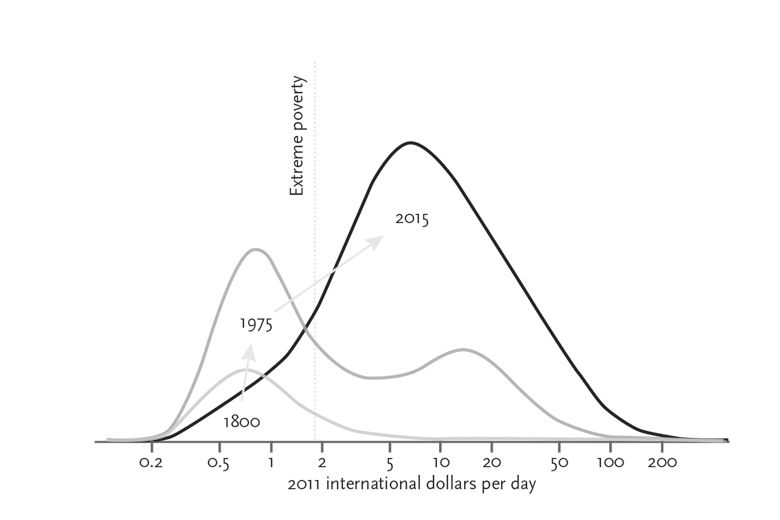
This book consists essentially of seventy-two graphs – and, despite that, it is gripping, provocative and (many will find) infuriating. The graphs all have time on the horizontal axis, and on the vertical axis something important that can be measured against it – life expectancy, for example, or suicide rates, or income. In some graphs the line, or lines (often the graphs compare trends in several countries) fall as they go from left to right; in others they rise. In every single one, the overall picture (with the inevitable blips and bounces) is of life getting better and better. Suicide rates fall, homicides fall, incomes rise, life expectancies rise, literacy rates rise and so on and on through seventy-two variations. Most of these graphs are not new: some simply update graphs which appeared in Pinker’s earlier The Better Angels of Our Nature (2011); others come from recognized purveyors of statistical information. The graphs that weren’t in Better Angels extend the argument of that book, that war and homicide are on the decline across the globe, to assert that life has been getting better and better in all sorts of other respects. The claim isn’t new: a shorter version is to be found in Johan Norberg’s Progress (2017). But the range and scope of the evidence adduced is new. The only major claim not supported by a graph (or indeed much evidence of any kind) is the assertion that all this progress has something to do with the Enlightenment.
Since the argument of the book is almost entirely contained in the graphs, those who want to attack the argument are going to attack the figures on which the graphs are based. Good luck to them: arguments based on statistics, like all interesting arguments, should be tested and tested again. Better Angels caused a vitriolic dispute between Pinker and Nassim Nicholas Taleb as to whether major wars are becoming less frequent. In Taleb’s view the question is a bit like asking whether major earthquakes are getting less frequent or not: they happen so rarely, and so randomly, that you would need records going back over a vast stretch of time to reach any meaningful conclusion; a graph showing falling death rates in wars over the past seventy years won’t do the job. But it certainly will tell you that lots of generalizations about modern war are wrong. Much, indeed most, of Pinker’s argument survived Taleb’s attack, which in any case was directed at only one graph among many.
A more radical line of criticism of Better Angels came from John Gray. How can one find a common standard of measurement for the suffering of a concentration camp victim, of a soldier who died in the trenches, and of someone killed in the firebombing of Dresden? To turn to economics, how can one find a common standard of measurement for books and washing machines, oranges and steak pies? Money, you might think, provides that standard, but what happens if many of the goods being measured – electric lighting, cars, televisions, computers – get cheaper and cheaper as time goes on, so that a rising standard of living is concealed by falling prices? For Gray, to place one’s faith in statistics, which claim to be measuring the unmeasurable, is no different from believing in conversations with angels or in the efficacy of Buddhist prayer wheels. Quantification is our religion.
Comments Off on Graphing good news
Genghis Khan – Temüjin the Child – Extra History – #1
Extra Credits
Published on 17 Feb 2018As a child, Temüjin was afraid of the world, saddened by its cruelty and an outcast from his own tribe. But his mother, Hoelun, passed on her risk-taking personality to him, a boy who would one day become the famed conqueror Genghis Khan.
Comments Off on Genghis Khan – Temüjin the Child – Extra History – #1
Why the Pith Helmet?
Major Sven Gaming
Published on 14 Apr 2017Anyone love the old Zulu movie staring Michael Caine?
I do, but why did the British wear these awesome hats? Well watch and you will find out…
And a link to more info on these wonderful Helmets. http://www.throughouthistory.com/?p=3153
Comments Off on Why the Pith Helmet?
February 18, 2018
Live And Let Live – France’s War Aims – Refugees I OUT OF THE TRENCHES
The Great War
Published on 17 Feb 2018
Comments Off on Live And Let Live – France’s War Aims – Refugees I OUT OF THE TRENCHES
How WWI Got Women to Start Wearing Bras
Today I Found Out
Published on 3 Oct 2016In this video:
Corsets dominated the undergarments of wealthier women in the Western world for centuries, until WWI. So how did the war help popularize the bra? In a word, or two words in this case: metal shortage. The making of corsets required quite a bit of metal. Thus, in 1917, the U.S. War Industries Board asked American women to help their “men win the war” by not wearing or buying corsets.
Want the text version?: http://www.todayifoundout.com/index.p…
Comments Off on How WWI Got Women to Start Wearing Bras
February 17, 2018
Cuban Missile Crisis – I: The Failed Checkmate – Extra History
Extra Credits
Published on 15 Feb 2018An eye for an eye, a missile for a missile — that’s how the saying goes, right? So thought the Soviet Union and the United States in the early fall of 1962, kicking off a 13-day staring contest that scared the world.
Comments Off on Cuban Missile Crisis – I: The Failed Checkmate – Extra History


