
World War Two
Published 12 Nov 2021To smooth the way for the Allied invasion of French North Africa, Operation Torch, a massive spy operation is set up in 1941 and 42.
(more…)
November 13, 2021
Here’s Looking at You, Bill – The Secret Preparations for Operation Torch – WW2 – Spies & Ties 10
Comments Off on Here’s Looking at You, Bill – The Secret Preparations for Operation Torch – WW2 – Spies & Ties 10
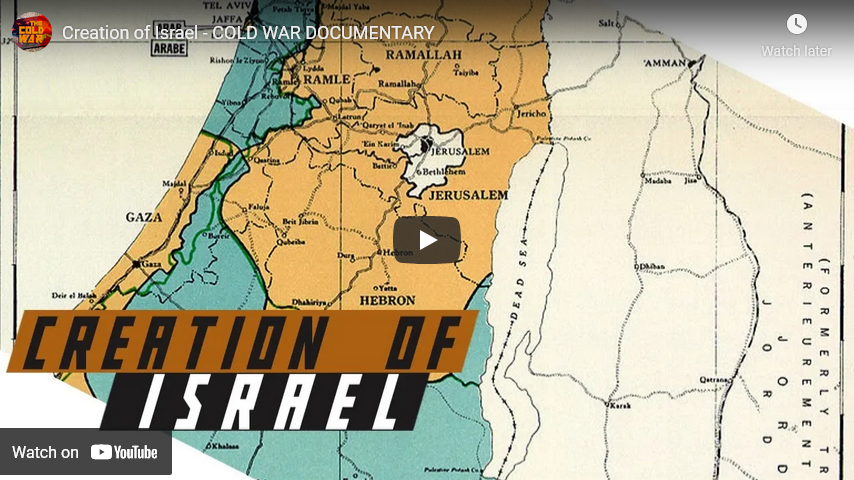
Creation of Israel
The Cold War
Published 1 Jun 2019Our series on the history of the Cold War period continues with a documentary on the creation of Israel, Zionist movement, reactions and diplomatic maneuvers of other states and the build-up to first Arab-Israeli war
Consider supporting us on Patreon: https://www.patreon.com/thecoldwar
Comments Off on Creation of Israel
November 12, 2021
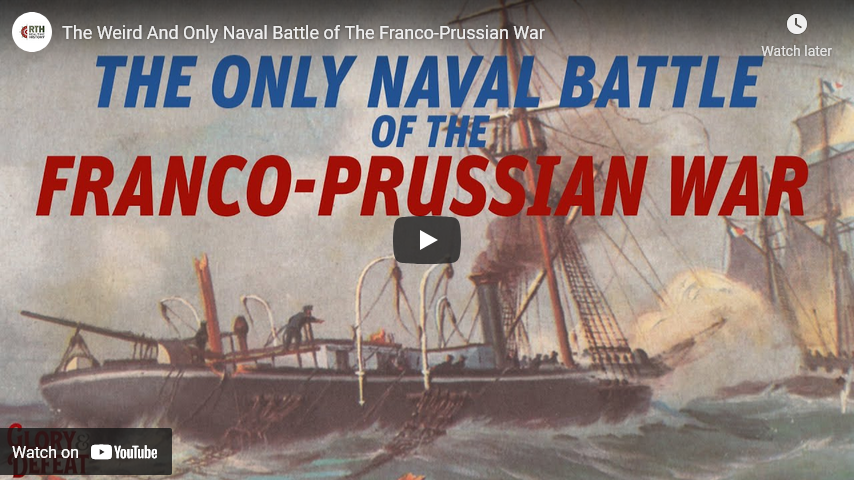
The Weird And Only Naval Battle of The Franco-Prussian War
Real Time History
Published 11 Nov 2021Support Glory & Defeat on Patreon: https://patreon.com/realtimehistory
While the fighting on land continued during the Franco-Prussian War in November 1870, the bizarre and only naval battle of the war took place off the coast of Cuba when the German Meteor and the French Bouvet met in the port of Havana.
» THANK YOU TO OUR CO-PRODUCERS
John Ozment
James Darcangelo
Jacob Carter Landt
Thomas Brendan
James Giliberto
Kurt Gillies
Albert B. Knapp MD
Tobias Wildenblanck
Richard L Benkin
Scott Deederly
John Belland
Adam Smith
Taylor Allen
Jim F Barlow
Rustem Sharipov» OUR PODCAST
https://realtimehistory.net/podcast – interviews with historians and background info for the show.» LITERATURE
Arand, Tobias: 1870/71. Die Geschichte des Deutsch-Französischen Krieges erzählt in Einzelschicksalen. Hamburg 2018Arand, Tobias: “Rogerowski oder Rasumofsky? Überlegungen zur nationalen ‘Meistererzählung’ in Fontanes Kriegsgefangen”, in: Fontane-Blätter 105 (2018), p. 61-86
Bauer, Gerhard u.a. (Hrsg.): Krieg – Macht – Nation. Wie das deutsche Kaiserreich entstand. Ausstellungskatalog Dresden Militärhistorisches Museum der Bundeswehr. Dresden 2020
Bigelow, John: France and the Confederate Navy 1862-1868. New York, 1888
Farret, “Étude sur les combats livrés sur mer de 1860 à 1880”, Revue Maritime et Coloniale, t. 70, no d’édition, 1881, p. 519-522
Gouttman, Alain: La grande défaite 1870-1871. Paris 2015
Pölking, Hermann and Linn Sackarnd: Der Bruderkrieg. Deutsche und Franzosen 1870/71. Freiburg 2020
Radecke, Gabriele/Rauh, Robert: Fontanes Kriegsgefangenschaft. Wie der Dichter in Frankreich dem Tod entging. Berlin 2020
Tümmler, Holger: Großer Atlas des Deutsch-Französischen Krieges 1870/71. Wolfenbüttel 2010
» SOURCES
Fontane, Theodor: Kriegsgefangen. Erlebtes 1870. Neuausgabe Berlin 2020Kriegsgeschichtliche Abtheilung des Großen Generalstabs (Hrsg.): Der deutsch-französische Krieg 1870-71. II.1. Berlin 1878
Kürschner, Joseph (Hrsg.). Der große Krieg in Zeitberichten. Leipzig 1895
Meisner, Heinrich Otto (Hrsg.): Kaiser Friedrich III. Das Kriegstagebuch von 1870/71. Berlin, Leipzig 1926
Roux, Georges: La Guerre de 1870. Paris 1966
Stenzel, Alfred: “Flotte und Küste”, in: Krieg und Sieg 1870-71. Ein Gedenkbuch, hrsg. v. Julius von Plugk-Harttung. Berlin 1895. S. 584-611
“The Naval Duel Near Havana,” Otago Witness, Issue 996, 31 December 1870, p. 11.
» OUR STORE
Website: https://realtimehistory.net»CREDITS
Presented by: Jesse Alexander
Written by: Cathérine Pfauth, Prof. Dr. Tobias Arand, Jesse Alexander
Director: Toni Steller & Florian Wittig
Director of Photography: Toni Steller
Sound: Above Zero
Editing: Toni Steller
Motion Design: Philipp Appelt
Mixing, Mastering & Sound Design: http://above-zero.com
Maps: Battlefield Design
Research by: Cathérine Pfauth, Prof. Dr. Tobias Arand
Fact checking: Cathérine Pfauth, Prof. Dr. Tobias ArandChannel Design: Battlefield Design
Contains licensed material by getty images
All rights reserved – Real Time History GmbH 2021
Comments Off on The Weird And Only Naval Battle of The Franco-Prussian War
Armored Vehicles of Operation Torch Pt. 1, by the Chieftain
World War Two
Published 11 Nov 2021Chieftain returns to the North African theatre to talk us through the armored fighting vehicles in action around the time of Operation Torch. This episode is part one of two with Chieftain covering the German and Italian vehicles. Here, Chieftain looks at everything from the fearsome Tiger to the nemesis of LRDG: the Sahariana.
(more…)
Comments Off on Armored Vehicles of Operation Torch Pt. 1, by the Chieftain
More on the populist success of Hungary’s Victor Orbán
Last week, Scott Alexander looked at a couple of recent biographies of Hungarian politician Victor Orban (linked here). He got some quite interesting responses from his readers, including a long Twitter thread from Lyman Stone, which he’s converted into plain text for ease of reading:
I won’t make you read it all in tweet format. He continues:
1) Dictatorship and democracy. The arguments about Orban cheating in elections might be totally true. I dunno. But that’s sort of irrelevant. Neutral opinion polls nobody disputes show he would have gotten 2/3 under almost any system.
His crude poll share was about 60% before the 2010 election, but given the threshold effects, he’d likely have ended up at a supermajority under almost any system. And as @slatestarcodex [says], a lot of the initiatives that the EU most despises under Orban are initiatives that *everyone agrees* have supermajority public support among Hungarian voters.
Moreover, I agree with @slatestarcodex that if public opinion turned in Hungary, Orban would probably turn on a dime too. The dude loves power. But that should inform our read of what’s going on in Hungary. *Hungarians wanted* a right-nationalist authoritarian leader, *and so they voted for one*, and the electorate has *wanted* recurrent intensifications of that regime. So is it a dictatorship? Or is it a democracy?
This gets at the problem with “democracy” as a concept. Hungary is undeniably Democratic: there is widespread public support for the regime, which is selected by elections, the results of which are a decent approximation of trustworthy and neutral opinion polls. But I think it’s still possibly reasonable to call Orban a dictator. He wields enormous *personal* power, there are few checks on his power, and he uses power to create a *personal* clique of supporters to perpetuate that power and enfeeble the competition.
But this is the point: Democracy and dictatorship aren’t opposites. In fact, they are natural companions! So much so that before the 20th century, “democracy” was often used *literally as a synonym* for “authoritarian and demagogic rule”! Orban is a great example of why the word “democracy” came into ill repute in the past: because it was widely understood that “the people” (often pejoratively “the mob”) will often vote for a strongman to stomp his boot on the face of disliked others. That’s not so much a disagreement with @slatestarcodex as just a comment where I think the modern western liberal mindset obscures understanding the phenomenon of populist leadership.
2) Why admire Orban? Here I think @slatestarcodex misses some important stuff, perhaps because his biographies miss it. Yes, Orban was incompetent in the 90s. So were MOST immediate post-Soviet leaders! And while Orban may have been corrupt, you can compare the personal wealth of the Fidesz clique to the cliques that looted Russia or Ukraine and realize that Hungary got a better class of corrupt leaders than much of eastern Europe. Moreover, Hungary actually had competitive elections with changes of power and leaders who *respected* those results! Maybe they were dirty but, like, it happened! This wasn’t universally true!
So why might Hungarians admire a dissident-cum-parliamentarian who competed for their votes and when defeated responded democratically by adapting to try to win the next election? Because … duh?
But it’s not just that. The big factor that’s absent in all these culturalist accounts of Hungarian politics is … the economy. Hungary went from below-average unemployment rate for its region under Orban 1 to way above-average under the socialists to again below-average under Orban 2.
This is extremely important. A part of Orban’s appeal is that, whether by coincidence or art, he has managed to preside over periods where Hungary’s economic performance was better than a lot of its neighbors, and often fairly obviously so. That is, supporting irredentist nationalism in the form of Orban hasn’t imposed costs on Hungarians: they aren’t like facing sanctions or something or enduring deep economic hardship to stand by their dictator. He’s delivered (comparatively) good times!
So when you have a leader who 1) seems marginally-less-corrupt than regional peers, 2) delivers marginally-better-results than regional peers, and 3) adopts policies that are widely popular … that leader will be popular! Duh!
Update: Fixed broken link.
Comments Off on More on the populist success of Hungary’s Victor Orbán
Britain’s Highly Unusual Crescent-Wing Victor Bomber
Dark Skies
Published 2 Nov 2021The V force was a legendary team of bombers built to serve during the post-war crisis. However, they would not carry ordinary bombs, but nuclear weapons.
As World War II ended, the division between the West and the East became a significant threat to world peace, and shortly before the Cold War began, Britain started working on a modern jet bomber force that could rival any other on the planet.
The Handley Page Victor featured a one-of-kind wing, making it the largest aircraft to break the sound barrier up to that point.
As the British mastered the atomic bomb by the mid-1950s with the exceptional V force and the Victor to deliver it, Britain’s stature among the world’s superpowers significantly solidified.
—
Join Dark Skies as we explore the world of aviation with cinematic short documentaries featuring the biggest and fastest airplanes ever built, top-secret military projects, and classified missions with hidden untold true stories. Including US, German, and Soviet warplanes, along with aircraft developments that took place during World War I, World War 2, the Korean War, the Vietnam War, the Cold War, the Gulf War, and special operations missions in between.
As images and footage of actual events are not always available, Dark Skies sometimes utilizes similar historical images and footage for dramatic effect and soundtracks for emotional impact. We do our best to keep it as visually accurate as possible.
All content on Dark Skies is researched, produced, and presented in historical context for educational purposes. We are history enthusiasts and are not always experts in some areas, so please don’t hesitate to reach out to us with corrections, additional information, or new ideas.

Comments Off on Britain’s Highly Unusual Crescent-Wing Victor Bomber
November 11, 2021
Remembrance Day ceremonies — please keep them short and on-topic
In The Line “Tommy Conway” (pseudonym for an active service member of the Canadian Armed Forces) has some thoughts on Remembrance Day and particularly the official ceremonies to mark the occasion:
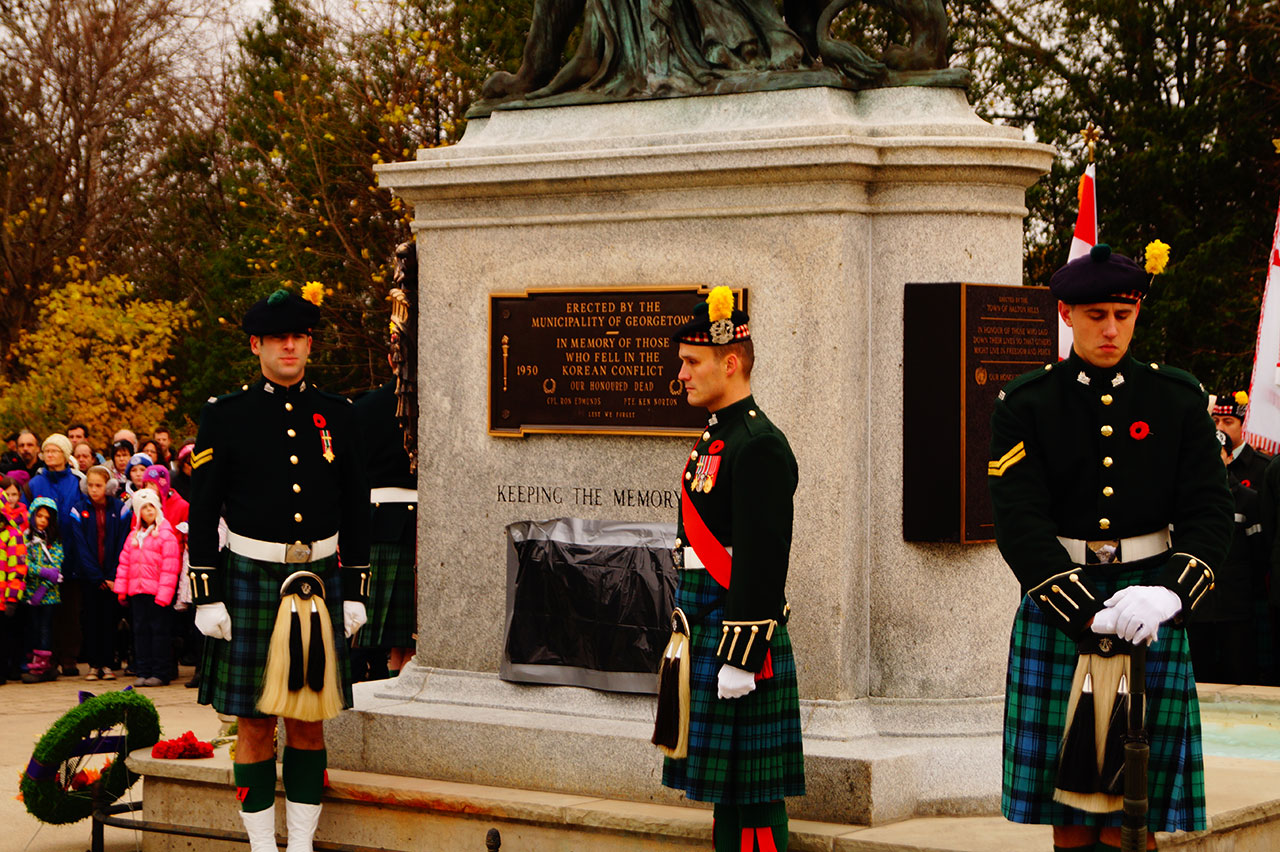
Members of the Lorne Scots (Peel, Dufferin & Halton Regiment) at Georgetown Cenotaph, 11 November, 2014.
Canadian troops are generally regarded as a practical, irreverent bunch. They absolutely hate that “hoo-ah” stuff you hear south of the border, and resent any attempt to import it. I’ve never met a more snide bunch and I wouldn’t have it any other way. When it comes to Remembrance Day, the most meaningful ceremonies for them involve a few close friends, or a small gathering of colleagues. One veteran related to me a ceremony he had on the job: a well-respected officer asked those present to speak well of lost friends, if they felt like it, then they had a moment of silence and carried on with the job. The least profound experience I’ve had was at the National Memorial in Ottawa, where a bunch of mid-career captains used the event as a way to catch up and barely shut their mouths for the speeches. Not that they missed much: the Chaplain-General took the time to tell us that our brave predecessors sacrificed their lives and youth, in part, to secure a harassment-free workplace. I don’t expect it will get better this year, or ever.
When it comes to local ceremonies, I understand, I really do, that organizers want to convey their thoughts about the fallen and want to do so in detail. Please try to keep speeches few and short, and ceremonies simple and purposeful. The more wreaths at a local ceremony that dignitaries want to lay, the more elements of the program you have, the longer you keep that young private soldier, who was bussed from a base that morning, from having a beer with his or her friends afterwards. For many young soldiers, the post-ceremony refreshment time is where their NCOs open up about the really hard stuff they’ve been through and let the new guys listen. It’s meaningful and right that your local business and civic leaders want to show respect for the dead, but it means more for everyone involved if you do it after the ceremony.
The National War Memorial itself is a great illustration on the pitfalls of trying too hard. Traditionally, the memorial was just let alone by the authorities, except for ceremonies. In 2006, a couple of drunks peed on it. While this was offensive, drunks doing offensive things is a fact of life. A confident society with reasonable people in charge would have let the legal system work out the mischief charges and carried on. Not long after, however, the CAF decided to post sentries at the memorial to guard it from stray drunks. Then, tragically, one of the sentries, Corporal Nathan Cirillo, was murdered in a terrorist attack in 2014 while performing this duty. So now the Ottawa Police guard the sentries, who in turn guard the memorial. Imagine yourself as a Canadian sapper who entered a major firefight in Panjwai, in a bulldozer with steel hastily welded to the windows because the chronically under-equipped CAF had no proper armoured bulldozers available, and think of this obscene waste of everyone’s time and money. If Canadian troops are looking at the memorial from the beyond, they’re looking in disbelief, not reverence. And they’re making snarky comments, too.
Comments Off on Remembrance Day ceremonies — please keep them short and on-topic
In memoriam
A simple recognition of some of our family members who served in the First and Second World Wars:
The Great War
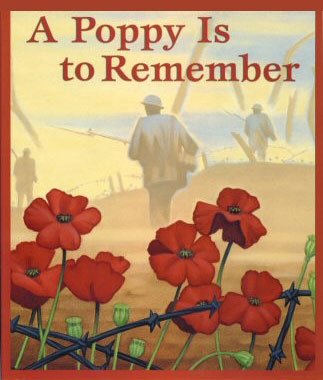 Private William Penman, Scots Guards, died 16 May, 1915 at Le Touret, age 25
(Elizabeth’s great uncle)- Private Archibald Turner Mulholland, Argyll & Sutherland Highlanders, mortally wounded 25 September, 1915 at Loos, age 27
(Elizabeth’s great uncle) - Private David Buller, Highland Light Infantry, died 21 October, 1915 at Loos, age 35
(Elizabeth’s great grandfather) - Private Harold Edgar Brand, East Yorkshire Regiment. died 4 June, 1917 at Tournai.
(My first cousin, three times removed) - Private Walter Porteous, Durham Light Infantry, died 4 October, 1917 at Passchendaele, age 18
(my great uncle) - Corporal John Mulholland, Argyll & Sutherland Highlanders, wounded 2 September, 1914 (shortly before the First Battle of the Aisne), wounded again 29 June, 1918, lived through the war.
(Elizabeth’s great uncle)
The Second World War
- Flying Officer Richard Porteous, RAF, survived the defeat in Malaya and lived through the war
(my great uncle) - Able Seaman John Penman, RN, served in the Defensively Equipped Merchant fleet on the Murmansk Run (and other convoy routes), lived through the war
(Elizabeth’s father) - Private Archie Black (commissioned after the war and retired as a Major), Gordon Highlanders, captured at Singapore (aged 15) and survived a Japanese POW camp
(Elizabeth’s uncle) - Elizabeth Buller, “Lumberjill” in the Women’s Land Army in Scotland through the war.
(Elizabeth’s mother) - Trooper Leslie Taplan Russon, 3rd Royal Tank Regiment, died at Tobruk, 19 December, 1942 (aged 23).
Leslie was my father’s first cousin, once removed (and therefore my first cousin, twice removed).
For the curious, the Commonwealth War Graves Commission the Royal British Legion, and the Library and Archives Canada WW1 and WW2 records site provide search engines you can use to look up your family name. The RBL’s Every One Remembered site shows you everyone who died in the Great War in British or Empire service (Canadians, Australians, New Zealanders, South Africans and other Imperial countries). The CWGC site also includes those who died in the Second World War. Library and Archives Canada allows searches of the Canadian Expeditionary Force and the Royal Newfoundland Regiment for all who served during WW1, and including those who volunteered for the CEF but were not accepted.
In Flanders fields the poppies blow
Between the crosses row on row,
That mark our place; and in the sky
The larks, still bravely singing, fly
Scarce heard amid the guns below.We are the Dead. Short days ago
We lived, felt dawn, saw sunset glow,
Loved and were loved, and now we lie
In Flanders fields.Take up our quarrel with the foe:
To you from failing hands we throw
The torch; be yours to hold it high.
If ye break faith with us who die
We shall not sleep, though poppies grow
In Flanders fields.Lieutenant Colonel John McCrae, MD Canadian Army Medical Corps (1872-1918)
Comments Off on In memoriam
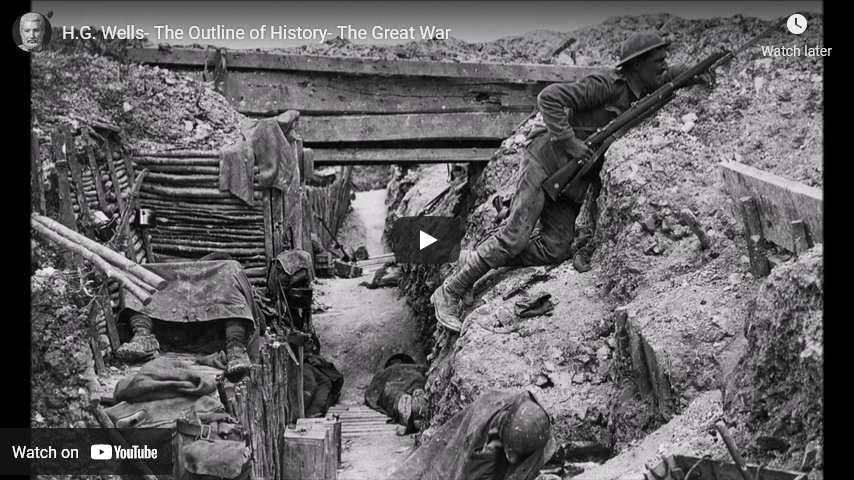
H.G. Wells – The Outline of History – The Great War
Thersites the Historian
Published 5 Mar 2021In this video, we look at H.G. Wells’ coverage of World War I, from the war’s outbreak to the Armistice. Here, we see Wells at his most passionate and he makes a few controversial claims as well as sharing a couple of his personal experiences as a Londoner dealing with German air raids and celebrating the Armistice.
Patreon link: https://www.patreon.com/thersites
PayPal link: paypal.me/thersites
Discord: https://discord.gg/QCaXXFr
Brave Browser: https://brave.com/noa557
Twitter link: https://twitter.com/ThersitesAthens
Minds.com link: https://www.minds.com/ThersitestheHis…
Steemit/dtube link: https://steemit.com/@thersites/feed
BitChute: https://www.bitchute.com/channel/jbyg…
Comments Off on H.G. Wells – The Outline of History – The Great War
QotD: War and human capital
… perhaps there is a parallel between the state of human capital in the American elite [today] and the German elite during the war. The German soldiers were the best in the world, but the people further up the line were not the best tacticians. At the upper reaches, the strategists were terrible in all sorts of ways, starting with Hitler, who was laughably inept at running a war. Winning was never an option, but the Germans could have avoided total obliteration if they had better leaders.
The blame for this is always put on Hitler and that’s a good place to start, but the Germans had a brain power problem throughout the planning layer. This is obvious in how they went about making tanks. Instead of going for a tank that was cheap and easy to produce by a civilian workforce, they tried to build tanks that were complex and required specialists to produce. The effects of allied bombing raids were amplified by this strategic blunder in production planning. This is a very basic error in planning and execution.
One possible cause of this was that the middle-aged men who would have been sorting these production and design problems had died during the Great War. The German army tended to “use up” their units, rather than cycle them in and out of lines. That meant that a lot of experience with supply and logistics was lost in the trenches. The British and the Americans rotated units in and out of the lines, thus they came out of the war with a vast number of people with experience in the nuts and bolts of war fighting.
The current ruling class needs the Germans to be seen as the ultimate in super villains, but the truth is the Germans were dumb about a lot of important things. The Russians came up with sloped armor, for example, and the Germans never bothered to steal the idea, even after Kursk. The Germans got their hands on the Churchill tank, but never bothered to learn anything from it. They never learned from the Americans how to use communications to coordinate their artillery and their armor.
In many respects, the story of the tank in the war is a great proxy for the story of human capital and cultural intelligence. The Germans had the best trained military on earth, but they lacked human capital in the strategy and tactics layer. Either the culture was unable to produce it or there was simply not enough smart people to create the necessary smart fraction. That was ultimately why Germany was wiped from the map. It’s probably why no new culture has arisen from that place on the map either.
The Z Man, “Tanking It”, The Z Blog, 2019-03-01.
Comments Off on QotD: War and human capital
November 10, 2021
Wives – What Soldiers Left Behind – WW2 – On the Homefront 012
World War Two
Published 9 Nov 2021With men away at the front, couples have to separate and manage the struggle of war on their own. For women who stay at home, this is not any easier than for the man: worry, longing, loneliness, meaningless sex, the temptation of falling in love with others – it is an emotional rollercoaster.
(more…)
Comments Off on Wives – What Soldiers Left Behind – WW2 – On the Homefront 012
Tank Chats #131 | Kanonenjagdpanzer | The Tank Museum
The Tank Museum
Published 9 Jul 2021Curator David Willey discusses the German Cold War tank destroyer the Kanonenjagdpanzer or Jpz 4-5 for short.
(more…)
Comments Off on Tank Chats #131 | Kanonenjagdpanzer | The Tank Museum
QotD: Pershing and Prohibition
There are two primary reasons for this. First, the Army had been living under various forms of prohibition long before the 18th Amendment’s ratification. In 1832, during the Black Hawk War, Illinois militiamen consumed their entire two-week issue of whiskey by the campaign’s second day. When Black Hawk attempted to surrender that day, the drunken militia instead attacked, and in the ensuing “Battle of Stillman’s Run” Black Hawk and his roughly fifty warriors routed the 275 militiamen. Consequently, Andrew Jackson’s Secretary of War Lewis Cass eliminated the whiskey ration.
As the temperance movement gained increasing influence, in 1890, Congress banned “intoxicating beverages” to enlisted men at military posts located in states, territories, or counties with local prohibition laws. The Army considered beer and light wines to be non-intoxicating, however, and allowed their sale and consumption at the post commander’s discretion. Congress subsequently expanded Army prohibition with the so-called Canteen Act of 1901, which forbade “the sale of, or dealing in, beer, wine or any intoxicating liquors by any person in any post exchange or canteen or army transport or upon any premises used for military purposes by the United States.” When America entered World War I, Congress extended alcoholic prohibition beyond the Army’s post boundaries. The Selective Service Act of May 1917 prohibited intoxicating beverages “in or near military camps” – which the War Department implemented by establishing a prohibition zone five miles wide around each post – and made it illegal to sell to any serviceman in uniform. (The Army once again skirted the bill’s intent by permitting beverages with less than 1.4 percent alcohol-by-volume). Thus, the 18th Amendment had little legal impact on the US. Army.
More importantly, perhaps, was the fact that like millions of their civilian counterparts, most officers and enlisted men simply chose to ignore the Volstead Act’s enforcement of Prohibition. When General Pershing became Army Chief of Staff, each day after leaving the War Department he enjoyed staying up late with his aides, drinking, talking about his youth, and joking. Once when he and George Marshall were traveling on a train together and enjoying a bottle of Scotch, Pershing suggested they offer some to Senator George Moses in the next car. Pouring a little into a glass, they proceeded to where Pershing thought Moses was sleeping in a Pullman. “Senator Moses,” whispered Pershing as he scratched a berth’s closed green curtain. When there was no answer, Pershing raised the curtain, only to discover not Senator Moses, but an angry woman who cried: “What do you want?” Pershing dropped the curtain and bolted down the aisle like a frightened schoolboy, pushing Marshall ahead of him and spilling the scotch. “I had a hard time keeping out of his way,” Marshall said, “because he was running up my back. But we got to the stateroom and got the door shut. Then he just sat down and laughed until he cried.” Finally, wiping his eyes, Pershing noticed a little Scotch remained in the glass and mischievously suggested Marshall return and try it again. Not on your life, Marshall replied. “Get another aide.”
Benjamin Runkle, “‘What a Magnificent Body of Men Never to Take Another Drink’: The U.S. Army and Prohibition”, Real Clear Defense, 2019-01-16.
Comments Off on QotD: Pershing and Prohibition
November 9, 2021
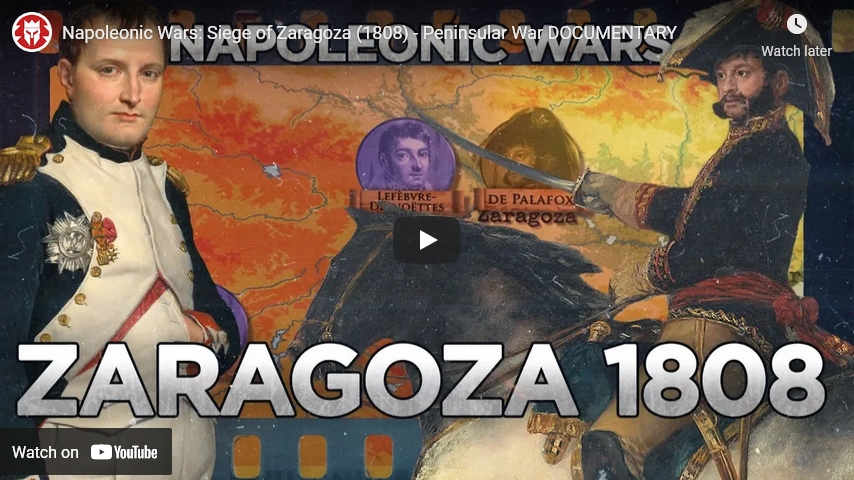
Napoleonic Wars: Siege of Zaragoza (1808) – Peninsular War
Kings and Generals
Published 30 Sep 2018
Our animated historical documentary series on the Napoleonic Wars are back with another episode covering the Peninsular War. The armies of Napoleon face more rebellions this time in Spain. And if the battle of Vimiero was crucial for the resistance in Portugal, the Siege of Zaragoza of 1808 played the similar role for the northern part of Spain. The battle of Bailen is just around the corner, and the Peninsular campaign will only get more interesting from here.This script was researched and written by Everett Rummage. Check out his brilliant Age of Napoleon podcast – http://bit.ly/2vC3cIE In our opinion, it is the best podcast on the Napoleonic era.
Support us on Patreon: http://www.patreon.com/KingsandGenerals or Paypal: http://paypal.me/kingsandgenerals
We are grateful to our patrons and sponsors, who made this video possible: https://drive.google.com/open?id=1KEV…
This video was narrated by Officially Devin (https://www.youtube.com/user/OfficiallyDevin)
Machinimas were made on NTW3 mod for Napoleon Total War by Malay Archer (https://www.youtube.com/user/Mathemed…)
✔ Merch store ► teespring.com/stores/kingsandgenerals
✔ Twitch ► https://www.twitch.tv/nurrrik_phoenix
✔ Twitter ► https://twitter.com/KingsGenerals
✔ Instagram ► http://www.instagram.com/Kings_GeneralsProduction Music courtesy of Epidemic Sound: http://www.epidemicsound.com
Napoleon Total War OST – “HMS Victory”
Napoleon Total War OST – “The Battle At Arcole”
Jon Björk – “Downfall 1”
Johannes Bornlöf – “Imperious 2”
Johannes Bornlöf – “Rise of the Phoenix 2”
Johannes Bornlöf – “Solemn”
Andreas Jamsheree – “Sunstorm 1”#Documentary #Kingsandgenerals #Napoleon
Comments Off on Napoleonic Wars: Siege of Zaragoza (1808) – Peninsular War
Led Zeppelin IV, fifty years on
In Monday’s NP Platformed newsletter, Colby Cosh helps a lot of “late Boomers” and Gen X’ers to feel even older:

This very day, friends, marks the 50th anniversary of the release of Led Zeppelin’s fourth studio album, whose title is technically a series of glyphs representing the band’s four members. Frustrated writers and editors usually just call it Led Zeppelin IV, and will have to go on doing so until the Unicode Consortium comes to its senses.
Zep IV is generally considered the band’s strongest LP, and it contains the song “Stairway to Heaven”, which has been played so often over 50 years of life that it is now somewhat divisive. It’s possible the species can be split into people who are sick of “Stairway” and those of us who still have to let it play all the way through, every time, even though it has nothing left to disclose and no remaining power to surprise. (How could it? We all know every note, every overtone of every chord, every syllable of incomprehensible Robert Plant doggerel.) NP Platformed is cheered by the thought that there are babies being born every day who will, at some time or other, get to hear “Stairway” for the first time. It’s not like they’ll get very far without hearing it.
“Stairway” makes for a hell of a cleanup hitter, but on Zep IV the lineup is immense from top to bottom. There are those who would argue that other Zeppelin studio LPs are stronger on the whole. If you like the heavy-blues side of the group, you might be tempted to vote for Zeppelin II (1969); folkies appreciate Zeppelin III (1970).
The fifth record, Houses of the Holy (1973), was once called “Zeppelin’s best record” by Chuck Klosterman, an undoubted authority in such matters … but please note that Klosterman wrote this in a listicle about the greatest metal albums that had Zeppelin IV No. 2 overall, with Houses of the Holy altogether omitted. Later, when trendsetting music-review site Pitchfork.com did a listicle of the top 100 albums of the 1970s, they ranked Zep IV seventh and spent a couple hundred words apologizing for not putting it first. (“We must be lying to ourselves …”) Zep IV: too big to ignore.


