Quotulatiousness

June 5, 2021

The morality of collective intergenerational responsibility

Filed under: Europe, Germany, History, USA — Tags: , , , , , , — Nicholas @ 03:00

Arthur Chrenkoff believes that the responsibility to compensate people for historical wrongs ends when the individuals who were harmed have died:
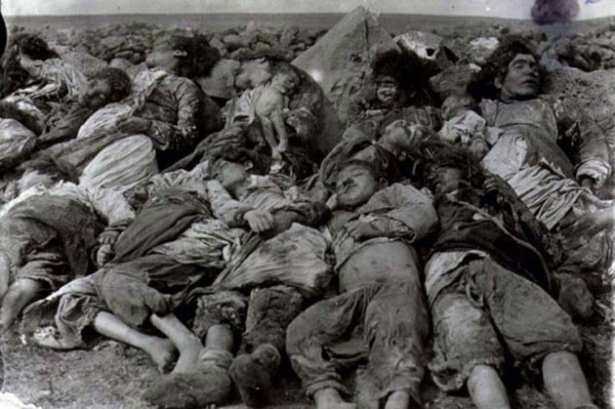
Victims of genocide
Photo by Cantetik2 via Wikimedia Commons.

What I was querying was the practicality and the morality of reparations being paid today: “If great-great-grandchildren of perpetrators have to pay great-great-grandchildren of survivors, is there any limit on historical liability? 200 years? 500 years?”

Before we get any further into the discussion, let me restate here my position, which has not changed at all in light of the subsequent online exchanges and name-calling: I do not believe in collective intergenerational responsibility. Far from modern and enlightened, it strikes me as a primitive, ancient principle, in line with the Old Testament’s “an eye for an eye” mentality. Thought to call it Old Testament might be unkind to Old Testament, since already by the time the Book of Ezekiel was being compiled during the Babylonian Exile, mid-first millennium BC, the Judaic theology had morally evolved beyond the belief that the sins of the fathers are visited on their children. We are each a moral agent, enjoying free will and exercising own judgments and actions, and for all that we are rightly held responsible and accountable. But it is unjust to blame (and, at the other end of the spectrum, absurd to praise) us for what our literal and metaphorical ancestors had done or failed to do at one point or another in the past, or what they have collectively achieved.

And so, to the comment that genocide has no statute of limitation, I say: it should, and it should be right about the time that all those who were alive at the time and affected by it have passed away.

The concept of reparations for historical wrongs is increasingly in the news. In the United States, the question revolves around the evil of slavery, but it’s hardly an American-centric debate. In many Western European countries there is talk of reparations for colonialism. Then there is the agitation in Poland, long supported by the ruling Law and Justice party, that Germany should pay Poland reparations for death and destruction caused during the Second World War. While the quantum has sometimes been calculated upward of US$15 trillion, the official suggestions have hovered around the more “modest” €850 billion (1947 estimates in today’s currency).

[…]

Not just genocide – everything that has ever happened, both bad and good, ripples across time and shapes the present. This is what history is about. Each event has an infinite number of causes and an infinite number of consequences. Hence, conceptual problems start popping up once you try to unscramble the egg and make simple adjudications about complex past situations. It’s one thing to make moral judgments about what had happened, it’s another to apply judicial standards used in disputes between contemporaries to met out sanctions and punishment in relations to historical wrongs, which might have occurred centuries ago. For starters, the collective approach to situations where each individual was affected it their own unique way might simplify things but it surely does not paint an accurate picture or deliver real justice. This goes for both the victims and the perpetrators. (At the extreme, for example, potentially forcing the descendants of German pacifists to compensate the descendants of Polish collaborators. In fairness, there were few of either at the time, but most other historical events are significantly more complicated than the black and white story of Nazi aggression and crimes against humanity.)

Which brings me to the second problem: the supposed intergenerational nature of responsibility and punishment. Not only are we talking about entire nations or ethnic (or social or religious or other) groups as monoliths for legal purposes, somewhat akin to a corporation, but also monoliths in time, across an unlimited number of generations. I find it morally odious, but you may well say “well, it’s not about moral blame per se, but whether you have, intentionally or not, benefitted at the expense of past others as a consequence of the evil actions of your ancestors” – in other words, it’s not a punitive but a restorative justice. Putting aside, again, the fact that no two individuals are ever affected in exactly the same way, the past is much more complex than your simplistic unicausal, zero-sum calculations allow and so, consequently, simple justice in theory is simply unjust in practice. Take Germany for example; if you think that Germany and Germans as a collective had benefitted from their rapacious actions during the war, you clearly have little idea what happened to them between, say, 1943 and 1946. You might think, as many did particularly in the immediate aftermath of the war, that this was still not a (collective) punishment enough considering the extent and the gravity of crimes committed (including the Holocaust) but if there was a time to tip the scales even more it was contemporaneously. The point I’m making is that any short-term German gains have been wiped out by the deliberate actions (military or otherwise) of the Allies, who in so doing destroyed much of the native German wealth as well as the wealth stolen by Germany from the occupied territories. That Germany is rich today is despite, not because of the Second World War. And while it’s true that Poland, for example, and at least some of its people are poorer today than they would have been had there been no war, I return back to my original position: how is it just and fair for a 25-year old from Bremen to compensate Poland as a whole (or the Polish government to be exact) for the “ripples” set off six decades before they were even born?

June 3, 2021

The Supernatural Adventures of Arthur Conan Doyle | B2W:ZEITGEIST! I E.19 Spring – 1923

TimeGhost History
Published 2 Jun 2021

Being the creator of the legendary Sherlock Holmes has made Arthur Conan Doyle famous for his scientific rationality. But Doyle also has a deeply held belief in the existence of the spirit universe. In a world still reeling from the shock of the Great War, he is not alone.
(more…)

June 2, 2021

How Hitler Manipulated Germany into Committing Genocide – WW2 Special

Filed under: Germany, History, WW2 — Tags: , , , , , , — Nicholas @ 04:00

World War Two
Published 1 Jun 2021

In the wrong hands, propaganda is a powerful tool that can trick whole countries into supporting a dictator, go to war, or even commit genocide.
(more…)

May 30, 2021

Rommel’s Desert Dash – The Whole Bloody Afrika Korps! – Gazala – WW2 – 144 – May 30, 1942

World War Two
Published 29 May 2021

Erwin Rommel begins his surprise new offensive with “Rommel’s Moonlight Ride”, bringing all of his mighty mobile units to the fray in North Africa, while in the Pacific, dozens of warships and tens of thousands of men set sail from Japan — their mission? Attack the Aleutian Islands and Midway Island, but above all, destroy the US Pacific Fleet!
(more…)

May 28, 2021

The Plot to Kill Hitler’s Hangman – Operation Anthropoid – WAH 035 – May 1942, Pt. 2

World War Two
Published 27 May 2021

Arthur Harris and his RAF Bombers carry out a massive bombing raid on Cologne. Meanwhile, one of the architects of the Holocaust, Reinhard Heydrich is the target of a spectacular assassination attempt.
(more…)

May 23, 2021

AF is short of fresh water – WW2 – 143 – May 23, 1942

Filed under: Britain, Germany, History, Japan, Military, Pacific, Russia, USA, WW2 — Tags: , , , , , — Nicholas @ 04:00

World War Two
Published 22 May 2021

Soviet Foreign Minister Molotov arrives in London to meet with Churchill, but at home in the USSR the Germans have launched an instantly successful offensive. In North Africa and Malta the British are building up, unaware that Erwin Rommel is just about to strike, and an American ruse discovers secret Japanese attack plans.
(more…)

May 16, 2021

Joseph Stalin Jumps the Gun – 142 – May 16, 1942

World War Two
Published 15 May 2021

The Soviets pre-empt a German offensive with one of their own in the south of the Eastern Front, but that’s not the only fighting. The skies over Malta and the waters of the Gulf of St. Lawrence are full of action. Meanwhile, two races against time — and the Japanese — come to an end in India.
(more…)

May 14, 2021

100,000 Dead British Subjects in Burma – WAH 034 – May 1942, Pt. 1

Filed under: Asia, Britain, Europe, Germany, History, Japan, Military, WW2 — Tags: , , , , , , , — Nicholas @ 04:00

World War Two
Published 13 May 2021

A large number of European and asian inhabitants of South-East Asia are locked up in Japanese prison camps, while in Burma, a big refugee crisis claims the lives of thousands. In Auschwitz-Birkenau and Sobibor, gassing Jews on an immense scale begins.
(more…)

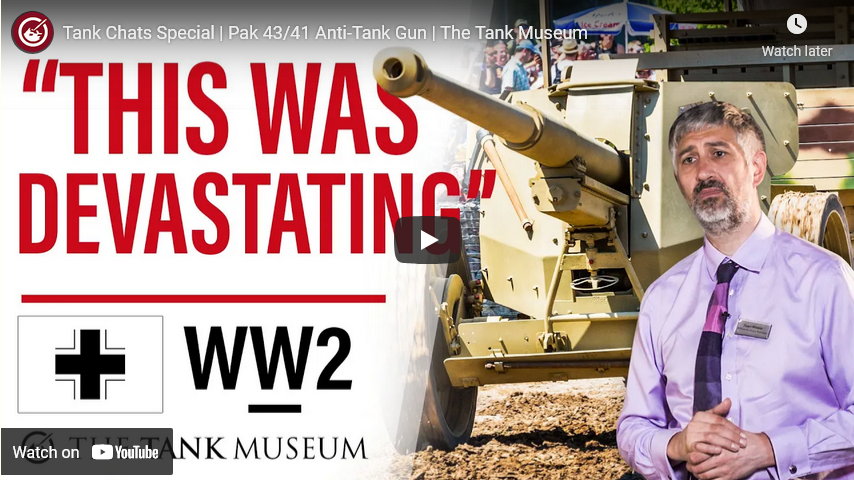
Tank Chats Special | Pak 43/41 Anti-Tank Gun | The Tank Museum

Filed under: Germany, History, Military, Weapons, WW2 — Tags: , , — Nicholas @ 02:00

The Tank Museum
Published 18 Sep 2020

The Tank Museum’s Archive and Library Manager Stuart Wheeler presents this Tank Chat Special on the Pak 43/41. Find out the history behind the infamous anti-tank gun and the story behind how it came to be in The Tank Museum’s collection — from its time as a gate-guard, to its restoration, and finally its display in the Museum.

Support the work of The Tank Museum on Patreon: ► https://www.patreon.com/tankmuseum
Visit The Tank Museum SHOP & become a Friend: ► tankmuseumshop.org

Twitter: ► https://twitter.com/TankMuseum
Instagram: ► https://www.instagram.com/tankmuseum/
#tankmuseum #tanks

May 11, 2021

Wheellocks – Real or Fake? And What is “Fake”, Really?

Filed under: Germany, History, Weapons — Tags: , , — Nicholas @ 02:00

Forgotten Weapons
Published 16 Aug 2016

http://www.patreon.com/ForgottenWeapons

When someone makes a “fake” historical gun, they can do so with the intent to deceive or be up-front with the gun’s new manufacture. Those acknowledged reproductions are a great option to have — guns like Uberti reproduction revolvers give us an excellent opportunity to shoot antique designs without the cost of true originals and without the risk of damaging them. On the other hand, creating “antiques” fraudulently to deceive someone into believing they are actually originals is a reprehensible practice.

What about when you don’t know, though? In the Victorian era, it was popular to have fancy antique guns — like these wheellock pistols. Just like today, not everyone could afford to actually go buy a 300-year-old ornate gun, though. So, many people would commission new replicas made (and I’m sure plenty of fraudulent copies were created as well). Fast forward a hundred years or more to the present day, and we have a bit of a conundrum for the potential buyer. Is a gun 100 years old or 400? It takes some substantial experience and knowledge to be able to tell the difference — and yet an acknowledged Victorian copy is still a potentially fantastic piece of workmanship and collectible in its own right.

May 9, 2021

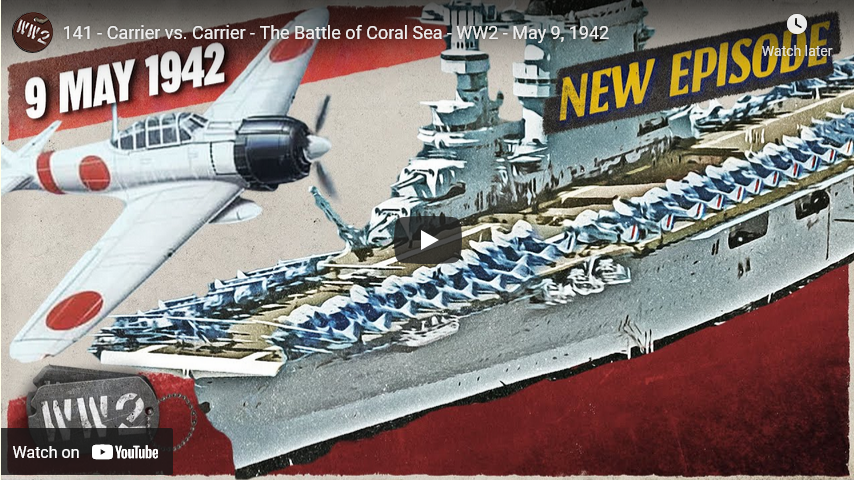
Carrier vs. Carrier – The Battle of the Coral Sea – WW2 – 141 – May 9, 1942

World War Two
Published 8 May 2021

This week sees a major clash between the naval forces of the Japanese and the Allies. Both sides take big damage, though on the tactical level it is a victory for the Japanese. Operationally, however, they must postpone their attacks towards Port Moresby. They are busy making plans all the while, though, for their upcoming attack against Midway Atoll in the Central Pacific. They also finally have success ending an offensive this week with the conquest of the Philippines when Corregidor falls. Japan’s ally Germany begins an offensive of their own this week on the Kerch Peninsula. The Allies, for their part, launch an offensive of their own this week against Vichy French-held Madagascar, and they take the main port, Diego Suarez.

Join us on Patreon: https://www.patreon.com/TimeGhostHistory
Or join The TimeGhost Army directly at: https://timeghost.tv

Get Collectibles here: https://timeghost.tv/collectibles/​

Follow WW2 day by day on Instagram @ww2_day_by_day – https://www.instagram.com/ww2_day_by_day
Between 2 Wars: https://www.youtube.com/playlist?list…
Source list: http://bit.ly/WW2sources

Written and Hosted by: Indy Neidell
Director: Astrid Deinhard
Producers: Astrid Deinhard and Spartacus Olsson
Executive Producers: Astrid Deinhard, Indy Neidell, Spartacus Olsson, Bodo Rittenauer
Creative Producer: Maria Kyhle
Post-Production Director: Wieke Kapteijns
Research by: Indy Neidell
Edited by: Iryna Dulka
Sound design: Marek Kamiński
Map animations: Eastory (https://www.youtube.com/c/eastory​)

Colorizations by:
– Daniel Weiss
– Mikołaj Uchman
– Norman Stewart – https://oldtimesincolor.blogspot.com/​
– Dememorabilia – https://www.instagram.com/dememorabilia/​

Sources:
– IWM A 9471
– Narodowe Muzeum Cyfrowe

Soundtracks from the Epidemic Sound:
– Rannar Sillard – “Easy Target”
– Jo Wandrini – “Dragon King”
– Jo Wandrini – “To War!”
– Fabien Tell – “Last Point of Safe Return”
– Brightarm Orchestra – “On the Edge of Change”
– Reynard Seidel – “Rush of Blood”
– Craft Case – “Secret Cargo”
– Gunnar Johnsen – “Not Safe Yet”
– Edward Karl Hanson – “Spellbound”
– Johan Hynynen – “One More Thought”
– Rannar Sillard – “March Of The Brave 4”
– Johan Hynynen – “Dark Beginning”
– Phoenix Tail – “At the Front”

Archive by Screenocean/Reuters https://www.screenocean.com​.

A TimeGhost chronological documentary produced by OnLion Entertainment GmbH.

May 8, 2021

Special Presentation: Semiauto Pistols of the 1800s

Filed under: Europe, Germany, History, Military, Weapons — Tags: , , , , , — Nicholas @ 02:00

Forgotten Weapons
Published 19 Sep 2018

http://www.patreon.com/ForgottenWeapons

Cool Forgotten Weapons merch! http://shop.bbtv.com/collections/forg…

Today’s Special Presentation is an overview of all the semiautomatic pistols that were actually put into serial production before the year 1900. We have looked at these individually before, but I think it is worthwhile to examine them together in context, to gain a better understanding of what the automatic pistol scene was really like in the last years of the 19th century.

If you enjoy Forgotten Weapons, check out its sister channel, InRangeTV! http://www.youtube.com/InRangeTVShow

Contact:
Forgotten Weapons
6281 N Oracle #36270
Tucson, AZ 85704

From the comments:

Joseph Heschmeyer
2 years ago (edited)
“Hi guys, thanks for tuning in for another video on ForgottenWeapons.com. Today we’ll be looking at the science fair project that got me kicked out of middle school.”

May 7, 2021

Tank Chats #106 | Panzer IV | The Tank Museum

Filed under: Germany, History, Military, Weapons, WW2 — Tags: , , , , , , — Nicholas @ 02:00

The Tank Museum
Published 11 Sep 2020

Join The Tank Museum’s Curator David Willey as he discusses the Sd.Kfz 161, better known as Panzer IV: the most numerously produced tank by Germany during the Second World War.

Support the work of The Tank Museum on Patreon: ► https://www.patreon.com/tankmuseum
Visit The Tank Museum SHOP & become a Friend: ► tankmuseumshop.org

Twitter: ► https://twitter.com/TankMuseum
Instagram: ► https://www.instagram.com/tankmuseum/
#tankmuseum #tanks

QotD: Battleship gunnery in WW2

Filed under: Britain, Germany, History, Military, USA, Weapons, WW2 — Tags: , , — Nicholas @ 01:00

Capital ships could also only defeat their opponents’ armour IF they could find them and hit them accurately. Which was hardly a given, as only the British – with the eight WWI 15″ guns on Warspite — and Germans — with the nine modern 11″[!] guns on Scharnhorst — actually hit any moving target at 26,000 yards or more. (Both in relatively clear conditions in daylight, and both well inside the theoretical 35,000-45,000 yard full range of most battleship guns.)

[Three years later, in foul weather at night during the Battle of North Cape, the Germans had their fears that British radar had advanced far beyond theirs in gunfire direction completely confirmed, when Scharnhorst was pounded to scrap by Duke of York and a few cruisers in a battle where even the British cruisers could engage and score hits at ranges that didn’t allow Scharnhorst to reply accurately.]

No other navy came even close to hitting anything actually moving at any speed at 26,000 yards (though West Virginia managed within about 15% of it with 22,800 yards using the latest radar at Surigao Strait in late ’44). Certainly not the radar-deficient Italians and Japanese.

At night, or in bad weather, that meant radar-efficient nations had an unsurpassable advantage, particularly for fast moving targets at sea like those hit by Warspite and Scharnhorst.

[Although one USN 16″ battleship peppered stationary French targets in a port at even longer ranges, some USN engagements — like Guadalcanal — were at Jutland distances, if not closer. (5,000-8,000 yards, even though the US ships had radar … Which would have been fine if the USN had been consciously doing a Matapan-style 3,500 yard ambush, but South Dakota‘s radar and other power went down to “electrical fault”, and she accidentally wandered within 5,000 yards and was battered at close range, “leaving the ship in Lee’s words ‘deaf, dumb, blind, and impotent'”. Fortunately Washington‘s working radar allowed her to sneak up on the Japanese and win the battle.) ]

At Surigao Straits those USN battleships with more modern radar — the late war rebuilds West Virginia, California and Tennessee — spotted the enemy at over 30,000 yards, and opened fire at 22,000 yards, actually getting some hits with the opening salvos! But some ships with less effective radar — Maryland (eight 16″) — had to wait for visual sightings of shell splashes before joining in, and Pennsylvania (twelve 14″) with her older Mark III radar, failed to spot the enemy at all.

How many and how big your guns are, or what their range is, doesn’t matter a damn if you never see your opponent!

[Though please note, in every battle of the war, the navy which has the choice — either through speed in daylight, or radar superiority at night or in heavy weather — always closed the range to their maximum advantage (if not to point-blank where possible) before engaging.]

So instead of endlessly debating the value of ten or twelve 14″ versus eight 15″ or 16″ or even nine 11″ or 16″; or of 20 degree versus 30 degree or 40 degree elevation; or of heavier slower shells versus lighter faster ones: I tend to accept that most heavy guns could penetrate most armour, and just wonder whether they could only hit anything in good light and good weather, or if they were completely blind in the wrong conditions?

Nigel Davies, “Real Battleships for WWII – Part I – defining a battleship”, rethinking history, 2021-01-23.

May 5, 2021

The Greatest Spy Story Almost Never Told – WW2 – Spies & Ties 02

Filed under: Europe, Germany, History, Military, USA, WW2 — Tags: , , , , , — Nicholas @ 04:00

World War Two
Published 4 May 2021

A spy story almost forgotten to history that is key to understanding the espionage campaign that was waged as Hitler, Stalin, Roosevelt, and Churchill publicly directed the frontlines. Coming together here are the histories of cryptography, Nazi double-agents, and nuclear weapons.
(more…)

« Newer PostsOlder Posts »

Powered by WordPress