Quotulatiousness

August 11, 2021

QotD: Wellington and Napoleon

Filed under: Britain, Europe, France, History, Humour, Military, Quotations — Tags: , , , , , — Nicholas @ 01:00

But the most important of the great men who at this time kept Britain top nation was an Irishman called John Wesley, who afterwards became the Duke of Wellington (and thus English). When he was still Wolseley, Wellington made a great name for himself at Plassaye, in India, where he

    “Fought with his fiery few and one,”

remarking afterwards, “It was the bloodiest battle for numbers I ever knew.” It was, however, against Napoleon and his famous Marshals (such as Marshals Ney, Soult, Davos, Mürren, Soult, Blériot, Snelgrove, Ney, etc.) that Wellington became most memorable. Napoleon’s armies always used to march on their stomachs, shouting: “Vive l’Intérieur!” and so moved about very slowly (ventre-à-terre, as the French say), thus enabling Wellington to catch them up and defeat them. When Napoleon made his troops march all the way to Moscow on their stomachs they got frozen to death one by one, and even Napoleon himself admitted afterwards that it was rather a Bad Thing.

Gorilla War in Spain

The second part of the Napoleonic War was fought in Spain and Portugal and was called the Gorilla War on account of the primitive Spanish method of fighting.

Wellington became so impatient with the slow movements of the French troops that he occupied himself drawing imaginary lines all over Portugal and thus marking off the fighting zone; he made a rule that defeats beyond these lines did not count, while any French army that came his side of them was out of bounds. Having thus insured himself against disaster, Wellington won startling victories at Devalera, Albumina, Salamanda, etc.

Waterloo

After losing this war Napoleon was sent away by the French, since he had not succeeded in making them top nation; but he soon escaped and returned just in time to fight on the French side at the battle of Waterloo. This utterly memorable battle was fought at the end of a dance, on the Playing Fields of Eton, and resulted in the English definitely becoming top nation. It was thus a very Good Thing. During the engagement the French came on in their usual creeping and crawling method and were defeated by Wellington’s memorable order, “Up Jenkins and Smashems”.

This time Napoleon was sent right away for ever by everybody, and stood on the deck of a ship in white breeches with his arms like that.

W.C. Sellar & R.J. Yeatman, 1066 And All That, 1930.

August 10, 2021

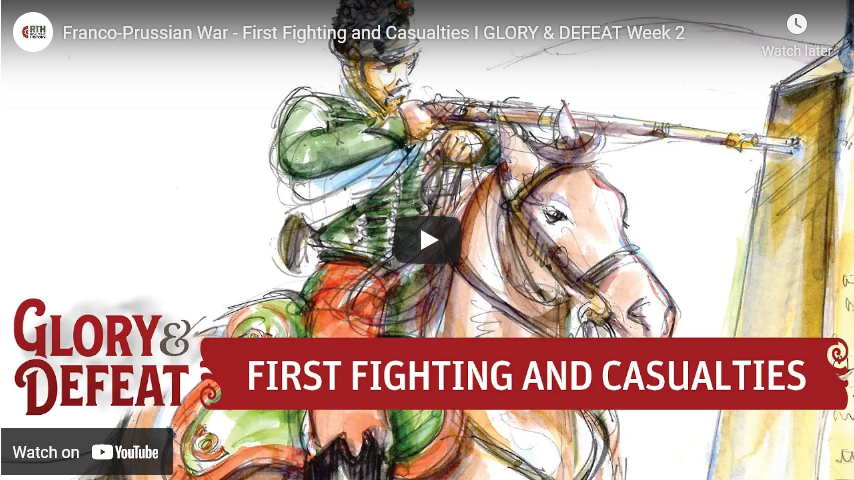
Franco-Prussian War – First Fighting and Casualties I GLORY & DEFEAT Week 2

Filed under: France, Germany, History, Military — Tags: , , , , , — Nicholas @ 04:00

realtimehistory
Published 22 Jul 2021

Support Glory & Defeat: https://realtimehistory.net/gloryandd…

With the official declaration of war from France, Prussia mobilizes and calls in the defensive alliances with the other German states within the North German Confederation but also with Bavaria, Württemberg and Baden. And while the bigger armies still assemble, the first skirmishes happen near the French border.

» OUR PODCAST
https://realtimehistory.net/podcast – interviews with historians and background info for the show.

» LITERATURE
Arand, Tobias: 1870/71. Der Deutsch-Französische Krieg erzählt in Einzelschicksalen. Hamburg 2018

Arand, Tobias / Bunnenberg, Christian (Hrsg.): Karl Klein. Fröschweiler Chronik. Kriegs- und Friedensbilder aus dem Krieg 1870. Kommentierte Edition. Hamburg 2021

Bourguinat, Nicolas / Vogt, Gilles: La guerre franco-allemande de 1870. Une histoire globale. Paris 2020

Howard, Michael: The Franco-Prussian War. London 1961

Milza, Pierre: L’année terrible. La guerre franco-prussienne septembre 1870 – mars 1871. Paris 2009

» SOURCES

Becker, Josef (Hrsg.): Bismarcks spanische «Diversion« 1870 und der preußisch-deutsche Reichsgründungskrieg. Bd. III. Paderborn, München, Wien, Zürich 2003

Bebel, August / Bernstein, Eduard (Hrsg.): Der Briefwechsel zwischen Friedrich Engels und Karl Marx. Bd. IV. Stuttgart 1921

Fontane, Theodor: Krieg gegen Frankreich, Bd. 1. Berlin 1873

Napoléon III: Proclamation de l’Empereur. Paris, 23. Juillet 1870

» OUR STORE
Website: https://realtimehistory.net

»CREDITS
Presented by: Jesse Alexander
Written by: Cathérine Pfauth, Prof. Dr. Tobias Arand, Jesse Alexander
Director: Toni Steller & Florian Wittig
Director of Photography: Toni Steller
Sound: Above Zero
Editing: Toni Steller
Motion Design: Philipp Appelt
Mixing, Mastering & Sound Design: http://above-zero.com
Maps: Battlefield Design
Research by: Cathérine Pfauth, Prof. Dr. Tobias Arand
Fact checking: Cathérine Pfauth, Prof. Dr. Tobias Arand

Channel Design: Battlefield Design

Contains licensed material by getty images
All rights reserved – Real Time History GmbH 2021
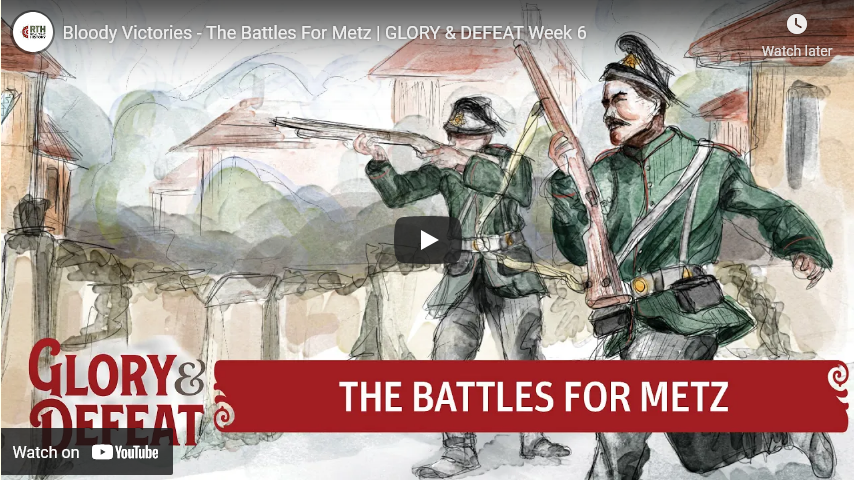
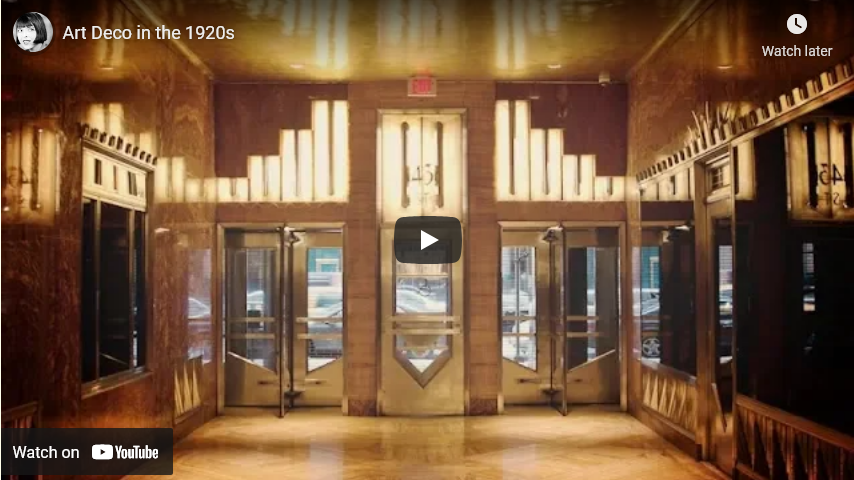
Art Deco in the 1920s

Filed under: Architecture, France, History, Media, USA — Tags: , , , , — Nicholas @ 02:00

The1920sChannel
Published 1 Nov 2019

The aesthetic of the 1920s was certainly unique and instantly recognizable. For those of us (me included) who don’t know much about art, it’s difficult to pinpoint the characteristics. The most important art movement of the ’20 was Art Deco. So here’s a closer, though unprofessional, look at 1920s aesthetic.

August 9, 2021

1815 Eruption of Mount Tambora

The History Guy: History Deserves to Be Remembered
Published 6 May 2020

In 1815, the volcano Mount Tambora on the island of Sumbawa in the Dutch East Indies erupted in the most explosive volcanic eruption in human history. The explosion affected the world’s climate, changing history in surprising ways. The History Guy recalls the forgotten history of the year without a summer.

This is original content based on research by The History Guy. Images in the Public Domain are carefully selected and provide illustration. As very few images of the actual event are available in the Public Domain, images of similar objects and events are used for illustration.

You can purchase the “offshore” bow tie worn in this episode at The Tie Bar:
https://www.thetiebar.com/?utm_campai…​

All events are portrayed in historical context and for educational purposes. No images or content are primarily intended to shock and disgust. Those who do not learn from history are doomed to repeat it. Non censuram.

Find The History Guy at:

Patreon: https://www.patreon.com/TheHistoryGuy​

The History Guy: History Deserves to Be Remembered is the place to find short snippets of forgotten history from five to fifteen minutes long. If you like history too, this is the channel for you.

Awesome The History Guy merchandise is available at:
teespring.com/stores/the-history-guy​

Script by THG

#volcano​ #thehistoryguy​ #history

From the comments:

The History Guy: History Deserves to Be Remembered
11 months ago
A viewer complained that much of the footage of volcanoes were volcanoes dissimilar to Tambora. Notably, Tambora is a stratovolcano. Lava from stratovolcano eruptions tends to be very viscous and cools quickly, whereas much of the footage in the episode is from shield volcanos in Hawaii, which produce free-flowing lava. Please understand that I can only use media in the Public Domain. I did not mean to misinform the audience by using the available footage and photographs.

August 7, 2021

The Black Markets of World War Two – WW2 – On the Homefront 012

World War Two
Published 6 Aug 2021

With the scarce food supply brought about by war, many turn to the black market and its astronomic prices as supplements. It is a place for opportunists and patriotic protesters, but mainly it’s a means to survive.
(more…)

August 5, 2021

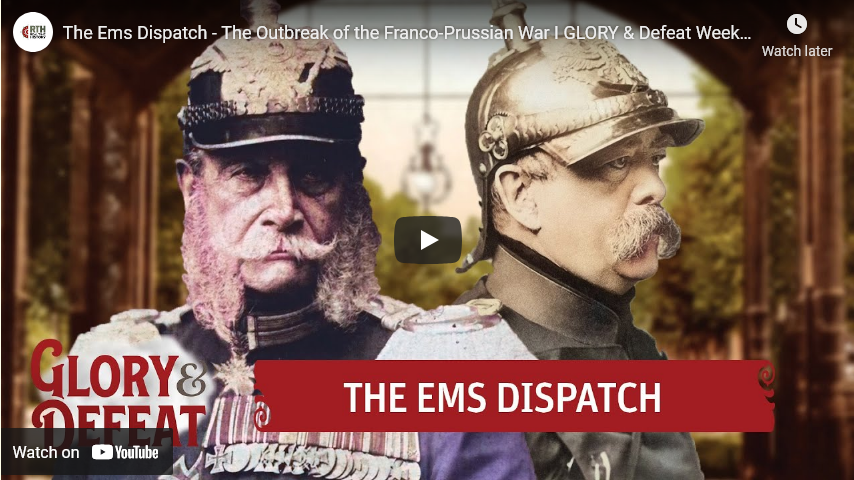
The Ems Dispatch – The Outbreak of the Franco-Prussian War I GLORY & Defeat Week 1

Filed under: Europe, France, Germany, History, Military — Tags: , , , , , , — Nicholas @ 04:00

realtimehistory
Published 13 Jul 2021

Support Glory & Defeat: https://realtimehistory.net/gloryandd…

French and Prussian animosity have been swelling in the background since the German Wars of Unification started in the 1860s. The French Duc de Gramont hopes that a victory over Prussia could restore French prestige while Prussian Chancellor Bismarck needs a reason to fulfill his dream of German unification from above. When the crisis about the Spanish throne escalates with the Ems Dispatch, the die is cast and the Franco-Prussian War begins.

» OUR PODCAST
https://realtimehistory.net/podcast – interviews with historians and background info for the show.

» LITERATURE
Arand, Tobias: 1870/71 – Die Geschichte des Deutsch-Französischen Krieges erzählt in Einzelschicksalen. Hamburg 2018

Böhme, Helmut: (Hrsg.): Die Reichs-gründung. dtv-Dokumente. München 1967

Gall, Lothar (Hrsg: Deutschland Archiv). Kaiserreich Bd. I. o.O. 2007

Girard Louis: Napoléon III. Paris 1986

Mährle, Wolfgang (Hrsg.): Nation im Siegesrausch. Württemberg und die Gründung des Deutschen Reiches 1870/71. Stuttgart 2020

Milza, Pierre: L’année terrible. La guerre franco-prussienne septembre 1870 – mars 1871. Paris 2009

» SOURCES
Fontane, Theodor: Der Krieg gegen Frankreich Bd. I. Berlin 1873

Louis L. Snyder, ed., Documents of German History. New Brunswick, N.J.: Rutgers University Press, 1958

» OUR STORE
Website: https://realtimehistory.net

»CREDITS
Presented by: Jesse Alexander
Written by: Cathérine Pfauth, Dr. Tobias Arand, Jesse Alexander
Director: Toni Steller & Florian Wittig
Director of Photography: Toni Steller
Sound: Above Zero
Editing: Toni Steller
Motion Design: Philipp Appelt
Mixing, Mastering & Sound Design: http://above-zero.com
Maps: Battlefield Design
Research by: Cathérine Pfauth, Prof. Dr. Tobias Arand
Fact checking: Cathérine Pfauth, Prof. Dr. Tobias Arand

Channel Design: Battlefield Design

Contains licensed material by getty images
All rights reserved – Real Time History GmbH 2021

Sarah Hoyt on “scientific government”

In the latest Libertarian Enterprise (which came out a few days ago, but I’ve been very busy), Sarah Hoyt outlines the genesis of the push for “scientific government” to save us all from ourselves and set right all the ills of the world:

Look, guys, since the middle of the 19th century, the idea of “scientific government” has been running around with pants on its head screaming insults at passerbys.

I like to say we’re still suffering from the consequences of WWI, but things were if not terminal very ill before then. Kings and emperors and Lord knows what else had got the idea of “science” and “permanent progress” stuck in their pin-like heads, which frankly couldn’t retain much more than the correct fork. And there were pet “scientists” and philosophers (the distinction was sometimes arguable. I mean, after all while doing experiments on electricity the 18th century was also fascinated with astral projection and other such things, and made no distinction. And the 19th was not much better.)

By the 20th century with mechanics and the Industrial Revolution paying a dividend in lives saved and prosperity created, these men of “science” were sure that it was only a matter of time till humanity and its reactions, thoughts and governance were similarly under control. And in the twentieth they expected us to become like unto angels.

Now, is there science that saved lives and created the wealthiest society every in the 20th century. DUH. Who the hell is arguing it. Oh, wait, there’s an entire cohort of people denying it. Not so many in the US — I think it’s hard to tell the real thing from foreign idiots posing. But in any case a minuscule contingent — but in France I know there’s a ton of them. They’re running with the bit in their teeth against rationality (I swear to bog) and thought and science. And trying to rebuild the religion of the middle ages. I read them and shake my head.

You see, you have to separate rationality and science from what the government and experts TELL you is rationality and science.

Yes, I know that France built a “Temple to Reason” and you know what? That by itself tells you their revolution was self-copulating and not right in the head. But you don’t need to go that far. Anyone who says they’re “for science” and want equality of results among disparate humans is not reasonable. Or reasoning. Or rational. They are however for sure completely and frackingly insane.

But I do understand the temptation, because so much of what’s being sold as “science” in the schools is not science but the worn out dogmas of people too stupid to know science if it bit them in the fleshy part of the buttocks.

I mean, never mind 2020. Which … you know? Remember how the flu vanished? Turns out the rat bastards were using a test that diagnosed flu as COVID. No, seriously. Malice or stupidity? I don’t know. And neither do you. Probably yes in most cases, though a lot of people have a ton of “learned stupidity”.

Even before 2020 a lot of our ideas on how things worked were lies, particularly those that hinged on or supported the leftist ideas of human kind. Things like Zimbardo’s (Is he dead yet? I need to know when to mark myself safe from being kidnapped by Zimbardo for crazy experiments. No, he really did that.) prisoner experiments; or the rat habitat experiments that supposedly showed that overpopulation had all sorts of bad effects, and therefore we should stop having kids. Turns out those effects are from the loss of social role. Which honestly, anyone who has looked at a conquered country could tell them. Of course, anyone who had looked at mice would also know they’re not humans, but never mind that. […] In fact, practically everything we think we know about psychology or sociology is likely to be a load of crap, if not outright faked.

And history, which is not really a science. Oh. Dear. Lord. Like, you know, the early form of internationalism, with international supply chains and empires caused WWI and … nationalism was blamed for it. Makes perfect sense … in hell.

In fact all this “science” stuff needs to be judged on one thing only: Does it make human lives better/save them? Or is it the astral projection of economics, sociology and psychology? By their fruits, etc.

QotD: September 1939 was pretty much the optimal moment for Germany to go to war

Filed under: Britain, Europe, France, Germany, History, Military, Quotations, Russia, WW2 — Tags: , , , , , — Nicholas @ 01:00

The German economy was already in poor condition, and it was the looting of Austrian gold and Czech armaments that gave it a temporary boost in what was effectively still peacetime. (The later looting of the Polish and French economies never made up for the costs of a full world war being in progress.)

Demographically German military manpower was at a height in 1940/41 that gave it an advantage over the allies and potentially the Russians, that would quickly evaporate within a few years. (Demographics was an important science between the wars, and many leaders – like Hitler and Stalin – made frequent references to it. The Russians in particular would start having more manpower available starting in 1942 … perhaps not a coincidence that Germany invaded in 1941?)

The Nazi air forces had a temporary superiority over the Allies in 1939 that was already being rapidly undercut as both the British and the French finally started mass production of newer aircraft. (By mid-1940 British aircraft production had overtaken the Germans, even without the French. If the war had not started in 1939, by 1941 the Luftwaffe would have been numerically quite inferior to the combined British and French air forces, even without the surprisingly effective new fighters being brought on line by the Dutch and others.)

German ground forces, while not really ready for war in September 1939 (half of their divisions were still pretty much immobile, and they had only 120,000 vehicles all up compared to 300,000 for the French army alone), were nonetheless in a peak of efficiency considering the Czechs and Poles had been knocked out, and the British and French were struggling to get new equipment into service. The Soviet short-term decision to ally with the Germans to carve up Eastern Europe (Stalin knew this was only a temporary delay to inevitable conflict), also allowed the Germans an easy victory and much greater freedom of action. Again, by 1941 British conscription and production, and French (and Belgian, and Dutch, etc.) upgrades and increases in fortifications, would have come a lot closer to making the German task next to impossible. (Even then it was the collapse of French morale after the loss of Finland — leading to the collapse of the French government – and Norway, that really defeated France, not vastly inferior divisions or equipment.)

A byproduct of an Allied ramp up might also have seen Belgium rejoin the allied camp in 1941, or at least make significant planning preparations to properly add its 22 divisions and strong border fortifications to allied defences if Germany attacked. (Rather than the hopeless mess that happened in 1940 when the allies rushed to rescue the temporary non-ally that had undermined the whole interwar defensive project …) Again, the Germans managed to find a sweet spot in 1939-40 that temporarily undermined long-standing interwar co-operation, and one that was not likely to last very long.

Similarly a delay of war would have allowed allied negotiations with the Balkan states to advance. The same guarantee that was given to Poland had been given to Yugoslavia, Rumania and Greece. (It is usually forgotten that Greece – attacked by Italy – and Yugoslavia – voluntarily – joined the British side at the worst possible moment in 1941. (Only to be crushed by the Germans … but with the interesting by-product of effectively undermining Germany’s chances of defeating the Soviets and occupying Moscow in the same year …)

Nigel Davies, “If the War hadn’t started until December 1941, would it?”, rethinking history, 2021-05-01.

August 3, 2021

1848 – The Year of (Failed) Revolutions I GLORY & DEFEAT

Filed under: Europe, France, Germany, Government, History — Tags: , , , , — Nicholas @ 04:00

realtimehistory
Published 7 Jul 2021

Support Glory & Defeat: https://realtimehistory.net/gloryandd…

The year 1848 was pivotal in European history. All across the continent revolutionary movements erupted and demanded a new order. This would be no different in France and in the German states.

» OUR PODCAST
https://realtimehistory.net/podcast – interviews with historians and background info for the show.

» LITERATURE
Engehausen, Frank: Die Revolution von 1848/49. Paderborn, München 2007

Gall, Lothar (Hrsg.): 1848 – Aufbruch zur Freiheit: Ausstellungskatalog zum 150-jährigen Jubiläum der Revolution von 1848/49. Berlin 1998

Gouttman, Alain. La grande défaite de 1870-1871. Paris 2015

Siemann, Wolfram: Die deutsche Revolution von 1848/49. Suhrkamp, Frankfurt am Main 1985

Wollstein, Günter: “Scheitern eines Traumes”. In: Informationen zur politischen Bildung, Heft 265 (2010) o.S.

» SOURCES
Carrey, Émile: Recueil complet des actes du Gouvernement provisoire. Première partie n° 281. Paris 1884

Haupt, Hermann (Hrsg.): Quellen und Darstellungen zur Geschichte der Burschenschaft und der deutschen Einheitsbewegung, Band 1, Heidelberg 1910

N.N.: Die Staats-Verträge des Königsreichs Bayern von 1806 – 1858. Regensburg 1860

» OUR STORE
Website: https://realtimehistory.net

»CREDITS
Presented by: Jesse Alexander
Written by: Cathérine Pfauth, Prof. Dr. Tobias Arand, Jesse Alexander
Director: Toni Steller & Florian Wittig
Director of Photography: Toni Steller
Sound: Above Zero
Editing: Toni Steller
Motion Design: Philipp Appelt
Mixing, Mastering & Sound Design: http://above-zero.com
Maps: Battlefield Design https://www.battlefield-design.co.uk/
Research by: Cathérine Pfauth, Prof. Dr. Tobias Arand
Fact checking: Cathérine Pfauth, Prof. Dr. Tobias Arand

Channel Design: Battlefield Design

Contains licensed material by getty images
All rights reserved – Real Time History GmbH 2021
August 2, 2021

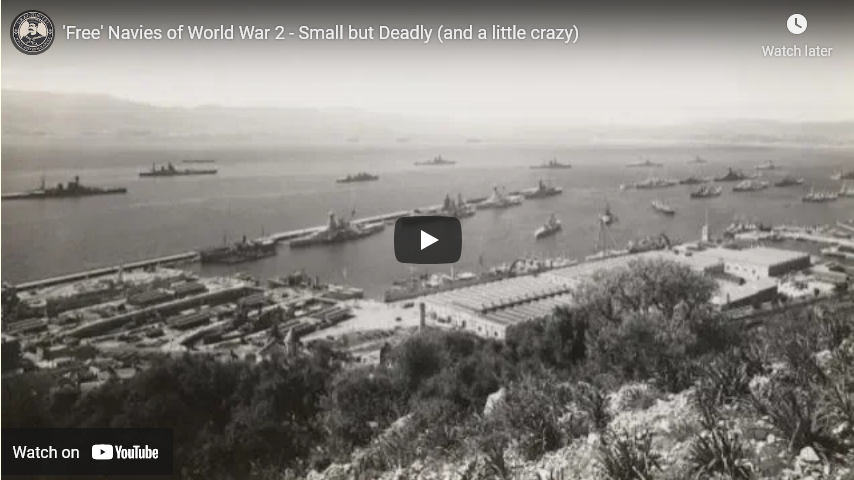
The World of the Franco-Prussian War – The 19th Century up to 1870 I GLORY & DEFEAT

realtimehistory
Published 30 Jun 2021

Support Glory & Defeat: https://realtimehistory.net/gloryandd…

Welcome to the first primer episode for Glory & Defeat. In this first primer episode we will take a broad look at the industrial revolution and the emerging new ideologies of the 19th century: Communism and Nationalism.

» OUR PODCAST
https://realtimehistory.net/podcast – interviews with historians and background info for the show.

» LITERATURE
Hobsbawm, Eric: The long nineteenth century. 3 Bände. London 1962-1987

Kugler, Martin: “Fehleinschätzungen der Menschheit”, in: Die Presse v. 28.2.2010. o.S

Osterhammel, Jürgen: Die Verwandlung der Welt. Eine Geschichte des 19. Jahrhunderts. München 2009

Bruckmüller, Ernst et. al. (ed.): Putzger. Historischer Weltatlas. Berlin 2001

Staas, Christian: “Im Schatten der Schlote”, in: Geo Epoche Nr. 30. Die industrielle Revolution. 2008. S. 72-85

Bischoff, Jürgen: “Vorwärts durch Raum und Zeit”, in: Geo Epoche Nr. 30. Die industrielle Revolution. 2008. S. 56-71

» SOURCES
Engels, Friedrich: Die Lage der arbeitenden Klasse in England. Leipzig 1845

» OUR STORE
Website: https://realtimehistory.net

»CREDITS
Presented by: Jesse Alexander
Written by: Cathérine Pfauth, Prof. Dr. Tobias Arand, Jesse Alexander
Director: Toni Steller & Florian Wittig
Director of Photography: Toni Steller
Sound: Above Zero
Editing: Toni Steller
Motion Design: Philipp Appelt
Mixing, Mastering & Sound Design: http://above-zero.com
Maps: Battlefield Design https://www.battlefield-design.co.uk/
Research by: Cathérine Pfauth, Prof. Dr. Tobias Arand
Fact checking: Cathérine Pfauth, Prof. Dr. Tobias Arand

Channel Design: Battlefield Design

Contains licensed material by getty images
All rights reserved – Real Time History GmbH 2021
July 29, 2021

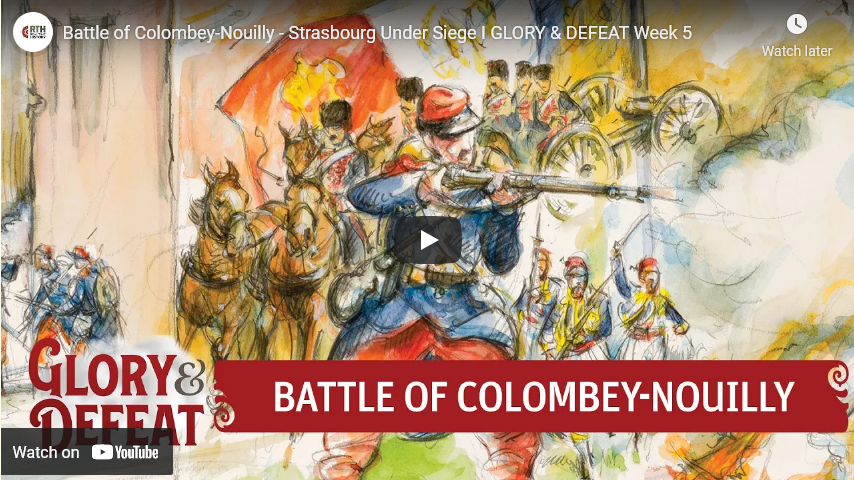
In The Shadow of Napoleon – The 2nd French Empire Before 1870 I GLORY & DEFEAT

realtimehistory
Published 12 Jul 2021

Support Glory & Defeat: https://realtimehistory.net/gloryandd…

After Napoleon I had conquered and then lost Europe, France went through multiple revolutions. In 1851, Napoleon’s nephew and French president Louis-Napoléon Bonaparte took control and in 1852 crowned himself Emperor Napoleon III. The new French Empire wanted to regain the glory of Napoleon’s uncle and together with his wife Empress Eugenie he ruled a state known for lavish balls and spending.

» OUR PODCAST
https://realtimehistory.net/podcast – interviews with historians and background info for the show.

» LITERATURE
Arand, Tobias: 1870/71. Die Geschichte des Deutsch-Französischen Kriegs erzählt in Einzelschicksalen. Hamburg 2018

Arand, Tobias/Bunnenberg, Christian (Hrsg.): Karl Klein. Fröschweiler Chronik. Kriegs- und Friedensbilder aus dem Krieg 1870. Kommentierte Edition. Hamburg 2021

Gouttman, Alain. La grande défaite de 1870-1871. Paris 2015

Herre, Franz: Eugénie. Kaiserin der Franzosen. Stuttgart, München 2000

Rieder, Heinz: Napoleon III. Abenteurer und Imperator. München 1998

» SOURCES
Bonaparte, Prince Napoléon-Louis: Des Idées Napoléoniennes. London 1839

Marx, Karl: Der achtzehnte Brumaire des Louis Napoleon. Hamburg 1869

Maupassant, Guy de: Bel-Ami. Paris 1901

N.N. (Hrsg): Fontane, Theodor. Aus den Tagen der Okkupation. Eine Osterreise durch Nordfrankreich und Elsaß-Lothingen 1871. Berlin (Ost) 1984

» OUR STORE
Website: https://realtimehistory.net

»CREDITS
Presented by: Jesse Alexander
Written by: Cathérine Pfauth, Dr. Tobias Arand, Jesse Alexander
Director: Toni Steller & Florian Wittig
Director of Photography: Toni Steller
Sound: Above Zero
Editing: Toni Steller
Motion Design: Philipp Appelt
Mixing, Mastering & Sound Design: http://above-zero.com
Maps: Battlefield Design
Research by: Cathérine Pfauth, Prof. Dr. Tobias Arand
Fact checking: Cathérine Pfauth, Prof. Dr. Tobias Arand

Channel Design: Battlefield Design

Contains licensed material by getty images
All rights reserved – Real Time History GmbH 2021
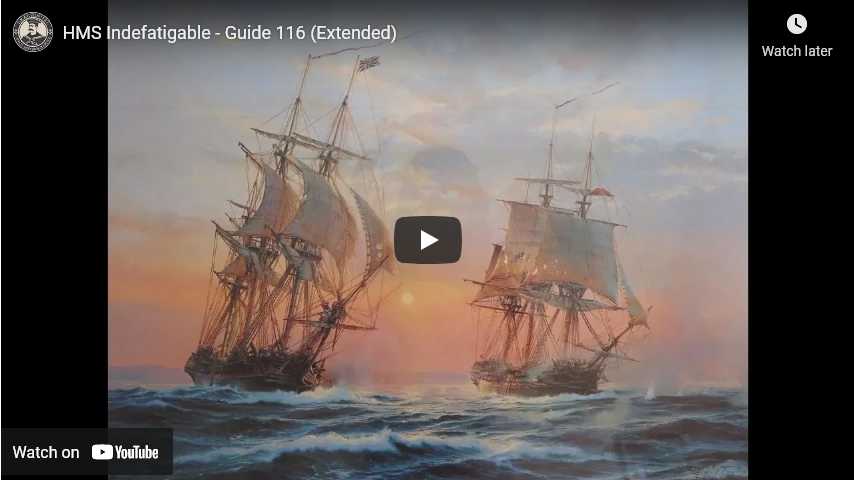
MAT 49: Iconic SMG of Algeria and Indochina

Filed under: France, History, Military, Weapons — Tags: , , , , — Nicholas @ 02:00

Forgotten Weapons
Published 16 Jan 2018

http://www.patreon.com/ForgottenWeapons​

Cool Forgotten Weapons merchandise! http://shop.bbtv.com/collections/forg…​

The MAT-49 was developed by France after World War Two to satisfy the need for a more modern submachine gun to replace the MAS-38. The military had come around to standardizing on the 9x19mm cartridge for its pistols and subguns, and the 7.65mm MAS-38 was not feasible to convert. All three state arsenals and the Hotchkiss company submitted designs, and the Tulle arsenal won out with a gun that borrows substantially from the American M3 “Grease Gun”.

About 700,000 MAT-49s were produced between 1949 and 1979, when it (along with the MAS 49/56 rifle) was replaced by the FAMAS bullpup rifle. During that time it saw substantial combat in France’s colonial wars, notable Algeria and Indochina. Despite being a relatively heavy weapon, it came to be well liked by all who used it for its durability and reliability.

Many thanks to the anonymous collector who let me take a look at this piece and bring you a video on it!

If you enjoy Forgotten Weapons, check out its sister channel, InRangeTV! http://www.youtube.com/InRangeTVShow

July 27, 2021

History Summarized: The Crusades

Overly Sarcastic Productions
Published 11 Jun 2017

Making a video exclusively about the crusades? That’s a bold strategy, Blue, let’s see how it pays off.

RELEVANT LINKS:
History Summarized: Islam: https://youtu.be/Uvq59FPgx88​
History Summarized: Christianity: https://youtu.be/A86fIELxFds​
History Summarized: Judaism: https://youtu.be/aKB6WduDwNE​
History Summarized: Christianity, Judaism, and the Muslim Conquest https://wp.me/p2hpV6-gQv
History Summarized: Venice (Part 2): https://youtu.be/byMleAJ5kRs
History Summarized: Byzantine Empire: https://youtu.be/-ucHQVu8Dw0

History Summarized: Abrahamic Religious Philosophy: https://youtu.be/B7myRRt0Mn8​

PATREON: www.patreon.com/user?u=4664797

MERCH LINKS:
Shirts – https://overlysarcasticproducts.threa…​
All the other stuff – http://www.cafepress.com/OverlySarcas…​

Find us on Twitter @OSPYouTube!

July 22, 2021

QotD: Nelson

Filed under: Britain, France, History, Humour, Military, Quotations — Tags: , , , — Nicholas @ 01:00

Napoleon ought never to be confused with Nelson, in spite of their hats being so alike; they can most easily be distinguished from one another by the fact that Nelson always stood with his arm like this, while Napoleon always stood with his arms like that.

Nelson was one of England’s most naval officers, and despised weak commands. At one battle when he was told that his Admiral-in-Chief had ordered him to cease fire, he put the telephone under his blind arm and exclaimed in disgust: “Kiss me, Hardy!”

By this and other intrepid manoeuvres the French were utterly driven from the seas.

W.C. Sellar & R.J. Yeatman, 1066 And All That, 1930.

July 21, 2021

QotD: The expansion of the English vocabulary (through plundering French)

Filed under: Britain, France, History, Quotations — Tags: , , , — Nicholas @ 01:00

Because French was at that time the international language of trade, it acted as a conduit, sometimes via Latin, for words from the markets of the East. Arabic words that it then gave to English include: “saffron” (safran), “mattress” (materas), “hazard” (hasard), “camphor” (camphre), “alchemy” (alquimie), “lute” (lut), “amber” (ambre), “syrup” (sirop). The word “checkmate” comes through the French “eschec mat” from the Arabic “Sh h m t“, meaning the king is dead. Again, as with virtue and as with hundreds of the words already mentioned, a word, at its simplest, is a window. In that case, English was perhaps as much threatened by light as by darkness, as much in danger of being blinded by these new revelations as buried under their weight.

Yet the best of English somehow managed to avoid both these fates. It retained its grammar, it held on to its basic words, it kept its nerve, but what it did most remarkably was to accept and absorb French as a layering, not as a replacement but as an enricher. It had begun to do that when Old English met Old Norse: hide/skin; craft/skill. Now it exercised all its powers before a far mightier opponent. The acceptance of the Norse had been limited in terms of vocabulary. Here English was Tom Thumb. But it worked in the same way.

So, a young English hare came to be named by the French word “leveret“, but “hare” was not displaced. Similarly with English “swan”, French “cygnet“. A small English “axe” is a French “hatchet“. “Axe” remained. There are hundreds of examples of this, of English as it were taking a punch but not giving ground.

More subtle distinctions were set in train. “Ask” – English – and “demand” – from French – were initially used for the same purpose but even in the Middle Ages their finer meanings might have differed and now, though close, we use them for markedly different purposes. “I ask you for ten pounds”; “I demand ten pounds”: two wholly different stories. But both words remained. So do “bit” and “morsel”, “wish” and “desire”, “room” and “chamber”. At the time the French might have expected to displace the English. It did not and perhaps the chief reason for that is that people saw the possibilities of increasing clarity of thought, accuracy of expression by refining meaning between two words supposed to be the same. On the surface some of these appear to be interchangeable and sometimes they are. But much more interesting are these fine differences, whose subtleties increase as time carries them first a hair’s breadth apart and then widens the gap, multiplies the distinctions: just as “ask” has evolved far away from “demand”.

Not only did they drift apart but something else happened which demonstrates how deeply not only history but class is buried in language. You can take an (English) “bit” of cheese and most people do. If you want to use a more elegant word you take a (French) “morsel” of cheese. It is undoubtedly thought to be a better class of word and yet “bit”, I think, might prove to have more stamina. You can “start” a meeting or you can “commence” a meeting. Again, “commence” carries a touch more cultural clout though “start” has the better sound and meaning to it for my ear. But it was the embrace which was the triumph, the coupling which was never quite one.

That’s the beauty of it. That was the sweet revenge which English took on French: it not only anglicised it, it used the invasion to increase its own strength; it looted the looters, plundered those who had plundered, out of weakness brought forth strength. For “answer” is not quite “respond”; now they have almost independent lives. “Liberty” isn’t always “freedom”. Shades of meaning, representing shades of thought, were massively absorbed into our language and our imagination at that time. It was new lamps and old; both. The extensive range of what I would call “almost synonyms” became one of the glories of the English language, giving it astonishing precision and flexibility, allowing its speakers and writers over the centuries to discover what seemed to be exactly the right word.

Rather than replace English, French was being brought into service to help enrich and equip it for the role it was on its way to reassuming.

Melvyn Bragg, The Adventure of English, as quoted by Brian Micklethwait, “Melvyn Bragg on England’s verbal twins”, Samizdata, 2018-12-23.

« Newer Posts — Older Posts »

Powered by WordPress