
Published on 31 Mar 2017
A Word To The Patronising Minority
April 1, 2017
Hello Angry Losers
Comments Off on Hello Angry Losers
March 31, 2017
Why Do Some English Speaking Countries Pronounce Z as “Zed” and Others as “Zee”?
Published on 19 Mar 2017
It’s not just the British that pronounce “z” as “zed”. The vast majority of the English speaking world does this. The primary exception, of course, is in the United States where “z” is pronounced “zee”.
Comments Off on Why Do Some English Speaking Countries Pronounce Z as “Zed” and Others as “Zee”?
March 28, 2017
The next Scottish referendum
Brendan O’Neill says that despite the common assertion that those in favour of Brexit can’t object to Scottish independence, the people who supported Brexit have a strong case to argue against Scotland splitting away from the United Kingdom:
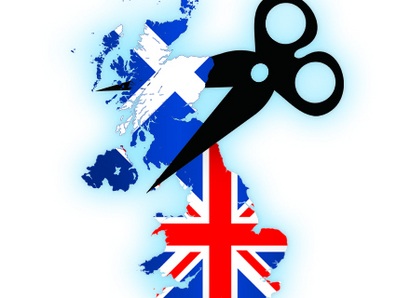
The argument is that if you backed Brexit, then you haven’t got a leg to stand on when it comes to opposing Nicola Sturgeon’s latest stab at Scottish independence. They’re the same thing, innit? ‘No one involved in Brexit, or who supported Brexit, can make any argument against Scottish independence except emotional ones’, says a writer for the Spectator.
Actually, the opposite is the case. Brexiteers are precisely the right people to put the case against Scottish independence. Because the argument against Scottish independence is the same as the argument for Brexit. Namely that people should not shy away from democracy, with all the debate and disagreement and difficulties it involves, but rather should embrace it. That instead of hiding from our responsibility to engage in national public life, or handing that responsibility over to ‘expert’ external bodies who will do decision-making on our behalf, we should accept this responsibility, and cherish it. Where Brexit represented a brave reclaiming of the institution of democracy, Scottish independence is driven by a sense of exhaustion with it, and by a rather elitist urge to opt out of it.
To many observers, Brexit and Sturgeon’s campaign for Scottish independence are the same thing: attempts to rupture longstanding unions. (Very longstanding in the case of the UK: 310 years. Not so much in the case of the EU: 24 years.) But the bigger, more important question is surely why these unions are being called into question.
[…]
For leftists in particular, many of whom threw their lot in with the idea of Scots independence during the Indy Ref of 2014, Scottish independence is attractive precisely to the extent that it allows them to circumvent what they see as the backward, Tory-esque thinking of a majority of Brits, especially English people. They, and also many in the SNP, fantasise that Scotland is a progressive, socialist-at-heart nation, and these fine instincts are being stymied by the votes and attitudes of dumb English people. Solution? Cut yourself off. Avoid even having to have the argument with the ignorant masses, never mind having to win it, by creating your own siphoned-off pseudo-independent nation in which you’ll always get your own way.
As one left commentator said during Indy Ref, the left’s flirtation with Scottish nationalism is driven in part by its irritation at ‘the sheer scale of the defeats suffered by the left’. One radical writer described Scottish nationalism as a ‘potential escape mechanism’ for leftists north of the border tired of living under governments in Westminster elected by the low-information right-wing hordes south of Hadrian’s Wall. And that’s what ‘independence’ is for Sturgeon and Co, too: an ‘escape mechanism’, a means of fleeing from the consequences of democracy into your own aloof, agreeable statelet.
This is why this independence movement seems to have so little to do with actual independence, as confirmed by the SNP’s desire to break from Westminster only to wrap itself in the interfering arms of the oligarchy in Brussels: because modern Scottish nationalism isn’t about independence at all. Except, perhaps, independence from the masses. From the British throng. From democracy. From a demos that has proven so disappointing to always-angry Scottish nationalists and to British leftists who see an independent Scotland, shorn of the millions who currently make up British democracy, as an opportunity to create the state-socialist utopia that they know a majority of Brits would find unappetising.
Comments Off on The next Scottish referendum
David Fletcher’s Tank Chats #3 Medium Tank MkII* (Vickers Medium)
Published on 20 Mar 2015
The third in a series of short films about some of the vehicles in our collection presented by The Tank Museum’s historian David Fletcher MBE.
In 1923 Vickers Ltd. of Sheffield and Newcastle, started to manufacture tanks for the British Army. They were the first representatives of a new generation of tanks, designed to fight on the move and restore mobility to the battlefield.
As designed the Medium tanks had a 3 pounder gun in the turret; a Vickers machine-gun in each side of the hull and Hotchkiss light machine-guns in the turret. These last were later eliminated in favour of a single Vickers machine-gun, mounted alongside the main gun and described as co-axial, since it elevates on the same axis as the main gun. This modification altered the design from Mark II to Mark II*. Using these tanks the Royal Tank Corps established standards of gunnery which, in their day, were never equalled.
Comments Off on David Fletcher’s Tank Chats #3 Medium Tank MkII* (Vickers Medium)
QotD: The rise of political correctness in the UK
The philosophy of political correctness is now firmly entrenched over here, too, and at its core is a refusal to look the truth squarely in the face, unpalatable as it may be.
Political correctness is about denial, usually in the weasel circumlocutory jargon which distorts and evades and seldom stands up to honest analysis.
It comes in many guises, some of them so effective that the PC can be difficult to detect. The silly euphemisms, apparently harmless, but forever dripping to wear away common sense — the naivete of the phrase “a caring force for the future” on Remembrance poppy trays, which suggests that the army is some kind of peace corps, when in fact its true function is killing.
The continual attempt to soften and sanitise the harsh realities of life in the name of liberalism, in an effort to suppress truths unwelcome to the PC mind; the social engineering which plays down Christianity, demanding equal status for alien religions.
The selective distortions of history, so beloved by New Labour, denigrating Britain’s past with such propaganda as hopelessly unbalanced accounts of the slave trade, laying all the blame on the white races, but carefully censoring the truth that not a slave could have come out of Africa without the active assistance of black slavers, and that the trade was only finally suppressed by the Royal Navy virtually single-handed.
In schools, the waging of war against examinations as “elitist” exercises which will undermine the confidence of those who fail — what an intelligent way to prepare children for real life in which competition and failure are inevitable, since both are what life, if not liberal lunacy, is about.
PC also demands that “stress”, which used to be coped with by less sensitive generations, should now be compensated by huge cash payments lavished on griping incompetents who can’t do their jobs, and on policemen and firemen “traumatised” by the normal hazards of work which their predecessors took for granted.
Furthermore, it makes grieving part of the national culture, as it was on such a nauseating scale when large areas were carpeted in rotting vegetation in “mourning” for the Princess of Wales; and it insists that anyone suffering ordinary hardship should be regarded as a “victim” — and, of course, be paid for it.
That PC should have become acceptable in Britain is a glaring symptom of the country’s decline.
George MacDonald Fraser, “The last testament of Flashman’s creator: How Britain has destroyed itself”, Daily Mail, 2008-01-05.
Comments Off on QotD: The rise of political correctness in the UK
March 26, 2017
“It’s that old self-love double-standard again”
Julie Burchill on the recent boom in public applause for female masturbation:
There’s a bit in the Cate Blanchett TV commercial for a scent called Si that never fails to make me snigger smuttily. (Admittedly not difficult.) After we see the Radiant One being life-affirming in the rain (‘Si to life!’) and with a Significant Other (‘Si to us!’) she wanders off alone and, looking particularly glowy, stares into the camera: ‘Si to myself!’ It’s tragic, but what was clearly intended as an oath to empowerment always strikes me as a reference to onanism. I spit out my Malibu every time.
Mind you, I could be forgiven for my immature interpretation. In recent years, female masturbation has gone from being the love that dare not speak its name to the one that can’t stop moaning, gasping and screaming it — and then making pop videos about it.
[…]
We’re encouraged to admire these finger-happy females, but what would our reaction be if male crooners started singing about self-abuse and, even better, filming themselves pretending to do it in order to flog their music? I suspect the reaction might not be a million miles from one long collective ‘Ewww!’ But why is a masturbating man the subject of amusement and/or contempt while a masturbating woman is some sort of heroine? Logically, it doesn’t make sense. A woman can always get sex, whereas men often have to chase it, pay for it or go without it, so they’ve got a lot more reason to be interfering with themselves.
But now it’s the ladies, Lord love ’em, who are paying for the pleasure right through the nose, with the unstoppable rise of sex aids. And yes, that was a snooty judgmental tone you thought you heard there. I refuse to use the approved term ‘sex toys’ because it brings a creepy air of infantilism to this most adult of pastimes (an unnerving number of sex aids are made in the style of children’s playthings). I don’t know what I find more pitiable, two people, presumably equipped with the usual supply of hands, mouths and sex organs, setting about each other with bits of garishly coloured cut-price plastic to reach the realms of ecstasy, or a woman with more money than sex paying £12,000 for a vibrator that the Sunday Times described thus: ‘An 18ct-gold-plated gilded pebble… five vibration patterns with customisable levels of intensity… comes in an artisanal wooden box with gold trimmings.’ Be still my beating heart!
Comments Off on “It’s that old self-love double-standard again”
March 25, 2017
When reality TV goes feral
In the Guardian, a sad tale of a failed reality TV show that went off the air … but the people involved were not told about it:
After a year cut off from modern life in the Scottish Highlands, imagine re-emerging to find a world where Donald Trump is US president, Britain has left the EU and Leicester won the Premier League.
For the contestants of the Channel 4 programme Eden, coming back from isolation means not just coming to terms with 2017 but also the news that their year of toil in the wilderness barely made it on to television.
The programme, which first aired in July last year, was billed as a social experiment where 23 strangers were brought to the remote west Highlands of Scotland to build a self-sufficient community away from technology and modern tools. The year-long saga would be recorded by four crew members and personal cameras.
However, only four episodes of the show – covering March, April and May – were screened, as viewing figures dropped from 1.7m to 800,000. Sexual jealousy, infighting and hunger also meant that over the year, a reported 13 of the 23 contestants left the show, though Channel 4 would not confirm the dropouts.
Despite the show being taken off air, those still toiling for survival in the wilds of the 600-acre estate on the Ardnamurchan peninsula were not informed that their ordeal had not been broadcast since August.
So much for those dreams of fame and fortune from “starring” in a reality TV show.
H/t to Colby Cosh for the link.
Comments Off on When reality TV goes feral
If Walls Could Talk The History of the Home Episode 1: The Living Room
Published on 21 Jan 2017
First episode about the Living Room with Lucy Worsley Give a thumbs up for more episodes! 😀
Comments Off on If Walls Could Talk The History of the Home Episode 1: The Living Room
March 24, 2017
David Fletcher’s Tank Chats #2: The Carden Loyd Carrier
Published on 27 Feb 2015
The second in a series of short films about some of the vehicles in our collection presented by The Tank Museum’s historian David Fletcher MBE.
The Carden Loyd Carrier or tankette: Designed by Sir John Carden and Captain Vivian Loyd this was a low cost, two-man Machine-Gun Carrier for infantry use. The company was taken over by Vickers-Armstrong in 1927 and the vehicle was mass-produced for the British Army in addition to a thriving export trade. Unpopular with the infantry, they were used mostly by the Royal Tank Corps as embryonic light tanks in the reconnaissance role.
Comments Off on David Fletcher’s Tank Chats #2: The Carden Loyd Carrier
March 21, 2017
British Weapons of World War 1 feat. C&Rsenal I THE GREAT WAR Live Stream
Streamed live 9 hours ago
Othais’ channel: https://www.youtube.com/candrsenal
In our series about the rifles and pistols today, Othais got his hands on the standard issue rifles and pistols of the British Army in World War One.
Comments Off on British Weapons of World War 1 feat. C&Rsenal I THE GREAT WAR Live Stream
March 20, 2017
Scotland … here they go again
Scottish First Minister Nicola Sturgeon is eager to get the voters back to the polls for another go-around for Scottish independence (well, not independence-independence, but separate-from-Britain-but-desperate-to-stay-in-the-EU-independence). Stephen Daisley comments on the situation as of Saturday:
The SNP has managed to spin normally sceptical hacks the line that Downing Street was caught on the back foot by Miss Sturgeon’s Monday surprise. It’s true that the timing was news to Number 10 — received wisdom ran that the Nationalist leader would unveil her gambit at the SNP annual spring conference in Aberdeen this afternoon.
But the UK Government has known since 2014, when Miss Sturgeon’s party refused to accept their 55% to 45% defeat, that another push for separation was a matter of ‘when’, rather than ‘if’. Contingency plans have been in place for some time, both to push back a referendum do-over until after Brexit and, if need be, to fight one immediately. The Nationalists are not dealing with that nice Mr Cameron anymore.
And Theresa May’s response to Miss Sturgeon’s demand was more cautiously-worded, better thought through, than the contributions that became common from David Cameron during the first referendum. Crucially, she did not dole out a flat No; instead, she said Not Yet.
[…]
Next week, she will ask MSPs to vote for a Section 30 request, petitioning Westminster for the power to hold a second referendum. There is no mandate for the Scottish Parliament to pursue such a policy. The constitution is reserved to the UK Parliament; a party winning a Holyrood election on a manifesto of surrendering Britain’s independent nuclear deterrent or withdrawing Scottish troops from an international conflict would not be thought to have grounds for pursuing such policies.
Even if this point were conceded — it is done so from first principles by the eager constitutionalists who populate the Scottish academy — there is another flaw in the Nationalists’ argument. True, they came first in the May 2016 election and their manifesto envisioned ‘Scotland being taken out of the EU against our will’ as cause for a re-run of 2014’s ‘once in a generation’ poll. But the Nationalists failed to secure a majority of seats at Holyrood for that proposition, winning only 63 out of 129. Fortunately for the SNP, they have six to spare in the shape of the Scottish Greens, once a conscientious party of the Left but, under Patrick Harvie, a Me-Too faction for the most triangulating government since New Labour.
Every time the Nats get themselves into a jam, every time it looks like they might finally have to stop girning and start governing, up pop the six little anoraks, festooned with CND badges and brimming with good intentions, and they come to the rescue. Time after time, Mr Harvie drags the SNP out of a hole and gets nothing in return except a pat on the head. That isn’t leadership; it’s the political instincts of Lassie.
The Greens’ amening of Miss Sturgeon’s gambit is different from previous acts of handmaidenry because it breaks the party’s pledge to the voters. In the manifesto they were elected on last May, the Greens promised:
‘Citizens should be able to play a direct role in the legislative process: on presenting a petition signed by an appropriate number of voters, citizens should be able to trigger a vote on important issues of devolved responsibility. As we proposed on the one year anniversary of the Independence Referendum, this is the Scottish Greens’ preferred way of deciding to hold a second referendum on Independence. If a new referendum is to happen, it should come about by the will of the people, and not be driven by calculations of party political advantage. In such a referendum the Scottish Greens will campaign for independence.’
H/T to Colby Cosh for the link.
March 17, 2017
Jeremy Clarkson’s view of off road cars – Clarksons Car Years – BBC
Uploaded on 21 Sep 2008
Jeremy has his say about 4x4s and his novel take on the school run.
Comments Off on Jeremy Clarkson’s view of off road cars – Clarksons Car Years – BBC
March 14, 2017
British India During World War 1 I THE GREAT WAR Special
Published on 13 Mar 2017
India was part of the British Empire during World War 1 and it was of vital importance to the war effort. Resources, manufacturing power and over 1.3 million men that served in the Army meant a great price for India to pay during the war. But even before the conflict, the call for independence grew louder and louder.
Comments Off on British India During World War 1 I THE GREAT WAR Special
March 12, 2017
Reasons for THE INDUSTRIAL REVOLUTION
Published on 26 Feb 2015
The Industrial Revolution transformed and shaped our modern world as we know it. Why did the fundamental changes of the Industrial Revolution begin in Great Britain? In our first episode about the era of Industrial Revolution, Brett explains how the agricultural revolution, a few inventions in the textile industry, the steam machine, improving means of transport and an overall changing society created a solid basis for the coming changes of the late 18th century.
Comments Off on Reasons for THE INDUSTRIAL REVOLUTION
March 6, 2017
David Fletcher’s Tank Chats #1: The A13 Cruiser
Published on 13 Feb 2015
The first in a series of short films about some of the vehicles in our collection presented by The Tank Museum’s historian David Fletcher MBE.
The A13 was the first British tank to have Christie Suspension. With a top speed of 40 miles per hour, it was much faster than the German Panzers, and had one of the best guns of its time. Despite this, many were lost in the battle for France in 1940. They fared better in the desert when their speed enabled them to cut off and defeat a huge Italian Army at Beda Fomm in Libya.
Comments Off on David Fletcher’s Tank Chats #1: The A13 Cruiser


