Quotulatiousness

August 4, 2019

The Hippo vs. the Bulldog, Göring’s War – WW2 – 049 – August 3 1940

Filed under: Britain, Germany, History, Military, WW2 — Tags: , , , , , — Nicholas @ 06:00

World War Two
Published on 3 Aug 2019

As the Kanalkampf comes to a close, the Battle of Britain heats up. Hitler wants Britain out of the war. But before the Germans can invade Britain, it will have to deal with the Royal Air Force and the Royal Navy.

Join us on Patreon: https://www.patreon.com/TimeGhostHistory
Or join The TimeGhost Army directly at: https://timeghost.tv

Follow WW2 day by day on Instagram @World_war_two_realtime https://www.instagram.com/world_war_t…
Join our Discord Server: https://discord.gg/D6D2aYN.
Between 2 Wars: https://www.youtube.com/playlist?list…
Source list: http://bit.ly/WW2sources

Written and Hosted by: Indy Neidell
Produced and Directed by: Spartacus Olsson and Astrid Deinhard
Executive Producers: Bodo Rittenauer, Astrid Deinhard, Indy Neidell, Spartacus Olsson
Creative Producer: Joram Appel
Post-Production Director: Wieke Kapteijns
Research by: Indy Neidell
Edited by: Iryna Dulka
Map animations: Eastory

Colorisations by Norman Stewart and Julius Jääskeläinen https://www.facebook.com/JJcolorization/
Eastory’s channel: https://www.youtube.com/channel/UCEly…
Archive by Screenocean/Reuters https://www.screenocean.com.

Sources:
Colored portrait of Hugo Sperrle by Ruffneck88
Narodowe Archiwum Cyfrowe
IWM: HU 93055, CH 1535, CH 1533, A 18881, HU 76020
301 squadron insignia by Jakub Mikita
303 squadron insignia by Mrozo

A TimeGhost chronological documentary produced by OnLion Entertainment GmbH.

History Summarized: Scotland

Filed under: Britain, History, Humour — Tags: , , , — Nicholas @ 04:00

Overly Sarcastic Productions
Published on 2 Aug 2019

Go to http://www.audible.com/overlysarcastic or text OVERLYSARCASTIC to 500500 to get a free audiobook, 2 free Audible Originals, and 30-day free trial.

Put on your Kilt and grab some bagpipes, it’s time to talk about Scotland! From the earliest beginnings to the modern day, the Scots have had a fiercely independent attitude, and are absolutely willing to fight about it — several times, in fact.

Fun fact about Kilts, I couldn’t fit this in the video anywhere, but basically Scots used to wear these big complicated vaguely-toga-like wraps of tartan plaid starting in the Renaissance, but in the 1720s one guy said “This is too complicated, take the top part off but keep the bottom half and just attach it with a belt — and behold, the Kilt as we know it was born.

FURTHER READING: Scotland, A Concise Historyhttps://www.amazon.com/Scotland-Conci…

PATREON: https://www.Patreon.com/OSP

DISCORD: https://discord.gg/sS5K4R3

MERCH LINKS: https://www.redbubble.com/people/OSPY…

OUR WEBSITE: https://www.OverlySarcasticProductions.com
Find us on Twitter https://www.Twitter.com/OSPYouTube
Find us on Reddit https://www.Reddit.com/r/OSP/

From the comments:

Overly Sarcastic Productions
1 hour ago (edited)
Blue: Spends two weeks researching, writing, and producing a video about Scottish History
Also Blue: USES THE WRONG FUCKING FLAG
Rest assured, everybody, I’m veritably mortified by how badly I messed that up.
-B

A sure-fire way to reduce monarchist sentiments – Royal celebrity slacktivism

Filed under: Britain, Cancon, Media — Tags: , , , , , — Nicholas @ 03:00

Chris Selley offers some friendly advice to His Royal Highness the Duke of Sussex:

Prince Harry and Meghan Markle visit Titanic Belfast in March 2018.
Photo from the Northern Ireland Office via Wikimedia Commons.

Despite what some scandalized British headlines have suggested, Prince Harry, Duke of Sussex, has not claimed to be helping to save the world from climate change by only planning to get his 37-year-old wife pregnant one more time. “Two, maximum!” he tells primatologist Jane Goodall in an interview-cum-rambling discussion in the current edition of British Vogue, which was guest-edited by Meghan, Duchess of Sussex. It was in the context of some store-bought Harry musings about the perils facing planet Earth and its future inhabitants — “this place is borrowed,” etc. — but it was presented more as a half-joke than as an earnest plan to help out the biosphere.

Good thing, too, because not long after those headlines landed we learned Harry was off to Sicily for a massive Google-sponsored climate change celebrity gabfest. Needless to say, he didn’t row there. Italian media reported more than 100 private jets and several superyachts had delivered the actors, singers, supermodels and tech magnates. All reportedly had to sign non-disclosure agreements about what went on, which is a brilliant new innovation in climate-change slacktivism: “Our climate change discussions were not only important enough to justify heroic eruptions of carbon dioxide, but so important that we can’t tell you anything about them.”

Some think it’s petty to criticize climate activists for their own emissions. I was recently taken to task by myriad correspondents, many of whom were not Liberal partisans, for suggesting that a family long weekend surfing on Vancouver Island was a strange look for a prime minister trying to sell Canadians on a carbon tax with the very future of the planet, he argues, hanging in the balance. Honestly it baffles me. Is the idea that celebrity advocacy for decarbonized lifestyles will inspire so many other people to adopt them that we should forgive the celebrities’ own excesses? If people actually take their environmental cues from the likes of Leonardo DiCaprio, Harry Styles, Naomi Campbell and Orlando Bloom — all were reportedly in Sicily — then surely they would be far more inspired if the celebrities actually made half a personal effort.

But there will always be films, and they will always need actors, and there will always be pop music, and it will always need singers, and fame being what it is, a lot of the actors and singers will always end up being insufferable flakes. The monarchy Harry’s dad and brother are front of the line to lead isn’t nearly so immutable. No other Western royal family has managed to maintain such a conspicuously opulent lifestyle while maintaining head-of-state status and widespread affection not just on its home soil — where class remains a dominant social divider — but in many very different realms all over the world.

Whatever you think of the Royals, it’s quite an accomplishment. And a significant part of the recipe has been eschewing intellectualism and the unfortunate flights of fancy that can come with it. Prince Charles will be Britain’s (and Canada’s) first university-graduate monarch. In contrast, by some accounts, 10-year-old Elizabeth Windsor was home-schooled to the tune of just seven-and-a-half hours a week. As Ben Pimlott explains in his landmark biography of her, the goal was first and foremost to prevent her emerging as a “blue stocking” — i.e., as a female intellectual.

August 1, 2019

“Since I recently called [Johnson] ‘a bag of living offal,’ my view is unlikely to be positive”

Filed under: Britain, Politics — Tags: , , , , , — Nicholas @ 05:00

Sean Gabb provides a brief evaluation of new British PM Boris Johnson:

Boris Johnson, Secretary of State for Foreign and Commonwealth Affairs at an informal meeting of the Foreign Affairs Council on 15 February 2018.
Photo by Velislav Nikolov via Wikimedia Commons.

I have been asked to comment on Boris Johnson’s appointment as Leader of the Conservative Party and therefore as Prime Minister. Since I recently called him “a bag of living offal,” my view is unlikely to be positive. However, I will try to be fair. More to the point, I will try to relate this latest turn of events to my general analysis of British politics.

Last month, I wrote that membership of the European Union was a peripheral issue for our ruling class. The main agenda for this class is to carry through a neo-Puritan remodelling of our institutions, and indeed our minds. The details of a customs and regulatory union are less important than control of education, the media and the criminal law. This being said, membership is useful so far as it blurs the lines of accountability. It is also an article of belief among some elements of the Ruling Class. For this reason, the verdict of the 2016 Referendum was unwelcome. It meant a diversion of effort from the main purpose. It upset various important people. The obvious solution was to give us a minimal departure that would satisfy us, but would keep in place those elements of the European Project that really are important to the Ruling Class.

Here, I come to a digression on the nature of how we are governed. There is no cabal of evil persons directing all events and appointments from behind the scenes. This is generally not how ruling classes operate. A more realistic model can be taken from Ian Kershaw’s analysis of the National Socialist revolution in Germany. This proceeded with limited central direction. Before 1939, the leaders were concerned mostly with foreign policy, after that with fighting a big war. Instead, the revolution was decentralised. Reliable men were put in key positions and told to “work towards the Fuhrer” – that is, to act in any situation as they might imagine Hitler himself would act. The result was often administrative chaos. The benefit was that the leadership could concentrate on what it saw as the essentials, and more local knowledge could be used in the overall revolution than would otherwise have been possible.

This is largely how things work in England. Our own transformation is not driven by detailed orders from the Shadowy-Ones-on-High, but by creating a bias within every useful institution to those who are broadly in favour of the transformation. The benefit is a constrained diversity of approaches that can be presented as a genuine diversity of opinion. The disadvantage is that executive power lies in this country where it has since 1701 – that is, in the hands of the Ministers of the Crown, who are accountable to the House of Commons. If the Prime Minister turns out to be a fool, and the other ministers are too cowardly to stab him in the back, there is no easy way to remove him.

On balance, Theresa May was more stupid than malevolent. Her job was to produce the minimal departure I have mentioned. The question of who wrote her Withdrawal Agreement is less important than the fact that few who mattered wanted or dared to accept it. She should never have thought it would be accepted. Having discovered it was unacceptable, she should have tried something else. Instead, she tried four times to ram it through the House of Commons. She also reached out to a Labour leader who is feared or just hated by important strands within the Ruling Class. At first, the damage was confined to the possibility of a Labour Government. It then widened, with the emergence of the Brexit Party, to the threat of a general delegitimisation of the system as it has emerged since 1997, or perhaps 1979.

July 31, 2019

The quickest way to raise the real income of minimum wage earners

Filed under: Britain, Business, Economics, Government — Tags: , — Nicholas @ 05:00

Tim Worstall explains how to quickly raise the living standards of everyone in Britain earning the minimum wage, without costing employers any more:

I – Tim Worstall that is – then started pointing out that the difference between this living wage and the minimum wage was the amount of tax that we – shamefully – charge to the low paid. Tax being both income tax and national insurance contributions. In fact, I rather shouted about it around the place, at the ASI, and here in The Times in 2012.

    The gross annual salary of a full-time worker on the minimum wage is £12,070.50. We could come close to lifting every low-paid worker out of poverty if we simply increased the personal tax allowance from £8,105 to that sum. Not a penny of income tax or NICs should leave their pay packet. A full-time worker, however, on the living wage would be taking home £12,410.74, after the taxman has taken a cut — that’s only £340 more. And before the Foundation uprated the living wage yesterday, the annual difference was just £8.74.

    There are problems. Raising the personal allowance gives everyone a tax cut — which I’ll admit doesn’t break my heart. But we could lower the amount at which the higher rates of tax kick in to make up for that lost revenue. And won’t these workers lose their right to unemployment benefit and a pension, if they don’t pay NICs? No, they qualify already, as the system treats the very low paid as if they had made NI contributions. We should go farther. The link between the full-year minimum wage and the personal allowance for tax and NI should be made explicit. Change one and the government of the day must change the other. If the minimum wage is the minimum moral amount that someone’s labour is worth, then that is what they should get, not the amount after Denis MacShane’s European wanderings have been paid for.

    Which leaves us with two competing visions of how everyone can be free of poverty pay. The Living Wage Campaign’s vision is to shout at every employer in the country until they give in. The Worstall Way is to increase the incomes of the working poor by stopping taxing them.

All Art Is Propaganda: Christopher Hitchens on George Orwell – George Packer Interview (2009)

Filed under: Books, Britain, History, Liberty, Politics — Tags: , , , , — Nicholas @ 04:00

The Film Archives
Published on 27 Jan 2014

George Packer (born August 13, 1960) is an American journalist, novelist, and playwright.

He is perhaps best known for his writings for The New Yorker about U.S. foreign policy and for his related book The Assassins’ Gate: America in Iraq.

Packer was born in Santa Clara, California. Packer’s parents, Nancy (née Huddleston) and Herbert Packer, were both academics at Stanford University; his maternal grandfather was George Huddleston, a congressman from Alabama. His sister, Ann Packer, is also a writer. His father was Jewish and his mother was from a Christian background. Packer graduated from Yale College, where he lived in Calhoun College, in 1982, and served in the Peace Corps in Togo. His essays and articles have appeared in Boston Review, The Nation, World Affairs, Harper’s, The New York Times, and The New Yorker, among other publications. Packer was a columnist for Mother Jones and has been a staff writer for The New Yorker since May 2003.

Packer was a Holtzbrinck Fellow Class of Fall 2009 at the American Academy in Berlin.

His book The Assassins’ Gate: America in Iraq analyzes the events that led to the 2003 invasion of Iraq and reports on subsequent developments in that country, largely based on interviews with ordinary Iraqis. He was a supporter of the Iraq war. He was a finalist for the 2004 Michael Kelly Award.

He is married to Laura Secor and was previously married to Michele Millon.

Books

The Village of Waiting (1988). New York: Farrar, Straus and Giroux (1st Farrar edition, 2001). Pb. ISBN 0-374-52780-6
The Half Man (1991). Random House ISBN 0-394-58192-X
Central Square (1998). Graywolf Press ISBN 1-55597-277-2
Blood of the Liberals (2000). Farrar, Straus and Giroux ISBN 0-374-25142-8
The Fight is for Democracy: Winning the War of Ideas in America and the World (2003, as editor). Harper Perennial. Pb. ISBN 0-06-053249-1
The Assassins’ Gate: America in Iraq (2005) Farrar, Straus and Giroux 2005 ISBN 0-374-29963-3
Betrayed: A Play (2008) Faber & Faber
Interesting Times: Writings from a Turbulent Decade (2009). ISBN 978-0-374-17572-6
The Unwinding: An Inner History of the New America (2013). ISBN 978-0-374-10241-8

Articles

Packer, George (28 September 2009). “A Reporter at Large: The Last Mission”. The New Yorker 85 (30): 38-55. [Richard Holbrooke’s plan to avoid the mistakes of Vietnam in Afghanistan].
Packer, George (15 March 2010). “A Reporter at Large: Obama’s Lost Year”. The New Yorker 86 (4): 40-51.
Packer, George (12 September 2011). “A Reporter at Large: Coming Apart”. The New Yorker. [An assessment of the post 9/11 decade]
Packer, George (27 May 2013). “A Reporter at Large: Change the World”. The New Yorker.

http://en.wikipedia.org/wiki/George_P…

The Jaguar E-Type / XK-E Story

Filed under: Britain, Business, History, Technology — Tags: , , — Nicholas @ 02:00

Big Car
Published on 10 May 2019

To help me continue producing great content, please consider supporting me: https://www.patreon.com/bigcar

The Jaguar XK-E or E-Type may be the most beautiful car in history. It’s certainly one of the most sought after, with cars fetching crazy prices at auction. It’s a car born out of a Le Mans-winning heritage, delivering looks with speed and handling to match, all at an affordable price. Yet somehow it had a top speed over 150mph, while also not having a top speed over 150mph!

#JaguarEType #JaguarXKE #EType

July 30, 2019

Mark Steyn: Boris Johnson is “Bertie Wooster with Jeeves’ brain”

Filed under: Britain, Politics — Tags: , , , , — Nicholas @ 03:00

The new British PM is quite different from anyone else inhabiting Number 10 in my lifetime, certainly:

Prime Minister Boris Johnson at his first Cabinet meeting in Downing Street, 25 July 2019.
Official photograph via Wikimedia Commons.

… unlike most media or entertainment figures who progress into politics, Boris has not abandoned his old self — for the very good reason that it’s a hit persona: The great-grandchild of Jews, Muslims and a distant cousin of the Queen, he invented himself in his teens as what his Oxford chum (and another old editor of mine) Toby Young calls a Wodehousian buffer — one might say a Drones Club character, were it not for the fact that he is not, as it happens, terribly clubbable.

It was a canny choice of shtick: It duped the left and half of the right into dismissing him as a buffoon. And, even more cleverly, chuntering his way around the country as a toff with a massive thesaurus gave him, somewhat counter-intuitively, the common touch. The famous image of him stuck on the zipline in a beanie-like helmet waving plastic Union Jacks is so ingeniously endearing one assumes he paid them to stall the thing — because a failed photo-op is way less tedious than one that goes off like clockwork.

This is the genius of the act: He’s Bertie Wooster with Jeeves’ brain. Out on the street, he’s everybody’s friend; among his actual alleged friends, he’s utterly ruthless: Within twenty-four hours of entering 10 Downing Street, he’d pulled off the bloodiest cabinet reshuffle of “modern times”, as the papers say — although actually I can’t think of a bloodier one even from non-modern times. (Only four members of the May regime were retained: Michael Gove, Amber Rudd, Baroness Evans and Matt Hancock.)

Is he a nice person? Well, he’s left an awful lot of human wreckage in his wake. Some of the women he’s used and discarded seem to me, without naming names, to be sad and profoundly damaged from their brief intersection with his wandering zipper. His latest squeeze seems likely to be moving into Number Ten without benefit of clergy – a first for the Tories and a sign of how desperate they are after years of letting all the sober, serious, earnest types turn their party into a laughingstock.

What does he believe in? Other than himself, not terribly much. About a decade ago, I was in London for a couple of days and had lunch with him and Stuart Reid at a favorite Italian restaurant. Stuart was the deputy editor who did all the hard grind at the Speccie, while Boris was the great fizzing impresario fronting the operation — a business model he transferred successfully into his mayoral regime, and will no doubt be trying again in Downing Street. He was going on the BBC’s “Question Time” that night and was worried that he didn’t have anything sufficiently arresting to say, so asked if I had any tips. I gave him a few thoughts on the passing scene, and he considered them not in terms of his own public-policy positions (if any) but in terms of attitudinal cachet. Finally, I said, “Why don’t you really stir them up and put in a word for social conservatism?”

“You mean abortion and all that? Oh, God..,” he sighed, and ordered dessert.

If that seems to be (for self-interested reasons) his most firmly drawn red line, don’t nevertheless overstate his ideological flexibility. Like Boris, Theresa May schemed and maneuvered for decades to reach the top spot … and, by the time she pulled it off, she’d spent so much time and effort on the scheming and maneuvering that she had no idea of what to do once she got there. Boris is likewise invested in himself, but, having reached the finial of Disraeli’s greasy pole, he doesn’t intend to be just the latest seat-filler. Mrs May wanted to be prime minister; Johnson wants to be a great and consequential prime minister.

On another brief pop-in from the thirteenth century, David Warren also takes note of the new British PM:

It has come to my attention that Britain has a new prime minister, BoJo the Clown (known to his friends as “Alexander Boris de Pfeffel Johnson”). I gather Mrs Maybe, previously raised to that office under some gender equality programme I suspect, didn’t work out. Mr BoJo has already been criticized for having unkempt blond hair (and small eyes, I have noticed). Too, he was educated at Oxford University, which is still somewhat élite. He was able to use the word anaphora in a sentence (here), and shares with Churchill (and Trump) an ebullience, a buoyant exuberance, that his enemies invariably discount to their cost. He is a reminder that one man (and I have named three) can change the course of history, and the fate of nations.

Not necessarily for the better, of course.

Jacob Rees-Mogg, Member of Parliament for North East Somerset, is suddenly elevated from the backbenches to the front bench; from persistent articulate rearguard rebel, to House Leader in the Mother of Parliaments; and, Lord President of the Council.

Born to rule (the son of an editor of The Times), the now right honourable gentleman stands as a throwback to 1529, when the last indigenous Catholic was appointed to that office. (Though I am not entirely clear what were the Privy Council arrangements under Good Queen Mary, before the return to Erastian apostasy under Bad Queen Bess.)

Not merely a Conservative but a member of the party’s (“Faith, Flag, and Family”) Cornerstone Group, and a diligently practising Roman Catholic with forty children or so, Rees-Mogg has already made a mark in his new rôle, by imposing rules of civility upon the Tory caucus. He was able to do so while characteristically exhibiting them, in a talk that kept everyone in stitches.

Mr BoJo, too, was christened a Catholic, though it has not so far had much effect. He has rabbinical Jewish and infidel Turk antecedents, too, and learnt Anglican hymns at Eton. He is thus a kind of one-stop shop for nominal Abrahamic associations, but to the point, the Orangemen of Ulster are already calling him “England’s first Catholic prime minister” — and what’s good enough for Belfast is good enough for me.

July 29, 2019

Life and love aboard HMS Pacific Princess

Filed under: Britain, Media, Military — Tags: , , , — Nicholas @ 05:00

Sir Humphrey is not amused at the stories in the British press about pregnant Royal Navy sailors needing to be flown back to the UK from some of Her Majesty’s deployed ships:

Life in the Royal Navy is less about preparing for war, and more like spending time on the loveboat. That seems to be the gist of quite a few stories in the media today which breathlessly relate to the news that since 2005 35 women sailors from 18 different ships have been airlifted to shore as a result of becoming pregnant and discovering this while they were at sea.

This news has been met with shock and horror by some commentators online, some of whom give the distinct impression that they are not intimately familiar with the process by which babies are made. At least one Daily Mail reader suggested that Chasity belts should form part of naval uniform for female members of the naval service (presumably in the RN kit record book it would be recorded as a “Torpedo Protection Belt”?).

Is the nation being let down by a bunch of serial shaggers in uniform or is perhaps the truth of the matter a little more complex than originally conceived?

The specific FOI that was referred to in the article, which looks like it originated in the Daily Star (alongside another story suggesting that the 2003 Iraq war occurred due to Saddam possessing “stargate” technology and the US and allies wanting to prevent various aliens attacking the Earth) asked for the total number of females aeromedically evacuated between 2005 and 2019. Confusingly though there is also some suggestion that the Sun also got the story as an exclusive – to be honest, its rather hard to tell.

To start with, a sense of context is perhaps useful. This FOI is a well worn question which seems to have been asked quite a few times over the years. Humphrey has found similar articles from 2015 and 2017 and 2018, so its not exactly breaking news that the RN has had to occasionally return sailors ashore when they find out they are pregnant.

The numbers involved sound dramatic – a whole 35 women flown at public expense due to getting pregnant. In 2015 the number was 25, so in the last four years a whole 10 additional women sailors have discovered they were pregnant while onboard a ship.

Given that the Royal Navy consists of about 3,000 women at any one time (roughly 10% of the Naval Service) and that each year roughly 3000 people join the Royal Navy (lets assume 300 women based on the above figure), then in very big handfuls between 2005 and 2019 roughly 7500 women have served in the Royal Navy at different times. The figure is likely to be even higher still, but it’s a useful, albeit very rough, “guesstimate”.

This means that of the 7500 women, a total of 35 have discovered they were pregnant while at sea during this period. That works out at, roughly, 0.5% of the total force spread over 14 years. This doesn’t sound quite as dramatic as first made out to be.

QotD: Put up your dukes!

Filed under: Britain, History, Military, Quotations — Tags: , , — Nicholas @ 01:00

Arthur Wellesley, 1st Duke of Wellington (1769–1852) by Thomas Lawrence, circa 1815-1816.
Wikimedia Commons.

The phrase “duke it out”, meaning “fight”, appears to derive ultimately from a nickname of one of the Great Captains, the Duke of Wellington (1769-1852).

It seems that the Duke had a rather prominent nose, so distinctive, in fact, that his troops often referred to him as “Old Nosey”. So the word “duke” soon became a synonym for “nose” in working class English slang, attested during Wellington’s own lifetime. That, in turn, led to the rise of the threat “bust your duke”, meaning “punch your nose”, and thus to “duke buster” as slang for “fist”, which was soon shortened to “duke”.

By further evolution, the phrase “put up your dukes” developed as an invitation to fight and “duke it out” became slang for “fight”.

While some etymologists apparently do not agree with this derivation, it’s worth noting that there is in London a mini-monument to the ducal proboscis, suggesting how notable it was.

Al Nofi, “Al Nofi’s CIC, Issue 472”, Strategy Page, 2019-06-01.

July 28, 2019

Joan of Arc – Thy Kingdom Come – Extra History – #4

Filed under: Britain, France, History, Military, Religion — Tags: , , , — Nicholas @ 06:00

Extra Credits
Published on 27 Jul 2019

Join us on Patreon! http://bit.ly/EHPatreon
City after city surrendered to Joan of Arc without a fight. Her mission was complete… or was it?

No Deal… Herr Hitler! – WW2 – 048 – July 27 1940

Filed under: Britain, China, Germany, History, Japan, Military, WW2 — Tags: , , , , — Nicholas @ 04:00

World War Two
Published on 27 Jul 2019

Hitler searches for ways to force Britain out of the war, but the British sit safely behind their cliffs, their channel and their Royal Navy. Engaging the navy and invading Britain would require a major air-superiority. As a result, the Germans plan to knock the British out of the skies. This is the Battle of Britain.

Join us on Patreon: https://www.patreon.com/TimeGhostHistory
Or join The TimeGhost Army directly at: https://timeghost.tv

Follow WW2 day by day on Instagram @World_war_two_realtime https://www.instagram.com/world_war_t…
Join our Discord Server: https://discord.gg/D6D2aYN.
Between 2 Wars: https://www.youtube.com/playlist?list…
Source list: http://bit.ly/WW2sources

Written and Hosted by: Indy Neidell
Produced and Directed by: Spartacus Olsson and Astrid Deinhard
Executive Producers: Bodo Rittenauer, Astrid Deinhard, Indy Neidell, Spartacus Olsson
Creative Producer: Joram Appel
Post-Production Director: Wieke Kapteijns
Research by: Indy Neidell
Edited by: Iryna Dulka
Map animations: Eastory

Colorisations by Norman Stewart and Julius Jääskeläinen https://www.facebook.com/JJcolorization/

Eastory’s channel: https://www.youtube.com/channel/UCEly…
Archive by Screenocean/Reuters https://www.screenocean.com.

A TimeGhost chronological documentary produced by OnLion Entertainment GmbH.

From the comments:

World War Two
1 week ago (edited)
World War Two is a very complex topic, and even with one or more videos a week, there is a lot of information or context that we don’t get to cover on this channel. That’s why are doing series on the interwar years (1919-1939) called “Between Two Wars” on our TimeGhost History channel. We’re currently in 1929, and we’ll be making generally two thematic episodes for each year of the interwar period. If you want to understand what led up to this massive and destructive conflict, do make sure to check the channel out here: https://www.youtube.com/channel/UCLfMmOriSyPbd5JhHpnj4Ng

Cheers,
Joram

Sea Lion: Why not just invade the UK in 1940?

Filed under: Britain, Germany, History, Military, WW2 — Tags: , , , — Nicholas @ 02:00

Military History Visualized
Published on 13 Oct 2017

Quite often people remark Hitler should just have finished off the UK before attacking the Soviet Union. Well, there are many problems with that assumption.

»» SUPPORT MHV ««
» patreon – https://www.patreon.com/mhv
» paypal donation – https://www.paypal.com/cgi-bin/webscr…

Military History Visualized provides a series of short narrative and visual presentations like documentaries based on academic literature or sometimes primary sources. Videos are intended as introduction to military history, but also contain a lot of details for history buffs. Since the aim is to keep the episodes short and comprehensive some details are often cut.

QotD: Anglo-Italian relations, 1922-1940

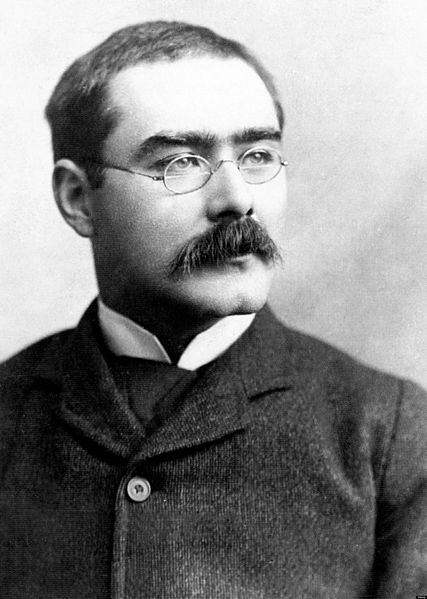
Orwell’s press card portrait, 1943

The history of British relations with Mussolini illustrated the structural weakness of a capitalist state. Granting that power politics are not moral, to attempt to buy Italy out of the Axis — and clearly this idea underlay British policy from 1934 onwards — was a natural strategic move. But it was not a move which Baldwin, Chamberlain and the rest of them were capable of carrying out. It could only have been done by being so strong that Mussolini would not dare to side with Hitler. This was impossible, because an economy ruled by the profit motive is simply not equal to rearming on a modern scale. Britain only began to arm when the Germans were in Calais. Before that, fairly large sums had, indeed, been voted for armaments, but they slid peaceably into the pockets of the shareholders and the weapons did not appear. Since they had no real intention of curtailing their own privileges, it was inevitable that the British ruling class should carry out every policy half-heartedly and blind themselves to the coming danger. But the moral collapse which this entailed was something new in British politics. In the nineteenth and early twentieth centuries, British politicians might be hypocritical, but hypocrisy implies a moral code. It was something new when Tory M.P.s cheered the news that British ships had been bombed by Italian aeroplanes, or when members of the House of Lords lent themselves to organized libel campaigns against the Basque children who had been brought here as refugees.

When one thinks of the lies and betrayals of those years, the cynical abandonment of one ally after another, the imbecile optimism of the Tory press, the flat refusal to believe that the dictators meant war, even when they shouted it from the house-tops, the inability of the moneyed class to see anything wrong whatever in concentration camps, ghettos, massacres and undeclared wars, one is driven to feel that moral decadence played its part as well as mere stupidity. By 1937 or thereabouts it was not possible to be in doubt about the nature of the Fascist régimes. But the lords of property had decided that Fascism was on their side and they were willing to swallow the most stinking evils so long as their property remained secure. In their clumsy way they were playing the game of Machiavelli, of “political realism”, of “anything is right which advances the cause of the Party” — the Party in this case, of course, being the Conservative Party.

All this “Cassius” brings out, but he does shirk its corollary. Throughout his book it is implied that only Tories are immoral. “Yet there is still another England,” he says. “This other England detested Fascism from the day of its birth… this was the England of the Left, the England of Labour.” True, but only part of the truth. The actual behaviour of the Left has been more honourable than its theories. It has fought against Fascism, but its representative thinkers have entered just as deeply as their opponents into the evil world of “realism” and power politics.

“Realism” (it used to be called dishonesty) is part of the general political atmosphere of our time. It is a sign of the weakness of “Cassius”s position that one could compile a quite similar book entitled The Trial of Winston Churchill, or The Trial of Chiang Kai-shek, or even The Trial of Ramsay MacDonald. In each case you would find the leaders of the Left contradicting themselves almost as grossly as the Tory leader quoted by “Cassius”. For the Left has also been willing to shut its eyes to a great deal and to accept some very doubtful allies. We laugh now to hear the Tories abusing Mussolini when they were flattering him five years ago, but who would have foretold in 1927 that the Left would one day take Chiang Kai-shek to its bosom? Who would have foretold just after the General Strike that ten years later Winston Churchill would be the darling of the Daily Worker? In the years 1935-9, when almost any ally against Fascism seemed acceptable, left-wingers found themselves praising Mustapha Kemal and then developing tenderness for Carol of Rumania.

George Orwell, “Who are the War Criminals?”, Tribune, 1943-10-22.

July 26, 2019

The young Boris Johnson at Oxford

Filed under: Britain, Education, Politics — Tags: , , — Nicholas @ 05:00

Toby Young recounts his first encounter with the new Prime Minister of the United Kingdom at Oxford in 1983:

Boris Johnson, Secretary of State for Foreign and Commonwealth Affairs at an informal meeting of the Foreign Affairs Council on 15 February 2018.
Photo by Velislav Nikolov via Wikimedia Commons.

I first set eyes on Boris Johnson in the autumn of 1983 when we went up to Oxford at the same time. I knew who he was since my uncle Christopher was an ex-boyfriend of his mother’s and he had told me to keep an eye out for him, but I still wasn’t prepared for the sight (and sound) of him at the dispatch box of the Oxford Union. This was the world famous debating society where ambitious undergraduates honed their public-speaking skills before embarking on careers in politics or journalism, and Boris was proposing the motion.

With his huge mop of blond hair, his tie askew and his shirt escaping from his trousers, he looked like an overgrown schoolboy. Yet with his imposing physical build, his thick neck and his broad, Germanic forehead, there was also something of Nietzsche’s Übermensch about him. You could imagine him in lederhosen, wandering through the Black Forest with an axe over his shoulder, looking for ogres to kill. This same combination — a state of advanced dishevelment and a sense of coiled strength, of an almost tangible will to power — was even more pronounced in his way of speaking.

He began to advance an argument in what sounded like a parody of the high style in British politics — theatrical, dramatic, self-serious — when — a few seconds in — he appeared to completely forget what he was about to say. He looked up, startled — Where am I? — and asked the packed chamber which side he was supposed to be on. “What’s the motion, anyway?” Before anyone could answer, a light bulb appeared above his head and he was off, this time in an even more orotund, florid manner. Yet within a few seconds he’d wrong-footed himself again, this time because it had suddenly occurred to him that there was an equally compelling argument for the opposite point of view. This endless flipping and flopping, in which he seemed to constantly surprise himself, went on for the next 15 minutes. The impression he gave was of someone who’d been plucked from his bed in the middle of the night and then plonked down at the dispatch box of the Oxford Union without the faintest idea of what he was supposed to be talking about.

I’d been to enough Union debates at this point to know just how mercilessly the crowd could punish those who came before them unprepared. That was particularly true of freshmen, who were expected to have mastered all the arcane procedural rules, some of them dating back to the Union’s founding in 1823. But Boris’s chaotic, scatter-brained approach had the opposite effect. The motion was deadly serious — “This House Would Reintroduce Capital Punishment” — yet almost everything that came out of his mouth provoked gales of laughter. This was no ordinary undergraduate proposing a motion, but a Music Hall veteran performing a well-rehearsed comic routine. His lack of preparedness seemed less like evidence of his own shortcomings as a debater and more a way of sending up all the other speakers, as well as the pomposity of the proceedings. You got the sense that he could easily have delivered a highly effective speech if he’d wanted to, but was too clever and sophisticated — and honest — to enter into such a silly charade. To do what the other debaters were doing, and pretend he believed what was coming out of his mouth, would have been patronising. Everyone else was taking the audience for fools, but not him. He was openly insincere and, in being so, somehow seemed more authentic than everyone else.

To say I was impressed would be an understatement. A few years before arriving at Oxford I had watched the television adaptation of Brideshead Revisited, Evelyn Waugh’s Oxford novel, and had been expecting to meet the modern-day equivalents of Sebastian Flyte and Anthony Blanche: larger-than-life, devil-may-care aristocrats delivering bon mots in between sips of champagne and spoonfuls of caviar. But the reality was very different: warm beer, stale sandwiches and second-hand opinions. Lots of spotty students, all as gauche as me. Less like an Oscar Wilde play than a Mike Leigh film.

In Boris, though, it was as if I’d finally encountered the “real” Oxford, the Platonic ideal. While the rest of us were works-in-progress, vainly trying on different personae, Boris was the finished article. He was an instantly recognizable character from the comic tradition in English letters: a pantomime toff. He was Sir Toby Belch in Twelfth Night demanding more cakes and ale, Bertie Wooster trying to pass himself off as Eustace H. Plimsoll when appearing in court after overdoing it on Boat Race night. Yet at the same time fizzing with vim and vinegar — “bursting with spunk,” as he once put it, explaining why he needs so many different female partners. He was a cross between Hugh Grant and a silverback gorilla.

My uncle had described him as a “genius” and as a boy he’d been regarded as something of a wunderkind. There was the occasion when he was holidaying with his family in Greece, aged 10, and asked a group of Classics professors if he could join their game of Scrabble. They indulged the precocious, blond-haired moppet, only to be beaten by him. Thinking it was a one-off, they asked him to play another round and, again, he won. On and on it went, game after game. At the prep school he attended before going to Eton, Britain’s grandest private school, he was seen as a prodigy. A schoolmaster who taught him back then told his biographer, Andrew Gimson, that he was the quickest-learner he’d ever encountered. In the staff room, the teachers would compare notes about the “fantastically able boy.”

He was without doubt the biggest man on campus — the person most likely to succeed. He made no secret of his desire to be Prime Minister one day, and not just a run-of-the-mill, common-or-garden PM, but up there with Gladstone and Disraeli. And this was a scaling back of his ambitions — as a boy he’d told his younger sister Rachel that he wanted to be “world king.” (There was an intermediate stage during his teenage years when he harboured fantasies of becoming President of the United States — something that’s technically possible, given that he was born in New York.) He was by no means the only member of the Oxford Union to express such hopes during that period, but in his case you felt it might actually happen. Unlike so many other privileged undergraduates, with their vaulting sense of entitlement, Boris’s gargantuan self-belief seemed of a piece with his outsized personality. He had an electrifying, charismatic presence of a kind I’d only read about in books before. Our mutual friend Lloyd Evans, who knew Boris better than me at Oxford, put it well. “He’s a war leader,” he told Andrew Gimson. “He is one of the two or three most extraordinary people I’ve ever met. You just feel he’s going somewhere. People just love him. They enjoy going with him and they enjoy being led.”

To get a sense of Boris Johnson’s unique charm, here’s a brilliant pastiche of some of his TV appearances, stitched together as if it was his Olympic Games Welcome during his time as Lord Mayor of London (do watch, it’s hilarious).

« Newer PostsOlder Posts »

Powered by WordPress