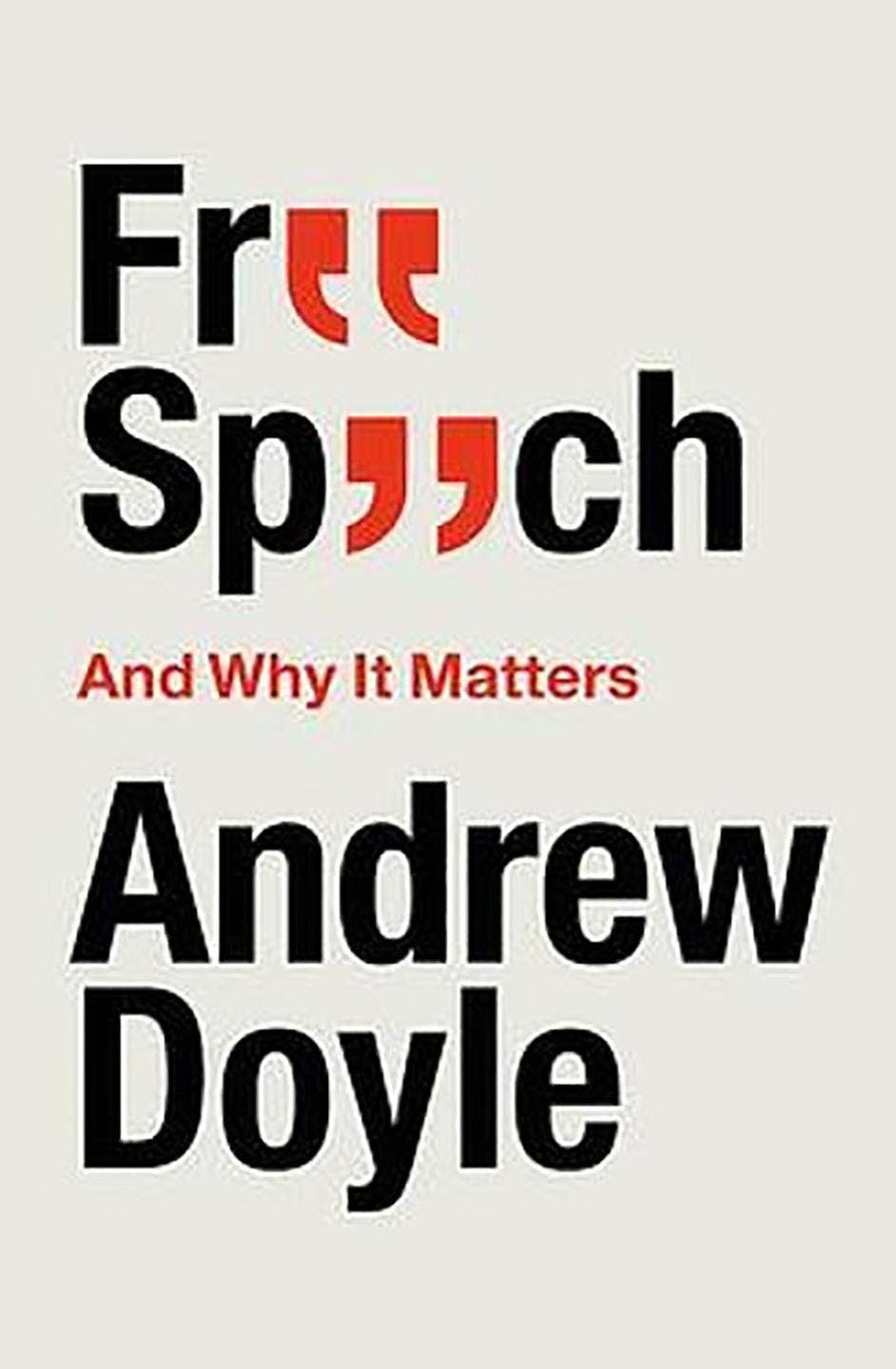
In The Critic, Simon Evans reviews Free Speech And Why It Matters by Andrew Doyle (who is perhaps best known on this side of the pond for his ultrawoke Twitter persona “Titania McGrath”):
When I am weaker than you, I ask you for Freedom, because that is according to your principles; when I am Stronger than you, I take away your freedom because that is according to my principles.
Frank Herbert, Children of Dune
It is most peculiar. If the counter-culture had a dominant theme, it was the right to criticise the establishment and to question orthodoxy of all kinds. Back in the Sixties, it was central to its mission to Expand your Consciousness, man. And it worked. Walls came tumbling down. Yet now, everywhere you look, it seems the elements of society — students, academics, comedians — that one would most naturally associate with that freedom of expression, are introducing caveats and qualifiers to that principle faster than you can cry “Stop Little Pol-Pot, Stop!” They are turning, before our very eyes, into actual scolds.
It must be supposed that what was once the siege army, camped outside the moat like Occupy Wall Street, has captured the castle, for they are demanding that the walls be re-erected. That “hate” speech be distinguished from free speech and dealt with accordingly. That freedom of speech need not mean freedom from consequences. And a general suspicion is at large, among the young, that free speech is some sort of artefact of complacent boomer self-indulgence, like Steely Dan and second homes. No longer counter-culture, but decidedly counter-revolutionary.
I’m a comedian, and these have been strange times for our trade. Brexit saw comedians side with the mirthless neo-liberal consensus, against the humorous, sceptical grumble of the common rabble. The same thing happened in America, with bar-room stand-ups horrified by the vulgarity of Trump. And now the latest revision sees many of my fellow jesters and fools unsure whether people can really be trusted with free speech.One might have thought this issue had been settled long ago, in this country, and in liberty’s favour. But no, it seems we need to sharpen our tools once again, and Andrew Doyle’s new book is an excellent place to start.
Making the case for the defence, Doyle’s book is terse, restrained and as carefully argued as a QC’s summing-up in a top-drawer courtroom drama. Whether his command of the material comes from his doctorate in Renaissance literature or his experience of defending the comedy character Titania McGrath from infuriated wokerati, who knows? It is a beautifully balanced and comprehensive overview that will of course be read by no one who needs to hear it.
It is admirably historically literate. Doyle takes a quote from Milton’s Areopagitica as his epigram, with the old poet, declaiming over the din of the Civil War, as defiant as Satan himself, “Give me liberty to know, to utter, and to argue freely according to conscience, above all liberties.”
This sets the tone for the whole book, but Doyle also presents arguments intended to appeal to those who insist that we live in a society. With the compromises that entails. This was most famously recognised by notorious cis-hetero white man and free speech absolutist John Stuart Mill, who was surveying the world from the heights of Victorian Exceptionalism when he published the still unsurpassed On Liberty.
Comments Off on Andrew Doyle defends freedom of speech in his new book
The British military started using training rifles in 1883, with the .297/.230 Morris cartridge in adapted Martini rifles. This would give way to the .22 rimfire cartridge for training shortly after the Boer War, and a substantial variety of rifles converted to .22 rimfire. Standardization would take until 1921, when the “Rifle, short, .22 inch, RF, Mk IV” was formally adopted – a conversion of the No1 MkIII SMLE to a single shot .22 rimfire weapon. This was modified to Mk IV* in 1925, when an empty magazine body was added to the rifle, to act as a brass catcher.
Just to make things more confusing, the nomenclature system was retroactively changed in 1926, and the designation became Rifle, No2 Mk IV*. This rifle is a very simple conversion. It used a standard bolt body, with the striker and bolt head modified for a rimfire type firing pin and .22 caliber extractor. The sight was not even changed; instead a conversion chart was issued with the rifles to specify the proper sight settings for .22 rimfire shooting (ie, set sight to 300yd for shooting at 25yd). These rifles would be used into the 1950s, particularly by India and Australia, who did not produce No4 rifles and thus did not produce No4 trainer conversions either.
David Fletcher looks at the Crossley Armoured Car, an inter-war vehicle. Only five were built and sent to Egypt, where they were unable to cope with the sand.
Support the work of The Tank Museum on Patreon: ► https://www.patreon.com/tankmuseum
Visit The Tank Museum SHOP & become a Friend: ► tankmuseumshop.org
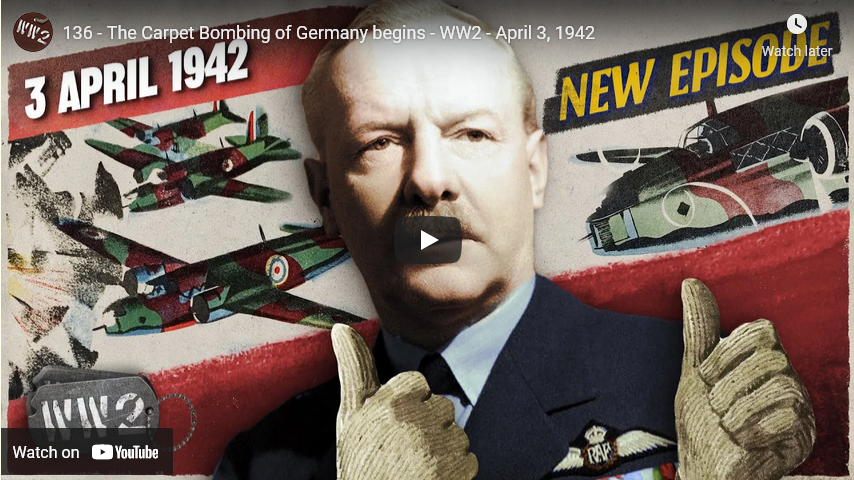
Britain’s campaign to firebomb the old towns of Germany where civilians reside begins in earnest this week. The British also destroy the port at St. Nazaire in commando action. In the Indian Ocean, however, they are avoiding contact with the Japanese, even while on land the Japanese advance in both Burma and New Guinea.
Written and Hosted by: Indy Neidell
Director: Astrid Deinhard
Producers: Astrid Deinhard and Spartacus Olsson
Executive Producers: Astrid Deinhard, Indy Neidell, Spartacus Olsson, Bodo Rittenauer
Creative Producer: Maria Kyhle
Post-Production Director: Wieke Kapteijns
Research by: Indy Neidell
Edited by: Iryna Dulka
Sound design: Marek Kamiński
Map animations: Eastory (https://www.youtube.com/c/eastory)
Censorship was not just a practice in totalitarian regimes. During World War Two, democratic liberties in Allied countries often clashed with propaganda and restrictions of the press.
Sources:
Dutch National Archives
IWM D 20472
Bundesarchiv
from the Noun Project: Map by BaristaIcon, strategy by Fran Couto, weather by Yoyon Pujiyono, building by Made, Government by lathiif studio, documents by Geovani Almeid, Pen by Caesar Rizky Kurniawan
The True Cost of Petrol, courtesy of www.mirrorpix.com
Soundtracks from the Epidemic Sound:
Johannes Bornlof – “The Inspector 4”
Fabien Tell – “Last Point of Safe Return”
Johan Hynynen – “Dark Beginning”
Reynard Seidel – “Deflection”
Phoenix Tail – “At the Front”
Johannes Bornlof – “Deviation In Time”
Max Anson – “Maze Heist”
Wendel Scherer – “Out the Window”
A TimeGhost chronological documentary produced by OnLion Entertainment GmbH.
From the comments:
World War Two
2 days ago
Censorship is a phenomenon of all ages. Those in power sometimes don’t want certain voices to be heard for a variety of reasons. While this episode is about political and military censorship, we ourselves are still dealing with another kind of censorship today. Economic, political and PR reasons to demonetize or age-restrict our videos are being conflated with “safety” and “harm” of “certain audiences”. We adamantly object to the restriction of fact-based history for the sake of business and public image. This is why it’s so important that we’re able to remain independent. We have full editorial control of our content, and we won’t surrender our mission to publish factual, unbiased and unsanitized documentaries. Our TimeGhost Army is the main reason why we have been able to remain independent and unwavering. Join the TGA at www.patreon.com/timeghosthistory or https://timeghost.tv
Cheers,
Joram
Comments Off on Victory at any Cost? – Allied Censorship – WW2 Special
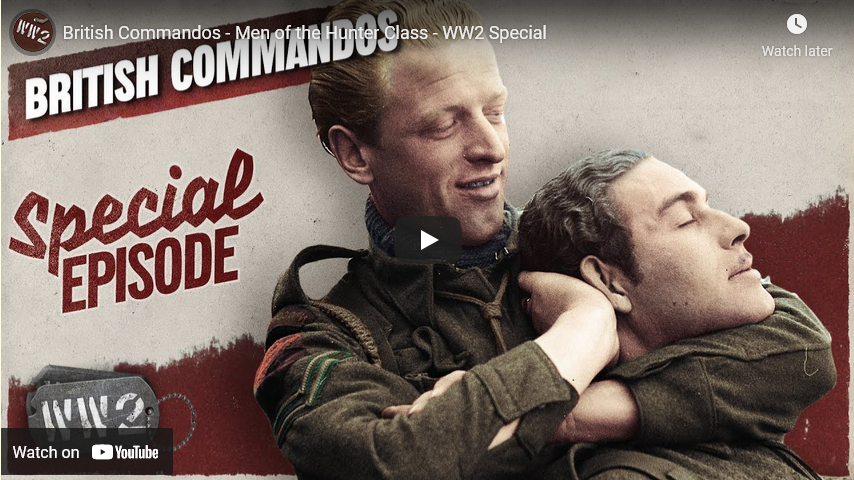
After the German take over continental Europe, the British invent the commando, a new soldier type to raid and harass German installations in occupied Europe.
Hosted by: Indy Neidell
Written by: Joram Appel
Director: Astrid Deinhard
Producers: Astrid Deinhard and Spartacus Olsson
Executive Producers: Astrid Deinhard, Indy Neidell, Spartacus Olsson, Bodo Rittenauer
Creative Producer: Maria Kyhle
Post-Production Director: Wieke Kapteijns
Research by: Joram Appel
Edited by: Karolina Dołęga
Sound design: Marek Kamiński
Map animations: Eastory (https://www.youtube.com/c/eastory)
Colorizations by:
– Daniel Weiss
Sources:
– Imperial War Museums: N 3, HU41240, A 26238, H17472, B 5203, H 19272, CH 10705, H 17489, D 8893, H 39031, A 17763, H 17502, TR1425, E 6390,E 6404, H 31439, TR1230, ADM 5072, H39029, H 17485, H 17347, H 022592, H 17511,H 22588, H 019284, H19269, NA 12466, N 530, NA12469, H18957, H 22604, A 27469, NA 379 A,N397 1941, C2352,H 17364, 023574,H 039033
– Bundesarchiv
– National Archives NARA
– National Military Museum
– Icons from the Noun Project: barge by Seb Chmiel, soldier by Wonmo Kang,
– Crickets sound courtesy of damonmensch
– Slide projector courtesy of hpebley3
Soundtracks from the EpidemicSound:
– “London” – Howard Harper-Barnes
– “March Of The Brave 10” – Rannar Sillard
– “Rememberance” – Fabien Tell
– “The Inspector 4” – Johannes Bornlöf
In 1981, the social scientist Mancur Olson published his magisterial The Rise and Decline of Nations: Economic Growth, Stagflation, and Social Rigidities. Olson had already won acclaim for The Logic of Collective Action, which explained why some groups received an outsize slice of the political pie. In his new book, Olson turned to the question of why nations fail. His thesis: nations lost dynamism when insiders managed to stack the rules against disruptive outsiders.
Stable societies with unchanged boundaries, Olson observed, “tend to accumulate more collusions and organizations for collective action over time.” Instead of accepting rules that encourage overall growth, these collusive organizations — trade groups and labor unions were paradigmatic examples — fight to keep what they have, slowing down “a society’s capacity to adopt new technologies and to reallocate resources in response to changing conditions,” thus reducing economic efficiency. Decline follows.
Olson pointed to Japanese stagnation under the Tokugawa shogunate, when, “before Admiral Perry’s gunboats appeared in 1854, the Japanese were virtually closed off from the international economy.” Ruling Japanese society, he writes, “were any number of powerful za, or guilds, and the shogunate or the daimyo often strengthened them by selling them monopoly rights.” The guilds “fixed prices, restricted production and controlled entry in essentially the same way as cartelistic organization elsewhere.”
A second example: Great Britain, “the major nation with the longest immunity from dictatorship, invasion and revolution” and, consequently, Olson explained, suffering “this century a lower rate of growth than other large, developed democracies.” In Olson’s view, the weak performance resulted from limits on change established by a “powerful network of special-interest organizations,” which included labor unions, industrial groups, and aristocratic cliques. By the 1970s, after the conservative government of Edward Heath fell in a losing battle with striking miners, many deemed Britain ungovernable. Olson contrasted the British situation with that of postwar Germany and Japan, where the chaos and destruction of wartime defeat wiped away established industrial and retail groups, leaving the field open to newcomers like Soichiro Honda or the Albrecht family (creators of international supermarket giant Aldi), who could work economic magic.
The word “ungovernable” was also used to describe New York in the 1960s and 1970s, when Mike Quill’s transit union ran roughshod over Mayor John Lindsay’s attempts to control public-sector wage growth. New York was a long-established city with lots of political collusion. The old Tammany Hall could broker deals to keep Gotham going, but Lindsay’s successor, Abe Beame, proved too weak to resist any special interest that wanted more spending or government favors. New York’s spending kept rising even as public services worsened, until bankruptcy loomed and public power wound up in the hands of the unelected Municipal Assistance Corporation. Thankfully, New York reformed itself economically, at least to some extent, under Mayors Rudolph Giuliani and Michael Bloomberg, as Britain did under Prime Minister Margaret Thatcher. Sufficiently strong leaders can buck entrenched insiders.
Music is:
“Light Thought var 2,” by Kevin MacLeod
“Bird Day,” by Broke For Free
“Drums of the Deep,” by Kevin MacLeod
“Thinking Music,” by Kevin MacLeod
“Flood,” by Jahzzar
“Hallon,” by Christian Bjoerklund
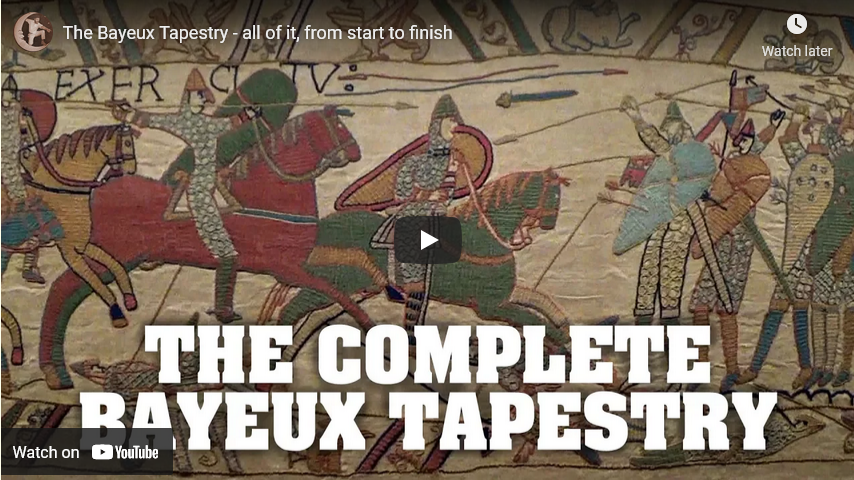
Other than The Adventures of Stoke Mandeville, this is the longest editing job I have ever done. It took eleven very long days of work to put this together from the opportunist footage I snatched when changing trains near the museum where it is on display. The shoot was not without its problems, one of which was the fact that because the tapestry is behind glass, and the museum has many illuminated displays, the reflections in the glass were a bane, and I didn’t manage to get rid of them all. Another was that my stills camera refused to work after taking a small number of pictures. It had always worked fine before, and has always worked fine since. It wasn’t the battery and it wasn’t the SD card. It was a mystery.
For the curious, the edit involved seventeen tracks on the timeline, and has twenty-two animated scenes. Unfortunately, the main animation software I was using could not handle full HD images, and so there is a slight loss of picture quality during most of the animated scenes. You will notice that the close-ups have a better picture quality than the wide shots. This is because they were taken with the camera pushed up against the glass, which improved focussing, and got rid of almost all of the haze and reflections caused by the glass.
It is important to understand that this ‘tapestry’ is a piece of propaganda, and does not tell an accurate version of events. The story I tell here is the one depicted, not what actually happened.
I have enough material for more videos on the tapestry, but am in no great hurry to spend many more days editing this difficult footage. Trying to match the writing and speaking of narration to panning camerawork that had no notion when shot of what might need to be said about some passing scene, was a nightmare, and many editing compromises had to be made, with some scenes skipped past quickly, and others drawn out.
Clarification on the nudity: I said that the figure under the mysterious Cleric and woman was the the only figure displaying genitals on the tapestry. This was misleading. Several animals clearly are pictured with genitals, and on the tapestry in Bayeux today it looks as though a couple of other human figures have genitals. Some of these may have been added later, and these are not being ‘displayed’ as the displaying figure is clearly doing, but look more incidental.
I describe the tall figure emerging from the building with a lance and pennant, being brought his horse, as “William”. It occurred to me after making the video that all the sources I consulted describe this figure as William, but the text does not name him as William, so possibly he is just a Norman knight, representing any and all of the knights setting out for the battle, and that this figure is meant to be “William” could be a modern tradition that has become accepted fact just by repetition.
Lindybeige: a channel of archaeology, ancient and medieval warfare, rants, swing dance, travelogues, evolution, and whatever else occurs to me to make.
▼ Follow me…
Twitter: https://twitter.com/Lindybeige I may have some drivel to contribute to the Twittersphere, plus you get notice of uploads.
website: www.LloydianAspects.co.uk
Comments Off on The Bayeux Tapestry – all of it, from start to finish
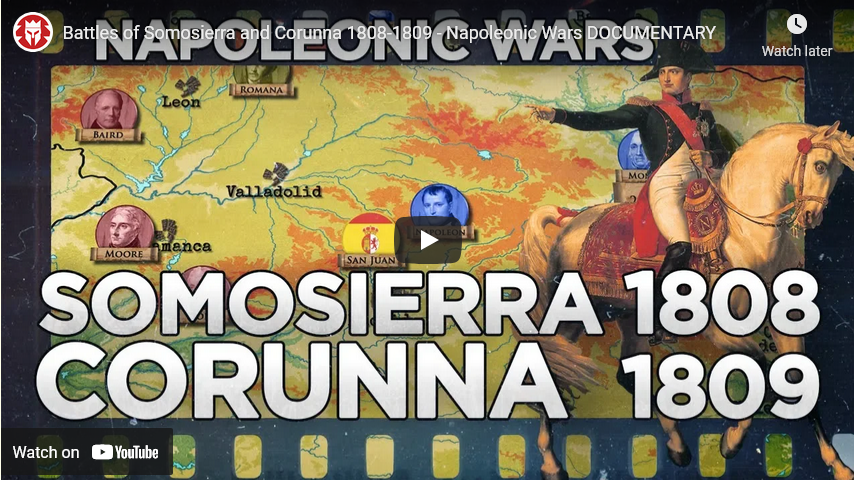
We are continuing our historical animated documentary series on the Napoleonic Wars with another episode on the Peninsular War, covering the battles of Somosierra and Corunna. Napoleon attempted to take back Madrid and crush the British resistance led by General Moore.
This script was researched and written by Everett Rummage. Check out his brilliant Age of Napoleon podcast – http://bit.ly/2vC3cIE In our opinion, it is the best podcast on the Napoleonic era.
Armament Research Services (ARES) is a specialist technical intelligence consultancy, offering expertise and analysis to a range of government and non-government entities in the arms and munitions field. For detailed photos of the guns in this video, don’t miss the ARES companion blog post:
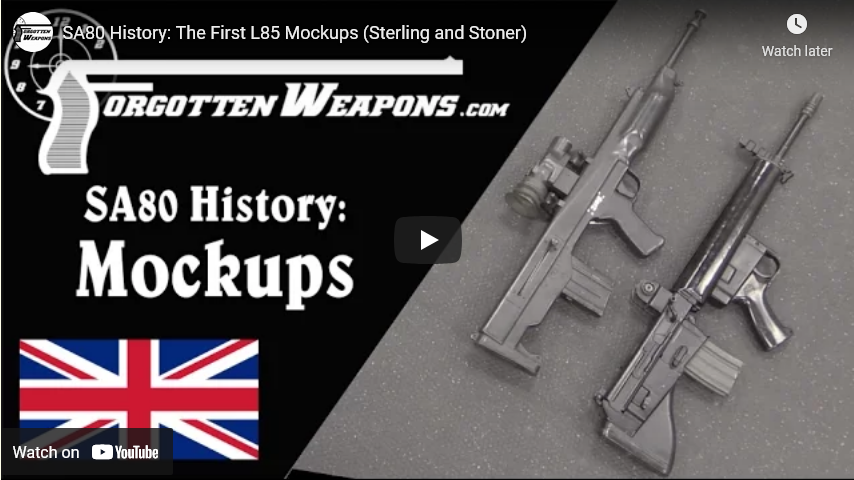
The British military had been working towards a reduced-power cartridge since the end of World War 2, and the ultimate adoption of the FAL/SLR in 7.62x51mm NATO did not end their interest in the concept. It would not be long before the roots of SA80 would take hold, and today we are looking at the very first mockups of the concept that would become the L85A1 and L86A1.
As part of a preliminary study to decide the basic layout and capabilities of a future new individual weapon and light support weapon, five wooden and metal mockups were produced in conventional and bullpup layouts, and also with/without “dropped” stocks to facilitate sighting. The favored mockup was the bullpup seen here, which gave rise to the whole Enfield Weapon System/SA80 family. It is relevant to note that the concept included a universal standard optical sight from the very outset, as this was a cutting edge concept at the time. In addition, note the small features like safety, sling swivels, and magazine catch, as these would vary back and forth through the development program.
After the wooden guns, two functional (or mostly functional) guns were produced. These were standard off-the-shelf rifles converted into bullpup configuration – one Stoner 63 and one Sterling AR18. Neither company was contacted for licensing or technical assistance.
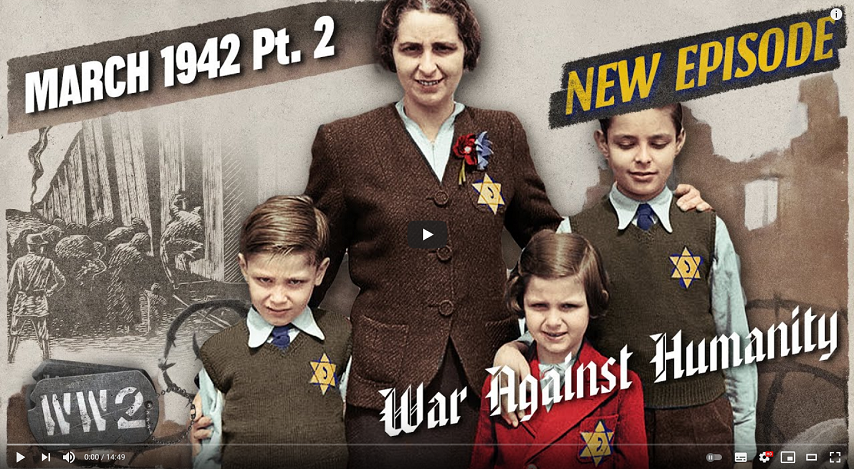
A report on the effect of strategic bombing called the “Dehousing Paper” is spread to justify the targeting of the civilian population of Germany. In Poland, one by one, extermination camps are starting construction. This month, a new one is finished, named Belzec. Here, Jews and other minority undesirables from Poland are gassed.
Hosted by: Spartacus Olsson
Written by: Spartacus Olsson and Joram Appel
Director: Astrid Deinhard
Producers: Astrid Deinhard and Spartacus Olsson
Executive Producers: Astrid Deinhard, Indy Neidell, Spartacus Olsson, Bodo Rittenauer
Creative Producer: Maria Kyhle
Post-Production Director: Wieke Kapteijns
Research by: Joram Appel
Edited by: Miki Cackowski
Sound design: Marek Kamiński
Map animations: Miki Cackowski, Eastory (https://www.youtube.com/c/eastory)
Colorizations by:
Mikołaj Uchman
Daniel Weiss
Dememorabilia – https://www.instagram.com/dememorabilia/
Julius Jääskeläinen – https://www.facebook.com/JJcolorization/
Sources:
Yad Vashem 1935/15, 3016/2, 1137/217, 10094/1, A4613/1116, 3518/7,1554/1
IWM ART 15747 12, HU 56848, MH 24747, CL 2377, ME(RAF) 3703, HU 107752, C 2364, C 4748, C 4743, HU 74904
Bundesarchiv
Graphic of Vickers Wellington bomber, courtesy of Emoscopes https://commons.wikimedia.org/wiki/Fi…
Graphic of Short Stirling bomber, courtesy of Emoscopes https://commons.wikimedia.org/wiki/Fi…
www.auschwitz.org
www.deathcamps.org
USHMM
Picture of scratches on a wall of a gas chamber at Auschwitz, courtesy of Lasy https://commons.wikimedia.org/wiki/Fi…
from the Noun Project: Watchtower by Eliricon
Soundtracks from the Epidemic Sound:
Johan Hynynen – “Dark Beginning”
Wendel Scherer – “Growing Doubt”
Peter Sandberg – “Document This 1”
Jon Bjork – “Disposal”
Philip Ayers – “Trapped in a Maze”
Fabien Tell – “Never Forget”
A TimeGhost chronological documentary produced by OnLion Entertainment GmbH.
From the comments:
World War Two
2 days ago
On the horrors of crafting this, on age restriction, and on covering Allied war crimes – by Spartacus
All episodes of War Against Humanity are difficult to make, but this was an especially harrowing episode to host. When I wrote the conclusion based on Joram’s initial draft, I was composed — it was an intellectual exercise still. That changed once I started giving the words a voice, and as you can see at the end of the episode I had difficulties keeping my composure — when I was done I cried bitterly. But that is how it is supposed to be — the totality of our creation is what brings it home, together with Joram I compile the knowledge, Miki or Karo put it into images under Wieke’s direction, and within all of that it is my job to express it in spoken language as best as I can.
Yes, it is difficult to make and it is difficult to watch — but we sincerely believe that none of us should look away lest we forget. We take upon ourselves to spend hours every week to sift through the minutiae of these events so that we can compress it into 15 minutes every two weeks. We do it not for money, not for fame, and not out of pleasure, but because it needs to be done so that others can spend less time on it than us and still see this time for what it was. It needs to be done by neither glossing over any events, nor the images as horrible as they are. This has two important purposes:
1. driving home that this really happened and
2. defeating any claims towards that we’re just making this up, or exaggerating.
Within that responsibility it is also our duty to report, without prejudice, on what the Allies did that was against human values and rights in this war. We don’t do that because there is an equivalence between events, or to create such an equivalence — we do it for the exact opposite purpose — to show the complete picture and preempt any calls for “what about the bombing of Germany and Hiroshima!?” We do it because we are dedicated to the facts, and the events must be permitted to speak for themselves.
We’re doing all of this in a time when the horrors of WW2 are ever further away in the rearview mirror, when survey after survey shows that the younger generation have little or no knowledge of how earth-shattering this war was. An indication of a growing educational gap, and in many of the countries where you are watching it has long been decided that reporting on these atrocities is of especial importance. That includes decisions to also expose younger people to the reality of it despite the graphic nature of the content. In most places these images are purposefully excepted from age restrictions that befall content made for entertainment, that is to say they do not fall under an 18+ restriction. They are regulated as PG 16 or the equivalent, in some places even PG13.
It then troubles us deeply that YouTube chooses to go against the decisions made by democratically elected bodies and restrict this content to over 18 only. It troubles us even more when this leads to the inevitable result that our viewership has dropped by 50% since they started doing that. That is a drop far above the share of our viewers that are under age, because with the restriction comes a reduction in recommendation to view — users that are not logged in and age verified don’t get notified — the content can no longer be embedded on external sites — in some countries it is blocked entirely, regardless of your age — and all of that further decreases the value of the video in YouTube’s algorithms. The result is that the War Against Humanity videos are now an echo chamber where we only reach those that already know the content.
We have spoken to YouTube to remedy this fault, but we have had no success thus far. As a result we have decided to start making a censored version of the videos that we will upload if or when they get age restricted. We already upload all of our content to https://odysee.com/@WorldWarTwo:6 but that is not a place where anyone will find our content by chance. On that note we should point out that the videos only get age-restricted because they are reported to YouTube by the community as inappropriate, offensive, or false. We take umbrage at that, because in effect this means that YouTube is helping those who would like these events to be forgotten, or even deny that they ever happened. It’s a pity; even morally wrong in my viewpoint. It leaves me despondent and the last weeks have been extraordinarily difficult for me — I have questioned my purposes and wondered why I put myself and our team through all of this, if all we’re doing is preaching to the choir. At first it left me sad, but after YouTube’s glib, bureaucratic responses I got depressed. I considered throwing in the towel, but then I would be nothing else than a coward refusing to stand for those who no longer have a voice. So, I will continue, I will resist, and we will fight against anyone that tries to silence us and the dead — because we must not look away, we must never forget.
The 100th Tank Chat milestone has been reached as the Rolls-Royce Armoured Car turns 100 years old! In this special edition, everybody’s favourite moustachioed tank historian David Fletcher examines his favourite vehicle in The Tank Museum’s collection: the Rolls-Royce Armoured Car, on its 100th birthday.
Support the work of The Tank Museum on Patreon: ► https://www.patreon.com/tankmuseum
Visit The Tank Museum SHOP & become a Friend: ►tankmuseumshop.org
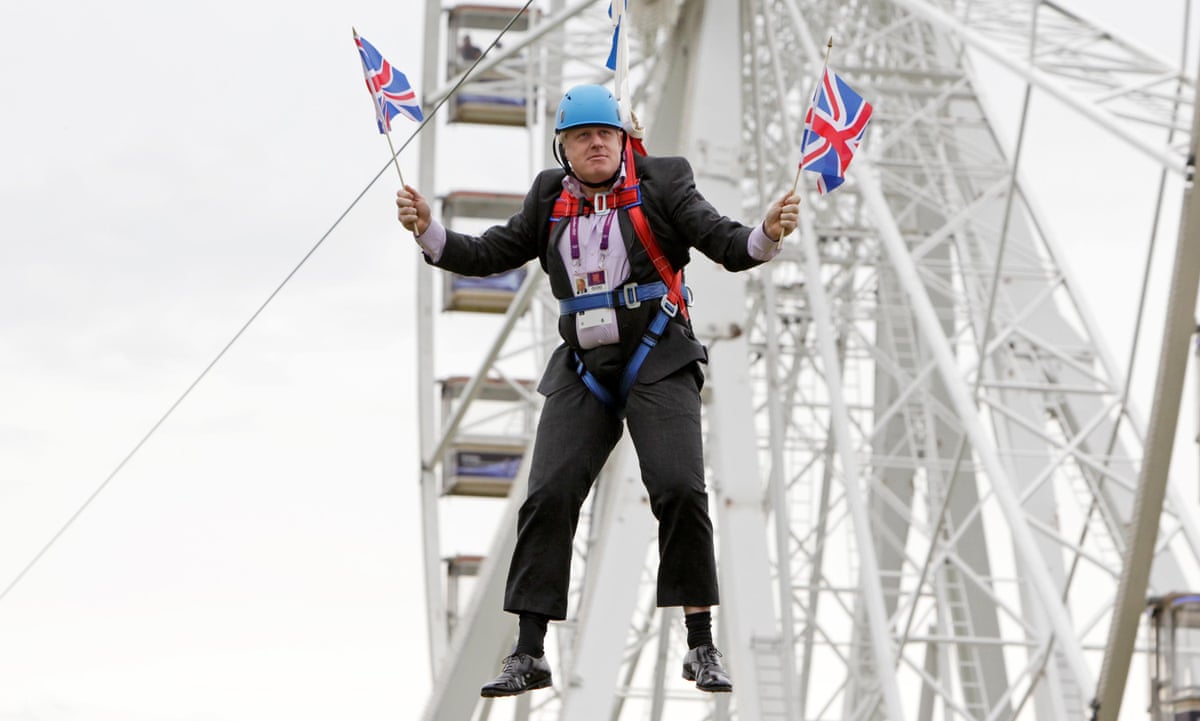
Bella Wallersteiner on the vast difference between Boris Johnson’s hopes for his premiership and the actual role he’s been playing:
A year has passed since the British public accepted lockdown as the best way to combat the spread of the novel coronavirus, yet we are still living under the strictures of the Coronavirus Act.
In the name of virus protection, we have experienced a level of authoritarianism not seen in this country since the time of Oliver Cromwell – restrictions on freedom of movement, forced closure of businesses, and prohibitions on weddings and funerals have challenged many of our most cherished beliefs about the limits of government power, while the ban on large gatherings means we cannot even legally protest them.
Today, as we mark the anniversary of the first lockdown, we would do well to reflect on just how compliant we have become to what were intended to be “emergency” powers.
Cheery platitudes have ranged from “we’re all in this together” and “we’ll send this virus packing” to the hopelessly inaccurate “it will all be over by Christmas”. But history tells us that governments tend to hold on to additional powers far longer than is necessary.
The Defence of the Realm Act of 1914, for example, granted the government wide-ranging powers in the name of public safety, including heavy censorship of the press and the introduction of rationing. Pub licensing laws remained in place for decades, only relaxed in November 2005.
The Second World War brought The Emergency Powers (Defence) Act 1939 which ceded immense regulatory powers to the government, including provisions “for the apprehension, trial and punishment of persons offending against the Regulations and for the detentions of persons whose detention appears to be expedient to the Secretary of State in the interest of public safety or the defence of the realm”. The Act was finally repealed on 25th March 1959, but the last of the Defence Regulations (which included the maintenance of public order) was not lifted until 31st December 1964.
Comments Off on Boris wanted to be a new Churchill, but instead is shaping up as a cut-rate Cromwell