
TimeGhost History
Published 2 Jun 2021Being the creator of the legendary Sherlock Holmes has made Arthur Conan Doyle famous for his scientific rationality. But Doyle also has a deeply held belief in the existence of the spirit universe. In a world still reeling from the shock of the Great War, he is not alone.
(more…)
June 3, 2021
The Supernatural Adventures of Arthur Conan Doyle | B2W:ZEITGEIST! I E.19 Spring – 1923
Comments Off on The Supernatural Adventures of Arthur Conan Doyle | B2W:ZEITGEIST! I E.19 Spring – 1923
QotD: Simon de Montfort
While he was in the Tower, Henry III wrote a letter to the nation saying that he was a Good Thing. This so confused the Londoners that they armed themselves with staves, jerkins, etc., and massacred the Jews in the City. Later, when he was in the Pope’s Bosom, Henry further confused the People by presenting all the Bonifaces of the Church to Italians. And the whole reign was rapidly becoming less and less memorable when one of the Barons called Simon de Montfort saved the situation by announcing that he had a memorable Idea.
Simon de Montfort’s Good Idea
Simon de Montfort’s Idea was to make the Parliament more Representative by inviting one or two vergers, or vergesses, to come from every parish, thus causing the only Good Parliament in History. Simon de Montfort, though only a Frenchman, was thus a Good Thing, and is very notable as being the only good Baron in history. The other Barons were, of course, all wicked Barons. They had, however, many important duties under the Banorial system. These were:
- To be armed to the teeth.
- To extract from the Villein(*) Saccage and Soccage, tollage and tallage, pillage and ullage, and, in extreme cases, all other banorial amenities such as umbrage and porrage. (These may be collectively defined as the banorial rites of carnage and wreckage).
- To hasten the King’s death, deposition, insanity, etc., and make quite sure that there were always at least three false claimants to the throne.
- To resent the Attitude of the Church. (The Barons were secretly jealous of the Church, which they accused of encroaching on their rites — see p. 30, Age of Piety.)
- To keep up the Middle Ages.
(*) Villein: medieval term for agricultural labourer, usually suffering from scurvy, Black Death, etc.
W.C. Sellar & R.J. Yeatman, 1066 And All That, 1930.
Comments Off on QotD: Simon de Montfort
June 2, 2021
Media Fearmongering
Laura Dodsworth on how the BBC and other British media outlets turned all the dials to 11 to ramp up fear over the spread of the Wuhan Coronavirus:
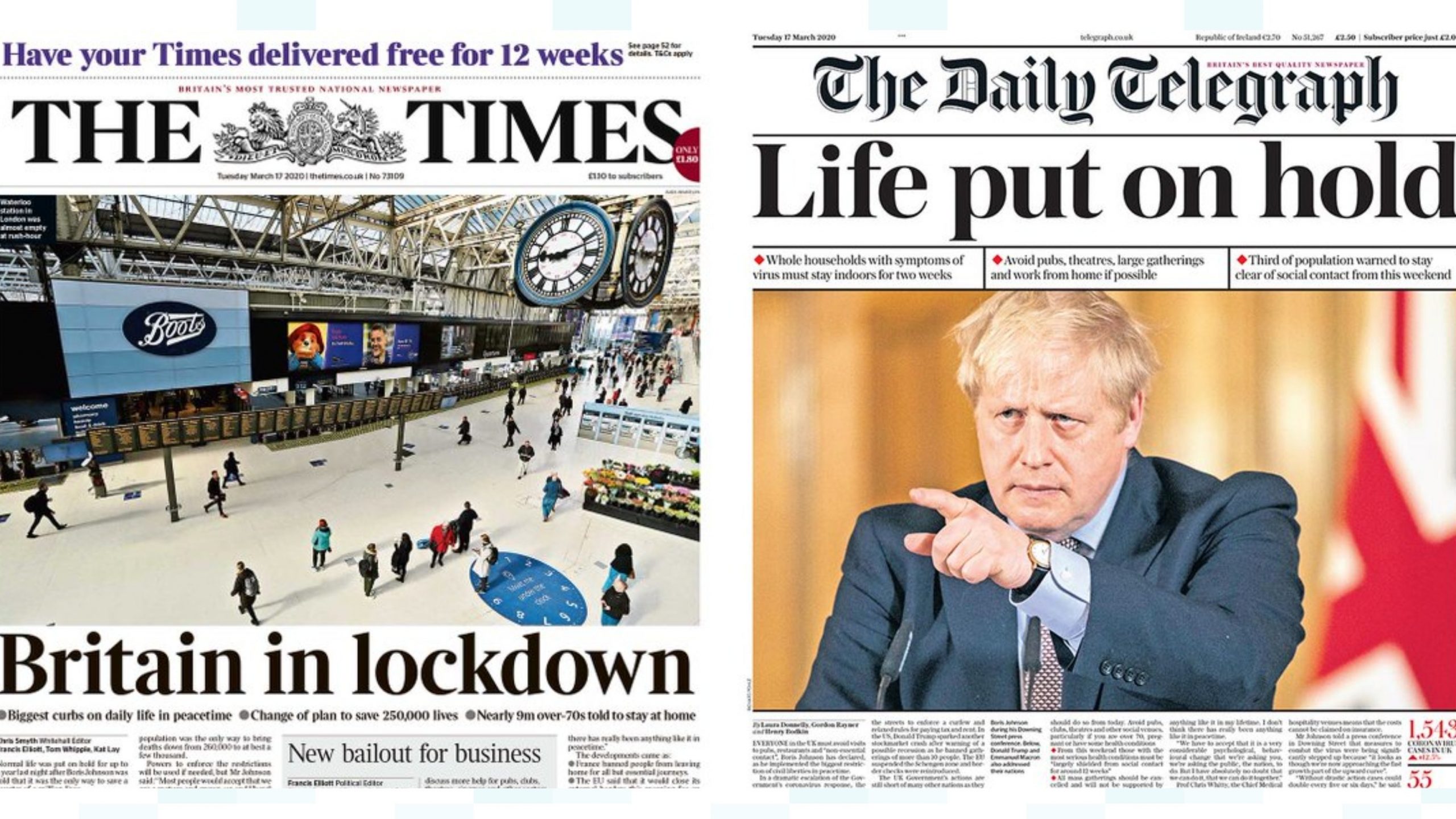
The media have served us a cornucopia of frightening articles and news items about Covid-19 in 2020 and 2021. While writing my new book, A State of Fear: How the UK Government Weaponised Fear During the Covid-19 Pandemic, I encountered a panoply of doom-mongering headlines. These were an indication of the significant role the media have played in creating our state of fear.
Of course, news media should not shy away from reporting frightening news during a pandemic. They should make us aware of the numbers of deaths, the policies being implemented to tackle the pandemic and the latest scientific developments. But during Covid, the media went beyond reporting on the pandemic. Instead, they appeared beholden to the old commercial imperatives, “If it scares, it airs”, and “If it bleeds, it leads”. It seems fear does sell.
The anxious, frightened climate this has helped to create has been suffocating. Death tolls were constantly brandished without the context of how many people die every day in the UK, and hospital admissions were reported while recoveries were not. As a result, Covid often appeared as a death sentence, an illness you did not recover from – even though it was known from the outset that Covid was a mild illness for the majority of people.
Given the wall-to-wall doom, it is therefore no surprise that the British were one of the most frightened populations in the world. Various studies showed that we were more concerned than other countries about the spread of Covid and less confident in the ability of our government to deal with it. One survey in July 2020 showed that the British public thought between six and seven per cent of the population had died from Covid – which was around 100 times the actual death rate at the time. Indeed, if six or seven per cent of Brits had died from Covid, that would have amounted to about 4,500,000 bodies – we’d have noticed, don’t you think?
While researching A State of Fear, I interviewed members of the general public about how they were impacted by the “campaign of fear” during the epidemic. Many talked of how the media had elevated their alarm.
“There wasn’t much to do”, Darren told me, “so we’d watch TV and we saw programmes about disinfecting your shopping when it arrives, and having a safezone in the kitchen. The nightly bulletins on the TV about death tolls, the big graphs with huge spikes on them, came at us ‘boom, boom, boom!’. It was a constant barrage of doom and gloom. My fear of the virus went through the roof.”
Sarah told me she had to stop watching the BBC. As her daughter put it, “If you just watched or listened to the BBC every day, what hope would you have had?”. Jane, meanwhile, described the “gruesome headlines” that came at her “thick and fast”.
The fearmongering about Covid began even before the pandemic hit the UK. We were primed by videos from Wuhan in China, which were then widely circulated by UK-based media outlets. These painted an apocalyptic picture, featuring collapsed citizens, medics in Hazmat suits, concerned bystanders and a city grinding to a halt. In one memorable video, which went viral, so to speak, a woman fell, stiff as a board, flat on her face, on a pavement. The split second where she falters is a giveaway – this was a set-up. If the rest of the world had Covid, China had “Stunt Covid”.
Comments Off on Media Fearmongering
June 1, 2021
What Orwell wrote about in The Road to Wigan Pier applies just as well to the modern Labour Party
David Starkey points out that while the best contemporary analysis of the collapse of the Labour vote may come from Rod Liddle, he is in many ways just echoing the words of George Orwell in The Road To Wigan Pier:
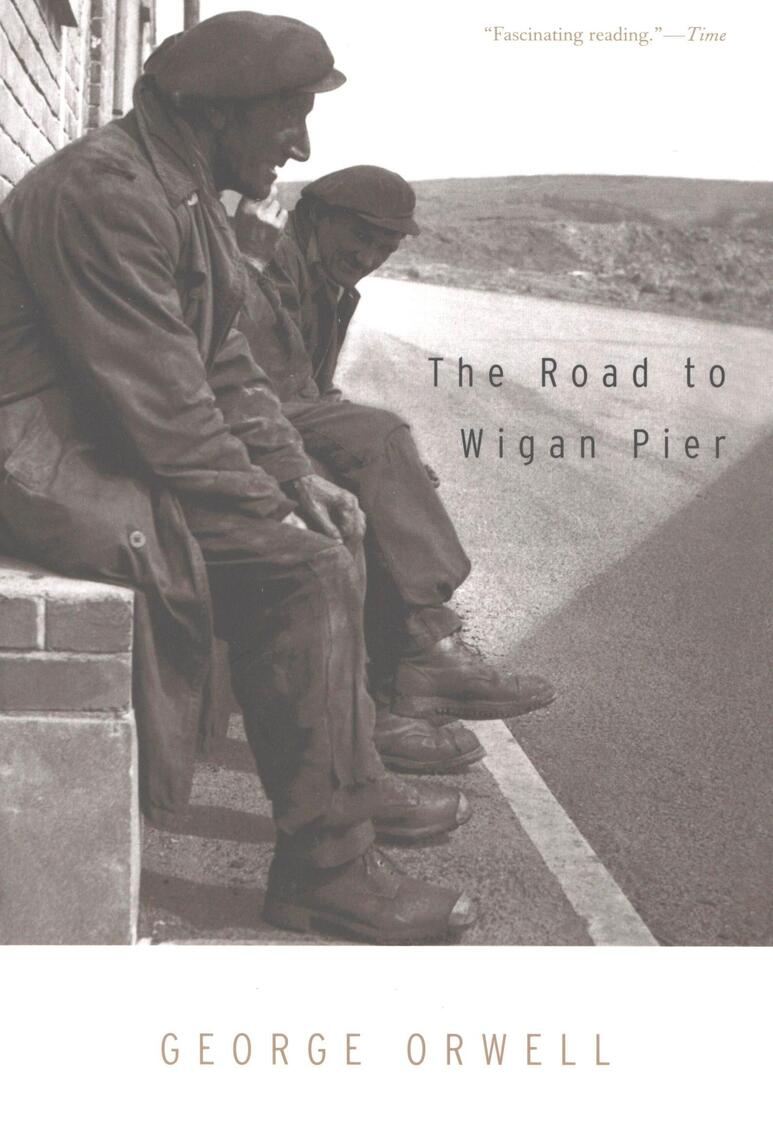
“The first thing that must strike any outside observer,” Orwell’s analysis begins, “is that Socialism in its developed form is a theory confined entirely to the middle classes.” “The typical Socialist is not”, he explains, “a ferocious-looking working man with greasy overalls and a raucous voice. He is either a youthful snob-Bolshevik … or, still more typically, a prim little man with a white-collar job … [and] a social position which he has no intention of forfeiting.”
He — and even more it must be said she — is also likely to be odd. Here Orwell is unsparing. And spot on. “There is,” Orwell declares, “the horrible — the really disquieting — prevalence of cranks wherever Socialists are gathered together.” “One sometimes get the impression,” he continues, “that the mere words ‘Socialism’ and ‘Communism’ draw towards them with magnetic force every fruit-juice drinker, nudist, sandal-wearer, sex-maniac, Quaker, ‘Nature Cure’ quack, pacifist, and feminist in England.”
Oh and vegetarians. And beards. And “high-minded women”. And homosexuals, like the two “dreadful-looking old men”, clad “in pistachio-coloured shirts and khaki shorts into which their huge bottoms were crammed so tightly that you could study every dimple”, whom Orwell encountered on a bus in Letchworth. And so — effortlessly out-Liddling Liddle — on.
Above all, Orwell identified the same disdain for the working class. “Are these mingy little beasts,” he reflected after attending one Socialist conventicle, “the champions of the working class?”
“For every person there”, he recalled, “bore the worst stigmata of snobbish middle-class superiority. If a real working man, a miner dirty from the pit, for instance, had suddenly walked into their midst, they would have been embarrassed, angry and disgusted; some, I should think, would have fled holding their noses”.
“The truth is,” Orwell concludes, “that to many people calling themselves Socialists, revolution does not mean a movement of the masses with which they hope to associate themselves; it means a set of reforms which ‘we’, the clever ones, are going to impose upon ‘them’, the Lower Orders.”
But Orwell was writing in 1937. Not 2021. So how on earth did the Labour party, with even then such a freakish, repellent cadre at its core, survive and thrive as the great mass movement that, for a time, it became and whose passing Liddle laments?
Comments Off on What Orwell wrote about in The Road to Wigan Pier applies just as well to the modern Labour Party
Rise and Fall of the Sikh Empire explained in less than 7 minutes
Epimetheus
Published 8 Oct 2019Rise and Fall of the Sikh Empire explained in less than 7 minutes Sikh history documentary
This video covers Sikh history from the Guru Nanak till the fall of the Sikh Empire.
This video and others like it are sponsored by my Patrons over on patreon.
https://www.patreon.com/Epimetheus1776
Comments Off on Rise and Fall of the Sikh Empire explained in less than 7 minutes
Undoing Dr. Beeching’s cuts
In The Critic, Brice Stratford looks at the British government’s “nationalization if necessary, but not necessarily nationalization” scheme to once again reform Britain’s passenger railway network:
Astonishing scenes this week, whereby the Tory government announces a White Paper to re-nationalise the railways. The union bosses and Guardianistas who have called for such policy for decades immediately decided that actually it’s a terrible idea, or that this doesn’t count as re-nationalising because it’s the Conservatives doing it, or that calling the new entity “Great British Railways” just because it will run Great Britain’s railways is so offensive that the entire project should be called off. It’s all very tribal, and very silly, and very 2021, alas.
Of course, the Department for Transport (DfT) is still afraid of admitting that this is in fact renationalisation, as to do so would be to rile up certain elements of the Right, and to admit what we all know: that their generations-long experiment in railway privatisation has been a failure. Today we have a service which is overpriced, unreliable, and generally an unpleasant and ineffective experience from start to finish.
The postwar Labour government included railway nationalization in its many, many reforms to the economic life of Britain and in 1948 the remaining railway systems were unified as British Railways. By the 1960s, the system was losing money at a high rate of speed, so Dr. Beeching was called upon to recommend how to put the railway if not into profit then at least into a much more acceptable rate of loss:
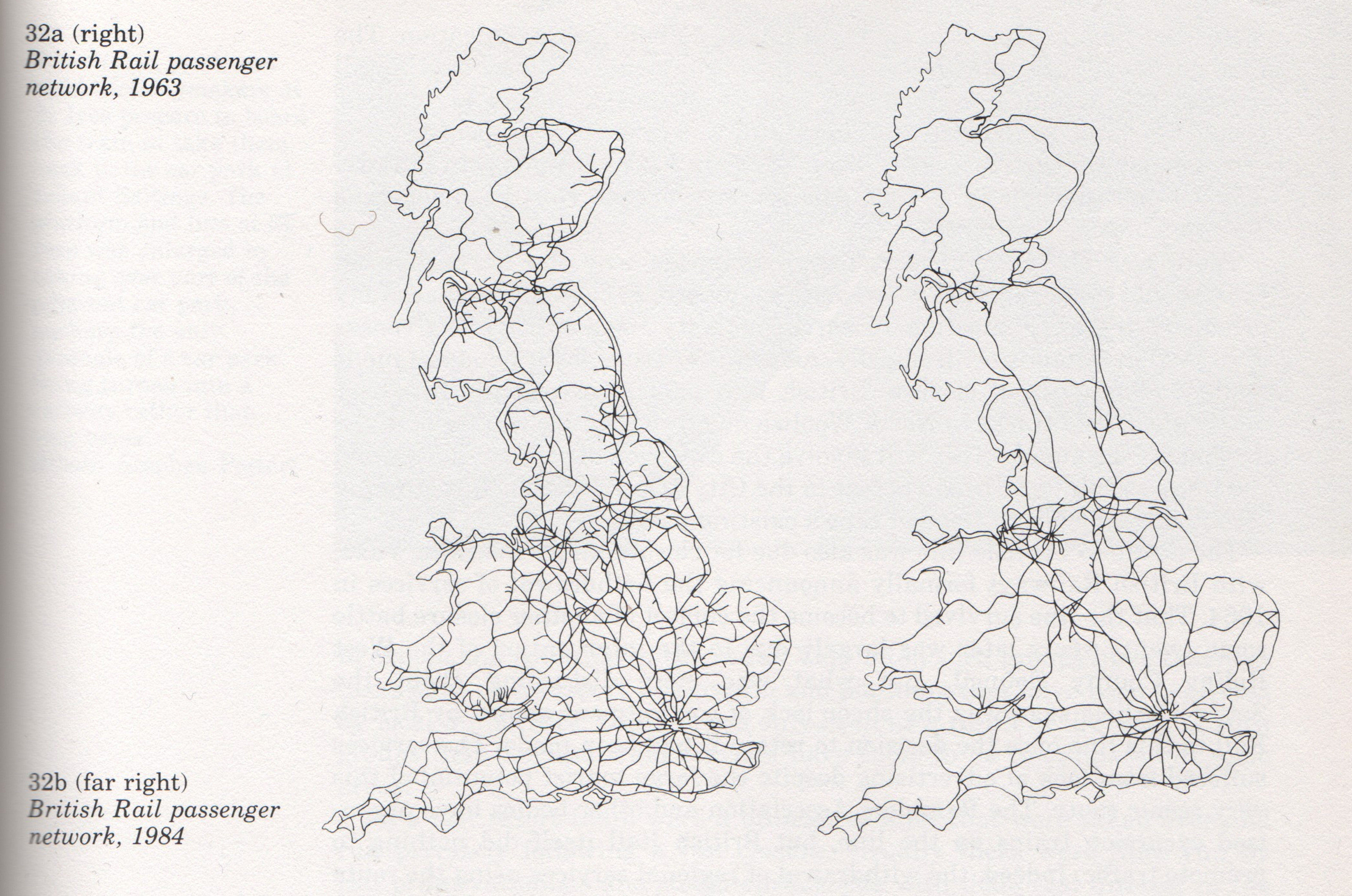
Maps originally from Losing Track by Kerry Hamilton and Stephen Potter (1985), by way of Is Your Journey Really Necessary?, 2012-12-31.
https://isyourjourneyreallynecessary.wordpress.com/2012/12/31/nice-work-if-you-can-get-there/
Click map to enlarge.
The aim of the Beeching cuts, which followed on from a pair of reports written by Dr Richard Beeching in 1963 and 1965 for the British Railway Board (of which he was Chair), was to turn the loss-making British railways network into a profitable enterprise. Prioritising this profitability over all else, he proposed axing about a third of Britain’s then 7000 railway stations, removing passenger service from around 5000 route miles, and cutting 70,000 jobs over three years. The moves were highly controversial, and though they certainly saved money, the social consequences were extensive and the scars remain visible today.
As a consequence of the cuts, Britain became over-reliant on car travel, and over the 1970s and 80s town planners gutted the experientially human-scale city centres in service of this newly favoured road transport. We still very much feel the consequences of the Beeching axe today, whereby a rail journey between neighbouring cities is often only possible by zigzagging up to London and back down again, and public transport between rural communities is limited to one bus service every hour or two in the morning and mid-afternoon, which crawls along at a testudinian pace, further isolating and atrophying the scattered settlements that once were happy, thriving homes.
Comments Off on Undoing Dr. Beeching’s cuts
The Avengers – Must See TV
Billy Rees
Published 19 Aug 2015ITV programme from 2005 presented by Joan Collins.

Comments Off on The Avengers – Must See TV
May 31, 2021
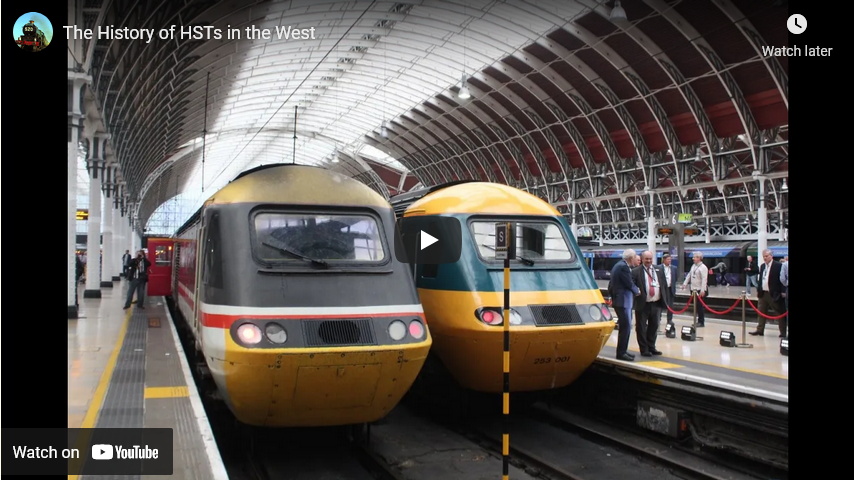
The History of HSTs in the West
Ruairidh MacVeigh
Published 29 May 2021Hello again! 😀
With the recent withdrawal of the last HST operations into London, I wanted to make a series of videos chronicling the history of these mighty trains in terms of their years of each region they were assigned to, the Great Western, East Coast, Midland, West Coast and Cross Country Routes.
With that in mind, we start with the first of the BR Regions to employ the venerable HST, but also the first to withdraw them from long distance services, the Great Western, a line that, since its inception under the auspices of Brunel, has played host to many different types of trains, but none have had greater impact that the superb HSTs.
All video content and images in this production have been provided with permission wherever possible. While I endeavour to ensure that all accreditations properly name the original creator, some of my sources do not list them as they are usually provided by other, unrelated YouTubers. Therefore, if I have mistakenly put the accreditation of “Unknown”, and you are aware of the original creator, please send me a personal message at my Gmail (this is more effective than comments as I am often unable to read all of them): rorymacveigh@gmail.com
The views and opinions expressed in this video are my personal appraisal and are not the views and opinions of any of these individuals or bodies who have kindly supplied me with footage and images.
If you enjoyed this video, why not leave a like, and consider subscribing for more great content coming soon.
Thanks again, everyone, and enjoy! 😀
References:
– 125Group (and their respective sources)
– Wikipedia (and its respective references)
Comments Off on The History of HSTs in the West
May 30, 2021
Rommel’s Desert Dash – The Whole Bloody Afrika Korps! – Gazala – WW2 – 144 – May 30, 1942
World War Two
Published 29 May 2021Erwin Rommel begins his surprise new offensive with “Rommel’s Moonlight Ride”, bringing all of his mighty mobile units to the fray in North Africa, while in the Pacific, dozens of warships and tens of thousands of men set sail from Japan — their mission? Attack the Aleutian Islands and Midway Island, but above all, destroy the US Pacific Fleet!
(more…)
Comments Off on Rommel’s Desert Dash – The Whole Bloody Afrika Korps! – Gazala – WW2 – 144 – May 30, 1942
The History of the English Flag
History With Hilbert
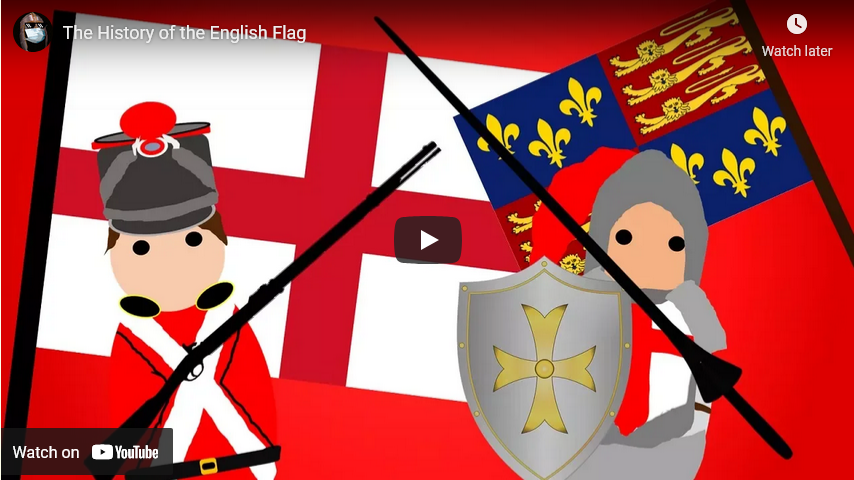
Published 13 Apr 2018Most people know that the Union Flag (sometimes incorrectly called the Union Jack by normies) is made up of the various flags of the United Kingdom combining things like the Scottish Saltire and the English Saint George’s Cross. But what is the history behind these symbols and why were they adopted by these nations, and what is more, why these flags, and what about the competitors who if history had been different might have come to symbolise these nations. In today’s episode, I’m going to explore the history and symbolism behind England’s flag, the Saint George’s Cross, as well as the other banners that were once seen as being representative of the English people.
Music Used:
“Sneaky Snitch” – Kevin MacLeod
“Pippin the Hunchback” – Kevin MacLeod
“Angevin” – Kevin MacLeod
“Gregorian Chant” – Kevin MacLeod
“Ever Mindful” – Kevin MacLeod
“Ever Mindful” – Kevin MacLeod (incompetech.com)
Licensed under Creative Commons: By Attribution 3.0 LicenseAll images are from the Public Domain of Wikimedia Commons and Pixabay.
Comments Off on The History of the English Flag
May 29, 2021
Prototype Jungle Carbine: A No1 MkV Becomes a No5 MkI
Forgotten Weapons
Published 17 Feb 2021http://www.patreon.com/ForgottenWeapons
https://www.floatplane.com/channel/Fo…
Cool Forgotten Weapons merch! http://shop.bbtv.com/collections/forg…
When the British began developing a shortened version of the No4 Lee Enfield in 1943 (which would become the No5 MkI “Jungle Carbine”), the development process included work with some rather older rifles. What we have here is a 1922 production No1 MkV rifle cut down as a trials prototype for the carbine development program. The No1 MkV was a trials gun itself from the early 1920s which basically gave a rear aperture sight to the classic MkIII SMLE. Unfortunately, I don’t have any specific details on the testing or use of this particular example, but I think it is a fascinating example!
Contact:
Forgotten Weapons
6281 N. Oracle #36270
Tucson, AZ 85740

Comments Off on Prototype Jungle Carbine: A No1 MkV Becomes a No5 MkI
May 28, 2021
The Plot to Kill Hitler’s Hangman – Operation Anthropoid – WAH 035 – May 1942, Pt. 2
World War Two
Published 27 May 2021Arthur Harris and his RAF Bombers carry out a massive bombing raid on Cologne. Meanwhile, one of the architects of the Holocaust, Reinhard Heydrich is the target of a spectacular assassination attempt.
(more…)
Comments Off on The Plot to Kill Hitler’s Hangman – Operation Anthropoid – WAH 035 – May 1942, Pt. 2
May 27, 2021
Charles Darwin “was 19th century euro upper class. It’d be stranger if he WASN’T ‘problematic’ by today’s standards”
Robert Wright argues that Charles Darwin is not guilty of the most recent set of sins alleged in an editorial in the journal Science:
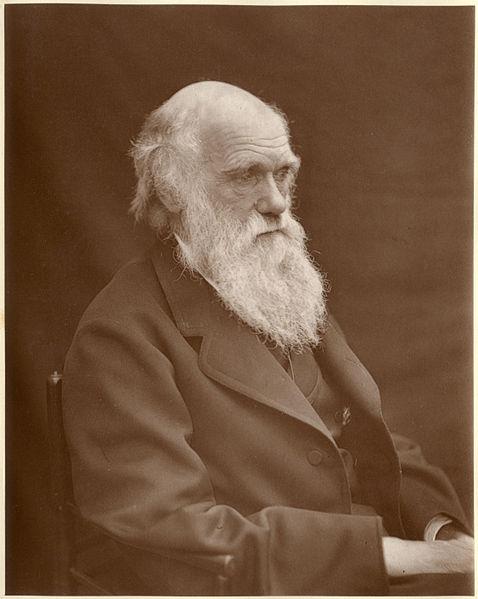
Charles Darwin, circa 1874.
Photo by Leonard Darwin via Wikipedia Commons.
The author of the Science piece (which ran under the heading “editorial”) was Agustin Fuentes, an anthropologist at Princeton. He contended that Darwin’s 1871 book The Descent of Man “offers a racist and sexist view of humanity” and is “often problematic, prejudiced, and injurious”. So students who are taught that Darwin was a great scientist “should also be taught Darwin as an English man with injurious and unfounded prejudices that warped his view of data and experience”.
There are things about this essay I like. For example: I understood it, which distinguishes it from many things written by contemporary anthropologists. Also, it’s hard to argue with its claim that Darwin said things about race and gender that would get a guy canceled today. (As one person put it on Twitter, Darwin, “was 19th century euro upper class. It’d be stranger if he WASN’T ‘problematic’ by today’s standards”.)
Still, Fuentes does seem to have gotten one important thing about Darwin wrong. And in the process he demonstrated a kind of confusion I consider so pernicious that I’ve decided to add it to my list of “existential psychological threats”, along with such cognitive biases as attribution error and confirmation bias (“existential” in the sense of grave threats to Planet Earth, a subject pondered often in this newsletter).
Here’s the confusion: In reading Darwin, Fuentes fails to distinguish between an explanation of something and a justification of something.
I want to emphasize that, though Fuentes seems to be on the left, this conflation of explanation and justification is common on both sides of the political spectrum. If you suggest that some terrorist act committed in America was a response to America’s bombing of majority-Muslim countries, someone on the right may respond to this attempt to explain why the terrorism happened by saying, “Oh, so you’re justifying the slaughter of Americans? You’re excusing the terrorists?”
The fact that I’m often on the receiving end of this kind of question may be one reason I’ve come to see this conflation — let’s call it the “explain/excuse conflation” — as something whose extinction would be a wonderful thing. But there’s another reason: I believe this conflation is a genuine impediment to solving some of the world’s biggest problems. If people get shouted down every time they start a sentence with, “I think the reason bad thing X happened is …” then we’ll have trouble understanding enough about bad things to reduce their frequency.
Here’s the assertion by Fuentes that, so far as I can tell, is flat-out wrong. After (accurately) writing that Darwin “asserted evolutionary differences between races,” he adds: “He went beyond simple racial rankings, offering justification of empire and colonialism, and genocide, through ‘survival of the fittest.'”
H/T to Colby Cosh for the link.
Comments Off on Charles Darwin “was 19th century euro upper class. It’d be stranger if he WASN’T ‘problematic’ by today’s standards”
May 25, 2021
Wait, Go Back! The SMLE MkIII* Wartime Simplification
Forgotten Weapons
Published 10 Feb 2021http://www.patreon.com/ForgottenWeapons
https://www.floatplane.com/channel/Fo…
Cool Forgotten Weapons merch! http://shop.bbtv.com/collections/forg…
The British entered World War One with a technically excellent rifle, with lots of bells and whistles. By 1916, the war was taking a previously unimaginable toll on the industrial capacity of the Empire and rifle production had to be economized. This led to the adoption of the MkIII* pattern of the Lee Enfield, to reduce cost and speed up production. The MkIII* omitted the windage adjustments on the rear sight, the front and rear volley sight elements, and the magazine cutoff. Around the same time, stock discs stopped being stamped with unit information (to avoid giving military intelligence of troop distribution when rifles were captured) and eventually deleted entirely.
The Pattern 1907 bayonet was also changed, although this does not coincide with the MkIII* rifle. In 1913, the British decided to delete the quillon from the standard bayonet. A great many bayonet with quillons were already in service, and those would be used in World War One, although many were modified in the field to cut off the quillons to avoid them hanging up on barbed wire or other obstacles.
Contact:
Forgotten Weapons
6281 N. Oracle #36270
Tucson, AZ 85740

Comments Off on Wait, Go Back! The SMLE MkIII* Wartime Simplification
May 24, 2021
“The revolution will be defeated when people stop being scared”
Sean Gabb discusses some outrageous elements of the ongoing cultural revolution against freedom of speech in Britain, the United States and many other western nations:

David Hume Tower at the University of Edinburgh (listed building number 50189).
Photo by Enric via Wikimedia Commons.
If I am a self-employed plumber or electrician, I can speak my mind and laugh at the complaints. If, like the great majority in this country, I am a salaried employee — whether in the state or private sectors is unimportant: the pressures to conformity are the same in both sectors — I must be careful what I say. I am scared of the sack. I am scared of sudden redundancy. I am scared of missing out on promotions. I am scared of generally unfair treatment because of my opinions. I therefore hide my opinions. The Peter Tatchells among us then look round complacently, telling themselves and each other that silence equals agreement, and that the few squeaks of opposition are from “disreputable extremists.”
This explains the present unbalanced debates over slavery and colonialism. Take these examples:
- First, in September 2020, the David Hume Tower at Edinburgh University was “denamed”. Someone had bothered to read the 1748 essay “Of National Characters”, and found in one of its footnotes an unfashionable statement about race. It was at once set aside that Hume was a philosopher of at least considerable note. More important was the “non-overt disrespect, offence, and racism that Black students have to go through at the University of Edinburgh”.
- Second, the Music Department at Oxford is presently worried that its curriculum “structurally centres white European music”, and that this causes “students of colour great distress”. It therefore wants to change its focus from the European classical tradition to things like “Artists Demanding Trump Stop Using Their Songs”. It also wants to discourage students from studying musical notation, as this is a “colonialist representational system”.
I could give a third illustration, and a fourth. I could fill a pamphlet with more. Some would be more alarming, though few less absurd. But these two can stand well enough for all the others. What makes these debates so irritating is that they are not debates. One side can put its case just as it pleases. The other is reduced to accepting all the main charges and begging for mitigation: “What Hume said was evil and unpardonable — but he was important for other things.” Or: “I feel your pain, but Mozart owned no slaves, and everyone knows that Beethoven was really black.” Because it has been so humbly begged, full mitigation will, in both cases, be granted. Hume will continue to be studied in the universities. Music students at Oxford will continue to use the standard notation and to analyse the usual classics. But preventing these things was never part of the agenda. The agenda was and is to transform what were honoured or unquestioned parts of our civilisation into things useful but more or less suspect, things subject to a toleration that may be varied or withdrawn at any time without notice.
It should be plain that we are, in both England and America, living through a revolution. This is not a normal revolution as these things are considered. Unlike in France or Russia, there has been no overthrow of an established order, no burst of state violence, no establishment after that of an overtly new order. There are no secret police. There are no labour camps. No one is beaten to death in a police cell. All the same, we are living through a revolution. It is a revolution that has involved the gradual capture of education, the media, the administration, the charities and the more permeable religious institutions, and the recent aligning of the larger or more glamorous business concerns. I see no point in discussing its ultimate objects. I am not sure if these are wholly agreed. But its provisional object is the destruction of our traditional identity, and of our liberty so far as this stands in the way of that provisional object.
These two elements of the provisional object are equally important. Our civilisation is being pulled apart because doing so strips away the mass of associations that, left in place, might hold up the more alarming parts of the transformation. Opposition is so feeble not only because that is all that will be tolerated: feeble opposition is all that can be tolerated. This is a revolution in which opponents are not murdered, but only scared into silence. They are scared into silence chiefly by fear of destroyed or blighted careers. The revolution will be defeated when people stop being scared. Then, there will be vicious and unrelenting public mockery, and commercial boycotts, and shareholder rebellions, and lost elections, and the general feeling of solidarity and impunity still sometimes found in a football stadium.
Comments Off on “The revolution will be defeated when people stop being scared”


