Drachinifel
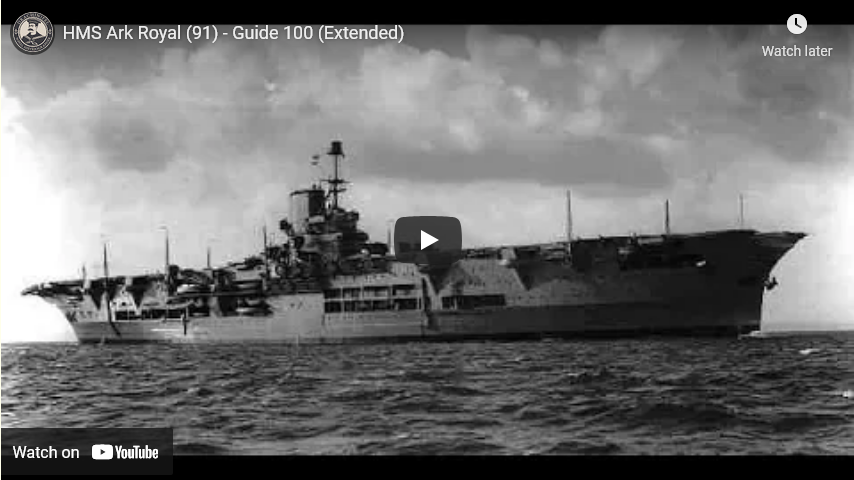
Published 15 Dec 2018HMS Ark Royal, an aircraft carrier of the Royal Navy, is today’s subject.
Want to support the channel? – https://www.patreon.com/Drachinifel
Want to talk about ships? https://discord.gg/TYu88mt

Drachinifel
Published 15 Dec 2018HMS Ark Royal, an aircraft carrier of the Royal Navy, is today’s subject.
Want to support the channel? – https://www.patreon.com/Drachinifel
Want to talk about ships? https://discord.gg/TYu88mt
World War Two
Published 22 May 2021Soviet Foreign Minister Molotov arrives in London to meet with Churchill, but at home in the USSR the Germans have launched an instantly successful offensive. In North Africa and Malta the British are building up, unaware that Erwin Rommel is just about to strike, and an American ruse discovers secret Japanese attack plans.
(more…)
Long before Henry III had died (of a surfeit of Barons, Bonifaces, etc.) Edward I had taken advantage of the general confusion and of the death of Simon de Montfort (probably of a surfeit of Vergers) to become King before his reign had begun.
Edward I was thus a strong King, and one of the first things he did was to make a strong arrangement about the Law Courts. Hitherto there had been a number of Benches there, on all of which a confused official called the Justinian had tried to sit. Edward had them all amalgamated into one large Bench called the King’s Bench, and sat on it himself.
Edward I, who had already (in his Saladin days) piously decimated several thousand Turks at Nazareth, now felt so strong that he decided to Hammer the Scots, who accordingly now come right into History.
The childless Scotch King Alexander the Great had trotted over a cliff and was thus dead; so the Scots asked Edward to tell them who was King of Scotland, and Edward said that a Balliol man ought to be. Delighted with this decision the Scots crossed the Border and ravaged Cumberland with savage ferocity; in reply to which Edward also crossed the Border and, carrying off the Sacred Scone of Scotland on which the Scottish Kings had been crowned for centuries, buried it with great solemnity in Westminster Abbey.
This was, of course, a Good Thing for the Scots because it was the cause of William the Wallace (not to be confused with Robert Bruce), who immediately defeated the English at Cambuskenneth (Scotch for Stirling) and invaded England with ferocious savagery. In answer to this Edward captured the Bruce and had him horribly executed with savage ferocity. Soon after, Edward died of suffocation at a place called Burrowin-the-Sands and was succeeded by his worthless son Edward II.
W.C. Sellar & R.J. Yeatman, 1066 And All That, 1930.
World War Two
Published 20 May 2021The inhuman, torturous, and deadly Japanese PoW Camps famous from Bridge over the River Kwai, Merry Christmas Mr. Lawrence, Empire of the Sun, and more recently Unbroken are a world of abuse and mistreatment managed by willfully incompetent and sadistically brutal men.
(more…)
TimeGhost History
Published 19 May 2021In the winter of 1923, a controversial activist takes a Catholic doctor to trial for libel. The proceedings capture a much bigger moment in the history of the interwar period: the controversial — but inherent — link between birth control and eugenics.
(more…)
British Pathé
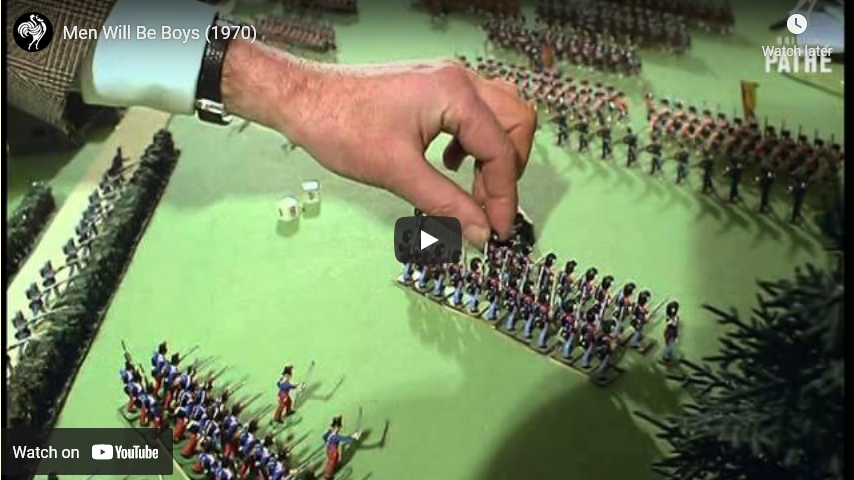
Published 13 Apr 2014Men will be boys. Various locations.
M/S men round lake with boats. C/U man in lake with waders with model boat. C/U another man with model boat. Man lighting boiler. C/U engine working. M/S as model of paddle boat moves through water. M/S paddle boat on water. In foreground a swan. C/U another model boat going through water. M/S pan scale model of Hitler’s yacht. M/S men playing with model cars on race track. C/U cars going round race track. C/U men’s hands on controls. C/U men looking at cars go past. L/S of cars going round race track.
L/S men playing war games with model soldiers. on large table. C/U as man moves soldiers out of line laying them on ground. M/S man moves horses forward. C/U hand placing cannon into position. C/U hand places horse troops in position. M/S lines of soldier. Hand places another in position. M/S of troops being moved.
M/S Mr Victor Martin and wife go through gate by railway crossing dressed up in their uniforms, carrying lamps etc. M/S as they make their way to their signal boxes. C/U railway notice ‘By Midland Railway’. Pa off notice to show Mr Martin approaching his signal box. M/S Martin going into signal box. M/S Mrs Martin going into signal box. C/U Mrs Martin going into signal box. C/U interior. Mr Martin hanging up his jacket inside signal box. He then sits at the controls. C/U signal controls working. C/U of Mr Martin operating signals. Camera zooms back and we see train going past him along track. C/U model train over track. C/U Mrs Martin working in her signal box.
M/S Mrs Martin working signal controls. C/U Mrs Martin. M/S showing trains going over track. C/U trains moving. Camera zooms out to show tracks . C/U trains moving. C/U looking along tunnel showing trains moving. C/U exterior. Signals working. Then camera pans to show where the trains run on an enclosed section out in the open. C/U goods train and passenger train moving. M/S Interior. Trains going over track and Mr Martin at controls.
FILM ID:2241.18A VIDEO FROM BRITISH PATHÉ. EXPLORE OUR ONLINE CHANNEL, BRITISH PATHÉ TV. IT’S FULL OF GREAT DOCUMENTARIES, FASCINATING INTERVIEWS, AND CLASSIC MOVIES. http://www.britishpathe.tv/
FOR LICENSING ENQUIRIES VISIT http://www.britishpathe.com/
British Pathé also represents the Reuters historical collection, which includes more than 136,000 items from the news agencies Gaumont Graphic (1910-1932), Empire News Bulletin (1926-1930), British Paramount (1931-1957), and Gaumont British (1934-1959), as well as Visnews content from 1957 to the end of 1984. All footage can be viewed on the British Pathé website. https://www.britishpathe.com/
As an instance of what I mean, I remember meeting Monty Byng in Bond Street one morning, looking the last word in a grey check suit, and I felt I should never be happy till I had one like it. I dug the address of the tailors out of him, and had them working on the thing inside the hour.
“Jeeves,” I said that evening. “I’m getting a check suit like that one of Mr. Byng’s.”
“Injudicious, sir,” he said firmly. “It will not become you.”
“What absolute rot! It’s the soundest thing I’ve struck for years.”
“Unsuitable for you, sir.”
Well, the long and the short of it was that the confounded thing came home, and I put it on, and when I caught sight of myself in the glass I nearly swooned. Jeeves was perfectly right. I looked a cross between a music-hall comedian and a cheap bookie. Yet Monty had looked fine in absolutely the same stuff. These things are just Life’s mysteries, and that’s all there is to it.
But it isn’t only that Jeeves’s judgment about clothes is infallible, though, of course, that’s really the main thing. The man knows everything. There was the matter of that tip on the “Lincolnshire.” I forget now how I got it, but it had the aspect of being the real, red-hot tabasco.
“Jeeves,” I said, for I’m fond of the man, and like to do him a good turn when I can, “if you want to make a bit of money have something on Wonderchild for the ‘Lincolnshire.'”
He shook his head.
“I’d rather not, sir.”
“But it’s the straight goods. I’m going to put my shirt on him.”
“I do not recommend it, sir. The animal is not intended to win. Second place is what the stable is after.”
Perfect piffle, I thought, of course. How the deuce could Jeeves know anything about it? Still, you know what happened. Wonderchild led till he was breathing on the wire, and then Banana Fritter came along and nosed him out. I went straight home and rang for Jeeves.
“After this,” I said, “not another step for me without your advice. From now on consider yourself the brains of the establishment.”
“Very good, sir. I shall endeavour to give satisfaction.”
And he has, by Jove! I’m a bit short on brain myself; the old bean would appear to have been constructed more for ornament than for use, don’t you know; but give me five minutes to talk the thing over with Jeeves, and I’m game to advise any one about anything.
P.G. Wodehouse, “Leave it to Jeeves”, My Man Jeeves, 1919.
James Delingpole on the latest unfortunate burble from one of the much lesser members of the House of Windsor:
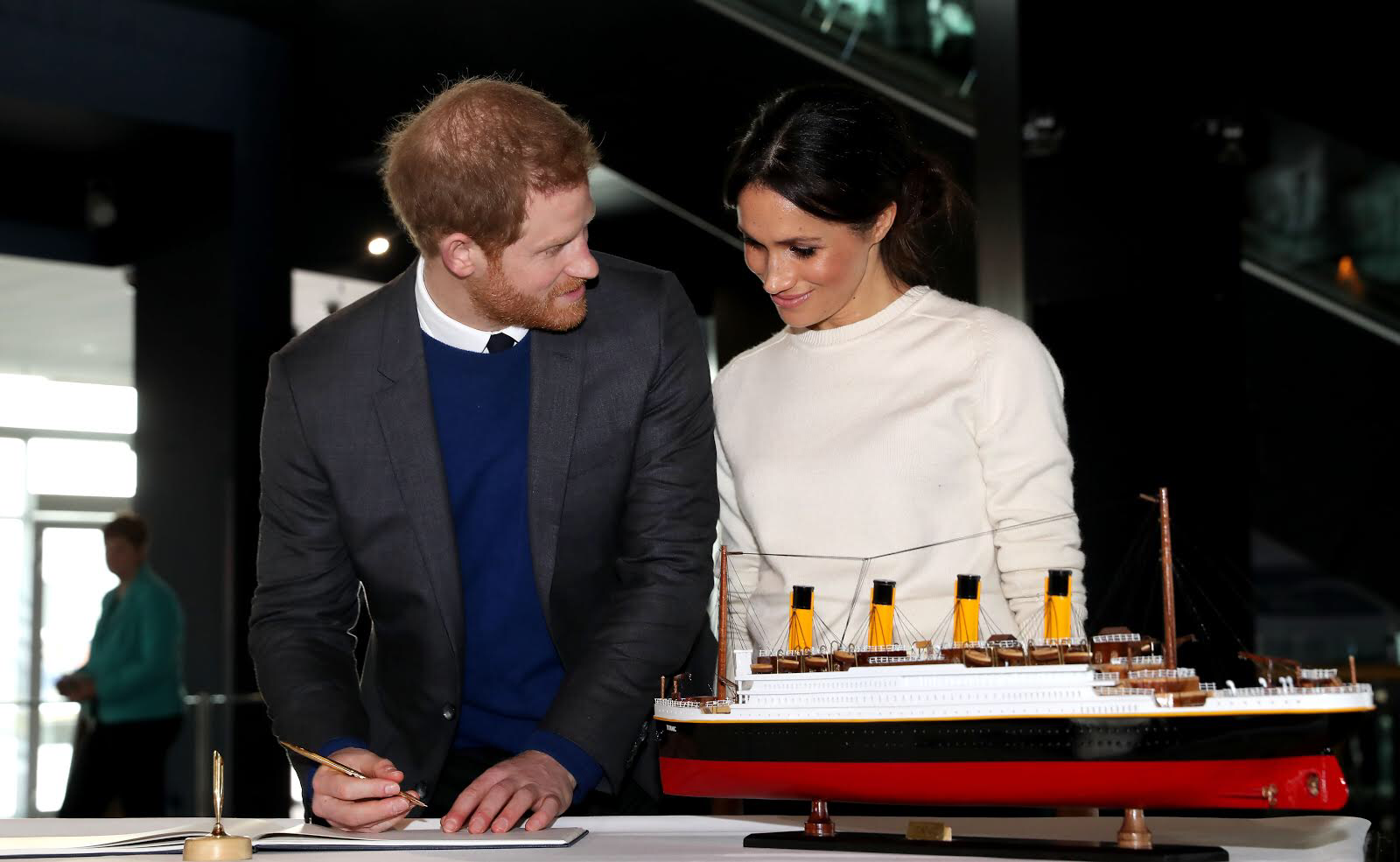
Prince Harry and Meghan Markle visit Titanic Belfast in March 2018.
Photo from the Northern Ireland Office via Wikimedia Commons.
Prince Harry’s epic stupidity is probably inherited from his presumed father, the Prince of Wales. Prince Charles, too, only got two A levels — a B in History and a C in French — yet somehow strings were pulled to land him a place at Cambridge University (normally it would have required something like three A grades at A Level, plus a decent performance in the entrance exam), where he scraped a lowly 2:2 in History.
There is, of course, nothing wrong with being epically, fabulously, unbelievably stupid. Many upper-class men successfully make their brainlessness part of their comical charm. Where stupidity becomes unattractive and culpable, though, is when it’s deployed to comment on issues far, far above its pay grade, and when it’s afforded undeserved prestige.
No one as thick as Harry, it’s surely a given, ought ever be allowed on to a public platform to pronounce on issues as vital as the protection of free speech. Yet this is exactly what happened when Harry was given space to expound his half-baked views on a podcast. Sure, Harry had the good grace to admit that he hadn’t a clue what he was talking about:
I don’t want to start going down the First Amendment route because that’s a huge subject and one which I don’t understand because I’ve only been here a short time.
Unfortunately, that didn’t stop him declaring that he thought the First Amendment was “bonkers”.
His explanation as to why he thought so was a bit incoherent, but it seemed to involve his belief that it could be used for something bad called “ideology” and could be used as an excuse to “spread hate”. He added: “Laws were created to protect people.” What I’m guessing Harry was struggling to do was to try to wheel out the woke cliche that while free speech is fine, “hate speech” isn’t fine and should not enjoy constitutional protection. This threadbare argument can be demolished in a second by anyone with more than two A Levels. Essentially if “free speech” laws don’t protect “hate speech” then they are not really free speech protection laws at all.
Like Prince Harry, I wouldn’t consider myself to be an expert on U.S. history. But I do dimly recall that round about the second half of the 18th century America’s colonists successfully freed themselves from rule by one of Prince Harry’s ancestors. The U.S. Constitution — and that pesky First Amendment — was one of the consequences.
Forgotten Weapons
Published 3 Feb 2021http://www.patreon.com/ForgottenWeapons
https://www.floatplane.com/channel/Fo…
Cool Forgotten Weapons merch! http://shop.bbtv.com/collections/forg…
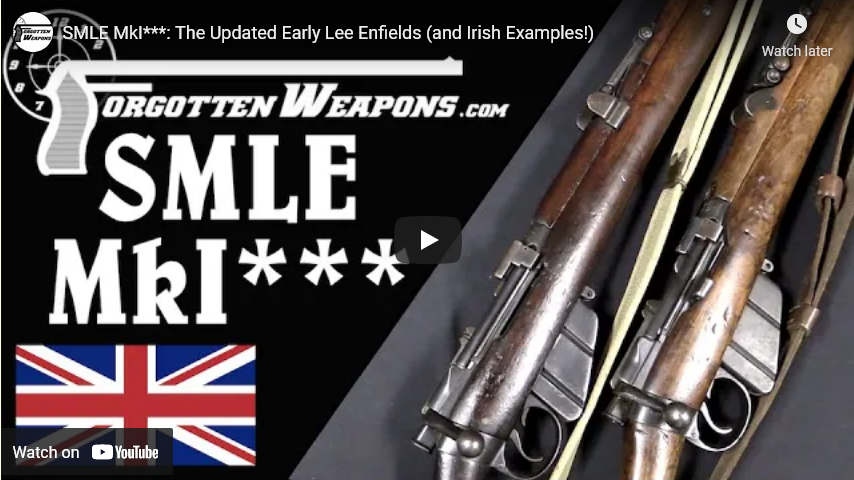
When the British adopted a new high-velocity spitzer bullet for the .303 cartridge, they had to update their rifles to use it. Specifically, the sights had to be recalibrated for the flatter trajectory of the new MkVII ammunition. In addition, the sight picture was changed from a barleycorn front and V-notch rear to the more precise square front post and rear U-notch.
These rifles are quite scarce, but several thousand were brought into the US in the early 1960s as surplus from Ireland. These Irish examples all had new serial numbers applied when the were sent to Ireland by the British in the 1920s, and they are in two different batches (one in MkI*** configuration, and one with the MkIII rear sight). We will take a look at both patterns today as well, so you can see the difference between the much more available Irish type and the pure British version.
Contact:
Forgotten Weapons
6281 N. Oracle #36270
Tucson, AZ 85740
CaNANDian
Published 25 Sep 2012Christopher Hitchens talked with EconTalk host Russ Roberts about George Orwell. Drawing on his book Why Orwell Matters, Hitchens talked about Orwell’s opposition to imperialism, fascism, and Stalinism, his moral courage, and his devotion to language. Along the way, Hitchens made the case for why Orwell matters.
Download audio: http://www.econtalk.org/archives/2009…

At Samizdata, Niall Kilmartin wondered why the BBC hadn’t gotten around to showing a 1970s historical series through the year-and-more of the pandemic lockdowns. He doesn’t mention the name of the series, and an unusually unhelpful BBC site search didn’t turn up a name but IMDB suggests it was 1975 and the series was called The Fight Against Slavery:
Fifty years ago, the BBC screened a dramatised documentary series about the fight to abolish the slave trade. Even a year of the virus limiting new series, at a time of great BBC eagerness to talk about racism, has not made them screen it again.
– I see one reason why they have not: the series displayed sleazy white slave traders and abusive white slave owners prominently, but it also showed white people eager to end the slave trade and (much worse) black people eager to continue it. It included the king of Dahomey’s threat: “if you do not allow me to sell you my slaves, their fate will be a great deal worse” (a very brief scene of the Dahomey murder spectacle lent meaning to his remark). After abolition was voted, it showed a white slave trader assuring the Dahomans, as a drug dealer might his suppliers, “It is one thing for parliament to pass a law …”, hinting at the Royal Navy’s long and hard campaign to enforce it.
– Only recently did I spot another reason why they would not want to show it again – the scene in which a corrupt old white slave trader warns his young colleague that “it’s more than your life’s worth” to doubt the ability of their slave-selling hosts to count very accurately the quantity of trade goods being handed over in exchange, and to assess their quality knowledgeably. The traders well knew that Africans counted two plus two as four, just as they did. Any trader who imagined that black ability to add diverged enough from white to enable an attempt to short-change them had learned otherwise long before the 1780s.
– The southern Confederacy thought the same. Until its death throes, it forbade enlisting a southern black as a Confederate soldier because, as one Confederate senator put it, “If blacks can make good soldiers then our whole theory of slavery is wrong.” (Perhaps also because even southern white Democrats realised that southern black desire to fight against blacks being freed was likely to be a very minority taste.) But there was one exception. Every regiment had its regimental band, which played to set the pace at the start and end of marches, used trumpets to signal commands in battle – and fought when other duties did not supervene. From its start to its end, Confederate law said any black could enlist as bandsman, with the same pay and perquisites as a white – a very rare example of formal legal equality. (Playing music requires the ability to count time. For the woke, “dismantling the legacy of the Confederacy” apparently includes dismantling its realisation – shared by the Victorian composer Dvorak – that blacks often excelled in music so much as to overcome prejudice against black ability. Today, it’s “racist” to value instrumental skill.)
“Politically correct” has meant “actually wrong” ever since the first commissar explained to the first party comrade that it was neither socialist nor prudent to notice a factual error in the party line. “Structurally racist” is PC’s modern companion. No longer are the woke content merely to imply (“mathematics is racist”, “punctuality is racist”, “politeness is racist”) that blacks can’t count, can’t tell the time and can only behave crudely. They’re starting to say it in words of fewer syllables.
If I’d scrolled down to the comments, I’d have discovered that Natalie Solent had also dug up the name of the series:
Natalie Solent (Essex)
May 10, 2021 at 4:30 pm
Outstanding post, Niall. Was the BBC series you mentioned “The Fight Against Slavery“, written and narrated by Evan Jones? I have not seen it – given that I was ten or eleven in 1975 my parents probably thought I was too young too see it.However someone called “InternetPilgrim” has put up three videos of the series on YouTube. There is a link to Part I here, Part II here and Part III here, so I will try to remedy that lack soon.
World War Two
Published 15 May 2021The Soviets pre-empt a German offensive with one of their own in the south of the Eastern Front, but that’s not the only fighting. The skies over Malta and the waters of the Gulf of St. Lawrence are full of action. Meanwhile, two races against time — and the Japanese — come to an end in India.
(more…)
World War Two
Published 13 May 2021A large number of European and asian inhabitants of South-East Asia are locked up in Japanese prison camps, while in Burma, a big refugee crisis claims the lives of thousands. In Auschwitz-Birkenau and Sobibor, gassing Jews on an immense scale begins.
(more…)
World War Two
Published 6 May 2021What would happen if Nazi Germany invaded Canada? You don’t need to imagine. In 1942, the government of Mackenzie King launched a propaganda effort that simulates Canada falling under Hitler’s yoke. Why? For the war economy of course!
Join us on Patreon: https://www.patreon.com/TimeGhostHistory
Or join The TimeGhost Army directly at: https://timeghost.tvFollow WW2 day by day on Instagram @ww2_day_by_day – https://www.instagram.com/ww2_day_by_day
Between 2 Wars: https://www.youtube.com/playlist?list…
Source list: http://bit.ly/WW2sourcesHosted by: Anna Deinhard
Written by: Fiona Rachel Fischer and Spartacus Olsson
Director: Astrid Deinhard
Producers: Astrid Deinhard and Spartacus Olsson
Executive Producers: Astrid Deinhard, Indy Neidell, Spartacus Olsson, Bodo Rittenauer
Creative Producer: Maria Kyhle
Post-Production Director: Wieke Kapteijns
Research by: Fiona Rachel Fischer
Edited by: Miki Cackowski
Sound design: Marek Kamiński
Map animations: Miki Cackowski and Eastory (https://www.youtube.com/c/eastory)Colorizations by:
Adrien Fillon – https://www.instagram.com/adrien.colo…
Daniel WeissSources:
IWM Art.IWM PST 18495, CH 27, CH 3231, CH 6831, HU 88386, HU 104482
nationaal archief
Photo Album of F.V. Light (1923-2000)Soundtracks from the Epidemic Sound:
Howard Harper-Barnes – “London”
Johannes Bornlof – “The Inspector 4”
Howard Harper-Barnes – “Prescient”
Max Anson – “Ancient Saga”
Howard Harper-Barnes – “Sailing for Gold”
Philip Ayers – “Please Hear Me Out”
Jo Wandrini – “Puzzle Of Complexity”
Reynard Seidel – “Deflection”
Rannar Sillard – “March Of The Brave 4”
Phoenix Tail – “At the Front”Archive by Screenocean/Reuters https://www.screenocean.com.
A TimeGhost chronological documentary produced by OnLion Entertainment GmbH.
From the comments:
World War Two
1 day ago
As you can see in the video, the efforts to raise money to pay for the war were extremely high. But when we read about the stuff that was going on in Winnipeg on “If-Day”, we were really surprised — talk about “playing” war! Of course, this top-notch high-effort propaganda had quite the impact on the citizens of Winnipeg, because — let´s be honest — who wouldn´t be frightened by any kind of Nazi invasion? And they did not spare any effort to get the details right, too. What is your impression of If-Day? Have you heard of it before? Please let us know in the comments!Cheers, Fiona
P.S. If you want to watch the short film starring Donald Duck which Anna mentions in the video, click right here: https://www.youtube.com/watch?v=XNMrMFuk-bo&ab_channel=8thManDVD.com%E2%84%A2CartoonChannel

[Three years later, in foul weather at night during the Battle of North Cape, the Germans had their fears that British radar had advanced far beyond theirs in gunfire direction completely confirmed, when Scharnhorst was pounded to scrap by Duke of York and a few cruisers in a battle where even the British cruisers could engage and score hits at ranges that didn’t allow Scharnhorst to reply accurately.]
No other navy came even close to hitting anything actually moving at any speed at 26,000 yards (though West Virginia managed within about 15% of it with 22,800 yards using the latest radar at Surigao Strait in late ’44). Certainly not the radar-deficient Italians and Japanese.
At night, or in bad weather, that meant radar-efficient nations had an unsurpassable advantage, particularly for fast moving targets at sea like those hit by Warspite and Scharnhorst.
[Although one USN 16″ battleship peppered stationary French targets in a port at even longer ranges, some USN engagements — like Guadalcanal — were at Jutland distances, if not closer. (5,000-8,000 yards, even though the US ships had radar … Which would have been fine if the USN had been consciously doing a Matapan-style 3,500 yard ambush, but South Dakota‘s radar and other power went down to “electrical fault”, and she accidentally wandered within 5,000 yards and was battered at close range, “leaving the ship in Lee’s words ‘deaf, dumb, blind, and impotent'”. Fortunately Washington‘s working radar allowed her to sneak up on the Japanese and win the battle.) ]
At Surigao Straits those USN battleships with more modern radar — the late war rebuilds West Virginia, California and Tennessee — spotted the enemy at over 30,000 yards, and opened fire at 22,000 yards, actually getting some hits with the opening salvos! But some ships with less effective radar — Maryland (eight 16″) — had to wait for visual sightings of shell splashes before joining in, and Pennsylvania (twelve 14″) with her older Mark III radar, failed to spot the enemy at all.
How many and how big your guns are, or what their range is, doesn’t matter a damn if you never see your opponent!
[Though please note, in every battle of the war, the navy which has the choice — either through speed in daylight, or radar superiority at night or in heavy weather — always closed the range to their maximum advantage (if not to point-blank where possible) before engaging.]
So instead of endlessly debating the value of ten or twelve 14″ versus eight 15″ or 16″ or even nine 11″ or 16″; or of 20 degree versus 30 degree or 40 degree elevation; or of heavier slower shells versus lighter faster ones: I tend to accept that most heavy guns could penetrate most armour, and just wonder whether they could only hit anything in good light and good weather, or if they were completely blind in the wrong conditions?
Nigel Davies, “Real Battleships for WWII – Part I – defining a battleship”, rethinking history, 2021-01-23.



Powered by WordPress