
As I write, highly civilized human beings are flying overhead, trying to kill me.
They do not feel any enmity against me as an individual, nor I against them. They are “only doing their duty”, as the saying goes. Most of them, I have no doubt, are kind-hearted law-abiding men who would never dream of committing murder in private life. On the other hand, if one of them succeeds in blowing me to pieces with a well-placed bomb, he will never sleep any the worse for it. He is serving his country, which has the power to absolve him from evil.
One cannot see the modern world as it is unless one recognizes the overwhelming strength of patriotism, national loyalty. In certain circumstances it can break down, at certain levels of civilization it does not exist, but as a positive force there is nothing to set beside it. Christianity and international Socialism are as weak as straw in comparison with it. Hitler and Mussolini rose to power in their own countries very largely because they could grasp this fact and their opponents could not.
George Orwell, “The Lion And The Unicorn: Socialism and the English Genius”, 1941-02-19.
September 1, 2021
QotD: The power of nationalistic feelings
August 31, 2021
Isambard Kingdom Brunel: The Genius of the Industrial Revolution
Biographics
Published 23 Mar 2020Check out Brilliant: https://brilliant.org/biographics
Check out Business Blaze: https://www.youtube.com/channel/UCYY5…
This video is #sponsored by Brilliant.
TopTenz Properties
Our companion website for more: http://biographics.org
Our sister channel TopTenz: https://www.youtube.com/channel/UCQ-h…
Our Newest Channel about Interesting Places: https://studio.youtube.com/channel/UC…Credits:
Host – Simon Whistler
Author – Morris M.
Producer – Jennifer Da Silva
Executive Producer – Shell HarrisBusiness inquiries to biographics.email@gmail.com
Source/Further reading:
Oxford National Dictionary of Biography: https://www.oxforddnb.com/view/10.109…
Interesting podcast on his life: https://www.bbc.co.uk/programmes/b04n…
Britannica: https://www.britannica.com/biography/…
History Today: https://www.historytoday.com/archive/…
The Thames Tunnel: https://www.smithsonianmag.com/histor…
The atmospheric railway: https://www.theguardian.com/science/t…
SS Great Britain accident: https://www.ssgreatbritain.org/about-…

August 30, 2021
QotD: “Veneer theory” of human nature
This turned out not to be true. So spectacularly untrue that we still talk about the Blitz Spirit. With our trademark humility, the British concluded that this was due to our exceptional moral fibre and, with help from the Americans, set about bombing German civilians to hell and back. Regrettably the Germans too responded by pulling together, and working harder in the war effort. Literally no one thinks this was due to their exceptional moral fibre. Instead, it seemed that crisis led to teamwork. Bregman is able to quote similar behaviour on the Titanic, on September 11th and in the aftermath of Hurricane Katrina.
Despite this mountain of evidence, veneer theory is still overwhelmingly believed. In 1951 William Golding wrote Lord of the Flies — a book about how a group of British boys crash-landed on a Pacific island would really behave. They start with ideals of co-operation, but quickly descend to violence and anarchy. Weeks later when they’re rescued half of them are dead. The book became a massive best seller, and a much-studied classic. For those who lived through World War I, World War II, and were now watching communism demonstrate that you didn’t even need an enemy to slaughter tens of millions, you can see the appeal of a cynical view of human nature. However it is pure fiction. In 1966 Lord of the Flies happened for real — 6 teenagers went for a joy ride in a fishing boat, got swept out by a storm and washed up on an inhospitable island in the Pacific. When they were found 11 months later, they were all alive and healthy. They had survived by fortitude, resourcefulness and above all, teamwork.
An anonymous reviewer, “Your Book Review: Humankind”, Astral Codex Ten, 2021-05-28.
August 29, 2021
The competing English and Dutch East India companies
In his latest Age of Invention newsletter, Anton Howes considers the odd fact that although the Dutch were the last major seafaring power to extend to the East Indies, they quickly became the most powerful European traders and colonialists in the region:
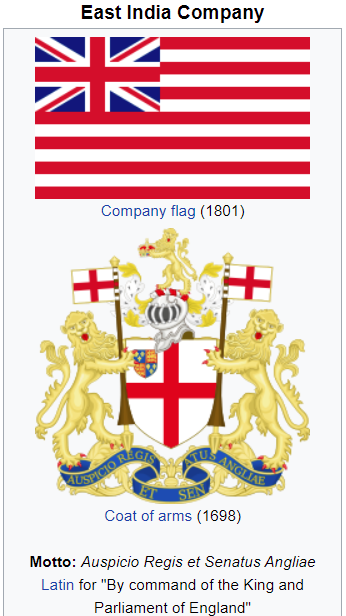
By the mid-seventeenth century, although the trans-Atlantic trades were still almost entirely in the hands of the Spanish, the European trade to the Indian Ocean had come to be dominated by the Dutch — which is quite surprising, as they had arrived so late. The high-value exports of the Indian Ocean — particularly pepper — had anciently arrived via the Red Sea, the Persian Gulf, or overland, and then been bought up in Egypt or Syria by the Venetians and Genoese, who then sold them on to the rest of Europe. It was then the Portuguese who had supplanted that trade in the late fifteenth century by discovering the direct route to the Indian Ocean around the Cape of Good Hope. The Portuguese monopolised the new sea route around Africa for a century, almost totally undisturbed by other Europeans, entrenching their position by building forts — occasionally with the permission of local rulers, but often without.
The Portuguese seem to have spread the rumour in Europe that they had effectively conquered the entire region, presumably to dissuade others from even trying to break their monopoly. Even as late as the 1630s, when other nations were already regularly trading there, foreign writers took the time to mock such assertions. As the Welsh-born merchant Lewes Roberts put it, the Portuguese “brag of the conquest of the whole country, which they are in no more possibility entirely to conquer and possess, than the French were to subdue Spain when they possessed of the fort of Perpignan, or the English to be masters of France when they were only sovereigns of Calais.” Quite.
[…]
But for all their tardiness, the Dutch arrival in the Indian Ocean was dramatic. The English may have been the first to threaten the Portuguese monopoly, but in the whole of the 1590s they sent a mere two expeditions out east, and in 1600-10 sent only a further eight (seven by the newly-chartered East India Company (EIC), with a monopoly over English trade with the region, and another voyage licensed to break that monopoly in 1604 by the king, which unhelpfully spoiled the company’s relations with local rulers by turning pirate and plundering Indian and Chinese ships). What the English sent out over the course of twenty years, the Dutch exceeded in just five. Between just 1598 and 1603, after the successful return of de Houtman’s first voyage, they sent out a whopping thirteen fleets — and this despite their merchants not even pooling their efforts like the English had until the very end of that period, when in 1602 the various small and city-based Dutch companies were merged to form a single, national joint-stock monopoly, the Verenigde Oost-Indische Compagnie (VOC). The founding of the VOC accelerated the divergence. Between 1613 and 1622 the EIC sent out a paltry 82 ships compared to the VOC’s 201.
The sheer quantity of Dutch ships heading for the Indian Ocean meant that they were soon dominant amongst the European merchants there, capturing forts from the Portuguese, founding further bases of their own, and able to forcibly keep the English out — sometimes by attacking the English directly, other times by simply threatening any of their would-be trading partners. The steady stream of Dutch ships also allowed them to resupply and maintain their factors — the key infrastructure of long-distance commerce, as I explained in last week’s post for subscribers. They were able to have a presence, and project force, in a way that the English could not. By 1638, Lewes Roberts, despite often lauding England’s commercial achievements, and being an EIC official himself, had to concede that in the Indian Ocean “the English nation are the last and least”.
That English weakness was reflected in how EIC merchants had to comport themselves in the region so as to have any share in the trade at all. Despite the EIC’s later reputation for bloodthirsty rapaciousness, in the early seventeenth century they were highly reliant on good relations with the locals. Whereas the Dutch could often afford to use force and bear the repercussions, the English more or less only held on in the early days by ingratiating themselves with local rulers — often by finding common cause against the aggressive and domineering Dutch. The infrequently-supplied English factors were often heavily indebted to local merchants too, including the Indo-Portuguese — a group that they often married into, for access to social networks and support. As the historian David Veevers argues in a new overview of the early EIC (a relatively pricey academic book, but compellingly argued and juicy with detail), the English often went further than just friendliness or integration, subordinating themselves to local rulers too. Of the few early forts that the English managed to establish, for example, that at Madras in 1640 was only built because the local ruler encouraged it, treating the English there as his vassals.
August 28, 2021
The name “Afghanistan” is becoming a badge of shame for western politicians, and deservedly so
In The Line, Matt Gurney points out that while it was probably beyond the capabilities of the Canadian government to evacuate all Afghanis who had assisted Canadian efforts in that country, the actual efforts fell very far short of even “adequate”:
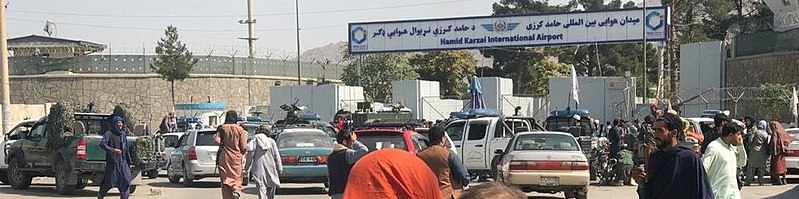
On the second day of the Taliban’s rule in Kabul, the front of Hamid Karzai International Airport was crowded with people trying to travel abroad, but were stopped by Taliban militants, 17 August, 2021.
Public domain image from VOA via Wikimedia Commons.
We have to cut through the fanatics on both sides and be very clear about this: the evacuation was always going to be messy. We were never going to get everyone out. But it is obvious that we did not get out as many people as we should have. It’s clear that we made major errors, including failing to work with veterans and aid groups on the ground; we did not lift bureaucratic hurdles quickly enough. We lost time dithering. That is our shameful failure.
It is not the Canadian government’s fault that our American allies decided to pull out of the conflict. Frankly, I still can’t entirely blame either the Trump or Biden administrations for that decision, although the execution of that decision has been catastrophic.
This was not a decision made in Ottawa, but in Washington, and for entirely American reasons. Further, the Liberals are not to blame for the U.S. government’s massive intelligence failure. We were caught totally flatfooted by the rapid and total collapse of the former Afghan government — what had been expected to take months took days. Canada, a member of both NATO and the Five Eyes, relies heavily on the intelligence gathered by our larger, more powerful ally. I do not fault Liberal party leader Justin Trudeau or his government for being caught unprepared.
So let’s dispense with that nonsense right away. In the big picture, there is not a whole hell of a lot Canadian governments could have done to avoid this crisis.
But we could’ve managed the crisis much better.
Over the last 10 days, we’ve had repeated reports of bottlenecks caused by over-restrictive paperwork requirements. We’ve seen other allies flying helicopters into Kabul to allow them to retrieve their people from sites around the city; Canada has helicopters and the ability to deploy them, but we didn’t follow suit.
Reports indicate that there was a gap of several days in any meaningful Canadian Armed Forces presence on the ground — and that gap set us back in terms of intelligence and planning. Canadian officials reportedly worried about the number of seatbelts on our transport planes even as other allies were loading their aircraft up with as many people as they could (we eventually began cramming evacuees into ours, as well). In several recent pieces here at The Line, Kevin Newman has described the struggle faced by those those trying to escape — people to whom we had had promised safe haven as their lives were now in peril due time they spent helping us during our missions in Afghanistan. There are numerous reports of our government telling these people to show up at gas stations and hotels — only to ghost them.
Facts beyond our control limited how effective we were ever going to be at getting people out, but we did not max out our effectiveness within those constraints. As a result, people will die who did not have to. The gap between the best-possible Canadian response and the actual Canadian response is a gap measured in lives.
I’m always happy to point the finger at Prime Minister Trudeau for his mistakes, but as Matt Gurney writes above, there was little that Trudeau could have done to avert the humanitarian disaster still unfolding around Kabul. The blame for deciding to pull out without adequate (or any) notice to allies or competent logistical and administrative planning lies with Joe Biden, as Conrad Black explains [this was written before the bomb attacks outside the airport in Kabul]:
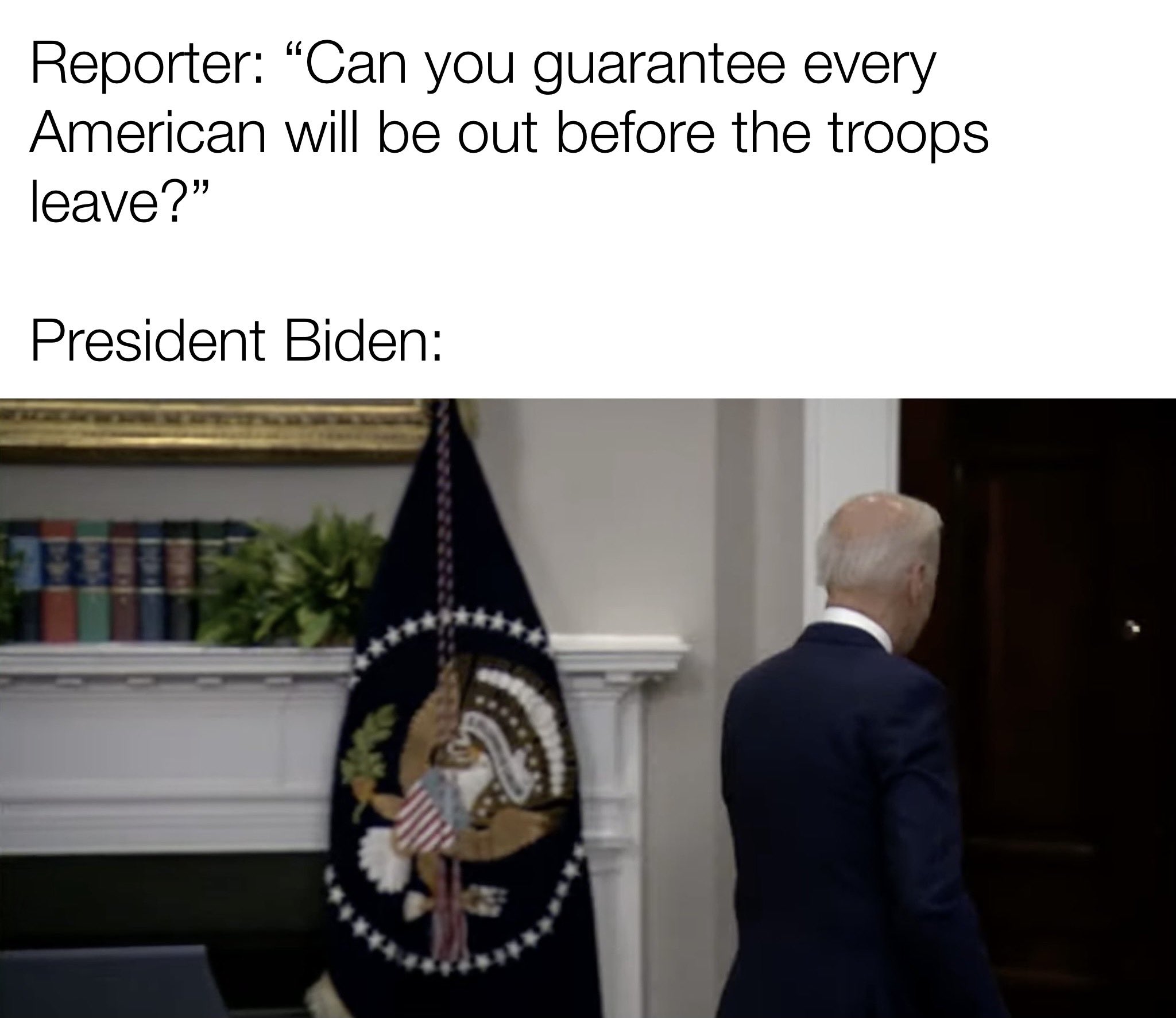
Biden, in his address last Monday, in his midweek interview with George Stephanopoulos, and in his address on Friday, uttered a series of egregious falsehoods that were quickly exposed. He said there was no expression of discontent from America’s allies. For the first time in history, references to an American president in the British Parliament were met with shouts of “shame”. When Thomas Tugendhat, the chairman of the House of Commons Foreign Relations Committee and a retired colonel who served with distinction in Afghanistan and was decorated by the U.S. 82nd Airborne Division for combat bravery, said that it was shameful for a commander-in-chief who has not served under his own colors to mock the sacrifice of men who have, all parties in the British House agreed. No American president has been so severely or — unfortunately — deservedly insulted.
No American, consuming only mainstream media narratives, would realize that there were three times as many allied forces from assorted NATO countries in Afghanistan as there were Americans, or that they were not consulted before the Americans abruptly departed and brought the roof down on all of them. The Western alliance, as former President Trump emphasized, has its problems. Most of the members were not pulling their weight. Germany, the strongest NATO country after the United States, has almost disarmed and has effectively made itself a Russian energy satellite through the Nord Stream 2 natural gas pipeline. But they did not deserve this.
After this horrifying fiasco, where the Americans scuttled and turned tail and left their European allies and Canada to fend for themselves, the NATO members have already indicated that they are in no mood to follow this administration anywhere. No one can blame them. Biden said on Friday that the United States was not sending armored vehicles to collect its citizens and bring them to Kabul airport as the British and French were doing because, he explained, Americans were not being stopped by Taliban checkpoints. Half an hour later, the inarticulate Pentagon spokesman John Kirby squarely contradicted his commander-in-chief, and the official explanation was changed to advise Americans not to try to reach the airport because of the danger.
Biden said the Afghans wouldn’t fight so they weren’t worth the risk of American lives; but 50,000 Afghan soldiers and scores of thousands of civilians have died in this war. No Americans ha[d] died in Afghanistan in 18 months (in stark contrast to the soaring crime rates in almost all American cities). As Tugendhat told the House of Commons, it is not for the commander-in-chief of this cowardly, shameful, and disastrous flight from American national responsibilities, who has never served in his own armed forces, to disparage those who have died in allied forces for a cause that he has abandoned and doomed.
The one potentially positive aspect of this horrible debacle has been the unarguable revelation that the president is not up to his job.
August 27, 2021
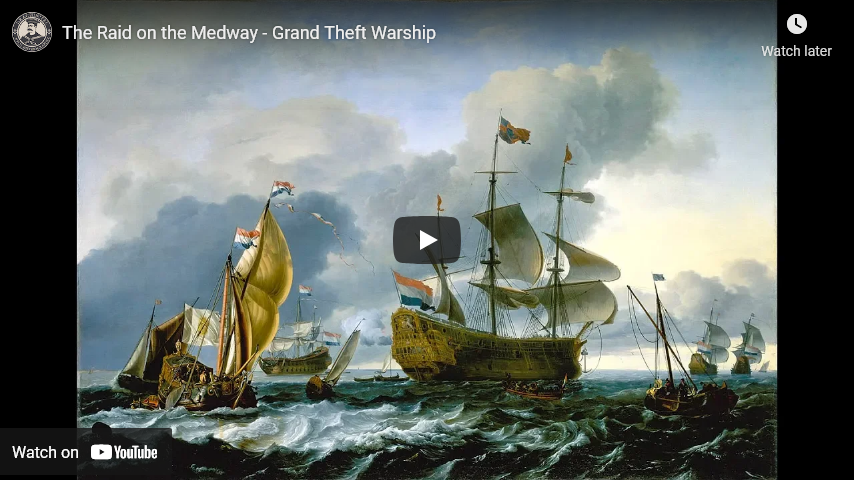
The Raid on the Medway – Grand Theft Warship
Drachinifel
Published 24 Apr 2019Today we look at the Dutch raid on the Medway in the 2nd Anglo-Dutch War and its after-effects.
Want to support the channel? – https://www.patreon.com/Drachinifel
Want to talk about ships? https://discord.gg/TYu88mt
Music – https://www.youtube.com/watch?v=jRQWZ…
Want to get some books? – www.amazon.co.uk/shop/drachinifel
Drydock Episodes in podcast format – https://soundcloud.com/user-21912004
From the comments:
lordmuntague
2 years ago
“On 14 December 1941 a Dutch minelayer named after Jan van Brakel, which was serving as a convoy escort on the UK eastern coast, accidentally hit the anchor buoy of one of the gate vessels which were protecting the entrance to the Medway during World War II. The commander reported this incident to the port authorities, signalling: “Van Brakel damaged boom defence Medway”. The instant reply was: “What, again?”From the RNSA Website.
August 26, 2021
A New World Order? – The World Power Conference | B2W: ZEITGEIST! I E.24 Summer 1924
TimeGhost History
Published 25 Aug 2021The League of Nations is just one manifestation of a broader ideal in the interwar years. Within a palace in the heart of the British Empire, a new conference is underway. It is attended by everyone from H.G. Wells to the Prince of Wales.
(more…)
August 23, 2021
Swastika Raised on Highest Point in Europe – WW2 – 156 – August 21, 1942
World War Two
Published 21 Aug 2021The Axis advance in the Caucasus takes Mt. Elbrus, and the one on Stalingrad continues, and there are several raids of note this week- a Japanese one on Guadalcanal is destroyed, an Allied one on Dieppe is badly savaged, and an American one at Makin Atoll is successful in the short term, but with bad long term ramifications.
(more…)
August 22, 2021
Mounties’ First Revolver: the NWMP Adams MkIII
Forgotten Weapons
Published 3 May 2021http://www.patreon.com/ForgottenWeapons
https://www.floatplane.com/channel/Fo…
Cool Forgotten Weapons merch! http://shop.forgottenweapons.com
The first handguns issued by the North West Mounted Police (which would later become the modern RCMP) were 330 Adams revolvers, requisitioned by the new police service in March 1874, and shipped over from England. Upon their receipt in July of that year, the Mounties were dismayed to find thoroughly worn out Adams Mk I 5-shot conversions from old percussion revolvers. These were found totally unfit for frontier service, and an appeal was sent back to England for something better.
A replacement shipment arrived in October 1875, and this time they received 326 much better Adams MkIII revolvers (330 were shipped, but 4 were stolen in transit). The MkIII pattern was a purpose-made .450 Adams cartridge revolver, holding six shots with a double action trigger and solid frame. These served very well, and the NWMP ordered more in 1880 — for which they instead received Enfield revolvers, which had replaced the Adams in British military service by that time.
The 326 Adams MkIII revolvers issued by the NWMP were marked by a local gunsmith upon their arrival. The right side of the frames are marked “C M.P.” (presumably Canada Mounted Police) and given a police inventory number just below the barrel (in addition to the serial number above the trigger). These issue numbers were defaced when the guns were sold out of service.
Contact:
Forgotten Weapons
6281 N. Oracle Box 36270
Tucson, AZ 85740

August 21, 2021
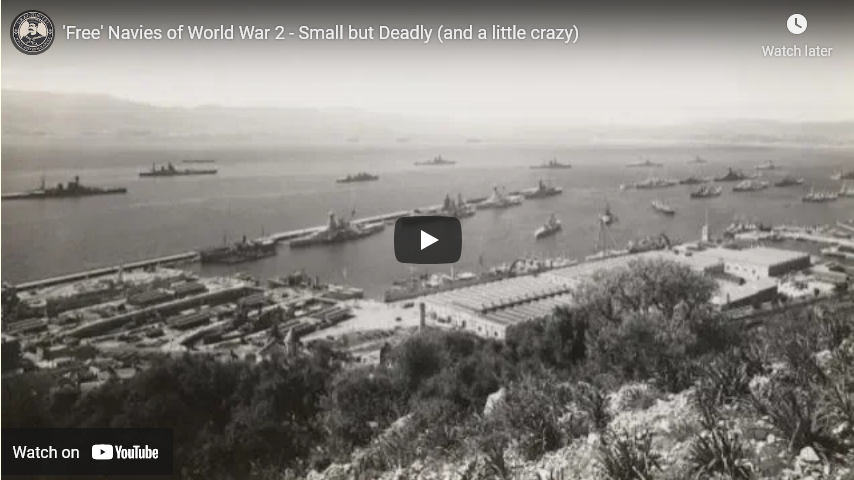
“Free” Navies of World War 2 – Small but Deadly (and a little crazy)
Drachinifel
Published 13 Aug 2019Today we take a brief look at the various “Free” navies that operated with the Royal Navy and how that interaction played out across the years of conflict.
Want to support the channel? – https://www.patreon.com/Drachinifel
Want a shirt/mug/hoodie – https://shop.spreadshirt.com/drachini…
Want a medal? – https://www.etsy.com/uk/shop/Drachinifel
Want to talk about ships? https://discord.gg/TYu88mt
Want to get some books? www.amazon.co.uk/shop/drachinifel
Drydock Episodes in podcast format – https://soundcloud.com/user-21912004
August 20, 2021
“They were there to debate Afghanistan, a far-away country of which it turns out that we know even less than we thought”
The British government recalls Parliament to debate the situation in Afghanistan (not that there’s much to be done at this late stage, but formalities are at least being observed in a perfunctory manner):
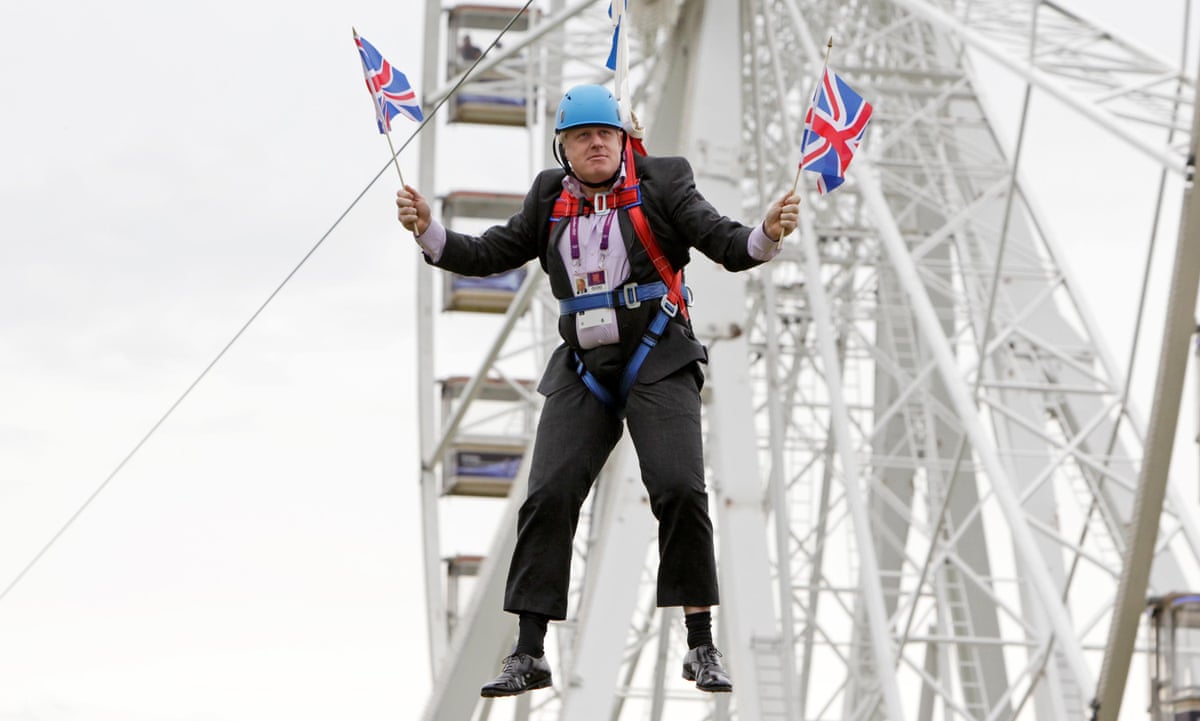
The House of Commons was full, for the first time since last March. Members of Parliament had been brought back from their holidays, from West Country campsites and from Greek resorts, in a repatriation operation that puts the Foreign Office to shame.
They were there to debate Afghanistan, a far-away country of which it turns out that we know even less than we thought. It was only last month that Boris Johnson was assuring MPs that “there is no military path to victory for the Taliban”, although we now know that path was straight along the road to Kabul, as fast as their trucks could carry them.
Now Johnson was back to explain that things had turned out to be a bit more complicated than he thought. Or perhaps a bit simpler: we’ve gone, they’re back. Parliament was getting eight hours to discuss this, although it was too late to do very much about it. It wasn’t so much shutting the stable door after the horse had bolted as holding a long discussion about the history of equine care as the stallion in question disappeared over the horizon.
Still, the atmosphere was jolly. Many of these MPs haven’t seen each other in over a year. There was a first-day-of-term feel to things. With Parliament’s Covid restrictions lapsed, the Conservatives were wedged in together in the small, windowless chamber, barely a facemask in sight. The government’s instructions are still to wear masks in crowded places, but the Conservatives view Covid as some sort of socialist conspiracy that will go away if they ignore it. Or maybe they just feel that rules are for the little people.
Labour MPs had at least nodded to social distancing, sitting about 18 inches apart from each other. This is, admittedly, easier when there aren’t very many of you. The opposition benches were a sea of masks. Only the Democratic Unionists, who like the Tories see illness as a sign of moral failure, were a lone island of uncovered faces.
Johnson’s statement was, as ever, a masterpiece of bare adequacy. It eloquently just about dealt with the matter in question, magisterially pretty much covering the bases. The speechwriters, one sensed, must have been working on the words late into the previous afternoon. They had gone through as many as one draft as they tried to come up with something that, if it didn’t deal with every complex nuance of the Afghan tragedy, at least asked the question that Johnson lives by: “Will this do?”
The situation in Afghanistan was a “concern”, the prime minister explained, with what might, in another context, have been a brilliantly comic understatement. Over the past 20 years, the British had worked for a better future for the people of Afghanistan. “Some of this progress,” the prime minister said, “is fragile”, which is certainly one way of putting it.
What had gone wrong with our intelligence services, several people asked, that they had so comprehensively failed to see this coming? Be fair, replied Johnson, even the Taliban had been surprised by the speed of their own advance.
On the US Naval Institute Blog, CDRSalamander notes the only speech in the House of Commons during that debate that grabbed and held the attention of the entire body:
Let’s back away from the problem at hand a bit … and then back up further. I mentioned it earlier, but let’s bring it up again; national humiliation. There are different aspects of this growing humiliation that are already manifesting itself, the first of which is how others look at us.
Let’s start with our closest friend and take a moment to listen to a speech earlier today in the British House of Commons by Tom Tugendhat, MP.
The mission in Afghanistan wasn’t a British mission, it was a Nato mission. … And so it is with great sadness that I now criticise one of them. … To see their commander-in-chief call into question the courage of men I fought with — to claim that they ran. It is shameful. … this is a harsh lesson for all of us and if we are not careful it could be a very, very difficult lesson for our allies. … to make sure we are not dependent on a single ally, on the decision of a single leader, but that we can work together with Japan and Australia, with France and Germany, with partners large and small, and make sure we hold the line together.
That is our closest friend outlining a loss of confidence. That is just one datapoint from a friend, but it is safe to say that it is probably somewhere in the center of opinion.
What are those nations who are not our friends thinking? I don’t think I need to spend all that much time on discussing how emboldened they are. It is self-evident to anyone who reads USNIBlog.
On the ground, troops of 2nd Battalion, The Parachute Regiment are actively involved in escorting British and Afghani civilians from safe houses to Kabul airport for evacuation:
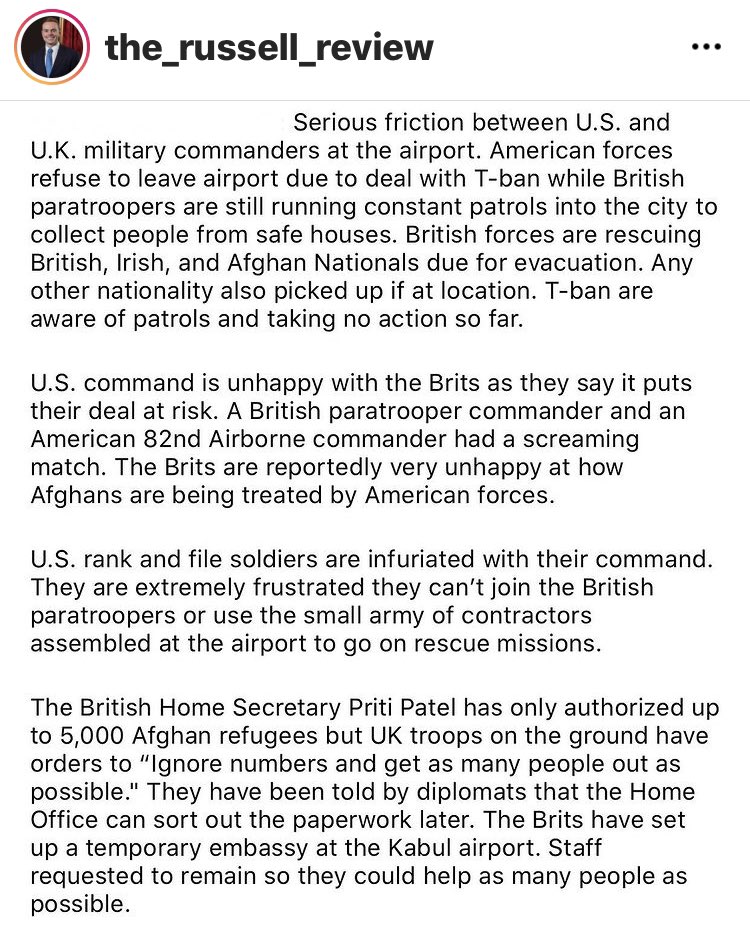
At least one NATO country hasn’t forgotten the civilians who have been left behind during the precipitate withdrawal by US troops.
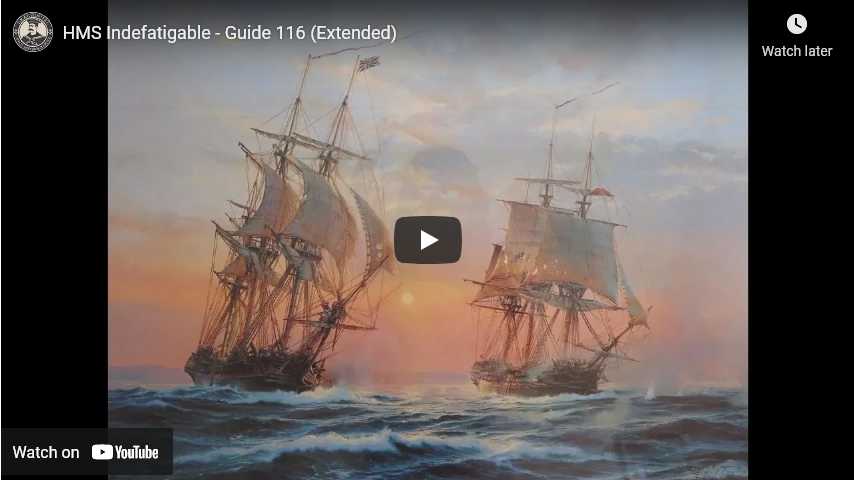
HMS Indefatigable – Guide 116 (Extended)
Drachinifel
Published 6 Apr 2019HMS Indefatigable, a razee frigate of the British Royal Navy, is today’s subject.
Want to support the channel? – https://www.patreon.com/Drachinifel
Want to talk about ships? https://discord.gg/TYu88mt
Want to get some books? www.amazon.co.uk/shop/drachinifel
August 18, 2021
The Conscripts and Conscientious Objectors of World War Two – WW2 Special
World War Two
Published 17 Aug 2021In keeping with their ideals of personal liberty, Britain and the United States have historically maintained relatively small armies made up of volunteer soldiers. When Germany and Japan mobilize huge numbers of well-trained conscripts and sweep across Europe and Asia, the democratic allies devote huge resources to closing the gap, while respecting the rights of those who object to fighting on moral grounds.
(more…)
August 16, 2021
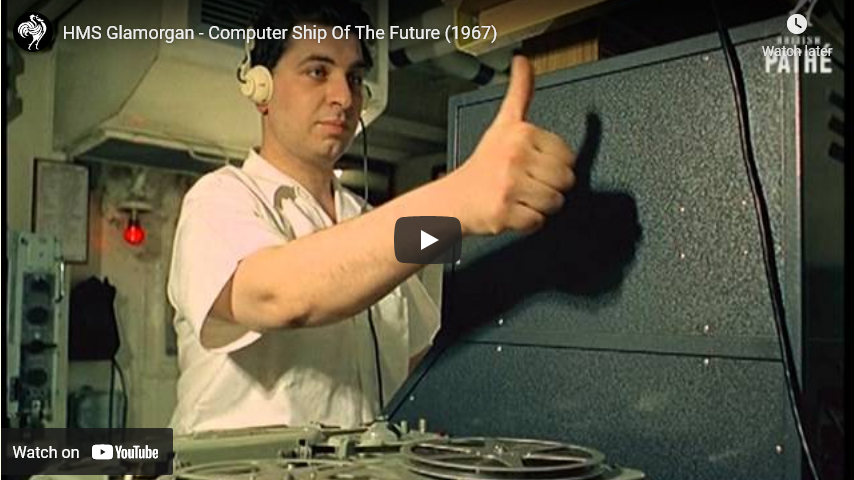
HMS Glamorgan – Computer Ship Of The Future (1967)
British Pathé
Published 13 Apr 2014English Channel.
Top shots of the guided missile destroyer
battleshipHMS Glamorgan at sea. In the control/computer room a man pulls out old-fashioned computer records [circuit packs, I believe] from a large control cupboard; officers on the bridge look at dials and through binoculars. Various shots in steering, control and engine rooms as the ship moves along. On the flight deck sailors play hockey while others watch and cheer them on. A navigator on deck looks through a sextant while another officer makes notes. A helicopter is moved from a hanger out onto the deck and prepared for takeoff; firemen in asbestos suits and helmets stand by with a hose; the chopper takes off.Three young men play guitars and banjos before a television camera in a tiny studio; we hear that the ship has its own closed circuit TV station; good shots of the filming; tape recording machines going round; picture being adjusted. Men in a mess room watch the performance on the television while they have a pint. Several shots of the sailors getting their rum rations. Various shots in the kitchens show food being prepared and served into the sailors mess tins; good canteen and catering shots (most of the food looks pretty unappetising) [the person writing the description clearly has no idea just how unappetizing British food could be in the 1960s … this looks well above average for the time]. In the sick bay a sailor gets a shot in the arm from the Medical Officer.
Several shots of the radar antennae on the ship and the men looking at the radar scanner screens in the control room. Men in protective gloves and hoods load shells in the gun turret; M/Ss of the main guns on the ship being fired. Several shots show the countdown for Seaslug missiles to be fired; men at control panels look at dials and radar screens; an officer counts down into a microphone (mute). Complicated boards of buttons show the location of the missiles, intercut with shots of the missiles moving into position by electronic instruction. The missiles move into the launchers on deck and are fired; men watch their progress on a radar screen. Another launcher moves into position; L/S of the ship as the missiles are fired.
Note: on file is correspondence and information about HMS Glamorgan. Cuts exist – see separate record. FILM ID:419.04
A VIDEO FROM BRITISH PATHÉ. EXPLORE OUR ONLINE CHANNEL, BRITISH PATHÉ TV. IT’S FULL OF GREAT DOCUMENTARIES, FASCINATING INTERVIEWS, AND CLASSIC MOVIES. http://www.britishpathe.tv/
FOR LICENSING ENQUIRIES VISIT http://www.britishpathe.com/
British Pathé also represents the Reuters historical collection, which includes more than 136,000 items from the news agencies Gaumont Graphic (1910-1932), Empire News Bulletin (1926-1930), British Paramount (1931-1957), and Gaumont British (1934-1959), as well as Visnews content from 1957 to the end of 1984. All footage can be viewed on the British Pathé website. https://www.britishpathe.com/
August 15, 2021
No Soviet Oil for Hitler – WW2 – 155 – August 14, 1942
World War Two
Published 14 Aug 2021The Axis advance into the Caucasus is going great … except the oil towns they take have no oil, and wasn’t that the whole purpose? Meanwhile in the Pacific, the US Navy is suffering perhaps its greatest defeat ever off Savo Island, even as the Marines take Tulagi, Gavutu, and Tanambogo.
(more…)


