Quotulatiousness

August 30, 2023

It’s hard to believe, but the big cabinet shuffle didn’t help Trudeau’s poll numbers

Filed under: Cancon, Economics, Government, Media, Politics — Tags: , , , — Nicholas @ 04:00

Rather the opposite, as Paul Wells explains:

The good news for Team Trudeau is that sometimes new inertia pushes old inertia off the front pages. In June, the apparent decision to stall on an inquiry into foreign election interference seemed bold to the point of recklessness. Now the conventional wisdom barely notices it’s happened. Perhaps one explanation for Pierre Poilievre’s rise in the polls is that he is now complaining about things more Canadians care about.

From Abacus

Did somebody mention polls! For many more reasons than this, the polls are dire for the Liberals. A cottage industry sprang up over the weekend, consisting of Liberal sympathizers pointing out that polls have often been lousy at predicting the future: Dan Arnold and Tyler Meredith; Gerald Butts; David Herle. They all have this much of a point: polls don’t predict the future, opinions can change, campaigns matter. Neither you nor I know what the future holds.

And yet. If Brian Mulroney managed to overcome John Turner’s polling lead in 1986-88, it’s partly because Mulroney’s government was still new, Mulroney was much less of a known quantity than Turner, and Mulroney was able to turn Turner’s chosen issue, free trade, into a huge advantage. If Trudeau has won three times while his share of the popular vote declines, it’s partly because he was less of a known quantity in earlier elections. There’s a reason why the last leader to win four consecutive elections was Wilfrid Laurier. It’s hard.

What Trudeau used to have was agility. He was a critic of the status quo. Stephen Harper needed to have jets in the air over Iraq; Trudeau didn’t. Harper had a low cap on the number of Syrian refugees he could accept; Trudeau didn’t. Harper and Mulcair were obsessed with balanced budgets. Trudeau was less of a fuddy-duddy. He’d change everything, from the electoral system on up.

This sort of stuff is simply easier for the young leader of a third party than for a prime minister nearing a decade in office. But as their manoeuvring room and novelty wear off, incumbent leaders can usually offer compensating virtues: their experience and wisdom. Sure, he’s less exciting than before, but now he’s a surer hand.

Unfortunately, for that to work you need to be a surer hand.

August 29, 2023

QotD: Private versus public decision-making

Filed under: Economics, Government, Liberty, Quotations — Tags: , — Nicholas @ 01:00

Those who wish to turn ever-more decision-making power over to government – and, hence, to take such power from individuals operating in their private spheres (including, but not limited to, private markets) – believe this bizarre notion: when Jones has the power to spend Smith’s money and to order Smith about, Smith’s welfare is improved compared to when the power to spend Smith’s money and to determine how Smith will act is reserved to Smith, with Jones’s authority confined to his – Jones’s – own business.

In private-property markets each individual has the power to say “no”, and when each individual says “yes”, that individual spends only his or her own money. Also, in private-property markets each individual’s choices are significant: if Smith chooses to buy a new car, Smith gets the new car that he chooses; if Smith chooses not to buy a new car, Smith gets no new car.

These basic features of private-property markets, along with a handful of other features that are embodied in the common law, ensure not that markets operate “perfectly”, but that the market process is always in action to generally improve the operation and outcomes of markets.

The political marketplace is nearly the exact opposite. In the political marketplace, Jones spends Smith’s money, and Smith has no real power to say no. Nor [are] Smith’s choices ever genuinely significant (unless, of course, Smith becomes one of the relatively small percentage of people who succeed in grabbing hold of political power).

If a malevolent all-powerful being were intent on designing a market that is destined to abuse the vast bulk of people, that devil could do no better than to impose on his victims majoritarian politics largely unconstrained by constitutional rules. This devil – being, of course, ill-mannered, and evilly-intentioned – would seek to destroy private-property markets.

Don Boudreaux, “Bonus Quotation of the Day…”, Café Hayek, 2019-07-31.

August 28, 2023

Why Britain Advanced Before Other European Nations | Thomas Sowell

Filed under: Britain, Economics, History, Law, Technology — Tags: , , , — Nicholas @ 02:00

Thomas SowellTV
Published 17 Dec 2021
(more…)

August 27, 2023

When the techno-utopians proclaimed the end of the book

Filed under: Books, Business, Economics, Media, Technology — Tags: , , — Nicholas @ 03:00

In the latest SHuSH newsletter, Ken Whyte harks back to a time when brash young tech evangelists were lining up to bury the ancient codex because everything would be online, accessible, indexed, and (presumably) free to access. That … didn’t happen the way they forsaw:

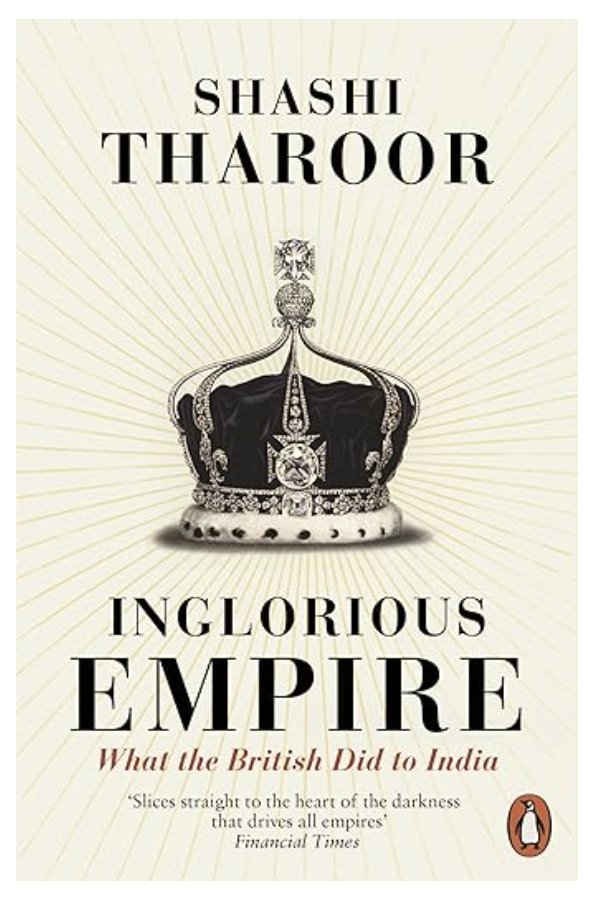
By the time I picked up Is This a Book?, a slim new volume from Angus Phillips and Miha Kova?, I’d forgotten the giddy digital evangelism of the mid-Aughts.

In 2006, for instance, a New York Times piece by Kevin Kelly, the self-styled “senior maverick” at Wired, proclaimed the end of the book.

It was already happening, Kelly wrote. Corporations and libraries around the world were scanning millions of books. Some operations were using robotics that could digitize 1,000 pages an hour, others assembly lines of poorly paid Chinese labourers. When they finished their work, all the books from all the libraries and archives in the world would be compressed onto a 50 petabyte hard disk which, said Kelly, would be as big as a house. But within a few years, it would fit in your iPod (the iPhone was still a year away; the iPad three years).

“When that happens,” wrote Kelly, “the library of all libraries will ride in your purse or wallet — if it doesn’t plug directly into your brain with thin white cords.”

But that wasn’t what really excited Kelly. “The chief revolution birthed by scanning books”, he ventured, would be the creation of a universal library in which all books would be merged into “one very, very, very large single text”, “the world’s only book”, “the universal library.”

The One Big Text.

In the One Big Text, every word from every book ever written would be “cross-linked, clustered, cited, extracted, indexed, analyzed, annotated, remixed, reassembled and woven deeper into the culture than ever before”.

“Once text is digital”, Kelly continued, “books seep out of their bindings and weave themselves together. The collective intelligence of a library allows us to see things we can’t see in a single, isolated book.”

Readers, liberated from their single isolated books, would sit in front of their virtual fireplaces following threads in the One Big Text, pulling out snippets to be remixed and reordered and stored, ultimately, on virtual bookshelves.

The universal book would be a great step forward, insisted Kelly, because it would bring to bear not only the books available in bookstores today but all the forgotten books of the past, no matter how esoteric. It would deepen our knowledge, our grasp of history, and cultivate a new sense of authority because the One Big Text would indisputably be the sum total of all we know as a species. “The white spaces of our collective ignorance are highlighted, while the golden peaks of our knowledge are drawn with completeness. This degree of authority is only rarely achieved in scholarship today, but it will become routine.”

And it was going to happen in a blink, wrote Kelly, if the copyright clowns would get out of the way and let the future unfold. He recognized that his vision would face opposition from authors and publishers and other friends of the book. He saw the clash as East Coast (literary) v. West Coast (tech), and mistook it for a dispute over business models. To his mind, authors and publishers were eager to protect their livelihoods, which depended on selling one copyright-protected physical book at a time, and too self-interested to realize that digital technology had rendered their business models obsolete. Silicon Valley, he said, had made copyright a dead letter. Knowledge would be free and plentiful—nothing was going to stop its indiscriminate distribution. Any efforts to do so would be “rejected by consumers and ignored by pirates”. Books, music, video — all of it would be free.

Kelly wasn’t altogether wrong. He’d just taken a narrow view of the book. He was seeing it as a container of information, an individual reference work packed with data, facts, and useful knowledge that needed to be agglomerated in his grander project. That has largely happened with books designed simply to convey information — manuals, guides, dissertations, and actual reference books. You can’t buy a good printed encyclopedia today and most scientific papers are now in databases rather than between covers.

What Kelly missed was that most people see the book as more than a container of information. They read for many reasons besides the accumulation of knowledge. They read for style and story. They read to feel, to connect, to stimulate their imaginations, to escape. They appreciate the isolated book as an immersive journey in the company of a compelling human voice.

QotD: Getting food to market in pre-modern societies

Filed under: Economics, Europe, Food, History, Quotations — Tags: , , , , — Nicholas @ 01:00

The most basic kind of transport is often small-scale overland transport, either to and from the nearest city, or in small (compared to what we’ll discuss in a moment) caravans moving up and down a region […]. The Talmud, for instance, seems to suggest that much of the overland grain trade in Palestine under the Romans was performed with itinerant donkey-drivers in small caravans – and I do mean small. Egyptian tax evidence suggests that most caravans were small; Erdkamp notes that 90% of donkey caravans and 75% of camel caravans consisted of three or less animals. These sorts of small caravans don’t usually specialize in any particular good but instead function like land-based cabotage traders, buying whatever seems likely to turn a profit at each stop and stopping in each town and market along the way. Some farmers might even do this during the off season; in Spain, peasants often worked as muleteers during the slow farming season, moving rents and taxes into town or to points of export for their wealthy landlords and neighbors.

Truly long-distance bulk grain transport overland wasn’t viable for reasons we’ve actually already discussed. There is simply nothing available in the pre-modern period to carry the grain overland that doesn’t also eat it. While moving grain short distances (especially to simply fill capacity while the main profit is in other, lower-bulk, higher value goods) can be efficient enough, at long distance, all of the grain ends up eaten by the animals or people moving it.

The seaborne version of this sort of itinerant, short-distance trade is called cabotage. Now today cabotage has a particular, technical legal meaning, but when we use this word in the past, it refers not to the legal status of a ship but a style of shipping using small boats to move mixed cargo up and down the coast. In essence, cabotage works much the same as the small caravans – the merchant buys in each port whatever looks likely to turn a profit and sells whatever [is] in demand. By keeping a mixed cargo of many different sorts of things, he protects against risk – he’s always likely to be able to sell something in his boat for a profit. Such traders generally work on very short distances, often connecting smaller ports which simply cannot accommodate larger, deeper-draft long-distance traders. Such cabotage trading was the background “hum” of commerce on many pre-modern coastlines and might serve to move grain up or down the coast, although not very much of it. Remember that grain is a bulk commodity, and cabotage traders, by definition, are moving small volumes.

But when it comes to moving large volumes, the sea changes everything. The fundamental problem with transporting food on land is that the energy to transport the food must come from food, either processed into muscle power by porters or animals. But at sea, that energy can come from the wind. So while the crew of a ship eats the food, the ship can be scaled up without scaling up the food requirements of the crew or the crew itself. At the same time, sea-transit is much faster than land transit and that speed is obtained from the wind without further inputs of food. It is hard to overstate how tremendous a change in context this is. Using the figures from the Price Edict of Diocletian, we tend to estimate that river transport was five times cheaper than land transport, and sea-transport was twenty times cheaper than land transport. So while the transport of bulk goods like grain on land was limited to fairly small amounts moving over short distances – say from the farm to the nearest town or port – grain could be moved long distances en masse by sea.

Now the scale and character of long-distance transport is heavily impacted by the political realities of the local waterways. If the seas are politically divided, or full of pirates, it is going to be hard to operate big, slow vulnerable grain-freighters and still make a profit after some of them get seized, pirated or sunk. But when we have periods of political unity and relatively safe seas, we see that this sort of transport can reach quite impressive scale. For instance the port regulations of late Hellenistic and Roman Thasos – itself a decent sized, but by no means massive port – divided its harbor into two areas, one for ships carrying 80-130 tons of cargo and one for ships 130+ tons (those regulations are SEG XVII 417). A brief bit of math indicates that the distribution of free grain in the city of Rome – likely less than a third of the total grain demands of the city – required the import, by sea of some 630 tons of grain per day through the sailing season. The scale of grain shipment in the back half of the Middle Ages (post-1000 or so) was also on a vast scale, with trade-oriented Italian cities exploding in population as they imported grain (Genoa being particularly well known for this, but by no means alone in it); with that came the reemergence of truly large grain-freighters.

Bret Devereaux, “Collections: Bread, How Did They Make It? Part IV: Markets, Merchants and the Tax Man”, A Collection of Unmitigated Pedantry, 2020-08-21.

August 26, 2023

QotD: The psychological value of “making”

Filed under: Economics, Health, Quotations — Tags: , , , , — Nicholas @ 01:00

The Domestic Revolution is a fascinating tour of the ways relatively minor changes snowball, changing the way people interact with the material world and with one another, but it’s also a tremendous pleasure for its lucid, practical explanations of how these things actually work. Goodman is deeply familiar with her tools and materials in a way that’s quite unusual today. Of course anyone who really makes things will have this familiarity — ask a software engineer about programming languages or his favourite text editor — but in most walks of life actually making things has become increasingly optional. Of the objects I interact with on a daily basis, the only ones I can really be said to have made (my kids don’t count) are the things I cook and the chairs I refinished and upholstered.1 Beyond that there’s the garden I planted with seeds and perennials I bought at a nursery, the furniture I assembled out of pieces some nice Swedish man machined for me, and the various bits of plumbing I’ve swapped out, but none of that is really “making” so much as it is “assembling things other people have made”. It’s mostly the productive equivalent of last mile delivery — nothing to sneeze at, but a far cry from the sort of deep involvement with the material world that was common only a few centuries ago.

This makes perfect sense, of course: I don’t have a deep and intimate knowledge of these things because I don’t need one. Still, though, it’s important to have a certain very basic familiarity with how the things around you work — enough, say, to know what to Google when something breaks and how to put the results into practice, or to turn fifteen feet of arching blackberry cane into an actual bush — because it gives you power over your world. The particular powers don’t really matter (it’s easy enough to pay someone else to fix your plumbing or grow your berries); the key is the patterns of thought they engender. There are, for example, apparently some enormous number of people who don’t change the batteries in their beeping smoke detectors. I have no idea whether it’s drug-induced apathy, ignorance of how things work (in the same way that drilling a hole in your wall to hang something seems scary if you don’t know that your wall is a lie just painted drywall in front of empty space between the studs), or simply a pathological lack of personal agency, but it’s hard to believe you can change anything dissatisfactory about your life if you can’t change a 9V battery.

Making and doing things, even when you don’t have to, is practice in believing that you can change your own world. It’s weightlifting for agency. You can outsource the making of your physical world, but social worlds — the arrangement of your family life, your personal relationships, the organizations and institutions you’re involved in — must be created by the participants themselves. A good society would be one where the default “builder-grade” scripts lead to human flourishing, but unfortunately that isn’t ours, so you have to be able to decide on your own changes. Start practicing now: find one little thing about your physical environment that annoys you and fix it. Put the new toilet paper roll actually on the holder. Replace the burned-out lightbulb. Hang the artwork that’s listing drunkenly against the wall. Pull some weeds. And then, once you’ve warmed up a little bit, go and make something new.

Jane Psmith, “REVIEW: The Domestic Revolution by Ruth Goodman”, Mr. and Mrs. Psmith’s Bookshelf, 2023-05-22.


    1. They’re oak dining chairs, probably (judging by the construction) about a hundred years old, and they looked a lot better on Facebook Marketplace than in real life. When I showed up to buy them, the sellers turned out to be an elderly couple moving to assisted living in six hours; they admired my baby and showed me pictures of their grandchildren and explained they had inherited the chairs from the wife’s mother, who in turn had gotten them from her friend’s mother, and by this point I couldn’t really say “yeah I can tell” and leave, so home they came. When I took apart the seats to recover them I discovered the original horsehair padding and some extremely questionable techniques applied over the years, but anyway now my chairs have eight-way hand-tied springs and I have some new calluses.

August 16, 2023

Facts about Africa’s Geography never taught in schools | Thomas Sowell

Filed under: Africa, Books, Economics, Environment, History — Tags: , , — Nicholas @ 02:00

Thomas SowellTV
Published 20 Nov 2021
(more…)

August 14, 2023

The WEIRDos – Western, Educated, Industrialized, Rich and Democratic societies

Filed under: Books, Economics, History — Tags: , , — Nicholas @ 03:00

Another anonymous book review at Scott Alexander’s Astral Codex Ten considers The Weirdest People in the World: How the West Became Psychologically Peculiar and Particularly Prosperous by Joseph Henrich:

Coming as he does from the scientific side of the aisle, Henrich isn’t just going to tell a story. He has a hypothesis about an empirical puzzle. The puzzle is the most important question, the big one, the one that once you think about it’s hard to think about anything else, the economists’ Holy Grail since Adam Smith: why are some countries rich and others poor?

His hypothesis comes from cross-cultural psychology. The West got rich because Westerners are different. People from Western, Educated, Industrialized, Rich and Democratic societies are WEIRD – the acronym comes from a previous article of his. In particular, compared to everyone else in the world and in history, modern Westerners:

  • Are individualist, not collectivist or conformist
  • Feel more guilt and less shame
  • Explain people’s actions by their innate dispositions, not their social role
  • Reason analytically not holistically
  • Follow more universal norms and less relationship-specific norms
  • Are more patient
  • Trust strangers more and are more honest.

This psychology might make societies richer, for fairly well-known and plausible reasons. The Weirdest People in the World (henceforth just WEIRD) sets out a causal chain from cultural change to psychological change to modern economic growth. The start of that chain is surprising: an obscure set of rules pushed by the medieval Catholic church, which banned marriage between cousins. The most important argument of the book is that these rules created WEIRD psychology.

How it worked: these marriage regulations served to dismantle intensive kin networks, which are the social cement of society almost everywhere else in the world. For most people in history, family hasn’t just been the place where children grow up and couples spend time together. Family has been the basic human group, and there have been extensive and precise rules dictating who counts as family (or clan) and how each person should act with respect to different relatives. The Church’s regulations, the Marriage and Family Programme (MFP), aimed to replace intensive kinship, and over many centuries it was more or less successful in doing that. We’ll come back shortly to why it wanted to.

So, the causal chain looks like this:1

WEIRD‘s key evidence is the link between the places where the Church promulgated the MFP and a set of psychological and social outcomes: the level of cousin marriage, the psychology of people living in those places today, social capital and economic growth. This is the scientific story of European history, and Henrich’s answer to the most important question in the world.

These maps from one of the scientific articles behind WEIRD show the basic causal claim: the medieval church reduced the intensity of kinship institutions.

He tells it with an extraordinary mastery of a very wide range of sources from anthropology, psychology, behavioural economics, economic history, and historical narrative. This book is for everyone, but the connoisseur will enjoy the bibliography: if you think it’s important and relevant, it’s probably in there, and there was also plenty of work which I did not know, and now feel I should. It takes a very smart person to keep this many balls in the air. Being at Harvard probably doesn’t hurt either – that’s the “collective brain” of the human network, which makes an appearance later on in the book.

So this book really sets down a marker: the anthropologists are returning from the Amazon, the Sudan and Polynesia, and coming for Western history and economics. It will be interesting to see how those target disciplines react.

Is it true?

Economists and historians think about Western history very differently.

Historians love irony and contingency. They enjoy byways. Triumphalist, linear narratives of progress are distrusted as “Whig history”. Growth economists, by contrast, are all about the linear bigness. They have a relentless focus on the one question of how the West got rich, and if you call that triumphalist, they will take out a chart of South Sudanese child mortality and laugh at you.

Both historians and historical economists — a more appropriate name than “economic historians” nowadays — are interested in causality. But economists have a crunchier, more “scientific” standard for what counts as proof of causality. You’ve got to have a treatment and a control group, and by default if you claim there are no confounds, they won’t believe you. You need you some plausible exogeneity. A random river where Napoleon’s armies stopped. The distance from Wittemberg where Luther nailed up his theses. And then, how does that affect something that matters today (if it doesn’t, then who cares?) Of course, the longer ago the exogenous treatment, the more impressive the result.

You can see the incentives that these disciplinary demands might set up, and that might worry you. At worst, you might get a kind of “underground river” concept of history, where

  1. X happened long ago
  2. [underpants gnomes whispering]
  3. Y is correlated with X today

Indeed this does seem to skip all the interesting, contingent bits:

On the other hand, if you want to explain an all-important outcome like the take-off into modern economic growth, then you can’t just mumble “one damn thing after another” or “irony and contingency”. That a hundred things randomly conspired to make the West Educated, Industrialized, Rich and Democratic is not a satisfying story. Why would the die rolls keep favouring this one place? (And you can’t invoke the law of large numbers. There are only five continents in the world, and modern economic growth did not have to happen anywhere at all.)


    1. It’s a bit more complex than that. In particular, the end of intensive kinship directly helps economic growth because it clears the way for voluntary associations to thrive. But the psychology angle is what’s really unique to WEIRD – in particular, Francis Fukuyama has previously argued that kin institutions might be a problem for higher-level cooperation.

August 11, 2023

QotD: Subsistence versus market-oriented farming in pre-modern societies

Filed under: Economics, Europe, Food, History, Quotations — Tags: , , , , — Nicholas @ 01:00

Large landholders interacted with the larger number of small farmers (who make up the vast majority of the population, rural or otherwise) by looking to trade access to their capital for the small farmers’ labor. Rather than being structured by market transactions (read: wage labor), this exchange was more commonly shaped by cultural and political forces into a grossly unequal exchange whereby the small farmers gathered around the large estate were essentially the large landholder’s to exploit. Nevertheless, that exploitation and even just the existence of the large landholder served to reorient production away from subsistence and towards surplus, through several different mechanisms.

Remember: in most pre-modern societies, the small farmers are largely self-sufficient. They don’t need very many of the products of the big cities and so – at least initially – the market is a poor mechanism to induce them to produce more. There simply aren’t many things at the market worth the hours of labor necessary to get them – not no things, but just not very many (I do want to stress that; the self-sufficiency of subsistence farmers is often overstated in older scholarship; Erdkamp (2005) is a valuable corrective here). Consequently, doing anything that isn’t farming means somehow forcing subsistence farmers to work more and harder in order to generate the surplus to provide for those people who do the activities which in turn the subsistence farmers might benefit from not at all. But of course we are most often interested in exactly all of those tasks which are not farming (they include, among other things, literacy and the writing of history, along with functionally all of the events that history will commemorate until quite recently) and so the mechanisms by which that surplus is generated matter a great deal.

First, the large landholder’s farm itself existed to support the landholder’s lifestyle rather than his actual subsistence, which meant its production had to be directed towards what we might broadly call “markets” (very broadly understood). Now many ancient and even medieval agricultural writers will extol the value of a big farm that is still self-supporting, with enough basic cereal crops to subsist the labor force, enough grazing area for animals to provide manure and then the rest of the land turned over to intensive cash-cropping. But this was as much for limiting expenses to maximize profits (a sort of mercantilistic maximum-exports/minimum-imports style of thinking) as it was for developing self-sufficiency in a crisis. Note that we (particularly in the United States) tend to think of cash crops as being things other than food – poppies, cotton, tobacco especially. But in many cases, wheat might be the cash crop for a region, especially for societies with lots of urbanism; good wheat land could bring in solid returns […]. The “cash” crop might be grapes (for wine) or olives (mostly for olive oil) or any number of other necessities, depending on what the local conditions best supported (and in some cases, it could be a cash herd too, particularly in areas well-suited to wool production, like parts of medieval Britain).

Second, the exploitation by the large landholder forces the smaller farmers around him to make more intensive use of their labor. Because they are almost always in debt to the fellow with the big farm and because they need to do labor to get access to plow teams, manure, tools, or mills and because the large landholder’s land-ready-for-sharecropping is right there, the large landholder both creates the conditions that impel small farmers to work more land (and thus work more days) than their own small farms do and also creates the conditions where they can farm more intensively (both their own lands and the big farm’s lands, via plow teams, manure, etc.). Of course the large landholder then generally immediately extracts that extra production for his own purposes. […] all of the folks who aren’t small farmers looking to try to get small farmers to work harder than is in their interest in order to generate surplus. In this case, all of that activity funnels back into sustaining the large landholder’s lifestyle (which often takes place in town rather than in the countryside), which in turn supports all sorts of artisans, domestics, crafters and so on.

And so the large landholder needs the small subsistence farmers to provide flexible labor and the small subsistence farmers (to a lesser but still quite real degree) need the large landholder to provide flexibility in capital and work availability and the interaction of both of these groups serves to direct more surplus into activities which are not farming.

Bret Devereaux, “Collections: Bread, How Did They Make It? Part II: Big Farms”, A Collection of Unmitigated Pedantry, 2020-07-31.

August 2, 2023

How Shipping Containers Took Over the World (then broke it)

Filed under: Business, Economics, History, Railways, USA — Tags: , , , , — Nicholas @ 02:00

Calum
Published 5 Oct 2022

The humble shipping container changed our society — it made International shipping cheaper, economies larger and the world much, much smaller. But what did the shipping container replace, how did it take over shipping and where has our dependance on these simple metal boxes led us?
(more…)

QotD: The Coolidge years

Filed under: Economics, Government, History, Quotations, USA — Tags: , , , , — Nicholas @ 01:00

I washed my car this morning and it rained this afternoon. Therefore, washing cars causes rain.

So-called “progressives” tell us that Calvin Coolidge was a bad president because the Great Depression started just months after he left office.

This is precisely the same, lame argument expressed in two different contexts.

In five years (August 2023), we will mark the 100th anniversary of the day that Silent Cal became America’s 30th President. I intend to celebrate it along with others who believe in small government, but you can bet there’ll be plenty of progressives trying to rain on our parade. So let’s get those umbrellas ready.

Let’s remember that the eight years of Woodrow Wilson (1913-1921) were economically disastrous. Taxes soared, the dollar plummeted, and the economy soured. A sharp, corrective recession in 1921 ended quickly because the new Harding-Coolidge administration responded to it by reducing the burden of government. When Harding died suddenly in 1923, Coolidge became President and for the next six years, America enjoyed the unprecedented growth of “the Roaring ’20s.” Historian Burton Folsom elaborates:

    One measure of prosperity is the misery index, which combines unemployment and inflation. During Coolidge’s six years as president, his misery index was 4.3 percent — the lowest of any president during the twentieth century. Unemployment, which had stood at 11.7 percent in 1921, was slashed to 3.3 percent from 1923 to 1929. What’s more, [Coolidge’s Treasury Secretary] Andrew Mellon was correct on the effects of the tax-rate cuts — revenue from income taxes steadily increased from $719 million in 1921 to over $1 billion by 1929. Finally, the United States had budget surpluses every year of Coolidge’s presidency, which cut about one-fourth of the national debt.

That’s a record “progressives” can only dream about but never deliver. Yet when they rank U.S. presidents, Coolidge gets the shaft. If you can get your hands on a copy of the out-of-print 1983 book, Coolidge and the Historians by Thomas Silver, buy it! You’ll be delighted at what Coolidge actually said, and simultaneously incensed at the shameless distortions of his words at the hands of progressives like Arthur Schlesinger.

Lawrence W. Reed, “Cal and the Big Cal-Amity”, Foundation for Economic Education, 2018-07-25.

July 28, 2023

QotD: “Stakeholder” Capitalism

Like many things faddish and ephemeral — disco, Pet Rocks, feathered hair, taking Michel Foucault seriously as an intellectual — the 1970s gave birth to the concept of stakeholder capitalism, one of the most unfortunate yet enduring of the bad ideas that polyester decade bequeathed us. At its essence, stakeholder capitalism is Marxian capitalism run through a lens of business ethics. It is the attempt to maintain authoritarian control over capitalism by displacing the Invisible Hand with a Velvet Glove, then using that glove, which hides an iron fist, to pound the world into adopting values that both assert and maintain its worldview. It is Theory applied to markets, marketing, wealth creation and management, and an overall globalized ethos of required and policed “virtue”, with the end goal being — as it always is under the discourses of Cultural Marxist thought — power: who has it, who controls it, and who uses it for their own ends most effectively and ruthlessly.

Of course, nobody participating in the push to replace shareholder capitalism with stakeholder capitalism would describe it this way. But then, euphemism and branding are each crucial tools in the Marxist’s verbal toolbox. So when you ask a stakeholder capitalist to describe stakeholder capitalism, what you ordinarily hear is that, as a business ethic, it combines the “sustainability” shareholder capitalism supposedly lacks with the “inclusivity” we’re not supposed to recognize is merely stultifying, policed conformity, the yield being a Woke capitalism that replaces production and consumption with “sharing and caring,” taking it out of the realm of the invisible and mechanical, as Adam Smith would have it, and placing it into the realm of values, where it can be used to shape the Greater Good the Marxist pretends he cares about. It’s fascism with a smiley face.

In the stakeholder capitalist system, investors aren’t — or at least, they shouldn’t be — solely interested in profits driven by production and consumption. And this is because to the stakeholder capitalist, itself a euphemism for collectivist corporatist, “it is well proven that our current form of Capitalism is inherently unsustainable because it requires endless growth on a planet with finite resources.”

Of course, none of this is “well proven” — the history of shareholder capitalism suggests the opposite, in fact, as innovation has led to the production of more and more out of less and less — but whether this is or isn’t the material case is incidental to those who are working on this inorganic worldwide paradigm shift commonly known as The Great Reset.

Because the move toward a “caring and sharing” worldwide economy, especially one that we’re told will be both sustainable and inclusive, requires those who care, those who share, and — most importantly, and at the very heart of the turn — those who get to determine what is cared about, who must do the sharing, and how most effectively to police the excesses that the ruling elite determine aren’t sustainable, while slowly dissolving the idea of the individual and his will to make way for an inclusive collective required to run the machinery of the self-installed Elect. It’s a global system of neo-Feudalism dressed in the finery of familiar values that have been deconstructed and re-signified, often without their consumers even aware that the values they reference — which were once commonly understood and largely shared by the civil society — are now their precise inverse: “tolerance”, thus, becomes the violent rejection of intolerance, as they define it; free speech is separated from “hate speech”, as they adjudicate it; individualism is but a controlling fiction maintained by the white male power structure that must be replaced by an ordered and value-determined collection of identity markers that construct you, while simultaneously acknowledging that there is no “you” beyond this assembly of discourses that assign your being its social situatedness, then places you within a collective of those with similar — though never identical — constructions. Once here, you are graded on the intersectional scale. Your relative worth and power come down to not to the content of your character, but rather to the collection and arrangement of your victimization tokens.

Jeff Goldstein, “Maybe I’ll be there to shake your hand, maybe I’ll be there to stakeholder capitalist the land”, protein wisdom reborn!, 2023-04-26.

July 25, 2023

QotD: Non-free farm labourers in pre-modern agriculture

Filed under: Economics, Europe, History, Quotations — Tags: , , , , , — Nicholas @ 01:00

The third complicated category of non-free laborers is that of workers who had legal control of their persons to some degree but who were required by law and custom to work on a given parcel of land and give some of the proceeds to their landlord. By way of example, under the reign of Diocletian (284-305), in a (failed) effort to reform the tax-system, the main class of Roman tenants, called coloni (lit: “tillers”), were legally prevented from moving off of their estates (so as to ensure that the landlords who were liable for taxes on that land would be in a position to pay). That this change does not seem to have been a massive shift at the time should give some sense of how low the status of these coloni had fallen and just how powerful a landlord might be over their tenants. That system in turn (warning: substantial but necessary simplification incoming) provided the basis for later European serfdom. Serfs were generally tied to the land, being bought and sold with it, with traditional (and hereditary) duties to the owner of the land. They might owe a portion of their produce (like tenants) or a certain amount of labor to be performed on land whose proceeds went directly to the landlord. While serfs generally had more rights (particularly in the protection and self-ownership of their persons) than enslaved persons, they were decidedly non-free (they couldn’t, by law, move away generally) and their condition was often quite poor when compared to even small freeholders. Non-free labor was generally not flexible (the landholder was obliged to support these folks year-round whether they had work to do or not) and so composed the fixed core labor of the large landholder’s holdings.

Bret Devereaux, “Collections: Bread, How Did They Make It? Part II: Big Farms”, A Collection of Unmitigated Pedantry, 2020-07-31.

July 18, 2023

Life lessons from Thomas Sowell’s memoir

Filed under: Books, Economics, History, Military, USA — Tags: , , , , , — Nicholas @ 05:00

Rob Henderson took a lot away from his recent reading of Thomas Sowell’s A Personal Odyssey, including some fascinating lessons from Sowell’s time in the US Marine Corps:

Trust people who value being honest more than being nice.

As the Korean War intensified, Sowell was drafted into the Marine Corps. He notes that color did not matter, as all new recruits were treated with equal disdain. Sowell describes his life in the Marine barracks in Pensacola. There were two non-commissioned officers permanently stationed to oversee the young marines. One was Sergeant Gordon, “a genial, wisecracking guy who took a somewhat relaxed view of life”. The other was Sergeant Pachuki, “a disciplinarian who spoke in a cutting and ominous way” and was always “impeccably dressed”.

Sowell and his peers preferred Sergeant Gordon, as he was more easygoing. Sowell had to go into town to pick up a package. Sowell asked his Chief Petty Officer if he could leave the base to retrieve his package. Sowell received permission.

Later, while Sowell was not on base, he was marked as absent and was accused of being AWOL (absent without leave), a serious offense. Sowell knew Sergeant Gordon, the nice one, had overheard him asking for permission to leave the base. Gordon denied having heard anything, and told Sowell, “You’re just going to have to take your punishment like a man”. Gordon fretted that if he crossed the higher-ups, he would be reassigned to fight in Korea.

But unasked, Sergeant Pachuki came forward and spoke with the colonel, explaining the situation. As a result, Sowell was exonerated and returned back to his duties.

Referring to Gordon, the “nice” sergeant who betrayed him, Sowell writes, “People who are everybody’s friend usually means they are nobody’s friend”.

A “free good” is a costless good that is not scarce, and is available without limit.

Sowell would regularly needle Sergeant Grover, another member who outranked him.

Here’s the excerpt:

    Some were surprised that I dared to give Sergeant Grover a hard time, on this and other occasions, especially since he was a nasty character to deal with. Unfortunately for him, I knew that he was going to give me as hard a time as he could, regardless of what I did. That meant it didn’t really cost me anything to give him as hard a time as I could. Though I didn’t realize it at the time, I was already thinking like an economist. Giving Sergeant Grover a hard time was, in effect, a free good and at a zero price my demand for it was considerable.

Sowell learned he could receive something he enjoyed (pleasure at provoking Grover) in exchange for nothing.

    Much of what you see has been carefully curated with an agenda in mind.

One of Sowell’s assignments in the Marine Corps was as a Duty Photographer on base. One day after submitting some of his photos, Sowell had the following exchange with the public information office sergeant:

    “They are good pictures, he said. “But they do not convey the image that the public information office wants conveyed.”

    “What’s wrong with them?” I asked.

    “Well, take that picture of the reservists walking across the little wooden bridge carrying their duffle bags.”

    “Yeah. What’s wrong with it?”

    “The men in that picture are perspiring. You can see the damp spots on their uniforms.”

    “Well, if you carry a duffle bag on a 90-degree day, you are going to sweat.”

    “Marines do not sweat in public information photographs.”

    “Okay, what was wrong with the picture of the reservists picking up shell casings after they had finished firing? That was one of my favorites.”

    “Marines do not perform menial chores like that, in our public relations image.”

    “But all these photos showed a very true picture of the reservists’ summer here.”

    “We’re not here to tell the truth, Sowell,” he said impatiently. “We are here to perpetuate the big lie. Now, the sooner you understand that, the better it will be for all of us.”

When I visited the Air Force recruiter in high school, I saw the brochures with images of well-groomed airmen in their dress blues graduating from basic training. I had no knowledge that much of that training would involve mind-numbing minutia. I suppose this is true for other career fields too. You see radiant coverage of academic research in legacy media outlets, or fun twitter threads outlining interesting research findings. You see the brand new hardcover book with all the glowing blurbs and reviews. You don’t see all the drudgery of research or writing behind the scenes.

Sometimes, it doesn’t pay to have too big a reputation.

Sowell and his fellow marines would sometimes have impromptu boxing matches around the barracks on base. One day Sowell was up against another guy and threw a sloppy right hand. The guy stumbled back, tripped, and fell to the ground. Although Sowell had swung and missed, witnesses thought he had knocked the other guy out.

Later, Sowell went up against another guy named Douglas. Douglas relentlessly came at Sowell and gave him a serious beating. Douglas told Sowell afterwards that the reason he was so aggressive was that he feared Sowell’s “one punch” could turn the fight around at any time. “Sometimes,” Sowell writes, “it doesn’t pay to have too big a reputation.”

July 17, 2023

The WEF considers whether to use the carrot or the stick next time

Elizabeth Nickson on the World Economic Forum’s latest gathering in China:

Last week the WEFers held their summer camp in China. More to come, they warned us. More pandemics, more catastrophic global warming, more inflation, hell on wheels, they promise us, Armageddon is coming. Be very afraid.

The following was a particularly lovely event:

“How to Stay Within Planetary Boundaries — Carrot or Stick?” which focused on whether to incentivize or force compliance with “climate goals”. It was hosted by some joker who edits a magazine called Nature Energy, no doubt funded by the WEF and read by exactly nobody. And some very po-faced morons of various colors, paid in the six figures, cited a bunch of falsified statistics ending with these pretty little paragraphs:

    We are — broadly speaking — agreed that we need to get on track towards a net-zero, climate-safe and nature-positive future, but we know this will not be easy. And we’re going to need to change behaviours of both individuals but also the way that our industries and corporations and also our governments work and practices.

    We’re going to need to do this through a mixture of carrots and hopefully perhaps not so many sticks, in some kind of mix. And there is a very active and live debate as to how we go about this. But we’re likely to see an increasing move towards more stick-like interventions …

These guys, they make me laugh. Seriously? How stupid do they think we are? How hated are they? All over the world, they are loathed and laughed at. Every time one of them is taken out, we laugh and laugh and laugh. Larry Fink from BlackRock? Hiding, Scared. Mocked, publicly humiliated. We need a lot more of that.

[…]

They have to destroy western culture, because we middle-class-unnecessary-eaters are too damned uppity. They have stolen so much that when the tipping point arrives, and it will, they will be hung from the highest tree. “Better to ruin those likely to catch and imprison us, and feed on peasants and serfs, the desperate in the rest of the world.”

Proof?

OK, let’s review the Biden/Trudeau/Macron/Sunak economy shall we? Since the out-in-the-open globalist theft of elections during the past three years — Sunak was installed, Trudeau is the most hated man in Canada, Biden is gaga and Macron is just crazy — this is what the bottom 50% are experiencing. Short form, ground into the dirt.

Ninety percent of the jobs “created” were those gained back after the pandemic. Most jobs are going to the foreign born – they work cheap.

    Of the roughly 900 days Joe Biden has been in the White House, real wages have fallen for almost 700 days — about 75% of Biden’s time in office. All total, the collective drop in real wages has been 3% rather than the robust real wage gains workers deserve and expect.

Every single American has lost $36,000 to Biden’s inflation. It has crippled us, especially those working in the real (not digital) economy — Uber drivers, truckers, farmers, manufacturers, ranchers, the bottom 50% — gas prices have gone up 50%. Home heating up 23%, milk 16%, beef 25%, eggs 83%. Home prices 32%, rents 15%, electricity 21%.

Let’s not even talk about interest rates. Ten raises in the last 30 months. Last week the Bank of Canada gave its people $26 million in bonuses. Meanwhile, people are losing their houses.

How much more punishment are we expected to take? This is directly caused by their mad hatter spending during the pandemic — which was fake but for a few months in early 2020 — and their subsequent restriction of the energy supply. Restriction of energy causes prices to skyrocket because producing anything requires energy.

« Newer PostsOlder Posts »

Powered by WordPress