
For Smart people, it’s all about the process. As we’ve discussed before, there’s some mysterious Hegelian alchemy happening in the minds of the Left, whereby process somehow becomes achievement. I’ll give you an example from academia, because that puts us firmly in the realm of “stuff that can’t possibly matter”. Stick with me:
I told y’all a while back about a friend of mine in grad school, who did his dissertation on an aspect of the Vietnam War. I’m making some of this up, of course, to protect various anonymities, but it’s at least as “fake but accurate” as the Rather Memo. Anyway, he had a long section on how Colonel So-and-So’s actions while attached to MACV-SOG only made sense in the light of his belief that his ARVN counterpart, Maj. Long Duc Dong, was a Communist infiltrator.
To my buddy, this appeared to be a completely unproblematic assertion. After all, he had reams of paperwork from Col. So-and-So, asserting his categorical belief that Long Duc Dong was a communist. Please note that it was absolutely irrelevant, for dissertation purposes, if Long Duc Dong actually was a Communist. It only matters that Col. So-and-So thought he was, and acted accordingly — which was a 100% true fact, about as “proven” as anything gets in the Liberal Arts. It’s actually extremely rare in the History Biz to find someone saying something like “I, Colonel So-and-So, believe X, with all my heart and soul, and I’m staking my entire professional reputation, not to mention the very lives of my soldiers, on this belief,” but that’s what my buddy had.
One particular prof on my buddy’s defense committee had a problem with this section. Oh, the evidence was fine, and the conclusions reasonable, and well written, and all that jazz. It was just that my buddy didn’t have enough Theory. That’s how it came back through the mark-up process: “Needs more Theory”.
This is where you need to understand academia’s weird argot, as it’s a window into the Smart People’s world. Normal folks would be scratching their heads at this point. Didn’t my buddy already have a theory, a really robust one? “Col. So-and-So only did thus-and-such because he thought Long Duc Dong was a Communist.” My buddy unearthed literal reams of evidence pointing to exactly that. QED, time to move on dot org …
… but that’s not how “Theory” works in academia. I’ve been very careful to capitalize it, because to them, it’s nothing so grubby as “a hypothesis which can be verified or rejected on the basis of evidence”. No, “Theory” is that highfalutin’ Frog shit. What my buddy really needed was an analysis of Long Duc Dong’s subalternity (or “subalterity”, despite years in grad school I’m still not sure which one is “correct”) vis a vis Col. So-and-So, an examination of the colonial and postcolonial discourses of power between the two of them, a long explication of the Colonel’s hegemony and Dong’s resistance. In other words, a shitload of buzzwords, simply for the sake of having buzzwords.1
That‘s how Smart People operate. The real world of actions and consequences, real people doing real things, is completely irrelevant. If you can’t fit it into Gayatri Spivak’s work on “strategic essentialism”, it doesn’t matter.
That’s why Smart People’s decisions seem so randomly stupid, yet planned, simultaneously. They’re not interested in examining actual facts in the real world. Most of the time, they’re not dealing with what we’d recognize to be “facts” at all. Regarding Long Duc Dong’s “subalternity”, or “subalterity”, or whatever, normal people’s normal response is: Who gives a shit? He himself surely didn’t, not having his PhD in Grievance Studies, and neither did Col. So-and-So. Those dumbasses, being so very very NOT-Smart, were only concerned with irrelevancies like “staying alive” and “winning the war”.
But to the Smart, Long Duc Dong’s subalternity (or whatever) isn’t just a real thing, it’s the only thing. When they’re forced to confront actual facts in the real world, they will put all their mental energy into shoehorning those facts into their paradigm, their “Theory”. Hence, Afghanistan. Did the Totally Legit Joe administration really believe that handing a list of our people to the Taliban was a good idea? Did they really think the Taliban would help them get to the airport, rather than marking them down on their rapidly-growing kill list?
You’re damn right they did. Despite all evidence, despite all reason, because the Afghans are “the subaltern” in the Smart People’s Theory — they have to act in thus-and-such way, because Postcolonial Theory insists they can do no other.
Really. I know it’s mind-boggling, but it’s nonetheless true.
Severian, “Mail”, Rotten Chestnuts, 2021-08-27.
1. After talking my buddy down from the ledge — he had, after all, spent years on this, including several trips to frickin’ Hanoi — we got blind drunk together and had great fun writing the “Theory” section of that chapter. My friends, you’ve never seen such incomprehensible polysyllabic buffoonery. The Postmodern Essay Generator itself couldn’t have done better. To this day I have no idea what any of that shit meant — not one word — but it sailed through committee, and my buddy now has tenure at Big State. When he went to publish his diss as his first book, even the editors — no mean SJWs themselves — confessed to being baffled by it, and suggested taking it out.
September 2, 2024
September 1, 2024
Can Chiang and Mao Unite China? – WW2 – Week 314 – August 31, 1945
World War Two
Published 31 Aug 2024Mao Zedong takes his first ever journey by plane to go and meet with Chiang Kai-Shek. They begin what will be several weeks of talks and negotiations. However, Chiang is not aware that Josef Stalin is lurking in the background. And the Soviet Red Army is lurking in Manchuria, having defeated the Japanese there, and are giving tacit support to the Chinese Communists, whose power base is very strong in the north. As for Japan, a motley collection of Allied fleets arrives in Tokyo Bay, for Japan’s surrender document is to be officially signed two days from now.
(more…)
QotD: “Yellow China” versus “Blue China”
The first is the polarity between North and South or, if you want to sound pretentious, between “Yellow China” and “Blue China”. “Yellow” represents the sandy but fertile yellow loess soil of the North China Plain and the Yellow River valley, heartland of traditional Chinese civilization. But “yellow” is also the ripe ears of grain that grow in that soil, because the North is a land fed by wheat rather than rice. “Yellow” also, by extension, refers to the mass irrigation projects required to make the arid North bloom, to the taxation and slave labor required to dredge and maintain the canals and water conduits, to the sophisticated and officious bureaucracy that made it all happen. And since there is no despotism so perfect as a hydraulic empire, “yellow” is absolute monarchy, centralization, and militarism. But “yellow” is also the military virtues — plain-spokenness, honesty, physical courage, stubbornness, and directness — the traditional stereotypes of the Chinese Northerner.
Far away, across the wide blue expanse of the Yangtze, lay the wild and untamed South. A land of rugged mountains and dense rainforest, both of them inhabited by tribes that the waves of migrating Chinese settlers viewed as both physically and spiritually corrosive. So those intrepid colonists built their cities by the water — clinging to the river systems and to the thousands of bays and inlets that crinkle the Southern Chinese coast into a fractal puzzle of land and sea. And thus they became “blue”.
“Blue” are the blue waters of the ocean and the doorways to non-Chinese societies, blue also is the culture of entrepreneurship, industry, trade, and cunning that spread from those rocky harbors first across Asia and then across the world. The Chinese diaspora that runs the economies of Southeast Asia and populates the Chinatowns in the West is predominately made up of “blue” peoples — the Cantonese, the Hakka, the Teochew, the Hokkien. “Blue” is independent initiative and innovation, because beyond the mountains the Emperor’s power is greatly attenuated. But “blue” is also corruption of every sort — the financial corruption of opportunistic merchants and unscrupulous magistrates, and the spiritual corruption of the jungle tribes and other non-Chinese influences. “Blue” is pirates and freebooters who made their lairs amidst the countless straits and islands and seaside caves. “Blue” is also unfettered sensuality — opium came to China via the great blue door, and more than one Qing emperor took a grand tour of the South for the purpose of sampling its brothels (considered to be of vastly higher quality).2
If you know nothing else about the geography of China, know that this is the primary distinction: North and South, yellow and blue.3 But this neglected period, the “time of division” after the collapse of the Jin, is when that distinction really started. Settlement of the South began under the Han Dynasty in the first couple centuries AD, but it was still very much a sparsely-populated frontier. What changed in the Middle Ages was that after the collapse of central authority and the invasion of the North by nomadic barbarians, a vast swathe of the intelligentsia, literati, and military aristocracy of the North fled across the Yangtze and set up a capital-in-exile. For the first time the South became really “Chinese”, but the society that emerged was a hybrid one that retained a Southern inflection.
It wasn’t just courtiers and generals and poets who fled to the South: millions and millions of ordinary peasants did too, which finally displaced the jungle tribes, and also altered the balance of power between North and South. For the first time in Chinese history, the South had more population, more wealth, and an arguably better claim to dynastic legitimacy. So when the North emerged from its period of anarchy and foreign domination and looked to reassert its traditional supremacy, the South said: “no”. The Southern dynasties, chief among them the Chen Dynasty,4 were able to maintain an uneasy military stalemate for almost two hundred years, thanks to the formidable natural barrier of the Yangtze River, and to the fact that Southerners were better versed in naval warfare and thus able to prevent any amphibious operations on the part of the North.
This only ended when the founder of the Sui Dynasty learned to fight like a Southerner, and assembled a massive naval force in the Sichuan basin, then floated it down the Yangtze gorges destroying everything in his path. The backbone of this force were massive ships which “had five decks, were capable of accommodating 800 men, and were outfitted with six 50-foot-long, spike-bearing booms that could be dropped from the vertical to damage enemy vessels or pin them in positions where they would be raked by close-range missile fire.” After breaking Southern control of the great river, the Sui founder assembled an invasion force of over half a million men and crushed the Southern armies, burned their capital city to the ground, and forcibly returned the entire aristocracy to the North.
John Psmith, “REVIEW: Medieval Chinese Warfare, 300-900 by David A. Graff”, Mr. and Mrs. Psmith’s Bookshelf, 2023-06-05.
1. The Chinese Middle Ages and the European Middle Ages aren’t actually contemporaneous — “Medieval China” generally denotes a period just before and after the fall of the Western Roman Empire.
2. “Blue” China is also the origin of a different sort of disordered sensuality — the culinary sort. Almost from the dawn of Chinese history, Northerners have been horrified by the gusto with which Southerners will eat anything. Scorpions, animal brains and eyeballs, you name it, Southerners are constantly upping the ante with each other. Northerners have also generally been horrified by the sadism that attends some Southern culinary traditions, with many animals being eaten alive, or partially alive, or after prolonged and deliberate torture. One usually unstated Northern view is that a lot of these customs were picked up from the jungle tribes that lurk in the Chinese imaginarium like the decadent ancestor in an H.P. Lovecraft story.
3. Confusingly, in the context of modern Hong Kong politics, “yellow” and “blue” represent the pro-sovereignty and pro-China factions respectively. This split is almost totally orthogonal to the one I’m talking about in this book review, and to the extent they aren’t orthogonal, the sign is flipped.
4. “Chen” is the most quintessentially Southern surname, but I’ve never been able to figure out whether that came before or after it was the name of the most famous Southern dynasty.
August 31, 2024
Forgotten War Ep2 – You Walk, You Walk Or You Die Mate
HardThrasher
Published 30 Aug 2024Please consider donations of any size to the Burma Star Memorial Fund who aim to ensure remembrance of those who fought with, in and against 14th Army 1941–1945 – https://burmastarmemorial.org/
(more…)
August 28, 2024
The Korean War Week 010 – MacArthur and the Incheon Meeting – August 27, 1950
The Korean War by Indy Neidell
Published 27 Aug 2024Douglas MacArthur has a plan for an amphibious invasion of Incheon, and he thinks it will turn the tide of the war. This week comes his heavy pitch to be allowed to do it to the powers-that-be among American command. The war in the field continues as the UN forces win the Battle of the Bowling Alley, but an air force attack accidentally hits targets over the border in China. Mao Zedong is furious. Also, MacArthur gets flak this week from the President for outspokenly advocating actions counter to US official policy with regard to China, so the Chinese situation grows ever more tense.
Chapters
01:28 Battle of the Bowling Alley
04:14 U.N. Air Power
06:46 Supply Issues
09:05 The British are coming
10:55 Incheon Plans
14:52 The Incheon Meeting
17:06 MacArthur and the VFW
20:25 KPA Plans for Next Week
21:24 Summary
(more…)
August 25, 2024
Soviet Victory in Manchuria – WW2 – Week 313 – August 24, 1945
World War Two
Published 24 Aug 2024The Soviet Red Army completes its conquest of Manchuria and the northern half of Korea this week, although Japanese Emperor Hirohito announced Japan’s surrender already last week. Behind the scenes are machinations going on by Josef Stalin and Mao Zedong that they hope will lead to a Communist China in future. Vietnam might well be going communist right now, though, for the August revolution continues with the Viet Minh taking ever more control.
00:00 Intro
00:34 Recap
00:49 Chiang, Mao, and Stalin
07:32 Soviet victory in Manchuria
09:08 Viet Minh taking control
11:45 Summary
12:31 Conclusion
13:20 Julius Poole memorial
(more…)
August 24, 2024
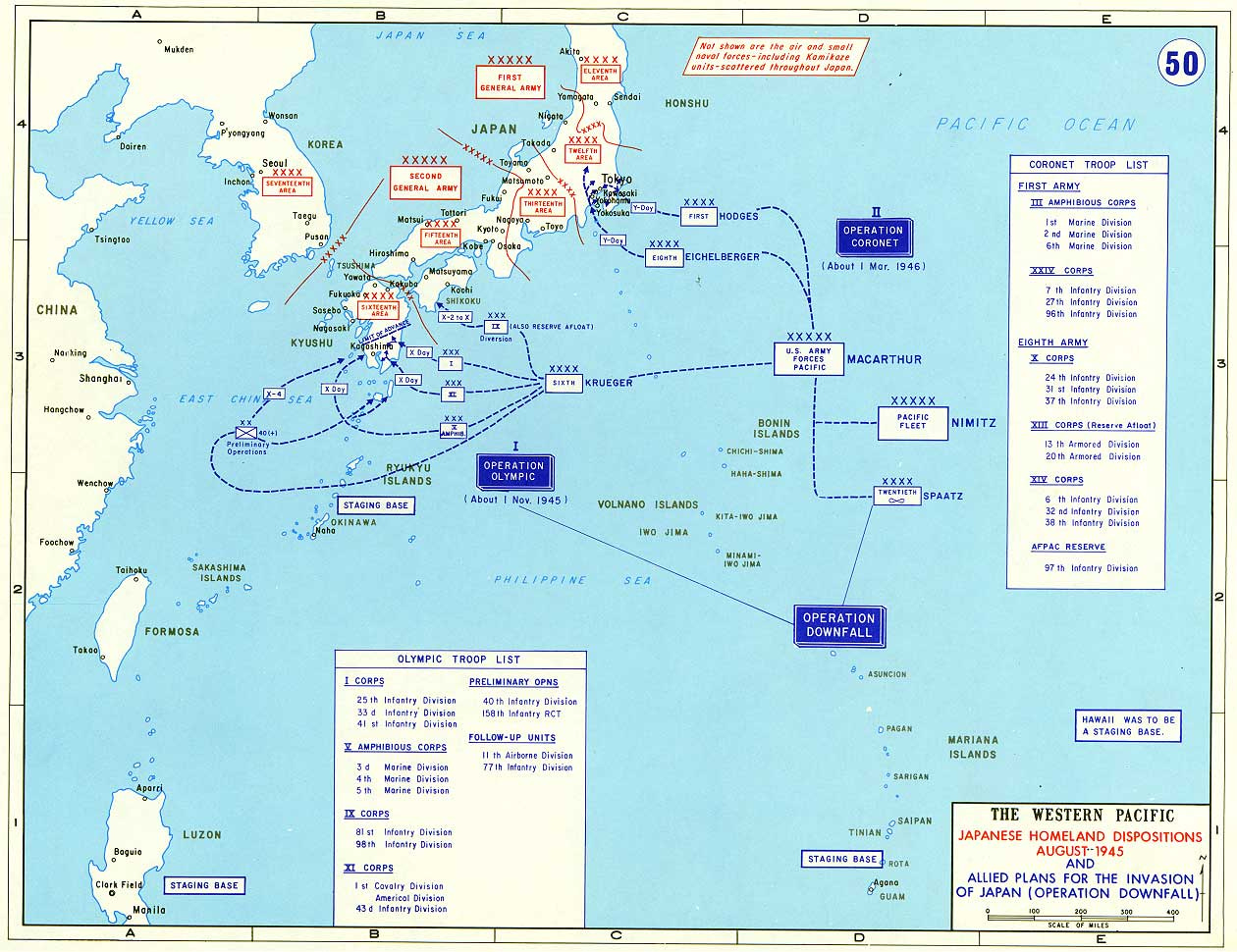
Operation Downfall – the planned invasion of Japan in 1946
Wes O’Donnell talks about the thankfully never-launched invasion of the Japanese home islands at the end of the Second World War:
History often hinges on the narrowest of margins.
Entire nations can rise or fall based on decisions made under the pressures of the moment.
But what if those decisions had gone the other way?
What if Archduke Franz Ferdinand had survived the assassination attempt in 1914?
What if John F. Kennedy had lived to complete a second term?
And most intriguingly, what if the United States had not dropped atomic bombs on Hiroshima and Nagasaki in August 1945?
The world would have witnessed Operation Downfall, the Allied invasion of Japan — an operation that, by all accounts, would have been the bloodiest amphibious assault in human history.
Operation Downfall was the codename for the proposed Allied plan for the invasion of Japan near the end of World War II.
The planned operation was abandoned when Japan surrendered following the atomic bombings of Hiroshima and Nagasaki and the Soviet declaration of war.
The operation had two parts: Operations Olympic and Coronet.
Set to begin in November 1945, Operation Olympic was intended to capture the southern third of the southernmost main Japanese island, Kyūshū, with the recently captured island of Okinawa to be used as a staging area.
Later, in the spring of 1946, Operation Coronet was the planned invasion of the Kantō Plain, near Tokyo, on the Japanese island of Honshu.
Airbases on Kyūshū captured in Operation Olympic would allow land-based air support for Operation Coronet.
The most troubling aspect of Downfall may have been the logistical problems facing military planners.
By 1945, there simply were not enough shipping, service troops, or engineers present to shorten the turnaround time for ships, connect the scattered installations across the Pacific, or build facilities like air bases, ports, and troop housing.
By this point in the war, the War Department had several military leaders that the government trusted to execute a quick end to hostilities.
Unlike the heavy political influence found in today’s wars, these men were given almost total freedom to plan large-scale military operations – Truman’s decision to drop the atomic bombs notwithstanding.
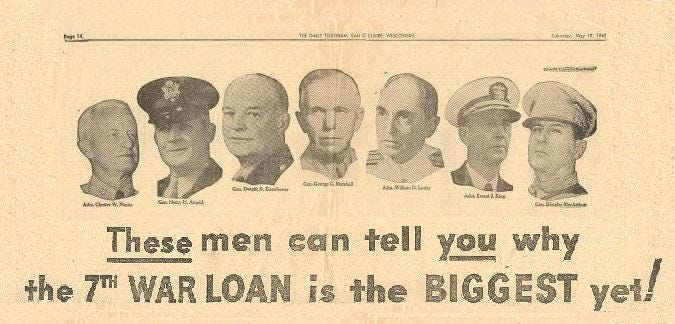
Six men of destiny
Responsibility for planning Operation Downfall fell to some of the most prominent American military leaders of the 20th century: Fleet Admiral Chester Nimitz, General of the Army Douglas MacArthur, and the Joint Chiefs of Staff — Fleet Admirals Ernest King and William D. Leahy, along with Generals of the Army George Marshall and Hap Arnold, who commanded the U.S. Army Air Forces.
These six men, raised in the relatively stable and predictable world of late 19th-century small-town America, carried with them the values instilled by that era.
Arnold and MacArthur were West Point graduates; King, Leahy, and Nimitz came out of the Naval Academy; while Marshall honed his discipline at the Virginia Military Institute, a school renowned for its toughness, even more so than the service academies.
For these leaders, the concepts of duty, honor, and country were more than just words — they were guiding principles.
They approached their roles without a trace of cynicism, supremely confident in their ability and, crucially, their God-given right to steer the course of history, especially in the chaos of war.
August 21, 2024
The Korean War Week 009 – Bloody UN Victory at Naktong Bulge – August 20, 1950
The Korean War by Indy Neidell
Published 20 Aug 2024The Marines are deployed to back up the UN forces facing disaster in the Naktong Bulge and by the end of the week the tide has turned, and the crack North Korean 4th Division has been shattered. There is also fighting around the whole rest of the Pusan Perimeter, and it is shrinking from all the attacks, though on the east coast the battle goes in favor of the South Korean forces this week at Pohang-Dong.
(more…)
August 18, 2024
Hirohito Announces Surrender – War Continues – WW2 – Week 312 – August 17, 1945
World War Two
Published 17 Aug 2024Hirohito broadcasts Japan’s surrender to the world- despite an attempted to coup to prevent it from happening, and much of the world celebrates, but the war isn’t really over. The Soviets are busy invading Manchuria, and there’s revolution in Vietnam and Indonesia.
00:00 Intro
00:22 Recap
00:49 Attempted Coup In Japan
04:12 Hirohito Surrenders
08:54 Japanese Surrender In China
12:05 Soviets In Manchuria
17:52 Revolution In Vietnam
20:33 Summary
21:07 Conclusion
(more…)
August 17, 2024
Forgotten War Ep1 – Witness the Rising Sun
HardThrasher
Published Aug 14, 2024In January 1942 the Japanese Army poured over the border with Burma, and pushed back the Indian and British Armies to the border with Burma. Today we look at how that disaster came about, why and the first phase of the campaign
(more…)
August 15, 2024
Yet another revisionist history of World War II
In the latest anonymous review at Astral Codex Ten, the book to be considered is How the War Was Won by Phillips Payson O’Brien:
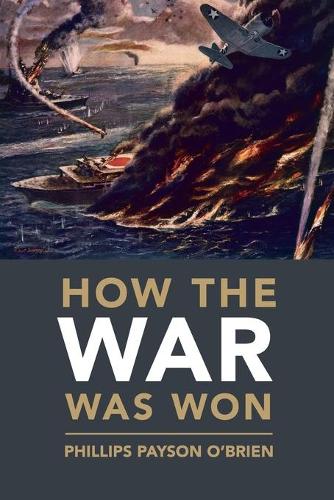
To a first approximation, there are a million books about World War II. Why should you care about How the War Was Won (hereinafter “HtWWW”) by Phillips Payson O’Brien?
- It provides a new, transformative view of the conflict by focusing on production of key goods and what affected that production instead of the ups and downs of battles at the front.
- That particular lens used can (and should) be applied outside of just World War II, and you can get a feel for how that might be done by reading HtWWW.
- I have lectured about World War II and read many, many books about it. I have never texted friends more excerpts of a book than this one.
I have some criticisms of HtWWW, but if the criticisms dissuade you from reading the book, I will have failed. These complaints are like tut-tutting Einstein’s penmanship.
The Wikipedia-Level Story of World War II (and O’Brien’s Counterargument)
To understand why O’Brien’s argument is so novel, you need to know the modern-day conventional understanding of the story of World War II. Here is my summary of the conventional narrative of World War II:
- Germany conquered Poland and France. It tried to bomb the UK into submission/maybe enable an invasion. That effort failed when Germany was defeated in the Battle of Britain, thanks largely to the plucky efforts of British airmen (memorably summarized by Winston Churchill: “Never in the field of human conflict was so much owed by so many to so few”.)
- Stymied in the West, Germany invaded the Soviet Union, won a bunch of crushing victories, but then got turned back at the gates of Moscow. The Soviets moved all of their factories east of the Ural Mountains and produced a vast tide of T-34 tanks that overpowered the Germans.
- The Germans suffered a catastrophic defeat at Stalingrad and a bloody strategic defeat at Kursk, after which the Soviets relentlessly pounded Germany to defeat.
- The US and the UK sent a lot of material help and eventually fought the Germans too, most notably in the D-Day invasion and the Battle of the Bulge. However, most of the fighting was done by the Soviets.
- It is very difficult to say how important the aerial bombing campaigns of the Western Allies were in defeating Germany. The Germans moved much of their production underground, insulating them from truly disastrous effects.
- The U.S. mostly fought alone against Japan, which won a series of impressive early victories (e.g., Pearl Harbor, the conquest of Singapore) until the decisive Battle of Midway, after which the vastly larger US industrial base outproduced Japan into oblivion.
- The US bombed the Japanese into submission by destroying Japanese cities, ultimately by dropping atom bombs on Hiroshima and Nagasaki.
By examining where the Axis focused their productive capacities and how the Allies disrupted those capacities, O’Brien challenges virtually every part of that narrative:
- The Battle of Britain was not a close-run thing. The fact that British fighter planes were flying over their own territory meant their attrition rate of pilots and aircraft were far lower than the Germans’.
- American and British bombing mattered far more to the war’s outcome than the battles of the Eastern Front, which consumed a much smaller portion of German expenditures.
- American and British airpower made German battlefield victories on the Western Front virtually impossible and dramatically limited the force Germany could bring to bear in the East.
- Japan (really, Japan plus the giant empire it conquered at the beginning of the war) was an industrial behemoth to rival the Soviet Union. However, the destruction of the Japanese merchant fleet by American air and sea forces wrecked Japan’s economy.
- The firebombing of Japanese cities and the atomic bombings of Hiroshima and Nagasaki had an ambiguous strategic effect. American air power played a much more important role in severing Japan from the natural resources it had conquered in the early part of the war.
August 14, 2024
The Korean War Week 008 – The First UN Counterattack – August 13, 1950
The Korean War by Indy Neidell
Published 13 Aug 2024The first UN large scale counterattack goes off this week; this by the American Task Force Kean. It has both successes and failures, and it runs right into a new North Korean offensive. The fighting happens just about everywhere on the Pusan Perimeter this week, though. That’s the area into which the UN forces have been compressed, and it is particularly threatening at the Naktong Bulge. It is, plain and simple, a week of desperate and bloody fighting and that’s about it.
Chapters
00:47 Recap
01:27 The Pusan Perimeter
04:31 Task Force Kean
07:44 The Naktong Bulge
10:09 The Fight Around Daegu
13:45 Summary
(more…)
August 11, 2024
The US drops two atomic bombs on Japan – WW2 – Week 311 – August 10, 1945
World War Two
Published 10 Aug 2024This week atomic bombs are for the first time in history dropped on cities — Hiroshima and Nagasaki in Japan. The bombs kill over 100,000 people and flatten large parts of the urban area. The Japanese government is actually meeting while the second bomb is dropped to consider their response to the first and to the demands for unconditional surrender. The response is not just to that first bomb, though, for on the 8th the Soviets tell the Japanese not only that they will not help them negotiate some sort of settled peace with the other Allies, they too are declaring war on Japan, and indeed invade Manchuria. With two atomic bombs and an invasion instead of mediating help, Japanese Emperor Hirohito cuts off any debate and says that Japan will surrender. This could happen next week.
00:00 Intro
00:17 Recap
00:44 Hiroshima Bombing
02:35 The Bombing Mission
04:19 Descriptions Of The Blast
06:38 The Nagasaki Bomb
07:37 The Tactics
08:31 The Japanese Response
12:55 Soviets Invade Manchuria
16:18 Splitting Korea
18:07 Operation Zipper
19:31 End Notes
20:08 Summary
20:30 Conclusion
(more…)
August 8, 2024
The Korean War Week 007 – The Pusan Perimeter – August 6, 1950
The Korean War by Indy Neidell
Published Aug 6, 2024The UN forces are withdrawn this week across the Naktong River into a new defensive zone in the Southeast corner of the Peninsula — the Pusan Perimeter, but already as the week begins they are in great danger from the right hook near the coast by the North Korean 6th Division, that threatens to upend everything, taking Chinju and aiming for Masan. There are also machinations afoot with the Chinese in Taiwan, and the fear that a larger war could erupt if things aren’t handled right concerning the Chinese; it’s a week full of tension.
(more…)
August 7, 2024
Unleashing the Atom: The Bombing of Hiroshima and Nagasaki – War Against Humanity 139
This video is only available on YouTube itself – click the image above or click here.
World War Two
Published 6 Aug 2024In August 1945, the United States became the first, and to this day only, nation ever to employ nuclear weapons in war. After The fledgling technology proves itself on the testing ground, it is ready for immediate use. The price for this innovation is paid by hundreds of thousands of Japanese civilians who are blinded, burned, crushed, irradiated, and finally burned in a humanitarian crisis never seen before and never since. Join us to hear the gut-wrenching accounts of survivors and understand the motivations behind this tragic outcome to ensure that the horrors of nuclear war are never forgotten and never again unleashed upon the world and its people.


