Quotulatiousness

November 11, 2025

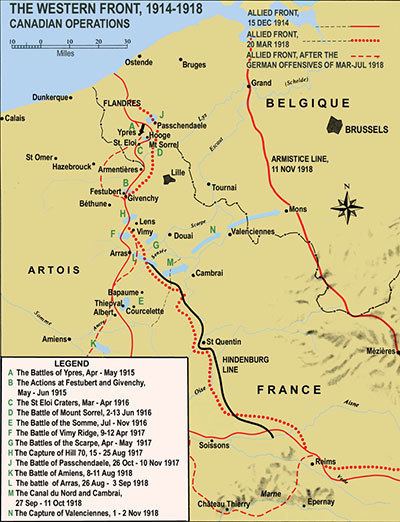
Four battles of the Canadian Corps

Following on from part one (excerpted here), The Black Horse outlines four major battles that the Canadians fought on the western front during the First World War:
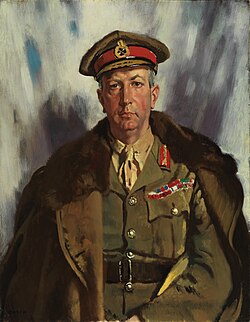
Sir Arthur Currie
Portrait by William Orpen, 1919.

The first part of the series was a political biography of Currie; the second part attempts to tell the story of the Canadian Corps at war through somewhat detailed account of four important battles. The piece is only partly biographical, it partly tells the story of Currie’s war, and partly tells the story the Canadian men who fought for the British Empire in the Great War. It’s a story of incredible martial prowess, but the careful reader will also observe a story of warring duties placed upon the leader of a colonial army; duty to his men, duty to the political leadership of his colonial people and the future of that nation, duty to the objectives of the imperial power on whose behalf he fought, and finally duty to glorious Victory. Currie ended his life understood by those with eyes to see as a great warrior and a military genius; but disliked by his men and hated by the leadership of his people because he prioritized the needs to the Empire and of Victory; but after the war the Empire was of limited service to Currie and to the Canadian people. I leave to the reader, to history, and to God, to decide the value of Victory.

[…]

2nd Battle of Ypres

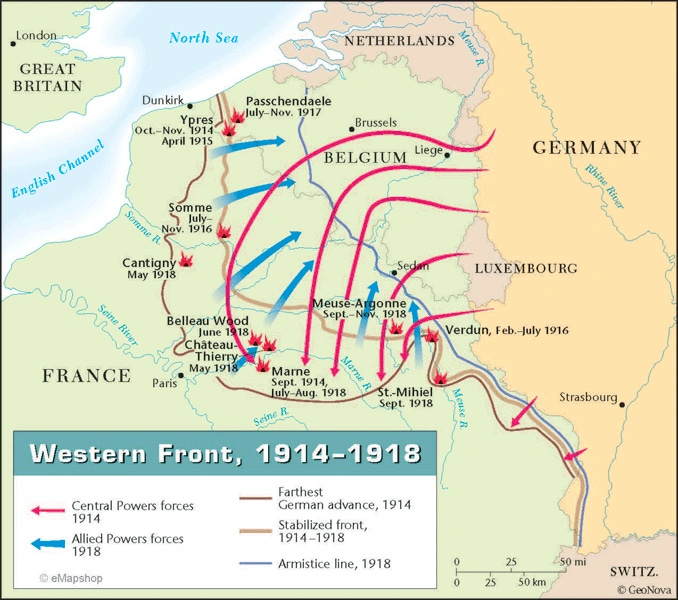
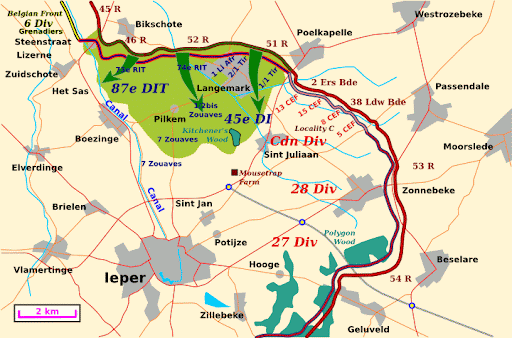
In the spring of 1915 the early dynamic advances of the German army were a distant memory faded behind the great defeat at the First Battle of the Marne. Through the winter both sides had dug in; and many German troops were redeployed to the Russian front. German chemists Walther Nernst and Fritz Haber brought forward the idea of using heavier-than-air Chlorine gas, carried on the wind, to overcome the mathematical impossibility of conventional attack. On April 22, 1915, Albrecht of Württemberg led 7 German divisions to attack 8 Allied divisions, including the 1st Canadian Division under the command of Sir Edwin Alfred Hervey Alderson. The attack began with the release of 168 tons of chlorine gas at about 1700h along a 4 mile stretch of the front around Langemark.

[…]

Vimy Ridge

For a year and a half after Ypres, Currie & the Canadian Corps continued to fight desperate engagements along the Western front with no clear strategic conclusion. After heavy losses and a lot of hard-learned lessons at the Somme from Sept 1915-Sept 1916, the Canadian Corps and Currie with them had become both hardened by bitter experience, and desperate to find better ways to prosecute the war. In September 1915 he was recorded to have said “I did not care what happened to me, but to my men, to their wives, their mothers, their children and to Canada I owed a duty which I wanted to fulfill to the very best of my ability”. Later that year as the division struggled with desertion, he ordered the execution of a deserter despite a three hour plea for clemency by the divisional cleric. The decision restored discipline, but haunted Currie’s dreams long afterwards.

In May 1916 Julian Byng took command of the Canadian Corps, replacing Sir Edwin Alderson. In the fall of that year, after heavy losses in a series of engagements at the Somme, Byng was given the opportunity to reorganize and refit the Canadian Corps; he looked to Currie as a key partner in the effort. They replaced the ineffective Ross Rifle with the Lee Enfield, reorganized the platoon structure to include heavy weapons within each platoon [machine guns, mortars, etc.], and implemented new training and tactics like rehearsals for advances, and the “creeping barrage”, carefully coordinated intended to keep artillery shells landing slightly ahead of advancing men.

[…]

Hill 70

After Vimy, Julian Byng was promoted. Currie was promoted in turn to lead the Canadian Corps. He would lead the Corps that he and Byng had made into one of the most effective fighting forces on any side of the conflict and lead it to bloody victory again and again. There is perhaps no better example of the mastery of the Canadian Corps, from top to bottom, than the battle of Hill 70. “Hill 70 was as close to a perfect battle as was ever fought on the Western Front” wrote historian Tim Cook.

[…]

The Hundred Days Offensive & the Pursuit to Mons

As the winter of 1917-18 passed, a new set of highly political decisions concerning whether and how to reorganize the Canadian Corps for the next round of fighting were taken. As noted in part one, Currie opted to split up the newly formed 5th division to reinforce the four divisions of the Canadian Corps and triple the size of the field engineering element. The decision optimized the Canadian Corps as an attacking force; and when they returned to the front that’s exactly how they would be used. Between August 8th and November 11th, 1918, the Canadian Corps fought nine major battles advancing 86 miles, and suffering 45,835 casualties [The force that began the offensive was ~100,000]. By comparison, the substantially larger American Expeditionary Force, over this same period, advanced only 34 miles while capturing only half the number of prisoners, suffering roughly twice the casualties per German division defeated.
How not to solve your housing affordability crisis

Filed under: Economics, Government, USA — Tags: , , , , , , — Nicholas @ 04:00

On the social media site formerly known as Twitter, Devon Eriksen explains why allowing fifty-year mortgages are not the solution that financial journalists seem to think they are:

    Wendy O @CryptoWendyO

    I don’t think a 50 year mortgage is bad.
    It gives everyone more flexibility financially
    You can pay a mortgage off early
    Not sure how else to lower home costs in 2025

Buyers: “How much will this house cost me?”

Sellers: “What’s your budget?”

Buyers: “Well, it was 500K, but with these new fifty year mortgages, I think it could stretch to million.”

Sellers: “I have an astonishing coincidence to report.”

Look, I don’t know exactly who’s retarded enough to need to hear this, but if you throw money at something, you get more of it.

Which means that if you subsidize demand, you get more demand.

And if you have the same supply, and more demand, price goes up.

This is how the federal Stafford Loan program made college a gateway to permanent debt slavery. Subsidize demand, price goes up.

The reason people don’t understand this is that most people are only smart enough to think about individuals, not populations.

They think if you have more money, you can buy more things, as if things come from the item store in a Japanese console RPG, where the store always has infinity stuff to sell you, and infinity money to buy your loot.

People who are capable of thinking about large groups quickly realize that money is just a way of distributing things.

Like, there’s a limited supply of things, and you’re just choosing who gets them. Having more money doesn’t make more things.

Except … it should, shouldn’t it?

Eventually?

Like, if apples get super expensive, because somebody invented a new kind of apple that’s so delicious that everyone wants them, then the price of those apples goes up, so more people start growing them.

So why doesn’t that work with houses and colleges?

Why don’t the super-inflated prices of those things inspire profit-minded people to make more?

It’s almost as if there were some sort of gatekeeper, whose permission you needed to make a house or a university.

But that’s impossible, because this is a totally capitalist country, so you can just do things, right?

Ian Runkle/Runkle of the Bailey chimes in:

Okay, let’s talk about 50 year mortgages.

First, let’s talk about what sets the price in a market where there’s more demand than supply. It’s set by what people can afford to pay, which means the payment/month.

What that means in practical terms is that the total price isn’t the limiter. It’s the monthly payment.

So, if X house is going for a price that has a 2500/month payment, the market is going to land total prices on a 2500/month payment.

So, increasing the mortgage terms makes things more affordable for about six months before the market adjusts. After that, it stops making it more affordable.

But “affordable” here doesn’t mean inexpensive. In fact, quite the opposite. Extending from a 30 year to a 50 year mortgage is likely to double the cost of credit.

But that’s before the prices adjust upward to “eat” the supposed affordability gains.

This doesn’t make houses more affordable, it makes them more expensive by far.

In memoriam

Filed under: Britain, History, Military, WW1, WW2 — Tags: , , — Nicholas @ 03:00

A simple recognition of some of our family members who served in the First and Second World Wars:

The Great War

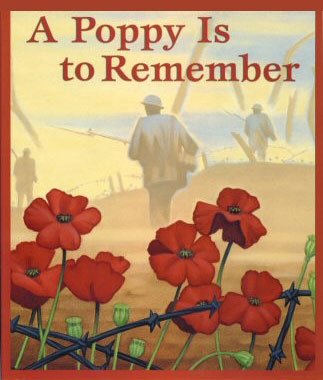
  • A Poppy is to RememberPrivate William Penman, Scots Guards, died 16 May, 1915 at Le Touret, age 25
    (Elizabeth’s great uncle)
  • Private Archibald Turner Mulholland, Argyll & Sutherland Highlanders, mortally wounded 25 September, 1915 at Loos, age 27
    (Elizabeth’s great uncle)
  • Private David Buller, Highland Light Infantry, died 21 October, 1915 at Loos, age 35
    (Elizabeth’s great grandfather)
  • Private Harold Edgar Brand, East Yorkshire Regiment. died 4 June, 1917 at Tournai.
    (My first cousin, three times removed)
  • Private Walter Porteous, Durham Light Infantry, died 4 October, 1917 at Passchendaele, age 18
    (my great uncle, who had married the day before he left for the front and never returned)
  • Corporal John Mulholland, Argyll & Sutherland Highlanders, wounded 2 September, 1914 (shortly before the First Battle of the Aisne), wounded again 29 June, 1918, lived through the war.
    (Elizabeth’s great uncle)
  • John Eleazar (“Ellar”) Thornton, (ranks and dates of service unknown, served in the Royal Garrison Artillery, the East Surrey Regiment, and the Essex Regiment (dates of service unknown, but he likely joined the RGA in 1899). Put on the “Z” list after the war — recall list. He died in an asylum in 1943.
    (my grandfather’s eldest brother)
  • Henry (Harry) Thornton, (uncertain) Lancashire Fusiliers. (We are not sure it is him as there were no identifying family or birth date listed. Rejected for further service.)
    (my grandfather’s second older brother)

The Second World War

  • Flying Officer Richard Porteous, Royal Air Force, survived the defeat in Malaya, was evacuated to India and lived through the war.
    (my great uncle)
  • Able Seaman John Penman, Royal Navy, served in the Defensively Equipped Merchant fleet on the Atlantic convoys, the Murmansk Run (we know he spent a winter in Russia at some point during the war) and other convoy routes, was involved in firefighting and rescue efforts during the Bombay Docks explosion in 1944, lived through the war.
    (Elizabeth’s father. We received his Arctic Star medal in July, 2024.)
  • Private Archie Black (commissioned after the war and retired as a Major), Gordon Highlanders, captured during the fall of Singapore (aged 15) and survived a Japanese POW camp (he had begun to write an autobiography shortly before he died)
    (Elizabeth’s uncle)
  • Elizabeth Buller, “Lumberjill” in the Women’s Timber Corps, an offshoot of the Women’s Land Army in Scotland through the war.
    (Elizabeth’s mother)
  • Trooper Leslie Taplan Russon, 3rd Royal Tank Regiment, died at Tobruk, 19 December, 1942 (aged 23).
    Leslie was my father’s first cousin, once removed (and therefore my first cousin, twice removed).
  • Flight Sergeant Kenneth Alexander Porteous, Royal Air Force, air gunner in a Lancaster bomber of 15 Squadron, Bomber Command. Died when his plane was shot down at Wormlitz 10 miles northeast of the target during a raid on Magdeburg, 21 January 1944 (aged 28).
    Kenneth was my first cousin, twice removed.
  • Reginald Thornton, rank and branch of service unknown, hospitalized during the war with shellshock and was never discharged back into civilian life. He died in York in 1986.
    (my grandfather’s youngest brother)

My maternal grandfather, Matthew Kendrew Thornton, was in a reserved occupation during the war as a plater working at Smith’s Docks in Middlesbrough. The original design for the famous Flower-class corvettes came from Smith’s Docks and 16 of the 196 built in the UK during the war (more were built in Canada). My great-grandmother was an enthusiastic ARP warden through the war (she reportedly enjoyed enforcing blackout compliance in the neighbourhood using the rattle and whistle that came with the job).

For the curious, the Commonwealth War Graves Commission the Royal British Legion, and the Library and Archives Canada WW1 and WW2 records site provide search engines you can use to look up your family name. The RBL’s Every One Remembered site shows you everyone who died in the Great War in British or Empire service (Canadians, Australians, New Zealanders, South Africans and other Imperial countries). The CWGC site also includes those who died in the Second World War. Library and Archives Canada allows searches of the Canadian Expeditionary Force and the Royal Newfoundland Regiment for all who served during WW1, and including those who volunteered for the CEF but were not accepted.

In Flanders fields the poppies blow
Between the crosses row on row,
That mark our place; and in the sky
The larks, still bravely singing, fly
Scarce heard amid the guns below.

We are the Dead. Short days ago
We lived, felt dawn, saw sunset glow,
Loved and were loved, and now we lie
In Flanders fields.

Take up our quarrel with the foe:
To you from failing hands we throw
The torch; be yours to hold it high.
If ye break faith with us who die
We shall not sleep, though poppies grow
In Flanders fields.

Lieutenant Colonel John McCrae, MD Canadian Army Medical Corps (1872-1918)

Here is Mark Knopfler’s wonderful song “Remembrance Day” from his Get Lucky album, set to a slideshow of British and Canadian images from World War I through to more recent conflicts put together by Bob Oldfield:

Vimy Ridge: Canada’s Finest Hour | History Traveler Episode 386

Filed under: Britain, Cancon, France, Germany, History, Military, WW1 — Tags: , , — Nicholas @ 02:00

The History Underground
Published 20 Oct 2024

Battle of Arras: Part 2

When it comes to the legendary actions of the Canadian soldiers in WWI, Vimy Ridge looms large above all of the others. This is where the four division of the Canadian Corps would fight side by side for the first time in The Great War. In this episode, we’re walking the ground on the left flank of the Canadian line, looking at the memorial and showing a few things that typically get overlooked in the Vimy Ridge area.

For more on the Battle of Arras, check out The Old Front Line Podcast with Paul Reed & his YouTube channel, ‪@OldFrontLine‬.

This episode was produced in partnership with The Gettysburg Museum of History. See how you can support history education & artifact preservation by visiting their website & store at https://www.gettysburgmuseumofhistory…

Map animations by @SandervkHistory

QotD: Moltke the Younger and the Schlieffen Plan

Filed under: France, Germany, History, Military, Quotations, Russia, WW1 — Tags: , , , , , — Nicholas @ 01:00

Helmuth von Moltke the Younger is a difficult character to uncover, but one essential to understanding the panoply of forces that produced WWI.1 Moltke died in 1916, providing him little opportunity to defend his tenure. His widow had intended to publish an exculpatory collection of evidence of the chaos of German war planning before 1914. However, by then it was 1919, and the documents were deemed harmful to Germany’s attempt to avoid the blame for the war and so not published. This would prove fateful; the documents would be destroyed in World War II.

Moltke therefore proved an ideal scapegoat for the “Schlieffen School”. For the Schlieffen School (mostly officers trained by Schlieffen), the Schlieffen Plan was a true recipe for victory bungled by incompetent execution. However, recent scholarship has shown a more nuanced picture. While Schlieffen did not fully approve of his successor, Moltke was a faithful student of Schlieffen’s concepts. The modifications he made to the plan were not because of a difference in opinion, but of circumstance. Following Schlieffen’s retirement, the French army became more aggressive, necessitating a stronger defense of the Rhine. Likewise, Russian strength and mobilization speed increased, necessitating a greater force allocated to the East. Moltke was also more realistic about the logistical limitations of the all-important right wing of the German offensive. While Schlieffen (allegedly with his dying breath) insisted “keep the right wing strong”, there were simply only so many divisions that could practically advance there. Moltke did his best to adapt the Schlieffen Plan to these changing circumstances, though with mounting fear that the strength of the Entente had placed victory beyond Germany’s strength.

Despite awareness of the long odds, officers continued to press for preventative war in succeeding European crises.3 The term “preventative war” did not mean “preempting the attack of hostile powers” but rather to initiate a war while the strategic balance was most favorable for Germany. While, as mentioned, they had their doubts about the surety of victory, they believed the odds would only get worse. The Schlieffen Plan had been designed for a one-front war against France (in 1905, the year of Schlieffen’s retirement, Russia was in the throes of revolution). Though adapted in later years, the plan remained tenable only so long as Germany had the chance to defeat France before Russian mobilization was completed. As the Russian army expanded and its rail system modernized, the General Staff saw the Schlieffen Plan nearing its expiration date.

The General Staff saw no alternative to Schlieffen’s concept because of its axiomatic focus on total victory. The kind of limited victory that the Elder Moltke had settled for in his later war plans had never entered the vocabulary of the General Staff. As such, the General Staff pressed strongly for war (which it believed was inevitable) to break out before the balance of power swung further against Germany.

The only alternative to this would have been to frankly state the perilous situation in which Germany stood militarily and admit that total military victory was out of reach and German diplomacy would need to be reoriented around this fact. Not only would this course of action been antithetical to the proud traditions of the officer corps, but it would also have been viewed as unacceptably political. What’s more, the Kaiser would have likely viewed such behavior as cowardly if not outright insubordinate. Once again, the Kaiser’s power over personnel decisions meant uncomfortable topics were not broached for fear of instant dismissal.

It is not entirely unjust to accuse German leaders of cowardice or careerism in avoiding these conversations. However, they — like so many who serve under capricious or incompetent heads of state — justified their silence and continued service under the logic of harm reduction. If they resigned (or clashed with the Kaiser leading to their dismissal) they knew they would be replaced by someone more compliant. The Kaiser’s power over personnel meant they understood clearly that they had no leverage.

The Chiefs of the General Staff, for all their influence, were incentivized to focus on the areas of their exclusive responsibility. Nevertheless, the younger Moltke was not passive in his efforts for war. He resumed contact with the Austro-Hungarian General Staff, assuring it of German support should Austria choose war in a crisis. As aforementioned, when crises came to Europe (some instigated by the German foreign ministry) he pressed the chancellor and Kaiser for a preventative war. Both, to their credit, while willing to risk war, would not choose it.

Perhaps most decisively, Moltke and his deputy, Erich von Ludendorff,4 made the decision to hinge the operational plan on an attack on the Belgian city of Liège (hosting a critical rail juncture) before the neutral country could mobilize.5 This modification was made because Moltke desired to avoid violating Dutch neutrality (as Schlieffen had called for). He wisely understood Germany could afford no more enemies and that invading the Netherlands would mean increasing the distance the German right wing would have to cover to gain the French flank, decreasing the odds of success. What’s more, Moltke hoped that Dutch neutrality would allow it to act as a “windpipe” in the event of a long war and a British blockade. However, avoiding Dutch territory complicated German logistics, necessitating the swift seizure of Liège to allow the offensive to meet its strict timetables.

This was a strictly operational decision, made on technical grounds. As such, neither the chancellor nor the Kaiser were informed of this detail of the plan (operational plans were kept strictly secret, with the prior year’s being systematically burned). However, as perceptive readers may have noticed, the need for a coup de main against a neutral country before it mobilized severely limited German strategic flexibility. There was only one deployment plan for war in the West (and only one at all after 1913). In a crisis, Germany was therefore bound to attack before the Belgians manned Liège’s fortifications. Yet this all-important point-of-no-return was unknown to the Kaiser, chancellor, and foreign minister. The General Staff had effectively stripped the Kaiser and civilian leaders of their “right to be wrong”.

Thus, the General Staff had drastically increased the likelihood of war in that the point-of-no-return was kept obscured from those who would be responsible for bring Germany to the brink. As would occur in 1914 during the July Crisis, the Kaiser and his minister could not understand why Moltke was pressing so strongly for war. As historian Annika Mombauer puts it, “Only Moltke knew that every hour counted”.6 The General Staff had — intentionally or not — engineered a situation in which political leadership would have to choose war or abandon its only operational plan. While political leadership was reticent to take this step (especially without the details of the plan) contributing to Moltke’s nervous breakdown, the General Staff ultimately got the war it so desired at the next crisis Germany found itself in. If the coup de main on Liège had been devised as a ploy to force political leadership to engage in a preventative war, it had succeeded.

Ultimately, the predominance of the military over German policy — both foreign and domestic — created an environment in which civilian leaders like Bethmann Hollweg were sidelined, and aggressive military strategies took precedence. This imbalance of prestige, coupled with the narrow, fatalistic worldview of military leaders, contributed to Germany’s march toward war, with little room to acknowledge alternative diplomatic or strategic approaches.

Kiran Pfitzner and Secretary of Defense Rock, “The Kaiser and His Men: Civil-Military Relations in Wilhelmine Germany”, Dead Carl and You, 2024-10-02.


  1. Helmuth von Moltke the Elder was his uncle.
  2. Mombauer, Moltke, 109.
  3. Better known for other work.
  4. Mombauer, 96.
  5. Mombauer, 219.
  6. Rosinski, “Scharnhorst to Schlieffen”, 99.

November 10, 2025

Canadian military expansion

Filed under: Cancon, Government, Military — Tags: , , , , — Nicholas @ 05:00

In the free-to-cheapskates portion of this week’s dispatch post from The Line, the editors discuss some of the implications of the significant expansion plans for the Canadian Armed Forces (with the caveat that little of these plans are funded and would be subject to major changes if the government fails to get its budget through Parliament):

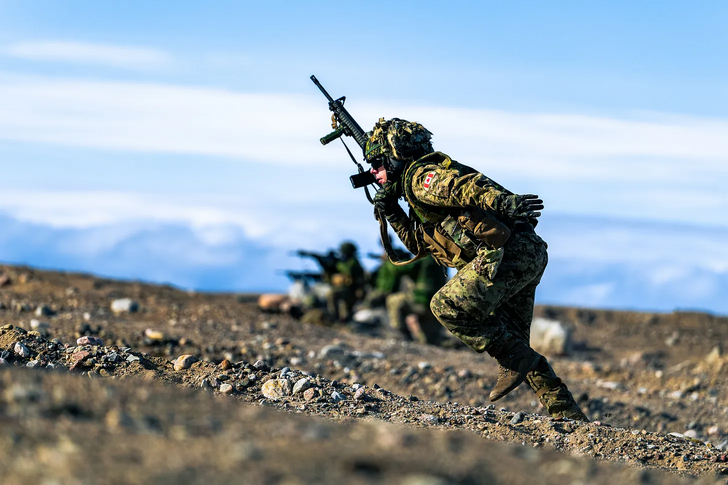
Canadian Armed Forces photo.

The amount of defence spending we’re talking about here is something that we have not thought about at all in recent generations. It’s a good thing. But it’s going to create some real challenges that we need to start thinking about, and coming up with solutions for, right away.

The numbers look something like this: the government had already announced a $9-billion influx of money into national defence, as well as a little bit of creative accounting, all with the goal of getting our spending up to the NATO two-per-cent-of-GDP target immediately, instead of on the absurdly prolonged trajectory the last prime minister deemed appropriate. A big part of this — and a welcome part — was a pay raise for members of the Canadian Armed Forces, particularly those at the lower scale of the pay grids for enlisted personnel and officers. One of the major problems the military has had in recent years is retaining trained personnel, and a pay raise is a tried-and-true way of helping address that. It also has the effect of juicing our spending at a time when our allies were looking for a tangible commitment. It’s a win-win.

But then there’s the rest of the spending: over $80 billion over the next five years, with a goal of getting up to the new NATO target of five per cent in only nine years, by 2035.

The Line supports this. We support this wholeheartedly. It makes us want to do cartwheels in the streets — and we would, if not for justified concerns for our joints and lower backs. (And dignity, though that’s less an issue.) But we do need to flag how transformative that level of investment would be.

Here’s the simplest way to put this. Almost our entire debate over defence in recent decades has been around the two-per-cent target. Nominally, the Canadian Armed Forces have certain capabilities that were suited to our national willingness to spend around two per cent of GDP. In reality, because of chronic under-funding, a lot of the capabilities we claim to have on paper didn’t really exist in reality. Units were badly undermanned. Equipment either didn’t exist or was not in serviceable condition or was long-since obsolete. Shortfalls of money and trained personnel were cutting into training exercises and basic upkeep on weapons, gear, and facilities. This prolonged fiscal starvation, combined with a fairly high level of demand on the forces for missions abroad and at home, had the effect, year after year, of hollowing out the force.

Getting spending up towards two per cent will help turn that around. This is conditional — and it’s a big condition — on fixing the military’s procurement problems. We could budget a trillion for the military, but it’s not going to make a difference if we have the same broken processes that need 10 to 15 years to actually get from an identified operational need to a signed contract. But still, if only in the big-picture sense, getting to two per cent will actually flesh out the Canadian Armed Forces into the organization that already existed on paper.

That’s good. That would be a big step up. But the problem is, as your Line editors have been screaming into the void for years, even the fully fleshed-out and realized version of the Canadian Armed Forces that existed on paper is too small for the current global environment, and lacks many critical capabilities that will be necessary to effectively fight — or even simply survive — on the battlefield. We need to do things we cannot currently do, and we need to do a lot more of all the things we’re already doing. That’s going to mean a bigger naval fleet, a larger army and a larger air force. That’s just the reality — our current force structure, even if fully manned and ready, is not large enough to meet all our needs.

That’s where the other tens of billions of dollars come in. There’s simply no way around the fact that this amount of money, combined with geopolitical reality and political rhetoric, is pointing to an inescapable conclusion: the Canadian Armed Forces are going to get a lot bigger. A lot bigger. We are looking at a substantial increase in the size of the regular forces, and probably an even larger increase in the size of the reserves.

Indeed, you may have seen this article recently in the Ottawa Citizen, by defence reporter David Pugliese. In it, he discusses proposals being prepared at National Defence Headquarters to establish a new reserve force of approximately 400,000 troops. The Line can confirm the general thrust of Pugliese’s reporting. We have no idea what the politicians will eventually sign off on, and we won’t be surprised if they get weak-kneed when some of the details are laid out before them, but discussion of a massive expansion of the Canadian Armed Forces, on a scale we haven’t seen since the Second World War, is indeed happening in certain rather important rooms in Ottawa.

Enshittification, the book

Filed under: Books, Media, Technology — Tags: , , , , — Nicholas @ 04:00

Cory Doctorow originally coined the all-too-useful name for the steady deterioration of pretty much everything in the online world and now it’s the title of his latest book:

Author and activist Cory Doctorow wants you to understand why online digital platforms are failing users, and he’s fighting for a better internet. “Enshittification” — a word he coined to describe the degradation of online platforms and services — is the slightly profane albeit funny title of his latest book.

[…]

First question from me: “What does enshittification look like in Canada?” (Try saying that word without chuckling). The country had several opportunities to lead as a global digital force to be reckoned with, Cory agrees, and in his view, “we dropped the ball on market concentration”.

“The Competition Bureau has, through almost all of its history, until last year when we got a new bill out of Parliament, been, I think, the weakest competition bureau in the world,” Cory declares, emphatically. It’s hard to refute his assessment: The merger of Shaw and Rogers, two very large telecoms in Canada, was made official in 2023, the year before Canada’s competition law was modernized.

“Wouldn’t you think, at the very least, Canada would have a robust domestic network platform available by now?” I ask. Gander Social, a made-in-Canada social media platform, designed as an alternative to large U.S.-based companies, is only now being beta tested.

“There are any number of people who would like very, very much to host a few thousand of their friends on a little Mastodon or Blue Sky server that can talk to all the other ones, and everyone can be in a conversation,” Cory counters.

“We don’t all have to be on the same server,” Cory continues. “If there’s one thing we learned from the Amazon outage, it’s that putting everyone on the same server is an incredibly bad idea, right? So we can all be on different servers in the same way we’re all on different email servers, drive on different roads. We have to live in different cities; we don’t all have to be in the same place to all talk to each other and be part of a single digital network. That’s what networks are, right?

“You know, what we don’t have, the lacuna in this plan, the thing that we need public investment in, is not the bicycles on the road, it’s the bike lanes, it’s the infrastructure, and it’s the kind of thing the private sector can’t do well,” he asserts. The pain points for small businesses, communities, large businesses, cooperatives or any entity wanting to host a social media platform, Cory suggests, include things like security audits and content moderation tools.

He also recommends “some mechanism to ease people’s passage off (existing) social media and onto a new platform”. Right now, Cory explains, “you have people building these new platforms and wondering how the people on the old platforms are going to get there. This is like West Germans building housing for East Germans in West Germany, without thinking about how they’re going to get over the wall. Except that, we built the wall. We are the ones maintaining the wall. The wall is made entirely of law. The wall could be torn down with an act of Parliament at the stroke of a pen.”

And on the related topic of artificial intelligence being crowbarred into everything we use online:

Cory’s also saying very provocative things about AI. His most-memorable quip: “AI is the asbestos we are shovelling into the walls of our society and our descendants will be digging it out for generations”. While he sees the merits of AI to support the work of radiologists or lawyers or software engineers — or nearly anyone — he doesn’t believe AI can do the job. “But,” he warns, “an AI salesman can 100 per cent convince your boss to fire you and replace you with AI”.

Somalia comes to Minnesota

Filed under: Africa, Britain, History, Italy, Religion, USA — Tags: , , , , , — Nicholas @ 03:00

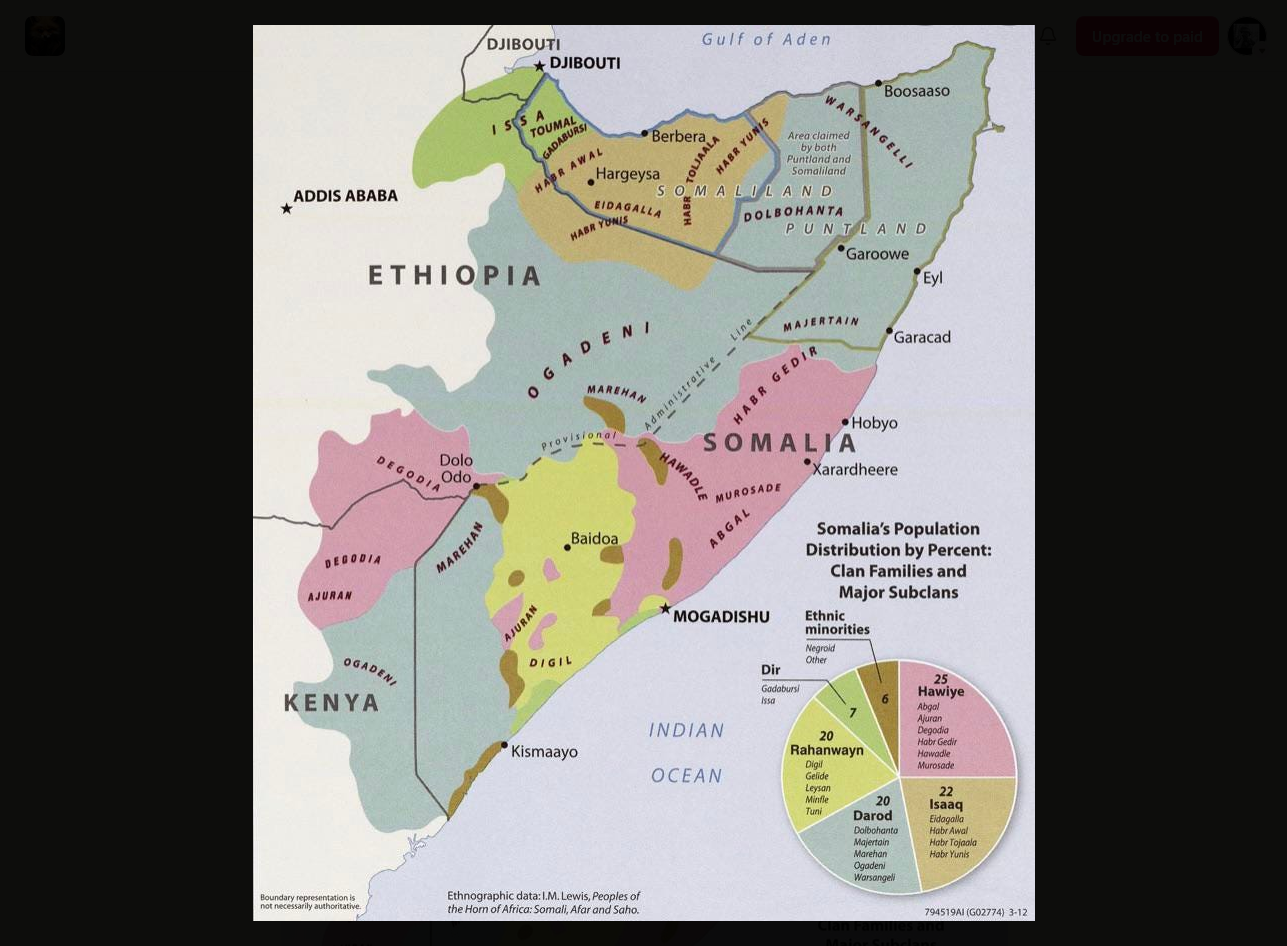
Ian at The Bugscuffle Gazette provides a useful thumbnail history of modern-day Somalia and how this impacts Minneapolis, Minnesota:

In Africa national borders — and thus nations — are matters of political convenience, if not flat-out arbitrary. Only newbies to Africa even think about nationality, old hands know that tribal affiliation trumps all.

I had forgotten that.

In Somalia the borders were drawn in the late 19th century by Great Britain1 and Italy2. Make a mental note of that in case it comes up in a trivia contest somewhere, but understand that tribes and clans in that misbegotten part of the world are far more important than lines drawn on a map by 19th century British and Italian diplomats.

As a “for instance” let us take a look at a couple of these clans: The Daarood and the Hawiye.

The patriarch of the Daarood showed up in East Africa in the 10th Century3, and founded a clan that has become one of the largest in East Africa, and the second4 largest of the Somali clans actually in Somalia. They were the clan ruling Somalia when folks rebelled and kicked off the Somalian Civil War.5 Their current turf is sort of hourglass-shaped, with a chunk in northern Somalia, and another chunk in southern Somalia.

The Hawiye showed up in the 12th Century6, and have become the largest clan in Somalia. Their turf in Somalia is a chunk of seaside property starting at Mogadishu7 and heading north.

Yes, I know it says “Darod”. It’s properly “Daarood”.

In 1969, a Daarood bugsnipe name of Mohammed Siad Barre found hisself as HMFIC of Somalia following a bloodless8 coup-d’etat, but a whole bunch of folks Had Thoughts regarding his ascension9, and Somalia was pretty much in a constant state of rebellion from 1978 to 1991, when the full-scale Somali Civil War kicked off.

Okay, great. Fascinating even … so what does this have to do with Minneapolis of all places?

In the aftermath of that little dust-up, we imported a lot of Somali refugees. And since the clan most in need of refugee-ing was the Daaroods, we brought in a lot of Daaroods, and — being clannish — they consolidated in a clan-like fashion in Minnesota.

As a “for instance”, Ilhan Abdullahi Omar, the U.S. Representative for the 5th District of Minnesota, is a Daarood.

Things were trundling along the way they always do10 — except we’ve since imported another wave of Somalis … and these aren’t Daaroods. Any guesses as to clan affiliation? Yes! They’re Hawiye.

So. A second-generation dacoit of Daarood descent name of Omar Fateh decides he wants to run Minneapolis as warlord mayor, and he’s got the backing of his clan-mate Ihlan Omar — he’s a shoo-in!

Except a whole bunch of Hawiye in Minneapolis went, “Sod that for a game of soldiers”, and voted for the white guy.

Yay, tribal loyalty! Brings a tear to my eye, it does.

Which is all well and good11, but Omar Fateh, Ihlan Omar, and a whole bunch of Daaroods in Minnesota are capital “P” Pissed, capital “O” Off about the whole thing.

I know full well and certain how … spicy … tribal conflicts can get — and you couldn’t pay me enough to live in Minneapolis for the next few years.


  1. British Somaliland — actually a protectorate — starting in 1884, Crown Colony starting in 1920, self-governance in 1960.
  2. Italian Somaliland starting in 1884, then the Italians made the mistake of picking the wrong side during WW2, Brits took over in 1941, passed it off to the UN (whee) in 1950 (with the Italians mucking about), and formally united with British Somaliland in 1960 to form present-day Somalia.
  3. Maybe 11th — we’re not real sure.
  4. Or third, depending on whom you ask.
  5. This is important.
  6. Damned newcomers.
  7. We’re getting there.
  8. Hah! The assassination of the previous boss was insanely thorough.
  9. The fact that he styled himself “Victorious Leader” and loved himself some Marxism probably didn’t help.
  10. “Send lawyers, guns, and money …”
  11. For certain values of “well”, and certain values of “good”.

Food in the Trenches of World War One

Filed under: Britain, Food, History, Military, WW1 — Tags: , , , , — Nicholas @ 02:00

Tasting History with Max Miller
Published 3 Jun 2025

Mashed potatoes over a corned beef and onion filling with gravy

City/Region: United Kingdom
Time Period: 1914

Many of the young men headed to fight in World War I didn’t already know how to cook, so the British government set up army schools of cookery to teach some of them how to make the most of the rations they were given. Even that ancient army standby, hardtack (clack clack), is better when you can cook it into a stew or pudding.

This potato pie, kind of a simplified preserved meat version of shepherd’s pie, isn’t half bad. If I were to make changes, I would leave out the additional salt (canned corned beef is plenty salty on its own) and add some more onions. While relatively tasty as-is, if you have any HP Sauce lying around, it makes this pie delicious, and many troops would have had access to it during World War I. Delicious and historically accurate: a win-win!

    Potato Pie.
    16 1/2 lbs. meat, 20 lbs. potatoes, 1 lb. onions, 3 ozs. salt, 1/2 oz. of pepper.
    Cut up and stew the onions with jelly from the meat added; boil or steam the potatoes; when cooked mash them. Line the sides of the dish with one-third of the mashed potatoes; place the meat and cooked onions in the centre; season with pepper and salt; cover over the remainder of the mashed potatoes, and bake till the potato cover is brown. As the mashed potatoes absorb the moisture of the meat and render it dry, about 2 pints of gravy prepared from the liquor in which the onions were cooked, should be poured into the pie before serving.

    Manual of Military Cooking. Prepared at the Army School of Cookery, 1914

(more…)

QotD: “Is it a boy or a girl?”

Filed under: Books, Health, History, Quotations — Tags: , , , , — Nicholas @ 01:00

Even in our supposedly enlightened times, “Is it a boy or a girl?” is still the first question asked of nearly every newborn — and the answer continues to shape how the child is raised. Research shows that from infancy, boys and girls are touched, comforted, spoken to, and treated differently by parents and caregivers. These early experiences may reinforce sex-typical patterns of behavior that often persist into adulthood.

People are intrinsically fascinated by psychological sex differences — the average differences between men and women in personality, behavior, and preferences. Psychologists have studied this topic systematically for decades, beginning with landmark works like The Psychology of Sex Differences (1974) by Eleanor Maccoby and Carol Jacklin. That book helped spark a wave of research that continues to this day. Since then, increasingly sophisticated methods have enabled researchers to detect subtle but consistent differences in how men and women think, feel, and act.

Men and women use language and think about the world in broadly similar ways. They experience the same basic emotions. Both seek kind, intelligent, and attractive romantic partners, enjoy sex, get jealous, make sacrifices for their children, compete for status, and sometimes resort to aggression in pursuit of their interests. In the end, women and men are more alike than different. But they are not identical.

To be sure, sociocultural influences play a role in creating those differences. But environmental factors don’t act on blank slates. To understand young men and young women, we must consider not only cultural context but also evolved sex differences. We are, after all, biological creatures. Like other mammals, we share similar physiology and emotional systems, so it’s not surprising that meaningful differences exist between human males and females.

To understand why psychological and behavioral sex differences evolved, the key concept is parental investment theory, developed by evolutionary biologist Robert Trivers in 1972. The basic idea is straightforward: the sex that invests more in offspring tends to be more selective when choosing a mate. This selectivity follows basic evolutionary logic: those with more to lose are more cautious and risk-averse. To put the stakes in perspective: raising a child from birth to independence in a traditional, preindustrial society requires an estimated 10 million to 13 million calories — the equivalent of about 20,000 Big Macs. For women, reproduction is enormously expensive.

Men also incur reproductive costs, though of a different kind. On average, they have about 20 percent more active metabolic tissue — such as muscle — that fuels their efforts in competition, courtship, and provisioning. While pregnancy requires a large, immediate investment from women, men’s reproductive effort is more gradual, spread out over a lifetime. In evolutionary terms, both sexes pay a price for reproduction, but in different currencies — women through gestation and caregiving, men through physical competition and resource acquisition.

Yet while nature can inform our understanding of human behavior, it does not dictate how we ought to live. A clearer grasp of sex differences can help guide our decisions. It cannot define our values.

Rob Henderson, “Sex Differences Don’t Go Away Just Because You Want Them To”, Rob Henderson’s Newsletter, 2025-08-03.

November 9, 2025

Sir Arthur Currie, commander of the famous Canadian Corps in WW1

Filed under: Britain, Cancon, History, Military, WW1 — Tags: , , , , , , , — Nicholas @ 05:00

As a counterpoint to the OTT summary of Sir Arthur posted last week, here’s The Black Horse with part one of a two-part look at the man’s early career before joining the Canadian Expeditionary Force in Europe:

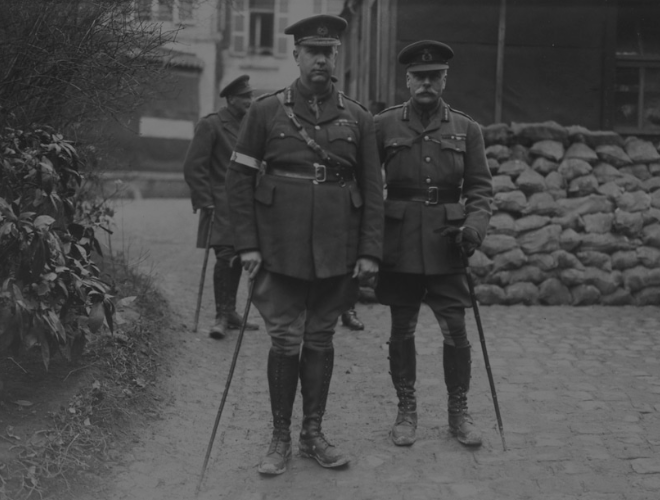
Sir Arthur Currie with Field Marshal Sir Douglas Haig, February 1918.
Libraries and Archives Canada item ID number 3404878.

The Red Ensign is a publication deeply interested in leadership; the good, the bad, and the ugly. For this reason, this Remembrance Day, I have chosen to draw the audience’s attention to the life and times of Sir Arthur Currie, the first Canadian commander of the Canadian Corps during the Great War. This presents an opportunity to both on honour and reflect upon the courage and sacrifice of the men who have fought under the flag of this great nation, but also offers the language to articulate the task facing any who would attempt to lead Canada today. As Currie’s war was defined by the challenge [of] leadership of Canadians in the context of the shifting priorities of the late British Empire, any who would seek to lead Canadians today face will struggle to harmonize efforts on behalf of the Canadian people and the priorities and policies of the American power block which he cannot eschew.

Dulce et decorum est pro patria mori; but when your country is an Imperial Dominion, who and what is “pro patria“, and how can one spend their life for them?

The Man Before the Great Man:

Arthur Currie was born in 1875 in Napperton, Ontario [50 km West of London], the third of eight children living on a homestead belonging to his grandfather. Raised with a the vigorous discipline of a Methodist home, Currie would remain a convicted Christian for his entire life, though he converted to Anglicanism as an adult. Currie was a good student, intending to pursue a career in law or medicine but dropped out of school twice, first temporarily because of the financial constraints brought on by the death of his father, and then for a second time at 19 because of a quarrel with one of his teachers. After leaving school he went West; after a string of failed efforts to establish himself via entrepreneurship and real-estate speculation he joined the Canadian militia as a gunner in 1897 in Victoria B.C. at the age of 23. A giant man (6’3″ at a time when the average Canadian height was 5’7″) with a noted eye for technical detail and, in the words of his son, a “tremendous command of profanity”, he quickly distinguished himself and was promoted to corporal before earning a commission as an officer in 1900. As an officer in peace time Currie was noted for his detailed inspections and his rapid transformation from “one of the boys”, into a rigid disciplinarian. This duality, an officer raised from the ranks, who could both embody the rigid tradition of the British military and who had an intimate familiarity with the life and ways of the enlisted men would become a defining feature of his career.

During Currie’s peace-time career as an officer he maintained a second career as a real-estate [agent]. After becoming head of Matson Insurance Firm 1904, he and the firm invested aggressively in the Victoria real-estate market. In 1913 Currie’s financial situation began to rapidly deteriorate as a consequence of price declines in the real-estate market. Currie’s financial problems nearly led him to refuse to stand up the 50th Regiment Gordon Highlanders of Canada in 1913. In July 1914 Curry used $10,833.34 of regimental funds intended for the purchase of uniforms and kit to pay his personal debts, and found himself facing forcible retirement just as the Canadian Army was being mobilized for war. At the intervention of one of his subordinates, Major Garnet Hughes, he instead accepted promotion as brigadier-general of the 2nd Brigade of the 1st Canadian Division, and ignored correspondence from the new commander of the 50th regiment, Major Cecil Roberts, about the missing funds until he was overseas.

Currie arrived at camp Valcartier on September 1st, 1914 to find himself charged with 10x as many men as he had ever led before, no staff, a shared tent as a command center, and the duty to prepare these men for one of the most difficult theatres of war the world has ever seen. The six months between taking command and the arrival of his brigade in the trenches near Ypres were marked by two mud besotted poorly supplied training camps, shoddy kit, rampant disease, and the company of a certain bear that was to become beloved by children around the world. Through this period Currie was well liked by the men, but known as a disciplinarian with an eye for technical detail. In March 1915 the brigade was deployed to what was expected to be a quiet part of the front with the intent of allowing the men to gain some experience with trench warfare before they were relied upon for action. Nobody anticipated what would happen next.

North Africa Ep. 7: Hitler says No! Rommel doesn’t care!

Filed under: Africa, Australia, Britain, Germany, History, Italy, Military, WW2 — Tags: , , , , — Nicholas @ 04:00

World War Two
Published 8 Nov 2025

Rommel is called to Berlin, where he’s told to wait until May and settle for Benghazi, but he rejects that plan and decides to strike sooner. In Cairo, Wavell reads ULTRA decrypts and realizes the Luftwaffe is preparing something, while admitting he has almost nothing left to hold Cyrenaica. On the ground, the Australians storm Giarabub in a sandstorm, El Agheila is snatched after a botched British ambush, and Rommel orders preparations to hit Mersa Brega before the British can dig in.
(more…)

When “research shows” in a headline indicates “bullshit here”

Filed under: Books, Media, Science — Tags: , — Nicholas @ 03:00

At Science Is Not The Answer, William M. Briggs says we should never trust stories headlined with “research shows X” (although if you’re a regular reader, you probably already know this):

Research Shows headlines are generated from papers by academics, and these all have explicit or tacit claims of cause, all purporting to explain some set of observations (whether gathered in history, the world, or by experiment). To explain is to state or to tacitly point to a cause.

The problem is that the methods science has developed to affirm or claim cause are often wrong: they are not right; they are in error; they are incorrect; they are fallacious; they sometimes make the right decisions, but only accidentally. By which I mean, cause is arrived at not by the methods, but by other means, yet the methods are credited.

I hope it is clear when I say that these methods are not to be used.

But are.

The worst tool, and one whose use is always and every instance a fallacy, is the so-called hypothesis test. We have done (“wee Ps”) in Class so many times, we’re sick of it (or I am). But I want to prove to you “tests” are fallacious another way, using one familiar example and one common situation. And with no math!

The idea is simple: a researcher makes observations, runs a “test”, and makes a pronouncement the cause he thought of is the one correct explanation for the observations.

He might be right about this, but it will only be accidentally, and not because of the “test”. For that same “test” could be used in support of an infinite number of other possible causes. That is the proof against “tests”: that they can support anything.

This will always be the case. As in every time. As in it is inescapable.

Our familiar example comes from A Global Enlightenment: Western Progress and Chinese Science by Alexander Statman (his surname guaranteeing I would read the book). It is mostly a review of the 18th Century Jesuit mission to China, and those Jesuits’ interactions with major figures of the so-called Enlightenment.

An important observation Statman makes is man’s proclivity to look for wisdom in the past or the future. One believes those in the past had superior knowledge, knew more secrets and could communicate with God (or the gods) with greater ease and facility, yet somehow that knowledge was lost (possibly wiped away in the flood; China, having the oldest extant civilization was thought to hold vast repositories). Or one believes those to come will be better than we, will know more, and will lead easier and happier lives, if only they are not held back by those who look to that past (China was also by others thought to have stagnated and could only copy their betters).

Samopal vz 38: Czechoslovakia’s Interwar Drum-Fed SMG in .380

Filed under: Europe, History, Military, Weapons — Tags: , , , , — Nicholas @ 02:00

Forgotten Weapons
Published 25 Jun 2025

Military interest in a submachine gun was late in Czechoslovakia, but by the late 1930s a development program was put into place. Interestingly, the main use case for an SMG was seen as being a replacement for a rifle-caliber LMG in fortification mounts. The thought process seems to have been that a large volume of fire was the necessary element to keep invaders away from border fortresses, and the ballistic power of the fire was not so important.

The vz38 was designed by František Myška, chambered for the 9x17mm (.380) cartridge used by the vz22/24 pistol then in service. It was tested against the ZB26 light machine gun. It proved reliable and effective, and its 96-round drum magazine (copied from the Finnish Suomi) was a particularly nice element. An initial order was placed and the gun was formally adopted into service, but production never began. Instead, German occupation of the country put an end to the project and only 20 preproduction examples were ever made.

Many thanks to the VHU — the Czech Military History Institute — for giving me access to this very rare example to film for you. The Army Museum Žižkov is a part of the Institute, and they have a three-story museum full of cool exhibits open to the public in Prague. If you have a chance to visit, it’s definitely worth the time! You can find all of their details (including their aviation and armor museums) here:

https://www.vhu.cz/en/english-summary/
(more…)

QotD: Historical training is not “spending 7 years memorizing dates”

Filed under: Education, History, Quotations — Tags: , , , — Nicholas @ 01:00

    James @TTJamesG
    The fact that you spent 7 years memorizing dates and the culmination of that is arguing semantics on X is depressing. Is it too late for a refund? You wrote an entire thread addressing a point I never made, a point you intentionally misconstrued.

Another thing that has come up a fair bit here recently is the idea that historical training consists of “spend[ing] 7 years memorizing dates” which is a severe misunderstanding of what historians do.

It confuses the job of reading history books for the job of writing them.

While any historian is going to end up knowing a lot of names and dates simply as a byproduct of teaching and working with their material, raw memorization is not a significant part of the PhD training process.

Instead, the focus is on research skills and analysis.

In practice, we can divide a lot of historical training into three components: the historical method, “theory”, and then field-specific training.

The historical method is the process and heuristics we use to assess historical sources.

While history students work from history books that are “pre-chewed” as it were, historians work with their evidence in its raw, unprocessed form: archives of documents, ancient texts, inscriptions, memoirs, archaeological remains and so on.

The historical method is how we approach that raw material: who produced it? What information would they have had (eyewitness? second hand?), what sources might they have had? What might their own aims have been?

And how can we most plausibly fill in gaps in our evidence?

Then there is historical theory. No good historian is a doctrinaire follower of a single theory of history — rather these are toolboxes of ideas we use to frame the research questions we’re asking.

But to use those ideas, you must know and understand them first.

So “critical theory” is interested in power relationships, while an Annales framework is interested in long-term structures and cultural assumptions, while a materialist framework focuses on material conditions and so on.

Each would imply different questions of the evidence.

Part of the point of learning theory, of course, is that each theory lens is, in and of itself, incomplete. Cultural structures matter, individual choices matter, material conditions matter, etc. etc.

You learn and think about a bunch of these to know the blindspots of each.

Finally, historians are going to learn a bunch of research skills specific to our period and place. For ancient Roman history, that’s Latin, Greek, epigraphy, paleography, some philology and a lot of archaeology.

For a more modern field, archive research methods are huge.

On top of that, you’re also going to develop knowledge in other disciplines — sciences, social sciences — that touch on your topic of interest. I work on the costs of warfare, so military science and theory, along with economics and a bit of demographics, matter to me.

What the historian is actually doing is taking that skillset to the raw evidence of the past — sometimes asking new questions of old material, frequently asking old questions of material no one has studied intensively before — to discover new information about the past.

Of course we also assemble a broad knowledge of the societies we study (like how Roman citizenship works), which we’d need to understand our sources and our evidence.

Roman citizenship, for instance, matters a lot for understanding the Roman army!

That broad knowledge is what we’re drawing on in teaching and for that we are relying on the work of our colleagues in the discipline: each historian is doing their own original discovering-the-past work, but also keeping up-to-date on our colleagues’ work.

The end result is both a steadily improving understanding of the past but also the ability, as our own conditions and interests change, to ask new questions, rather than simply endlessly rehash old questions and old (potentially flawed) answers.

“Online Rent-a-Sage” Bret Devereaux, Twitter, 2025-08-05.

« Newer PostsOlder Posts »

Powered by WordPress