
In a NYT town hall recently leaked to the press, a reporter asked the executive editor, Dean Baquet, why the Times doesn’t integrate the message of the 1619 Project into every single subject the paper covers: “I’m wondering to what extent you think that the fact of racism and white supremacy being sort of the foundation of this country should play into our reporting … I just feel like racism is in everything. It should be considered in our science reporting, in our culture reporting, in our national reporting. And so, to me, it’s less about the individual instances of racism, and sort of how we’re thinking about racism and white supremacy as the foundation of all of the systems in the country.”
It’s a good point, isn’t it? If you don’t believe in a liberal view of the world, if you hold the doctrines of critical race theory, and believe that “all of the systems in the country” whatever they may be, are defined by a belief in the sub-humanity of black Americans, why isn’t every issue covered that way? Baquet had no answer to this contradiction, except to say that the 1619 Project was a good start: “One reason we all signed off on the 1619 Project and made it so ambitious and expansive was to teach our readers to think a little bit more like that”. In other words, the objective was to get liberal readers to think a little bit more like neo-Marxists.
The New York Times, by its executive editor’s own admission, is increasingly engaged in a project of reporting everything through the prism of white supremacy and critical race theory, in order to “teach” its readers to think in these crudely reductionist and racial terms. That’s why this issue wasn’t called, say, “special issue”, but a “project”. It’s as much activism as journalism. And that’s the reason I’m dwelling on this a few weeks later. I’m constantly told that critical race theory is secluded on college campuses, and has no impact outside of them … and yet the newspaper of record, in a dizzyingly short space of time, is now captive to it. Its magazine covers the legacy of slavery not with a variety of scholars, or a diversity of views, but with critical race theory, espoused almost exclusively by black writers, as its sole interpretative mechanism.
Don’t get me wrong. I think that view deserves to be heard. The idea that the core truth of human society is that it is composed of invisible systems of oppression based on race (sex, gender, etc.), and that liberal democracy is merely a mask to conceal this core truth, and that a liberal society must therefore be dismantled in order to secure racial/social justice is a legitimate worldview. (That view that “systems” determine human history and that the individual is a mere cog in those systems is what makes it neo-Marxist and anti-liberal.) But I sure don’t think it deserves to be incarnated as the only way to understand our collective history, let alone be presented as the authoritative truth, in a newspaper people rely on for some gesture toward objectivity.
Andrew Sullivan, “The New York Times Has Abandoned Liberalism for Activism”, New York, 2019-09-13.
August 13, 2025
QotD: The New York Times and their 1619 project
August 12, 2025
Britain warns online platforms about “overzealous” interpretation of online safety law
“Ben the Layabout” posted a note over at Founding Questions linking to a Telegraph article [archive.ph link] that seems to indicate the British government is demanding that online services both enforce the letter of the law and the spirit … whatever that might mean at any given moment in time:
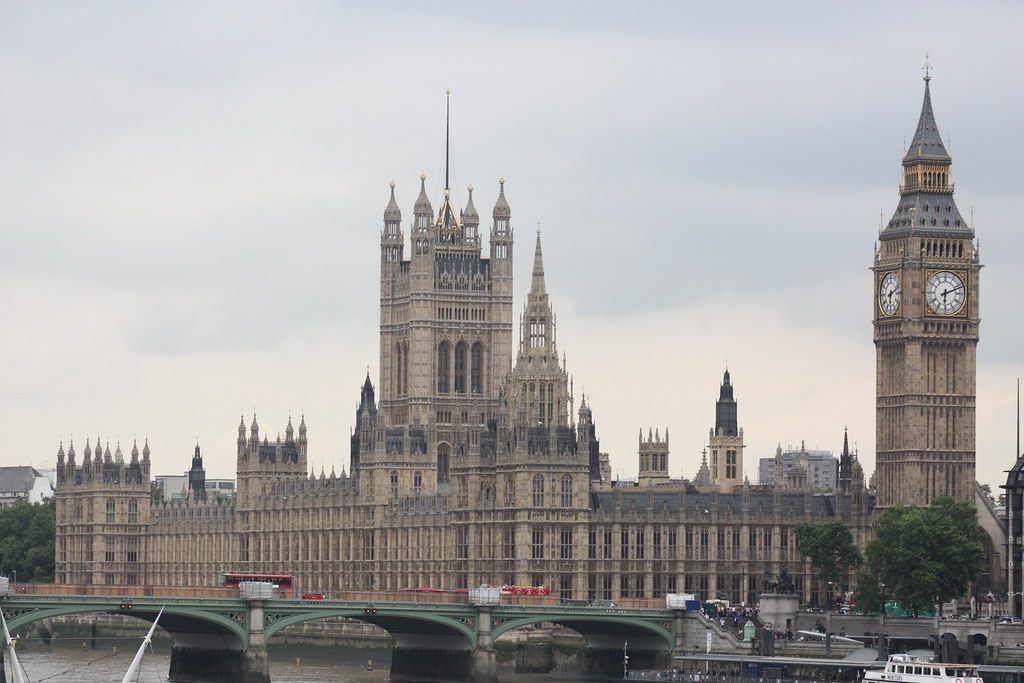
“Palace of Westminster”by michaelhenley is licensed under CC BY-NC-SA 2.0


Social media giants face huge fines for curbing free speech by “overzealous” enforcement of online safety laws.
Ministers have told platforms including Facebook, X, Instagram and TikTok they must not restrict access to posts that express lawfully held views.
The warning, in an apparent change of tone from ministers, comes amid a backlash over websites blocking users from viewing material, including parliamentary debates about grooming gangs.
Campaigners have said that free speech is threatened by the Government’s application of the Online Safety Act, which is meant to protect children from harmful content.
JD Vance, the US vice-president, used a visit to the UK this week to warn ministers against going down the “dark path” of censorship.
Whitehall sources have expressed concern that social media firms, some of which have criticised the law, “have been overzealous” in enforcing it and must be “mindful” of the right to freedom of expression.
The Science Department, which oversees the legislation, told companies they could face fines if they failed to uphold free speech rules.
A spokesman said:
As well as legal duties to keep children safe, the very same law places clear and unequivocal duties on platforms to protect freedom of expression.
Failure to meet either obligation can lead to severe penalties, including fines of up to 10 per cent of global revenue or £18m, whichever is greater.
The Act is not designed to censor political debate and does not require platforms to age gate any content other than those which present the most serious risks to children such as pornography or suicide and self-harm content.
Platforms have had several months to prepare for this law. It is a disservice to their users to hide behind deadlines as an excuse for failing to properly implement it.
So online sites big and small are required to obey the British law, but only as and how the British government wants it enforced or they’ll levy massive punishment. Too lax? Punishment. Too strict? Also punishment. It’s almost as if Britain wants to be cut off from the rest of the internet …
German-Soviet Invasion of Poland 1939
Real Time History
Published 8 Aug 2025Germany and the Soviet Union both regarded the Polish state as a creation of the post-WW1 system, and both had claims on Polish territory. In the summer of 1939, Adolf Hitler decided to invade Poland in a fait acompli against the Allies. In a secret agreement between Germany and the Soviet Union they agreed on dividing up the Polish state and Eastern Europe.
(more…)
AOL to shut down its last dial-up access: dozens to be inconvenienced
James Lileks on the end-of-era announcement from AOL — and I can’t recall the last time I thought of that company — that they’ll be eliminating the last of their dial-up internet access accounts:
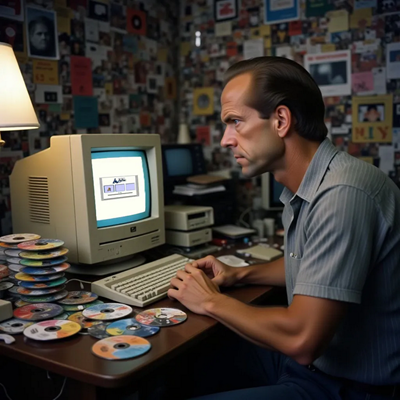
New tech: shiny today, tarnished tomorrow. Everything that was once bright and brilliant now stamps its walker towards the exit door. The headlines wave goodbye: Last telegram office in the US shut down.
Last phone booth in New York is decommissioned. The latest: AOL to shut off its landline customers.
You’d think this would be news on the level of “homing pigeon trainer employment hits record lows”.
Who uses dialup? Yahoo, which now owns the AOL brand, says that the user base is in the “low thousands”, which suggests that some people forgot to turn off autopay in 2005. What does AOL do today? The usual basket of dross and chum. A website that offers “trending videos” — gosh, don’t know where else you’d find those — and a lot of news stories, supplied by Yahoo, and its … numberless army of journalists, I guess.
It’s a legacy brand for people who want to slide into the internet like comfy slippers they left under the desk. And that’s fine. Facebook serves the same function. It’s a place to start, a home base. A familiar window out which we gaze daily We all have them. But let us not get nostalgic for AOL and the early days of the internet. Some people, of course, love to talk about the pioneer days, and how it required some technical know-how:
Well, we didn’t have those fancy little pre-made modems like you got in the 90s, so we had to get a little matchbox and fill it up with a certain kind of specially-bred insect that sang a note at a particular pitch when exposed to electrical current. So you’d crank up the generator and put the little alligator clips on the box and hold the box up to the phone while you entered your user name in Morse code by pushing on the hang-up buttons, and then you had to shake the box so the insect singing would modulate. Took about an hour, but then you’d be “On the Line”, as we said, and you could go to a Usenet group and call people Nazis. Kids today, they can call someone a Nazi without lifting a finger.
Negev 7: Israeli Scales up to a 7.62 NATO Machine Gun
Forgotten Weapons
Published 31 Mar 2025The Israeli Negev machine gun had a rather long development cycle, beginning in 1985 but not seeing final completion and issue until 1997. Once on the market, it proved to be a pretty successful weapon, used by the Israeli military and also a number of export client around the world. In 2012, IMI released an improved newer version, the Negev 7. This was made exclusively as a 7.62mm NATO caliber gun, as opposed to the original Negev which was only made in 5.56mm NATO.
(more…)
QotD: Rick Wakeman – “I was Spinal Tap for real”
“How’d you do that?” an engineer asked.
“Don’t tell him,” Visconti told Wakeman. “It’ll make you a fortune!”
Visconti asked Wakeman if he could come back to play mellotron for one of his artist’s recording sessions. After getting dropped off at the studio by his mother, Wakeman was greeted at the studio by a precocious young rocker whose eyes appeared to be two different colors. His name was David Bowie, and he wanted Wakeman to play mellotron on “Space Oddity”, the title track of his second album. “This will be a piece of cake for you,” he reassured Wakeman.
“Oh, okay,” Wakeman stammered.
“I take it you have played a piece of cake before?” Bowie replied. Wakeman, confused and nervous, offered no reply.
“Well,” Bowie went on, “maybe not then.”
The song launched a lifelong friendship with Bowie, and Wakeman’s career. He became rock’s go-to keyboardist, playing in countless sessions. In 1970, Melody Maker, at the time England’s most influential music publication, featured Wakeman on a cover story that anointed him “Tomorrow’s Superstar”. Bowie offered him a few key pieces of advice: get your own band, play with musicians who understand you, and, when it comes time to perform, “do what you want onstage, especially if you’re using your own money. Don’t let a promoter, agent, or manager tell you otherwise — they don’t have the imagination.”
Wakeman put the advice to use in the brashest of ways: He turned down Bowie’s offer to play in his sideband, the Spiders From Mars, and instead became the keyboardist for Yes. With its mystical lyrics, orchestral productions, Tolkienseque album art, and long, multipart songs, Yes exemplified progressive rock in all its technical breadth and portentous glory. Wakeman, who surrounded himself with keyboards and wore a cape to hide his arms after a critic said he moved like “a demented spider”, became prog rock’s most iconic star. “Here comes Rick, the caped crusader!” the band’s lead singer, Jon Anderson, recalls with a laugh. “He had a great sort of stance onstage, and very powerful energy. It really put him apart from any other keyboard player.” Or, as Wakeman deadpans, “I was Spinal Tap for real”.
David Kushner, “The Stranger-Than-Fiction Secret History of Prog-Rock Icon Rick Wakeman”, Vanity Fair, 2020-06-25.
August 11, 2025
Smug Canadian boomer autohagiography rightly antagonizes the under-35s
Fortissax had an argument with one of his readers over a smug, self-congratulating meme about how wonderful Canada was in the 1990s and early 2000s:

What we lived through long before Trudeau was the Shattering, the breakdown of Canada’s social cohesion, driven by left-liberalism with communist characteristics applied to race, ethnicity, sex, and gender, and punitive almost exclusively toward visibly White men. My generation, those millennials born on the cusp of Gen Z, saw post-national Canada take shape not in the comfortable suburban rings of the GTA or the posh boroughs of Outremont and Westmount, but in self-segregated, ghettoised enclaves of immigrants whose parents never integrated and were never required to.
Memes like that are dishonest because they feed a false memory. The 2000s were not normal. Wages were stagnant, housing was already an asset bubble, and immigration was still flooding in under a policy that explicitly forbade assimilation. Brian Mulroney had enshrined multiculturalism into law in 1988. Quebec alone resisted, carving out the right to limit immigration under the 1992 Quebec–Canada Accord. After Chrétien, Stephen Harper brought in three million immigrants, primarily from China, India, and the Philippines in that order.
The Don Cherry conservatives of that era were Bush lite. They were rootless, cut off from their history, their identities manufactured from the top down since the days of Lester B. Pearson. They conserved nothing. For Canadian youth, it was the dawn of a civic religion of wokeness, totalitarian self-policing by striver peers, and the quiet coercion of every institution. My memories of that decade are of constant assault — mental, physical, spiritual — from leftists in power, from encroaching foreigners, and from the cowardice of conservatives.
Your 2000s might have been great. For us, they were communist struggle sessions. In 2009 we were pulled from class to watch the inauguration of Barack Obama, a foreign president, as a historic moment for civil rights. Our schools excluded us while granting space to every group under the sun: LGBT safe spaces and cultural clubs for Italians, Jamaicans, Jews, Indians, Indigenous, Balkaners, Greeks, Slavs, Portuguese, Quebecois, Iroquois, Pakistanis — every culture celebrated except our own. Anglo-Quebecers and Anglo-Canadians got nothing but an Irish club, closely monitored for “white supremacy” and “racism” by the HR grandmas of the gyno-gerontocracy of English Montreal. Students self-segregated, sitting at different cafeteria tables and smoking at different bus shelters. At Vanier, Dawson, and John Abbott College, these divisions were institutionalised. I remember walking into the atrium of Dawson, my first post-secondary experience, greeted by a wigger rolling a joint while a Jamaican beatboxed to Soulja Boy.
We became amateur anthropologists out of necessity, forced to navigate a nationwide cosmopolitan experiment from birth. We learned the distinctions between squabbling southeastern Europeans of the former Yugoslavia, and we did not care if Kosovo was Serbia or whether Romanians and Albanians were Slavic, they all acted the same way. We learned the divides within South Asia, the rivalries between Hindutva and Khalistani, the differences between a Punjabi, a Gujarati, a Telugu, a Pakistani, a Hong Konger, a mainlander, and a Taiwanese. We know the shades of Caribbean identity, the factions of the Middle East, and the intricacies of North African identity. We should never have needed to know these things, but we do.
For us, childhood in this cesspit was the seedbed of radicalism. We never knew an era when contact with foreigners was limited to sampling food at Loblaws. All we know is being surrounded by those who hate us, governed by a state that wants to erase us, with no healthcare, no homes, no jobs that are not contested by foreigners, and no money to start families.
Stalin’s Death: The Day the USSR Changed Forever! – W2W 39
TimeGhost History
Published 10 Aug 2025March 1953: Stalin’s sudden death triggers a whirlwind of conspiracies, paranoia, and a deadly battle for control inside the Kremlin. As Beria, Khrushchev, and the Soviet elite scramble for power, the fate of the world’s largest superpower hangs in the balance. Was Stalin murdered by his inner circle, or did his own regime consume him? Discover the truth behind the downfall, the rise of Khrushchev, and the birth of the KGB in the Cold War’s most dramatic turning point.
(more…)
The problem with the theory that local government is more responsive is … people
Poor Chris Bray is having a moment of deep cognitive dissonance over the vast chasm between his prior belief that local government is more sensible, more grounded, more responsive to the electorate than huge, distant, impersonal big government:
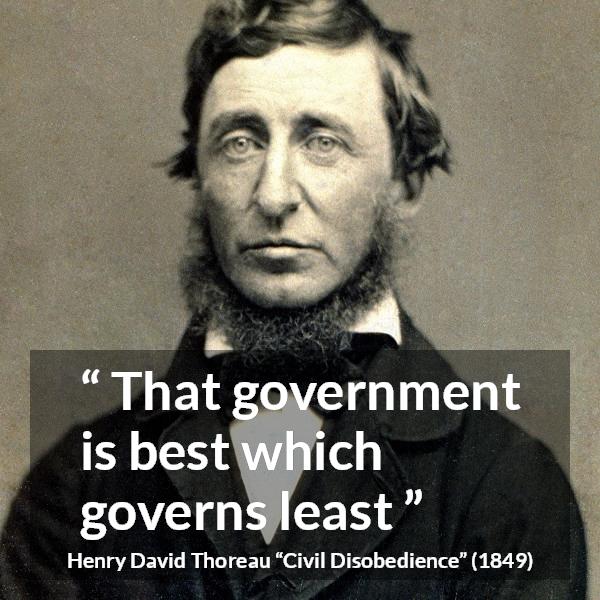
The more you deal with government, the more you are likely to agree with Thoreau
The problem of underlying principles and structural assumptions in a moment of profound cultural decay.
Like my old friend James Madison, the core of my understanding of political power is that authority becomes more rational and balanced as it gets closer to the people who are governed. Starting from home in my list of ideological priors, centralized power is usually going to be a steamroller, managed on top-down premises by people you’ve never met; local government, government by neighbors, is usually going to be more adept at listening and adapting. Your mayor is down the block, mowing his lawn. You can wave to him. When I worked at small town newspapers, I’d have breakfast with the city manager and the police chief — mostly so they could threaten to call my editor and have me fired, but still. They were here, right in front of me. I could talk to them. In the town where I’ve lived for a few years, now, I’ve waited at Trader Joe’s for a city councilman in cargo shorts and an old t-shirt to move over so I could get to the ground beef. They aren’t distant autocrats.
Sadly, though, a good few of them turn out to be proximate autocrats, and almost miraculously stupid. The problem with the theory of relatively well-balanced local authority is that some of the biggest goobers I’ve ever met have served on small town city councils and school boards, and your HOA board of literal neighbors makes Mussolini look like a hippie.
[Deleted a video here of an HOA officer being arrested, because it was staged.]
I wrote a quite carefully reported newspaper story about wasted money at a suburban school district, decades ago, that was critical but fair and elaborately sourced. The subsequent conversations I had with the members of the school board made me wonder if they had actual brain damage. No one on earth is more susceptible to psychotic conspiracy theories than small town elected officials, who respond to mild criticism by demanding to know WHO PUT YOU UP TO THIS, WHO ARE YOU REALLY WORKING FOR!?!?!?! WHAT’S YOUR TRUE AGENDA!?!?!?! WHO SENT YOU!?!?!?!? If you ask me for a list of the top ten people I’ve known personally and can’t stand at all, roughly eight of them were elected to local government positions in towns with low-five-figure populations, and I start grinding my teeth at the sound of their names. Wait, no: nine.
This topic is back on my mind this week because of Lina Hidalgo, though a county of five million people may be a bad example of real localism and neighborhood authority. Hidalgo is the county judge — in Texas, the chief executive officer — of Harris County. And she’s mad as a hatter. Click on the link to watch the video, but a tax increase is “not about politics, it’s about kids.” Never heard that one before.
[…]
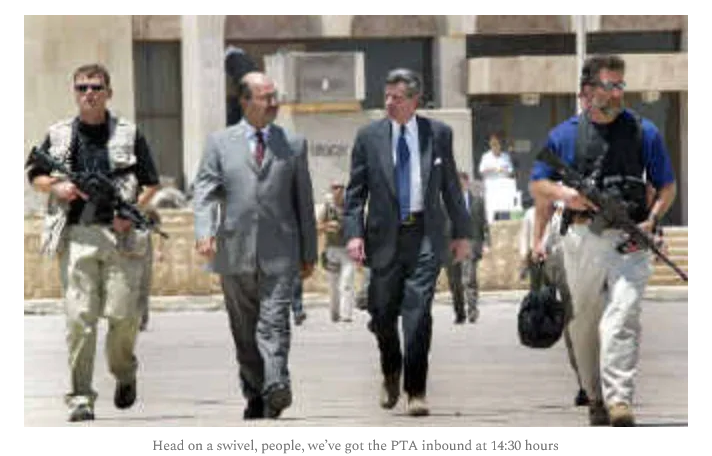
Making appalling decisions at the head of broken institutions, they respond to criticism by hiring men with guns as a shield against ordinary human contact. Like I said, the mayor is down the block, mowing his lawn, so you can wave to hi—STOP RIGHT THERE, GET ON THE GROUND.
The spirit of the NSBA letter lives on in a thousand local offices, where the problem with running schools is that parents exist, and the problem with running cities is that they have people in them.

Speed vs Armour: The Unexpected History of Fast Tanks
The Tank Museum
Published 21 Mar 2025Would you rather go to war in a tank that was quick but lightly armoured – or heavily armoured but slow?
The concept of fast tanks has existed since the First World War, but making a tank fast is easier said than done. You can increase the speed, but only by compromising the other two sides of The Iron Triangle.
Whilst a good power to weigh ratio is key to making a tank go fast, there are other factors that need to be considered. J Walter Christie pioneered the innovative helicoil spring suspension system – an invention that allowed tanks to cope with travelling at high speeds across country. Although not picked up by the US Army, the brilliance of Christie’s suspension was recognised by the Soviets and soon made an appearance on the BT-Series of tanks – and most effectively on the T-34.
Back in the UK, the newly mechanised cavalry was making use of some brand-new Cruiser tanks. Whilst these were fast vehicles, this was coming at the cost of effective protection. Some military thinkers advocated for the concept of “speed as armour” but results were mixed – with the Crusader and Cromwell both proving to be capable tanks.
After the war, the British Army finally moved on from “speed as armour” and settled on sacrificing a bit of speed for the sake of better protection. This was incorporated first into the concept of Universal Tanks and remains a fixture in the modern Main Battle Tank.
So, we’ll ask again. Would you rather go to war in a tank that was quick but lightly armoured – or heavily armoured but slow?
00:00 | Introduction
00:51 | What Makes it a Fast Tank?
02:39 | What is a Fast Tank For?
04:39 | Suspension of Disbelief
06:34 | Speedy Soviets
08:29 | Cruisers Replace Cavalry
11:20 | The Second Wave
13:19 | Cruising in Europe
19:08 | One Tank to Do It All
(more…)
QotD: The job of the fuller
The cleaning agents for fulling wool varied by time and place. Roman fulleries generally used urine allowed to sit for a time (becoming “stale” – such urine is known as “wash”) because that concentrated the ammonium in the urine which acted as the cleansing agent. By the Middle Ages, we see the use of “fuller’s earth” (ammonia-rich clay), although urine continued to be used as well, presumably for its greater availability. As J.S. Lee notes (op. cit., 53), from the late twelfth century, we begin to see the use of water-power to replace the fullery worker as the treading agent, with the use of heavy wooden hammers driven by a water wheel to pummel the fabric.
Once this process was done the clothes or fabric were removed from the basin, scrubbed and wrung out fully, before being rinsed. In the Roman context – Roman fulleries (fullonicae) are fairly well archaeologically preserved and so give clues to the process at that time – the rinsing basins are set up to allow workers to walk in and out of them (some have working benches) which suggests that rinsing may have included additional scrubbing and wringing to make sure to remove both all of the impurities as well as all of the cleaning agents (Flohr, The World of the Fullo, 179-81). Fabrics would then have to be hung to be dried. In the Roman context, artwork tends to show clothes hung over high beams in the fullonica to dry; in the medieval context they were often hung to dry outdoors on long wooden frames called “tenters”.
Finally, the cloth would be “napped” (also called “raising the nap”, “rowing”, “teasing”, or polishing), which may have actually been the most labor intensive part of the process. Cloth would be brushed first, to raise the nap (the fuzzy, rough raised surface on woolen cloth), which would then be sheared to leave the cloth smooth. This stage also provided an opportunity for burling (and now you know why the coat factory is in Burlington), the inspection of the cloth and the manual removal of burrs, knots and other defects. Flohr (op. cit.) argues that this stage in the process consumed the bulk of the time and labor of fulling (a point on which J.S. Lee concurs for the Middle Ages). It is to a significant degree unfortunate that the sensational “they washed clothes in urine!” element of fulling has tended to eclipse the rest of the process in not only the popular imagination but occasionally in the scholarly discourse (the already cited Flohr, The World of the Fullo is a good antidote to this).
The position of fulling in the production chain of textiles seems to have varied a bit over time. In the medieval and early modern periods, fulling was generally done only once, as a final finishing stage in cloth production. By contrast, as Miko Flohr argues (op. cit., 57ff), the primary job of the Roman fuller was effectively as a laundry (though they may have treated freshly woven wool as well). Part of this probably has to do with differences in Roman clothing; Roman clothes were generally fairly simple in shape which must have made them easier to put through a fullery as a completed garment. Myself, I wonder if the changing role of fulling has to do with the introduction of soap during the later Roman Empire, which would have made it more possible for clothes to be laundered domestically (the Romans cleaned their bodies with oil, scraping it off with a strigil, which while perfectly good for cleaning skin would obviously not do for clothes, but soap and scubbing will work for both).
Fulling was generally a commercial (that is, not household) operation, done by professional fullers and we’ll talk about them (along with dyers and cloth merchants) in just a moment in terms of their place in society.
Bret Devereaux, “Collections: Clothing, How Did They Make It? Part IVa: Dyed in the Wool”, A Collection of Unmitigated Pedantry, 2021-04-02.
August 10, 2025
“Believe all women” especially when they imagine (or hallucinate) offense
An excerpt from a work-in-progress by James Pew, from an incident during the heydey of #MeToo hysteria in the Toronto media community:
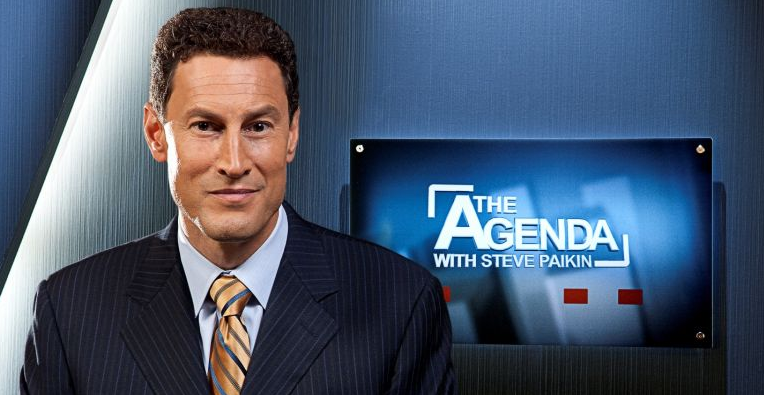
Steve Paikin is a Canadian journalist and author, and the host of TVOntario’s acclaimed flagship program, The Agenda With Steve Paikin. In his brush with #MeToo infamy, Paikin was accused of asking for, or possibly suggesting sex with a woman (who had previously appeared on his show), while at a business lunch with her at Grano restaurant in Toronto. The woman, a former Toronto Mayoral candidate who has a record of previous unsubstantiated claims against former Toronto Mayor Rob Ford, claims to have “politely” declined Paikin’s request, but said she was not invited back on his show because of her refusal to have sex with him.
The Paikin scandal was different from others which had unfolded in the hazardous year of 2018. This was a #MeToo story where the public appeared interested in both sides. Were chinks in the #MeToo armour beginning to appear? As Joe O’Conner wrote in the pages of the National Post, there was “an accusation and a vociferous denial”.1 But similar to other #MeToo narratives, the accuser was reaching deep into the past. According to Sarah Thomson, Paikin’s unwanted proposition for sex occurred in 2010.
Defending himself on Facebook, Paikin called the allegations a “complete fiction”. He wrote: “To be clear, I did not have sex, suggest, request, imply, or joke about having sex with you (Sarah Thomson)”.
Paikin had been a supporter of #MeToo. He wrote that “The #MeToo movement is too important to be undermined by spurious allegations”. Did he not realize that #MeToo means “believe all women”? Aren’t spurious allegations the type we are not supposed to believe? Wouldn’t that mean that women don’t (or can’t) make spurious allegations, but only the type of allegations that must be believed unquestioningly? Didn’t Paikin realize the contradiction in thinking that #MeToo was important, but in his case it was acceptable to cast off its intrinsic blanket credulity concerning the abuse claims of women? Paikin wrote:
Sadly, in this day and age, too many people are going to believe the lie, especially when it comes to this subject. I am mortified that in many peoples’ eyes, I have lost the presumption of innocence that I’ve previously enjoyed. But I did not do these things. There is simply no truth to these allegations.2
Surprisingly, TVO did not remove Paikin, but launched an investigation instead. In a piece published in the Globe and Mail called “The Humiliation of Steve Paikin”, Margaret Wente wrote, “Mr. Paikin was lucky not to be suspended, people say. Some luck. His name is in the headlines, generally on the same page as all the other #MeToo stories that now dominate the news. I imagine that most people who know him don’t believe a word of it. Others will think, ‘These days you never know’.”3 A fair assessment. Wente later points out “Women (just like men) lie for all kinds of reasons, including the fact that they are unbalanced or unhinged.” However, it should be pointed out that in the #MeToo era and since, women do not get cancelled and humiliated because a man (or men) made unsubstantiated allegations against them.
The most suspicious part of the story is that Thomson’s assistant was present at the lunch meeting when Paikin supposedly propositioned her. Who would do such a thing as Paikin was accused in the presence of other people? Thomson did not provide the name of her assistant, and no investigative journalists were able to find out who she was. A critical detail appeared to go uncorroborated. However, the independent investigator tracked her down and conducted an interview. Her testimony was essential to clearing Paikin, although she chose to remain anonymous.
By April of 2018, the independent investigation into the allegations against Paikin was complete. It was found that while Thomson genuinely believed that Paikin had propositioned her “the evidence brought forward by Thomson and others (did) not support her account of what happened”.4 Rachel Turnpenney, the lawyer who conducted the investigation, referred to Thomson’s former assistant as “Witness J” – whose testimony contradicted Thomson’s account. Witness J told investigators that Paikin did not proposition Thomson or make any inappropriate sexual comments during the lunch.
But even if the allegations were true, was what Paikin alleged to have done really so bad? Aren’t men taught to ask for consent? Isn’t that what “propositioning” Thomson would have been? It could be argued, had the allegations turned out to be true, that Paikin demonstrated inappropriate, perhaps insensitive conduct. Clearly it would have been poor judgement, but should a man like Paikin be fired for a slip in judgement where no crime occurred? In hypothetical defense of a mis-step that never occurred, is it not possible to argue that a man might misread body language or other signs from a woman, and interpret them as mutual sexual interest? Getting this wrong can be embarrassing for both parties involved, but does it meet the severity of a cancellable offense? As Margret Wente wrote, “The truth is that not all men are guilty of what they’ve been accused of, and others aren’t that guilty of very much”.
But the social justice contingent is obsessed with power dynamics. According to them, any man who holds a professional position elevated over a woman he is attracted to, will automatically use his power to coerce the woman for sexual favours. In spite of the high-profile example in figures such as former American movie mogul Harvey Weinstein, it is insane to assume this is the default position of successful men, or men in places of authority or influence, just as it is insane to believe all women unconditionally.
Turnpenney felt that while Paikin’s testimony was consistent and credible, Thomson made “leaps without sufficient evidence to do so and she linked evidence together without factual foundation. Thomson’s evidence also veered toward being exaggerated and untrue.” Even though Paikin was ultimately exonerated, he was humiliated by the experience. In the initial statement he made defending himself, he characterized Thomson’s actions as defamatory. However, lucky for Thomson, Paikin chose not to sue. Thomson paid no penalty for all the trouble she caused, and most people felt Paikin was fortunate to have dodged a #MeToo bullet. As of this writing, Steve Paikin is still the host of The Agenda.
1. A #MeToo story with two sides: Steve Paikin fires back at sexual harassment allegations
2. ‘My turn’: Steve Paikin responds to sexual misconduct allegations – Sudbury News
3. The humiliation of Steve Paikin – The Globe and Mail
4. TVO host Steve Paikin cleared by investigator after sexual harassment accusations | CBC News
Nova Scotia rediscovers the joys of dictatorial power
Clearly hankering for those glorious days when Canadians cowered in their homes due to the government’s public health diktats, Nova Scotia has now banned almost all outdoor activities in wooded areas across the province:
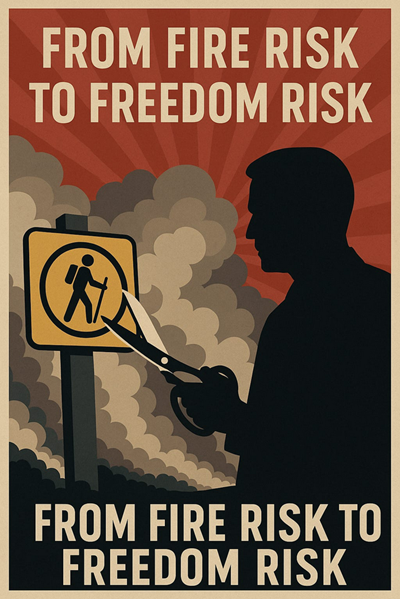
Image from Junk Economics
Nova Scotia’s Premier has decided that walking in the woods — yes, walking — is now so dangerous it carries a $25,000 fine.
Not for lighting a campfire. Not for running your ATV through dry brush. Not for tossing a cigarette. Just walking. In a province where there are currently four active wildfires … all under control.
This is not about preventing wildfires. This is about the politics of safety — and how governments turn fear into obedience.
I was born in Halifax, and my family’s roots run deep in Nova Scotia — deeper than the roads and towns that stand there now. Generations of my parents, grandparents, and great-grandparents — along with uncles, aunts, and cousins — are buried in its soil. My family weathered centuries of storms, wars, and political upheavals there, carving out a life from raw wilderness. This isn’t some detached policy rant from a distance. It’s personal. And it’s infuriating to watch a government use “safety” as a smokescreen for inaction, punishing people for living their lives while leaving the real problem unsolved.
The Problem They Didn’t Solve
In 2023, Nova Scotia suffered its worst wildfire season in history. At the time, the province had four Airbus H125 helicopters to fight fires.
In 2025, after all the smoke cleared and the “lessons learned” speeches were made, Nova Scotia … still has four Airbus H125 helicopters. Newer paint jobs, slightly upgraded safety features, same firefighting capacity. No fixed-wing aircraft. No surge ability. No major investment in manpower or pre-positioned crews.
The province didn’t fix the problem. They just hit refresh on the equipment list.
[…]
The Legal Overreach
The ban covers 89% of provincial land (Crown land) plus private forested land. Even if you own it, you can’t invite your mother over to walk her dog in your woods.
Section 7 of the Charter protects liberty, and the Forests Act was never intended to give cabinet the power to impose a province-wide walking ban. That’s legislative overreach wrapped in administrative convenience.
And the $25,000 fine? Grossly disproportionate — and in practice, quietly plea-bargained down because it’s more for optics than enforcement. A scarecrow penalty to make the Premier look tough on camera.
The Snitch Line and the COVID Flashback
Just like pandemic tip lines, Nova Scotia has invited citizens to report on each other for the crime of going for a picnic.
It’s hard to overstate how corrosive this is: encouraging suspicion, legitimising neighbour-against-neighbour policing, and normalising the idea that the government can criminalise any movement it decides is risky.
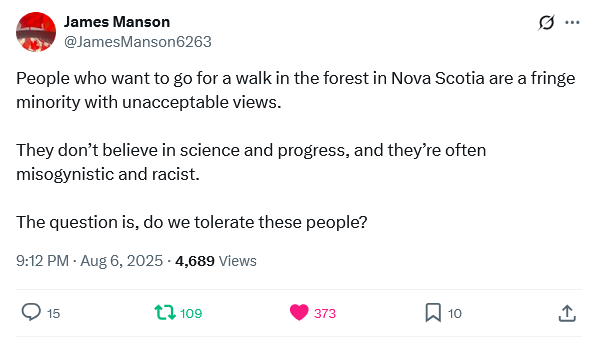
Of course, the commentariat is having a wonderful time of it:
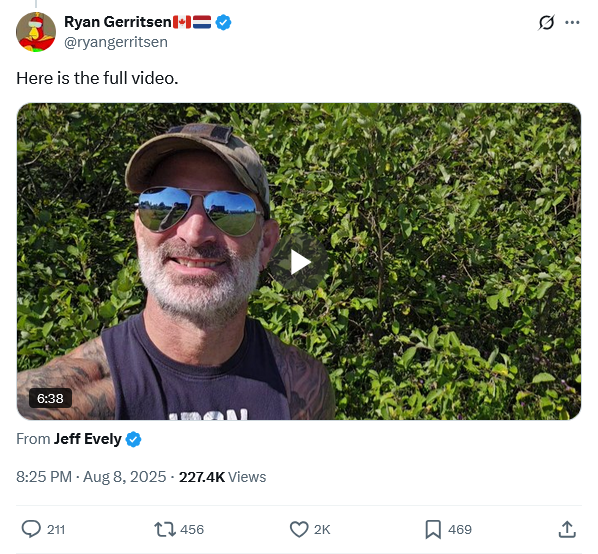
And what may be the first issued fine under the provincial ban went to Jeff Evely:
Al Stewart – “Helen and Cassandra”
jonnoms
Published 19 Jun 2011Slight re-working of ‘Where Are They Now?’ video to another, Al Stewart song.


