Quotulatiousness

May 17, 2025

Learning racism in Japan

Filed under: Cancon, Japan — Tags: , , , , — Nicholas @ 03:00

John Carter recounts how his views and opinions on racism changed while living for an extended period in Japan:

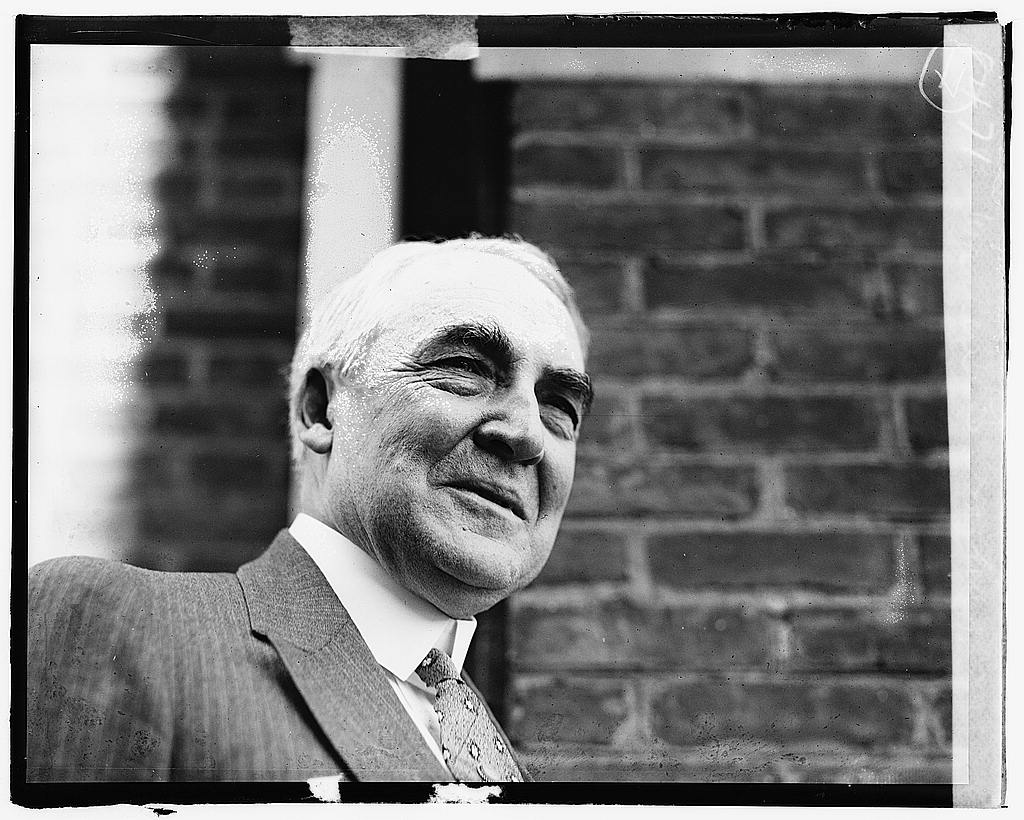
“Tokyo street scene” by snapsbycw is licensed under CC BY 2.0 .

We started the conversation talking about the Shiloh Hendrix affair, but ultimately got onto the subject of the Land of the Rising Sun. As it turns out, Alexandru and I have both spent quite some time living in Japan, an experience which contributed to both of us becoming incorrigible racists. This is a very common occurrence: almost anyone who spends a significant amount of time living in a very different country will start to draw conclusions about the differences between human groups. Your levels of epistemic closure need to be extraordinarily high to avoid this.

When I first moved to Japan I was, in most ways, an unreconstructed liberal. I took the axiomatic precept of the Boomer Truth Regime – that stereotypes are both incorrect and evil, because all people are basically the same – more or less for granted. This was very easy for me to do: I’d grown up in a remote, homogeneously Anglo part of rural Canada, and while I’d had some degree of exposure to different ethne at university, this was during a period in which Canada was making a real effort to filter immigrants for quality, and most of the non-white, second-generation immigrants I interacted with were heavily westernized. I wasn’t unaware of cultural differences, but I generally assumed that it went no deeper than that, and that inside every human being there was a liberal Anglo struggling to break free.

Japan of course is a completely alien culture. Among the many profound differences with the contemporary West is that the Japanese are, famously, intensely and unashamedly racist, or “xenophobic” as it is usually framed. I was initially taken aback by how frank the Japanese could be about this, for instance by asking questions about me that were clearly in rooted in their stereotypical understanding of what young North American white boys were generally like. But there were two things about this experience that quickly made me stop and think. First, these questions were almost never hostile, but rather came from a place of genuine curiosity: they were simply trying to get to know me, which they would do by starting with a default mental picture and then testing to see if and how I conformed or departed from that picture so that they could update their model accordingly. Yet I had been assured my entire life, by every TV show, movie, and teacher, that stereotypes were always hateful! Second, a great many of their stereotypical assumptions about me were uncomfortably accurate. Yet I had been assured my entire life, by every TV show, movie, and teacher, that stereotypes were always wrong!

It didn’t take me long to get over this cognitive dissonance, which I resolved by the simple expedient of concluding that I’d been lied to by my culture, which is something that even then I’d realized happens a lot. This then gave me internal permission to observe the Japanese themselves, to notice the myriad differences in character and behaviour as compared to my own people, and to connect these individual level differences to their emergent societal consequences.

Learning racism in Japan is a humbling experience for a Westerner. I’ve travelled to a lot of different countries, and everywhere else I’ve either felt like my own people were basically on the same civilizational level (Europe), or at a noticeably higher level (South America). Japan is the only place I’ve ever been where I felt like an unlettered, uncouth, savage, stinky barbarian primitive one step removed from the cave – where it was obvious that my own people could learn quite a bit about how to comport themselves in a civilized fashion. Then again, at the same time, this taught me to value that very barbarism: it’s quite possible, as the Greek understood when regarding the Mede, to be overcivilized.

I could go on about this subject for hours, but I’ve got things I need to do today – like go to the gym and get some work done on other projects I’ve been engrossed in – and I wanted to get this out fast. In any case, I did go on about this subject for hours, with Alexandru and Phisto, so if you’d like to hear more about Japan you’ll just have to click through and listen.

Battle of the Atlantic, 1939-1940

Real Time History
Published 3 Jan 2025

In the summer of 1940, Great Britain is under attack in the air and at sea. German U-Boat wolf packs prowl the Atlantic and sink over a million tons of shipping. German skippers call this the “happy time” — but was the German Navy actually that successful early in the Battle of the Atlantic?
(more…)

QotD: Suburbs and their critics

Filed under: Architecture, Media, Politics, Quotations, USA — Tags: , , , , — Nicholas @ 01:00

I respect [sprawl] as people’s choice – the suburbs, highways and byways, strip malls, cookie-cutter houses, whether small semi-detached or McMansions, the whole lot of it.

It gets a lot of bad press, it has got a lot of influential haters, ridiculers and deriders. There are the urbanists, the town planners, the architects, most of whom can’t abide the sprawl. It’s ugly, inefficient, unsustainable, it lacks amenities and it lacks a sense of community, it prioritises – or privileges, as they would say – cars over pedestrians, it wastes space and it wastes resources, it’s barbaric. Those much smarter and more creative than us have offered a lot of alternatives: high-density living, modernist spaces, Le Corbusier’s houses as “machines for living”. They tore down the slums and erected high rise projects, council flats, banlieues and osiedla. They designed and built whole new districts, rich in concrete and wide bare expanses of public space.

Then there are the cultural as opposed to professional haters, and they too are as old as the suburbs themselves. The sprawl is a prison, a conformist hell. It deadens imagination and stifles creativity. It’s full of dumb people leading dumb lives. It’s a triumph of materialism, selfishness and narrow mindedness over selflessness, community and commonweal. From literature through movies and music to TV shows, suburbs don’t get a break; they are the hotbed of reaction, sexism, racism, homophobia, xenophobia, intolerance, prejudice, oppression and kitsch. “Revolutionary Road”, “Stepford Wives”, “American Beauty”, “Weeds”, “Little Boxes”, Stephen King novels, the list is endless, but you get the drift.

There are many differences between the suburbanites and the suburbs haters, but the one big one is this: the suburbanities are the live-and-let-live crowd – they know what they like but they don’t give a shit if you don’t like it. It’s your business and it’s your life – you can do whatever you like. The suburbs haters, on the other hand, not only know what they like but they believe that everyone else should like it to, and if they don’t, tough luck, they should be forced to change for the sake of what’s really good for them and for the whole community. Suburbs are not something that can be tolerated as an option; they should be destroyed, land reclaimed, ideally by nature, their former residents corralled and concentrated.

In many ways it’s yet another example of the old elite versus the masses cultural clash. The masses essentially just want to be left alone. The elites want to remake the whole world so it accords to their vision of what’s good and useful. The masses’ is not to question why …

Arthur Chrenkoff, “In praise of sprawl”, Daily Chrenk, 2020-05-21.

May 16, 2025

Those scary “Brexity books”

Filed under: Books, Britain, Europe, History, Liberty, Media, Politics — Tags: , , , — Nicholas @ 04:00

Andrew Doyle on the sudden interest British police seem to be taking about what kind of books you may have on your shelves at home:

If the British police saw this collection, you’d be lucky to get out of prison in fifty years!

The UK police certainly seem to believe in that old aphorism that that “You can tell everything you need to know about a person from their bookshelf”. There has been much press coverage this week of the case of Julian Foulkes, a former policeman who was arrested at his home in Gillingham for tweetcrime. It took six officers to handcuff the pensioner and take him to a cell, and bodycam footage from the arrest shows them assessing the contents of his bookshelves. One was seen singling out The War on the West by Douglas Murray and another remarked that there were “very Brexity things”.

I have a fair few “Brexity” books on my shelf too. I have just as many “anti-Brexity” books, as it happens. It seems to have escaped the attention of these officers that it is possible to read multiple points of view without necessarily subscribing to any of them. They have also apparently forgotten that “Brexity” views are fairly commonplace, enough so to win the largest democratic mandate the country has ever seen. If it’s a majority view, is it really all that controversial?

I recall during the lockdown I was scheduled for a television interview and, having set up the webcam, I suddenly realised that the two volumes of Ian Kershaw’s excellent biography of Hitler were not only visible, but prominent. The design of the books’ spines is such that the word “HITLER” is displayed in huge letters. Very dramatic and marketable, but not so helpful if you’re about to appear on live television. I must confess that I repositioned my chair to ensure that the books were obscured.

But why? It isn’t as though any sensible person could possibly believe that my interest in the history of tyranny implies an endorsement of it. I could just as easily have a copy of Mein Kampf on the shelf and still retain my wholehearted opposition to its author and everything he stood for. If I owned a copy of the Koran, would that make me a Muslim? If I owned a copy of Jilly Cooper’s Riders, would that make me prone to passionate romps in stables? As a chronic hay fever sufferer, this hardly seems likely.

The assumption that the books we choose to read are a mirror-image of our private thoughts, or that we are so malleable that any opinion we encounter will automatically be assimilated, is very much a core tenet of faith in today’s woke mindset, one that has quite palpably infected the justice system. Those who are currently serving prison time for offensive tweets will be aware that the unevidenced belief that the public act on cue to the language they read has some very authoritarian consequences.

For some reason, men who sleep around don’t want to marry women who sleep around

Filed under: Health, Media, USA — Tags: , , , , — Nicholas @ 03:00

Young women who approach casual sex the way that young men do (or used to, anyway) are shocked to find that men don’t want to settle down in a long term relationship with a woman with a similar “bodycount”:

A young woman at a club with unrealistically disinterested young men.
Image generated by Grok.

First of all, men are very different than women, but guys are also fairly simple creatures.

Here are the fundamentals, ladies …

If a man sees you as a potential match, is attracted to you, you feed him, seem to want to take care of him, you’re a good mom (if you have kids), have good sex with him, are nice to him, he enjoys talking to you and you genuinely seem to think he’s great, he will think he’s the luckiest guy on earth. The great thing about all of this is that it’s mostly under your control. Yes, you might have to dress up and have some open conversations about what the two of you like in bed, but it’s a doable list. Being 6’4′ or making $500,000 per year to get some woman’s attention may be outside of a man’s control, but if a man considers a woman relationship material, she is probably capable of locking him in if she wants to do it.

Of course, like everything else in life, there is some nuance involved here.

For one thing, good sex is a key part of a good relationship, BUT unlike a lot of women, men are also generally very comfortable with the idea of having sex OUTSIDE OF RELATIONSHIPS. A lot of men can enjoy sex with women they just met, women they know they’ll never see again, or even women THEY DON’T EVEN LIKE AS HUMAN BEINGS. Men just have a biological drive toward sex, the same way, for example, a lot of dogs have a biological drive toward prey. The second my dog sees a cat; she wants to chase it. If she catches up to the cat, she doesn’t even know what to do, but she does know she wants it to run so she can have the fun of running after it. It’s an innate drive for her and most men have that same kind of innate drive around sex, even though most of us never have the opportunity to fully express it.

[…]

For example, all other things being equal, just about every man would prefer a virgin to a woman with say 50 previous partners. Why? Well, in a man’s book, being promiscuous is a huge negative in a woman you’re interested in long term for reasons great and small, fair and unfair.

Like what?

Well, first and foremost, the traditional concern is that if she’s sleeping around, how do you know your child is yours? The last thing any man wants to do is get cucked and end up spending his life raising a child some other man impregnated his wife with right under his nose. Along similar lines, the more a woman has slept around, the more likely it is that she may cheat. After all, unless you’re the absolute peak of the pyramid for men, having sex requires a lot of effort and work. For women? Not so much. She’ll have easy opportunities every day of the week, probably multiple times per day, and if she feels comfortable sleeping around, can you trust her?

How easy is it? Well, once, I remember talking to a female friend of mine who had moved to another city, was lonely, and she complained to me that she “Just needed to get laid.” I laughed at her over the phone and told her something like, “All you have to do is dress up, go to a hotel bar, look for any attractive single man, sit next to him, and talk to him for 5 minutes, then ask him to take you up to his room. You’ll be having sex 5 minutes after. It’s that easy” – and it is, for women.

We can go on. Promiscuous women are statistically less likely to stay married. You also have to think they probably aren’t going to be as satisfied in bed if they’re comparing you to a large number of men. You know, “Well, Brett had that amazing 8 pack, Jimmy was really hung, Paul could go forever, and Todd did that really cool thing with his tongue, so how good is this compared to those guys?” Furthermore, it’s natural for men to want large numbers of female partners, but not so much for women, which usually means women who sleep around have issues. How many mentally healthy, happy women are racking up truly large numbers of guys? Not many.

A Very Basic Introduction To Ancient Carthage

MoAn Inc.
Published 1 Jan 2025

Images Used
Hamilcar Barca and The Oath of Hannibal – Benjamin West (1738–1820) – https://en.wikipedia.org/wiki/Ancient…
Ancient Carthage. (2024, December 27). In Wikipedia. https://en.wikipedia.org/wiki/Ancient…
Numerius Fabius Pictor (antiquarian). (2023, October 11). In Wikipedia. https://en.wikipedia.org/wiki/Numeriu…)
Aristotle. (2024, December 27). In Wikipedia. https://en.wikipedia.org/wiki/Aristotle
Herodotus. (2024, December 30). In Wikipedia. https://en.wikipedia.org/wiki/Herodotus
Cassius Dio. (2024, November 28). In Wikipedia. https://en.wikipedia.org/wiki/Cassius…
Plutarch. (2024, December 23). In Wikipedia. https://en.wikipedia.org/wiki/Plutarch
Polybius. (2024, December 31). In Wikipedia. https://en.wikipedia.org/wiki/Polybius
Livy. (2024, November 23). In Wikipedia. https://en.wikipedia.org/wiki/Livy
File:Death Dido Cayot Louvre MR1780.jpg. In Wikipedia. https://commons.wikimedia.org/wiki/Fi…
Colosseum. (2024, December 21). In Wikipedia. https://en.wikipedia.org/wiki/Colosseum
Carthage Ports Puniques, https://commons.wikimedia.org/wiki/Fi…
File:Bardo National Museum tanit-edit.jpg. In Wikipedia. https://commons.wikimedia.org/wiki/Fi…
File:Bardo Baal Thinissut.jpg. In Wikipedia. https://commons.wikimedia.org/wiki/Fi…
File:Ginnasium Solunto.jpg. In Wikipedia. https://commons.wikimedia.org/wiki/Fi…
File:Carthage 323 BC.png. In Wikipedia. https://commons.wikimedia.org/wiki/Fi…

A Bit About MoAn Inc. –
Trust me, the ancient world isn’t as boring as you may think. In this series, I’ll be walking you through a VERY basic idea of what happened during Rome’s famous Punic Wars.

Donate Here: https://www.ko-fi.com/moaninc

Free Marble Image Photo by Henry & Co.thanks to https://unsplash.com/wallpapers/desig…

#AncientRome #AncientHistory #PunicWars

QotD: Marxist and socialist revolutions

Filed under: Africa, Books, Economics, Quotations — Tags: , , , , , — Nicholas @ 01:00

Professor Chirot’s theory is that revolutions break out when an outmoded governments refused to recognise their own outmodedness and hence to reform. This obviously has some similarities with the Marxist idea that revolutions occur when the relations of production of a society can no longer contain its productive forces, and is in contradiction to Tocqueville’s idea that revolutions break out not when rigid and dictatorial regimes are at their most oppressively rigid and dictatorial, but when they begin to reform and meet the demands of those who demand change. This is not to say that Professor Chirot is wrong, but one might have expected him to make allusion to the two theories.

The collapse of communist regimes in Eastern Europe, which he is happy to call revolutionary, also does not support his rough schema. It is not that the communist regime refused to reform, it is that it was incapable of reform for the same reason that a woman can’t be a little bit pregnant. If a regime makes the kind of claims for itself that the communist regime made, even if the leaders had themselves long since ceased to believe them, namely that it is the ineluctable denouement of all history, if not that of the universe itself, it cannot retreat, all the more so because its crimes, which one could and would have been claimed as a step in the march of history, would thereafter be seen for what they were: the choices of fanatical psychopaths avid for total power.

Professor Chirot seems to have a slight soft spot (admittedly only implicit) for socialism, that is to say for something more than mere social democracy. In his discussion of the case of Angola, in which a revolutionary movement emerged triumphant, but whose post-revolutionary regime was a pure kleptocracy under cover of Marxist rhetoric, he says: “Much more could have been done through either a market-friendly or a genuinely more socialist approach to economic development”.

This surely implies that somewhere, at some time, there was a socialist regime that would have handled Angola’s oil bonanza better, in which case one would have liked an example that it might have followed. Norway, perhaps? But Norway is not socialist, it is social democratic. Besides, Norwegians and Angolans are scarcely the same in a very large number of ways. I would have thought that the chances of Angola following the Norwegian model were, and are, approximately, and perhaps even exactly, zero.

Theodore Dalrymple, “Longing for Revolution”, New English Review, 2020-05-13.

May 15, 2025

Inventing “American Bushido

Filed under: History, Military, USA — Tags: , , , , — Nicholas @ 04:00

Secretary of Defense Rock identifies where this new military cult came from:

In the decades since the end of the Cold War, the United States military has undergone a cultural transformation — not merely in terms of technology, doctrine, or geopolitical posture, but in its self-conception. What has emerged is a new martial identity, one that fuses an idealized warrior code with fetishized notions of lethality and tactical superiority. This identity, what might be termed an “American Bushido“, is not merely a rhetorical or symbolic phenomenon. It is an ideological formation with material consequences for how wars are planned, how personnel are trained and selected, and how national security strategy is interpreted through the narrow prism of combat prowess. At its core, this American Bushido enshrines tactical skill and lethal capacity as ends in themselves, rather than as tools in service of coherent political objectives. But has also branched out more broadly into American society in unhealthy ways, corroding civic culture. This elevation of the warrior ethos risks distorting strategic judgment, encouraging a professional military caste isolated from civilian oversight, and glorifying violence as the central expression of national power at home and abroad.

The concept of Bushido, the feudal Japanese code of honor among the samurai, was historically a synthesis of martial discipline, spiritual rectitude, and absolute loyalty.1 In the twentieth century, however, Imperial Japan weaponized Bushido as state propaganda stripping it of nuance and repurposing it to justify fanatical nationalism, unquestioning obedience, and mass sacrifice in the service of empire leaving a trail of destruction and war crimes that rivaled Nazi Germany in World War II.2 On the tactical level, that meant banzai charges into machine gun fire and kamikaze missions that turned pilots into human-guided cruise missiles. On the strategic level, that meant one decisive battle that would single-handedly win the war in an era of mass mobilization. In the American context, however, Bushido has been appropriated and reimagined as a branding tool and cultural phenomenon: a way to market military service as a modern warrior whose path translates to all walks of life, stripped of its philosophical depth but saturated with over-the-top aggression.

[…]

In this context, the move toward an AVF, formalized by President Nixon in 1973 and championed by the Gates Commission in 1970, was seen as a political necessity and a strategic recalibration.3 The commission drew a sharp analogy between military service and public infrastructure, framing the draft as a form of taxation in service of national needs. As they put it, “It can expropriate the required tools and compel construction men and others to work until the job is finished or it can purchase the goods and manpower necessary to complete the job.”4 In this view, conscription was not a moral aberration but a practical mechanism through which the state could marshal resources, including human labor, to fulfill collective obligations.5 But this collective obligation had been pushed to the brink, and an all-volunteer force offered a path to professionalize the force, improve quality and morale, and insulate the military from the social upheavals tearing through the nation. Voluntarism was framed as a means of restoring legitimacy and operational effectiveness, ensuring that those who served did so by choice, not coercion. In many ways, voluntarism was a return to the American tradition but did so embracing the concept of the professional soldier and not the citizen soldier. While this shift solved many short-term problems, it also began a long-term process of separating the military from the broader public, contributing to the rise of a distinct warrior class and the cultural isolation of the armed forces from civilian society.

The development of the AVF worked about as one could expect through the 1980s, eventually culminating in the 100-hour war in the Persian Gulf, a campaign that showcased overwhelming American technological and tactical superiority with just 63 American dead.6 In the aftermath, President George H. W. Bush famously proclaimed, “By God, we’ve kicked the Vietnam syndrome once and for all!7 But while the battlefield triumph seemed to bury the ghosts of Vietnam, the underlying mentality never truly died; it was only displaced. What had definitively died was the draft, and with it, the citizen-soldier model that had once anchored the American military to broader society. In its place emerged an increasingly professionalized force, insulated from the public and shaped by the lessons and traumas of a war that continued to cast a long shadow over American strategy, civil-military relations, and the political appetite for sustained conflict.
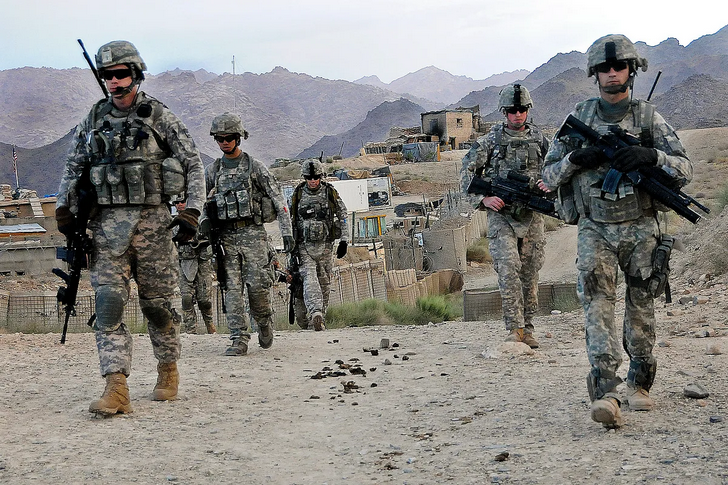
GWOT has accelerated American Bushido

The U.S. military’s post-9/11 transformation unwittingly accelerated this. Terms like “warfighter”, “operator”, and “lethality” replaced earlier bureaucratic or strategic vocabulary. Secretary of Defense Jim Mattis, nicknamed “Mad Dog” and revered for his battle-hardened persona, became the symbolic vanguard of this transformation. Phrases such as “unleash lethality” began appearing in speeches, documents, and strategic vision statements.8 Underlying all of this was a single premise: that the decisive instrument of American power was the warrior, and that the ultimate measure of military effectiveness is the capacity to kill.9

There is no doubt that tactical excellence is a prerequisite for military success, and nobody has done it better than the modern American military. But the rise of American Bushido has elevated tactical proficiency to the level of doctrine itself, often at the expense of strategic clarity. This phenomenon is not unique to the U.S., but it is particularly acute within a military-industrial ecosystem flush with funding, prestige, and cultural deference. The result has been a proliferation of elite units, special operations forces, and kinetic capabilities, often deployed with great fanfare but little discernible strategic gain, as given by the recent two-billion-dollar campaign attempting to pound the Houthis into submission in Yemen from the air.

[…]

Even still, it’s a bizarre framing because there never was a “warrior ethos” in the American tradition to nostalgically return to, at least not in the mythologized sense currently being invoked. The foundational ideal of national defense was not the professional warrior, but the citizen-soldier: an ordinary individual who took up arms out of civic duty, served for a finite period, and then returned to civilian life. Soldiering, in this tradition, was a temporary obligation, not a permanent identity. It was a job — necessary and honorable, but not meant to confer moral superiority or define a lifelong caste. Only a small number of officers and NCOs were considered to be professionals who led a variety of militia and volunteers in American conflicts.

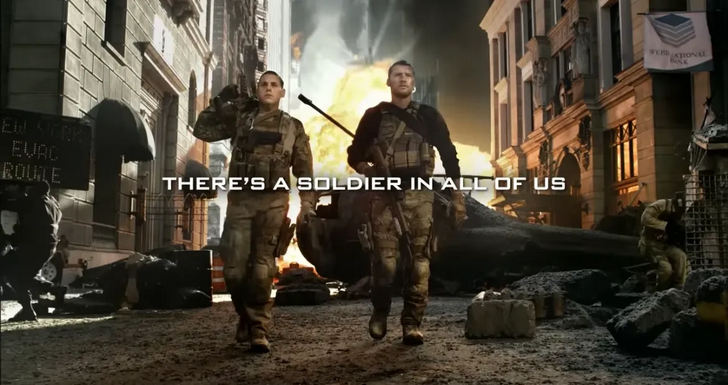
One might mistake the famous Call of Duty tagline “there’s a soldier in all of us”, as a manifestation of American Bushido. But in truth, it gestures toward the opposite. The commercial depicts ordinary people stepping briefly into a role demanded by extraordinary circumstances, the very ethos of the citizen-soldier tradition. However stylized or commercialized, the message remains: soldiering is not a sacred vocation reserved for an elite few, but a responsibility that can emerge from within the ordinary citizen. In that sense, there is a soldier in all of us.


    1. See Inazō Nitobe, Bushido: The Soul of Japan (1900), Cameron Hurst, “Death, Honor, and Loyalty: The Bushidō Ideal”. Philosophy East and West 40, no. 4 (1990): 511–27. Tasuke Kawakami, “BUSHIDŌ IN ITS FORMATIVE PERIOD”. The Annals of the Hitotsubashi Academy 3, no. 1 (1952): 65–83, Karl F. Friday, “Bushidō or Bull? A Medieval Historian’s Perspective on the Imperial Army and the Japanese Warrior Tradition”. The History Teacher 27, no. 3 (1994): 339–49, and Stephen Turnbull, The Samurai and the Sacred (Osprey Publishing: Oxford, 1999).

    2. For Bushido in the Imperial Japanese context, see John W. Dower, War Without Mercy: Race & Power in the Pacific War (Pantheon Books: New York, 1986), Edward J. Drea, Japan’s Imperial Army: Its Rise and Fall (University Press of Kansas: Lawrence, 2016, S. C. M. Paine, The Japanese Empire: Grand Strategy from the Meiji Restoration to the Pacific War (Cambridge University Press: Cambridge, 2017) The Wars for Asia, 1911–1949, (Cambridge University Press: Cambridge, 2012), and Robert Edgerton, Warriors Of The Rising Sun: A History Of The Japanese Military (Basic Books: New York, 1999).

    3. Thomas S. Gates, The Report of the President’s Commission on an All-Volunteer Armed Force (Washington, DC: U.S. Government Printing Office, 1970).

    4. Ibid., 23.

    5. Milton Friedman, the 1976 Nobel Prize-winning economist, played a pivotal role on the Commission, where his influential intellectual arguments helped overcome the significant institutional resistance.

    6. For scholarship on the military’s post-Vietnam recovery and AVF transition, see James F. Dunnigan, Raymond M. Macedonia, Getting It Right: American Military Reforms After Vietnam to the Gulf War and Beyond (William Morrow & Co: New York, 1993) and Suzanne C. Nielsen Lieutenant Colonel, An Army Transformed: The U.S. Army’s Post-Vietnam Recovery and the Dynamics of Change in Military Organizations (US Army War College Press: Carlisle, 2010).

    7. Quoted from Maureen Dowd, “After the War: White House Memo; War Introduces a Tougher Bush to Nation”, New York Times, March 2, 1991.

    8. U.S. Department of Defense, Summary of the 2018 National Defense Strategy of the United States of America (Washington, DC: DoD, 2018), 1.

    9. The emphasis on the warrior ethos was set in motion in part because the events of March 23, 2003, when an 18-vehicle convoy from the 507th Maintenance Company took a wrong turn and was ambushed by insurgents in Nasiriyah, southern Iraq. See Vernon Loeb, “Army Plans Steps to Heighten ‘Warrior Ethos'”, Washington Post, September 8, 2003.

“You can earn a degree in economics without ever encountering the Depression of 1920-1921”

Filed under: Economics, Government, History, USA — Tags: , , , , — Nicholas @ 03:00

Most modern economists focus on the lessons learned (and not learned) from the Great Depression, but as John Phelan points out, a better learning experience occurred nearly a decade earlier:

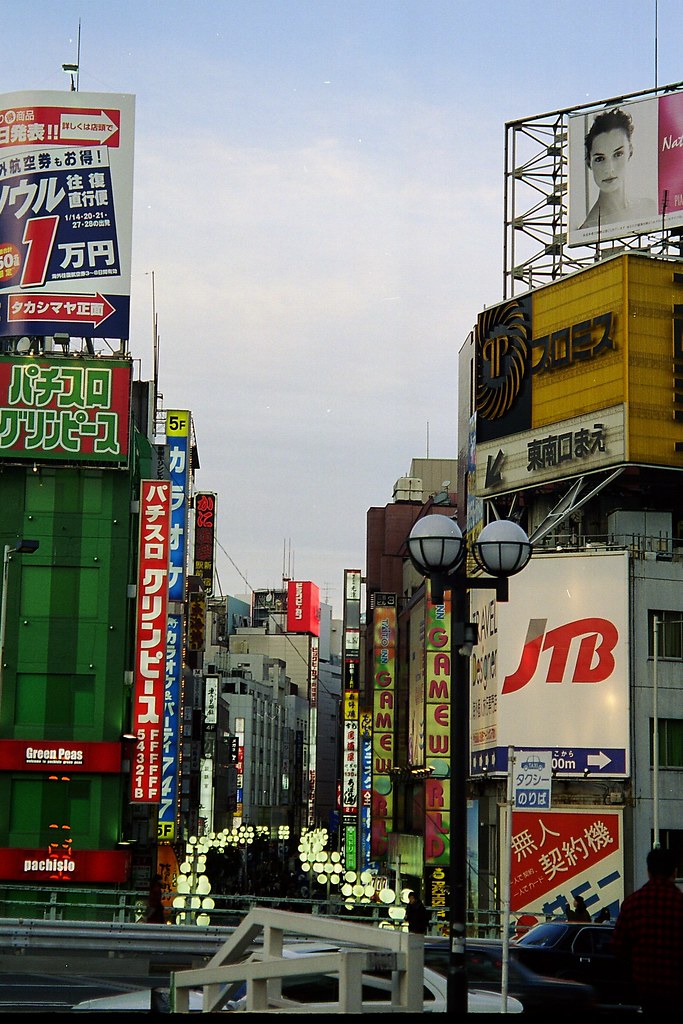
Warren G. Harding, 14 June 1920.
Library of Congress control number 2016828156

In July 1921, the United States emerged from a depression. Though the economic statistics of the time were rudimentary by modern standards, the numbers confirm that it had been bad.

By one estimate, output fell by 8.7 percent in real terms. (For comparison, output fell by 4.3 percent in the Great Recession of 2007-2009). From 1920 to 1921, the Federal Reserve’s index of industrial production fell by 31.6 percent compared to a 16.9 percent fall in 2007-2009. In September 1921, there were between two and six million Americans estimated unemployed: with a nonagricultural labor force of 31.5 million, this latter estimate implies an unemployment rate of 19 percent.

“In this period of 120 years,” wrote one contemporary, “the debacle of 1920-21 was without parallel”.

And then it was over. From 1921 to 1922, industrial production jumped by 25.9 percent and residential construction by 57.9 percent. Manufacturing employment increased by 9.5 percent and real per capita income by 5.9 percent. The 1920s began to roar.

What caused the crash of 1920-1921? Why was it so short? And why was the economic recovery so vigorous?

[…]

Bust to Recovery

As output slumped and unemployment soared, there were those urging action. In December 1920, Comptroller of the Currency John Skelton Williams wrote:

    It is poor comfort to the man or woman with a family denied modest comforts or pinched for necessities each week to be told that all will be, or may be, well next year, or the year after. Privations and mortifications of poverty can not be soothed or cured by assurances of brighter and better days some time in the future. Our hope and purpose must be to forestall and prevent suffering and privation for the people of today, the children who are growing up and receiving now their first impression of life and their country.

No such policies were forthcoming.

In October 1919, Woodrow Wilson, then entering the last year of his presidency, was incapacitated by a stroke and his administration ground to a halt: “our Government has gone out of business”, wrote the journalist Ray Stannard Baker.

Wilson’s successor Warren G. Harding, who took office in March 1921, supported Strong’s policies, noting “that the shrinkage which has taken place is somewhat analogous to that which occurs when a balloon is punctured and the air escapes”.

While lower prices meant reduced incomes for some, they meant reduced costs for others. Eventually, producers and consumers started to buy again. By March 1921, lead and pig iron prices bottomed out: cottonseed oil, cattle, sheep, and crude oil followed by midsummer.

The higher interest rates had attracted gold. From January 1920 to July 1921, foreign bullion augmented the American gold stock by some $400 million to $3 billion. By May 1921, 80 percent of the volume of Federal Reserve notes was supported by gold. Interest rates could fall.

In April, the Federal Reserve Bank of Boston cut its main discount rate from 7 to 6 percent. The Federal Reserve Bank of New York followed suit next month, cutting from 7 to 6.5 percent. The Roaring Twenties began.

The Lessons

Students of macroeconomics will learn about the Great Depression of the 1930s. They will learn that many of the policies routinely used to fight downturns now — fiscal stimulus and expansive monetary policy — were forged in those years. You can earn a degree in economics without ever encountering the Depression of 1920-1921. Yet, initially, it was as bad as that which began in 1929 but ended more quickly and was followed by a rapid recovery.

Whereas the policymakers of the 1930s — led by the defeated vice-presidential candidate of 1920, Franklin D. Roosevelt — diagnosed the economic problem facing them as unemployment and deflation, those of 1920 diagnosed it as the preceding inflation. Where policymakers of the 1930s used cheap money and government spending to boost demand, those of the 1920s saw this as simply repeating the errors which had created the initial problem. To them, there could be no true cure that didn’t deal with the disease, rather than the symptoms.

It is for history to judge who was correct, but it’s undeniable that the recovery of the Depression of 1920–1921 was immensely stronger and faster than that of the Great Depression. Ironically, this may be the very reason it is often overlooked in history and economic courses.

An additional lesson of eternal relevance can also be drawn: successful solutions will be those which are based on a correct diagnosis of the problem.

Remington Model 81 Special Police

Filed under: History, USA, Weapons — Tags: , , , , — Nicholas @ 02:00

Forgotten Weapons
Published 30 Sept 2016

The Remington Model 8 was one of the first successful self-loading rifles introduced to the commercial market, and it was designed by none other than John Browning. It was an expensive rifle, but popular for its power and reliability. In the 1920s, an entrepreneur founded the Peace Officer Equipment Company to sell police gear in St Joseph, Missouri. He would design a conversion to the Remington Model 8 to replace its fixed 5-round magazine with larger detachable magazines (5-, 10-, and 15-round, with 15-round being the most common by far).

POEC made and sold the conversion until about 1936, when Remington replaced the Model 8 with the slightly improved Model 81. At that point, Remington licensed the magazine conversion themselves, and offered it as a factory option, under the Special Police name. Remington had big hopes for the rifle, but only a few hundred were sold, with the LA County Sheriff being the single largest customer, ordering 200 of them. This rifle is one of the LA guns, number 40 of their order.

Cool Forgotten Weapons Merch! http://shop.bbtv.com/collections/forg…

QotD: The Donatist heresy

Filed under: History, Quotations, Religion — Tags: , , , , , — Nicholas @ 01:00

The Donatist heresy argued that, for the sacraments to be effective, the priest must himself be in a faultless state of grace. You can see their point — if the sacraments are effective regardless, what’s the point of the priesthood? It also makes the sacraments seem perilously close to magic spells, but whatever, the theology of it all is above my pay grade. Donatism has been roundly condemned several times, by real popes (not that fraud Bergoglio, who is quite clearly in league with The Other Guy), and that’s good enough for me.

But like all things theological in the Christian Centuries, Donatism had important socio-political implications. Again, I’m about the furthest thing from a medievalist, but as I understand it, Jan Hus — a proto-Luther if anyone was — advanced a kind of Donatist argument against the Holy Roman Emperor (and / or the King of Bohemia, I forget which, or even if they were separate guys at that point). He was also, IIRC, echoing the English heretic John Wyclif, whose arguments had a similar political import in a similarly anarchic time. They held (again IIRC, which I might not) that since kings derive their authority from God, any king that is obviously on the outs with the Lord has lost his right to rule. A heretic or schismatic king, in other words, is no king at all.

You could call this a Christian version of the old Chinese idea of “The Mandate of Heaven”, and if you want to do that I’m not going to argue with you, but it’s considerably easier to identify a heretic. A Christian king’s most basic responsibility is to his own spiritual health; closely followed by his obligation to his realm’s spiritual health. It’s pretty easy to tell when a king’s not doing that.

Severian, “The New Donatism?”, Founding Questions, 2021-11-20.

May 14, 2025

We welcome (almost) all refugees

Mark Steyn notes the odd situation of rabid pro-refugee organizations suddenly finding that there are some refugees they don’t want to come to the United States after all:

We are told, relentlessly, that “diversity is our strength”. But it’s a delicate balance, isn’t it? After Biden’s untold millions of drug mules and sex fiends, just fifty-nine whites from South Africa could completely destroy all the multiculti harmony:

I confess to mixed feelings about those scenes myself. When I was a kid, the Boers had a reputation, unlovely as they might be in certain aspects, as the toughest buggers on the planet. In Britain and Canada, it was not uncommon to hear fellows, depressed at how their own countries were going, talk breezily about emigrating to South Africa. Yet in the end they folded in nothing flat — and the country’s new masters don’t want them and they have to find somewhere to go. Gee, it’s almost like that might be a lesson of more general application in the year ahead.

So it’s interesting to see the American left tiptoe all the way up to making the real purpose of “diversity” explicit: We’re in favour of open borders … except for whites. Rather than sully their hands with fifty-nine Afrikaners, the Episcopal Church has declared it’s willing to forego the moolah from the federal “refugee resettlement” racket. The spousal-abusing MS-13 gangbanger may be the quintessential “Maryland man”, but these white guys never can be.

Watching hoity-toity upper-class whites like NBC’s Andrea Mitchell finger-wagging from the anchor chair about their anti-whiteness is instructive. They assume that they will never have to face the consequences of their virtue-signalling. But the chasm between Eliteworld and Reality yawns wider with every day, and it will one day consume most of the west’s high-status “progressives” too. There are limits to kingly power. That’s the lesson Canute tried to teach his courtiers when he took them to the water’s edge and commanded the tide to lay off his loafers. But King Canute would never have ordered his staff to tell the peasantry to eat crickets on a bed of cockroach coulis. Because that would be too ridiculous.

For that we had to wait until Justin Trudeau, sinking bazillions of dollars into bug farms as part of the masterplan: that’s not just a bug, it’s an indispensable feature. Because at the World Economic Forum all the clever guys decided that, in the interests of saving the world from “climate change”, our rulers had to do to our own farmers what the mob is doing to white South Africans: destroy their farms, kill all the cows and sheep, and ensure that nothing grazes there ever again.

There are few things sadder than a post-developed society. If you walk around South African towns at the end of the day, you will notice in high-rise buildings the absence of lights on the upper floors: the inability to maintain skyscrapers is one of the first signs of a society in decline. It starts at the heights and then sinks to the basement, whether those heights are Boeing or bug farms. If you’re in on the racket, you can still live high off the hog-simulating scorpions … for a while. But the people who make the running in the western world are mad, and their fever dreams are boundless.

The Korean War Week 47 – MacArthur’s Big Lie Exposed – May 13, 1951

Filed under: China, History, Military, USA — Tags: , , , , , , — Nicholas @ 04:00

The Korean War by Indy Neidell
Published 13 May 2025

The MacArthur Hearings continue in Washington, and George Marshall is adamant that what Mac says about the January 12th proposal is just plain not true. There’s still a war going on in the field, although this week is really a week of deployments, as 8th Army moves north to reoccupy former lines, even as reports come in of the Chinese massing for a possible attack.

Chapters
00:00 Intro
00:43 Recap
01:18 McMahon and MacArthur
06:28 Day Two
08:28 George Marshall’s Turn
12:20 Van Fleet Plans and Deploys
17:03 Summary
17:11 Conclusion
(more…)

Carney’s new cabinet – remarkably similar to Trudeau’s cabinets

Prime Minister Mark Carney talked as if he was initiating a new era in Canadian politics, but when it came to nominating his first cabinet, it’s plus ça change, plus c’est la même chose with most of the same cast of incompetents, crooks, lickspittles, and fart-catchers. Justin Trudeau would feel right at home:

Prime Minister Mark Carney promised change, a new way of doing things at speeds never before seen. Yet to help him do this, he is relying on the same old, tired, incompetent ministers who got us into the mess we’re currently in.

The Liberals will trumpet the large number of new faces in Carney’s 28-member cabinet — there are 15 MPs who have never served before.

But the top tier of ministers — the ones sitting in the front row at the swearing-in ceremony on Tuesday — were all former Trudeau acolytes, cabinet ministers now committed to rescuing us from a crisis of their own making.

In the front row was Sean Fraser, our new justice minister and attorney general, and the man who, under former prime minister Justin Trudeau, was responsible for immigration and then housing, two files he spectacularly failed at. If we want to know how bad Fraser was in those jobs, we need only look to Carney’s election platform.

“The last time we faced a housing crisis at such a broad scale was after the Second World War”, read the platform. This crisis “has left younger generations facing rents, down payments and mortgage payments so high that it turned housing into a barrier to opportunity instead of a cornerstone of opportunity”.

What about Fraser’s record at immigration? According to the Liberal platform, the Trudeau government let immigration “grow at a rapid and unsustainable pace”.

In December, when Liberal fortunes were in the toilet, Fraser announced that, for family reasons, he was quitting politics. Strangely, after the party witnessed a reversal in the polls, he announced he was returning.

In Carney’s eyes, Fraser’s blundering on two key files qualifies him to become justice minister. The only thing worse than Fraser as a cabinet minister may be Carney’s judgment.

Also in the front row was Chrystia Freeland, who served as deputy prime minister and finance minister under Trudeau and is now returning to cabinet as minister of transportation and internal trade.

Freeland’s record is best summed up, again, by the Liberal platform: “Business investment in Canada has dropped from 14 per cent of GDP in 2014 to 11 per cent in 2024, undermining long-term economic growth”.

Meanwhile, long-time Trudeau lieutenant Mélanie Joly, whose reign at foreign affairs was about as successful as Fraser was at housing and immigration, moves to industry.

Well, if we’re stuck with Carney’s retreads, at least we can laugh about ’em. Through the tears:

Noah has some faint praise for the new minister of National Defence and the new Secretary of State for Defence Procurement:

Welp it’s official. Bill Blair is out.

I cant say that it’s overly shocking. I don’t think anyone truly expected Blair to be MND by the end of today. While I will give Blair some credit for holding the fort, most of you already know I wasn’t his biggest fan.

He was a great placeholder who was able to smoothly roll out the plans left to him. He also did have several good public showings, such as his efforts in Korea last year. I will give credit where it is due.

However, he was also uninspiring, too passive in his role, and while I have no doubt he took it seriously, was never going to be a great long-term option. He had long overstayed his welcome […] Now he’s out completely from cabinet and in his place we have not one but two new ministers on the defence profile!

David McGuinty, best known for his eight-year stint as Chair of the National Security and Intelligence Committee has taken the reigns as the new Minister of National Defence While Kelowna MP and veteran Stephen Fuhr will take on a new role as Secretary of State for Defence Procurement.

In this role Fuhr will work under McGuinty specifically to tackle the file of Defence Procurement ahead of the establishment of the DPA. He is one of eight new secretaries of state that will operate on a “junior” level in cabinet.

Now McGuinty wouldn’t have been my first pick. I will openly admit that, but it is hard [not] to argue that he is the most prepared for the role, and likely the best we have available.

McGuinty previously held the NSICOP chair from 2017 all the way until December when he was appointed Minister of Public Safety. He has a background in International Development before becoming a parliamentarian, including stints with UNICEF.

He isn’t coming into this without a background on the current security climate we’re facing. He certainly can’t be said to be ill-prepared to take the role at a time when CAF and the DND are at one of their most pivotal moments in restructuring.

The Bomber Mafia & The Norden Bombsight – What The Heck Happened? The Bomber War Episode 2

HardThrasher
Published 28 Oct 2023

Selected Internet Sources
Target for Today (1944) – Target For Today (1944)
https://www.navsea.navy.mil/Home/Warf… – LTE Thompson, first lead scientist at Dahlgren
https://www.amazon.co.uk/Scientist-Ex… – Donald Jacobs
The Fairey Battle – Light Bomber, Hea…
https://en.m.wikipedia.org/wiki/Point…
https://en.m.wikipedia.org/wiki/Butt_…
https://en.m.wikipedia.org/wiki/Area_…
https://en.m.wikipedia.org/wiki/Casab…
https://discovery.nationalarchives.go… – Western War Plan W5a and W6

Selected Bibliography
America’s Pursuit of Precision Bombing 1910-1945 – McFarland et al.
Dresden – Sinclair McKay
Dresden; Tuesday … – Fredrick Taylor
Absolute War – The Firebombing of Tokyo – Chris Bellamy
Black Snow
Bomber Command – Max Hastings
Bomber Command’s War Against Germany, An Official History – Nobel Franklin et al.
The Bomber Mafia – Malcolm Gladwell
Undaunted and Through Adversity (Vol 1 &2) – Ben Kite
United States Strategic Bombing Survey (European War) (USSBS) Sept 1945 – Var. – https://collections.nlm.nih.gov/catal…
America’s Pursuit of Precision Bombing 1910-1945, McFarland
Big Week – James Holland

« Newer PostsOlder Posts »

Powered by WordPress