Quotulatiousness

January 3, 2021

The Formation of the United Nations! – WW2 – 123 – January 2, 1942

World War Two
Published 2 Jan 2021

At the ongoing Arcadia Conference, 26 nations sign the Declaration of the United Nations. Otherwise it is very much a week of motion and changes in motion: in the USSR the Soviets are on the move in the center and the Crimea, the Japanese are slowing their movement in China, the Americans are finishing their movement in the Philippines, and the Axis are moving backward in North Africa. The Luftwaffe also decides that Malta must be eliminated as a base for the Allies.

Join us on Patreon: https://www.patreon.com/TimeGhostHistory
Or join The TimeGhost Army directly at: https://timeghost.tv

Follow WW2 day by day on Instagram @ww2_day_by_day – https://www.instagram.com/ww2_day_by_day
Between 2 Wars: https://www.youtube.com/playlist?list…
Source list: http://bit.ly/WW2sources

Written and Hosted by: Indy Neidell
Director: Astrid Deinhard
Producers: Astrid Deinhard and Spartacus Olsson
Executive Producers: Astrid Deinhard, Indy Neidell, Spartacus Olsson, Bodo Rittenauer
Creative Producer: Maria Kyhle
Post-Production Director: Wieke Kapteijns
Research by: Indy Neidell
Edited by: Iryna Dulka
Sound design: Marek Kamiński
Map animations: Eastory (https://www.youtube.com/c/eastory)

Colorizations by:
– Julius Jääskeläinen – https://www.facebook.com/JJcolorization/
– Mikolaj Uchman

Sources:
– Election1960 from Wikimedia
– Battleship by Anand Prahlad from the Noun Project
– Supermarine Spitfire by Joel Wisneski from the Noun Project
– Afrrs from Wikimedia
– National Portrait Gallery
– Bundesarchiv

Archive by Screenocean/Reuters https://www.screenocean.com.

A TimeGhost chronological documentary produced by OnLion Entertainment GmbH.

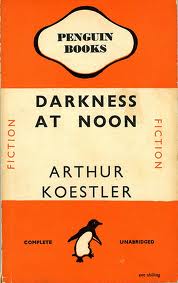
Arthur Koestler’s Darkness at Noon ranks with Orwell’s Nineteen Eighty-Four

Filed under: Books, History, Politics, Russia — Tags: , , , , — Nicholas @ 03:00

James E. Hartley on why Koestler’s 1941 novel should be seen as a prescient guide to modern-day “wokeness”:

The puzzling thing about wokeness is not that it is fashionable among a small subset of the Campus Left. One should never be surprised by what is fashionable among college faculty and students. The curious question is how these ideas broke out of the academic asylum and met acquiescence among a large group of people who should have known better.

The answer is found in a book which should have never fallen off the radar: Arthur Koestler’s Darkness at Noon. First published in 1941, it was — along with 1984 — one of the great books about totalitarianism written in the 1940s. Widely praised when it was published, the book was enormously influential in fostering the consensus view of post-war anti-communism. In 1998, Modern Library published a list of the 100 best English novels of the 20th century; Darkness at Noon was ranked eighth, five places above 1984.

The plot of the novel itself is fairly simple. The story begins with the imprisonment of Nicholas Rubashov, one of the heroes of the communist revolution in a country which is clearly the Soviet Union. Decades after the revolution, Number 1 (read: Stalin) has assumed power. Rubashov is imprisoned on the absurdly false charges of plotting to kill Number 1. The entire novel takes place in prison, as Rubashov is interrogated and eventually comes to voluntarily confess at a public trial to crimes he did not commit. He is then shot.

The novel explores the philosophical puzzle of why Rubashov would join with what has obviously become a murderous cult run by a totalitarian who is solely interested in amassing enough power to stamp his will upon the whole country. Rubashov, a devoted communist to the end, abandons his principles and bit by bit comes to accede to demands of the new generation who are seeking scapegoats and ritualistic confessions of guilt.

What is the nature of the new generation? One of the Party officials interrogating Rubashov explains:

    There are only two conceptions of human ethics, and they are at opposite poles. One of them is Christian and humane, declares the individual to be sacrosanct, and asserts that the rules of arithmetic are not to be applied to human units. The other starts from the basic principle that a collective aim justifies all means, and not only allows, but demands, that the individual should in every way be subordinated and sacrificed to the community — which may dispose of it as an experimentation rabbit or a sacrificial lamb.

The individual does not matter. The group matters. What is good for the group is by definition good, regardless of whether it is good for the individual. As the interrogators make abundantly clear, no individual has the right to stand in the way of the group. The Party represents the group, and thus no individual has the right to oppose the Party.

First Arab – Israeli War 1948

Filed under: History, Middle East, Military — Tags: , , , , , , — Nicholas @ 02:00

Kings and Generals
Published 31 Aug 2019

Support our channel and install the free-to-play PC game World of Tanks to get the in-game gifts: http://patron.me/KingsAndGeneralsWoT

Previously in our animated historical documentary series on modern warfare we have covered the Six-Day War of 1967, also known as the Third Arab-Israeli War http://bit.ly/30NfTOy This new 3d documentary will explain the events of the First Arab-Israeli War, which was fought in 1948-1949.

Creation of Israel: http://bit.ly/2ZApWFi
Arab countries after the World War II: http://bit.ly/2ZBW0bX
First Arab – Israeli War of 1948 – Political episode: http://bit.ly/2zyjAvs

Support us on Patreon: http://www.patreon.com/KingsandGenerals or Paypal: http://paypal.me/kingsandgenerals

We are grateful to our patrons and sponsors, who made this video possible: https://drive.google.com/open?id=1Jlq…

The video was made by our friend Leif Sick, while the script was written by Matt Hollis.

This video was narrated by Officially Devin (https://www.youtube.com/user/Official…)

✔ Merch store ► teespring.com/stores/kingsandgenerals
✔ Podcast ► Google Play: http://bit.ly/2QDF7y0 iTunes: https://apple.co/2QTuMNG
✔ Twitter ► https://twitter.com/KingsGenerals
✔ Instagram ► http://www.instagram.com/Kings_Generals

Sources:
Efraim Karsh – The Arab-Israeli Conflict: The Palestine War 1948
Benny Morris – A History of the First Arab-Israeli War 1948
Ahron Bregman – Israel’s Wars: A History Since 1947

Production Music courtesy of Epidemic Sound: http://www.epidemicsound.com

#Documentary #ArabIsraeliWar #ColdWar

QotD: Literary stasis in the Byzantine empire

Filed under: Europe, Greece, History, Middle East, Quotations — Tags: , , , , — Nicholas @ 01:00

Undoubtedly, the Mediaeval Romans – now exclusively Greek in their language – made little effort to be original in their literature. They had virtually the whole body of Classical Greek literature in their libraries and in their heads. For them, this was both a wonderful possession and a fetter on the imagination. It was in their language, and not in their language. Any educated person could understand it. But the language had moved on – changes of pronunciation and dynamics and vocabulary. The classics were the accepted model for composition. But to write like the ancients was furiously hard. Imagine a world in which we spoke Standard English, but felt compelled, for everything above a short e-mail, to write in the language of Shakespeare and the Authorised Version of the Bible. Some of us might manage a good pastiche. Most of us would simply memorise the whole of the Bible, and, overlooking its actual content, write by adapting and rearranging remembered clauses. It would encourage an original literature. Because Latin soon became a completely foreign language in the West – and because we in England were so barbarous, we had to write in our own language – Western Mediaeval literature is often a fine thing. The Mediaeval Romans never had a dark age in our sense. Their historians in the fifteenth century wrote up the fall of Constantinople to the Turks in the same language as Thucydides. Poor Greeks.

Sean Gabb, “The Mediaeval Roman Empire: An Unlikely Emergence and Survival”, SeanGabb.co.uk, 2018-09-14.

January 2, 2021

Victor Davis Hanson’s 2020 review

Filed under: Government, Health, History, Media, USA — Tags: , , , , — Nicholas @ 05:00

I’m not normally prone to weak puns, but I think it’s not unfair to call 2020 an Anus horribilis rather than an Annus horribilis, because the last twelve months have been utter ass:

The year 2020 is now commonly dubbed the annus horribilis — “the horrible year.” The last 10 months certainly have been awful.

But then so was 1968, when both Martin Luther King Jr. and Bobby Kennedy were assassinated. The Tet Offensive escalated the Vietnam War and tore America apart. Race and anti-war riots rocked our major cities. Protesters fought with police at the Democratic National Convention in Chicago. A new influenza virus, H3N2 (the “Hong Kong flu”), killed some 100,000 Americans.

But an even worse 2020 saw the COVID-19 outbreak reach global pandemic proportions by March. Chinese officials mislead the world about the origins of the disease — without apologies.

Authorities here in the U.S. were sometimes contradictory in declaring quarantines either effective or superfluous. Masks were discouraged and then mandated. Researchers initially did not know how exactly the virus spread, only that it could be lethal to those over 65 or with comorbidities.

Initial forecasts of 1 million to 2 million Americans dying from the virus unduly panicked the population. But earlier assurances that the death toll wouldn’t reach 100,000 falsely reassured them.

[…]

For the first time in American history, given the lockdowns and the cold-weather viral resurgence, there was neither a traditional Thanksgiving nor Christmas for many people.

Yet amid the death, destruction and dissension, history will show that America did not fall apart.

In remarkable fashion, researchers created a viable and safe COVID-19 vaccine in less than a year — a feat earlier described as impossible by experts.

The nation went into recession but avoided the forecasted depression. This was partly because America in early 2020 was booming by historical standards, and partly because the Trump administration and Congress quickly infused some $4 trillion of liquidity into the inert economy.

For all the charges and counter-charges of voter fraud and Trump being a sore loser, President-elect Joe Biden will eventually take office. And Donald Trump will leave it.

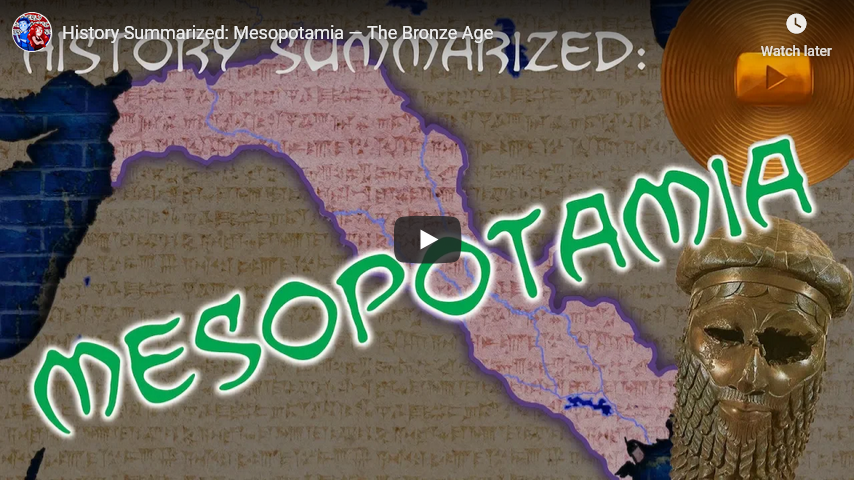
History Summarized: Mesopotamia — The Bronze Age

Overly Sarcastic Productions
Published 22 Feb 2019

Let’s spin the clock way back to the beginning of urbanized civilization, and learn about the long history of Mesopotamia from the dawn of the city to the collapse of the last Sumerian empire.

This video is part of The Bronze Age collaboration.
Find 10 other great videos with this playlist: https://goo.gl/4JLV8s
Previous video — Cynical Historian: https://youtu.be/xSDn0HSXjgo
Next video — Epimetheus: https://youtu.be/-RrAoL_PVmo

Further reading: “Babylon: Mesopotamia and the Birth of Civilization” By Paul Kriwaczek: https://goo.gl/nyQAdS

PATREON: www.patreon.com/OSP

MERCH LINKS:
Shirts – https://overlysarcasticproducts.threa…
All the other stuff – http://www.cafepress.com/OverlySarcas…

This is the dawning of the Age of the Putz

Filed under: Government, Health, Liberty — Tags: , , — Nicholas @ 03:00

At least, that’s how David Warren sees it:

“Covid 19 Masks” by baldeaglebluff is licensed under CC BY-SA 2.0

… the spirit of Resolution has been dying in our society, and that is among the principal reasons that our public life has been down-trending. It is what we may call the Age of the Putz, using the term with its full Yiddish vigour, yet in English where we may say it in the presence of women and children. Yes, it means stupid, foolish, worthless, idle and so forth. But as I understand, at the fulcrum, it means “easy to swing around.” It means being led by one’s rope, as it were. A putz (understandably confused with a schmuck, or a nebbish) does what he has been told by the authorities, and oddly like the brave, he does not hesitate. But this is because he can’t endure pain. He can be agreeable, yet without charm. (Reader warning: my Yiddish may be defective.)

This would be acceptable, in the sense that there is nothing we can do about a putz — he has already surrendered — but a line must be drawn somewhere, if only for our own edification. This is where, in current jargon, we cross over from a putz, to a Karen. In my apartment building alone, there must be a dozen who have made this “transition.”

They are the ones who think they will die, if you’ve forgotten your bat-muzzle, or threaten to step within seventy inches of them, in an elevator. They may appear to be making a threat, by the shrieks of complaint they utter, but really it is only fear. It is, to be plain, the opposite of Resolution. The authorities, taking them for putzes, have easily instilled the “public health” terror, with “science” they have made up, and may yank them here or there as they want.

Could I make videos, I would record a snide little number that composed itself in my head, last May (when we were only two months into “fifteen days to flatten the curve”). It was entitled, “You’re Going To Kill People!” The dance component was a variation on the hippie-days twist, in which Walmart shoppers try to stay two feet clear of each other, while looting modest consumer durables.

Lee Metford and Lee Enfield Carbines for the Cavalry

Filed under: Britain, History, Military, Weapons — Tags: , , , , — Nicholas @ 02:00

Forgotten Weapons
Published 28 Sep 2020

http://www.patreon.com/ForgottenWeapons

https://www.floatplane.com/channel/Fo…

Cool Forgotten Weapons merch! http://shop.bbtv.com/collections/forg…

When the Lee magazine rifle was adopted for British military service, it was initially produced as a long rifle for the infantry. To accommodate the cavalry on horseback, a much more compact carbine version was produced. These were initially Lee Metford pattern, but changed to Lee Enfield pattern rifling when the long rifles made the same shift. The carbines were the origin of the cocking-piece-mounted safety, as the Lee Metford rifles in service at the time had no manual safety at all. The cavalry service wanted one, and the safety they came up with was added to later patterns of infantry rifle.

The Lee carbines are designed to be sleek and handy, to easily fit into a cavalry scabbard. The bolt handles are swooped forward slightly and flattened against the receiver. The front sight wings are rounded and the magazine was reduced to 6 rounds, barely extending beyond the receiver. Early examples were fitted with a D-ring on the left side of the receiver socket for use with a single point sling, but this was removed quickly and it is very rare to find carbines with intact sling rings today.

Contact:
Forgotten Weapons
6281 N. Oracle #36270
Tucson, AZ 85740

QotD: The Opposite Rule of Progressives

Filed under: Politics, Quotations, USA — Tags: , , — Nicholas @ 01:00

At various times, I’ve rolled out my rule about how to interpret statements by liberals regarding non-liberals […] it goes like this. Take whatever they say, assume the opposite and you will get close to the truth. When liberals said the Tea Party was “AstroTurf” and liberal groups were genuine grassroots, you could flip it around to mean their gang was a rent-a-mob and the weirdos in the 17th century outfits were just regular folks pissed off and making some noise.

That was in fact the case. The Left has well funded “volunteer” operations to bus in protesters when needed. Often they are paid by their union, like we saw in Wisconsin with the teacher unions. It is a form of projection, for the most part, but in politics it is a way to shift the focus away from whatever crooked stuff they’re doing. One of the oldest tricks in politics is to falsely accuse your opponent of something, so the story is about the other guy denying it, not about whatever you are doing. […] For as long as I’ve been alive, there have been theories about why there is a Left and Right in American politics. All of these theories claim the mantel of science and all of them come from the Left. The reason for this is, at some level, the Left knows they are not working from facts and reason, but rather a set of beliefs. Rather than confront that, they accuse everyone that opposes them of holding irrational beliefs and acting from emotion.

The formula goes like this. They assign to themselves qualities they wish they possessed, but don’t. “Open minded” always makes the list along with “smart” and “unconventional.” Who would not want to be a smart, open minded guy, who is a little off-beat? Gosh that sounds just like the protagonist of every cool TV show and movie! Then they usually assign some bad qualities to the mythical right-winger or conservative. Then they produce a “study” that confirms all of this as science!

I’ll note that liberals have a long list of words for the people on the other side of the hive walls. You never hear liberals talk about the differences between libertarians and paleo-cons or neocons and paleos. To the liberal, they are part of the undifferentiated other on the other side of the wall. Often they avoid this and rely on their cartoon version of the conservative, which is usually a blend of the 1950’s sitcom dad and a prison guard. It’s Ward Cleaver with a closet full of Nazi uniforms.

The Z Man, “The Opposite Rule of Liberalism”, The Z Blog, 2013-11-15.

January 1, 2021

“Wolfpack” Pt. 2 – The Torpedoing – Sabaton History 100 [Official]

Filed under: Germany, History, Media, Military, WW2 — Tags: , , , , — Nicholas @ 04:00

Sabaton History
Published 31 Dec 2020

The Allies had cracked the secret codes, deprived the German Kriegsmarine of their best U-Boat aces, and sunk more submarines than the Germans could replace. Yet the Wolfpacks returned. From the depth of the sea they continued their hunt, even far away from the busy routes of the Atlantic. On their way south, along the coast of Africa, Wolfpack “Eisbär” would engage in a fateful encounter. An encounter that would demonstrate how the old rules of conduct, honor and mercy had become a thing of the past.

Support Sabaton History on Patreon: https://www.patreon.com/sabatonhistory

Listen to “Wolfpack” on the album Primo Victoria: https://music.sabaton.net/PrimoVictoria

Listen to Sabaton on Spotify: http://smarturl.it/SabatonSpotify
Official Sabaton Merchandise Shop: http://bit.ly/SabatonOfficialShop

Hosted by: Indy Neidell
Written by: Markus Linke and Indy Neidell
Directed by: Astrid Deinhard and Wieke Kapteijns
Produced by: Pär Sundström, Astrid Deinhard and Spartacus Olsson
Creative Producer: Maria Kyhle
Executive Producers: Pär Sundström, Joakim Brodén, Tomas Sunmo, Indy Neidell, Astrid Deinhard, and Spartacus Olsson
Community Manager: Maria Kyhle
Post-Production Director: Wieke Kapteijns
Editor: Iryna Dulka
Sound Editor: Marek Kaminski
Maps by: Eastory — https://www.youtube.com/c/eastory
Archive: Reuters/Screenocean — https://www.screenocean.com

Sources:
– Design vector of baseball elements created by macrovector official – www.freepik.com

All music by: Sabaton

An OnLion Entertainment GmbH and Raging Beaver Publishing AB co-Production.

© Raging Beaver Publishing AB, 2019 – all rights reserved.

The paradox of innovation – the more you have, the less impact each individual innovation has

Filed under: Britain, Economics, History, Technology — Tags: , , — Nicholas @ 03:00

In the latest Age of Invention newsletter, Anton Howes considers the oddity that as the British economy expanded during the early Industrial Revolution, each new discovery had less and less direct impact on the economy as a whole:

What this means is that when there were even some slight improvements in agriculture alone, the effects on living standards could be dramatic. But absent such improvements, a rich culture of innovation affecting everything from clothes to watches to books, wine, glassware, metals, and pottery would have been almost entirely masked from the figures. Importantly, the same applies not only to the composition of average notional consumption baskets, but to the contributions of different sectors to the economy as a whole. While the total amount of food has increased dramatically for the past few hundred years, for example, agriculture’s share of the economy steadily fell (from over 40% of the English economy in 1600, and an even greater share of total employment, to less than 1% today, with a similar trend repeated worldwide). So the relative importance of your typical agricultural innovation for overall growth rates has fallen dramatically. Perhaps it’s no wonder that twentieth-century agricultural pioneers like Norman Borlaug still don’t really get their due.

The same goes, more recently, for manufacturing. The reason the textbooks always name Kay, Hargreaves, Crompton, Cartwright and Arkwright, is because they made improvements to what was already one of the most important sectors of the economy: textiles. In the eighteenth century, textiles as a whole accounted for a whopping 16-17% of the British economy. So any growth in the value of wool, linen, and increasingly cotton goods, had an appreciable impact on overall economic growth. Today, by contrast, you’d be hard pressed to find many sectors that account for even 5% of the country’s economy (except construction, and possibly financial services, depending on how broadly you define them). And while Britain may have long lost its role as the workshop of the world, textile production in China today still only accounts for about 7% of the country’s economy. To put it another way, the modern Arkwrights and Cartwrights and Cromptons of China, to have any comparable effect on national statistics, would have to make productivity improvements to their industry that are at least three times as impressive.

And impressive they are, though you won’t have heard of them. Arkwright and Crompton multiplied the number of threads that a single machine could spin, from one to dozens. Today, thread is spun by the thousands, at speeds they could have scarcely comprehended, and with entire factories hardly needing a single pair of human hands. Automatic sensors monitor the yarn’s tension and detect any defects while it is being spun, with robots even whizzing along to repair any snaps, able to find a loose end and piece the yarn together again — a task that once required the nimble fingers of small children. From an eighteenth-century perspective, our textile machines routinely now do magic, and are getting ever more fantastical every day. Imagine showing Arkwright the use of lasers in fading and cutting jeans.

But by replacing human labour, innovation has become ever more hidden. Many people don’t realise that British manufacturing is actually larger and more valuable than ever. It’s just that it employs fewer people than ever, so hardly anybody gets to witness its great strides forwards (to witness a flavour of manufacturing’s modern marvels, I recommend checking out MachinePix).

And more importantly, the overall effect of each innovation has also been steadily diluted — itself the result of growth. Innovation has, in a sense, been the victim of its own success. By creating ever more products, sprouting new industries, and diversifying them into myriad specialisms, we have shrunk the impact that any single improvement can have. When cotton was king, a handful of inventors might hope to affect the entire national textile industry in some way. Nowadays, there’s not a chance. Doubling the productivity of cotton spinning is all well and good, but what about nylon, polyester, rayon, and the host of other fibres we have since invented? And which kind of spinning machine would you improve? An old-fashioned ring-spinner, a newer rotor spinner, or perhaps even one of the brand new air-jet types?

If you make an improvement, it’s not going to be to the industry as a whole — it’ll be specific. And actually improvements have always been specific; it’s just that the industries have since multiplied and narrowed. Inventors once made drops into a puddle, but the puddle then expanded into an ocean. It doesn’t make the drops any less innovative. This paradox of progress affects all innovation, such that it is no wonder that the number of researchers has been increasing while national-level productivity growth has appeared fairly stagnant. Even general-purpose technologies, like the recent dramatic improvements to telecommunications, computing, and software, have had a muted effect, being applied more slowly than we’d have liked. I expect that all future general-purpose technologies will fare even worse, for it takes still further effort and innovation to apply a technology to a given industry, and those industries will continue to multiply. All future general-purpose technologies, that is, except improvements to energy.


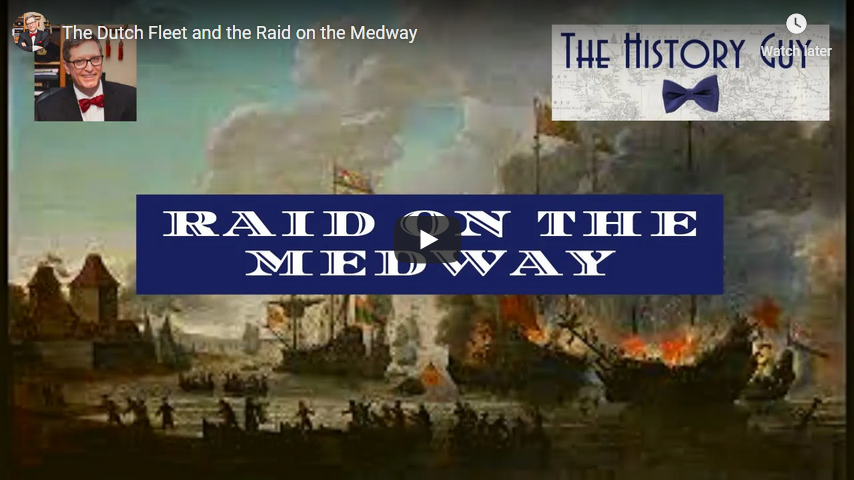
The Dutch Fleet and the Raid on the Medway

Filed under: Britain, Europe, History, Military — Tags: , , , — Nicholas @ 02:00

The History Guy: History Deserves to Be Remembered
Published 3 Nov 2018

Two of the world’s greatest sea powers compete for control of the world’s shipping lanes. At the height of the Age of Sail, the Dutch fleet makes one of the most daring naval raids in history. The History Guy remembers the raid on the Medway.

This is original content based on research by The History Guy. Images in the Public Domain are carefully selected and provide illustration. As photographs of actual events are sometimes not available, photographs of similar objects and events are used for illustration.

The episode relates events that occurred during a period of conflict. All information is provided within historical context and is intended for educational purposes. Those who do not learn from history are doomed to repeat it.

Patreon: https://www.patreon.com/TheHistoryGuy

The History Guy: History Deserves to Be Remembered is the place to find short snippets of forgotten history from five to fifteen minutes long. If you like history too, this is the channel for you.

Awesome The History Guy merchandise is available at:
teespring.com/stores/the-history-guy

#worldhistory #militaryhistory #thehistoryguy

QotD: Buying “organic” food

… every time I buy “organic”, I feel like I’m sending a reinforcement to several different forms of vicious stupidity, beginning with the term “organic” itself. Duh! Actually, all food is “organic”; the term just means “chemistry based on carbon chains”.

Take “no GMOs” for starters. That’s nonsense; it’s barely even possible. Humans have been genetically modifying since the invention of stockbreeding and agriculture; it’s what we do, and hatred of the accelerated version done in a genomics lab is pure Luddism. It’s vicious nonsense, too; poor third-worlders have already starved because their governments refused food aid that might contain GMOs. And without GMOs it’s more than possible that the new wave of wheat rust, once it really gets going, might condemn billions to death.

Vegan? I’ve long since had it up to here with the tissue of ignorance and sanctimony that is evangelical veganism. Comparing our dentition and digestive tracts with those of cows, chimps, gorillas, and bears tells the story: humans are designed to be unspecialized omnivores, and the whole notion that vegetarianism is “natural” is so much piffle. It’s not even possible except at the near end of 4000 years of GMOing staple crops for higher calorie density, and even now you can’t be a vegan in a really cold climate (like, say, Tibet) because it’ll kill you. In warmer ones, you better be taking carnitine and half a dozen vitamins or you’re going to have micronutrient issues sneak up on you over a period of years.

OK, I give on gluten-free. Some people do have celiac disease; that’s a real need. But “no trans fat”? Pure faddery, or the next thing to it. The evidence indicting trans fats is extremely slim and surrounded by a cloud of food-nannyist hype. I hate helping to keep that sort of balloon inflated with my dollars.

Who could be against “fair trade”? Well, me … because the “fair trade” crowd pressures individual growers to join collectives with “managed” pricing. If you’re betting that this means lazy but politically adept growers with poor resource management and productivity prosper at the expense of more efficient and harder-working ones, you’ve broken the code.

Finally, “pesticide-free”. Do I like toxic chemicals on my food? No … but I also don’t fool myself about what happens when you don’t use them. This ties straight back to the general cluster of issues around factory farming. Without the productivity advantages of pesticides, synthetic fertilizer, and other non-“organic” methods, farm productivity would plummet. Relatively wealthy people like me would cope with reduced availability by paying higher prices, but huge numbers of the world’s poor would starve.

I buy “organic” food because it tastes better and I can, but I feel guilty about reinforcing all the kinds of delusion and superstition and viciousness that are tied up in that label. We simply cannot feed a world population of 6.6 billion without pesticides and factory farming and GMOs and preservatives in most bread; now, and probably forever, “organic” food will remain a luxury good.

Try telling its political partisans that, though. Hyped on their belief in their own virtue, and blissfully ignorant about scale problems, they have already engineered policies that have cost thousands of lives during spot famines. The potential death toll from (especially) anti-GMO policies is three orders of magnitude higher.

And my problem reduces to this: how can I buy the kind of food I want without supporting dangerous delusions?

Eric S. Raymond, “Organic guilt”, Armed and Dangerous, 2010-08-23.

« Newer Posts

Powered by WordPress