
We’ll begin our tribute to Maurice Sendak with an excerpt of our 1986 interview, in which he told me that when he was a child, adults looked big and grotesque to him, and he couldn’t imagine ever becoming one.
MAURICE SENDAK: It was inconceivable to me as a child that I would be an adult. I mean, one assumed that it would happen, but obviously it didn’t happen, or if it did, it happened when your back was turned, and then suddenly you were there. So I couldn’t have thought about it much.
TERRY GROSS: Because adults seemed really big and different, you couldn’t imagine becoming one?
SENDAK: And awful. Yeah. I mean they were mostly dreadful, and if the option were to become an adult was to become another dreadful creature, then best not, although I think there had to be a kind of normal anticipation of that moment happening because being a child was even worse.
I mean, being a child was being a child — was being a creature without power, without pocket money, without escape routes of any kind. So I didn’t want to be a child.
I remember how much — when I was a small boy I was taken to see a version of Peter Pan. I detested it. I mean the sentimental idea that anybody would want to remain a boy, I don’t — I couldn’t have thought it out then, but I did later, certainly, that this was a conceit that could only occur in the mind of a very sentimental writer, that any child would want to remain in childhood. It’s not possible. The wish is to get out.
“‘Fresh Air’ Remembers Author Maurice Sendak”, NPR Books, 2012-05-08.
May 26, 2019
QotD: Maurice Sendak on childhood
May 10, 2019
Microsoft can’t get worse than old Clippy? “Hold my non-alcoholic beer”
Libby Emmons reports on a new Microsoft Word plugin that puts Clippy into the history books:
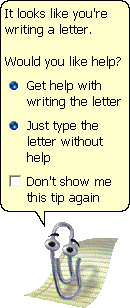
Coming soon to a word processing app you probably already subscribe to is Microsoft’s new Ideas plugin. This leap forward in the predictive text trend will endeavor to help you be less offensive. Worried you might be a little bit racist? A little gender confused? Not sure about the difference between disabled persons and persons who are disabled? Never fear, Microsoft will fix your language for you.
Using machine learning and AI, Microsoft’s Ideas in Word will help writers be their least offensive, most milquetoast selves. Just like spell check and grammar check function, Ideas will make suggestions as to how to improve your text to be more inclusive. On the surface, this seems like a terrible idea, but when we dig further beneath the impulse, and the functionality of the program, it gets even worse. What’s happening is that AI and machine learning are going to be the background of pretty much every application, learning from our behaviours not only how we’d like to format our PowerPoint presentations, but learning, across platforms, how best to construct language so that we say what we are wanted to say as opposed to what we really mean.
There is an essential component of honest communication, namely that a person express themselves using their own words. When children are learning to talk and to articulate themselves, they are told to “use your words.” Microsoft will give writers the option of using someone else’s words, some amalgamation of users’ words across the platform, and the result will be that the ideas exhibited will not be the writer’s own.
April 8, 2019
April 7, 2019
QotD: Good writers and bad
Thinking about it, what often makes a writer good, is that they avoid the things that all bad writers seem to share. In this sense, “good” is not a state in itself, but simply not being in the state we call “bad.” A great wordsmith is further away from the state of bad writing than someone who is just an average writer. That average writer can appear to be much better, by offering keen insights and clever observations. The path to becoming a good writer, therefore, starts with avoiding the things that define a bad writer.
The most common trait of bad writers, it seems, is they write about themselves. Unless you are an international man of mystery, you’re not that interesting. No one is. Bad writers, always seem to think they are the most interesting people they know. This is what made former President Obama such a boring speaker. No matter the subject, his speech was going to be a meditation on his thoughts and feelings about the subject. It became a game of sorts to count how many times he referenced himself in a speech.
That’s the hallmark of bad writing. Instead of focusing on the subject, the writer focuses on himself, which suggests he does not know the material. Even when relating an experience or conversation, the good writer makes himself a secondary character in the story, not the focus. Bad writers are always the hero of everything they write, as if they are trying to convince the reader of something about themselves. Good writers avoid this and focus on the subject of their writing.
The Z Man, “How To Be A Bad Writer”, The Z Blog, 2019-03-03.
April 5, 2019
April 4, 2019
George Orwell BBC Arena Part 1 – Such, Such Were the Joys
Alan Ruben
Published on 4 Mar 2013Part 1 of an in-depth 5 part series about George Orwell made in 1983.
March 19, 2019
QotD: Celebrity intellectuals
Tyler Cowen posted his latest Conversations with Tyler. His guest was Malcolm Gladwell, the famous gadfly and popularizer of the blank slate. Of course, Cowen slobbers all over him, because that’s what good thinkers are supposed to do when they get to meet someone like Gladwell. It’s a way of letting the other good thinkers know you are not the sort that colors outside the lines. Gladwell is one of those guys who is more famous for what he represents than anything he has said or written.
Celebrity intellectuals are not famous because they have offered up a great insight or discovery. There’s no money in that. New ideas challenge the orthodoxy. The people with the money to help an aspiring celebrity intellectual live the sort of life they deserve tend not to like challenges to the orthodoxy. Instead they gravitate to people who confirm that the current arrangements are as the heavens ordained. That’s Gladwell. His celebrity is rooted in his ability to flatter the Cloud People.
The typical path to celebrity for these guys is not much different than the way mediocre comics get rich and famous. The game is to flatter the right audience. Making a bunch of bad whites in the hill country feel good about themselves is not a path to the easy life. You can make a nice living, but you’re not going to be doing Ted Talks or getting five figures to do the college circuit. Figure how to let the Cloud People on the Upper West Side feel like champions and you have the golden ticket.
The Z Man, “The Fading Star”, The Z Blog, 2017-03-16.
March 12, 2019
QotD: The creed of the editor
It is part of the woolly lore of editors and lawyers alike: the misplaced or absent comma in a statute or a contract that ends up costing somebody zillions of dollars. There really are not many examples of this happening, but lawyers have a responsibility to behave as though the danger were omnipresent. The thought of a comma disaster encourages close attention to detail: it provides a spur to the spirit during long hours of copy-editing.
As for print editors, believing in the myth of the expensive punctuation mark imparts a hypothetical cash value, even a heroic dignity, to the fussiness they probably acquired in toilet training.
The thing about text errors in the law is that natural language is highly redundant. You can transpose letters in a sentence or word, sow punctuation randomly, leave out the vowels: what’s left will ordinarily still convey the intended meaning. Errors induced by chance rarely create true ambiguity. Their disruptiveness is vexing when you are trying to create high art for a consumer’s pleasure, such as, say, a learned newspaper column. Usually they do not cost anyone money or alter history.
Colby Cosh, “At long last, milkmen deliver the punctuation scandal we’ve been waiting for”, National Post, 2017-03-22.
March 8, 2019
QotD: Wine books as hagiography
Disasters of this sort happen much more rarely in books of the second category. Or rather, the things that do go wrong are sent from outside to try the heroic château-owners: items such as the French Revolution, the German occupation, hail, drought, floods, phylloxera, mildew and oidium. Disasters are there to be triumphed over; owners (or, at any rate, recent owners) are always doing their best, even when the world is less than the best possible. Greed, corruption, exploitation of employees and sharp practice turn up as rarely in the literary genre that is the château profile as does premarital bonking in Barbara Cartland. (And just out of interest, were there no collaborators in the vineyards during the last war? I’ve yet to read of any.) Of course, these books tend to be commissioned when the château is rich and its label famous; even so, it would be a nice change to read some day of an estate where the vineyards were wrecked, the workforce pissed, the proprietors fraudulent and the wine disgusting. In the meantime we have Asa Briggs: ‘I would not have written this book, however, had I not been invited to do so by the Duc and Duchesse de Mouchy, and they, along with other members of the Dillon family (who now own the vineyard) on both sides of the Atlantic, have given me great encouragement – and offered me memorable hospitality – throughout the inevitably protracted period of my research.’ Well, yes. Briggs does his little nods and bows, and writes with the bonhomie of a trusted courtier. He imparts all the key information that official sources will disclose about Haut-Brion; he writes effectively about the wider history of the Bordeaux wine trade (which perhaps should have been his subject in the first place), and fascinatingly about the city under the Revolution, when the owner of Haut-Brion was sent to the guillotine. But it is not for nothing that the name Asa Briggs, as a New Statesman competition entrant pointed out, is an anagram of Sir Gasbag. He just can’t help the pompous and the self-referential: ‘The year 1938, when I went up to university, was only an ‘average year’, rather like 1939, the first year I visited Bordeaux before war reached it … I have never tasted the 1955, the year of my marriage’. He is also a generous quoter of the gasbaggery of others. Take this insight from that ‘great citizen and long-time Mayor of Bordeaux’, Jacques Chaban-Delmas: ‘The spirit of a city takes bodily shape, so to say, across time and across the history that defines, affims and perpetuates both its identity and its raison d’être.’ Not much will have gone missing in the translation.
It is, no doubt, the fault of the genre, but Haut-Brion avoids controversy like a corked bottle. Briggs praises Edmund Penning-Rowsell’s ‘thoughtful and wide-ranging’ The Wines of Bordeaux, but does not quote its author’s judgement that ‘vinously the château has had its ups and downs in this century’. Briggs is ‘deeply impressed’ by Robert Parker and his ‘outstanding personality’, but does not refer to Parker’s assertion that the château produced ‘simplistic’ claret in the years 1966-74: ‘Whether this was intentional,’ Parker writes in Bordeaux, ‘or just a period in which Haut-Brion was in a bit of a slump remains a mystery. The staff at Haut-Brion is quick-tempered and sensitive about such a charge.’ Briggs also manages to blandify the potentially interesting anecdote. There is a story about Malcolm Forbes (‘who died while I was carrying out research for this book’), who at one extreme famously bought a bottle of Jefferson claret for $156,000, and at the other several hundred bottles of 1965 Haut-Brion for $5 a throw. ‘Forbes described himself as an appreciator of wine rather than as a collector, and he was a shrewd appreciator at that, a man who liked a bargain,’ Briggs notes. He records Forbes’s opinion that the 1965 got ‘better and better’ each time he drank it, the owner of Haut-Brion’s view that Forbes had been ‘quite right’ to have bought the wine, and ends by nervelessly quoting the Haut-Brion brochure to the effect that the wine is ‘astonishing for the vintage’. Sir Gasbag concludes: ‘Six thousand cases of Haut-Brion were produced in 1965. The comparative figures for 1964 and 1966 were 17,500 and 19,500. Forbes obviously knew what rarity meant.’ Among the fawning and the back-slapping lies a moderately interesting story about the penny-pinching of the super-rich. Of course, the reason the 1965 is ‘rarer’ than those on either side of it was because of climactic conditions which made it one of the crappiest of all postwar vintages, in which Haut-Brion produced a marginally less crappy wine than some of the other first growths. And would any vineyard-owner ever willingly dump on his own wine in overt contradiction of a millionaire client? I once attended a vertical tasting of a second-growth claret in the presence of the owner and her business manager. Among several excellent vintages there was an obvious super-dud of a 1958, which should long since have been emptied straight into the vinegar mother. When the owner arrived for the tasting she asked her manager in some puzzlement why they were showing the 1958. Because we have several hundred cases of it left,’ he replied. Whereupon, a few minutes later, she rose to her feet and gave measured praise to the lesser-known but arguably undervalued 1958.
Julian Barnes, “Did You Get Black Truffles on the Nose?”, Literary Review, 1994-10.
March 1, 2019
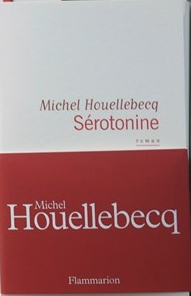
Theodore Dalrymple on Michel Houellebecq: “Houellebecq runs an abattoir for sacred cows”
At the New English Review:
Not reading many contemporary French novels, I am not entitled to say that Michel Houellebecq is the most interesting French novelist writing today, but he is certainly very brilliant, if in a somewhat limited way. His beam is narrow but very penetrating, like that of a laser, and his theme an important, indeed a vital one: namely the vacuity of modern life in the West, its lack of transcendence, lived as it is increasingly without religious or political belief, without a worthwhile creative culture, often without deep personal attachments, and without even a struggle for survival. Into what Salman Rushdie (a much lesser writer than Houellebecq) called “a God-shaped hole” has rushed the search for sensual pleasure which, however, no more than distracts for a short while.
Something more is needed, but Western man — at least Western man at a certain level of education, intelligence and material ease — has not found it. Houellebecq’s underlying nihilism implies that it is not there to be found. The result of this lack of transcendent purpose is self-destruction not merely on a personal, but on a population, scale. Technical sophistication has been accompanied, or so it often seems, by mass incompetence in the art of living. Houellebecq is the prophet, the chronicler, of this incompetence.Even the ironic title of his latest novel, Sérotonine, is testimony to the brilliance of his diagnostic powers and his capacity to capture in a single word the civilizational malaise which is his unique subject. Serotonin, as by now every self-obsessed member of the middle classes must know, is a chemical in the brain that acts as a neurotransmitter to which is ascribed powers formerly ascribed to the Holy Ghost. All forms of undesired conduct or feeling are caused by a deficit or surplus or malalignment of this chemical, so that in essence all human problems become ones of neurochemistry.
On this view, unhappiness is a technical problem for the doctor to solve rather than a cause for reflection and perhaps even for adjustment to the way one lives. I don’t know whether in France the word malheureux has been almost completely replaced by the word déprimée, but in English unhappy has almost been replaced by depressed. In my last years of medical practice, I must have encountered hundreds, perhaps thousands, of depressed people, or those who called themselves such, but the only unhappy person I met was a prisoner who wanted to be moved to another prison, no doubt for reasons of safety.
Houellebecq’s one-word title captures this phenomenon (a semantic shift as a handmaiden to medicalisation) with a concision rarely equalled. And indeed, he has remarkably sensitive antennae to the zeitgeist in general, though it must be admitted that he is most sensitive to those aspects of it that are absurd, unpleasant, or dispiriting rather than to any that are positive.
February 27, 2019
QotD: When progressives took over SF publishing
When I sold my first novel in the late 90s. Most Americans might not be that sensitive to the “climate” but I was. I had after all grown up in a socialist (at best, during the better times) country where to graduate you had to present the proper progressive front. I knew the signs and the hints and social positioning of “further left than thou.” For instance, my first SF cons, as an author, in the green room, I became aware that “a conservative” was a suitable, laughter inducing punchline for any joke; that all of them believed the Reagan years had set us on course to total dystopia; that the US was less enlightened/capable/free than anywhere else; that your average Republican or even non-Democrat voter was the equivalent of the Taliban.
As for Libertarians, I will to my dying day cherish the dinner I had with my then editor to whom I was describing a funny incident at MileHi where for reasons known only to Bob, I found myself in an argument with someone who wanted to ban the internal combustion engine. My editor perked up and (I swear I’m not making this up) said “Oh, a Libertarian.” At which point my husband squeezed my thigh hard enough to stop me answering. But yeah. That was a not uncommon idea of a libertarian. If it was completely insane and involved banning something, then it was a libertarian.
I once overheard the same editor talking to a colleague and saying that if she got submissions across her desk and they were – dropped and horrified voice – somewhat conservative she recommended they try Baen.
Which the other editor (from a different house) agreed with, because after all, they weren’t in the business of publishing conservative works.
This immediately put me on notice that in the field if you were a conservative (I presume libertarians were worse, or at least they seemed to induce more mouth foaming. And though I was solidly libertarian and – at the time – might have qualified as a Libertarian, I suspect if faced with my real positions they would have classed me as conservative, because my positions were self-obviously not left and that’s all it took.) there was only one house that would take you, and if what you wrote/wanted to write wasn’t accepted by then, then you were out of luck.
After that I lived in a state of fear
I imagine it was similar to living in one of the more unsavory periods of the Soviet Union. You saw these purges happen. Whisper-purges. You got the word that someone was “not quite the thing” or that they associated with so and so who associated with so and so who was a – dropped voice – conservative. Suddenly that person’s books weren’t being bought and somehow people would clear a circle around them, because, well, you know, if you’re seen with a – dropped voice – conservative they might think you’re one too. And then it’s off to Never-Never with you.
I found a few other conservatives/libertarians (frankly, mostly libertarians) in the field, all living in the same state of gut clenching fear.
We did such a dance to test both the reliability and discretion of the other before revealing ourselves that we might as well have developed a hanky code. [Blue for true blue Conservative, white for pure Libertarian, red for the blood of our heroes, brown for OWL (older, wiser libertarian), purple for squishy conservative, powder blue for Brad Torgersen. (The powder blue care bear, with the bleeding heart… and the flame thrower.)]
Conventions were nerve wracking because I watched myself ALL the TIME. And you never knew how much you had to watch yourself. Suddenly, out of the blue, at a World Fantasy the speaker, a well known SF/F writer went on about Dean Howard, our next president. The room erupted in applause, some people stood to clap, and I sat there, frozen, unable to actually fake it to that point but too shocked to even put a complaisant expression on my face.
Sarah Hoyt, “Say Goodbye To The State Of Fear”, According to Hoyt, 2017-03-11.
February 24, 2019
QotD: Wine books
There are three categories of wine book. The first are guides, like those of Robert Parker, which seek to offer practical help in the purchase and consumption of wines – though their effects are often contrary, adding feverishness to the acquisition (‘I’ve landed a 95-pointer!’) and self-consciousness to the drinking (‘Did you get black truffles on the nose?’). The second category consists of historical surveys and château profiles, the latter often little more than disguised puffery, since the author will have been given privileged access to the archives, and will have been vetted, if not actually chosen, by the château, will have been wined and dined until he – or, occasionally, she – is practically wearing the château’s label as a blazer badge. Famous wine houses are nowadays international businesses, and no less good at promoting themselves than Nike and Benetton. Thirdly, there are books of almost no practical value but which appeal to the nostalgic, fetishistic or cork-sniffing side of oenophilia: celebrations, anthologies, reminiscences of the wine country and its colourful characters, evocations of people and vintages often long since dead. The wine buff will often buy such useless treasures second-hand and will employ them to induce harmless reverie, rather like leafing through an old Sears Roebuck catalogue.
Julian Barnes, “Did You Get Black Truffles on the Nose?”, Literary Review, 1994-10.
February 21, 2019
Simplified, consistent English
You may have encountered this short article usually attributed to Mark Twain (or alternatively to M.J. Shields in a letter to The Economist):
For example, in Year 1 that useless letter “c” would be dropped to be replased either by “k” or “s”, and likewise “x” would no longer be part of the alphabet. The only kase in which “c” would be retained would be the “ch” formation, which will be dealt with later. Year 2 might reform “w” spelling, so that “which” and “one” would take the same konsonant, wile Year 3 might well abolish “y” replasing it with “i” and Iear 4 might fiks the “g/j” anomali wonse and for all.
Jenerally, then, the improvement would kontinue iear bai iear with Iear 5 doing awai with useless double konsonants, and Iears 6-12 or so modifaiing vowlz and the rimeining voist and unvoist konsonants. Bai Iear 15 or sou, it wud fainali bi posibl tu meik ius ov thi ridandant letez “c”, “y” and “x” — bai now jast a memori in the maindz ov ould doderez — tu riplais “ch”, “sh”, and “th” rispektivli.
Fainali, xen, aafte sam 20 iers ov orxogrefkl riform, wi wud hev a lojikl, kohirnt speling in ius xrewawt xe Ingliy-spiking werld.
Along the same lines, here’s a new take on the idea of making the English language phonetically consistent:
H/T to Rob Beschizza for the link.
Dune – Plots and Plans – Extra Sci Fi – #2
Extra Credits
Published on 19 Feb 2019On the surface, Dune appears to be a peak demonstration of “the competent man” trope so popular in Golden Age science fiction, but Herbert deconstructs this by carefully demonstrating how all of the characters make bad assumptions on faulty premises…


