
As for […] the idea that we could lose our freedom by succumbing to a wave of religious hysteria, I am sorry to say that I consider it possible. I hope that it is not probable. But there is a latent deep strain of religious fanaticism in this, our culture; it is rooted in our history and it has broken out many times in the past.
It is with us now; there has been a sharp rise in strongly evangelical sects in this country in recent years, some of which hold beliefs theocratic in the extreme, anti-intellectual, anti-scientific, and anti-libertarian.
It is a truism that almost any sect, cult, or religion will legislate its creed into law if it acquires the political power to do so, and will follow it by suppressing opposition, subverting all education to seize early the minds of the young, and by killing, locking up, or driving underground all heretics. This is equally true whether the faith is Communism or Holy-Rollerism; indeed it is the bounden duty of the faithful to do so. The custodians of the True Faith cannot logically admit tolerance of heresy to be a virtue.
Nevertheless this business of legislating religious beliefs into law has never been more than sporadically successful in this country — Sunday closing laws here and there, birth control legislation in spots, the Prohibition experiment, temporary enclaves of theocracy such as Voliva’s Zion, Smith’s Nauvoo, and a few others. The country is split up into such a variety of faiths and sects that a degree of uneasy tolerance now exists from expedient compromise; the minorities constitute a majority of opposition against each other.
Could it be otherwise here? Could any one sect obtain a working majority at the polls and take over the country? Perhaps not — but a combination of a dynamic evangelist, television, enough money, and modern techniques of advertising and propaganda might make Billy Sunday’s efforts look like a corner store compared to Sears Roebuck.
Throw in a Depression for good measure, promise a material heaven here on earth, add a dash of anti-Semitism, anti-Catholicism, anti-Negrosim, and a good large dose of anti-“furriners” in general and anti-intellectuals here at home, and the result might be something quite frightening — particularly when one recalls that our voting system is such that a minority distributed as pluralities in enough states can constitute a working majority in Washington.
Robert A. Heinlein, “Concerning Stories Never Written”, Revolt in 2100, 1953.
October 11, 2019
QotD: Religious hysteria
October 6, 2019
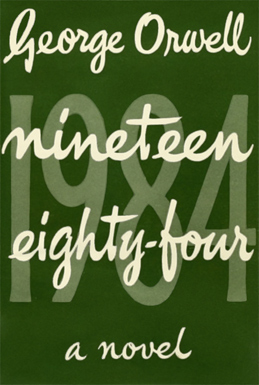
The cultural influence of George Orwell
George Orwell, the chosen pen name of Eric Blair, is one of the best known writers of the 20th century and even people who have never read any of his writings are aware of his influence. John Rodden and John Rossi outline the immediate post-war period that saw Orwell publish his final and best-known work:

Seven decades ago on June 8, George Orwell’s Nineteen Eighty-Four exploded on the cultural front—fittingly enough, just two months before the Soviet Union’s first successful atomic test that August, which broke America’s nuclear monopoly. Orwell’s warning was urgent — and timely. Almost overnight, in the wake of the surrender of Germany and Japan that ended World War II in 1945, a new war—the so-called Cold War — had emerged. (Orwell is often credited with coining the term.)
The Cold War pitted the capitalist West against the communist East, above all the United States against the USSR (and soon China). Just three weeks before the publication of Nineteen Eighty-Four, the Soviet Union lifted the Berlin Blockade, thereby avoiding a potentially deadly showdown with the West that might have triggered World War III. Two weeks later, on May 23, the Federal Republic of Germany (West Germany) was officially established, effectively ending prospects in the near future of German reunification. On the very day of Nineteen Eighty-Four‘s publication, June 8, fears swept through liberal America of a growing Red Scare when a leaked document named numerous celebrities as Communist Party members (e.g., Helen Keller, Dorothy Parker, Fredric March, Danny Kaye, Edward G. Robinson). That same month, the communist armies of Mao Zedong captured Shanghai, and less than six months later on October 1, declared victory in the civil war against the American-backed Nationalists and the founding of the People’s Republic of China.
What educated person is not at least vaguely familiar with the language and vision of Orwell’s novel — even if he or she does not recognize the source? Indeed the very ignorance of the source represents an inadvertent tribute to the power of Orwell’s language and vision. Like Shakespeare’s poetry (“All the world’s a stage,” “To be or not to be,” “This above all: to thine own self be true”), so deeply have some of Orwell’s locutions become lodged in the cultural lexicon and political imagination that most people no longer recognize their author, let alone the source.
Today, as in the case of Shakespeare, hundreds of millions of people mouth Orwell’s coinages and catchphrases, such as “Big Brother” and “doublethink” — including his name as proper adjective, “Orwellian” (i.e., nightmarish, oppressive). And that’s just in English. Tens of millions more recognize and repeat them in foreign translations, as I [Rodden] discovered in our travels and teaching in the communist East Germany as well as in Asia. Rudimentary acquaintance with such locutions is regarded as a sine qua non of cultural literacy in English — even today, when prolefeed (mindless chatter) floods the print columns and dominates the airwaves.
Nineteen Eighty-Four represents Orwell’s Orwellian vision — in the form of a fictional anti-utopia (or “dystopia”) — of what a nightmarish, oppressive future might hold. It projects a world 35 years away — half the biblical lifespan of three score and ten. Having completed his novel by the end of 1948, Orwell flipped the last two digits to underscore his anti-utopian theme of a world turned upside down and inside out. Or so many scholars have reasonably claimed. The date resultant from the flipped digits also gave the novel its immediacy. Previous anti-utopias, such as Aldous Huxley’s Brave New World (1932), had cast their ominous scenarios far into the future, which lessened their dramatic impact and tended to render them entertaining thought experiments. (Huxley’s action is set in the 26th century.) By contrast, Orwell’s dire future is too close for comfort — and depicts the planet in the immediate aftermath of a global nuclear war that has nearly annihilated the human species. His vision thus projects a world in which middle-aged readers in 1949 might find themselves in old age — and certainly their children and grandchildren were likely to witness it. (If he had lived, Orwell himself would have still been just 80 years old on April 4, 1984, when the story opens.)
September 18, 2019
The invention of Writing, Paper and Print! l HISTORY OF CHINA
IT’S HISTORY
Published on 22 Jul 2015The invention of script, paper and printing can be credited to the Chinese. It was in China that Cai Lun, in his emperor’s service, made the production of paper suitable for the masses. Originally planned as a means to wrap things in, it soon became obvious that paper was more suitable for writing than the common bamboo stick. Guy explains how the Chinese printed written pages long before Gutenberg was born, how Chinese writing actually works and how emperor Qin tried to establish the standardized Chinese Han Characters, or Hanzi, attempting to unify the writing symbols for his country.
» SOURCES
Videos: British Pathé (https://www.youtube.com/user/britishp…)
Pictures: mainly Picture Alliance
Content:
Faulmann, Carl (1995): Schriftzeichen und Alphabete aller Zeiten und Völker. Augsburg. Reprint der Originalausabe von 1880 Wien.
Pan, Jixing (1998): “On the origin of movable metal-types”. In: Chinese Science Bulletin 43 (20).
Wai Wong (2005): “Typesetting Chinese. A personal perspective”. In: TUGboat 26 (2) 111-114.
https://www.tug.org/TUGboat/tb26-2/wo…
Yan, Yangtse (2006): “New Evidence suggests longer paper making history in China”. http://news.xinhuanet.com/english/200…» ABOUT US
IT’S HISTORY is a ride through history – Join us discovering the world’s most important eras in IN TIME, BIOGRAPHIES of the GREATEST MINDS and the most important INVENTIONS.» HOW CAN I SUPPORT YOUR CHANNEL?
You can support us by sharing our videos with your friends and spreading the word about our work.» CAN I EMBED YOUR VIDEOS ON MY WEBSITE?
Of course, you can embed our videos on your website. We are happy if you show our channel to your friends, fellow students, classmates, professors, teachers or neighbors. Or just share our videos on Facebook, Twitter, Reddit etc. Subscribe to our channel and like our videos with a thumbs up.» CAN I SHOW YOUR VIDEOS IN CLASS?
Of course! Tell your teachers or professors about our channel and our videos. We’re happy if we can contribute with our videos.» CREDITS
Presented by: Guy Kiddey
Script by: Martin Haldenmair
Translated by: Guy Kiddey
Directed by: Daniel Czepelczauer
Director of Photography: Markus Kretzschmar
Music: Markus Kretzschmar
Sound Design: Bojan Novic
Editing: Markus KretzschmarA Mediakraft Networks original channel
Based on a concept by Florian Wittig and Daniel Czepelczauer
Executive Producers: Astrid Deinhard-Olsson, Spartacus Olsson
Head of Production: Michael Wendt
Producer: Daniel Czepelczauer
Social Media Manager: Laura Pagan and Florian WittigContains material licensed from British Pathé
All rights reserved – © Mediakraft Networks GmbH, 2015

September 16, 2019
History-Makers: Herodotus
Overly Sarcastic Productions
Published on 13 Sep 2019Signup for your Free trial to The Great Courses Plus here: http://ow.ly/diiG30oC0Lk
There is much to do, and many unknowns on our horizon! — One of those unknowns is “How did Herodotus become the Father of History” and why is his book so confusingly organized? All that and more on this installment of History-Makers!
Let me know which History writer you’d like me to discuss next in the comments below!
PATREON: https://www.Patreon.com/OSP
DISCORD: https://discord.gg/sS5K4R3
MERCH LINKS: https://www.redbubble.com/people/OSPY…
OUR WEBSITE: https://www.OverlySarcasticProductions.com
Find us on Twitter https://www.Twitter.com/OSPYouTube
Find us on Reddit https://www.Reddit.com/r/OSP/— — —
The Great Courses Plus is currently available to watch through a web browser to almost anyone in the world and optimized for the US, UK and Australian market. The Great Courses Plus is currently working to both optimize the product globally and accept credit card payments globally.
September 13, 2019
QotD: Orwell’s campaign against the jackboot
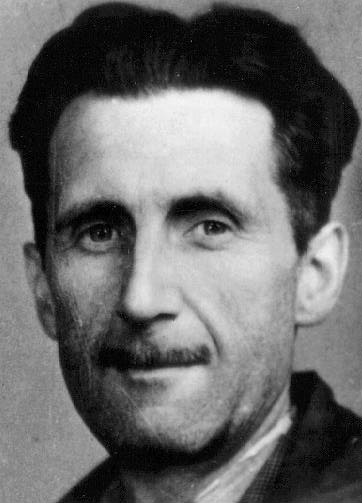
Orwell’s press card portrait, 1943
In spite of my campaign against the jackboot — in which I am not operating single-handed — I notice that jackboots are as common as ever in the columns of the newspapers. Even in the leading articles in the Evening Standard, I have come upon several of them lately. But I am still without any clear information as to what a jackboot is. It is a kind of boot that you put on when you want to behave tyrannically: that is as much as anyone seems to know.
Others besides myself have noted that war, when it gets into the leading articles, is apt to be waged with remarkably old-fashioned weapons. Planes and tanks do make occasional appearances, but as soon as an heroic attitude has to be struck, the only armaments mentioned are the sword (“We shall not sheathe the sword until”, etc., etc.), the spear, the shield, the buckler, the trident, the chariot and the clarion. All of these are hopelessly out of date (the chariot, for instance, has not been in effective use since about A.D. 50), and even the purpose of some of them has been forgotten. What is a buckler, for instance? One school of thought holds that it is a small round shield, but another school believes it to be a kind of belt. A clarion, I believe, is a trumpet, but most people imagine that a “clarion call” merely means a loud noise. One of the early Mass Observation reports, dealing with the coronation of George VI, pointed out that what are called “national occasions” always seem to cause a lapse into archaic language. The “ship of state”, for instance, when it makes one of its official appearances, has a prow and a helm instead of having a bow and a wheel, like modern ships. So far as it is applied to war, the motive for using this kind of language is probably a desire for euphemism. “We will not sheathe the sword” sounds a lot more gentlemanly than “We will keep on dropping block-busters”, though in effect it means the same.
One argument for Basic English is that by existing side by side with Standard English it can act as a sort of corrective to the oratory of statesmen and publicists. High-sounding phrases, when translated into Basic, are often deflated in a surprising way. For example, I presented to a Basic expert the sentence, “He little knew the fate that lay in store for him” — to be told that in Basic this would become “He was far from certain what was going to happen”. It sounds decidedly less impressive, but it means the same. In Basic, I am told, you cannot make a meaningless statement without its being apparent that it is meaningless — which is quite enough to explain why so many schoolmasters, editors, politicians and literary critics object to it.
George Orwell, “As I Please” Tribune, 1944-08-04.
August 29, 2019
QotD: Imagining a world made up only of women
So what would a world made up totally of women really be like? It would be tyrannical beyond belief. No one would be willing to speak against the accepted narrative unless they were willing to be unpersoned or killed. Think of a mix between 1984, the very worst social aspects of socialist regimes, and the Borg. There would be constant pushing for position, usually by starting whisper campaigns or setting someone above oneself up to be badly embarrassed. Look at the SJWs of today’s world and see how they operate. That’s what it would look like, writ large across the entire planet. They attack anyone outside the group who doesn’t comply with their demands, and if someone inside the group says a single word out of line according to the ever-shifting standards the entire group turns on them without mercy. The only way to get back in their good graces is to loudly proclaim your “sin” and accept their abuse until they get bored of you. Even afterward, you’ll forever be “tainted” with the sin of noncompliance.
When you write your books and send them out into the world, please stop writing women as soft, cuddly pacifists. We aren’t. Kipling was completely right about the female of the species being the more dangerous sex. He was also right about the price of letting women control society. If any thinking individualist finds themselves in a society run by women, may God have mercy on their souls because those women will have none at all.
“outofthedarkness”, guest posting at According to Hoyt, 2017-08-09.
August 15, 2019
QotD: Strong female characters in fiction
Today, when I telling the kids about it, I realized why. It was because the character was a strong woman. Born with the ultimate disadvantage, the ultimate lack of support, she doesn’t – like fairytale princesses – either get rescued by a strong knight nor even by fate that reveals her to be a hidden princess. Also, she never complains; she never repines – she takes the situation she finds herself in and makes the best out of it, all the while looking out for those who are weaker or in more need than her. This last characteristic nets her the all-important recipe book (supposedly created by a medieval convent, which rings true for Portugal, and lost for centuries.) When her romance doesn’t work because her very conventional suitor wants a girl of suitable family, she doesn’t go into a decline, she just goes on with life.
She is, in fact, what editors so often say they want “a strong woman heroine, self sufficient, a good role model for growing girls.” Only, from my observation and reading, by this they usually mean mouthy, aggressive, foolhardy and complains a lot about men till one wonders if said character has an issue with being born female. There are exceptions, of course, but complaining about fate and men and being bitter seems to be obligatory.
And yet, it is true that this type of character is not only a great role model for young women, she is the type of role model we do need. Earth needs women (yes, and men, but we’re talking women here) who take care of the weak and helpless. Earth needs women who don’t whine. Earth needs women who cheerfully shoulder the burden of what needs to be done.
Earth does not need women who complain about men all the while neurotically obsessing on clothes and jewelry to attract said men and pursuing the highest-status males they can possibly get. There is nothing wrong with these activities, in moderation, but when they become the focus of existence they create a generation of infantile harpies. Now, I don’t think any women in real life are as bad as that, but almost all women characters in books and movies are just like that.
Young women who read/watch these characters end up feeling they must APPEAR like them or they’ll be thought weak. And this is wrong. Strength in women – and men – can be defined not as throwing weight around but in doing what must be done for oneself and those who depend on one.
Earth needs grown up women.
I very much hate to tell people what to do, much less what to be, but I wish we could set about writing – and living – role models for the women Earth needs.
Sarah Hoyt, “Earth Needs Women a blast from the past of November 2010”, According to Hoyt, 2017-07-13.
August 7, 2019
QotD: “Great” “Art”
How do we know it’s true art? And before you start making gestures and sputtering, to finally come back with “knowledgeable people know that,” let me cut through the fog. The answer is, we don’t. No, not even experts. If everyone knew what great art was, investment in art wouldn’t be such a risky business. Great art, great literature, any form of “greatness” in creative expression is ultimately “What future generations think is great.” And, like all speculation about the future, it’s difficult, if not impossible. In visual art, what is often the acclaimed taste of an era is the laughable, ridiculous pastiche of a later era. In literature … Do me a favor, let your fingers do the walking through Gutenberg, then look up the biographies of some of those authors. Many of the people who make you say “who?” and who in fact would make anyone but an expert in the literature of their time go “who?” were literary lions in their times, acclaimed by all and pronounced “the next Shakespeare.” (Who, like “the next Heinlein,” used to rise every generation until people got tired of it.)
If the art is so great, how come no one is buying it? Besides the artist who is spending way too much time with absinthe and way too little time with quill and paper, or brushes and canvas, that is?
Oh. I see. Because the general public is too stupid to appreciate the greatness of the artist. Because the artist is “ahead” of the public.
Yeah, if you believe that you probably also think that history comes with an arrow since obviously art does. That is, art moves from “primitive” to “exquisite and advanced.” If you truly believe this, I invite you to go through any local art museum and move through it from, say, Roman times till now. And then I invite you to think. The Denver Museum of Art has an installation that consists of a bunch of twisted-together kitchen implements, something that often happens in my house due to the habit of overfilling drawers and my tendency – pre-coffee – to think there is no problem brute force can’t solve.
This is an “installation” worth 2 million and if you believe it is superior to Leonardo da Vinci’s Virgin of the Rocks, you should stop hitting the absinthe. No, wait. Have another cup. I have this installation …
Sarah Hoyt, “What Happens When the Artist Chides His Audience?”, PJ Media, 2017-07-13.
August 2, 2019
QotD: What we mean by “civilization”
Which is when the dime dropped and I realized you guys immediately translated civilization to “as good as we have or better.” Which, of course, made me giggle. Because I’d have liked you to tell a Roman, with their world-bestriding empire that they weren’t civilized. Or, before that a classical Greek.
Understand I am not imagining others before us had the internal combustion engine, or steam, or trains, or … Sure, they might have, but that’s a heck of a coincidence, since those things usually come about by an individual stroke of genius, and even when they do they often aren’t used the way we did (Romans and their mechanical toys.)
To imagine other civilizations of which we’ve forgotten every trace followed exactly the same route we did to the same place we’re at requires believing that inventing steam and the internal combustion engine and harnessing electricity is as natural to humans as dams to beavers.
Now, maybe that’s true. It would certainly make for a very good science fiction story. (Short story, I think. Too much of a punchline thing for a novel.) BUT the odds defy rationality.
I was imagining, you know “builds houses of wood or stone. Domesticated SOME animals. Has villages and cities. Might have trade over long routes. MIGHT have had wheeled vehicles.” (The last, as we know, one can have quite sophisticated civilizations without.)
Look, it’s not your fault. Since the seventies, we’ve been bombarded by crazy BS about superior aliens or superior lost civilizations. (And before that, there was a trickle of it, too, going back I think to the eighteenth century, just couched in different terms.) You’ll get stuff about how the pyramids were built of stones that floated at the sound of a certain note. (A C note, or the equivalent, I bet. “Listen, Mac, you take this stone to the top of the pyramid, I give you a C Note. A hundred Amontheps in your pocket, bucko. Buys a lot of fish and falafel.”)
Part of this, and part of the reason it intensified since the seventies were the “unilateral disarmament people.” You know, those jokers who wanted us to get rid of our own nukes and stand disarmed in front of the USSR, who would then realize we were peaceful, and not attack, and everyone would live in peace and harmony with rainbows and farting unicorns. Yes, it was a stupid and crazy idea since the continued survival of the USSR depended on plunder and conquest. But I’ll remind you our last president still believes that bag of moonshine. All of it, including the unicorn farts.
Sarah Hoyt, “We Are The Superior Civilization”, According to Hoyt, 2017-05-15.
July 31, 2019
All Art Is Propaganda: Christopher Hitchens on George Orwell – George Packer Interview (2009)
The Film Archives
Published on 27 Jan 2014George Packer (born August 13, 1960) is an American journalist, novelist, and playwright.
He is perhaps best known for his writings for The New Yorker about U.S. foreign policy and for his related book The Assassins’ Gate: America in Iraq.
Packer was born in Santa Clara, California. Packer’s parents, Nancy (née Huddleston) and Herbert Packer, were both academics at Stanford University; his maternal grandfather was George Huddleston, a congressman from Alabama. His sister, Ann Packer, is also a writer. His father was Jewish and his mother was from a Christian background. Packer graduated from Yale College, where he lived in Calhoun College, in 1982, and served in the Peace Corps in Togo. His essays and articles have appeared in Boston Review, The Nation, World Affairs, Harper’s, The New York Times, and The New Yorker, among other publications. Packer was a columnist for Mother Jones and has been a staff writer for The New Yorker since May 2003.
Packer was a Holtzbrinck Fellow Class of Fall 2009 at the American Academy in Berlin.
His book The Assassins’ Gate: America in Iraq analyzes the events that led to the 2003 invasion of Iraq and reports on subsequent developments in that country, largely based on interviews with ordinary Iraqis. He was a supporter of the Iraq war. He was a finalist for the 2004 Michael Kelly Award.
He is married to Laura Secor and was previously married to Michele Millon.
Books
The Village of Waiting (1988). New York: Farrar, Straus and Giroux (1st Farrar edition, 2001). Pb. ISBN 0-374-52780-6
The Half Man (1991). Random House ISBN 0-394-58192-X
Central Square (1998). Graywolf Press ISBN 1-55597-277-2
Blood of the Liberals (2000). Farrar, Straus and Giroux ISBN 0-374-25142-8
The Fight is for Democracy: Winning the War of Ideas in America and the World (2003, as editor). Harper Perennial. Pb. ISBN 0-06-053249-1
The Assassins’ Gate: America in Iraq (2005) Farrar, Straus and Giroux 2005 ISBN 0-374-29963-3
Betrayed: A Play (2008) Faber & Faber
Interesting Times: Writings from a Turbulent Decade (2009). ISBN 978-0-374-17572-6
The Unwinding: An Inner History of the New America (2013). ISBN 978-0-374-10241-8Articles
Packer, George (28 September 2009). “A Reporter at Large: The Last Mission”. The New Yorker 85 (30): 38-55. [Richard Holbrooke’s plan to avoid the mistakes of Vietnam in Afghanistan].
Packer, George (15 March 2010). “A Reporter at Large: Obama’s Lost Year”. The New Yorker 86 (4): 40-51.
Packer, George (12 September 2011). “A Reporter at Large: Coming Apart”. The New Yorker. [An assessment of the post 9/11 decade]
Packer, George (27 May 2013). “A Reporter at Large: Change the World”. The New Yorker.
July 24, 2019
thoughts about writing
exurb1a
Published on 23 Jul 2019Apologies for the resolution in some places. Apologies for the words in all places.
Books I enjoyed while I was in creative pinches ►
Zen in the Art of Writing – Ray Bradbury
https://www.goodreads.com/book/show/1…What I Talk About When I Talk About Running – Haruki Murakami
https://www.goodreads.com/book/show/2…The Elements of Style – William Strunk Jr.
https://www.goodreads.com/book/show/3…On Writing – Sol Stein
https://www.goodreads.com/book/show/1…The Book of Five Rings – Miyamoto Musashi
https://www.goodreads.com/book/show/8…Why I Write – George Orwell
http://orwell.ru/library/essays/wiw/english/e_wiwMy stuff –
The Fifth Science Paperback ► https://tinyurl.com/y5zj33s5 (you may need to change your region accordingly: .co.uk, etc)
I also make horrendous music ► https://soundcloud.com/exurbia-1
Help me to do this full-time, if you’re deranged enough ► https://www.patreon.com/exurb1r?ty=h
The rest of my books ► https://tinyurl.com/ycnl5bo3
June 13, 2019
Americans “don’t really believe in foreigners”
A few days back, Sarah Hoyt wrote a long post about the actual differences between American culture and the many different cultures that most Americans have difficulty understanding:

I don’t think anyone who hasn’t actually acculturated between two countries understands how different cultures can be, deep down, at the bone level and the most basic reactions level, let alone what causes the difference, from inherited influences to just deep built in assumptions about climate/physical plant/fauna.
And some of the people who have acculturated, at that, might not be self-aware enough to see the difference, and just replace one set of assumptions with another and roll with it. (Or get caught somewhere between. Well, to some extent we all get caught somewhere between. The question is, what percentage is in the new country. I’d say for me, after being in Portugal recently, probably 95% American. There are things trained in before the age of 3 which I’ll never let go of, though some got truly weird with the acculturation, like how I react to “shame.”)
That experience this weekend was the “clicking in” of something that’s been bothering me for a long time. In our writers’ group I used to run across people who projected modern AMERICAN female back into the time of pharaohs. One of my best friends refused to believe me when I told her there was zero chance of an alien race having the same university system as the US since even Portugal (avowedly human) doesn’t. There were other things. You guys have heard me rant about several “historical” books that make the past exactly like the future only with different tech. The fact that they don’t understand that tech affects not just how people live but how they think, feel and react is another of those things I don’t get, as I think even within living memory we should be able to see how different things have gotten. See for instance not wearing of aprons, because the clothes are cheap enough and abundant enough that ruining a shirt is not a big deal, unless it’s a very good shirt.
Technological shifts in living memory have made ordinary life from before the new technology (like cheap, dependable cell phones) almost unimaginable. How many movies and TV shows from before the mobile phone became widely available depended as a plot point on the characters being unable to communicate with one another at key moments? Many mystery novels of the pre-mobile-phone era probably make no sense at all to modern readers because instant communication has become “baked in” to our world.
The clothing aspect has been less obviously important, yet only a couple of generations back, most people owned perhaps three changes of clothing, including one “good” suit/dress for church-going or special occasions. We’ve become so wealthy as a culture that almost everyone has more than enough clothes for any imagined need … although church-going has become almost exotic to urban and even suburban folks, and formal attire is becoming more and more rare. (But everyone has more T-shirts and shorts than they know what to do with.)
But until this weekend I didn’t realize how prevalent and universal it is, since the clash took place between two people from native anglophone cultures, both of which are denizens of the net and contact people of other countries, regularly. Okay, one of them didn’t know she was dealing with a foreigner […] This weekend I realized people don’t really believe in foreign countries either. They’re willing to accept that some things (and those usually conform to their mental picture of the generic “culture” or “region”) are different, but that the fundamentals and the cherished unexamined assumptions might be different is unthinkable — literally. And if we can think of them, we still assume the other country is somehow “wrong” or worse “pretending” to be different to be contrary.
This means, ultimately, that even an era of instant all over the world communication, human tribalism still wins. And with it, I suppose, nationalism.
The wave of populism in the west that has taken the establishment and the mainstream media by surprise is a predictable response to the globalist attitudes of the elites. If you work hard enough at it, you can provoke unpleasant responses from those who don’t agree with your worldview, and the transnational elites have been working very hard indeed.
There are other implications: since it’s virtually impossible to avoid faster communication and more widespread travel in the future, this is going to make the next couple/three centuries a series of epic clashes, until either some sort of understanding emerges or polarized cultures can immigrate to the stars and far far away from each other.
Mass immigration is a REALLY bad idea (‘mkay) not that this is a surprise to any of you. People inhabiting enclaves of “their kind” are slow to acculturate (three generations, if it happens at all.) And the number of people coming over the Southern border is like nothing we’ve ever experienced before. And trust me, in terms of functionality, you do NOT want to import any culture descended from 17th century Spain. There is a reason that the American countries South of us are in crisis on a more or less permanent basis, and that Brazil, screwed up though it is, is more functional than the others. No, just no.
I’m certainly not against immigration, but I strongly believe it is possible to have too much immigration, as Europe and the United States are being forced to confront. When people leave their native land to go somewhere else, be it for economic or political reasons, there’s a natural expectation that they will at least attempt to acculturate to their new country. To western elites, this is wrong (or at least, misguided) and “we” should encourage new immigrants to avoid acculturation and to embrace and celebrate the culture they came from. Because reasons. And a lot of immigrants are happy to avoid the hard work of learning how to fit in to the foreign culture they find themselves in — and it is hard work — leading to second or third generations who still can’t or won’t fit in and adapt to the culture.
Let me just say that is one more proof of “people don’t really believe in foreigners.”
Sure, a lot of American culture is triumphant and imitated. Only it’s more “spoofed” because what they imitate is what they see in movies, and proving that humans prefer narrative to lack there of, even when it makes no sense, the bad parts are often picked up first. And they’re often bad parts only seen in movies, btw. Like certain underclass behaviors being seen as glamorous.
But it’s an overlay. At a deep down level, these people dressing in jeans and t-shirts are still foreign and — THIS IS VERY IMPORTANT — don’t believe Americans software-in-the-head is different, which leads to cargo-cultish attempts to import American successes without getting what brings them about, from innovation, to social mobility to freedom of speech. Not really, not at a deep level.
[…]
This means the left’s project of “fighting nationalism” is not just doomed, but it’s stupid as eating rocks, and will cause only unending misery suffering and war. (So, SOP for Marxists. In fact, chalk this whole internationalism bullshit as something else Marx was wrong about. Workers of the world unite, my little sore feet.)
June 11, 2019
QotD: Advice to young men
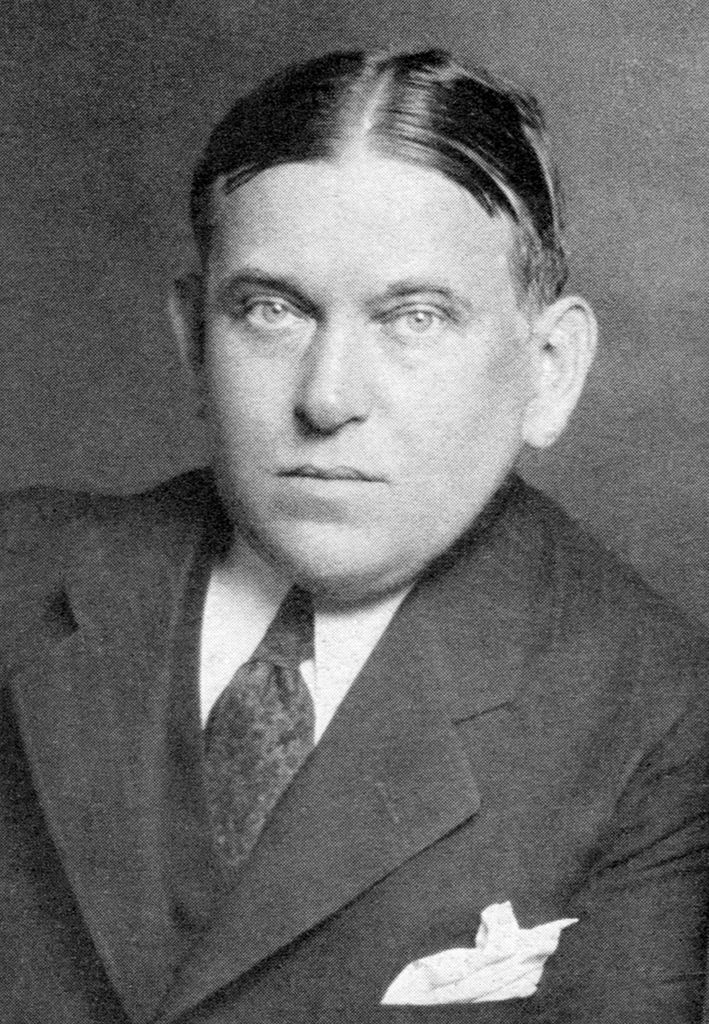
H.L. Mencken in 1928.
Photo by Ben Pinchot for Theatre Magazine, August 1928.
Since Philip Dormer Stanhope, Earl of Chesterfield, published his celebrated letters to his morganatic son, in 1744, there has been no adequate book, in English, of advice to young men. I say adequate, and the adjective tells the whole story. There is not, of course, a college president or a boss Y.M.C.A. secretary, or an uplifting preacher in the United States who has not written such a book, but all of them are alike filled with bilge. They depict and advocate a life that no normal young man wants to live, or could live without ruin if he wanted to. They are full of Sunday-school platitudes and Boy Scout snuffling. If they were swallowed by the youth of today the Republic of tomorrow would be a nation of idiots.H.L. Mencken, “Another Long-Awaited Book”, Chicago Tribune, 1926-09-12.
June 10, 2019
QotD: Robert Heinlein on “honest work”
The beginning of 1939 found me flat broke following a disastrous political campaign (I ran a strong second best, but in politics there are no prizes for place or show).
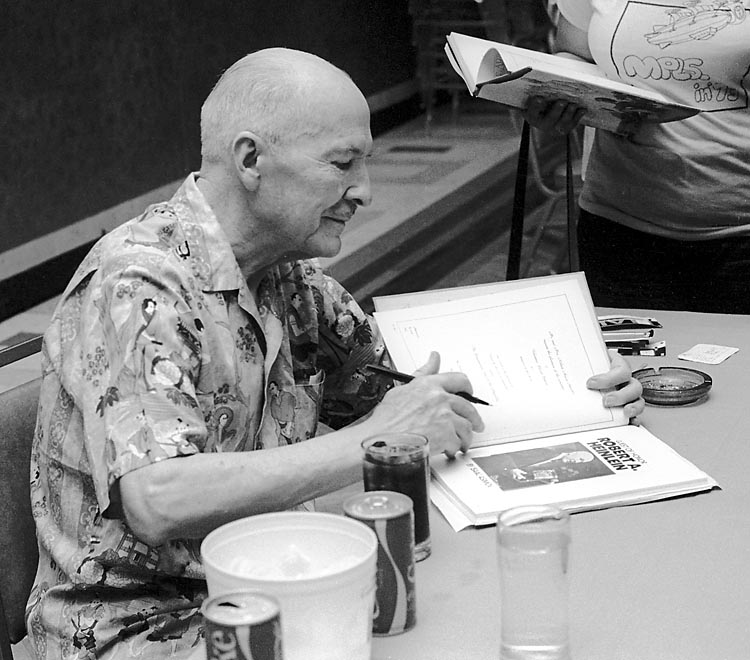
Robert A. Heinlein at the 1976 World Science Fiction Convention
Via Wikimedia Commons.I was highly skilled in ordnance, gunnery, and fire control for Naval vessels, a skill for which there was no demand ashore — and I had a piece of paper from the Secretary of the Navy telling me that I was a waste of space — “totally and permanently disabled” was the phraseology. I “owned” a heavily-mortgaged house.
About then Thrilling Wonder Stories ran a house ad reading (more or less):
GIANT PRIZE CONTEST —
Amateur Writers!!!!!!
First Prize $50 Fifty Dollars $50In 1939 one could fill three station wagons with fifty dollars worth of groceries.
Today I can pick up fifty dollars in groceries unassisted — perhaps I’ve grown stronger.
So I wrote the story “Life-Line.” It took me four days — I am a slow typist. I did not send it to Thrilling Wonder; I sent it to Astounding, figuring they would not be so swamped with amateur short stories.
Astounding bought it… for $70, or $20 more than that “Grand Prize” — and there was never a chance that I would ever again look for honest work.
(“Honest work” — an euphemism for underpaid bodily exertion, done standing up or on your knees, often in bad weather or other nasty circumstances, and frequently involving shovels, picks, hoes, assembly lines, tractors, and unsympathetic supervisors. It has never appealed to me. Sitting at a typewriter in a nice warm room, with no boss, cannot possibly be described as “honest work.”)
Robert A. Heinlein, 1980.
June 9, 2019
The blog as a modern “commonplace book”
I’ve been blogging continuously for over fifteen years, but I’ve never found — or even considered — a single unifying theme for the blog. There are consistencies over the years, like the QotD posts, but in general the blog acts as a place for me to note things that interest, excite, or agitate me. After my grandfather died in 1979, I inherited a few of his notebooks, which included scores of lists on all kinds of things … my grandmother said it was all gathered to help with crossword puzzles, but the range of information was much wider than you’d normally find in crosswords. I think, had he lived long enough, my grandfather would have been a dedicated blogger. The blogging world has a lot of blogs like mine, where the blogger notes seemingly random bits of information, and this is far from new: they used to be called “commonplace books“:
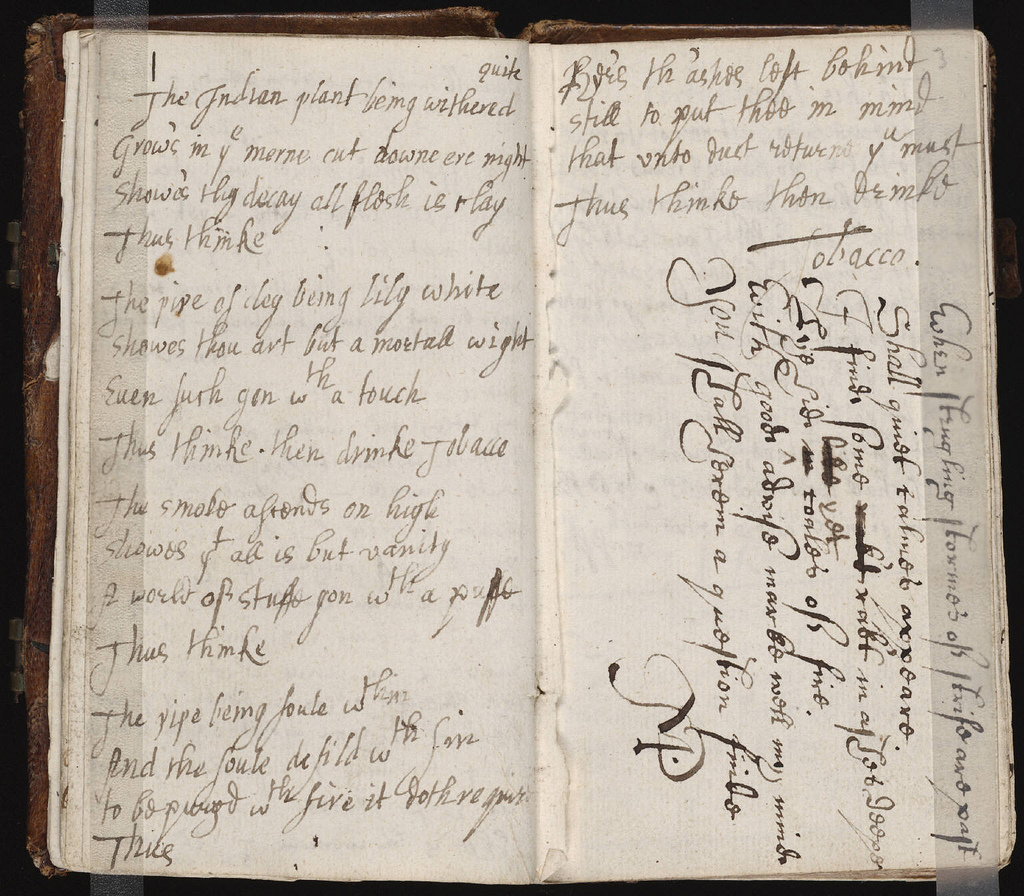
Anonymous mid-17th century manuscript containing poems by various authors, in various hands, including Shakespeare’s second sonnet.
Wikimedia Commons.
Commonplace books (or commonplaces) are a way to compile knowledge, usually by writing information into books. They have been kept from antiquity, and were kept particularly during the Renaissance and in the nineteenth century. Such books are essentially scrapbooks filled with items of every kind: recipes, quotes, letters, poems, tables of weights and measures, proverbs, prayers, legal formulas. Commonplaces are used by readers, writers, students, and scholars as an aid for remembering useful concepts or facts. Each one is unique to its creator’s particular interests but they almost always include passages found in other texts, sometimes accompanied by the compiler’s responses. They became significant in Early Modern Europe.
“Commonplace” is a translation of the Latin term locus communis (from Greek tópos koinós, see literary topos) which means “a general or common topic”, such as a statement of proverbial wisdom. In this original sense, commonplace books were collections of such sayings, such as John Milton’s example. Scholars now understand them to include manuscripts in which an individual collects material which have a common theme, such as ethics, or exploring several themes in one volume. Commonplace books are private collections of information, but they are not diaries or travelogues.
In 1685 the English Enlightenment philosopher John Locke wrote a treatise in French on commonplace books, translated into English in 1706 as A New Method of Making Common-Place-Books, “in which techniques for entering proverbs, quotations, ideas, speeches were formulated. Locke gave specific advice on how to arrange material by subject and category, using such key topics as love, politics, or religion. Commonplace books, it must be stressed, are not journals, which are chronological and introspective.”
By the early eighteenth century they had become an information management device in which a note-taker stored quotations, observations and definitions. They were used in private households to collate ethical or informative texts, sometimes alongside recipes or medical formulae. For women, who were excluded from formal higher education, the commonplace book could be a repository of intellectual references. The gentlewoman Elizabeth Lyttelton kept one from the 1670s to 1713 and a typical example was published by Mrs Anna Jameson in 1855, including headings such as Ethical Fragments; Theological; Literature and Art. Commonplace books were used by scientists and other thinkers in the same way that a database might now be used: Carl Linnaeus, for instance, used commonplacing techniques to invent and arrange the nomenclature of his Systema Naturae (which is the basis for the system used by scientists today). The commonplace book was often a lifelong habit: for example the English-Australian artist Georgina McCrae kept a commonplace book from 1828-1865.


