
World War Two
Published 25 May 2021Before the infamous day that was Pearl Harbor, US and Japanese military planners worked to envision what a future war in the Pacific would look like. With the entire region now a war zone, it is time to put their theories to the test. Watch the video to find out what these are.
(more…)
May 26, 2021
The Great All-Out Battle – Naval Warfare in the Pacific – WW2 Special
Comments Off on The Great All-Out Battle – Naval Warfare in the Pacific – WW2 Special
May 20, 2021
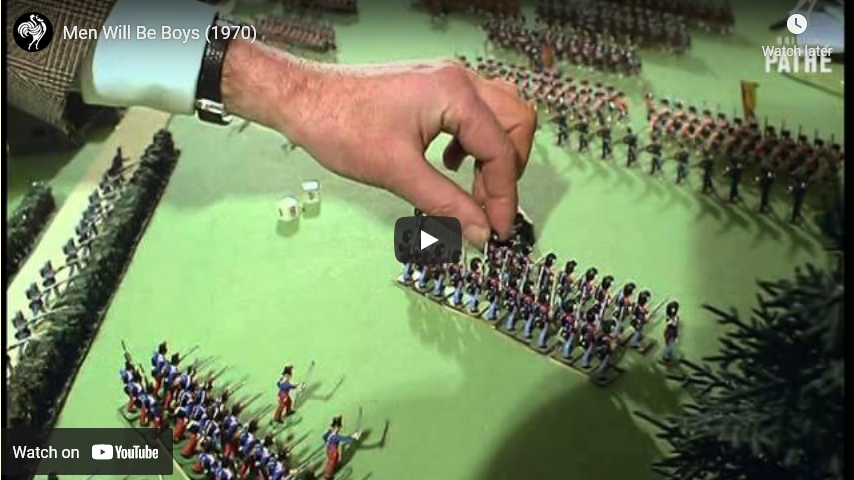
Men Will Be Boys (1970)
British Pathé
Published 13 Apr 2014Men will be boys. Various locations.
M/S men round lake with boats. C/U man in lake with waders with model boat. C/U another man with model boat. Man lighting boiler. C/U engine working. M/S as model of paddle boat moves through water. M/S paddle boat on water. In foreground a swan. C/U another model boat going through water. M/S pan scale model of Hitler’s yacht. M/S men playing with model cars on race track. C/U cars going round race track. C/U men’s hands on controls. C/U men looking at cars go past. L/S of cars going round race track.
L/S men playing war games with model soldiers. on large table. C/U as man moves soldiers out of line laying them on ground. M/S man moves horses forward. C/U hand placing cannon into position. C/U hand places horse troops in position. M/S lines of soldier. Hand places another in position. M/S of troops being moved.
M/S Mr Victor Martin and wife go through gate by railway crossing dressed up in their uniforms, carrying lamps etc. M/S as they make their way to their signal boxes. C/U railway notice ‘By Midland Railway’. Pa off notice to show Mr Martin approaching his signal box. M/S Martin going into signal box. M/S Mrs Martin going into signal box. C/U Mrs Martin going into signal box. C/U interior. Mr Martin hanging up his jacket inside signal box. He then sits at the controls. C/U signal controls working. C/U of Mr Martin operating signals. Camera zooms back and we see train going past him along track. C/U model train over track. C/U Mrs Martin working in her signal box.
M/S Mrs Martin working signal controls. C/U Mrs Martin. M/S showing trains going over track. C/U trains moving. Camera zooms out to show tracks . C/U trains moving. C/U looking along tunnel showing trains moving. C/U exterior. Signals working. Then camera pans to show where the trains run on an enclosed section out in the open. C/U goods train and passenger train moving. M/S Interior. Trains going over track and Mr Martin at controls.
FILM ID:2241.18A VIDEO FROM BRITISH PATHÉ. EXPLORE OUR ONLINE CHANNEL, BRITISH PATHÉ TV. IT’S FULL OF GREAT DOCUMENTARIES, FASCINATING INTERVIEWS, AND CLASSIC MOVIES. http://www.britishpathe.tv/
FOR LICENSING ENQUIRIES VISIT http://www.britishpathe.com/
British Pathé also represents the Reuters historical collection, which includes more than 136,000 items from the news agencies Gaumont Graphic (1910-1932), Empire News Bulletin (1926-1930), British Paramount (1931-1957), and Gaumont British (1934-1959), as well as Visnews content from 1957 to the end of 1984. All footage can be viewed on the British Pathé website. https://www.britishpathe.com/
Comments Off on Men Will Be Boys (1970)
July 22, 2020
Operation Barbarossa – The German Plans to Lose the War – WW2 Special
World War Two
Published 21 Jul 2020The planning for Barbarossa, the German invasion of the Soviet Union, took nearly a year and went through a variety of scenarios. The basic plan was finalized in December 1940, and that month General Friedrich Paulus ran a series of war games to test its feasibility. Today we’ll look at his conclusions.
Join us on Patreon: https://www.patreon.com/TimeGhostHistory
Or join The TimeGhost Army directly at: https://timeghost.tvFollow WW2 day by day on Instagram @World_war_two_realtime https://www.instagram.com/world_war_two_realtime
Between 2 Wars: https://www.youtube.com/playlist?list…
Source list: http://bit.ly/WW2sourcesWritten and Hosted by: Indy Neidell
Director: Astrid Deinhard
Producers: Astrid Deinhard and Spartacus Olsson
Executive Producers: Astrid Deinhard, Indy Neidell, Spartacus Olsson, Bodo Rittenauer
Creative Producer: Joram Appel
Post-Production Director: Wieke Kapteijns
Research by: Indy Neidell
Edited by: Mikołaj Cackowski
Sound design: Marek Kamiński
Map animations: Mikołaj Cackowski, Eastory (https://www.youtube.com/c/eastory)Colorizations by:
Dememorabilia – https://www.instagram.com/dememorabilia/
Carlos Ortega Pereira, BlauColorizations – https://www.instagram.com/blaucoloriz…
Jaris Almazani (Artistic Man) – https://instagram.com/artistic.man?ig…
Cassowary Colorizations – https://www.flickr.com/photos/cassowa…
Norman Stewart – https://oldtimesincolor.blogspot.com/
Teppeny – https://www.instagram.com/teppeny.color/Sources:
Bundesarchiv
Narodowe Archiwum Cyfrowe
SA Kuva
from the Noun Project: Target by RITASYA, soldier by Wonmo KangSoundtracks from the Epidemic Sound:
Reynard Seidel – “Deflection”
Johannes Bornlof – “The Inspector 4”
Phoenix Tail – “At the Front”
Johannes Bornlof – “Deviation In Time”
Fabien Tell – “Last Point of Safe Return”
Johan Hynynen -” Dark Beginning”
Johannes Bornlof – “Death and Glory 3”
Rannar Sillard – “March Of The Brave 4”Archive by Screenocean/Reuters https://www.screenocean.com.
A TimeGhost chronological documentary produced by OnLion Entertainment GmbH.

Comments Off on Operation Barbarossa – The German Plans to Lose the War – WW2 Special
January 20, 2020
Gaming India’s colonial and post-colonial history
In Quillette, Jonathan Kay looks at two wargames that deal with different aspects of Indian history:
… the peoples whom Europeans encountered in the Americas were skilled and inventive combatants who often put white men to flight (or worse) despite their enormous disadvantage in technology and (ultimately) manpower. In many cases, First Nations (as we now call them in Canada) fought fiercely with one another, too, and had well-developed military traditions that Europeans variously feared, admired and adopted. And they would make fitting protagonists for any modern boardgame designer willing to reject the current fashion of presenting indigenous peoples as holy elves of the forest.
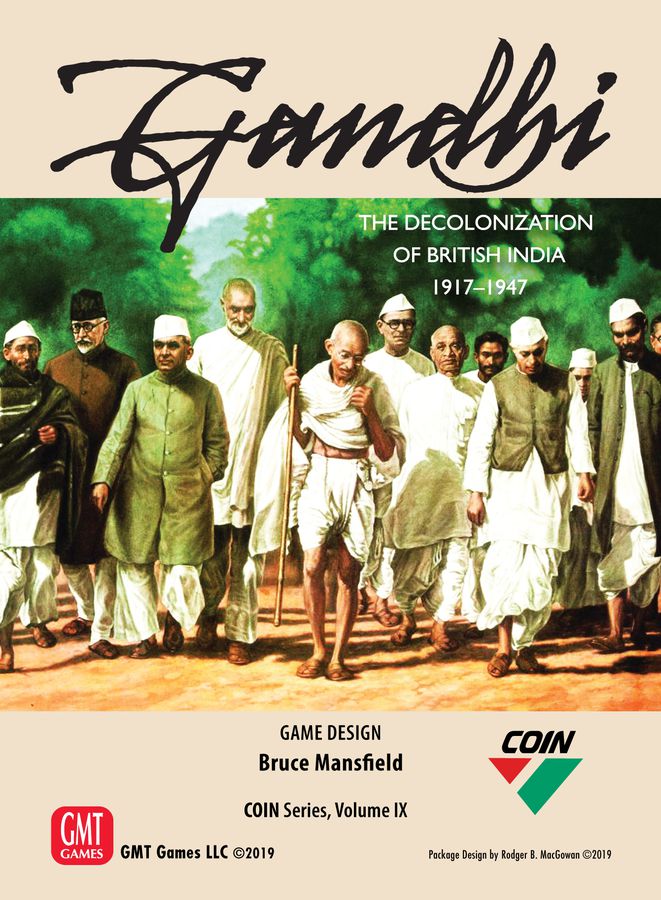
What would such a game look like? A good example comes to us in the form of GMT Games’ 2019 release, Gandhi: The Decolonization of British India. This is the latest entry in GMT’s COIN series, which is designed to model guerrilla wars and other unconventional conflicts through the use of cards that represent historical events. As in other games of the genre, such as Fire in the Lake (Vietnam), People Power (Insurgency in the Philippines, 1983-1986) and Colonial Twilight (The French-Algerian War, 1954-62), the game doesn’t present a simple narrative of good versus evil, but a more complex narrative in which all sides have at least some ulterior motives that are at odds with their official propaganda. In Gandhi, there are four players, one each controlling the Raj, the Indian National Congress, the Muslim League and the “Revolutionaries.” The latter three all share the goal of some kind of national independence, but each pursues its own (often mutually antagonistic) methods, with the Revolutionaries using violence to undercut the more pacifistic Congress, and the Muslim League playing off Congress, the Revolutionaries and the Raj in order to protect the interests of the country’s Islamic minority. (Historians of Canada would note that diplomacy and warfare with and among First Nations often was similarly complex.)
The game is unpredictable and complex, since each player will pursue different strategies in the country’s many different zones, making and breaking de facto partnerships depending on the circumstances. Amid all of this gaming chaos, the moral logic of decolonization remains a central theme of the game. But by the end of things, you realize that the ejection of the British from India was a big and messy project, as history typically is. While Spirit Island was created with the goal of mainlining anti-colonialism directly into the boardgame experience, Gandhi gets to the same theme obliquely by way of amoral realism, doing a better job pedagogically in the process.
A key aspect of Gandhi is that the Raj has agency: It is not reduced to the status of automaton-villain, as in Spirit Island. But there are limitations to the imaginative ecosystem that players inhabit: Every one of the four players has to take on their assigned role without questioning their underlying, game-dictated objective — including the Raj player, who must, start to finish, exert himself in defence of a colonial project that now is widely viewed as being on the wrong side of history. The other three factions likewise remain prisoners of their parochial regional, religious and doctrinal differences, which, historically, would contribute to millions of deaths in the chaos that accompanied the British exit.
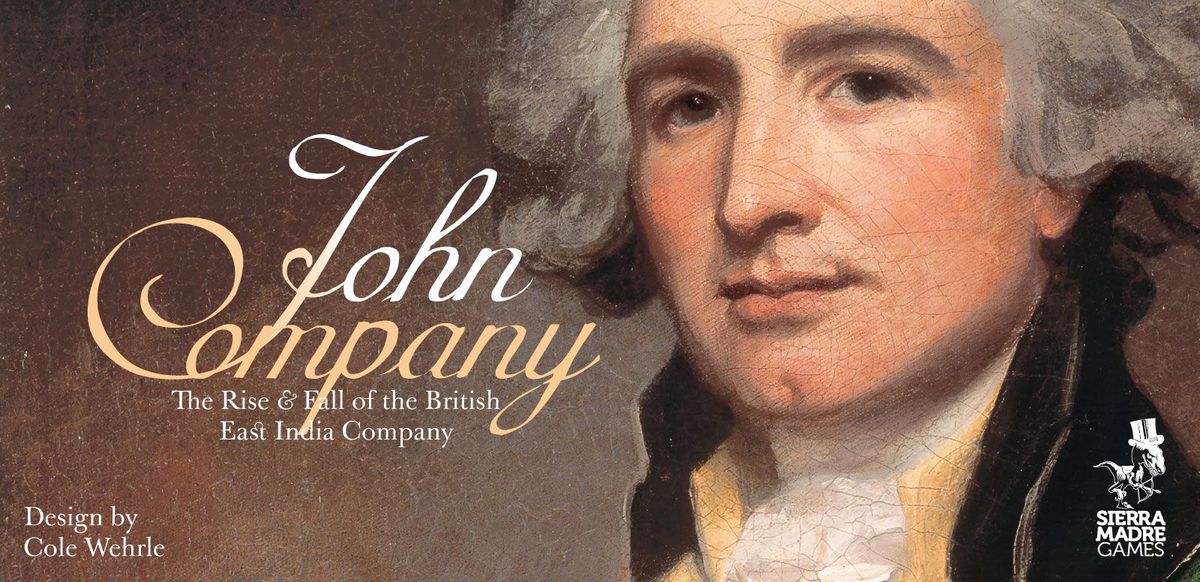
Which brings me to the fourth and final colonialism-themed game I will discuss: the acclaimed 2017 release John Company, by Indiana-based designer Cole Wehrle. In theory, John Company is also a game about British colonialism in India. But here’s the rub: The players all act as competing factions within the commercial innards of John Company (a nickname for the British East India Company). On one hand, the players have a co-operative goal — to keep the company afloat as it manages the enormous expense of creating and operating a colonial apparatus on the subcontinent. But I can attest that far more of players’ mental energy goes into fighting each other for the spoils of war and trade. Indeed, much of the game consists of exchanging favours and bribes among players, as each attempts to leverage positions of power within the company to extract revenues, plunder and positions of influence.
As the game progresses, you notice, almost as an afterthought, that great things are afoot within India: New trade routes are created, military battles are fought, whole regions go into revolt and are pacified, with many (fictional) lives hanging in the balance. But as a player, you barely notice any of this — except to the narrow extent these events can be exploited as a source of wealth, since the way you win the game is by accumulating enough cash and baubles to retire your functionaries into gilded clubs and country houses back in England.
And what of the actual Indians who lived and died under the Raj? They don’t appear at all in the game, for John Company‘s real play arc exists within the corrupt solipsism of intra-corporate deal-making. Which sounds horrifyingly amoral. But when the game’s over, you realize: That’s the whole point. The colonialists who ran India — like those who came to North America and every other place on the map, from South America to the Belgian Congo to China — typically weren’t motivated by a desire to destroy and subjugate. They were out to make a buck, either as lone freelancers in a canoe, or bureaucrats pulling levers within some gigantic corporate behemoth. The horrifying, often genocidal murder and mayhem was a by-product of greed. Which doesn’t make it better. But it does make the narrative more comprehensible in regard to governing our future behaviour as human societies — since we all are vulnerable to spasms of greed, while true evil for its own sake is a rare thing.
Games teach you about the forces of history not by listing a set of facts for you to memorize, but by creating a rules system that effectively pushes you to act in a certain way — whether as a colonialist, revolutionary or deity. If the game is well-designed, then those actions make a certain kind of internal sense. That dark logic is what stays with you — as an explanation of why people acted a certain way at a certain time. It’s always easy to judge historical figures. It’s harder, but ultimately more interesting and valuable, to understand them.
Comments Off on Gaming India’s colonial and post-colonial history
September 8, 2019
How Did War Become a Game?
Invicta
Published on 28 Jun 2019Get your first audiobook and two Audible originals when you try Audible for 30 days. Visit https://www.audible.com/Invicta or text “Invicta” to 500 500!
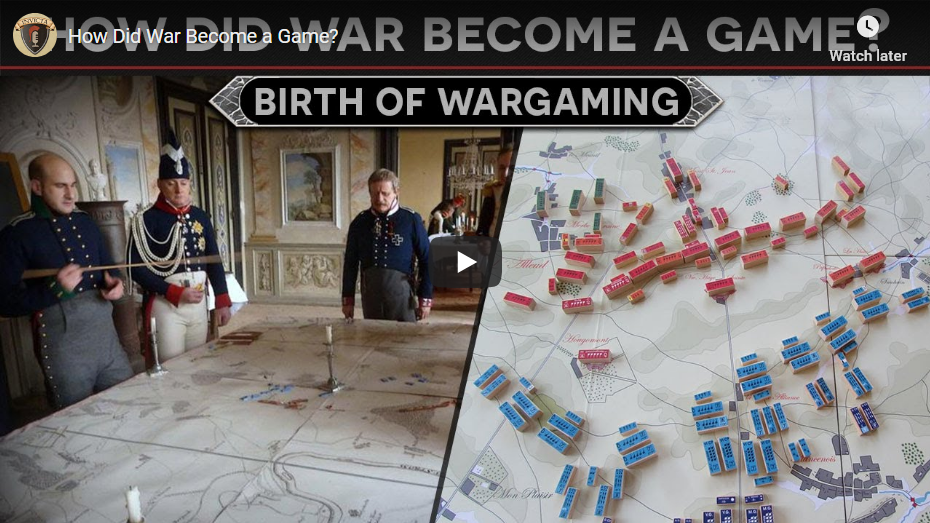
In this video we continue to take a look at the history of Kriegsspiel and explore the early days of wargaming that eventually gave rise to modern table top games such as Warhammer and Dungeons & Dragons.
Research: Jon Peterson
Script: Invicta
Narration: Invicta
Artwork: Gabriel Cassata
Editing: InvictaBibliography
Playing at the World by Jon Peterson
Debugging Game History: A Critical Lexicon by Henry Lowood
War Games: A History of War on Paper by Philipp von Hilgers
Pluie de Balles – Complex Wargames In the Classroom by Jorit Wintjes and, Steffen Pielstrom
Comments Off on How Did War Become a Game?
September 7, 2019
Little Wars TV Talks to Lindybeige!
Little Wars TV
Published on 23 Jul 2019Nikolas Lloyd, known on YouTube as “Lindybeige,” was a guest speaker at Historicon 2019 and we had the chance to chat with him. His eclectic military history channel is one of our absolute favorites and we had a blast in this wide-ranging interview. We ask him about his favorite generals, how he started wargaming, which Hollywood movie is most faithful to history, and much more!
If you aren’t familiar with the channel, check out Lindybeige here: https://www.youtube.com/user/lindybeige
In this interview, we reference the video “The Wargamers Who Won a Real War,” about the Battle of the Atlantic. You can see that video here: https://www.youtube.com/watch?v=fVet8…
Thanks for watching, and we hope you’ll subscribe here for more of the best historical wargaming videos on YouTube!

Comments Off on Little Wars TV Talks to Lindybeige!
March 14, 2018
February 10, 2018
US military will disrupt GPS signals in western states during certain periods of the Red Flag wargames
For much of February — and in some places, well into March — the US military will be jamming signals from the Global Positioning System as part of training exercises over vast swaths of the Western United States, as well as in smaller areas surrounding major military facilities across the US.
[…]
The jamming will be restricted for the most part to periods between 11pm and 2am Eastern Time. This is when commercial air traffic is at its least dense, so the impact on air travel should be negligible. But the exact times may vary. And jamming tests for other exercises during the same period — including some at or off the coast of Navy nuclear sub bases at Bangor in Washington and Kings Bay, Georgia — may have an impact on commercial shipping and fishing vessels.
Red Flag 18-1 includes participants from all four service branches of the Department of Defense, as well as units of the British Royal Air Force and the Royal Australian Air Force. “[This] primarily is a strike package focused training venue,” said Colonel Michael Mathes, commander of the 414th Combat Training Squadron at Nellis. But while strike packages — practice bombing missions and stand-off missile attacks — are the end product, the exercise also includes a “cyber” component, in which the adversary team will attempt to disrupt operations through everything from phishing emails to electronic warfare.
More information at Ars Technica.
Comments Off on US military will disrupt GPS signals in western states during certain periods of the Red Flag wargames
June 18, 2017
Sabres and Smoke: The War of 1812
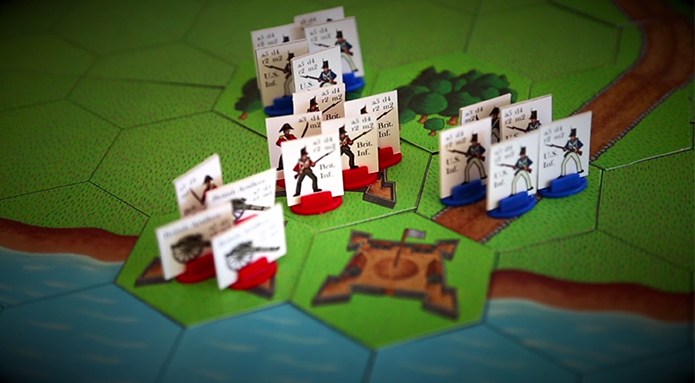
Last month, Military History Now profiled a new game (and new Ontario-based game company): unusually for today, it’s not a computer game, but a board wargame:
MHN: Tell us about the game.
Sheppard: Sabres and Smoke: the War of 1812 is a two-player light strategy board game that allows players to relive 16 of the War of 1812’s most important battles. From Queenston Heights to Fort York, players command either the British or American armies in battles that shaped the future of North America.
MHN: Tell us about Hand 2 Hand Entertainment. Who are you guys? How did you get started?
Sheppard: We are based near Toronto, Canada and have been working on Sabres and Smoke: The War of 1812 since July of 2016. I founded Hand 2 Hand Entertainment in 2016, the summer after I finished Grade 12, because I although I was lucky enough to find a summer job, there were no hours available. So, I decided to spend my time combining two things that I really enjoy: history and board games. I started by visiting battle sites from the War of 1812 and doing extensive research to make my game historically accurate. From there I created the battle scenarios and the game rules. Hand 2 Hand Entertainment spent the fall and winter designing Sabres and Smoke: The War of 1812, and preparing to launch a Kickstarter campaign in the summer of 2017. This summer, I am running the company out of the Propel Summer Incubator (PSI) program with the Propel Centre for Entrepreneurship at the University of Western Ontario.
[…]
MHN: The computer wargaming market is enormously popular; what can tabletop games offer that computers can’t?
Sheppard: This is an interesting question. I think there is a certain satisfaction to physically moving units on a battlefield in board games like this. Although you can look at units and terrain from a commander’s perspective in video games, doing it on a board feels more real. Players can look at the board in the same way Generals would have looked at maps when commanding real battles throughout history. I think this is what makes light strategy board games special.
Comments Off on Sabres and Smoke: The War of 1812
June 16, 2016
Silent Victory now available in wargame format
I’m currently reading this two-volume history of the US Navy’s submarines in the Pacific during WW2 by Clay Blair, Jr., so I was interested to see this review of a wargame covering this exact conflict:
Consim Press has published a fantastic solo player wargame in Silent Victory: U.S. Submarines in the Pacific, 1941-1945. With game design by Gregory M. Smith, Silent Victory offers a little bit of everything for someone looking for an immersive, historical naval wargame that is easy to play yet detailed enough to be fulfilling for an advanced gamer.
It covers one of the biggest problems American sub commanders faced for the first two years of the war:
For every torpedo you fire, you’ll roll a 1d6 dice for a dud. Roll a 1 or 2, well, you are out of luck. It might have hit, but it didn’t explode. Dud. This happened to me at least three times in two patrols. It was a fact — the U.S. Navy had a torpedo problem. Clay Blair Jr.’s magisterial book Silent Victory: The U.S. Submarine War against Japan made this clear:
“…[T}he submarine force was hobbled by defective torpedoes. Developed in peacetime but never realistically tested against targets, the U.S. submarine torpedo was believed to be one of the most lethal weapons in the history of naval warfare. It had two exploders, a regular one that detonated it on contact with the side of an enemy ship and a very secret “magnetic exploder” that would detonate it beneath the keel of a ship without contact. After the war began, submariners discovered the hard way that the torpedo did not run steadily at the depth set into its controls and often went much deeper than designed, too deep for the magnetic exploder to work.”
Blair notes that not until late 1943 would the U.S. Navy fix the numerous torpedo problems.
Actually, the depth control issue was only the start of the problem. Once enough sub skippers had complained to their chain of command that the torpedoes were running too deep, and were able to get a few of them tested to prove it, then other problems became apparent. Even if the torpedo ran at the correct depth, the magnetic exploder would not reliably trigger the warhead when it passed under an enemy ship. The German and British submarine services had also developed similar exploders, but had abandoned them after wartime testing proved them to be ineffective. US Navy submarine admirals would not be convinced, so it took much longer for the sub captains to get permission to de-activate the magnetic exploders and use the contact exploders instead.
Unbelievably, it now became clear that there were also problems with the contact exploder as well, so even if it hit the side of the target it might not explode. American torpedoes had a significantly smaller warhead than those of other navies, because it had been expected that the magnetic exploder detonating below the keel of an enemy ship would be sufficient to break the back of the target and sink it. When used as ordinary torpedoes, it often took three or four hits to guarantee a sinking even on a merchant ship. Warships, having better compartmentalization, were even tougher to sink without lucky shots that hit fuel or ammunition compartments.
There are three reasons why this game succeeds.
First, historical accuracy. From the problems with torpedoes, to the detailed lists of Japanese merchant and capital ships, or to the specific weapons load out of each U.S. submarine in WWII, it is all there. The makers of this game did not cut any corners. They did their homework and tried, I think successfully, to incorporate significant historical facts into the gameplay.
Second, a risk/reward based gameplay experience. Every decision you make — from the torpedoes you use to deciding if you want to attack submerged and at close or long distance — incurs risk. There are numerous tradeoffs. For instance, you can attack from long distance submerged, but you suffer a roll modifier and risk not hitting your target. Or, you can be aggressive, and attack at close range, surfaced at night, which may increase your chance of hit but also increase your chance of detection. It just depends.
Finally, simple game rules. Complicated games are no fun to play. As a player, I don’t want to spend 10 minutes looking up rule after rule in a rulebook the size of a encyclopedia. In Silent Victory, the designers have done us a favor. The rules are clearly written and extensive, and after a single read through I referred to them occasionally. But more important, the combat mat has the dice roll encounter procedures printed on it, all within easy view. Also, the other mats all have reference numbers and clearly identify which dice should be rolled for what effects. It is all right there on the mats. This makes for a fun, smooth playing experience. And finally, if I were add another reason why this game is worth your money, it is the game’s replay value. You can conduct numerous patrols and no two patrols will ever be the same.
Silent Victory is a fun naval wargame that will appeal to the novice or expert gamer – and maybe you’ll learn something along the way.
Comments Off on Silent Victory now available in wargame format
April 28, 2016
Wargaming at the Marine Corps War College
Professor James Lacey explains why he introduced commercial wargames into his curriculum for USMC officers at the war college:
As every team plotted their strategic “ends,” students soon realized that neither side had the resources — “means” — to do everything they wanted. Strategic decisions quickly became a matter of tradeoffs, as the competitors struggled to find the “ways” to secure sufficient “means” to achieve their objectives (“ends”). For the first time, students were able to examine the strategic options of the Peloponnesian War within the strictures that limited the actual participants in that struggle.
Remarkably, four of the five Athenian teams actually attacked Syracuse on Sicily’s east coast! As they were all aware that such a course had led to an Athenian disaster 2,500 years before, I queried them about their decision. Their replies were the same: Each had noted that the Persians were stirring, which meant there was a growing threat to Athens’ supply of wheat from the Black Sea. As there was an abundance of wheat near Syracuse, each Athenian team decided to secure it as a second food source (and simultaneously deny it to Sparta and its allies) in the event the wheat from the Black Sea was lost to them. Along the way, two of the teams secured Pylos so as to raise helot revolts that would damage the Spartan breadbasket. Two of the teams also ended revolts in Corcyra, which secured that island’s fleet for Athenian purposes, and had the practical effect of blockading Corinth. So, it turns out there were a number of good strategic reasons for Athens to attack Syracuse. Who knew? Certainly not any War College graduate over the past few decades.
All of these courses of action were thoroughly discussed by each team, as were Spartan counter moves. For the first time in my six years at the Marine Corps War College, I was convinced that the students actually understood the range of strategies and options Thucydides wrote about. In the following days, I was stopped dozens of times by students who wanted discuss other options they might have employed, and, even better, to compare their decisions to what actually happened. A number of students told me they were still thinking about various options and decisions weeks later. I assure you that no one even spent even a car ride home thinking about my Thucydides lectures.
[…]
At the end of each wargame, students walked away with a new appreciation of the historical circumstances of the period and the events they had read about and discussed in class. And even though all wargames are an abstract of actual events, I am sure that no student exposed to historical gaming will ever again read about the Peloponnesian War without thinking about Sicily’s wheat, the crucial importance of holding the Isthmus of Corinth, or what could have been done with a bit more Persian silver in the coffers of one side or the other’s treasury. Similarly, the next time one of this year’s students reads about Lee and Grant in 1864, they will also be thinking about how the truly decisive actions took place out west. For, as it was during the actual conflict, in every game the students played, Grant’s role was to pin down the Army of Northern Virginia, while the western armies ripped out the economic heart of the Confederacy.
In fact, I was astounded at the number of students who approached me after the Civil War exercise to mention that despite having studied the Civil War before, this was the first time they realized that the war was won in the west. I could go on for another few thousand words discussing other revelations students experienced through gaming and simulations, but the key point is that these experiential learning experiences linger in students’ minds for a very long time. I once asked my seminars how many of them had discussed the games and their results with their spouses. Every hand went up. I am quite sure that very few of them ever discussed one of my lectures with their spouses.
April 13, 2016
The bureaucracy will always be with us
Strategy Page recounts some of the recent the bureaucratic snags between NATO countries in eastern Europe when troops need to cross inter-alliance borders:
In early 2015 Operation Dragoon Ride rolled through Central Europe to send a message to Russians. From March 20th to April 1st, an US Army squadron returning from Atlantic Resolve NATO exercises took an unusual route back to its base in Germany, after spending three months in training facilities in Poland, Lithuania and Estonia. The unit involved was the 3rd Squadron (battalion) of the 2nd American Cavalry Regiment. This unit refers to itself as dragoons (an ancient term for horse mounted infantry) and the movement operation was called Dragoon Ride and the apparent reason for it was to demonstrate to the locals as well as the Russians that American armored units could reach the East European NATO nations by road, as well as by ship, aircraft or rail. Dragoon Ride purposely rode close to the Russian border, often in full view of Russians and Russian media. The American troops frequently stopped in towns and villages so the locals could meet their allies, take pictures and quietly enjoy the pain this demonstration was causing the increasingly aggressive Russians.
But what was not publicized, and what the Russian government knew full well, was that this road movement took the efforts of hundreds of unseen troops and bureaucrats to deal with the paperwork. For all of 2015 it required nearly 6,000 travel documents to be prepared, filed and approved to get foreign military vehicles across East European borders. Some of these documents take several weeks to get approved and operations like Dragoon Ride required hundreds of them and nearly as many NATO local government personnel were involved with this paperwork as were actually participating (500 troops) in the actual Dragoon Ride (of 120 vehicles). While all these rules and approvals would not stop invading Russians they would, in theory, slow down reinforces from the West.
The pile of paperwork and weeks required to handle it were used as very concrete evidence to persuade the East European nations to streamline the process, a lot, or have themselves to blame if reinforcements did not arrive in a timely fashion. As usual a compromise was worked out. Thus eight NFIUs (NATO Force Integration Units) were organized, each consisting of 40 troops trained and equipped to handle the paperwork and traffic control measures required to get military convoys across eastern borders as quickly as possible. The NFIU work out of embassies and stay in constant touch with the border control bureaucracies of the East European nations involved. NFIUs also arrange for rest areas and resupply for the convoys.
Comments Off on The bureaucracy will always be with us
January 23, 2016
World of Warships – How To Not Suck
Published on 20 Jun 2015
If I said to you “What’s Port?” and your answer is “A fortified wine from Portugal served by the Wardroom Steward at Mess Dinners” you’re either a Royal Naval Officer or someone who could probably benefit from watching this video. There’s no cure for being a Royal Naval Officer, but the cure for sucking at World of Warships is just one click away.
Comments Off on World of Warships – How To Not Suck
July 7, 2015
World of Warships open beta
I’ve been keeping an eye on World of Warships, if only due to the renderings of the various ships (as a kid, I used to love the diagrams of ships in publications like Purnell’s History of the Second World War). I doubt I have the time to play the game very much, but I’ll probably sign up for the open beta which began last week.
At Massively Overpowered, MJ Guthrie talks to the developers:
Immersion. That’s not a word you often hear associated with lobby-based PvP games. But in the case of World of Warships, the third title in Wargaming’s WWII-era trilogy, it’s more than just fitting; it’s defining. Although not a battle simulation, WoWS offers a genuinely immersive experience thanks to the historical authenticity and the level of detail in both the audio and visual departments. You’ve heard the devil is in the details? Well that’s where the immersion is, too. And now that open beta has started, more players are finally able to dive in and experience this for themselves.
To learn more about how the development team achieved such a high level of immersion, I went to the source: I visited Wargaming’s headquarters in St. Petersburg and talked with the devs who create everything you see and hear in the game. And after watching the creation process in action, I appreciated the ambiance all the more when I jumped in for a hands-on in the closed beta.
Accuracy must take second place to what the players say they want, however:
Sounds really start to shine through once you turn the music down. Although the game’s smart music slider suppresses it when you fire, try clicking it off sometime to focus on the many ambient sounds. Tohtash said that the team has already added “about 3,000″ different sounds to the game. Players will actually hear different metallic sounds from the engines and hulls when the ships change speeds and from the guns when they fire. Engines have four different sound elements (engine, turbine, resonance, and post effects), and guns have three (attack, body, and echo or tail), which combine with recoil, load, and double echo. Using the various elements, the team took care to make different caliber of guns have different sounds. On top of all the types of sounds is the fact that they are positional, changing depending on what view players are in. If your camera is too close to the gun, you will get ringing in your ears after the shot!
Artillery sounds in World of Warships are something that diverges from historical accuracy. The team has access to reference videos, but focus groups have not wanted the more accurate gunfire sounds; they favor big booming ones. Tohtash admitted that actual sounds alone are a bit dry, but once effects such as implementing the bass and the full range of frequencies are added in, the sound is richer and fuller.
June 20, 2015
If World War III had broken out in 1955
Mark Stout looks at what a global nuclear war might have looked like merely ten years after the first nuclear weapons were used to end the Second World War:
Those of us who came of age in the late Cold War imagined that if a nuclear war came it would be The End of Everything. By contrast, those who came of age after the Cold War never thought there’d be a nuclear war at all. With Putin’s military forces on the loose in Ukraine and all around Europe, the chance of war by miscalculation, even a nuclear war is rising. What would such a war look like? With the world situation vastly different from the late Cold War and with nuclear arsenals much smaller, it would probably not be a brief nuclear exchange but something more limited, albeit still horrific.
Perhaps such a war would be like one that the U.S. government imagined in 1955. In June of that year, the government conducted a massive relocation exercise called Operation Alert in cities across the country. A British Pathé newsreel tells the story in breathless shorthand. As part of the exercise, the State Department moved key personnel to an above-ground location at the foot of the Shenandoah Mountains in Front Royal, Virginia that now belongs to the Smithsonian Institution. There, according to records held at the National Archives, they practiced how they would continue to conduct the business of the department in case of World War III.
Among other documents, the Archives holds “Situation Report #1,” issued by the State Department’s intelligence arm on D+1 of the war game. It is an interesting artifact of the time. In 1955 nuclear arsenals on both sides of the Iron Curtain were much smaller than they became later and intercontinental ballistic missiles did not exist. Thus, the Soviet ability to strike the U.S. homeland was also much more limited and the “war” unfolded much more slowly than it would have even ten years later. As a result, the imaginary war of June 1955 combined attributes of World War II as well as the World War III that haunted us in the 1980s.
Comments Off on If World War III had broken out in 1955


