
Alan Ruben
Published on 9 May 2013Part 3 of an in-depth 5 part series about George Orwell made in 1983.
April 6, 2019
QotD: Truth and propaganda in the Spanish Civil War
The struggle for power between the Spanish Republican parties is an unhappy, far-off thing which I have no wish to revive at this date. I only mention it in order to say: believe nothing, or next to nothing, of what you read about internal affairs on the Government side. It is all, from whatever source, party propaganda — that is to say, lies. The broad truth about the war is simple enough. The Spanish bourgeoisie saw their chance of crushing the labour movement, and took it, aided by the Nazis and by the forces of reaction all over the world. It is doubtful whether more than that will ever be established.
I remember saying once to Arthur Koestler, ‘History stopped in 1936’, at which he nodded in immediate understanding. We were both thinking of totalitarianism in general, but more particularly of the Spanish civil war. Early in life I have noticed that no event is ever correctly reported in a newspaper, but in Spain, for the first time, I saw newspaper reports which did not bear any relation to the facts, not even the relationship which is implied in an ordinary lie. I saw great battles reported where there had been no fighting, and complete silence where hundreds of men had been killed. I saw troops who had fought bravely denounced as cowards and traitors, and others who had never seen a shot fired hailed as the heroes of imaginary victories; and I saw newspapers in London retailing these lies and eager intellectuals building emotional superstructures over events that had never happened. I saw, in fact, history being written not in terms of what happened but of what ought to have happened according to various ‘party lines’. Yet in a way, horrible as all this was, it was unimportant. It concerned secondary issues — namely, the struggle for power between the Comintern and the Spanish left-wing parties, and the efforts of the Russian Government to prevent revolution in Spain. But the broad picture of the war which the Spanish Government presented to the world was not untruthful. The main issues were what it said they were. But as for the Fascists and their backers, how could they come even as near to the truth as that? How could they possibly mention their real aims? Their version of the war was pure fantasy, and in the circumstances it could not have been otherwise.
The only propaganda line open to the Nazis and Fascists was to represent themselves as Christian patriots saving Spain from a Russian dictatorship. This involved pretending that life in Government Spain was just one long massacre (vide the Catholic Herald or the Daily Mail — but these were child’s play compared with the Continental Fascist press), and it involved immensely exaggerating the scale of Russian intervention. Out of the huge pyramid of lies which the Catholic and reactionary press all over the world built up, let me take just one point — the presence in Spain of a Russian army. Devout Franco partisans all believed in this; estimates of its strength went as high as half a million. Now, there was no Russian army in Spain. There may have been a handful of airmen and other technicians, a few hundred at the most, but an army there was not. Some thousands of foreigners who fought in Spain, not to mention millions of Spaniards, were witnesses of this. Well, their testimony made no impression at all upon the Franco propagandists, not one of whom had set foot in Government Spain. Simultaneously these people refused utterly to admit the fact of German or Italian intervention at the same time as the Germany and Italian press were openly boasting about the exploits of their’ legionaries’. I have chosen to mention only one point, but in fact the whole of Fascist propaganda about the war was on this level.
This kind of thing is frightening to me, because it often gives me the feeling that the very concept of objective truth is fading out of the world. After all, the chances are that those lies, or at any rate similar lies, will pass into history. How will the history of the Spanish war be written? If Franco remains in power his nominees will write the history books, and (to stick to my chosen point) that Russian army which never existed will become historical fact, and schoolchildren will learn about it generations hence. But suppose Fascism is finally defeated and some kind of democratic government restored in Spain in the fairly near future; even then, how is the history of the war to be written? What kind of records will Franco have left behind him? Suppose even that the records kept on the Government side are recoverable — even so, how is a true history of the war to be written? For, as I have pointed out already, the Government, also dealt extensively in lies. From the anti-Fascist angle one could write a broadly truthful history of the war, but it would be a partisan history, unreliable on every minor point. Yet, after all, some kind of history will be written, and after those who actually remember the war are dead, it will be universally accepted. So for all practical purposes the lie will have become truth.
George Orwell, “Looking back on the Spanish War”, New Road, 1943 (republished in England, Your England and Other Essays, 1953).
Comments Off on QotD: Truth and propaganda in the Spanish Civil War
February 8, 2019
History Summarized: The Portuguese Empire
Overly Sarcastic Productions
Published on 9 Nov 2018Play World of Warships for free: http://bit.ly/2zyT191. New players will receive 1 MILLION free credits, the historical premium ship HMS Campbeltown and more by using my code PLAYWARSHIPS2018
What happens when you spend a few decades casually getting really good at seafaring, only to find that there’s suddenly a whole new world that’s only accessible to societies with exceptional sailing prowess? — You get fabulously rich, that’s what. Watch along and learn all about the surprising success of Portugal!
PATREON: http://www.patreon.com/OSP
From the comments:
BenficaHaze 1904
1 month ago
Portugal didn’t follow Spain. Portugal started the discoveries 60-70 years before SpainPietro SF
1 month ago
The video already starts badly by suggesting Portugal only entered the Discoveries as a response to the Spaniards, when in reality the Portuguese pioneered the Age of Discovery, starting it half a century before Columbus’ Voyage.Daniel Ghan
1 month ago
Nice video, but 2 significant errors:
1) Columbus didn’t motivate Portugal’s exploration as the video implies; rather, it was the other way around. The Portuguese began searching for a way to India around Africa after the fall of Constantinople in 1453. Columbus, who was Italian, asked the Portuguese king to finance his expedition but was refused, and only then went to Spain.
2) Magellan (Magalhães) was Portuguese but his expedition was sponsored by Spain and he had a Spanish crew. So the expedition would not have returned to Lisbon.Metriximor
1 month ago
Alright, Portuguese here, just wanna say overall you did a great job but I wanna clear a few misconceptions.Portugal didn’t just spring up into action because of Columbus, in fact, he even asked the Portuguese Crown for funding before he asked the Spanish Crown. Portuguese discoveries began in 1418 with Madeira, 1427 we found Açores, then in 1434 Gil Eanes goes around Cape Bojador, 1472 we found Newfoundland, but most importantly, in 1487 Bartolomeu Dias goes around the Cape of Storms, and looking out at the huge possibilities of his accomplishment he declares it to be the Cape of Good Hope.
This was all before Columbus even thought of sailing the Atlantic(1488) or contacting the Spanish(1489), so saying Portugal just began exploring because of him is downplaying it a lot.
Otherwise, fantastic work, love your channel and content keep it up 😀
PORTUGAL CARALHO
Comments Off on History Summarized: The Portuguese Empire
November 6, 2018
Strange History: A Remington Rolling Block From the USS Niagara
Forgotten Weapons
Published on 16 Oct 2018https://www.forgottenweapons.com/stra…
http://www.patreon.com/ForgottenWeapons
The story of the USS Niagara is quite an odd little corner of history. It was a ship built in 1877 and acquired by the US Navy in 1898, fitted out as a water distillery and supply ship. That fitting out was not actually done by the Navy, though, but rather by a group of wealth private citizens in New York, headed by William Randolph Hearst. As an outburst of (allegedly) grassroots support for the US war effort against Spain, these men outfitted and donated the Niagara to the Navy. And the fitted it out like a private yacht, with porcelain china and silver flatware for all the officers and sailors, and much more. The arms and accouterments purchased were all finely stamped or engraved with the name of the ship, including 35 brand new Remington Rolling Block rifles in 7mm Mauser, with “NIAGARA” engraved in bold letters across the top of the receiver.
Once the outfitting was complete and the ship was in Navy service, she sailed down to Cuba, stayed on station for about two months without participating in any action of note, and then sailed back to New York to be decommissioned and sold for scrap. Francis Bannerman was on hand at the scrap auction, and bought most of the small items form the ship (including the rifles). Bannerman’s catalog would list Niagara items until 1927…
Contact:
Forgotten Weapons
PO Box 87647
Tucson, AZ 85754If you enjoy Forgotten Weapons, check out its sister channel, InRangeTV! http://www.youtube.com/InRangeTVShow
Comments Off on Strange History: A Remington Rolling Block From the USS Niagara
August 27, 2018
Feature History – Peninsular War
Feature History
Published on 20 Aug 2017Hello and welcome to Feature History, featuring the Peninsular War and not much else. It’s not called Peninsular War and other stuff, just Peninsular War so really you can’t complain.
Help me defeat Napoleon (or not)
https://www.paypal.me/FeatureHistory
Patreon
https://www.patreon.com/FeatureHistory
https://twitter.com/Feature_History
Discord
https://discord.gg/Zbk4CvR
———————————————————————————————————–
I do the research, writing, narration, art, and animation. Yes, it is very lonely
Comments Off on Feature History – Peninsular War
July 15, 2018
1918 Flu Pandemic – Trench Fever – Extra History – #2
Extra Credits
Published on 14 Jul 2018The flu arrived in France. It found a pleasant home in the crowded wartime trenches, much to the dismay of the Allies who tried to keep the flu a secret. When it made its way to Madrid, not subject to wartime censorship, it picked up the nickname “Spanish flu.”
Comments Off on 1918 Flu Pandemic – Trench Fever – Extra History – #2
July 1, 2018
Over-generous subsidies encourage fraud and waste
At Catallaxy Files, Rafe Champion continues discussing Matt Ridley’s book Climate Science: The Facts:
Ridley went on to criticise biodiesel programs and the promotion of diesel cars. Then he mentioned one of the most outlandish schemes – the clearing of forests on the west coast of the US to convert into wood pellets to burn in British furnaces instead of coal to generate electricity. The Daily Mail reported that this was one of the legacies of Energy Secretary Chris Huhne.
Mr Huhne, who served in the coalition government and was later jailed for perverting the course of justice, championed the energy source in office and is now European chairmen of Zilka Biomass, a US supplier of wood pellets.
Nice work if you can get it.
And then there are the household biomass furnaces in Britain, promoted by Huhne under the Renewable Heat Incentive (RHI) scheme whereby businesses and households pay for a renewable energy boiler upfront then receive payments for up to 20 years depending on the amount of heat they produce.
Some unscrupulous homeowners can double the amount they produce by using heat generated under the RHI to dry wood or other materials.
This can then be fed back into the boiler to burn it and generate even more heat – and money from the public purse.
The scheme was started in 2011 by Chris Huhne, then Liberal Democrat energy secretary, for businesses then extended to domestic customers three years later. Households and firms can apply for grants to switch from fossil fuel heating systems to renewable ones such as biomass boilers, which burn wood pellets, chips or logs.
As the scheme is open to applications until 2021, final payments to participants will run to at least 2041. By this time, the bill for taxpayers is expected to hit £23billion.
Closely related is the the Irish “Cash for Ash” scandal that paid more than the cost of the fuel. An orgy of corruption was sparked by renewables in Spain and there was the strange phenomenon of solar power generated in the dark because the Spanish subsidy was initially so generous is was worthwhile to shine diesel-powered lights on the panels overnight.
Comments Off on Over-generous subsidies encourage fraud and waste
June 11, 2018
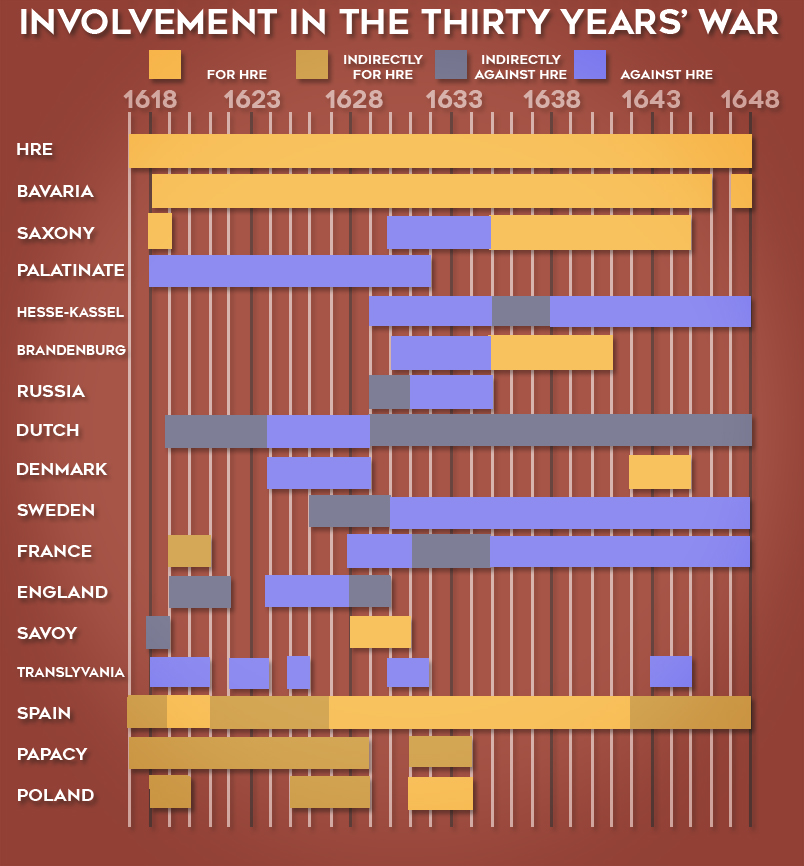
Feature History – Thirty Years’ War
Feature History
Published on 12 Nov 2016Hello and welcome to Feature History, featuring religious conflict, tragic war, and a really nifty collaboration with Jabzy.
3 Minute History – German Peasant’s War
https://www.youtube.com/watch?v=zeQVAUmyLksInvolvement Chart
Comments Off on Feature History – Thirty Years’ War
June 6, 2018
March 28, 2018
Samuel HaNagid – A Prince of Jews – Extra History
Extra Credits
Published on 11 Jun 2016Forced to flee from his home in Cordoba, Samuel HaNagid made a new name for himself in the kingdom of Granada. He picked his allies carefully and rose to the position of vizier, an unheard of honor for a Jew in a Muslim kingdom. His fame as a poet, a leader, and a patron of Judaic studies spread across the Mediterranean.
Comments Off on Samuel HaNagid – A Prince of Jews – Extra History
March 22, 2018
Feature History – Spanish Civil War
Feature History
Published on 12 Mar 2017Hello and welcome to Feature History, featuring The Spanish Civil War, zero mic etiquette, and a super subtle political lesson.
Comments Off on Feature History – Spanish Civil War
February 10, 2018
Johann Sebastian Bach; Toccata & Fugue in Dm, by Sinfonity
SinfonityTV Guitar
Published on Dec 14, 2014Johann Sebastian Bach; Toccata & Fugue in Dm, BWV 565
Live recorded in Segovia (Spain), Aug 2014. Video produced by NURILANDS FILMS, directed by Núria García.
Comments Off on Johann Sebastian Bach; Toccata & Fugue in Dm, by Sinfonity
November 13, 2017
Otto von Bismarck – V: Prussia Ascendant – Extra History
Extra Credits
Published on 11 Nov 2017The northern German states now looked to Prussia for leadership, but that power brought increased attention from their enemies. Bismarck engineered a war with France by striking at Napoleon III’s pride and wound up winning a runaway victory to secure Prussia’s diplomatic power.
Comments Off on Otto von Bismarck – V: Prussia Ascendant – Extra History
November 1, 2017
Spain versus Catalonia
Tim Black on the situation in Catalonia after the abortive declaration of independence:
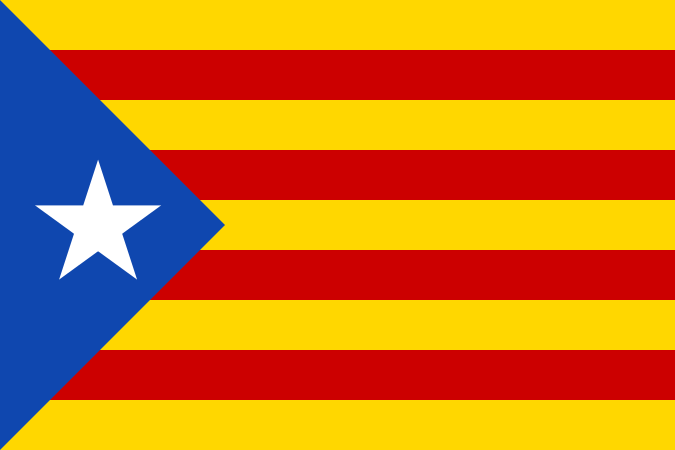
L’Estelada Blava, the “blue-starred flag” of the Catalonian independence movement
(Via Wikimedia)
An excessive focus on history can obscure the real dynamic informing the Catalonia autonomous community’s push for independence from Spain. It makes it look as if what we’re seeing now is a revival of a longstanding strain of Catalan nationalism, drawing on its 12th-century legacy as a principality, fired up by the divided union of Aragon and Catalonia during the early modern era, and burnished with the left-wing romance of Catalonia’s stand-alone, red-and-black resistance to General Franco during the 1930s. It makes it look, ultimately, as if Catalonia is not only an entity distinct from the rest of Spain, it is also a victim of, if not Spain, than certainly the Spanish state.
Not that matters have been helped by the Spanish government’s brutal, anti-democratic response to Catalonia’s independence referendum, as unconstitutional and therefore illegal as it was. It merely reinforced the impression that this is a conflict between an oppressive state and an oppressed people. After all, such is the defensiveness and weakness of the Spanish political class, we saw armed units of Guardia Civil assaulting Catalan voters, forcibly shutting polling stations and confiscating ballot boxes, and now we see charges of rebellion and sedition being laid at the doors of the leading pro-independence Catalan politicians, which has even prompted the Catalan president Carles Puigdemont to flee to Brussels. This really does look like a conflict rooted in some longstanding desire of the Spanish state to bend the Catalans to its will.
But to think that misses the real catalyst for the Spanish crisis, which lies less in Madrid or Barcelona, than in the European Union’s HQ in Brussels. That’s because, in the EU’s flight, manned by Western Europe’s political classes, from the democratic accountability of national peoples, in its demonisation of the very idea of national sovereignty as a species of 1930s-style nationalism, indeed in its essential anti-national elitism, it has created a transnational, technocratic set of institutions that necessarily weakens national state structures, depriving nations of numerous lawmaking powers, border controls and economic independence. Admittedly, the Spanish nation state has never been particularly strong. In common with the rest of Europe, its party-political system is in disarray, with its two traditional behemoths, the Socialist and Popular parties, hollowed out, and populist rivals exploding on to the scene. And, specific to Spain, the state has failed properly to cohere itself as a state, with suppressed regional antagonisms re-emerging in the post-Franco era. But the EU has not only exacerbated the internal weaknesses of the Spanish state; it has also fundamentally undermined even the possibility of a functioning nation state.
[…]
Yes, the cultural distinction between Catalonia and the rest of Spain has come to the fore in recent decades, with the red-yellow-and-blue Estelada a familiar sight hanging from buildings, and Catalan a familiar sound on the streets. But it’s clear that the driving force is less cultural difference, no matter how divisive, than the experience of EU-driven austerity as an unnecessary drain on an economically rich region. This is why support for Catalan independence has only risen dramatically since the economic crisis. As the Financial Times puts it: ‘After decades during which Catalan support for independence hovered between 15 and 20 per cent, secessionist sentiment started climbing rapidly in 2009. By 2011, according to the closely followed survey by the Catalan Centre for Opinion Studies (CEO), support for independence was above 30 per cent. Two years later, it reached an all-time high of 48.5 per cent.’
This is not a uniquely Spanish phenomenon, either. In other EU member states, the same dynamic is at work, with richer regions or areas with a sufficiently distinct cultural identity seeking to unfasten themselves from the rest of their respective nations. You can see it in the desire for greater economic autonomy of the rich Lombardy and Veneto regions in northern Italy. And you can see it again in Belgium, with the wealthy northern region of Flanders continually seeking to decouple itself from the de-industrialised, relatively impoverished southern region of Wallonia.
Comments Off on Spain versus Catalonia
October 16, 2017
What Happens When You Inbreed? – Brit Lab
BBC Earth Lab
Published on 17 Dec 2015Does inbreeding really lead to deformities and nasty diseases could inbreeding actually be a good thing? Greg Foot finds out the answers.
Comments Off on What Happens When You Inbreed? – Brit Lab


