Quotulatiousness

November 10, 2019

History-Makers: Machiavelli

Overly Sarcastic Productions
Published 8 Nov 2019

If I could have a conversation with any person in History, it’s Machiavelli. Easy. And I wouldn’t even have to do anything, I’d just say “So, tell me about Rome” and watch the fireworks. In the meantime, I’ll settle for playing Assassin’s Creed Brotherhood and liberating Roma with my boy Niccolò.

The best Prince is one who donates to TEAM TREES: https://teamtrees.org

PATREON: https://www.Patreon.com/OSP

DISCORD: https://discord.gg/sS5K4R3

MERCH LINKS: https://www.redbubble.com/people/OSPY…

OUR WEBSITE: https://www.OverlySarcasticProductions.com
Find us on Twitter https://www.Twitter.com/OSPYouTube
Find us on Reddit https://www.Reddit.com/r/OSP/

October 30, 2019

Shakespeare Summarized: Julius Caesar

Overly Sarcastic Productions
Published 1 Dec 2013

Here we go again! It’s only taken me several months…

Sarcastified Shakespeare returns, this time with a look at that historical tragedy we all love to write essays about, Julius Caesar!

I think the real main character here was Brutus’s crippling self-esteem issues…

October 28, 2019

QotD: Latin versus English

Filed under: Britain, Greece, History, Quotations — Tags: , , , — Nicholas @ 01:00

In a sensible language like English important words are connected and related to one another by other little words. The Romans in that stern antiquity considered such a method weak and unworthy. Nothing would satisfy them but that the structure of every word should be reacted on by its neighbours in accordance with elaborate rules to meet the different conditions in which it might be used. There is no doubt that this method both sounds and looks more impressive than our own. The sentence fits together like a piece of polished machinery. Every phrase can be tensely charged with meaning. It must have been very laborious, even if you were brought up to it; but no doubt it gave the Romans, and the Greeks too, a fine and easy way of establishing their posthumous fame. They were the first comers in the fields of thought and literature. When they arrived at fairly obvious reflections upon life and love, upon war, fate or manners, they coined them into the slogans or epigrams for which their language was so well adapted, and thus preserved the patent rights for all time. Hence their reputation.

Winston Churchill, My Early Life, 1930.

October 6, 2019

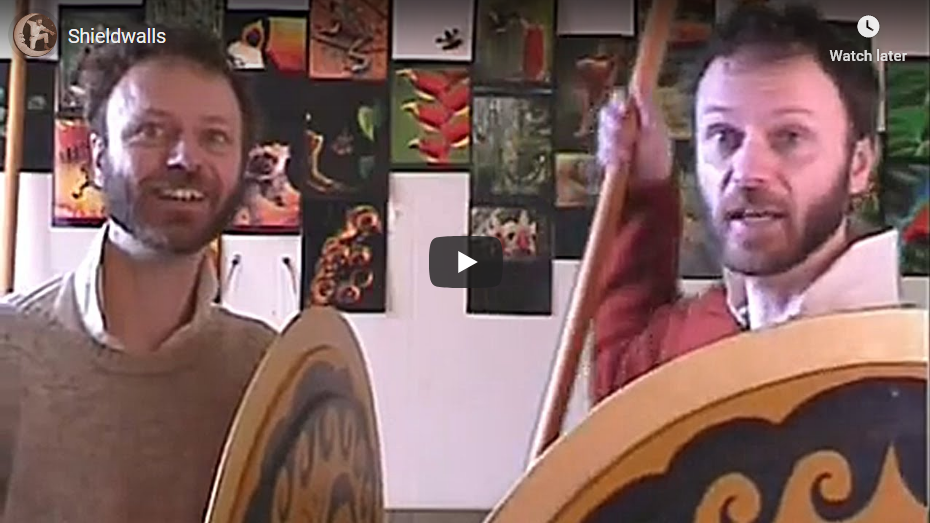
Shieldwalls

Filed under: Greece, History, Military — Tags: , , , — Nicholas @ 02:00

Lindybeige
Published on 24 Mar 2011

This may address many of the comments I had for my spears video. Many of my theories are based on the I think fairly reliable notion that people in the past were similar to people today in that they tended towards a desire for self-preservation, and away from reckless bravery.

http://www.LloydianAspects.co.uk

September 19, 2019

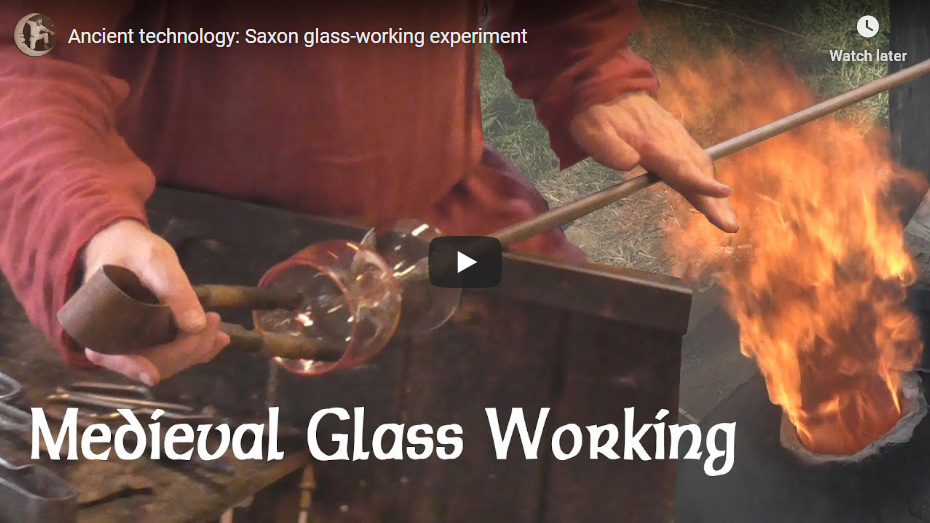
Ancient technology: Saxon glass-working experiment

Filed under: Britain, History, Technology — Tags: , , , , , — Nicholas @ 02:00

Lindybeige
Published on 9 Aug 2019

Many thanks to Victoria Lucas for inviting me along to see her experiments in medieval glass-working. Fire! Craft! Mud!
Support me on Patreon: https://www.patreon.com/Lindybeige

Picture credits:

Natron deposit image
By Stefan Thüngen – Own work, Public Domain, https://commons.wikimedia.org/w/index…

Glass slab of BETH SHE’ARIM
Hanay [CC BY-SA 4.0 (https://creativecommons.org/licenses/…)]

Palm cup
Reptonix free Creative Commons licensed photos [CC BY 3.0 (https://creativecommons.org/licenses/…)]

Lindybeige: a channel of archaeology, ancient and medieval warfare, rants, swing dance, travelogues, evolution, and whatever else occurs to me to make.

▼ Follow me…

Twitter: https://twitter.com/Lindybeige I may have some drivel to contribute to the Twittersphere, plus you get notice of uploads.

websites:
http://www.Lindybeige.uk
http://www.LloydianAspects.co.uk

August 30, 2019

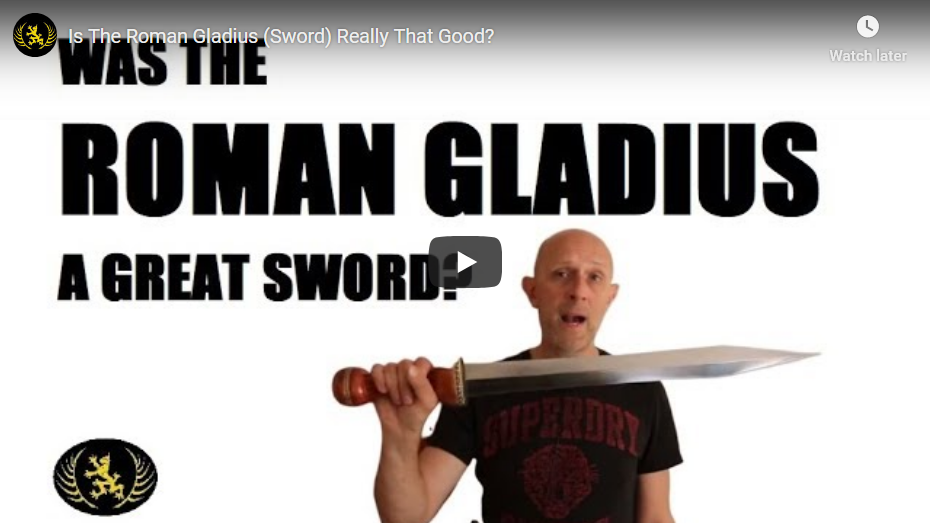
Is The Roman Gladius (Sword) Really That Good?

Filed under: Europe, History, Military, Weapons — Tags: , , , — Nicholas @ 02:00

scholagladiatoria
Published on 15 Jul 2019

Is The Roman Gladius (Sword) Really That Good?

August 17, 2019

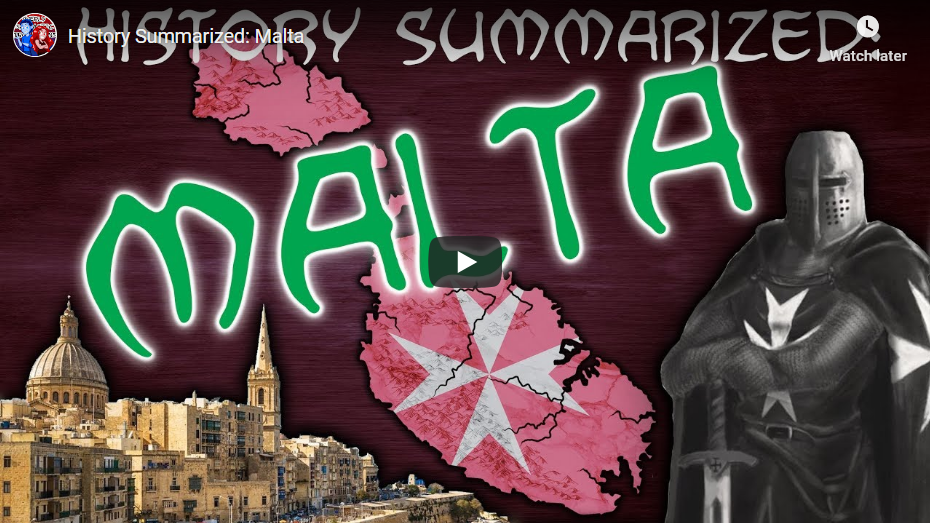
History Summarized: Malta

Overly Sarcastic Productions
Published on 16 Aug 2019

Go to https://NordVPN.com/overlysarcastic and and use code OVERLYSARCASTIC to get 75% off a 3 year plan and an extra month for free. Protect yourself online today!

Malta, the Island of A Dozen Empires, chilling in the middle of the Mediterranean Sea, is one of the most social butterflies in History. Having played host to or fought against every major power in the Mediterranean, this island bears a gorgeous architectural and linguistic record of its past, and is still a treasure to behold in the modern day. I’ve covered a lot of nations and empires in my time here, but between the rich cultural blends, the overflowing artistic treasures, and the Still-In-One-Piece-ness of it all, Malta may have one of the strongest claims to being the Winner of History in my book. What’s so special about Malta? Watch and find out!

NOTE on 7:00 – 7:08 — I’m cheating the time-scales a little here. This church, the Rotunda of Mosta, was actually built mid 1800s. Malta’s lavish church construction continued nearly unabated from C. 1565 to the modern day, so I use this example here — but St Paul’s Co-Cathedral in Valletta, shown from 6:27-6:33 is a better example of pure original Baroque construction. Honestly, all of the churches in Malta deserve a look if you’re curious.

PATREON: https://www.Patreon.com/OSP

DISCORD: https://discord.gg/sS5K4R3

August 10, 2019

Trump as the American Commodus

Filed under: Government, History, Media, Politics, USA — Tags: , , , , — Nicholas @ 05:00

In the New York Review of Books, Tom Holland explains that America isn’t Rome, even if the current President does rather remind him of the Emperor Commodus:

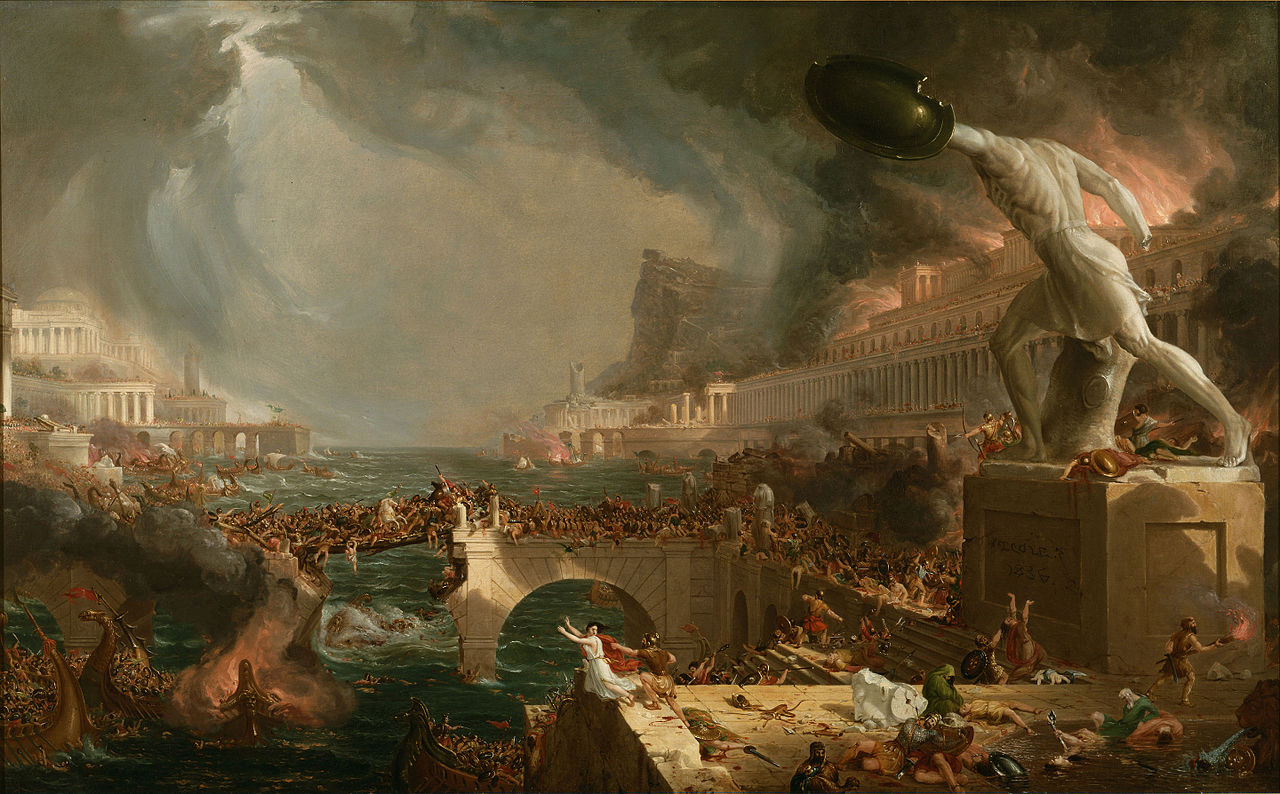
The Course of Empire – Destruction by Thomas Cole, 1836.
From the New York Historical Society collection via Wikimedia Commons.

When Edward Gibbon embarked on his great history of the decline and fall of the Roman Empire, he began his narrative with the accession of Commodus. Marcus Aurelius, the father of the new emperor, was a man who, in the noblest traditions of the Roman people, had combined the attributes of a warrior, a statesman, and a philosopher; Commodus was none of these.

“The influence of a polite age, and the labour of an attentive education,” Gibbon wrote sternly, “had never been able to infuse into his rude and brutish mind, the least tincture of learning; and he was the first of the Roman emperors totally devoid of taste for the pleasures of the understanding.” Instead, Commodus delighted in trampling on the standards by which the Roman political class had traditionally comported themselves. Most shockingly of all — as everyone who has seen Gladiator will remember — he appeared in the arena. His reward for this spectacular breach of etiquette was the cheers of the plebs and the pursed-lipped horror of the senatorial elite. To fight before the gaze of the stinking masses was regarded by all decent upholders of Roman morality as the most scandalous thing that a citizen could possibly do — but Commodus reveled in it. So it was, as Gibbon put it, that he “attained the summit of vice and infamy.”

Today, when conservatives contemplate a leader who, far from being merely an enthusiast for World Wrestling Entertainment, has long been an active and flamboyant participant in it, they may experience a similar shudder. Donald Trump, the only president of the United States ever to have been inducted into the WWE Hall of Fame, boasted that he had won “the highest ratings, the highest pay-per-view in the history of wrestling of any kind.” The Battle of the Billionaires — a proxy wrestling match fought in 2007 between Trump and Vince McMahon, the owner of WWE — had culminated in a victorious Trump strapping McMahon to a barber’s chair and shaving him bald. A decade later, Trump made clear just how much of an influence the theatrical violence of WWE had had on his approach to politics when he tweeted a video of himself body-slamming and repeatedly punching McMahon.

It was in a similar spirit, perhaps, that Commodus might have posed after decapitating an ostrich. Trump, smacking home his point, made sure before he tweeted the video to specify who his real target was. Clumsily superimposed over McMahon’s face was the CNN logo. “FraudNewsCNN” ran the hashtag. “The speed with which we’re recapitulating the decline and fall of Rome is impressive,” the conservative intellectual and former editor of the Weekly Standard Bill Kristol tweeted in response. “What took Rome centuries we’re achieving in months.”

The conviction that Trump is single-handedly tipping the United States into a crisis worthy of the Roman Empire at its most decadent has been a staple of jeremiads ever since his election, but fretting whether it is the fate of the United States in the twenty-first century to ape Rome by subsiding into terminal decay did not begin with his presidency. A year before Trump’s election, the distinguished Harvard political scientist Joseph Nye was already glancing nervously over his shoulder at the vanished empire of the Caesars: “Rome rotted from within when people lost confidence in their culture and institutions, elites battled for control, corruption increased and the economy failed to grow adequately.” Doom-laden prophecies such as these, of decline and fall, are the somber counterpoint to the optimism of the American Dream.

H/T to Niall Ferguson for this and the preceding Roman-related link.

Sulla’s dictatorships

Filed under: Europe, Government, History, Politics, USA — Tags: , , , , , — Nicholas @ 03:00

In New York magazine, Andrew Sullivan portrays the current state of the American Republic in light of the late history of the Roman Republic:

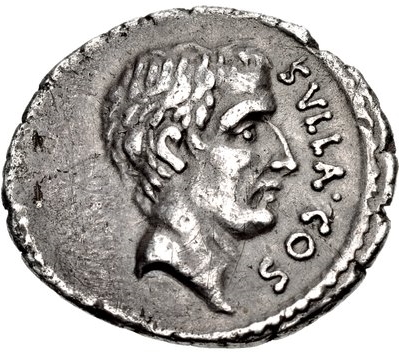
This 54 B.C. coin bears the portrait of the dictator Sulla. The moneyer was Q. Pompeius Rufus, the grandson of Sulla and his home would likely have had portraits of their famous ancestor. Thus, although posthumously struck, the portrait on these coins is probably an accurate representation.
Photo by CNG via Wikimedia Commons.

… zoom out a little more and one obvious and arguably apposite parallel exists: the Roman Republic, whose fate the Founding Fathers were extremely conscious of when they designed the U.S. Constitution. That tremendously successful republic began, like ours, by throwing off monarchy, and went on to last for the better part of 500 years. It practiced slavery as an integral and fast-growing part of its economy. It became embroiled in bitter and bloody civil wars, even as its territory kept expanding and its population took off. It won its own hot-and-cold war with its original nemesis, Carthage, bringing it into unexpected dominance over the entire Mediterranean as well as the whole Italian peninsula and Spain.

And the unprecedented wealth it acquired by essentially looting or taxing every city and territory it won and occupied soon created not just the first superpower but a superwealthy micro-elite — a one percent of its day — that used its money to control the political process and, over time, more to advance its own interests than the public good. As the republic grew and grew in size and population and wealth, these elites generated intense and increasing resentment and hatred from the lower orders, and two deeply hostile factions eventually emerged, largely on class lines, to be exploited by canny and charismatic opportunists. Well, you get the point.

After the overthrow of the monarchy, the new Republic went from strength to strength, struggling against and generally beating and absorbing other city states in the Italian peninsula, eventually rising to face the challenge of Carthage, the dominant power in the western Mediterranean. The eventual Roman victory over Carthage left Rome the superpower of its age, able to dominate and control even the remaining “great” powers of the eastern Mediterranean world. One of the costs of military dominance was an over-reliance on its citizen armies, which eventually changed the entire economy of the Republic, switching from largely small-holding farmers (who were subject to legionary service) to larger slave-worked farms that displaced the families of free citizens from their lands. The result was a constant inflow of impoverished rural citizens to the urban centres, especially Rome itself.

The newly enlarged urban poor found champions to push for reforms to aid them in their plight, the first of whom was Tiberius Gracchus (Extra Credits did a short video series on the Brothers Gracchi: Part I, Part II, Part III, Part IV, Part V, and an extra commentary video). The defeat and death of the Gracchi brothers by agents of the Patrician order led, as you might expect, to yet more polarization and further violent political struggle. This process was hastened by the conflict between Marius and his former protégé Sulla:

As the turn of the first century BCE approached and wars proliferated, with Roman control expanding west and east and south across the Mediterranean, the elites became ever wealthier and the cycle deepened. Precedents fell: A brilliant military leader, Marius, emerged from outside the elite as consul, and his war victories and populist appeal were potent enough for him to hold an unprecedented seven consulships in a row, earning him the title “the third founder of Rome.” Like the Gracchi, his personal brand grew even as republican norms of self-effacement and public service attenuated. In a telling portent of the celebrity politics ahead, for the first time, a Roman coin carried the portrait of a living politician and commander-in-chief: Marius and his son in a chariot.

A dashing military protégé (and rival) of Marius, Sulla, was the next logical step in weakening the system — a popular and highly successful commander whose personal hold on his soldiers appeared unbreakable. Tasked with bringing the lucrative East back under Rome’s control, he did so with gusto, prompting a somewhat nervous Senate to withdraw his command and give it to his aging (and jealous) mentor Marius. But Sulla, appalled by the snub, simply refused to follow his civilian orders, gathered his men, and called on them to march back to Rome to reverse the decision. His officers, shocked by the insubordination, deserted him. His troops didn’t, soon storming Rome, restoring Sulla’s highly profitable command, and forcing his enemies into exile. Sulla then presided over new elections of friendly consuls and went back into the field. But his absence from Rome — he needed to keep fighting to reward his men to keep them loyal — enabled a comeback of his enemies, including Marius, who retook the city in his absence and revoked Sulla’s revocations of command. Roman politics had suddenly become a deadly game of tit for tat.

When Sulla entered Rome a second time, he rounded up 6,000 of his enemies, slaughtered them en masse within earshot of the Senate itself, launched a reign of terror, and assumed the old emergency office of dictator, but with one critical difference: He removed the six-month expiration date — turning himself into an absolute ruler with no time limit. Stocking and massively expanding the Senate with his allies, he neutered the tribunes and reempowered the consuls. He was trying to use dictatorial power to reestablish the old order. And after three years, he retired, leaving what he thought was a republic restored.

Within a decade, though, the underlying patterns deepened, and nearly all of Sulla’s reforms collapsed. What lasted instead was his model of indefinite dictatorship, with the power to make or repeal any law. He had established a precedent that would soon swallow Rome whole.

June 29, 2019

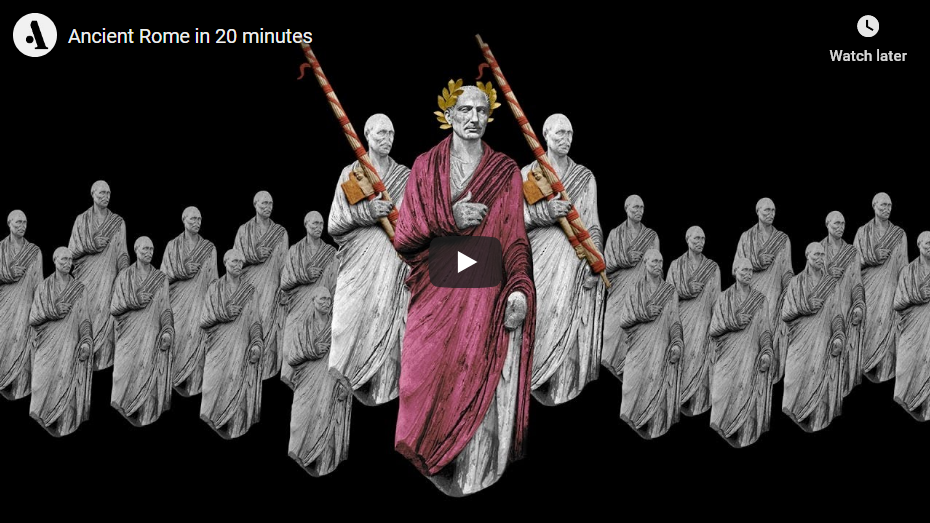
Ancient Rome in 20 minutes

Filed under: Europe, History — Tags: , , , , — Nicholas @ 02:00

Arzamas
Published on 30 May 2017

Caesar, The Colosseum, Republic, Nero, geese, plebeians, legions – everything that you once knew, but forgot, in a crash course video by Arzamas.

Narrated by Brian Cox.

“Ancient Rome in 20 minutes” is a Russian version of a Russian video by Arzamas.

June 22, 2019

History Summarized: The Fall of Rome

Overly Sarcastic Productions
Published on 21 Jun 2019

Go to http://www.audible.com/overlysarcastic or text OVERLYSARCASTIC to 500500 to get a free audiobook, 2 free Audible Originals, and 30-day free trial.

Rome, in one form or another, has been around for a *while*. Kinda seemed like it was going to last forever, like it was basically immortal. Well bad news for everyone involved: Rome goes bye-bye just like all the other empires in world history. So let’s talk about when, how, and why Rome fell!

SEASONS OF ROME T-Shirt: https://www.threadless.com/discover/s…

SOURCES & FURTHER READING:
Gibbon’s Decline and Fall: https://amzn.to/2FwBRvO
Mary Beard’s SPQR: https://amzn.to/2Wwu2x3
The History of Rome Podcast: https://apple.co/2U7Q4tq
Lectures from TheGreatCourses: “The Decline and Fall of the Roman Empire?” (Gregory Aldrete), “Late Antiquity — Crisis and Response” & “Barbarians & Emperors” (Thomas Noble)
If I see anyone complaining that I didn’t sufficiently cite this video I’m going to sack your ancient capital and pillage your temples.

PATREON: https://www.Patreon.com/OSP

OUR WEBSITE: https://www.OverlySarcasticProductions.com
Find us on Twitter https://www.Twitter.com/OSPYouTube
Find us on Reddit https://www.Reddit.com/r/OSP/

June 8, 2019

Blue’s Top Five Domes!

Overly Sarcastic Productions
Published on 7 Jun 2019

There are questions any self-respecting YouTube Historian must ask: “How do you balance entertainment and educational value?”, “What’s the split between your area of expertise and more foreign topics?”, and, of course, the most important of all: “Which Dome is the best dome?”

Today, Overly Sarcastic Productions takes a stand on this critical issue — and proceeds to shitpost about it.

PATREON: https://www.Patreon.com/OSP

OUR WEBSITE: https://www.OverlySarcasticProduction…

Find us on Twitter @OSPYouTube!

May 23, 2019

Those “theories of history”

Filed under: History, Politics, USA — Tags: , , , , , — Nicholas @ 05:00

At Rotten Chestnuts, Severian starts off talking great-man versus vast-impersonal-forces-of-history then segues into passivity (not Severian’s, but the widespread use of the passive voice):

Lionel Royer (1852-1926). Vercingetorix jette ses armes aux pieds de Jules César (Vercingetorix throws down his arms at the feet of Julius Caesar)
The painting depicts the surrender of the Gallic chieftain after the Battle of Alesia (52 BC). The depiction of Gauls with long hair and mustaches is also called into question today. The horse is a Percheron, although at this time this breed was not in Gaul. The rectangular shield also does not accord with the time when they were mostly oval.
Musée CROZATIER du Puy-en-Velay. — http://www.mairie-le-puy-en-velay.fr/ via Wikimedia Commons.

Academics, of course, are all in on “social” explanations of historical phenomena. Being weak, ineffective people themselves, with no experience of life, the very idea of a Caesar frightens and repels them… so they construct theories of History in which it is impossible for a Caesar to exist. On this view, “social forces” (what they used to call “the relations of the means of production”) tore the Roman Republic apart; the Empire was its inevitable next stage. Assign whatever name you like to the Imperator — whether Caesar, Marius, Sulla, or Miles Gloriosus, he’s just the temporary face of the vast, impersonal social forces that control our fate. None of this “History is just the biographies of great men” for them!

The eggheads have a point, though, albeit not the one they think they’re making. The Roman elite’s social system was designed to produce a certain type of man. Whether Gaius Julius Caesar was personally the embodiment of that system, or a perversion of it, is irrelevant — the system was designed to produce men like Caesar, fellows with a very particular set of skills. Eggheads have never seen one, but anyone who has kicked around the world outside the ivory tower for a bit has met that type of guy. The skills themselves are fairly common, at least in embryo. Whether a potential Caesar becomes actual might well be merely a question of opportunity and scale.

A terrifying notion, that, when you look around the modern West. The one characteristic all effective elites have in common is the self-knowledge that they are the elite. The British, for instance, thought nothing of sending some 19 year old kid, whose slim formal education was mostly Latin and Greek, off to govern the Punjab. It worked, largely because that kid, whatever his defects of intellect and ability, had character, of the kind you just don’t get without a pedigree stretching back to Hastings.

Again, if you’ve ever met one of the horsey set you know what I’m talking about. If you haven’t, the most accessible American equivalents are the sons and grandsons of career army officers. Think of Lieutenant Dan in Forrest Gump, as played by Gary Sinise in the movie. That kind of guy always completes the mission, or dies trying, because it’s simply unthinkable that he won’t. After five generations, West Point is in his DNA…

May 4, 2019

Miscellaneous Myths: Hermes

Filed under: Europe, Greece, History, Religion — Tags: , , — Nicholas @ 06:00

Overly Sarcastic Productions
Published on 3 May 2019

He’s fast! He’s smart! He should really put on some pants! It’s history’s most marketable deity, Hermes himself!

(but red, who are those other two guys?)
(shhhhh)

PATREON: http://www.Patreon.com/OSP

March 31, 2019

Miscellaneous Myths: Nerites

Filed under: Europe, Greece, History — Tags: , , — Nicholas @ 02:00

Overly Sarcastic Productions
Published on 1 Mar 2019

This teenie weenie episode is brought to you courtesy of our patron Ryan The Nomad!

There’s no art of Nerites, which means none of you can prove he WASN’T a mermaid.

🦐

PATREON: http://www.patreon.com/user?u=4664797

« Newer PostsOlder Posts »

Powered by WordPress