Quotulatiousness

February 9, 2020

Classics Summarized: The Aeneid

Filed under: Books, Europe, History, Humour — Tags: , , , , , , — Nicholas @ 02:00

Overly Sarcastic Productions
Published 28 Jul 2015

The epic conclusion that no-one asked for! Virgil steps up to the plate and finishes the trilogy that Homer never expected to be a trilogy.

PATREON: https://www.patreon.com/user?u=4664797

Find us on Twitter @OSPYouTube!

February 1, 2020

Cursus honorum – Consuls

Filed under: Government, History — Tags: , , , , — Nicholas @ 02:00

Historia Civilis
Published 18 May 2015

Patreon: https://www.patreon.com/HistoriaCivilis
Website: https://www.historiacivilis.com
Twitter: https://twitter.com/HistoriaCivilis

Music is “The Life and Death of a Certain K. Zabriskie, Patriarch” by Chris Zabriskie. (http://chriszabriskie.com/)

January 29, 2020

The Roman Triumph

Filed under: Europe, History, Military — Tags: , , , , — Nicholas @ 06:00

Historia Civilis
Published 5 Dec 2018

Patreon | http://patreon.com/HistoriaCivilis
Donate | http://www.paypal.com/cgi-bin/webscr?…
Merch | http://teespring.com/stores/historiac…
Twitter | http://twitter.com/HistoriaCivilis
Website | http://historiacivilis.com

Sources:
The Jewish War, by Josephus: https://amzn.to/2Ub8JRq
Parallel Lives: The Life of Pompey, by Plutarch: https://amzn.to/2BP6vjq
Parallel Lives: The Life of Julius Caesar, by Plutarch: https://amzn.to/2BP6vjq
Letters to Atticus, Book 13, by Cicero: https://amzn.to/2Qa9SKv
The History of Rome, Book 1, by Livy: https://amzn.to/2PbCkX7
Natural History, Book 3, by Pliny the Elder: https://amzn.to/2PhX3Za
Roman History, Book 43, by Cassius Dio: https://amzn.to/2PgJ99C
Roman History, Book 44, by Cassius Dio: https://amzn.to/2PgJ99C
Roman History, Book 53, by Cassius Dio: https://amzn.to/2Pgdq8Q
Roman History, Book 54, by Cassius Dio: https://amzn.to/2Pgdq8Q
Roman History, Book 55, by Cassius Dio: https://amzn.to/2Pgdq8Q
The Life of Julius Caesar, by Suetonius: https://amzn.to/2QuwULE
The Fasti Triumphales http://www.attalus.org/translate/fast…
The Roman Triumph, by Mary Beard: https://amzn.to/2UafiDD
Rubicon, by Tom Holland: https://amzn.to/2E0x5HX
Cicero, by Anthony Everitt: https://amzn.to/2PgJJnO
Julius Caesar, by Philip Freeman: https://amzn.to/2DXortC
Caesar: Life of a Colossus, by Adrian Goldsworthy: https://amzn.to/2Q9rtlO
The Rise of Rome, by Anthony Everitt: https://amzn.to/2PeSEGw
Circum Metas Fertur: An Alternative Reading of the Triumphal Route,” by Ida Östenberg. From Historia: Zeitschrift für Alte Geschichte, vol. 59, no. 3: https://bit.ly/2SpsjHJ

Music:
“Honey,” by Nctrnm
“XY,” by Nctrnm
“The House Glows (With Almost No Help),” by Chris Zabriskie
“Hallon,” by Christian Bjoerklund

We are a participant in the Amazon Services LLC Associates Program, an affiliate advertising program designed to provide a means for us to earn fees by linking to Amazon.com and affiliated sites.

January 25, 2020

Cursus honorum – Praetors

Filed under: Government, History, Law — Tags: , , , — Nicholas @ 02:00

Historia Civilis
Published 19 Feb 2015

Patreon: https://www.patreon.com/HistoriaCivilis
Website: https://www.historiacivilis.com
Twitter: https://twitter.com/HistoriaCivilis

Music is “Sea” by Jahzzar (http://betterwithmusic.com)

January 23, 2020

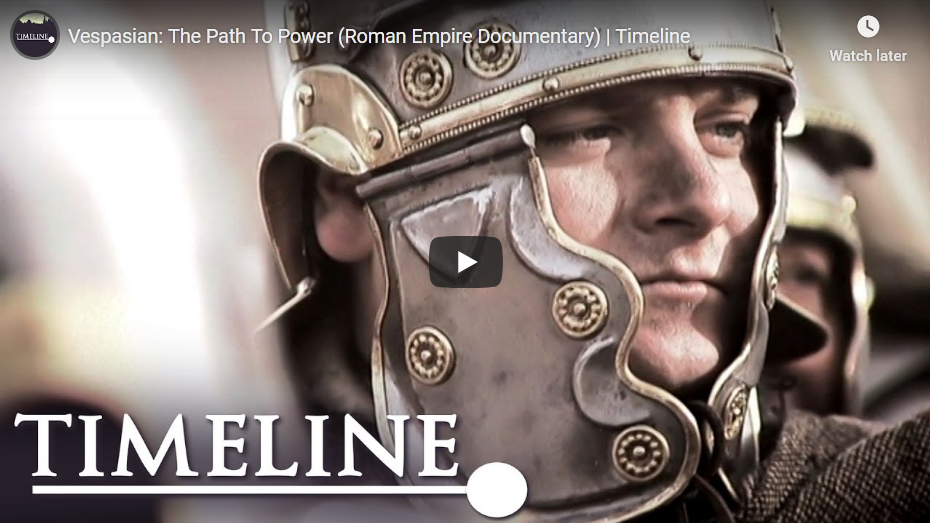
Vespasian: The Path To Power | Timeline

Filed under: Britain, Europe, History, Military — Tags: , , , , , — Nicholas @ 06:00

Timeline – World History Documentaries
Published 9 Jun 2017

Check out our new website for more incredible history documentaries: HD and ad-free. http://bit.ly/2O6zUsK

Looks at the life of the Roman emperor Vespasian, from childhood to his death in 79 AD. Provides insight into the sophisticated workings of the Roman Empire.

Content licensed from Digital Rights Group (DRG).

January 21, 2020

Punic Wars | 3 Minute History

Filed under: Africa, Europe, History, Military — Tags: , , , , — Nicholas @ 02:00

Jabzy
Published 25 Jan 2015

Finally broke into the Ancient Period

January 19, 2020

Cursus honorum – Aediles

Filed under: Bureaucracy, Government, History — Tags: , , , , — Nicholas @ 02:00

Historia Civilis
Published 6 Feb 2015

Patreon: https://www.patreon.com/HistoriaCivilis
Website: https://www.historiacivilis.com
Twitter: https://twitter.com/HistoriaCivilis

Music is “Clap Your Hands” by Jahzzar (http://betterwithmusic.com)

January 14, 2020

Cursus honorum – Quaestors

Filed under: Bureaucracy, Government, History — Tags: , , , , — Nicholas @ 02:00

Historia Civilis
Published 20 Dec 2014

Patreon: https://www.patreon.com/HistoriaCivilis
Website: https://www.historiacivilis.com
Twitter: https://twitter.com/HistoriaCivilis

Music by audionautix.com

January 4, 2020

Blue’s Dumb History Tales #2

Overly Sarcastic Productions
Published 3 Jan 2020

Happy new year, have some memes.

Our content is intended for teenage audiences and up.

DISCORD: https://discord.gg/y7uUnzJ

PATREON: https://www.Patreon.com/OSP

MERCH LINKS: https://www.redbubble.com/people/OSPY…

OUR WEBSITE: https://www.OverlySarcasticProductions.com
Find us on Twitter https://www.Twitter.com/OSPYouTube
Find us on Reddit https://www.Reddit.com/r/OSP/

January 3, 2020

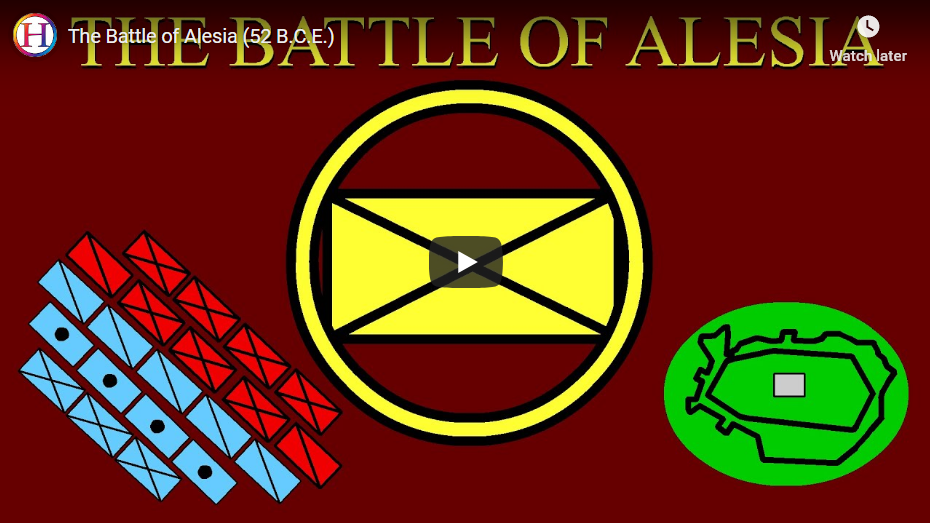
The Battle of Alesia (52 B.C.E.)

Filed under: Europe, France, History, Military — Tags: , , , , — Nicholas @ 06:00

Historia Civilis
Published 24 Apr 2015

Patreon | http://patreon.com/HistoriaCivilis
Donate | http://www.paypal.com/cgi-bin/webscr?…
Merch | http://teespring.com/stores/historiac…
Twitter | http://twitter.com/HistoriaCivilis
Website | http://historiacivilis.com

Music is “The Life and Death of a Certain K. Zabriskie, Patriarch” by Chris Zabriskie. (http://chriszabriskie.com/)

December 24, 2019

Holiday Tales: Christmas

Overly Sarcastic Productions
Published 25 Dec 2017

Merry Christmas, all! In honor of this complex and multifaceted holiday, today let’s talk about some of the many and varied influences and major historical turning points that sculpted this holiday into what we know and love (or lose our minds at Starbucks over.)

Nobody tell Blue that this video is mostly historical.

PATREON: https://www.patreon.com/user?u=4664797

Find us on Twitter @OSPYouTube!

December 18, 2019

History Summarized: Pope Fights

Filed under: Europe, France, History, Humour, Italy, Religion — Tags: , , , , — Nicholas @ 02:00

Overly Sarcastic Productions
Published 24 Aug 2018

The Medieval Catholic Church was … an interesting place, to put it lightly. Sometimes there was more than one Pope at a time, and sometimes they fought each other for power. Ladies and Gentleman, I present to you Pope Fights! The most absurd chapter in all of Catholicism.

Pope Francis’ Rock Album, if you’re still not convinced: https://www.youtube.com/watch?v=hW3az…

PATREON: https://www.patreon.com/user?u=4664797

Find us on Twitter @OSPYouTube!

December 6, 2019

“The Last Stand” – The 1527 Sack of Rome – Sabaton History 044 [Official]

Filed under: Europe, History, Media, Military, Religion — Tags: , , , , , , — Nicholas @ 04:00

Sabaton History
Published 5 Dec 2019

In 1527, a large Holy Roman army consisting of Germans, Spaniards and Italians march on Rome frustrated over unpaid wages and lacking supplies. Pope Clement VII seeks shelter as Rome is pillaged and burned while his brave Swiss Guard makes a heroic last stand.

Support Sabaton History on Patreon: https://www.patreon.com/sabatonhistory

Listen to The Last Stand (where “The Last Stand” is featured):
CD: http://bit.ly/TheLastStandStore
Spotify: http://bit.ly/TheLastStandSpotify
Apple Music: http://bit.ly/TheLastStandItunes
iTunes: http://bit.ly/TheLastStandItunes
Amazon: http://bit.ly/TheLastStandAmz
Google Play: http://bit.ly/TheLastStandGooglePlay

Watch the official lyric video of “The Last Stand” here: https://www.youtube.com/watch?v=BwfJs…

Listen to Sabaton on Spotify: http://smarturl.it/SabatonSpotify
Official Sabaton Merchandise Shop: http://bit.ly/SabatonOfficialShop

Hosted by: Indy Neidell
Written by: Markus Linke and Indy Neidell
Directed by: Astrid Deinhard and Wieke Kapteijns
Produced by: Pär Sundström, Astrid Deinhard and Spartacus Olsson
Creative Producer: Joram Appel
Executive Producers: Pär Sundström, Joakim Broden, Tomas Sunmo, Indy Neidell, Astrid Deinhard, and Spartacus Olsson
Post-Production Director: Wieke Kapteijns
Production Intern: Rune Vaever Hartvig
Edited by: Iryna Dulka
Sound Editing by: Marek Kaminski
Maps by: Eastory – https://www.youtube.com/c/eastory

Archive by: Reuters/Screenocean https://www.screenocean.com
Music by Sabaton.

Sources:
– Rijksmuseum
– Fondo Antiguo de la Biblioteca de la Universidad de Sevilla
– A massacre in a church during the Sack of Rome: a priest is about to be stabbed and another priest is lying dead on the floor before the altar. Wood engraving by R. Venturi after himself. Credit: Wellcome Collection. CC BY
– Guy de Chauliac bandaging the leg of Pope Clement VII at Avi. Oil painting by Ernest Board. Credit: Wellcome Collection. CC BY
– Photo of Sistine Chapel ceiling by Qypchak
– Photo of Arco delle Campane by Przemek Pietrak

An OnLion Entertainment GmbH and Raging Beaver Publishing AB co-Production.

© Raging Beaver Publishing AB, 2019 – all rights reserved.

December 2, 2019

QotD: Evidence of markets in classical civilizations

Filed under: Economics, Europe, Greece, History, Quotations — Tags: , , , , — Nicholas @ 01:00

If someone were to claim that market behaviour was peripheral to life in eighteenth century England, it would be easy to laugh at him. This is not to say the claim has not been or will not be made. But if it were made, it could be refuted with a mass of government and private statistics, of newspaper reports and law reports, of high literature, of sermons, speeches and letters, of descriptive and analytical surveys, of biographies and novels, and of physical remains. Ludicrous claims can always be based on selective and misread evidence. In this case, the weight of the evidence must be decisive.

If we turn, however, to the ancient world, the evidence must almost always be indecisive. Very few ancient writings have survived. Obviously, two thousand years are a long time; and ancient civilisation did collapse. Add to this that far fewer documents relating to economic matters were produced or could be preserved than has been the case with us. There was no printing: everything had to be copied by hand. The best writing material was papyrus, which was both expensive and fragile. The normal writing materials for accounts and administrative documents were waxed tablets, which were scraped and reused, and thin wooden sheets, which were thrown away once they had served their purpose.

The literary remains of Greece and Rome which have come down to us through generations of copying and recopying are the products of a rather snobbish culture, and contain little direct information about economic behaviour. The great writers, as Finley observes, do seem to have lacked the conceptual framework for intelligent discussion of finance and commerce. Even otherwise, these were matters they regarded as beneath the notice of history. Thucydides, for example, gives full discussion to the political causes of the Peloponnesian War, but says nothing of what we know from the archaeological evidence was the complete Athenian displacement of Corinth in the pottery markets of the Western Mediterranean world.

During the past century or so, the rubbish dumps of Egypt have revealed a mass of the everyday documentation we have for no other area of the ancient world. There are tax records, and commercial correspondence, and administrative commands, among much else. The problem here is that Egypt was always an exception. From its earliest history, its geography opened it to capture and exploitation by rent-seeking élites. The Pharaohs were worshipped as gods and given whatever they demanded. The Ptolemies organised the country into one gigantic state enterprise and used the proceeds for making a big noise in the Hellenistic world. The Roman Emperors kept up the monopolies and requisitions, treating Egypt as their personal property, and so far as possible isolating it from the rest of the Empire. The documentary evidence, therefore, we have from Egypt may not be representative of the ancient world as a whole.

But this, plus the material archaeology, is all we have. And if we want to know anything for economic motivations and behaviour, we must press the evidence we have as hard as we can. The history of the ancient world is, in many important respects like a mosaic that has been broken up with many of its tiles thrown away. The whole must be reconstructed from the parts remaining. It is a difficult enterprise, but it can be attempted.

If there is little direct, there is much indirect evidence. This is scattered through the surviving body of ancient literature. It consists of casual remarks, illustrations to arguments, even comments that are in themselves foolish. It is a question of looking for this evidence, and of knowing how to use it.

An interesting example of how evidence can be extracted and used comes not from our own ancient world, but from pre-Columbian South America. Deirdre McCloskey has looked at the geographical distribution of Mayan obsidian tools. She notes that, the farther from the sources of their obsidian, the smaller was the ratio of blade weight to cutting length. She comments:

    By taking more care with more costly obsidian the blade makers were earning better profits; as they did by taking less care with less costly obsidian.

What we have here, then, is evidence that illiterate, stone age toolmakers were at least as conscious of opportunity cost as any Victorian mill owner, and rather more so than the average socialist planner of the next century. So long, of course, as this is evidence — this is, so long as the tools are distributed as claimed — we have empirical reason for doubting the Polanyi claim that,

    previously to our time no economy has ever existed that, even in principle, was controlled by markets…. Gain and profit made on exchange never [before the nineteenth century] played an important part in human economy.

Sean Gabb, “Market Behaviour in the Ancient World: An Overview of the Debate”, 2008-05.

November 19, 2019

Overly Sarcastic Podcast: Blue Talks Machiavelli!

Filed under: Books, Europe, History, Italy — Tags: , , , , — Nicholas @ 06:00

Overly Sarcastic Productions
Published 23 Apr 2016

Damn, YouTube, back at it again with the Podcast.

From the man who brings you outdated memes and crude photoshops comes the second episode of the Overly Sarcastic Podcast. Today, Blue talks through Machiavelli’s two most famous works, and how they work together more than you might initially think.

This episode has slightly different visuals because the blue orb from last time charges by the minute. Comment below if you have a preference for visuals in future OSPodcasts and let us know if you have any topics you’d like Blue to discuss.

« Newer PostsOlder Posts »

Powered by WordPress