
The problem for the liberal is that most people do not want to be transformed. They want life to be better but not qualitatively different. It is only the liberal, or the “progressive”, as he prefers to be called today, who welcomes revolution and relishes the violent tactics necessary to bring it about. For the progressive, it is an article of faith that the masses will resist change and must be forced to swallow it.
This is a crucial difficulty, and it gives rise to all sorts of persuasion, nudging, compulsion, and outright violence. If the masses don’t know what’s good for them, they must be made to change. Every liberal in history, from Jean-Jacques Rousseau to Barack Obama, has adopted this course of action. The current liberal lions, Chuck Schumer and Nancy Pelosi, and their lion cubs – New Jersey’s Sen. Cory Booker and California’s Sen. Kamala Harris – appear to be even more radical.
Booker speaks repeatedly in favor of what he calls “the collective good”. Apparently, he knows what that good is, and others do not. And he seems willing to use uncivil means to achieve that collectivist end, such as lashing out at DHS secretary Kirstjen Nielsen. His humiliation of Nielsen was not just embarrassing. As I saw it, it revealed a cold, vicious, Leninist temperament, a willingness to sacrifice individuals in the service of the collective and of his own political ambition.
Then there is Harris. “Loose regulations and lax enforcement … That’s abandoning the middle class,” she says. What she seeks, apparently, is more government control with herself in charge.
Both of these über-liberals claim to know more than the rest of us, but what is it they know?
In a truth worthy of Wittgenstein, one could say that what they “know” is that they know, and nothing else. And what they oppose is any suggestion that they do not know.
In other words, liberalism is a temper, not a philosophy. It has no fixed content – it can be either communistic or fascistic, racially “progressive” or virulently anti-Semitic, pacifistic or militaristic – but in one respect, it never changes. It exerts control and demands obedience.
Jeffrey Folks, “Leftists versus the People”, American Thinker, 2018-02-24.
May 31, 2024
QotD: Progressives believe you need to be changed to their design
March 3, 2024
January 22, 2024
“He lied. That was what he had to say at the time.”
At First Things, Robert Carle reviews Tania Brannigan’s Red Memory: The Afterlives of China’s Cultural Revolution:
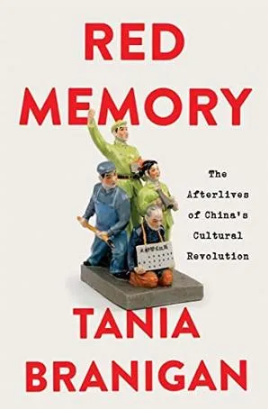
At a 1979 White House dinner, actress Shirley MacLaine told Deng Xiaoping, China’s new leader and the guest of honor that evening, about a Chinese scientist she had met. He said that he’d been happier and more productive when he worked on a Chinese farm. Deng cut her short: “He lied. That was what he had to say at the time.” Deng spent three years working in a tractor factory during the Cultural Revolution, and he refused to romanticize it. The memoirs of Cultural Revolution survivors written in the 1980s echo Deng’s view that it was a brutal and pointless experiment.
Today, there is widespread nostalgia in China for the Cultural Revolution. President Xi Jinping has reflected positively on the time he spent exiled in the remote town of Liangjiahe in Shaanxi province, living in a cave, hauling coal carts, carrying manure, building dikes, enduring bitter winters, flea bites, and hunger. This experience, Xi claims, bonded him with China’s common people and prepared him to be an empathetic ruler. Liangjiahe is now a “red tourist” attraction where students can visit Xi’s old home and admire the well he built.
Xi’s glamorization of the Cultural Revolution is reflected in Beijing’s chic dining scene. In Red Classics Restaurant, for example, waitresses in Red Guard uniforms serve meat and vegetables in plain style to invoke an era of stark living. You can have a fully themed wedding in this restaurant, posing for photos in matching Mao suits on a tractor parked in one corner.
In her new book, Red Memory, Tania Branigan describes the clashing memories of the Cultural Revolution. Those who suffered under the brutality of the Red Guard describe an infernal decade when Mao turned his murderous paranoia on his own people, leading them to tear each other to pieces. Children denounced their parents, and students murdered their teachers. In Mao’s campaign against the four “olds” (Old Ideas, Old Culture, Old Customs, and Old Habits), traditional Chinese culture and morality became targets for destruction.
But Branigan also tells stories of people who are nostalgic for a time when life was more austere and when people lived for a cause other than individualism and materialism. Some former Red Guards have set up a bookstore and website called Utopia. Others organize trips to North Korea to admire society as it should be, or set up rural communes for students. One Utopia co-founder, a professor, made headlines for slapping an eighty-year-old “traitor” who had dared to criticize Mao.
Red Memory is full of chilling stories of brutality and betrayal. Fang Zhongmou witnessed the torture and beating of her husband by adolescent Red Guards. She endured years of interrogations at her workplace because her father had been a landowner. One night in 1970, while doing laundry at home, she launched into a tirade against Mao. Her son told her, “If you go against my dear Chairman Mao, I will smash your dog head in”. He reported her to officials. After two months of violent “struggle sessions”, Fang was executed. The son grew up to be a guilt-ridden adult who agonizes over his mother’s gravesite.
Song Binbin was eighteen when she viciously denounced her school’s deputy principal, Bian Zhongyun. Bian had told the students that they should run out of the building in the event of an earthquake. Because she did not instruct the students to take Mao portraits with them, Red Guards hunted her down and beat her to death with nailed clubs. As the Cultural Revolution swept China, beatings and executions became increasingly baroque. Students poured boiling water over teachers’ heads and made them swallow excrement, crawl over embers, drink ink and glue, and beat one another.
December 17, 2023
QotD: When “factions” coalesce into “parties”
Geographic expansion keeps that in check, the Federalist guys thought, because clever, ambitious men who feel themselves blocked by the Old Boys’ Network can always head west, to try their luck in one of the burgeoning frontier communities. Which worked — that’s the part the Federalist guys got right — but enough clever, ambitious men stayed back East that “factions” transformed into something much worse: Actual political parties.
Severian, “Real Federalism Has Never Been Tried”, Rotten Chestnuts, 2021-05-03.
November 29, 2023
QotD: The children of the revolution
As soon as you saw people as things to be measured, they didn’t measure up. What would run through the streets soon enough wouldn’t be a revolution or a riot. It’d be people who were frightened and panicking. It was what happened when the machinery of city life faltered, the wheels stopped turning, and all the little rules broke down. And when that happened, humans were worse than sheep. Sheep just ran; they didn’t try to bite the sheep next to them.
Terry Pratchett, Night Watch, 2002.
November 16, 2023
Maryland Council of Safety Revolutionary Flintlock
Forgotten Weapons
Published 20 Nov 2014In the buildup to the US War of Independence, “Committees of Safety” were organized in the colonial state to form shadow governments for the independence movement. These committees (or councils, as a few were named) had, among other tasks, the responsibility of sourcing arms for the local militia forces.
This was done both by purchasing arms available at the time from gunsmiths, commercial dealers, and private individuals and also by contracting with gunsmiths to manufacture guns specifically for the council or committee. Typically these guns were not specially marked — there was no particular reason to do so — and as a result they are very difficult to authenticate today. A Revolutionary War weapon could have been anything available at the time.
One notable exception is an order placed by the Maryland Council of Safety. They ordered quite a lot of guns from area manufacturers, including a batch of 500 pistols. In addition, they hired an inspector to verify the quality of the finished guns, and mark them. The inspector was named Thomas Ewing, and his marking looked rather like a tulip. Records about the guns he oversaw and marked remain in existence, and allow them to be identified — including this example.
(more…)
October 19, 2023
QotD: Revolutionary terrorism in Tsarist Russia
Country estates were burnt down and businesses were extorted or blown up. Bombs were tossed at random into railroad carriages, restaurants, and theaters. Far from regretting the death and maiming of innocent bystanders, terrorists boasted of killing as many as possible, either because the victims were likely bourgeois or because any murder helped bring down the old order. A group of anarchocommunists threw bombs laced with nails into a café bustling with two hundred customers in order “to see how the foul bourgeois will squirm in death agony”.
Instead of the pendulum’s swinging back — a metaphor of inevitability that excuses people from taking a stand — the killing grew and grew, both in numbers and in cruelty. Sadism replaced simple killing. As Geifman explains, “The need to inflict pain was transformed from an abnormal irrational compulsion experienced only by unbalanced personalities into a formally verbalized obligation for all committed revolutionaries”. One group threw “traitors” into vats of boiling water. Others were still more inventive. Women torturers were especially admired.
What do you think was the response of “moderate” Russians to all of this? Academics and journalists and liberal politicians and forward-thinking businessmen, that sort of people. If your guess is that it horrified them and caused them to grudgingly support the forces of order, you would be … wrong. In fact, quite the opposite: making excuses for terrorism became trendy. Lawyers and teachers and doctors and engineers held fundraisers for terrorists, donated to charities that supported insurrectionary behavior, and turned their offices into safe houses. Apparently chaos and death were one thing, but it was much, much scarier for your friends and neighbors to think you might be a reactionary. Naturally this same class of people were the first to be herded into the camps, or into the cork-lined cellars in the basement of the Lubyanka. Despite all my boundless cynicism about human nature, I still can’t quite believe that this all actually happened.
Dostoevsky predicted it 50 years beforehand.
John Psmith, “REVIEW: Demons, by Fyodor Dostoevsky”, Mr. and Mrs. Psmith’s Bookshelf, 2023-07-17.
September 11, 2023
How the Russian Army Collapsed
The Great War
Published 9 Sept 2023As 1917 began, the Russian army was larger and better-equipped than ever before. Within weeks, the Tsar and his dynasty were gone, and by the summer, the Russian army was disintegrating before the eyes of its generals — but how exactly did one of the most powerful armies in the world collapse?
(more…)
August 30, 2023
QotD: Hairstyles of the late Ancien Régime
As the industrial revolution and various other shifts (including truly disastrous harvests) robbed those whose income came from hereditary landholding of their ancient riches and prominence, even while the court demanded a complex set of “dancing attendance” for royal favor (A policy started and encouraged by Louis XIV in part to rob the nobility of wealth and prominence, not to mention keeping their minds off rebellion) the nobility felt insecure. The fact that its ranks were being penetrated by people from the bourgeoisie, who married their children or “simply” franked the nobility’s lavish lifestyles, made the nobles feel they were losing control. Even though rank remained a thing of birth, they were in fact, in the real world, losing rank.
The response were fashions so extravagant that they make us go “Wait, what?” and must have given people headaches.
You can see where wigs came from and were fashionable, in a society without running water and/or decent shampoos. It was easier to keep your hair ridiculously short and wear wigs, which is why they’ve been part of human fashion since ever.
But it took the French revolution to come up with wigs on armatures (or hair extensions, ditto) and hairstyles that incorporated ships and, at one point, bird cages with live, singing birds.
To look at drawings or read descriptions is to go “uh, what? who ever thought that was attractive?” and also “Boy their heads must have hurt”.
Yet the competition for the most elaborate and showy hairstyle, no matter how insane, did not stop until those heads fell to Madame Guillotine thereby stilling forever their status anxiety.
Sarah Hoyt, “Is That A Ship On Your Head?”, Libertarian Enterprise, 2019-09-01.
August 23, 2023
Frustration as a key driver in motivating mass unrest
Rob Henderson reviews the old classic The True Believer by Eric Hoffer:
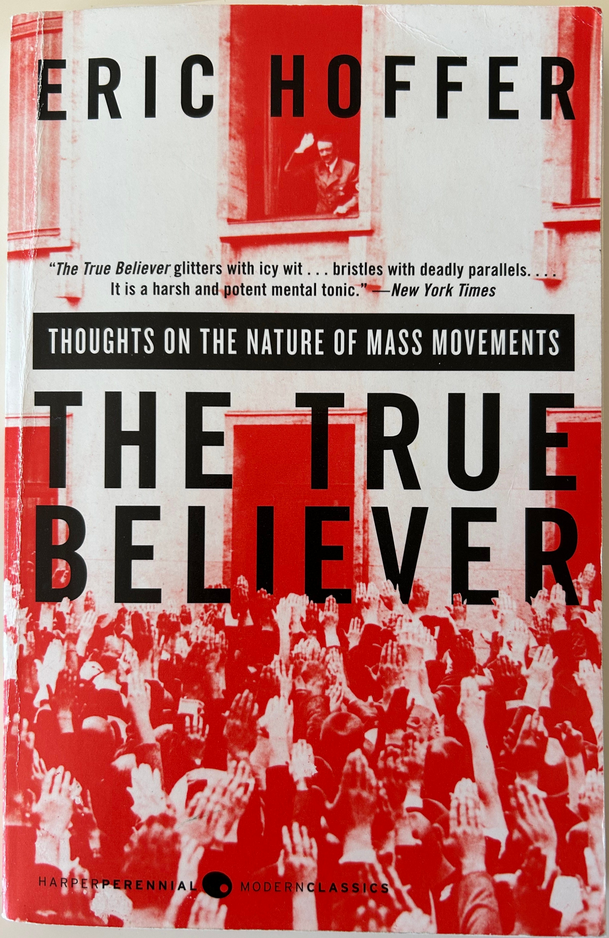
Eric Hoffer made the case that if you peel back the layers of any mass movement, you will find that frustration is their driving force.
Frustration, though, doesn’t arise solely from bleak material conditions. The dockyard philosopher argued that “Our frustration is greater when we have much and want more than when we have nothing and want some. We are less dissatisfied when we lack many things than when we seem to lack but one thing.”
He points out in the years leading up to both the French and Russian Revolutions, life had in fact been gradually improving for the masses. He concludes, “It is not actual suffering but the taste of better things which excites people to revolt” and that “The intensity of discontent seems to be in inverse proportion to the distance from the object fervently desired.”
Personally, I saw this when I first arrived at Yale. I recall being stunned at how status anxiety pervaded elite college campuses. Internally, I thought, “You’ve already made it, what are you so stressed out about?” Hoffer, though, would say these students believed they had almost made it. That is why they were so aggravated. The closer they got to realizing their ambitions, the more frustrated they became about not already achieving them.
Hoffer’s conceptions of frustration highlight how if your conditions improve, but not as much or as quickly as you’d like, you will be vulnerable to recruitment by mass movements that promise to make your dreams come true.
In Democracy in America, Alexis de Tocqueville wrote, “When inequality is the general law of society, the most blatant inequalities escape notice. When everything is virtually on a level, the slightest variations cause distress. That is why the desire for equality becomes more insatiable as equality extends to all.” For Hoffer, this insatiability cultivates frustration — a nebulous, simmering emotional state that can be harnessed by any ideology.
He describes what has now become known as the “Tocqueville effect”: A revolution is most likely to occur after an improvement in social conditions. As circumstances improve, people raise their expectations. Societal reforms raise reference points to a level that is usually not matched, eliciting rage and frustration.
August 21, 2023
Cunk on America – Historian Reacts
Vlogging Through History
Published 9 May 2023
(more…)
August 2, 2023
You say you want a revolution …
The latest book review from the Psmiths is Bernard Yack’s The Longing for Total Revolution: Philosophic Sources of Social Discontent from Rousseau to Marx and Nietzsche, by John Psmith:
This is a book by Bernard Yack. Who is Bernard Yack? Yack is fun, because for a mild-mannered liberal Canadian political theorist he’s dropped some dank truth-bombs over the years. For example, check out his short and punchy 2001 journal article “Popular Sovereignty and Nationalism” if you need a passive-aggressive gift for the democratic peace theorist in your life.1 The subject of that essay is unrelated to the subject of the book I’m reviewing, but the approach, the method, and the vibe are similar. The general Yack formula is to take some big trendy topic (like “nationalism”) and examine its deep philosophical and intellectual substructure while totally refusing to consider material conditions. He’s kind of like the anti-Marx — in Yack’s world not only do ideas have consequences, they’re about the only things that do. Even when this is unconvincing, it’s usually very interesting.
The topic of this book is radicalism in the ur-sense of “a desire to get to the root”. What Yack finds interesting about radicalism is that it’s so new. It’s a surprising fact that the entire idea of having a revolution, of burning down society and starting again with radically different institutions, was seemingly unthinkable until a certain point in history. It’s like nobody on planet Earth had the idea, and then suddenly sometime in the 17th or 18th century a switch flips and it’s all anybody is talking about. We’re used to that sort of pattern for scientific discoveries, or for very original ways of thinking about the universe, but “let’s destroy all of this and try again” isn’t an incredibly complex or sophisticated thought, so why did it take so many millennia for somebody to have it?
Well, first of all, is this claim even true? One thing you do see a lot of in premodern history is peasant rebellions, but dig a little deeper into any of them and the first thing you notice is that (sorry vulgar Marxists)2 there’s nothing especially “revolutionary” in any of these conflagrations. The most common cause of rebellion is some particular outrage, and the goal of the rebellion is generally the amelioration of that outrage, not the wholesale reordering of society as such. The next most common cause of rebellions is a bandit leader who is some variety of total psycho and gets really out of control. But again, prior to the dawn of the modern era, these psychos led movements that were remarkably undertheorized. The goal was sometimes for the psycho to become the new king, sometimes the extinguishment of all life on earth, but you hardly ever saw a manifesto demanding the end of kings as such. Again, this is weird, right? Is it really such a difficult conceptual leap to make?
Peasant rebellions are demotic movements, but modern revolutions are usually led by frustrated intellectuals and other surplus elites. When elites did get involved in pre-modern rebellions, their goals were still fairly narrow, like those of the peasants — sometimes they wanted to slightly weaken the power of the king, other times they wanted to replace the king with his cousin. But again this is just totally different in kind from the 18th century onwards, when intellectuals and nobles are spending practically all of their time sitting around in salons and cafés, debating whose plan for the total overhaul of society, morality, and economic relations is best.
The closest you get to this sort of thing is the tradition of Utopian literature, from Plato’s Republic to Thomas More, but what’s striking about this stuff is how much ironic distance it carried — nobody ever plotted terrorism to put Plato’s or More’s theories into practice. Nobody ever got really angry or excited about it. But skip forward to the radical theorizing of a Rousseau or a Marx or a Bakunin, and suddenly people are making plans to bomb schools because it might bring the Revolution five minutes closer. So what changed?
Well this is a Bernard Yack book, so the answer definitely isn’t the printing press. It also isn’t secularization, the Black Death, urbanization, the Reformation, the rise of industrial capitalism, the demographic transition, or any of the dozens of other massive material changes that various people have conjectured as the cause of radical political ferment. Instead Yack points to two abstract philosophical premises: the first is a belief in the possibility of “dehumanization”, the idea that one can be a human being and yet be living a less than human life. The second is “historicism” in the sense of a belief that different historical eras have fundamentally different modes of social interaction.
Both views had some historical precedent (for instance historicism is clearly evident in the writings of Machiavelli and Montesquieu), but it’s their combination that’s particularly explosive, and Rousseau is the first person to place the two elements together and thereby assemble a bomb. Because for Rousseau, unlike for any of the ancient or medieval philosophers, merely to be a member of the human species does not automatically mean you’re living a fully-human life. But if humanity is something you can grow into, then it’s also something that you can be prevented from growing into. Thus: “that I am not a better person becomes for Rousseau a grievance against the political order. Modern institutions have deformed me. They have made me the weak and miserable creature that I am.”
But what if the qualities of social interaction which have this dehumanizing effect are inextricably bound up with the dominant spirit of the age? In that case, it might be impossible to really live, impossible to produce happy and well-adjusted human beings, without a total overhaul of society and all of its institutions. This also clarifies how the longing for total revolution is distinct from utopianism — utopian literature is motivated by a vision of a better or more just order. Revolutionary longing springs from a hatred of existing institutions and what they’ve done to us. This is an important difference, because hate is a much more powerful motivator than hope. In fact Yack goes so far as to say (in a wonderfully dark passage) that the key action of philosophers and intellectuals upon history is the invention of new things to hate. Can you believe this guy is Canadian?
1. Of course, if my reading of MITI and the Japanese Miracle is correct, popular sovereignty may not be around for that much longer.
2. I say “vulgar” Marxists, because for the sophisticated Marxists (including Marx himself) it’s already pretty much dogma that premodern rebellions by immiserated peasants aren’t “revolutionary” in the way they care about.
July 24, 2023
Revolutionary boredom
Chris Bray rises to passionately denounce [Comrade to be named later] as a traitor to the revolution who must be purged from the movement instantly!
Well-written histories of the Great Terror or the Cultural Revolution — or of the final years of the Roman republic, say for example — have the strange effect of becoming incredibly boring. The 94th bonfire of humanity, appearing on page 678, resembles the previous 93 bonfires. The grim machine of political purges makes brutal depravity tedious. Commissar X, Commissar Y, and Commissar Z run the Committee to Kill Wrongthinkers; then, and you always see this coming, Commissar X, Commissar Y, and Commissar Z are declared to be wrongthinkers, and are tossed on their own bonfire. The managerial tier is always consumed by its own instrument. Purge culture is the center of a politics of repression, the inevitable dynamic of a system that has degenerated to the stage of an unprincipled grasping for status and position. Someone was denounced yesterday; someone is being denounced today; someone will be denounced tomorrow.
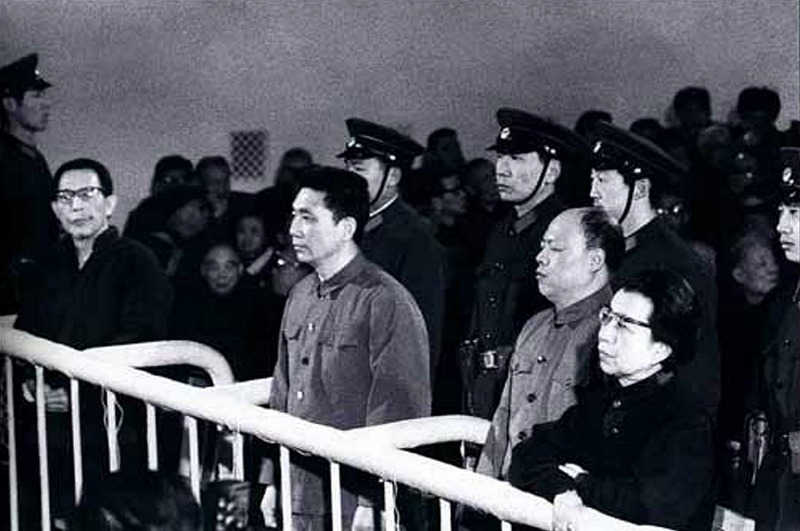
The “Gang of Four” on trial in 1981.
In two instances, now — the frenzied shark attack on Matt Taibbi and Michael Shellenberger, and the obviously insane response to RFK Jr. this week — prominent House Democrats have mimicked a cultural style that should be extremely familiar to anyone who has read some history. Debbie Wasserman Schultz is so fascinatingly horrible a figure that she echoes, a bug-eyed ranting halfwitted sociopath with a hollow core like a long historical line of hollow bug-eyed sociopaths. These are the people who are drawn to destructive political stages. Repellent and ascendant, they call to others of the type. Destroyers flock.
I assume you’ve seen some footage from yesterday’s hearing, which was widely covered and widely discussed, so I’m not going to rehash that nasty piece of Theatre of Cruelty. If you missed it, just know that Robert F. Kennedy, Jr. is OBSOLETE OBSOLETE OBSOLETE.
But I want to point at the water underneath the waves we can see in national media, because the presumptions of the Central Commissariat go all the way down.
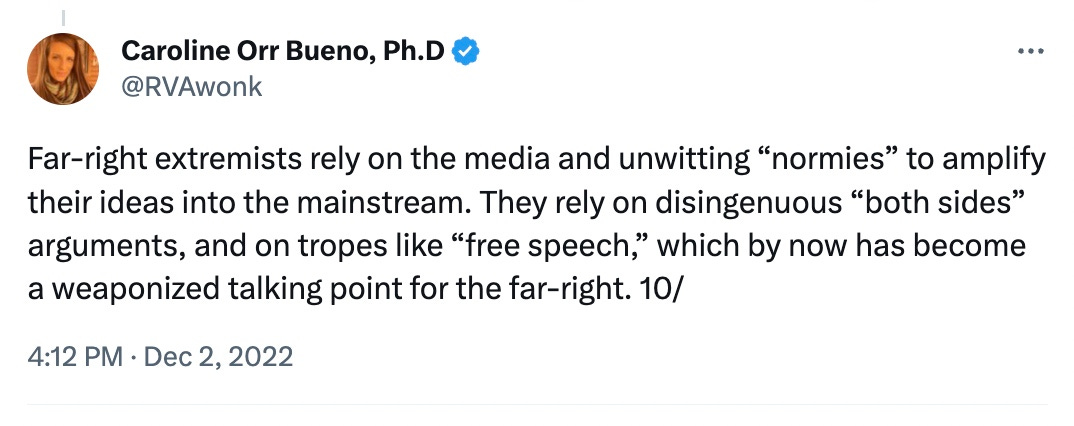
The week that led to the ritual denunciation of RFK Jr. started with a fascinatingly naked declaration in a Pasadena courthouse. Two California physicians, Mark McDonald and Jeff Barke, are suing the California Medical Board to block enforcement of AB 2098, the new law that threatens the medical license of any doctor in the state who expresses consensus-deviating crimethink about the darkly sacred Covid-19, a High Enemy of the Glorious Motherland. McDonald and Barke are relying on the First Amendment and its protection of the so-called “free speech” trope, a well-known tool of dangerous far-right extremists.
Courts have split on AB 2098, and so far some have declined the premise that this regulation of physicians’ speech is unconstitutional, so the case is now before the 9th Circuit on appeal. A three-judge panel heard oral argument in the case this week, in an architecturally pleasant forum that used to be a luxury hotel. And this is where Deputy Attorney General Kristin Liska said this to the court: “In order to effectively regulate the practice of medicine, the state needs to be able to reach the aspects of speech that are used to care for patients.”
If you take a professional license from the state, the regulatory power of the state reaches your speech acts; you can lose your license not only for harming patients or providing poor quality care, but for saying things that the state disagrees with. Your conversations belong to the government.

July 17, 2023
Uncancelled History with Douglas Murray | EP. 06 George Washington
Nebulous Media
Published 27 Dec 2022Allen Guelzo joins Douglas Murray on this episode to discuss George Washington. From his early childhood to his years as president, the two analyze the founding father’s legacy. Should the first president stay cancelled?
(more…)
July 4, 2023
From the American Revolution: Short Land Pattern Brown Bess
Forgotten Weapons
Published 22 Mar 2023The standard weapon of the British Army in the American War of Independence was the “Brown Bess”, and today we are looking at a 1769 Short Land Pattern example of the Brown Bess. This was a smoothbore .75 caliber, 10.2 pound flintlock with a whopping 42 inch barrel (the Long Land Pattern it superseded had a 46” barrel). Adopted in 1769, it would serve as the British standard infantry arm until 1797.
This particular example was issued to the 53rd Infantry Regiment, otherwise known as the King’s Shropshire Light Infantry. This regiment arrived in Quebec City in May 1776 and participated in the fighting at Ticonderoga and Saratoga, where several of its companies were captured and interned until the end of the war.
(more…)


