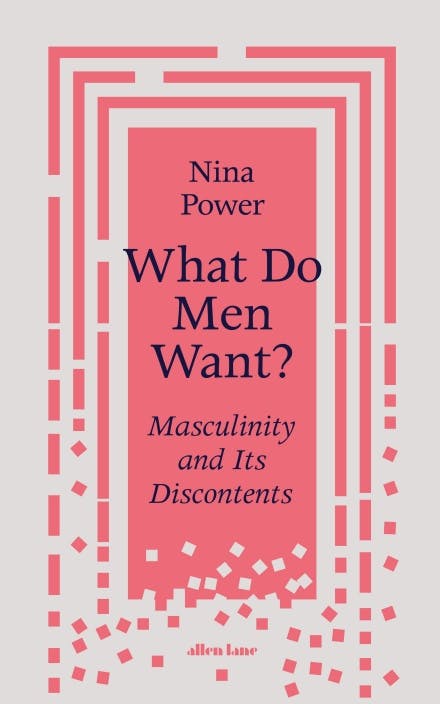
I’m sitting on a plane and I’m feeling increasingly excited. I’m flushed. My heart rate is up, and I can’t seem to find a comfortable way to sit. My agitation isn’t caused by any nervousness about flying, nor by any fears of contracting COVID-19 during the flight. My disquiet has been triggered by the book I’m reading. The sensations it arouses almost overwhelm me. I find I have to pause every few paragraphs, close the slim volume, and rest it on my lap in order to regain some sense of personal composure. Fiction usually transports my imagination away from myself, but this book is accomplishing the opposite: I feel increasingly aware of my body as I read it, as though being immersed in fiction has drawn me into a moment of privacy with myself. It feels somehow unseemly for the public world of the airplane to intrude on my private sensations. I have to put the book down frequently in order to remind myself that it is no act of indecency for the happy family sitting down the aisle from me to be talking casually, but rather that it is my own sense of secrecy that must be reconciled to the ordinary world around me.
I am reading Story of O, a novel written in 1954 that recounts the titular character’s journey into sexual bondage, violent penetrations, beatings, whippings, burnings, chains, gags, and dungeons. Readers only familiar with the pedestrian 1975 adaption are advised not to be put off — director Just Jaeckin’s film benefits from the lovely Corinne Cléry’s beguiling performance in the title role, but his soft-focus softcore aesthetic (gauzy white linen dresses and a smooth classical guitar soundtrack) miss the tenderness, the elegance, and the literary grace of the source. Graham Greene described Story of O as a “rare thing, a pornographic book well written and without a trace of obscenity”; Brian Aldiss remarked that O makes “pornography (if that is what it is) an art”; even JK Rowling has offered praise for the book, observing that, “If you’ve read Story of O you’ve kind of read the ultimate.” But it is JG Ballard’s description of the novel as “a deeply moral homily … touched by the magic of love” that resonates most powerfully with me. O is a radical instruction in morals (the book has a clear sense of feminine virtue, for one thing), and yet this sexual morality is unlike any I can find in our contemporary expression of sexual ethics, where self-expression is valued more than self-giving.
O is the story of a woman objectified and humiliated, of a woman who submits to being violated by the countless tongues and phalluses and fingers which enter her. The novel is more sensual than suspenseful — although there is a clear narrative, it is not a story driven by plot, but rather by a series of erotic episodes (Geraldine Bedell writing for the Observer described them as written with “a hallucinatory, erotic intensity”). It is a psychologically as well as sexually penetrative story of surrender, of being mastered and of becoming enslaved, especially its first chapter which describes the elegant sexual tortures of the Chateau at Roissy, a kind of playboy mansion with fewer grottos and more dungeons.
It is here that, at the request of her lover René, O acquiesces in her complete submission. The cast of characters is sparse: O and René; Jacqueline, a young model whom O seduces, and Jacqueline’s 16-year-old sister, Natalie, a virgin eager to be initiated into the sexual rites of Roissy; Anne-Marie, an older and more ruthless mistress than are the many men at the Chateau; sundry blondes, brunettes, and redheads arranged alluringly throughout the text; and finally O’s ultimate lover, the sophisticated Sir Stephen, a kind of father-figure to René who ends up laying claim to O, flogging her, shackling her labia with an iron ring, and branding her with his initials as his slave, “a condition,” the narrator tells us, “of which O herself was proud.” As I read of the many exquisite ways O gives herself for men’s uses, I begin to wonder if the book was presenting me not with a picture of masculine sexual fantasies, but with a vision of my own.
The novel was written by the mysterious Pauline Réage, a pseudonym. In what is arguably one of the most successful literary secrets, Réage’s identity was kept hidden for decades. It wasn’t until 40 years after the novel’s publication that the then 86-year-old Dominique Aury, a respected editor and French intellectual, revealed that she was the author. It seems fitting that in a novel of sexual submission, Aury — Dominique, dominance, dominatrix — maintained such strict control over her own identity. Even Dominique Aury was not her “real” name: she was born Anne Desclos, but legally changed it in 1940. Aury’s nested names and identities are like a meta-fictitious exercise in un-making and making the self, for questions of self-identity and self-integrity lie at the heart of her novel.
Marilyn Simon, “My Own Private Chateau — Pauline Réage’s Story of O Revisited”, Quillete, 2020-10-18.
February 14, 2021
QotD: Pauline Réage’s Story of O
February 12, 2021
A significant percentage of psychiatric problems have a genetic component
This is not an area I’ve heard much discussion about, other than on Scott Alexander‘s blog(s):

“Codon Wheel for translating genetic code from the Wellcome Trust Sanger Institute” by dullhunk is licensed under CC BY 2.0
Most psychiatric disorders are at least partly genetic. Some, like schizophrenia and ADHD, are very genetic, probably 80% plus. This is strange, because having psychiatric disorders seems bad, so you would expect evolution to have eliminated those genes. Researchers looking into this question argue between two hypotheses.
First, a failure. Evolution is imperfect, so some bad genes manage to slip through. This sounds dismissive, but it’s definitely true to some degree. Thousands of different genes contribute to risk for conditions like ADHD and schizophrenia, with each adding only a tiny amount of risk. When a gene is only very slightly bad, it takes evolution millennia to get rid of it, and during those millennia people are getting new very-slightly-bad mutations, so it all balances out at a certain level of bad genes per generation. Those bad genes are sufficient to explain the existing amount of ADHD and schizophrenia; they’re just evolution not working as well as we’d hope.
Second, a tradeoff between two goods. The genes for psychiatric disorders are good in some way. Maybe having some schizophrenia genes (maybe not enough to give you schizophrenia) makes you more creative and raises your inclusive fitness. This keeps schizophrenia risk genes in the population, and sometimes two people with very high level of these genes will mate and their child will have schizophrenia. “Higher creativity” vs. “lower schizophrenia risk” is a tradeoff, and different people are at different points on the tradeoff, and some people will be so far to one end that they will get schizophrenia.
Recent research has pretty heavily favored the failure hypothesis. If you have enough people’s genomes, you can use some complicated math to infer how evolution is affecting different genes. And on most of the schizophrenia risk genes we know about, evolution has been gradually eliminating them in a way that looks like they’re on net harmful — not keeping them around in a way that looks like they have counterbalancing advantages. In the modern day, people with genes for psychiatric disorders tend to have fewer, rather than more children than people without those genes – except in the case of ADHD, which I’m tempted to cynically attribute to them being less likely to remember to use contraception.
Also, a lot of the theories about how psychiatric disorder genes are good suggest that different disorders are good in opposite ways. For example, schizophrenia genes are supposed to give you more artistic creativity, whereas autism genes are supposed to make you more cool-headed and rational. This makes a kind of intuitive sense looking at the symptoms of the disorders. But it turns out that many, many of the genes that cause autism also cause schizophrenia, and vice versa. They seem to be general genes for having mental disorders, with a wide variety of negative effects — which seems like a better match for the first theory where they’re just plain bad news and evolution hasn’t gotten around to eliminating them yet.
February 1, 2021
QotD: “Useless things … do not further The Revolution”
“Fat acceptance,” slutwalks, and all the rest of it follow naturally from Bolshie beliefs. If you accept — as a good little Dialectical Materialist must — that there’s nothing to human happiness but bread, shoes, and shit, ugliness — physical, moral, mental — becomes a good in itself. How could it be otherwise? Only truly useless things can be beautiful, and useless things, by definition, do not further The Revolution.
Too bad for the Bolshies that it’s in our nature to confuse the messenger with the message. I like to think of myself as an open-minded, tolerant man who takes things as they come, but holy jeeebus, I don’t care what Emma Goldman’s deal is — if she’s for it, I’m against it. I need bleach for my eyes.
We need to use that. It’s no coincidence that Ashley Judd and now Taylor Swift are spouting off about Progtard politics — they used to be cute; now they’re not. See what Social Justice does to you, ladies?
Severian, “The Face You Deserve”, Rotten Chestnuts, 2018-10-11.
January 20, 2021
QotD: Helping the homeless
I understand that the general media explanation of homelessness is to blame it on the cold heart of whoever was the last Republican President in office, but it is hard for me to correlate national policy with trends in homelessness. I am maybe 70% convinced that the closing of mental health facilities in the 70’s and 80’s across most cities and states was the main cause, a hypothesis born out by the high rates of mental illness recorded in most homeless populations. This is why I think so much government spending for the homeless is wasted — it all focuses on creating homes, I guess just because of our word choice of “homeless”. If we called them the mentally ill, or perhaps “helpless” rather than “homeless” we might investigate other approaches.
I see a number of sources nowadays trying to pin these closures entirely on tight-fisted Republican governors, and I am sure this is partly true. But this misses an important element — that civil libertarians had real issues with both the conduct of these institutions (e.g. One Flew Over The Cuckoo’s Nest) and the fairness of the forced-institutionalization process. Also tied up in all this were Cold War stories of Soviet Russia using institutionalization in mental hospitals as a way to dispose of dissidents. After all, it is a short step from the totalitarian view of ideology (ie that everyone must believe, not just comply) to declaring that any deviation from the official orthodoxy constitutes mental illness.
Warren Meyer, “Why I Go Back and Forth On Issues of Forced Psychiatric Institutionalization”, Coyote Blog, 2018-09-20.
January 18, 2021
QotD: Francis Bacon on what we now call “Confirmation Bias”
Man is a rational animal, as Aristotle put it. Not that he is always rational, but that he is capable of reason. Reason, trained, leads to happiness. Orwell wasn’t the first person to observe that this didn’t always work in practice.
“The human understanding when it has once adopted an opinion (either as being the received opinion or as being agreeable to itself) draws all things else to support and agree with it” wrote Francis Bacon in his 1620 Novum Organum, one of the major early works of the European Enlightenment and Scientific Revolution. Today, we call this confirmation bias. We don’t form opinions based on the evidence — we often shape the evidence to suit our opinions. We attribute importance to facts which back our preferred theory and dismiss as unimportant those which do not. “It is the peculiar and perpetual error of the human intellect to be more moved and excited by affirmatives than by negatives; whereas it ought properly to hold itself indifferently disposed towards both alike,” Bacon added. We continue to cling to ideas which have been discredited, a phenomenon called belief perseverance. Or worse, our faith in discredited ideas becomes even stronger when we are presented with contrary evidence — the backfire effect. Or we focus on successes and ignore failures, a phenomenon called survivorship bias. Bacon reminds us of the story of Diagoras of Melos, who was shown a picture of those who had escaped shipwreck after making vows to the gods hanging in a temple. Diagoras asked where he could find a picture of those who made vows to the gods but drowned anyway.
Bacon wrote that humans are afflicted with “idols of the mind,” and he identified four. The first are idols of the tribe, flaws in thinking common to all people that come from human nature itself. Second are idols of the cave, or den. All of us, Bacon argued, have a cave in our mind where the light of reason is dimmed, and this cave varies from person to person depending on his or her character, experiences, and environment. Third are idols of the marketplace, associated with the exchange of ideas. As language can never be perfectly precise, it’s possible for falsehoods to develop and spread as a concept as explained by one person to another. Finally come idols of the theatre, ideas which have been presented to us and taken root so deeply and firmly they’ve become hard to remove. In Bacon’s time, this was the philosophy of Aristotle, which had become so fundamental to Western thought that even parts of it which could easily be disproven remained unchallenged for centuries. To manage the effect of the idols, Bacon proposed “radical induction” — the forerunner to the modern scientific method.
Adam Wakeling, “George Orwell and the Struggle against Inevitable Bias”, Quillette, 2020-08-08.
January 12, 2021
QotD: The use and abuse of stigma
Let us first take stigma, something which in Dr. Volkow’s social philosophy is entirely harmful and should be abolished. There is no doubt that stigma can be cruel, unjust, and unfeeling. One of the most obvious examples of this was the stigma that attached to illegitimate children, as if they were responsible for the fact of their own illegitimacy.
But stigma, and hence the fear of stigma, can be beneficial in a social creature such as Man. I want the good opinion of my neighbours, I do not want them to think I am rude or dishonest. Fearing the stigma of being thought so, I try harder to be polite and honest.
Of course, wanting the good opinion of others may, in certain situations, have bad effects. Wanting the good opinion of my superior in the Nazi Party would be very bad. But that does not mean that desiring the good opinion of others is always intrinsically bad. In the same way, fear of stigmatization is not always bad (and there can be no fear of stigma without the existence of the thing itself). For example, it might be that people are discouraged from taking drugs, drinking too much, or stealing for fear of being stigmatized.
Theodore Dalrymple, “Stigma and Sympathy”, The Iconoclast, 2020-09-23.
January 2, 2021
QotD: The Opposite Rule of Progressives
At various times, I’ve rolled out my rule about how to interpret statements by liberals regarding non-liberals […] it goes like this. Take whatever they say, assume the opposite and you will get close to the truth. When liberals said the Tea Party was “AstroTurf” and liberal groups were genuine grassroots, you could flip it around to mean their gang was a rent-a-mob and the weirdos in the 17th century outfits were just regular folks pissed off and making some noise.
That was in fact the case. The Left has well funded “volunteer” operations to bus in protesters when needed. Often they are paid by their union, like we saw in Wisconsin with the teacher unions. It is a form of projection, for the most part, but in politics it is a way to shift the focus away from whatever crooked stuff they’re doing. One of the oldest tricks in politics is to falsely accuse your opponent of something, so the story is about the other guy denying it, not about whatever you are doing. […] For as long as I’ve been alive, there have been theories about why there is a Left and Right in American politics. All of these theories claim the mantel of science and all of them come from the Left. The reason for this is, at some level, the Left knows they are not working from facts and reason, but rather a set of beliefs. Rather than confront that, they accuse everyone that opposes them of holding irrational beliefs and acting from emotion.
The formula goes like this. They assign to themselves qualities they wish they possessed, but don’t. “Open minded” always makes the list along with “smart” and “unconventional.” Who would not want to be a smart, open minded guy, who is a little off-beat? Gosh that sounds just like the protagonist of every cool TV show and movie! Then they usually assign some bad qualities to the mythical right-winger or conservative. Then they produce a “study” that confirms all of this as science!
I’ll note that liberals have a long list of words for the people on the other side of the hive walls. You never hear liberals talk about the differences between libertarians and paleo-cons or neocons and paleos. To the liberal, they are part of the undifferentiated other on the other side of the wall. Often they avoid this and rely on their cartoon version of the conservative, which is usually a blend of the 1950’s sitcom dad and a prison guard. It’s Ward Cleaver with a closet full of Nazi uniforms.
The Z Man, “The Opposite Rule of Liberalism”, The Z Blog, 2013-11-15.
December 20, 2020
QotD: Online literacy
In the various fora and social media circles in which I run, there’s a self-selecting bias toward literacy. Thoughts tend to be expressed in complete sentences with reasonably correct grammar and punctuation.
But sometimes I’ll find myself looking at the posts of a Facebook friend-of-a-friend-of-a-friend and I see these random aggregations of misspelled words. They have the occasional capital letter or punctuation mark thrown in, as though the writer knew they were supposed to include those, but not how or why.
And I find myself wondering “What’s it like inside their head?” I mean, you’d probably be going through life slightly angry, thinking everybody was secretly laughing at you behind their hands, that there was some arcane code of keyboard use you were violating. The whole internet would be like one of those fancy restaurants with too much silverware and you never know which implement to use to eat which dish.
Tamara Keel, “I’ve always wondered…”, view from the porch, 2018-08-24.
December 19, 2020
QotD: Ego and the A-listers
It’s not that people at the top of their fields are more virtuous. Well … actually I think people at the top of their fields do tend to be more virtuous, for the same reason they tend to be be more intelligent, less neurotic, longer-lived, better-looking, and physically healthier than the B-listers and below. Human capability does not come in [neatly] divisible chunks; almost every individual way that humans can excel is tangled up with other ways at a purely physiological level, with immune-system capability lurking behind a surprisingly large chunk of the surface measures. But I don’t think the mean difference in “virtue”, however you think that can actually be defined, explains what I’m pointing at.
No. It’s more that ego games have a diminishing return. The farther you are up the ability and achievement bell curve, the less psychological gain you get from asserting or demonstrating your superiority over the merely average, and the more prone you are to welcome discovering new peers because there are so damn few of them that it gets lonely. There comes a point past which winning more ego contests becomes so pointless that even the most ambitious, suspicious, external-validation-fixated strivers tend to notice that it’s no fun any more and stop.
[…]
I think there are a couple of different reasons people tend to falsely attribute pathological, oversensitive egos to A-listers. Each reason is in its own way worth taking a look at.
The first and most obvious reason is projection. “Wow, if I were as talented as Terry Pratchett, I know I’d have a huge ego about it, so I guess he must.” Heh. Trust me on this; he doesn’t. This kind of thinking reveals a a lot about somebody’s ego and insecurity, alright, but not Terry’s.
There’s a flip side to projection that I think of as the “Asimov game”. I met Isaac Asimov just a few months before he died. Isaac had long been notorious for broadly egotistical behavior and a kind of cheerful bombast that got up a lot of peoples’ noses. But if you ever met him, and you were at all perceptive, you might see that it was all a sort of joke. Isaac was laughing inside at everyone who took his “egotism” seriously – and, at the same time, watching hungrily for people who could see through the self-parody, because they might – might – actually be among the vanishingly tiny minority that constituted his actual peers. The Asimov game is a constant temptation to extroverted A-listers; I’ve been known to fall into it myself. It’s not really anybody’s fault that a lot of people are fooled by it.
Another confusing fact is that though A-listers may not be about ego or status competition, they will often play such games ruthlessly and effectively when that gets them something they actually want. The something might be more money from a gig, or a night in the hay with an attractive wench, or whatever; the point is, if you catch an A-lister in that mode, you might well mistake for egotism some kinds of display behavior that actually serve much more immediate and instrumental purposes. Your typical A-lister in that situation (and this includes me, now) is blithely unconcerned that a bystander might think he’s egotistical; the money or the wench or the whatever is the goal, not the approval or disapproval of bystanders.
Finally, a lot of people confuse arrogance with ego. A-listers (and I am including myself, again, this time) are, as a rule, colossally arrogant. That is, they have utter confidence in their ability to meet challenges that would humble or break most people. Do not be fooled by the self-deprecating manner that many A-listers cultivate; it is a mask adopted for social purposes, mostly to avoid freaking out the normal monkeys. But this arrogance is not the same as egotism; in fact, in many ways it is the opposite. It is possible to be arrogant about one’s abilities compared to the statistically average human being and the range of challenges one is likely to encounter, but deeply and genuinely humble when dealing with peers or contemplating the vastness of one’s own ignorance and incapability relative to what one could imagine being. In fact, this combination of attitudes is completely typical of the A-listers I have known.
Eric S. Raymond, “Ego is for little people”, Armed and Dangerous, 2009-11-09.
December 18, 2020
QotD: Hunter S. Thompson’s view of humanity
One interesting thing about Thompson […] is that much of his work could almost be assigned to the field of religious literature. This is not just because he suffered occasional demonic hallucinations under the influence of brown acid and ibogaine. Setting the drugs aside (“Not that which goeth into the mouth defileth a man; but that which cometh out of the mouth, this defileth a man”), there is a certain ascetic, unworldly quality to his work. He seems to have had a quasi-Augustinian horror of the greasy, hairy human body, and a strong distaste for squirming, brawling, lumpy, dumb man-apes in all their mass manifestations. His career-making Scanlan’s piece, “The Kentucky Derby Is Decadent and Depraved”, is really an indictment of humanity as decadent and depraved — and that remains true insofar as the subject of the piece is Thompson himself and his Hobbesian preoccupations.
Colby Cosh, “Q: Where’s Cosh?”, ColbyCosh.com, 2005-02-21
December 13, 2020
QotD: The statistical “Rule of Silicone Boobs”
If it’s sexy, it’s probably fake.
“Sexy” means “likely to get published in the New York Times and/or get the researcher on a TEDx stage”. Actual sexiness research is not “sexy” because it keeps running into inconvenient results like that rich and high-status men in their forties and skinny women in their early twenties tend to find each other very sexy. The only way to make a result like that “sexy” is to blame it on the patriarchy, and most psychologist aren’t that far gone (yet).
[…]
Anything counterintuitive is also sexy, and (according to Rule 2) less likely to be true. So is anything novel that isn’t based on solid existing research. After all, the Times is the newspaper business, not in the truthspaper one.
Finding robust results is very hard, but getting sexy results published is very easy. Thus, sexy results generally lack robustness. I personally find a certain robustness quite sexy, but that attitude seems to have gone out of fashion since the Renaissance.
Jacob Falkovich, “The Scent of Bad Psychology”, Put a Number On It!, 2018-09-07.
December 3, 2020
Modern narcissism
In Quillette, Marilyn Simon discusses a song her daughters learned in school and what it reveals about modern thought:
There is a pop song by Canadian artist Alessia Cara that my daughters have learned to sing in their school choir. The song is “Scars to Your Beautiful.” It is a catchy, simple song. Many readers probably know it. The message it promotes is, by all accounts, a positive one, which is presumably why it’s being taught to children at school. The chorus goes like this:
There’s a hope that’s waiting for you in the dark,
You should know you’re beautiful just the way you are,
And you don’t have to change a thing,
The world could change its heart,
No scars to your beautiful,
We’re stars and we’re beautiful.In spite of my girls’ sweet singing voices, and the intention of the lyrics, I think it is one of the most disturbing songs my kids have ever learned in school (right up there with Lennon’s insipid and juvenile “Imagine”). It is a narcissistic anthem painfully unaware of its hypocrisy. It reinforces the notion that beauty is rightfully a girl’s desirable goal, and that her aspiration to be “a star” is not only attainable — without any corresponding effort or talent on her part, naturally — but also the world’s ethical responsibility to ensure. In other words, there are no standards, ideals, nor any objectivity; instead the world needs to change its heart in order to conform to an individual’s subjective self-desiring.
Narcissism isn’t merely an issue of having an inflated ego. It is the condition of being enamored with one’s idealized projection of oneself to the exclusion of reality and of one’s real self. This occurs not because one is vain, but because one is too fragile to admit failings or fault. It has nothing to do with self-love, but rather with being locked in a solipsistic gaze with a fantasy of one’s self. Contemporary culture has taken classic narcissism and turned it into a new moralism. What we deem goodness now is that everyone else affirms the delusions of one’s wishful thinking as objective truth. Cara’s song, for instance, first reinforces the fantasy that each one of us is equally beautiful, and then makes the claim that the world must “change its heart” and endorse the image of oneself that is, in the first place, a self-interested desire. In other words, the mythology of “Scars to Your Beautiful,” and of our self-positive, identity-affirming culture as a whole, would suggest that not only is Narcissus correct in falling in love with a projection, an unreal and unreachable image of himself in a pond — something the Greeks thought was quite bad enough — but also that the rest of world must affirm his reflection as the real thing and celebrate his dead-end obsession with it.
So, positive reinforcement of self delusion is now a social good. The individual and society reject what is objectively real and instead embrace infantile narcissism, where the self’s fantasy of its own perfection is reaffirmed by the uncritical and unconditional love of a universal parent. Cara’s song intends to be encouraging, and in some ways it is (I’m not entirely deaf to my pre-teens’ rebuttals of “Mommm! You’re so depressing. It’s just a song to make us feel good!” and I will assent to the wisdom of my 12-year-old that healthy self-esteem is a good thing). But at its core, the song is self-delusion dressed in the garb of pop psychology. This is an accurate picture of our contemporary moral code: Everyone’s ideal projection of her or himself must be coddled and adored by a soft and nurturing world. Only a bad person would suggest that not everyone is equally beautiful, that not everyone is the “star” she imagines herself to be. (And only a monster would suggest that some people don’t even have inner beauty, either.)
“Competitive individualism,” writes Christopher Lasch, has channeled “the pursuit of happiness to the dead end of a narcissistic preoccupation with the self. Strategies of narcissistic survival now present themselves as emancipation from the repressive conditions of the past, thus giving rise to a ‘cultural revolution’ that reproduces the worst features of the collapsing civilization it claims to criticize.” Lasch’s words, written in 1979, predict so much of our contemporary upheaval — in our efforts to overcome racism, we have fallen into the trap of making (almost) everything about race. In our efforts to end sexual harassment, we have traded natural, often playful, interactions between women and men for institutional policies, while simultaneously treating women as somehow less than fully human, incapable of deceit and of misreading situations, and incapable of deftly handling sexual innuendo and sexual tension. The same thing has occurred with our culture’s criticism of our esteem for idealized physical beauty, particularly female beauty, while we make the contradictory insistence that we are all ideally beautiful, and should be admired accordingly. Beauty, we say, shouldn’t be venerated. That’s shallow. But we should also all believe that “we’re stars, and we’re beautiful.” That’s virtue.
November 27, 2020
QotD: Popular music and survivorship bias
What brought this to mind was a discussion on Facebook, prompted by my quipping about music:
Man, I just {LISTENED_TO_ALBUM/WENT_TO_CONCERT} by {$GROUP_FROM_MY_TEENS/EARLY_TWENTIES} and they still kicked ass just like they did when they were new.
{$GROUP_LIKED_BY_KIDS_WHO_SHOULD_GET_OFF_MY_LAWN} just won’t have that same kind of staying power.”
Part of that phenomenon is that we’re less likely to form strong emotional connections to specific pieces of music the way we were when we were younger, and part of it is that the music that gets remembered from the good ol’ days is just the good stuff. The year 1968, for instance, had huge chart hits from The Beatles and The Rolling Stones, but also from 1910 Fruitgum Company and Tiny Tim.
The airwaves had plenty of crap in my teens and early twenties, but I prefer to forget that. Say what you will about the Kids These Days, but they aren’t listening to Milli Vanilli … of course, as it turned out, neither were kids back then.
Survivorship Bias is baked right into a lot of hobbies that interface with older things. “Man, they really knew how to build [cameras/pocket knives/watches/revolvers] in the old days!” is skewed by the fact that only the well-built stuff has survived. The handgun counter at the hardware store in a hypothetical Old West town had Colts and Smith & Wessons and Remingtons, and plenty of cheaply-made Victorian equivalents of Hi Points and Jennings, too.
Tamara Keel, “Survivorship Bias”, View From The Porch, 2020-08-24.
November 23, 2020
QotD: The social poison of hypersensitivity
There is a hypersensitivity at work here. A heightened and overactive threat-detection mechanism, perhaps. Whatever the mechanics of the thing, it is understandable. Jews did indeed suffer mightily in history, and are watchful for a future pogrom. Blacks did indeed suffer slavery and segregation.
And yet, this hypersensitivity is absolute and complete social poison.
Read that again, please. This is a poison pill. When you read Drew’s piece, you will notice how everything is colored through the lens of racism. He literally cannot see anything without suspecting secret racism behind it. And, furthermore, I have no doubt his friends are fully cognizant of this. They, not wishing to anger him or appear racist themselves (who does?), almost assuredly feel a constant social pressure to micromanage their words, gestures, and behavior around their friend. This, in turn, makes interacting with him less pleasant. This becomes self-reinforcing. Drew detects his friends act different about him, which fuels an assumption that the difference is due to racism, which in turn is detected by the friends, who now act even more different in an effort to avoid this very thing.
Everybody gets caught in a spiral of stupidity that no one can escape from.
All until somebody, in the heat of the moment, not thinking, breaks out a slur. Whether driven by bad luck, too much to drink, or some other mechanism, the micromanagement of offense is broken. And not even knowing how to handle this, the relationship of the man and his friends entirely breaks down, requiring him to write a letter to his friend, and considering abandoning the friendship altogether.
See how this works? Drew, like many American blacks, has a wall between him and the rest of us. Piercing that wall takes extra effort. He may even be entirely justified in how he arrived at the notion that the wall was necessary, just as a Jewish person is quite justified in worrying about pogroms and other such things, given the course of history.
However justified, though, the hypersensitivity works against healing and normalization of relations. It poisons relationships.
Thales, “Hypersensitivity and Race”, Declination, 2018-08-08.
November 9, 2020
QotD: The Children of Men becomes disturbingly real in Japan
To western eyes, contemporary Japan has a kind of earnest childlike wackiness, all karaoke machines and manga cartoons and nuttily sadistic game shows. But, to us demography bores, it’s a sad place that seems to be turning into a theme park of P.D. James’ great dystopian novel The Children Of Men. Baroness James’ tale is set in Britain in the near future, in a world that is infertile: The last newborn babe emerged from the womb in 1995, and since then nothing. It was an unusual subject for the queen of the police procedural, and, indeed, she is the first baroness to write a book about barrenness. The Hollywood director Alfonso Cuarón took the broad theme and made a rather ordinary little film out of it. But the Japanese seem determined to live up to the book’s every telling detail.
In Lady James’ speculative fiction, pets are doted on as child-substitutes, and churches hold christening ceremonies for cats. In contemporary Japanese reality, Tokyo has some 40 “cat cafés” where lonely solitary citizens can while away an afternoon by renting a feline to touch and pet for a couple of companiable hours.
In Lady James’ speculative fiction, all the unneeded toys are burned, except for the dolls, which childless women seize on as the nearest thing to a baby and wheel through the streets. In contemporary Japanese reality, toy makers, their children’s market dwindling, have instead developed dolls for seniors to be the grandchildren they’ll never have: You can dress them up, and put them in a baby carriage, and the computer chip in the back has several dozen phrases of the kind a real grandchild might use to enable them to engage in rudimentary social pleasantries.
P.D. James’ most audacious fancy is that in a barren land sex itself becomes a bit of a chore. The authorities frantically sponsor state porn emporia promoting ever more recherché forms of erotic activity in an effort to reverse the populace’s flagging sexual desire just in case man’s seed should recover its potency. Alas, to no avail. As Lady James writes, “Women complain increasingly of what they describe as painful orgasms: the spasm achieved but not the pleasure. Pages are devoted to this common phenomenon in the women’s magazines.”
As I said, a bold conceit, at least to those who believe that shorn of all those boring procreation hang-ups we can finally be free to indulge our sexual appetites to the full. But it seems the Japanese have embraced the no-sex-please-we’re-dystopian-Brits plot angle, too. In October, Abigail Haworth of The Observer in London filed a story headlined “Why Have Young People in Japan Stopped Having Sex?” Not all young people but a whopping percentage: A survey by the Japan Family Planning Association reported that over a quarter of men aged 16–24 “were not interested in or despised sexual contact.” For women, it was 45 per cent.
Mark Steyn, The [Un]documented Mark Steyn, 2014.