
De Gaulle was as much a Victorian as Churchill, but he lasted much longer, striding into the modern era not just as an object of reverence but as an active political force. His childhood in France’s austere northern regions was soaked in patriotism and religion, administered and absorbed in strong doses which would now be regarded as dangerous. In those years of toy soldiers and strict mealtimes he learned, among other things, to dislike, mistrust, and resent the ancient English foe, so much that he would never fully shake off these feelings. His was the France wounded and dismembered by the debacle of the 1870 Franco-Prussian war, appalled by the rising of the Paris Commune, shaken and divided by the wrongful humiliation, prosecution, and cruel imprisonment of Captain Dreyfus. The shadow of Germany was unavoidable. In Paris, the statue on the Place de la Concorde that represented the city of Strasbourg was veiled in black, in mourning at its seizure by the German Empire. Professor Jackson tries hard to acquit de Gaulle of any allegiance, then or later, to the anti-Dreyfus faction. There is no doubt that de Gaulle in his later life was far too intelligent to fall for the crude anti-Semitism that infects so much French conservatism and was especially strong in de Gaulle’s youth. Still, it is hard to accept that he was never touched by it, and in moments of strain he would make remarks or use derogatory words that no person should make or use.
Peter Hitchens, “A Certain Idea of France”, First Things, 2019-04.
May 7, 2022
QotD: De Gaulle’s France
April 24, 2022
“This is the status of mental illness in youth culture today, where […] they would like the laurel of victimhood without the actuality of being victimized”
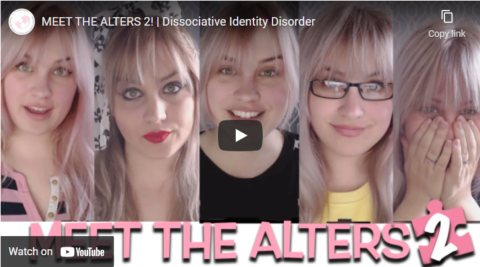
Freddie deBoer has become convinced that there’s no such thing as “Multiple Personality Disorder”, despite the vastly increased numbers of young people with social media accounts who have built their online personas around their MPD or dissociative identity disorder (DID) issues:
The technical name is dissociative identity disorder, but it’s more commonly referred to as multiple personality disorder. It’s been in a thousand cheesy cop shows and legal dramas, too many novels written in MFA programs, and untold freshman Into to Psychology textbooks. M. Night Shyamalan’s films Split and Glass are typical of pop culture portrayals of the disorder as a lurid and impossibly dramatic disorder, with clear and distinct switches between entirely separate personalities that occur at the most narratively convenient times. And in recent years there’s been an explosion of interest and claims of diagnosis of the disorder, coincident with the rise of Tumblr and TikTok, where there are thriving communities of adolescents who claim to have dozens of “alters” and who refer to themselves as “systems”, along with a whole boutique identity vocabulary that they’ve developed. The number of views of videos tagged with #DID on TikTok is in the billions.
And yet.
And yet dissociative identity disorder is probably not even real. Its presence in the DSM has proven to be persistently and deeply controversial. Diagnostic criteria and standards are perceived by many to be highly impressionistic and unacceptably subject to the biases of the evaluator. The disorder reflects a cinematic and exaggerated vision of what mental illness looks like, which may make it more attractive to people looking for a diagnosis. DID is often presented as a kind of get-of-accountability-free card, as someone who claims to have it can always say that past bad behavior was caused by another personality and is thus not their responsibility. Many high-profile cases have been revealed to be frauds or, at least, the product of a therapist or doctor forcing patients to think they have it. The most famous DID patient, Chris Costner Sizemore of The Three Faces of Eve, claimed that her alters were not the product of childhood trauma but that she was born with multiple selves with fully-formed personalities, which completely contradicts the established etiology for the disorder.
Some who have claimed to have it have done so only after being accused of a crime. (An embezzler’s sole defense in a trial in the early 1980s was that an alter stole the money.) Diagnosis often involves the use of “recovered memories” and hypnosis, both of which are controversial if not outright discredited. And claiming to have it does not even require conscious dishonesty, just an active imagination and too much awareness of DID’s presence in culture. Regardless, the mere existence of the disorder provokes angry disagreement in a way that simply does not exist for other major psychiatric conditions like schizophrenia or bipolar disorder. Even proponents of the prevalence of DID acknowledge major overlapping symptoms with schizophrenia and major difficulties in diagnosis.
[…]
Even if we accept the disorder and are particularly generous in our criteria, the number of genuine cases from the past one hundred years is probably somewhere in the three digits. It’s that rare, if real. And its newfound prevalence among adolescents is particularly hard to understand, given that the condition has generally been identified among those in their 30s and 40s and is even rarer among the young. As stated in a 2011 lit review, “Despite continuing research on the related concepts of trauma and dissociation, childhood DID itself appears to be an extremely rare phenomenon that few researchers have studied in depth.”
The people who have traditionally been treated for DID have suffered, greatly, and not in the cool arty time-to-dye-my-hair-again type of suffering common to social media performance, but actual, painful, pitiable suffering. Those patients who have been diagnosed in the past with the disorder, by doctors, and who have spent years and years dealing with the consequences, are often truly debilitated people, whether the disorder itself is real or not. They require intense therapy, are often medicated with powerful drugs, and are frequently subject to long-term hospitalization. They tend to live broken and pain-filled lives, like most people with serious mental illness.
Of the dozens of high-follower DID accounts that I’ve seen, almost none are experiencing any of that. Plenty of them are in therapy, but judging from how they talk about it, it all seems to be of the customer service variety of therapy. Hardly any of them say they’re medicated, which I guess makes sense — every last one I’ve seen comes from the school that sees mental illness as some adorable personality quirk that makes them unique and high status, rather than as a source of great pain and personal destruction. They don’t take meds because they don’t think there’s anything to treat. And, indeed, they aren’t living debilitated lives. On the contrary, they’re flourishing, going about self-actualized and successful lives, getting into Ivy League schools, bragging about their social media clout, being girlbosses. This is the status of mental illness in youth culture today, where we are expected to extend every accommodation to those who say they have mental illness even as they would seem to require no accommodation at all; they would like the laurel of victimhood without the actuality of being victimized.
þ to Colby Cosh for the link.
QotD: Love in an age of Instagram
I really like the girl I’m dating, except for one thing. On every date, she asks me to take photos of her for Instagram. Afterward, she consults me repeatedly on which will “get the most likes.” I’m starting to get really annoyed, and I find it cuts into my enjoyment of our time together. She even did this on my birthday! — Irritated
Psychologist Erich Fromm wrote, “Mature love says: ‘I need you because I love you.'” He died in 1980, 30-some years before Instagram-infused love: “I need you, love, because my telescoping selfie stick won’t fit in my cute purse.”
This girl’s far from alone in turning every occasion short of stints on the toilet into a photo op. Social media (and Instagram especially) transformed fishing for compliments into a business model. #admirationvampires
Some young women — especially 20-somethings with a still-murky sense of identity — might feel they don’t exist in any meaningful way if they don’t post pix and videos of themselves to score likes and gain followers. #KeepingUpWithTheInstadashians
There’s also the lure of easy money for those who can rack up an audience: potentially making big “influencer” bucks just by showing up to events in some pop-up shop’s dress and striking a bunch of poses they copied off Beyonce.
Amy Alkon, “The Camera Sutra”, Advice Goddess, 2021-12-25.
April 16, 2022
How much of teenagers identifying as transgender is “social contagion and the development of a new youth subculture”?
The sheer number of children and teens who are deciding that they are “trans” is far in excess of previous generations. How much of this phenomena may be accounted for by social contagion?

My teenage daughter has decided that she is “trans”. So have all her friends. Not some of them. Not most of them. Every. Single. One.
She had never heard of trans, and had no signs of gender dysphoria, until she was moved to a new, cool trans-friendly school by her unsuspecting, politically liberal parents. There she met a group of geeky (or dare I say nerdy?), smart, slightly (but not very) gender nonconforming, artsy kids. As I understand it, they all discovered “trans” together. The old “cis” friends were swiftly discarded in favour of this exciting new peer group.
Exploring “trans stuff” online with friends is a source of great interest and excitement — a real social event. What’s not to love about 245 gender identities, complete with their own unique flags? Then there are those cool neo-pronouns. Forcing your out-of-touch old parents to refer to you as “ze” or “ey” (how do you pronounce that again??) in the name of “inclusivity” is just too delicious to resist. The manga, the cute avatars in computer games, the blue or pink hair — all part of the fun as well. Mocking the outgroup (in this case so-called “cis” people in general and the dreaded TERFs in particular) is also good for a laugh — especially if they happen to be your parents as well.
There is even a special vocabulary with lots of new terms — deadnaming, misgendering, sex assigned at birth, and much more. If these concepts need to be explained to your uncool parents (accompanied by eye rolls of course), so much the better.
Bonding with friends, searching for their identity and place in life, working out their sexuality, separating from family — these are all normal developmental tasks for teens. For many, youth subcultures can be a natural part of that. Some are harmless. Some, like drug use and extreme dieting, not so much. But in the case of the latter, sensible adults usually intervene to help steer the young people in the right direction. Not in the case of trans. Here we have adults steering kids down a dangerous path, which involves permanent, life altering drugs and surgeries for which there is no good evidence base.
For many of these kids, LGBTQ+ is a youth subculture. It really is as simple as that. Recent surveys have been identifying skyrocketing rates of “trans” or “queer” identification in young people. One found that an astonishing 39% of young adults in the US aged between 18-24 identified with the label LGBT — the figure for teens <18 may well be even higher. Of course this figure includes gay and lesbian people as well as those identifying as trans. Another poll, which looked only at gender, found that nearly 10% of US high schoolers identified as “gender diverse”. Yet another survey gives a lower figure of 1.8%. Whichever figure is correct, this is a huge explosion in numbers over a very short period of time. As endocrinologist Dr Will Malone asks; “How do we reconcile these numbers with 2013 data reporting the prevalence of adult gender dysphoria to be a rare 2-14 in 100,000?”
Social contagion and the development of a new youth subculture, that’s how.
H/T to Blazing Cat Fur for the link.
April 15, 2022
Volodymyr Zelensky has become a “pop cultural admixture of Churchill and an ’80s action hero”
In The Line, Andrew Potter explains how Ukrainian President Zelensky has shamed all the western leaders — like Trudeau — who have been long on rhetoric and short on action to support their claimed values:
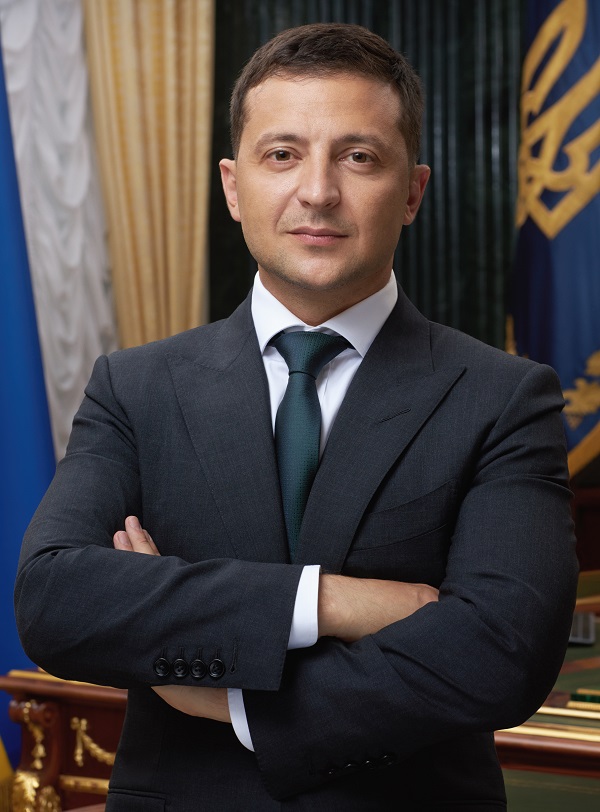
“Volodymyr Zelensky Official portrait” by http://www.president.gov.ua/ is licensed under CC BY 4.0

When asked by journalists to explain his refusal to head for safety, Zelensky has made it clear that he has no wish to die, and that he fears for the lives of his loved ones (his wife and kids have since been moved to relative safety.) But, he added: “As for my life: I am the president of the country, and I simply do not have the right to it.” Sure, he could flee to preserve his own life. But, he has said, how would he explain his actions to his kids? As Zelensky sees it, he has no choice in the matter. His duty requires that he remain and lead his country in the fight; to do anything less would be dishonourable.
But while his Last Action Hero schtick has proven enormously popular with European and North American audiences, Zelensky’s refusal to leave Kyiv, and Ukraine’s insistence on fighting off the Russians instead of capitulation, has put our so-called leaders in a bit of a bind.
To begin with, Ukraine’s refusal to capitulate to Russian aggression has forced many governments into taking steps they almost certainly would have preferred to avoid — economic and political sanctions against Russia, costly shipments of arms and other aid, diplomatic side-choosing, rethinking of trade agreements, and so on. Ukraine’s defence is coming at a pretty high cost, and the final bill is far from being tallied.
But beyond the economic and political price that is being paid to support Ukraine, there is the extraordinary amount of cognitive dissonance Zelensky’s behaviour has generated amongst the leadership of the West. Honour? Duty? Sacrifice? What century does he think he’s living in?
For centuries, honour reflected the sorts of qualities that gentlemen were expected to possess: dignity, integrity, courage. But it is hard to even talk about honour now with a straight face. It brings to mind 19th-century aristocrats in wigs and hose, demanding satisfaction and challenging one another to a meeting over some best-forgotten offence. The old honour codes couldn’t survive the triumph of the values of liberal democracy and the arrival of what Francis Fukuyama famously called the End of History, where the willingness to risk one’s life for abstract ideas or principles has been replaced by voting and economic calculation in the public sphere and “the satisfaction of sophisticated consumer demands” in the private.
Today, the old notion of honour survives only in small and isolated precincts of (mostly) male society, places like the military and some sports, places where how you behave in front of your peers matters more than comfort, more than money, more than health, maybe even more than life itself. The rest of us have become versions of what Nietszche derided as “the last man” — creatures of liberalism who have no pride, take no risks, and desire only comfort and security.
April 8, 2022
QotD: The fearlessness of De Gaulle
The evidence suggests that he was one of those dangerous people who simply do not know what fear is, and that he discovered this quite early in his long life. If a sergeant had not fallen dead on top of the young Lieutenant de Gaulle when he first went into battle at Dinant in August 1914, he would probably have died in some useless, gallant sacrifice and never have been heard of again. If he had not been knocked unconscious by the blast of a grenade at Verdun in March 1916, it is hard to believe that he would have allowed himself to be taken prisoner by the Germans. In that case he would almost certainly have died in that frightful battle, or not long afterward, another silent shade in that huge legion of shades who marched off into the dark during that appalling war.
Only his wife Yvonne was unimpressed by his grandeur, more than once urging him to retire, or puncturing his ambition. During the long, frustrating wilderness years between his wartime glory and his final presidential triumph, he mused to her that he might one day repeat his great rallying call of 1940. Using the rather patronizing endearment “Pauvre Ami,” she declared flatly, “Nobody will follow you.” He snapped back, “Shut up, Yvonne! I am old enough to know what I want to do!” In fact, on that occasion he was wrong and she was right. She even mocked his soldierly abilities. When the general’s aides suggested that they might install a machine gun at their remote, forbidding country home in Colombey, in case of an attack by communists, Yvonne scoffed that her husband would have no idea how to use it. Perhaps she would have.
Peter Hitchens, “A Certain Idea of France”, First Things, 2019-04.
March 29, 2022
QotD: SJW white guilt
In short, reading shit like this is penance for being white. Subjecting themselves to a stream of invective about their failings for being white gives them absolution. It’s kinda like those folks in the BDSM community who seek out a black dominatrix to work out their guilty feelings, and having paid for verbal abuse and a beating, feel that they’ve done their bit for race relations, and for the liberal side of the SF community, Mistress Nora is just the ticket, and they are paying her with sales and awards for all the abuse they can stomach.
Dr. Mauser, “Message Received”, Shoplifting in the Marketplace of Ideas, 2019-01-30.
March 27, 2022
The zombie Russian empire under Tsar Vladimir I
In the most recent Weekly Dish, Andrew Sullivan looks at the quasi-Imperial goals of Vladimir Putin:
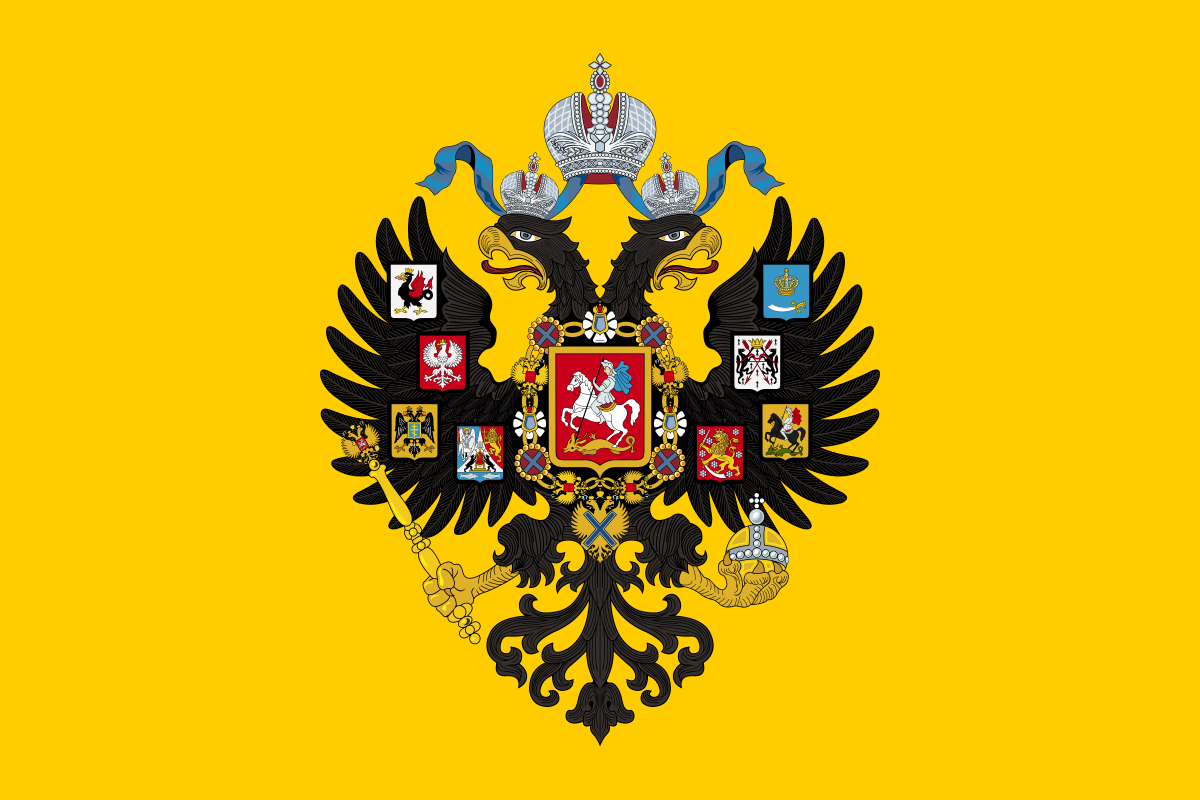
Imperial Standard of the Emperor of Russia, used from 1858 to 1917.
Image by Trajan 117 via Wikimedia Commons.
“The huge iceberg Russia, frozen by the Putin regime, cracked after the events in Crimea; it has split from the European world, and sailed off into the unknown,” – Vladimir Sorokin, New York Review of Books, 2017.
The greatest mistake liberals make when assessing reactionaryism is to underestimate it. There is a profound, mesmerizing allure — intensified by disillusion with the shallows of modernity — to the idea of recovering some great meaning from decades or centuries gone by, to resurrect and resuscitate it, to blast away all the incoherence and instability of post-modern life into a new collective, ancient meaning.
Even when it’s based on bullshit. You’d be amazed how vacuous slogans about returning to a mythical past — “Make America Great Again!”, “Take Back Control!” — can move public opinion dramatically in even the most successful modern democracies. That’s one reason it’s self-defeating for liberals to press for maximal change in as many things as possible. National identity, fused often with ethnic heritage, has not disappeared in the human psyche — as so many hoped or predicted. It has been reborn in new and strange forms. Now is the time of monsters, so to speak. Best not to summon up too many.
This, it seems to me, is what many of us have missed about the newly visible monster of post-Communist Russia. It would be hard to conjure up a period of post-modern bewilderment more vividly than Russia in the post-Soviet 1990s. A vast empire collapsed overnight; an entire totalitarian system, long since discredited but still acting as some kind of social glue and cultural meaning, unraveled in chaos and confusion.
Take away a totalitarian ideology in an instant, and a huge vacuum of meaning will open up, to be filled by something else. We once understood this. When Nazi Germany collapsed in total military defeat, the West immediately arrived to reconstruct the society from the bottom up. We de-Nazified West Germany; we created a new constitution; we invested massively with the Marshall Plan, doing more for our previous foe than we did for a devastated ally like Britain. We filled the gap. Ditto post-1945 Japan.
But we left post-1991 Russia flailing, offering it shock therapy for freer markets, insisting that a democratic nation-state could be built — tada! — on the ruins of the Evil Empire. We expected it to be reconstructed even as many of its Soviet functionaries remained in place, and without the searing experience of consciousness-changing national defeat. What followed in Russia was a grasping for coherence, in the midst of national humiliation. It was more like Germany after 1918 than 1945. It is no surprise that this was a near-perfect moment for reactionism to stake its claim.
It came, like all reactionary movements, not from some continuous, existing tradition waiting to be tweaked or deepened, but from intellectuals, making shit up. They created a near-absurd mythology they rescued from the 19th and early 20th centuries — packed with pseudo-science and pseudo-history. Russia was not just a nation-state, they argued; it was a “civilization-state”, a whole way of being, straddling half the globe and wrapping countless other nations and cultures into Mother Russia’s spiritual bosom. Russians were genetically different — infused with what the reactionary theorist Lev Gumilev called “passionarity” — a kind of preternatural energy or will to power. They belonged to a new order — “Eurasia” — which would balance the Atlantic powers of the US and the UK, and help govern the rest of the world.
March 17, 2022
If everything is about justice, then nothing is
At Astral Codex Ten, Scott Alexander wonders why everything these days is said to be about “justice”:
Freddie deBoer says we’re a planet of cops. Maybe that’s why justice is eating the world.
Helping the poor becomes economic justice. If they’re minorities, then it’s racial justice, itself a subspecies of social justice. Saving the environment becomes environmental justice, except when it’s about climate change in which case it’s climate justice. Caring about young people is actually about fighting for intergenerational justice. The very laws of space and time are subject to spatial justice and temporal justice.
I can’t find clear evidence on Google Trends that use of these terms is increasing — I just feel like I’ve been hearing them more and more often. Nor can I find a simple story behind why — it’s got to have something to do with Rawls, but I can’t trace any of these back to specific Rawlsian philosophers. Some of it seems to have something to do with Amartya Sen, who I don’t know enough about to have an opinion. But mostly it just seems to be the zeitgeist.
This is mostly a semantic shift — instead of saying “we should help the poor”, you can say “we should pursue economic justice”. But different framings have slightly different implications and connotations, and it’s worth examining what connotations all this justice talk has.
“We should help the poor” mildly suggests a friendly optimistic picture of progress. We are helpers — good people who are nice to others because that’s who we are. And the poor get helped — the world becomes a better place. Sometimes people go further: “We should save the poor” (or the whales, doesn’t matter). That makes us saviors, a rather more impressive title than helpers. And at the end of it, people/whales/whatever are saved — we’re one step closer to saving the world. Extrapolate the line out far enough, and you can dream of utopia.
“We should pursue economic justice” suggests other assumptions. Current economic conditions are unjust. There is some particular way to make them just, or at least closer to just. We have some kind of obligation to pursue it. We are not helpers or saviors, who can pat ourselves on the back and feel heroic for leaving the world better than we found it. We are some weird superposition of criminals and cops, both responsible for breaking the moral law and responsible for restoring it, trying to redress some sort of violation. The end result isn’t utopia, it’s people getting what they deserve.
(cf. Thomas Jefferson: “I tremble for my country when I remember that God is just.”)
What is “climate justice”? Was the Little Ice Age unjust? What if it killed millions? Is it unjust for Mali to have a less pleasant climate than California? What if I said that there’s a really high correlation between temperature and GDP, and Mali’s awful climate is a big part of why it’s so poor? Climate justice couldn’t care less about any of this. Why not? Hard to say. Maybe because there’s no violation and no villain.
QotD: The curse of creativity
Gregory Wolfe, “In God’s Image: The virtue of creativity”, National Review, 2005-05-27.
March 9, 2022
QotD: Cynicism
Lois McMaster Bujold, Borders of Infinity, 1989.
February 23, 2022
From Shell Shock to PTSD – Understanding the Trauma of War – WW2 Special
World War Two
Published 22 Feb 2022Humanity has spent millennia developing ever more efficient ways to kill. This reaches its apogee in WWI and WWII, the most terrible conflicts in human history. Broken bodies bring with them broken minds. The trauma of war brings with it the mysteries of shell shock, war neurosis and PTSD.
(more…)
February 17, 2022
QotD: What your book collection says about you
Both are correct. It has been my experience over the years that if people have explicitly political / social books in abundance, they are not really interested in contrary observations, no matter how genially offered; criticize the citizens of the shelves and you are criticizing them in an intimate fashion. The oft-expressed desire for a “conversation” on these matters rarely results in such.
James Lileks, The Bleat, 2019-01-30.
February 7, 2022
QotD: The Dunning-Kruger Effect
The term lends a scientific name and explanation to a problem that many people immediately recognize — that fools are blind to their own foolishness. As Charles Darwin wrote in his book The Descent of Man, “Ignorance more frequently begets confidence than does knowledge.”
An Overview of the Dunning-Kruger Effect
This phenomenon is something you have likely experienced in real life, perhaps around the dinner table at a holiday family gathering. Throughout the course of the meal, a member of your extended family begins spouting off on a topic at length, boldly proclaiming that he is correct and that everyone else’s opinion is stupid, uninformed, and just plain wrong. It may be plainly evident to everyone in the room that this person has no idea what he is talking about, yet he prattles on, blithely oblivious to his own ignorance.The effect is named after researchers David Dunning and Justin Kruger, the two social psychologists who first described it. In their original study on this psychological phenomenon, they performed a series of four investigations and found that people who scored in the lowest percentiles on tests of grammar, humor, and logic also tended to dramatically overestimate how well they had performed. Their actual test scores placed them in the 12th percentile, yet they estimated that their performance placed them in the 62nd percentile.
Kendra Cherry, “What Is the Dunning-Kruger Effect?”, verywellmind, 2018-04-09.
January 27, 2022
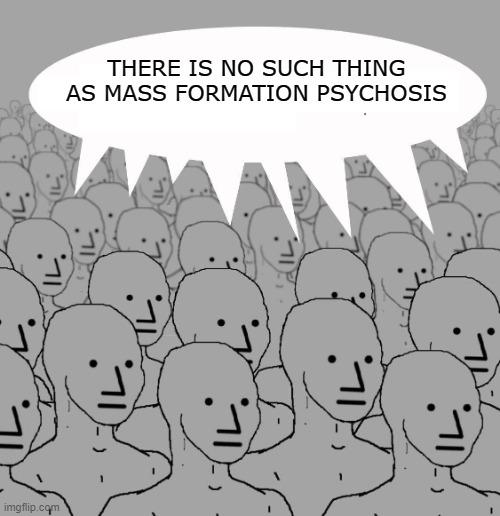
What is this “Mass Formation Psychosis” thing that so many are suddenly fascinated with?
I started seeing the phrase “Mass Formation Psychosis” popping up a lot recently, but I hadn’t bothered looking into it until quite recently. In an effort to figure out what it’s supposed to be and why people are talking about it, I did the lazy thing I usually do and had a quick wander through some of the blogs I follow to gather up their respective takes on it. Here’s one from earlier in the week from Severian at Founding Questions:
In the depths of the Great Leap Forward, Mao Zedong decided that China must overtake at least Great Britain, if not the US, in steel production (this was back when the US actually made shit, you understand, so … you know, like a hundred years ago). But since that was impossible with China’s existing steel mills, Mao hit on a solution: He’d just have the peasants do it! Right in the backyards of their collective farms.
No, I’m not kidding. They really did that. The “steel” produced was worthless, of course, and indeed the whole zany scheme probably contributed to the Great Famine, as peasants ended up throwing farm implements, cooking pots, anything and everything that could be melted down into their backyard furnaces. Yeah, they’d need them for the harvest, but the harvest was a month or two away, and the commissar and his pistol demanding more more more! steel was right now.
And that’s the great thing about a totalitarian dictatorship (if you’re the dictator) — if your madcap caper runs aground on reality’s rocks, you can simply declare victory and move on. What backyard blast furnaces? Never heard of them … and neither have you, comrade, if you know what’s good for you. Problem solved.
But … what if, for some bizarre reason, Mao’s slaves had just kept throwing things into their backyard furnace? If Mao had come down personally from the Forbidden City and said “Yeah, we’re good here, save your hoes and scythes and woks and whatnot,” but they still they persisted?
That’s the situation in which Tapioca Joe and the Juggalos find themselves vis a vis Covid.
Severian linked to Robert Stacy McCain’s call for making today “Everybody Blog About Mass Formation Psychosis Day”, which in turn linked to this Substack post from Robert Malone.
As many of you know, I have spent time researching and speaking about mass psychosis theory. Most of what I have learned has come from Dr. Mattias Desmet, who realized that this form of mass hypnosis, of the madness of crowds, can account for the strange phenomenon of about 20-30% of the population in the western world becoming entranced with the Noble Lies and dominant narrative concerning the safety and effectiveness of the genetic vaccines, and both propagated and enforced by politicians, science bureaucrats, pharmaceutical companies and legacy media.
What one observes with the mass hypnosis is that a large fraction of the population is completely unable to process new scientific data and facts demonstrating that they have been misled about the effectiveness and adverse impacts of mandatory mask use, lockdowns, and genetic vaccines that cause people’s bodies to make large amounts of biologically active coronavirus Spike protein.
These hypnotized by this process are unable to recognize the lies and misrepresentations they are being bombarded with on a daily basis, and actively attack anyone who has the temerity to share information with them which contradicts the propaganda that they have come to embrace. And for those whose families and social networks have been torn apart by this process, and who find that close relatives and friends have ghosted them because they question the officially endorsed “truth” and are actually following the scientific literature, this can be a source of deep anguish, sorrow and psychological pain.


