
Quotulatiousness

March 17, 2014

Tokenism watch – PhD models

Filed under: Business, Education, Media — Tags: , , , , — Nicholas @ 08:06

Martha Gill is underwhelmed by Betabrand’s use of PhDs as runway clothing models:

‘Hey ladies, you might have PhDs, but really you all want to be models’

Is there no job you don’t need a ludicrous set of qualifications for nowadays? Clothing company PhD, in a fairly ill-defined attempt to, I don’t know, raise awareness or something, have hit upon a novel concept for a fashion shoot: recruiting only models with PhDs.

“Our designers cooked up a collection of smart fashions for spring, so why not display them on the bodies of women with really big brains?” founder Chris Lindland said in a statement. Supporters have greeted it as a feminist move, saying it helps to promote “different kinds of female role models”.

Hmmm. Does it? I’m really not so sure that it does.

[…]

I mean, I see what they’re trying to do. They are trying to broaden the public’s idea of models, make them more representative, and show that being intelligent is something to aspire to, too. They just haven’t managed to do this. In any way.

You see, what I think they’ve done here is confuse the term “role model” with “clothing model”. The drive to make models more “representative” (see also Dove’s “real women” campaign) is actually setting up modelling to be far more aspirational than it is. It takes as read that being a model is the pinnacle of feminine achievement, and all we need to do to make girls feel good about themselves is to tell them they, too, can all be models. Even if they’re PhD students.

But models are just models. Really, really, ridiculously good-looking people doing what, when it comes down to it, is a fairly crap job.

The photo chosen to accompany the article in the Telegraph is why I originally wrote “runway model” instead of “clothing model”. The photos in the Daily Mail taken from the Betabrand website are much less … ridiculous than the Telegraph implies. They’re just modelling ordinary clothing for ordinary women, not the weird and totally impractical stuff some clothing designers foist on their runway models at fashion shows.

Betabrand PhD model example

I’d say there’s no story here (despite blogging about it), but there is. It’s just not quite the drive-by that the Telegraph‘s photo editor wants it to be. Betabrand scored a lot of free advertising and (probably) got its clothing line modelled on the cheap as well. It’s rather amusing that the Daily Mail is significantly more realistic in their coverage of this story than the Telegraph.
February 16, 2014

The crime that launched a thousand (bad) editorials

Filed under: Books, Media, USA — Tags: , , , — Nicholas @ 11:20

In the New York Post, Larry Getlen retells the tale of Kitty Genovese’s murder and the myths that grew up around it:

The murder of Kitty Genovese shifted from crime to legend a few weeks later, when The New York Times erroneously reported that 38 of her neighbors had seen the attack and watched it unfold without calling for help.

The Times piece was followed by a story in Life magazine, and the narrative spread throughout the world, running in newspapers from Russia and Japan to the Middle East.

New York became internationally infamous as a city filled with thoughtless people who didn’t care about one another; where people could watch their neighbors get stabbed on the street without lifting a finger to help, leaving them to die ­instead in a pool of their own blood.

The people of Kew Gardens — before that, a relatively crime-free neighborhood where few bothered locking their doors — were referred to in the press as monsters.

But as journalist Kevin Cook details in his new book, Kitty Genovese: The Murder, the Bystanders, the Crime that Changed America (W.W. Nor­ton), some of the real thoughtlessness came from a police commissioner who lazily passed a falsehood to a journalist, and a media that fell so deeply in love with a story that it couldn’t be bothered to determine whether it was true.

February 12, 2014

India’s unhappy relationship with the free press

Filed under: Books, India, Liberty, Media — Tags: , , — Nicholas @ 09:55

A recent report from Reporters Without Borders has India at the 140th rank (of 180 countries surveyed) for freedom of the press:

The world’s largest democracy remains one of the most restrictive places for the press.

In a report published Wednesday, Reporters Without Borders, a Paris-based nonprofit, ranked India 140th out of 180 countries surveyed for the free speech it affords the media. This was a one-point jump from the country’s 2013 ranking, when it recorded its steepest fall on the annual-list since 2002.

On Monday, acting on an agreement chalked out by a Delhi court, one of India’s largest publishing houses withdrew a 2009 book that reinterprets Hinduism, the latest instance of a book being removed from circulation in the country.

The authors of Wednesday’s report singled out the insurgency in the disputed territory of Kashmir, where channels of communications, including telephone lines, satellite televisions and the Internet, are routinely suspended in response to unrest, as well as the killings of eight journalists in 2013, for India’s lowly press freedom ranking. The killings included those of Jitendra Singh, a freelancer in the eastern state of Jharkhand, who documented Maoist activists in the state, and that of Rakesh Sharma, a Hindi newspaper reporter who was shot dead in Uttar Pradesh, India’s most populous state, in August.

February 1, 2014

QotD: Captains, Majors, and Colonels

Filed under: Britain, Media, Military, Quotations — Tags: , , , , , — Nicholas @ 09:06

The BBC television show Blackadder is arguably one of the funniest and finest comedies of the late 20th century. Achingly sharp, with jokes that are still funny to this day, it was a four series show which finished with Blackadder Goes Forth set in the First World War. Watching the show today, one is struck by how funny it is, and also worryingly how its anti-establishment jokes aimed at undermining the social structure of the time has become the accepted historical record of the First World War.

The UK has a very strange ‘love hate’ relationship with its military officers — junior ones are portrayed as incompetent (Lieutenant George), Captains are seen as possibly okay (Captain Blackadder), Majors are usually seen retired and with a snifter in their hand (the Major from Fawlty Towers), while Colonels or heaven forbid Generals (General Melchett) are usually seen as inept, incompetent, who do not have a clue about their profession or what it involves. They are seen as people without a clue until the point when they retire, at which point they suddenly become military geniuses, whose angry letters to Broadsheet newspapers warrant being printed on the grounds that they are military commanders who know what they are talking about.

Sir Humphrey, “This is the Captain(s) of Your Ship Speaking… Why there are 260 Captains in the Royal Navy today”, Thin Pinstriped Line, 2013-10-19

January 29, 2014

Timeless truths from Yes, Prime Minister on the newspapers

Filed under: Britain, Humour, Media — Tags: — Nicholas @ 10:55

January 23, 2014

QotD: The media, politicians, and moral panics

Filed under: Media, Politics, Quotations, USA — Tags: , , , , , , — Nicholas @ 10:45

No one who has given any study to the development and propagation of political doctrine in the United States can have failed to notice how the belief in issues among politicians tends to run in exact ratio to the popularity of those issues. Let the populace begin suddenly to swallow a new panacea or to take fright at a new bugaboo, and almost instantly nine-tenths of the master-minds of politics begin to believe that the panacea is a sure cure for all the malaises of the republic, and the bugaboo an immediate and unbearable menace to all law, order and domestic tranquillity. At the bottom of this singular intellectual resilience, of course, there is a good deal of hard calculation; a man must keep up with the procession of crazes, or his day is swiftly done. But in it there are also considerations a good deal more subtle, and maybe less discreditable. For one thing, a man devoted professionally to patriotism and the wisdom of the fathers is very apt to come to a resigned sort of acquiescence in all the doctrinaire rubbish that lies beneath the national scheme of things — to believe, let us say, if not that the plain people are gifted with an infallible sagacity, then at least that they have an inalienable right to see their follies executed. Poll-parroting nonsense as a matter of daily routine, the politician ends by assuming that it is sense, even though he doesn’t believe it. For another thing, there is the contagion of mob enthusiasm — a much underestimated murrain. We all saw what it could do during the war — college professors taking their tune from the yellow journals, the rev. clergy performing in the pulpit like so many Liberty Loan orators in five-cent moving-picture houses, hysteria grown epidemic like the influenza. No man is so remote and arctic that he is wholly safe from that contamination; it explains many extravagant phenomena of a democratic society; in particular, it explains why the mob leader is so often a victim to his mob.

H.L. Mencken, “Roosevelt: An Autopsy”, Prejudices, Second Series, 1920.

January 16, 2014

H.L. Mencken’s Bathtub hoax

Filed under: Books, Humour, Media, USA — Tags: , , , — Nicholas @ 15:13

Wendy McElroy remembers one of the greatest publishing hoaxes of the 20th century:

On December 28, 1917, Mencken published the article “A Neglected Anniversary” in the New York Evening Mail. He announced that America had forgotten to celebrate the seventy-fifth anniversary of the modern bathtub, which had been invented on December 20, 1842 in Cincinnati, Ohio. “Not a plumber fired a salute or hung out a flag. Not a governor proclaimed a day of prayer,” Mencken lamented. He proceeded to offer an informal history of the US bathtub, with political context. For example, President Millard Fillmore had installed the first one in the White House in 1851. This had been a brave act since the health risks of using a bathtub were highly controversial within the medical establishment. Indeed, Mencken observed, “Boston early in 1845 made bathing unlawful except upon medical advice, but the ordinance was never enforced and in 1862, it was repealed.”

The actual political context was somewhat different. America had entered World War I several months before. The media was now rabidly anti-German and pro-war. Mencken was of German descent and anti-war. Suddenly, he was unable to publish in his usual venues or on his usual subjects. Thus, Mencken – a political animal to the core – turned to non-political writing in order to publish anything: A Book of Prefaces on literary criticism (1917); In Defense of Women on the position of women in society (1918); and The American Language (1918). But he was effectively shut out of the most important event in the world, the one about which he cared most.

Mencken did not just get mad; he got even. “A Neglected Anniversary” was a satire destined to become a classic of this genre. In his article, Mencken spoke in a tone of mock-reason, which was supported by bogus citations and manufactured statistics. His history of the bathtub was an utter hoax set within the framework of real history. The modern bathtub had not been invented in Cincinnati. Fillmore had not introduced the first one into the White House. The anti-bathtub laws cited were, to use one of Mencken’s favorite words, “buncombe.”

[…]

Mencken remained silent about the hoax until an article titled “Melancholy Reflections” was published in the Chicago Tribune on May 23, 1926, eight years later. It was Mencken’s confession and an appeal to the American public for reason. His hoax had gone bad. “A Neglected Anniversary” had been reprinted hundreds of times. Mencken had received letters of corroboration from some readers and requests for more details from others. His history of the bathtub had been cited by other writers and was starting to find its way into reference works. As Mencken noted in “Melancholy Reflections,” his ‘facts’ “began to be used by chiropractors and other such quacks as evidence of the stupidity of medical men. They began to be cited by medical men as proof of the progress of public hygiene.” And, because Fillmore’s presidency had been so uneventful, on the date of his birthday calendars often included the only interesting tidbit they could find: Fillmore had introduced the bathtub into the White House. (Even the later scholarly disclosure that Andrew Jackson had a bathtub installed there in 1834 did not diminish America’s conviction that Fillmore was responsible.)

Upon confessing, Mencken wondered if the truth would renew the cry for his deportation. The actual response: Many believed his confession was the hoax.

January 11, 2014

Proportionality in media coverage

Filed under: Media, Politics, USA — Tags: , , , , — Nicholas @ 10:41

Jonah Goldberg makes a good point about what the media chooses to focus their attention on, and how it can downplay or amplify the actual importance of a given issue:

You have to wonder how some of the folks in the media can look at themselves in the mirror. The three network news shows have devoted orders of magnitude more coverage to a story about closed lanes on the George Washington Bridge than they have to the IRS scandal. I know this is not a new insight, but WHAT THE HELL!?

The sheer passion the New York Times-MSNBC mob is bringing to a partial road closure is a wonder to behold. What about the children! The chiiiiillllldrennnn!!!!!

But using the IRS to harass political opponents — one of the charges in the articles of impeachment for Richard Nixon — well, that’s complicated. The president didn’t know. The government is so vast. I had a flat tire! A flood! Locusts! It wasn’t his fault! Besides Chris Christie joked about putting down the cones himself! The cones, man! The cones!

But forget about the IRS scandal. Obama’s whole shtick is to pretend that he’s above politics while being rankly political about everything, including his stated desire to “punish our enemies.” By comparison, Chris Christie looks like Diogenes and Cincinnatus rolled into one. From inauguration day forward, this whole crew has behaved like Chicago goons dressed in Olympian garb, and the press has fallen for it.

We don’t need to recycle the whole sordid history of the sequester and the shutdown to remember that this White House sincerely, deliberately, and with malice aforethought sought to make things as painful as possible for millions of Americans. Traffic cones on the George Washington Bridge are a stain on the honor of New Jersey. (Stop laughing!) But deliberately pulling air-traffic controllers to screw with millions of people is just fine? Shafting World War II vets and vacationing families at National Parks is something only crazy right-wingers on Twitter would have a problem with? And keep in mind, it is at least plausible Christie didn’t know what his staff was doing. It is entirely implausible that the president didn’t know about the WWII memorial closure, after the news appeared in the president’s daily briefing (a.k.a. the New York Times).

I’d say I just don’t get it, but I do get it. For the mainstream media, skepticism comes naturally when a Republican is in the crosshairs. It comes reluctantly, slowly, and painfully — if at all — when it’s a Democrat.

The press would be much more useful to the country if it was equally critical of politicians regardless of party affiliation, rather than acting as a propaganda arm for one side. In Canada, replace “Chris Christie” with “Rob Ford” and the story is pretty much the same … everything Ford does goes under the microscope to detect evil intent, wrongdoing, malice, and (blatantly hoped-for) criminality. Other politicians, both on city council and at the provincial level, get so much benefit of the doubt that the press sometimes acts as unpaid PR staff.

Update: David Friedman points out the only evidence in Christie’s favour and does a bit of quick math to point out the costs imposed on New Jersey commuters by this little flexing of the arm of power:

There is only one piece of evidence that I can see in Christie’s favor—the fact that he would have had to be terminally stupid to think he could get away with it.

Of course, that leaves the conclusion that the two people known to be responsible, a high up Christie aid whom he has just fired and the Port Authority official actually responsible for closing down the lanes who has now resigned, both close to Christie, were terminally stupid as well as criminally irresponsible. […]

One other point is suggested by the story, not about Christie but about the Port Authority and government actors more generally. Average weekday traffic volume eastbound on the bridge, found with a little googling, is a bit over 150,000 vehicles. Assume a third of them got delayed by the traffic jam for an hour each. Assume their occupants value their time at ten dollars an hour. Assume one person per vehicle. On those very conservative assumptions, a single Port Authority official, acting in effect on a whim, imposed a cost of two million dollars on New York commuters and it took four days for anyone else in the organization to notice and do something about it. More generous assumptions could easily push the number up to five or ten million.

January 8, 2014

China and the deep blue seas

Filed under: China, Military — Tags: , — Nicholas @ 09:26

There has been much debate among analysts about what China is planning to do with their expanding “blue water” navy. At The Diplomat, Henry Holst warns against simplistic interpretations of People’s Liberation Army Navy (PLAN) intentions:

In a 2012 article published in The Diplomat, Andrew Erickson and Gabe Collins claim “China seeks to develop a ‘blue water’ navy in the years to come—but one that is more ‘regional’ than ‘global’ in nature,” and that China does not intend to challenge U.S. naval hegemony. However, analyzing China’s maritime identity, a concept that will be explained below, and it becomes clear that two major long-term goals of the PLAN’s blue-water modernization are to frequently deploy outside East Asia and challenge U.S. naval dominance on the high seas.

Erickson and Collins cite Chinese naval technological inferiority in areas such as anti-submarine warfare and area-air defense vis-à-vis the U.S. navy as evidence that the PLAN does not intend to challenge U.S. naval hegemony, concluding that such a military imbalance would make any challenge futile. Additionally, Erickson and Collins use the small number of PLAN deployments outside of East Asia as proof that in the future Beijing does not aim to frequently outside its immediate environs.

[…]

Analyzing China’s maritime identity provides a superior methodology in anticipating future PLAN strategic interests. Maritime identity is a nation’s inherited maritime traditions, responsibilities, prerogatives, self-concept and strategic interests as a naval power. It frames the strategic discussion that occurs at high levels of government and therefore wields enormous influence over foreign policy. Washington’s willingness to employ naval forces in support of Libyan rebels fighting Gaddafi in 2011 reflected America’s maritime identity, which is famous for supporting democracy, human rights and self-determination worldwide. The American maritime identity is perfectly summed up in the U.S. Navy recruiting slogan: “A Global Force For Good.” In a similar way, analyzing the personality of China’s developing maritime identity is a practical method by which to gauge future Chinese naval strategic interests.

How does one ascertain China’s maritime identity? Analyzing Chinese Communist Party (CCP)-run newspaper articles in the People’s Daily provides an excellent conduit into the strategic thinking of China’s decision-making apparatus. This is because the People’s Daily serves as the mouthpiece of the CCP Standing Committee. For those unfamiliar with China’s system of government, imagine a totalitarian government having an elected body of seven individuals who wield total control over state affairs, and then broadcast their opinions directly through a controlled media body. Analyzing Chinese domestic media discussion on whether China should pursue a full-fledged blue-water navy (蓝水海军), a pursuit both tightly bound to a country’s maritime identity and highly relevant to future PLAN strategic interests, sheds light on the strategic discussions occurring at high levels within the CCP.

January 2, 2014

QotD: Why progressive policy ideas get more media attention

Filed under: Media, Politics, Quotations, USA — Tags: , , , , , , — Nicholas @ 11:34

When it comes to crafting winning political narratives, progressives have a natural advantage over conservatives. That’s because progressives have a free hand to project rosy visions of the future while conservatives must constantly defend against progressives’ distorted depictions of the past.

Two fundamental techniques undergird progressives’ success at narrative spinning. The first is skillful framing of the debate through investing heavily in public opinion making machinery. This disarms critics while giving lawmakers cover to vote for bills they’ve neither read nor understood. Thus framed, policies are judged only by their stated intentions, never their actual results. This allows politicians to promote new pieces of legislation named for their lofty objectives, even if the thousands of pages of vague and contradictory content deliver just the opposite.

The second is dodging all responsibility for failure. This is accomplished by blaming insufficient resources, the prior administration, the greedy 1 percent, sabotage by Republicans, or even the people’s obdurate failure to appreciate the progressive benefits conferred upon them. When the going gets tough, reality can be dismissed with a slogan. Forward!

Bill Frezza, “2013: The Year The Progressive Narrative Collided With Reality”, Forbes, 2013-12-30

December 23, 2013

Ambrose Bierce, remembered

Filed under: Books, History, Media, USA — Tags: , — Nicholas @ 14:04

In The Weekly Standard, Andrew Ferguson recounts the life and (theories about the) death of Ambrose Bierce:

“We have produced but one genuine wit,” H. L. Mencken wrote, in a survey of American letters: “Ambrose Bierce. And save to a small circle he is unknown today.” Mencken was writing decades after Bierce had gone off to Mexico, by which time his life was best remembered for the way he had left it. And the circle of those who read him is even smaller now, needless to say. When the Library of America finally got around to issuing a canonical selection of his writing, in 2011, the single volume (Philip Roth got nine!) was relatively slender; it was the 219th in the library’s series of great American writers.

His fame was not general, even at its most robust. Those who admired him, mostly his fellow writers, admired him extravagantly. He was a “writer’s writer,” in the deadly phrase. The tributes from William Gladstone, Arnold Bennett, Bret Harte, and many other popular and learned literary men shared a common thread: Why, they all asked, wasn’t Bierce better known? Bierce himself ached for fame as awfully as any writer, but was, in time, amused by the strange status he had achieved: He was famous for not being famous. He wrote to a friend toward the end of his life:

    How many times, and during a period of how many years must one’s unexplainable obscurity be pointed out to constitute fame? Not knowing, I am almost disposed to consider myself the most famous of authors. I have pretty nearly ceased to be “discovered,” but my notoriety as an obscurian may be said to be worldwide and everlasting.

The problem with “writers’ writers” — as many readers have discovered — is that they are seldom “readers’ writers.” It depends on the readers as much as the writers, of course, and today’s readers might find they have caught up to Bierce’s jaded view of war, politics, romantic love, religion, family life, and nearly everything else. When he is remembered these days it is usually for the short story “An Occurrence at Owl Creek Bridge,” which, until recently, was one of a handful of short stories — along with “The Lottery,” “The Most Dangerous Game,” “To Build a Fire,” and a few others — that no student could escape an American high school without having pretended to read.

His witticisms, which were of a very high order, reappear sometimes, too. His best aphorisms in The Devil’s Dictionary are easily a match for La Rochefoucauld, maybe even Voltaire. His most reprinted book review consists of a single sentence: “The covers of this book are too far apart.” When a young mother pestered him for advice on bringing up children, he finally replied: “Study Herod, madam. Study Herod.” Democracy he defined as “four wolves and a lamb voting on what to have for lunch.” At the death of a local politician, Bierce volunteered the epitaph: “Here lies Frank Pixley, as usual.” Disdainful of philosophical pretension, he rewrote Descartes’s axiom as “Cogito cogito ergo cogito sum”: “I think I think, therefore I think I am.”

H/T to Jon, my former virtual landlord, for the link.

December 10, 2013

Origins of the “infographic” plague

Filed under: Books, Media — Tags: , , , — Nicholas @ 09:28

As Tim Harford says, “So it’s HIS fault”:

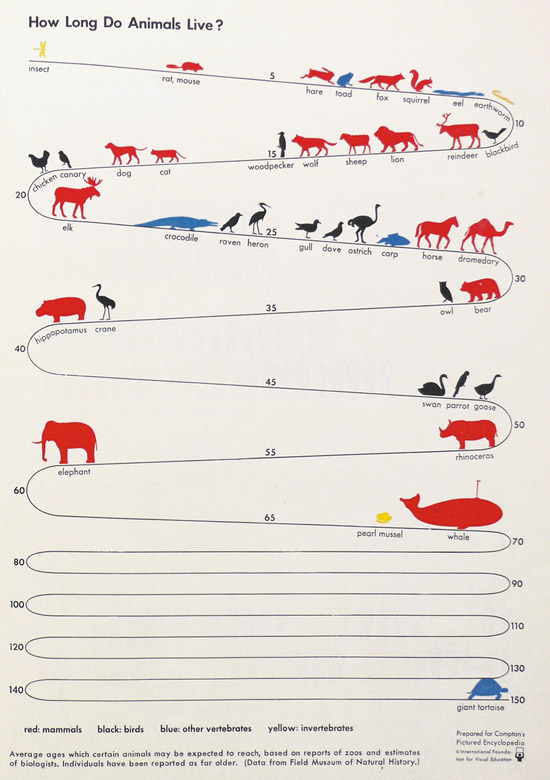
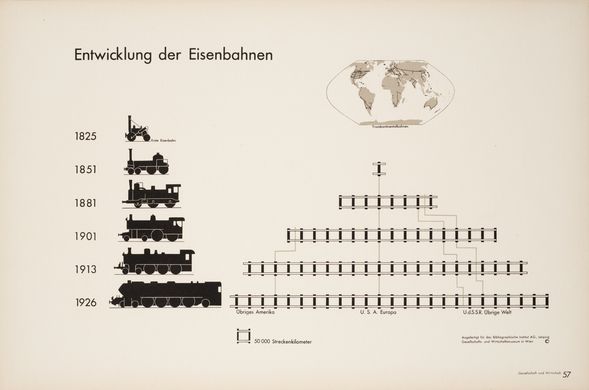
In the 1930s, Austrian sociologist, philosopher and curator Otto Neurath and his wife Marie pioneered ISOTYPE — the International System Of TYpographic Picture Education, a new visual language for capturing quantitative information in pictograms, sparking the golden age of infographics in print.

The Transformer: Principles of Making Isotype Charts is the first English-language volume to capture the story of Isotype, an essential foundation for our modern visual language dominated by pictograms in everything from bathroom signage to computer interfaces to GOOD’s acclaimed Transparencies.

Isotype1

The real cherry on top is a previously unpublished essay by Marie Neurath, who was very much on par with Otto as Isotype’s co-inventor, written a year before her death in 1986 and telling the story of how she carried on the Isotype legacy after Otto’s death in 1946.

Isotype2

November 27, 2013

Some awkward questions about the Brixton “slaves”

Filed under: Britain, Law, Media — Tags: , , , , — Nicholas @ 10:29

Brendan O’Neill goes through the “half-truths and wild claims” of the recent modern slavery story in Britain:

It was presented to us as another Fritzl-like horror, involving three ‘enslaved women’, at least one of whom had ‘spent her whole life in captivity’ and had ‘never seen the outside world’. Or it was Britain’s own version of the recent Cleveland, Ohio case, in which Ariel Castro kidnapped three women from the streets and shackled them to immoveable objects in his house where he abused them for 10 years. In fact, it was worse than Cleveland, suggested the Mirror, because where those American women only suffered for a decade, these British-based women went through a ‘30-year nightmare of captivity, servitude and unimaginable brutality’. It was, in a nutshell, the worst-ever case of hidden human enslavement, the papers told us. ‘No known victims have spent so long in captivity being brainwashed, beaten, manipulated and terrorised’, one said.

We now know that these claims about the so-called ‘Brixton slaves’ are, to use the only term that will suffice, bullshit. Everything that has subsequently come to light, everything that has unfolded in the six days since these ‘slaves’ were ‘rescued’ from some kind of one-time Maoist commune, has called into question the initial claims made by the police, the highly dramatised narrative imposed on these events by the media, and the hyperbolic descriptions of the case by politicians desperate to appear as modern-day William Wilberforces combatting the evils of ‘slavery’. Indeed, the key question that must now be asked is not ‘How did three women end up in a grim commune?’ (let’s leave that to the police), but rather: ‘Why did the entire British media and the political class, along with campaigners and the Twitterati, so willingly and gullibly buy a horror story that was not true?’

[…]

So almost everything we were told about the Brixton case has turned out either to be untrue or to have been wildly exaggerated or dramatised. These were not slaves. They were not held captive. They were not denied contact with the outside world. Rather, what we seem to be dealing with is, quite simply, a very, very eccentric household, in which various people came together, did and believed very strange things, developed an obsession with Mao and conspiracy theories about the British ‘fascist state’, and then ended up regretting it all — well, three of women seem to have regretted it. And so they left. Voluntarily. Without a struggle. It sounds like it was all very unpleasant; it seems clear emotional manipulation was involved and possibly physical force too (but let’s allow the courts to decide that). But slavery? Fritzl-style abuse? Hell, horror, unimaginable brutality? There is nothing remotely resembling evidence to show that anything like that occurred.

So why did the media, politicians, feminists and campaigners lap up this half-cooked, shrill, mostly baseless fantasy about slaves stuck in suburban jails in London? Because it spoke to their already existing prejudices; because it seemed to confirm the darker thoughts that lurk in their heads, about wicked men, vulnerable women, and the unspeakable things that happen in ‘ordinary houses on ordinary streets’; because it allowed them to feel, temporarily, like history-making moral crusaders against evil, and to hell with anything so pesky as a fact. Aneeta Prem, head of the Freedom Charity that assisted the women and drove much of the dramatic talk about ‘domestic servitude’ and ‘rescue’, yesterday said there was too much media frenzy around the case and ‘the more information there is that comes into the public domain, the more it will hamper [the women’s] recovery’. So there’s a problem with having too much information about this case? Why? Might it be because the information so dramatically contradicts the fantasy put about by Prem and others about a group of slaves having been held captive in London for three decades?

November 23, 2013

Houston – sex trafficking capital of the world (says Dallas newspaper)

Filed under: Law, Media — Tags: , , , — Nicholas @ 09:17

According to a Dallas newspaper, Houston is the focal point of a vast sex trafficking operation:

Check out this obvious crap — unbelievable to any thinking person — in the November 22 Dallas Morning News.

The Texas Senator and Representative that the paper apparently very credulously and obediently took notes from contend that there are 300,000 sex trafficking cases prosecuted every year — “in Houston alone.”

Here’s the quote from the Dallas Morning News editorial:

    Editorial: Cracking down on sex traffickers

    Two Texas Republicans, Sen. John Cornyn and Rep. Ted Poe of the Houston area, are co-sponsoring a bill that would impose stiff penalties on these adult victimizers of up to life in prison. The Justice for Victims of Trafficking Act, which has bipartisan support in both houses, would supplement an existing law that focuses primarily on punishing sex-trafficking organizations abroad.

    Poe and Cornyn estimate that one-quarter of U.S. sex-trafficking victims have Texas roots. Poe says our state’s proximity to Mexico and high immigrant population give the state a particularly high profile. In Houston alone, about 300,000 sex trafficking cases are prosecuted each year.

Do they work butt-drunk at this paper?

300,000? Do you realize how many people that is?

[…]

Of course, Houston’s population is only 2.161 million. So, throw in my fantasy guestimate of at least 200,000 uncaught and unpunished people guilty of sex trafficking on top of the 300,000 supposedly documented. This suggests that a vast segment of Houston’s population — at least 15 percent and maybe 25 percent — is engaged in the business of sex trafficking.

Math is hard.

The power of the press in World War One

Filed under: Britain, History, Media, Weapons, WW1 — Tags: , , , , — Nicholas @ 08:55

The current issue of History Today includes an interesting article by Adrian Bingham on the British newspapers (especially the Daily Mail and the Times) during WW1:

When Britain declared war on Germany in August 1914 the widespread feelings of fear, uncertainty and patriotic determination were matched at the offices of the Daily Mail by a sense of vindication. The newspaper had been warning about the German threat for years, perhaps most notoriously when it serialised in 1909 a series of inflammatory articles by the journalist Robert Blatchford, which, when reprinted as a penny pamphlet, sold some 1.6 million copies. The Mail had, moreover, consistently demanded that the Royal Navy be reinforced. It was soon styling itself ‘the paper that foretold the war’. For its critics, the Mail’s irresponsible stoking of anti-German sentiment, driven above all by the paper’s owner, Lord Northcliffe, actually helped to create the conditions that enabled conflict to break out. ‘Next to the Kaiser’, wrote the esteemed editor and journalist A.G. Gardiner, ‘Lord Northcliffe has done more than any other living man to bring about the war.’

[…]

It was not long, however, before Northcliffe became frustrated with the strict censorship imposed on the British press when reporting events in Europe. ‘What the newspapers feel very strongly’, wrote Northcliffe to Lord Murray of Elibank, ‘is that, against their will, they are made to be part and parcel of a foolish conspiracy to hide bad news. English people do not mind bad news.’ Such censorship was particularly worrying when it risked hiding failures in the prosecution and management of the war. Drawing both on the experiences of his visits to the front and on private sources of information from his many correspondents, Northcliffe became increasingly convinced that several men in leading positions were not up to the job, including the prime minister, Asquith, the First Lord of the Admiralty, Winston Churchill, and the Secretary of State for War, Lord Kitchener.

The episode that crystallised this concern, over which Northcliffe put both his and the Mail’s reputation on the line, was the Shell Crisis of May 1915. Northcliffe had received letters from the front claiming that British military operations were being undermined by the lack of the right kind of shell and, after the Allies failed to capitalise on an initial breakthrough at Neuve Chapelle due to a lack of munitions, these criticisms began to be publicly aired. On May 15th, 1915 The Times (also owned by Northcliffe at the time) published a telegram from its respected military correspondent, Lieutenant-Colonel Repington, highlighting the problem and Northcliffe decided to go on the offensive. After some critical editorials, on May 21st the Mail published an incendiary piece written by Northcliffe himself and headlined ‘The Tragedy of the Shells: Lord Kitchener’s Grave Error’. Northcliffe pinned the blame for the shells scandal directly on Kitchener:

    Lord Kitchener has starved the army in France of high-explosive shells. The admitted fact is that Lord Kitchener ordered the wrong kind of shell … He persisted in sending shrapnel – a useless weapon in trench warfare … The kind of shell our poor soldiers have had has caused the death of thousands of them.

This direct public attack on such an esteemed figure at a time of national crisis was shocking and generated fury among many of Northcliffe’s critics. Members of the London Stock Exchange burned copies of both The Times and the Mail and anxious advertisers cancelled contracts. Thousands of readers stopped buying the papers. Northcliffe, though, was undaunted: at this point he was concerned not with circulation but with what he perceived as his national duty. ‘I mean to tell the people the truth and I don’t care what it costs’, he told his chauffeur. It was clear even to Northcliffe’s opponents, moreover, that there were indeed problems with Britain’s munitions supply. Northcliffe was soon vindicated. Although Kitchener survived in the short term, the Liberal government fell at the end of May 1915, to be replaced by a coalition administration: Asquith remained as prime minister, but Lloyd George was appointed as minister of munitions to address the supply problems.

« Newer PostsOlder Posts »

Powered by WordPress


