Quotulatiousness

May 4, 2010

Let’s return to the proper name: the Royal Canadian Navy

Filed under: Cancon, Government, Military — Tags: , — Nicholas @ 12:05

I can’t help but endorse this Globe & Mail editorial calling for the government to give the Navy back its proper name:

Today marks the 100th anniversary of Canada’s navy, which fought with distinction in two World Wars and the Korean War, and is now, alas, known as the Canadian Forces Maritime Command, a bulky and obscure label that communicates little of what it is and what it has done.

What better way to mark the centennial than to restore its rightful name, the Royal Canadian Navy, which it carried from 1911 to 1968, when defence minister Paul Hellyer unified the navy, army and air force under one command. (At one time, each service reported to its own cabinet minister.) The unification does not need to be undone. The navy does not need to go back to having its own command structure. Just the name will do.

[. . .]

Defence Minister Peter MacKay has honoured the service and sacrifice of the navy by announcing on the weekend that the executive curl, a distinctive loop on the upper stripe of naval officers’ uniforms that disappeared after unification, will make a comeback. He should take the next step and bring the name back.

And while we’re at it, I’m sure the Royal Canadian Air Force would like to go back to its correct name, too.

April 30, 2010

Training to fight lower-tech aircraft in the air

Filed under: Military, USA — Tags: , , , , — Nicholas @ 09:41

Strategy Page rounds up information on US Navy efforts to keep their air-to-air combat skills fresh:

The U.S. Navy has refurbished a surplus U.S. Air Force National Guard F-16 flight simulator to help keep its F-16 pilots in shape for using F-16s to train navy pilots (in F-18s) how to best deal with Chinese, and other potential enemy, pilots. The navy uses F-16s because these aircraft are best able to replicate the performance of likely high end enemy fighters. That’s because Russia and China have used the F-16 as the model for most of their latest fighters (the Russian MiG-29 and Chinese J-10). The navy bought 26 of a special model (F-16N) of the aircraft in the late 1980s. But in the 1990s, the navy retired its F-16Ns, because of metal fatigue, and had to wait nearly a decade before it got sixteen more. The refurbished simulator had its cockpit modified to reflect the one the navy F-16s use.

The navy also uses F-5s to simulate lower performance enemy fighters. Two years ago, the navy completed a six year effort to buy and modify 44 F-5E fighters from Switzerland. The U.S. uses F-5s, a 12 ton fighter roughly similar to the MiG-21. The F-5 is normally armed with two 20mm cannon, and three tons of missiles and bombs. The U.S. Navy modified and refurbished the Swiss F-5s so their performance better matched that of Russian or Chinese aircraft.

It may sound odd to have older equipment still in service, but they are very useful for training purposes. Both the air force and the army will perform better if they’ve trained against the kind of equipment and tactics used by likely opponents, and it’s unlikely that you can arrange a “friendly” wargame exercise against a force you may be fighting for real in the near future.

The other thing is that the troops playing the “other side” in wargame exercises tend to have a lot more fun doing so . . .

April 15, 2010

Uninhabited islands could be flashpoint in Sino-Japanese conflict

Filed under: China, Japan, Military — Tags: , , , — Nicholas @ 07:35

A group of uninhabited islands south of Okinawa have the potential to increase tensions between China and Japan. The Senkaku island group is subject to overlapping claims from China, Taiwan, and Japan:

Japan reports that, for the third time in the past 18 months, Chinese warships have been spotted south of the Japanese Island of Okinawa. This time, it was two Chinese submarines, running on the surface. That had never been seen before, in the area near the Senkaku islands (which are claimed by China, Taiwan and Japan). The Senkakus are eight uninhabited islands, which in the past were only used occasionally by fishermen. The Senkakus are 220 kilometers from Taiwan, 360 kilometers from China and 360 kilometers from Okinawa (which is part of Japan).

[. . .]

Five years ago, a Chinese oil drilling platform, in disputed waters halfway between China and the Japanese island of Okinawa, began producing natural gas, despite ongoing negotiations over who owns what in that patch of ocean. The Chinese spent two years building that platform, in waters claimed by Japan. A second platform was later built, as well as an underwater oil pipeline for both platforms. China regularly sends groups of warships to patrol the area, to underline their belief that this bit of water is under Chinese control. Japan would probably win any naval war with China, but since China has nuclear weapons, and Japan does not (at least not right now), such a war could go seriously against Japan. This has been brought up in Japan before, and it is feared that the issue may lead to Japan secretly, or openly, building nuclear weapons (which it could certainly do, and quite quickly.)

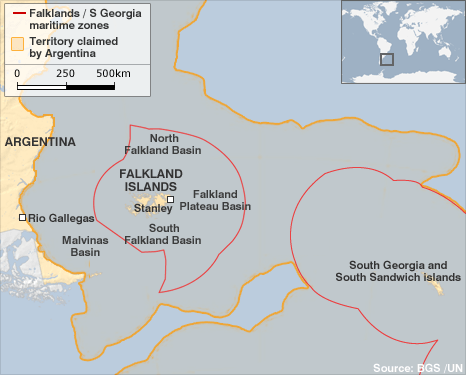
I’m certainly hoping that this is just speculation on the part of Strategy Page (the bit about nuclear weapons), as territorial disputes over islands do have a way of getting out of hand (see Falkland Islands, for example).

April 6, 2010

Boatin’

Filed under: Administrivia, History, USA — Tags: , , — Nicholas @ 09:34

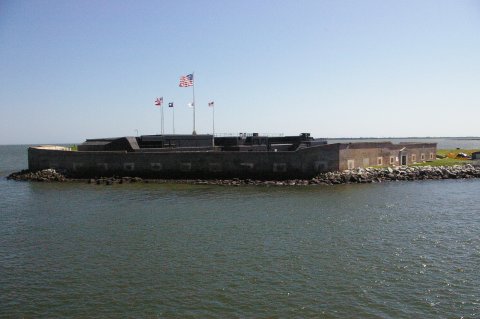
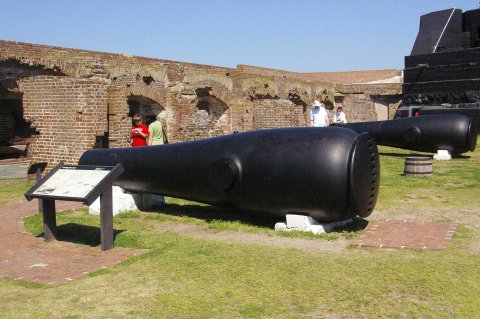
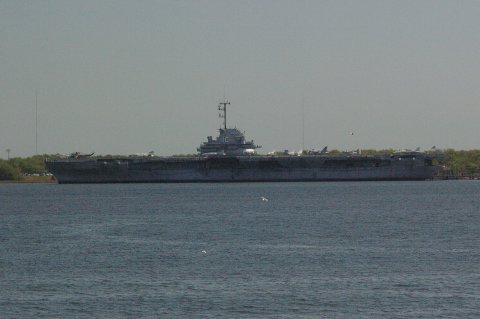
A few photos taken on our boat tour out into Charleston harbour, including a stop at Fort Sumter:


The (remains of) the fort, from the inner harbour, approaching the dock


Some of the recovered cannon from the Civil War sieges


The USS Yorktown, taken from the Aquarium on the other side of the river.

March 29, 2010

Costs continue to rise for F-35B aircraft

Filed under: Economics, Europe, Military, USA — Tags: , , , , , — Nicholas @ 08:47

Strategy Page has more on the increasing spendiness of the F-35 program, especially the part the Navy is most concerned about:

Denmark has decided to wait, until 2014, to decide what to replace its elderly F-16 fleet with. Meanwhile, 18 of the F-16s will be retired. But the other 30 will be refurbished so that they can continue to operate for the rest of the decade. Denmark had wanted to replace the F-16s with F-35s. But the F-35s keeps getting delayed (now more than two years behind schedule), and is becoming more expensive (nearly a hundred percent over budget). The Danish F-35 buy is no longer a sure thing. The delays have lots of users concerned. The U.S. Navy has been nervously watching as the costs of the new F-35C and F-35B carrier aircraft versions go up.

It comes down to this. Currently, it costs the navy, on average, $19,000 an hour to operate its AV-8 vertical takeoff and F-18C fighter aircraft. It costs 63 percent more to operate the F-35C (which will replace the F-18C) and the F-35B (which will replace the AV-8). These costs include buying the aircraft, training and maintaining the pilots, the aircraft and purchasing expendable items (fuel, spare parts, munitions.) Like the F-22, which recently had production capped at less than 200 aircraft, the capabilities, as superior as they were, did not justify the much higher costs. The F-35, at least for the navy, is headed in the same direction. The navy can go ahead with the more recent F-18E, and keep refurbishing, or even building, the AV-8. Politics, and lobbying by the F-35 manufacturer, will probably keep the F-35 headed for fleet service, no matter what the cost.

Another ally watching the F-35B costs rise with trepidation is the Royal Navy, whose aircraft carriers are not able to handle conventional aircraft (even the two large carriers under construction won’t have catapults for launching non-STOL planes). Earlier posts on the Royal Navy’s carrier worries here and here.

March 26, 2010

Somali pirates

Filed under: Africa, Military — Tags: , , , — Nicholas @ 09:03

Strategy Page has a useful round-up of information on the pirates and their operating methods:

The piracy has been a growing problem off the Somali coast for over a decade. The problem now is that there are thousands of experienced pirates. And these guys have worked out a system that is very lucrative, and not very risky. For most of the past decade, the pirates preyed on foreign fishing boats and the small, often sail powered, cargo boats th[at] move close (within a hundred kilometers) [to] the shore. During that time, the pirates developed contacts with businessmen in the Persian Gulf who could be used to negotiate (for a percentage) the ransoms with insurance companies and shipping firms. [. . .]

Big ships have small crews (12-30 sailors). Attacking at night finds most of the crew asleep. Rarely do these ships have any armed security. Ships can post additional lookouts when in areas believed to have pirates. Once pirates (speedboats full of armed men) are spotted, ships can increase speed (a large ship running at full speed, about 40+ kilometers an hour, can outrun most of the current speed boats the pirates have), and have fire hoses ready to be used to repel boarders. [. . .]

Now that the pirates have demonstrated their ability to operate far (over 700 kilometers) from shore, it’s no longer possible to just use naval patrols and convoy escorts. This works in the Gulf of Aden, but father off the Somali coast, there is simply too much area to patrol. With ocean going mother ships, the pirates can operate anywhere in the region. Between the Gulf of Aden, and the Straits of Malacca to the east (between Singapore and Indonesia), you have a third of the worlds shipping. All are now at risk. Convoys for all these ships would require more warships (over a hundred) than can be obtained.

March 25, 2010

Is this the beginning of the end for “Don’t ask, don’t tell”?

Filed under: Military, USA — Tags: , , , , , , , — Nicholas @ 10:14

US Defense Secretary Robert Gates has announced some changes to the “don’t ask, don’t tell” policy that makes it a bit less easy to force gay or lesbian service members out of the armed forces:

The Pentagon announced immediate changes on Thursday to make it more difficult for the military to kick out gay service members, an interim step while Congress debates repeal of the existing “don’t ask, don’t tell” policy.

Defense Secretary Robert Gates told a news conference that the directives included raising the rank of those allowed to begin investigation procedures against suspected violators of the “don’t ask, don’t tell” policy.

If you wonder why even a small step like this has been so long in coming, this explains how deeply embedded anti-homosexual attitudes can be:

Well now we know. The reason Western forces failed to prevent the massacre in Srebrenica in 1995 is because of the gays. You see the Dutch lifted a ban on homosexuals in the armed services in 1974 and ever since then the Nancy boys have been so busy watching Sex and the City, baking flans and checking out the backsides of their hetero comrades-in-arms that the whole operation has gone to pot.

This is the theory floated with an ironically straight face by retired Marine General John Sheehan during congressional hearings on abandoning Don’t Ask Don’t Tell, Bill Clinton’s cowardly split-the-difference policy on gays in the service. The General’s criticism wasn’t limited to the Dutch, mind you; he thinks many European armies have gone “soft” owing to liberal social engineering projects.

General Sheehan may be more representative of attitudes at the higher levels of the armed forces than Secretary Gates. I don’t get it, but this is nothing new. As I wrote back in 2008:

As a recruiting policy, DADT is just plain dumb. As a “retention” policy, DADT is worse: gay and lesbian soldiers are pretty clearly determined to serve — in spite of the widespread anti-gay mentality pervasive in some units — and are being dismissed from the service for being honest. This, at a time when all branches of the US armed forces are struggling to maintain troop levels. It’s a stupid, dishonest policy and should be discarded ASAP.

Oh, and here:

It’s truly mind-boggling that the US military can still justify this stupid policy: being gay isn’t a crime, and is becoming “normal” across the country, yet it still counts as a reason to drum someone out of the military. This, at a time when the armed forces are finding their demands for personnel outstripping the supply.

A gay man or a lesbian woman is no more a threat to the efficient functioning of a military unit than anyone else — all things being equal — and may well be more motivated to succeed because they’ve volunteered to serve in spite of the idiotic “Don’t ask, don’t tell” policy.

Another tidbit on military reform in China

Filed under: China, Military — Tags: , , , — Nicholas @ 08:50

In an article briefly discussing the not-widely-reported unrest in ethnic Uighur regions, a mention of some progress in reducing corruption in China’s military hierarchy:

There’s a lot of corruption remaining in the military as well. For over a decade, the government has worked to eliminate the worst of the theft and moonlighting. The most outrageous examples of this have been curbed. Thus military officers no longer use cash from the defense budget to set up weapons factories they run and profit from. Big chunks of procurement cash no longer disappear into the offshore bank accounts of generals and admirals. But there’s still a lot of corruption. Much is still for sale, like promotions. Lower ranking officers and NCOs can still be found selling weapons and equipment that is reported “destroyed” or “mission.” Commanders who are not doing so well, can pay to have reports of their performance upgraded. Senior government officials still have doubts about how effective the military would be in another war. It was noted, usually by journalists, that the army response to several recent national disasters (which usually employ troops for disaster relief) had problems. This is not supposed to be reported, but the journalists discuss it among themselves, and some of this knowledge gets onto the Internet and outside the country. People love to gossip, especially in a police state like China.

In response to the corruption, and uncertainly about how the military reform (and modernization) program is going, this year’s defense budget only went up 7.5 percent. For over a decade, the annual increases were in the double digits. But another reason for the stall is the impact of the worldwide recession. While the Chinese economy continued to grow, the rate was less.

The usual caveats apply about any official statistics used in discussions about China: if you’ve somehow managed to avoid seeing ’em before, there’s a roundup here.

March 23, 2010

Another sign of modernization or just window-dressing?

Filed under: China, Military — Tags: , , — Nicholas @ 07:45

China has been actively modernizing their military forces for the last couple of years, including not only new designs in equipment, but also doctrinal changes in how those forces go about doing their jobs. The generals seem to have finally decided that moving away from the Mao-era massed infantry is necessary, as Korean War tactics won’t prevail against an opponent with modern equipment. A minor name change is a way-marker for all the other military changes happening:

Without any fanfare, China has changed the names of its armed forces. Gone are the PLA (Peoples Liberation Army) prefix for the navy (PLAN) and air force (PLAAF). It’s now just the Chinese Army, Chinese Navy and Chinese Air Force. Since there was no official announcement, there was no explanation for why the old PLA prefix was dropped. The PLA was the original armed forces, founded in 1927, of the Chinese Communist Party. This force was initially known as the Chinese Red Army. After World War II, the PLA name was formally adopted for all the armed communist armed forces.

If nothing else, it will make future reports on the Chinese military sound less like propaganda reels from the 1950s.

March 18, 2010

Harrier replacement’s first hover test

Filed under: Britain, Military, Technology, USA — Tags: , , , , — Nicholas @ 09:49

The F-35B from Lockheed Martin is intended to replace the Hawker Harrier for the US Marine Corps and the Royal Navy. Here’s a short video of the test plane in its first test of hovering and then a slow-speed landing:

H/T to Lewis Page, who writes:

Though the F-35 had been planned to be bought in thousands by the US forces alone, suggesting good economies of scale and affordable prices for export customers down the road, critics of the programme are now alleging that costs are so far out of control that the well-known military procurement “death spiral” process has set in: higher price, less planes bought, unit cost driven up even higher, even less planes bought and so on.

However it’s important to note that if the F-35 is successful it has the potential to destroy large amounts of the present global military aerospace industry. If it does get made in large enough numbers to be offered cheaply in time, it will be more sophisticated and yet cheaper than any other combat jet on the market, in all likelihood putting several of its competitors out of business in decades to come. This is probably a major reason why so many aerospace people are desperate for it to fail.

But there are others who feel that the Western fighter jet industry is overlarge, bloated, has no real threat to confront any more and is consuming funds which might be better spent on simpler things such as infantrymen or helicopters. They might be hoping that the F-35 can resolve its problems.

Earlier posts on the F-35, particularly from the Royal Navy’s viewpoint here.

March 17, 2010

The secret life of the F-18

Filed under: Military, USA — Tags: , , , — Nicholas @ 09:11

Another interesting article from Strategy Page:

The U.S. Navy has grounded 16 percent (104 of 635) of its older (A/B/C/D models) F-18 fighters. The reason is the discovery of cracks in the airframe. Small cracks were expected to show up eventually, the result of all the stress put on the metal from violent aerial maneuvers, and carrier landings. But in this case, the cracks were showing up sooner than expected. Most of the grounded aircraft can still be flown in an emergency. All these older F-18s have to be examined, and those found with cracks (usually where the wing meets the fuselage), repairs can be made.

Over the last few years, the navy has found that both their older F-18C Hornet fighters, and their newer F-18E “Super Hornet” are wearing out faster than expected. This was sort of expected with the F-18Cs, which entered service during the late 1970s and early 80s. These aircraft were expected to last about twenty years.

This is of interest to a lot of American allies, as the F-18 is in use by many of their air forces. Partly due to the faster aging of the US aircraft, the manufacturer is still producing spare parts (which benefits both the US Navy and allied air forces).

One very interesting detail I didn’t know:

There are actually two quite different aircraft that are called the F-18 (the A/B/C/D version, and the E/F/Gs). While the F-18E looks like the original F-18A, it is actually very different. The F-18E is about 25 percent larger (and heavier) than the earlier F-18s, and has a new type of engine. By calling it an upgrade, it was easier for the navy to get the money from Congress. That’s because, in the early 1990s, Congress was expecting a “peace dividend” from the end of the Cold War, and was slashing the defense budget. There was a lot of commonality between the two F-18s, but they are basically two different aircraft.

Rather like the Royal Navy managing to sneak their last generation of aircraft carriers through the budget process by calling them “through-deck cruisers”.

March 16, 2010

That Red Dragon may be paper after all

Filed under: China, Economics, Military — Tags: , , — Nicholas @ 07:45

Strategy Page makes a case for the recent military spending and increased media attention being paid to it being highly misleading:

Over the next few years, you’ll be seeing a lot media attention paid to China’s growing military might. China’s ever increasing spending on modern weapons and military equipment gives the illusion of growing military power. It is very much an illusion. The 2.3 million troops in the Chinese armed forces are poorly trained and led. China has a long history of corruption and rot in the military during long periods of peace. The last time the Chinese military has been in action was 1979 (when they attacked Vietnam, and got beaten up pretty bad). [. . .]

American sailors are constantly exposed to examples of the poor training and leadership in the Chinese navy, whenever they encounter Chinese warships at sea. Foreigners living in China, and speaking Chinese, can pick up lots of anecdotes about the ineptitude and corruption found in the military. It’s all rather taken for granted. But in wartime, this sort of thing would mean enormous problems for the troops, when they attempted to fight better trained and led troops.

You don’t see much in the media about the poor training of Chinese troops, pilots and ship crews. You don’t hear much about the poor leadership and low readiness for combat. But all of this is common knowledge in China. There, the military is not walled off from everyone else. Cell phone cameras and the Internet make it easy to pass around evidence (often in the form of “hey, this one is hilarious”). The government tries to play up how modern and efficient the military is, but most Chinese know better, and don’t really care. China is winning victories on the economic front, and that what really counts to the average Chinese.

According to this analysis, the key role of the Chinese military is actually as a tool in American politics, specifically filling the role once occupied by the mighty Soviet armed forces. The Chinese are portrayed as being the reason for maintaining or increasing US military spending, which must work well enough, for aside from the required money to keep troops on active duty in Iraq and Afghanistan, the government still provides additional funds for this purpose.

The basic weapon for this sort of thing is FUD (Fear, Uncertainty and Doubt). Works every time, although it is difficult to pitch the Chinese navy as a crack force. Most of their ships are elderly, poorly designed and rarely used. Their nuclear subs are worse than the first generation of Russian nukes back in the 1960s. The most modern Chinese ships are Russian made, Cold War era models. Chinese ships don’t go to sea much, not just because it’s expensive, but because Chinese ships tend to get involved in nasty incidents. Like the submarine that killed its crew when the boat submerged (and the diesel engines did not shut down when the batteries kicked in, thus using up all the oxygen.) Breakdowns are more common, as well as a lot of accidents you don’t hear about (weapons and equipment malfunctions that kill and maim.)

Given my skepticism about the Chinese economy (see here for example), I’m somewhat inclined to agree with the author of this article about the Chinese military.

March 2, 2010

Military neglect: “it’s how we’ve always done it”

Filed under: Cancon, Military, Politics, Weapons — Tags: , , , , — Nicholas @ 12:23

Matt Gurney discusses the military share of the federal budget, in light of proposed spending restrictions in the upcoming throne speech:

It can’t be denied that the Harper government has delivered what the troops needed. German-made tanks, American transport helicopters and British artillery cannons have made our troops more effective and harder to kill. But it has also revealed an enduring flaw in Canadian military procurement policy: In peacetime, we convince ourselves we’ll never need a military, and in wartime, we pay through the nose to buy one off the shelf. From building virtually a whole new navy and air force to battle the Nazis, to the recent race to get drones and helicopters into Kandahar in time to make a difference, it’s how we’ve always done it. This must change.

Neglecting our Forces in peacetime and then racing to properly equip them once they’re already committed to battle not only puts our men and women in danger, it’s fiscally inefficient. It would be better, both for our military and our treasury, to commit ourselves to maintaining a large, robust military in peacetime that is capable of going to war on short notice, with all it needs already on hand. That means maintaining a high tempo of training, recruiting enough manpower to fill the ranks, and replacing obsolete or worn out equipment promptly.

[. . .] arguably, each branch of the Canadian Forces, most particularly the army but certainly the navy as well, ought to be considerably larger than it is. Even if Canadians are willing to settle for the status quo — a small military that uses technology and guts to punch above its weight — we’re going to need to spend to keep us there.

Many will no doubt argue that Canada doesn’t need a powerful military. But to their credit, the Conservatives, who’ve spent the last several years positioning themselves as the party that gave the military its pride back, aren’t taking that line. Thursday’s budget — and those that follow it — must put the money where their mouths have been.

Historically, Canadians have not supported military spending outside wartime. The necessity of paying for salaries, training, and equipment when they’re not actively being employed seems to most Canadians to be wasted spending. Even when the government manages to overcome its hesitation to spend money on new kit, it is viewed primarily as a source of regional development assistance, political patronage, or industrial policy, rather than providing the troops with the tools they need to do their jobs.

It’s (barely) possible that the goalposts have shifted over the last several years: Canada’s military has a higher profile in public eyes than at any time since 1945. Canadians are far more individually supportive of soldiers, sailors, and airmen than ever before. Perhaps there won’t be the political cost to the government for paying the extra financial costs to keep our military kit up to current standards.

But the smart money isn’t betting on that as the most likely outcome.

February 26, 2010

US Navy SEAL teams to use British mini-sub

Filed under: Britain, Military, Technology, USA — Tags: , , — Nicholas @ 12:53

Lewis Page discovers that the latest minisub for the US Navy’s SEAL teams is actually made in Britain:

A groundbreaking new miniature submarine in use by the US Navy’s secretive, elite frogman-commando special operations force was actually designed and built in old Blighty, the Reg can reveal.

We reported first on the S301 mini-sub two weeks ago, noting from federal documents that the famous US Navy SEALs had leased a demonstration model for “doctrinal, operational, and organizational purposes”. This was followed up last week by the Honolulu Advertiser, which had spoken to Submergence Group, the American firm listed by the US government as provider of the S301.

It emerged that the S301 — now in trials with the SEALs in Hawaii — had cost just $10m to develop, which contrasted especially well with the $885m+ spent on the ill-fated Advanced SEAL Delivery System (ASDS).

The ASDS, from US defence behemoth Northrop Grumman, had been intended to supersede the SEALs’ current Mark 8 Mod 1 minisubs, which are carried in a “Dry Deck Shelter” (DDS) airlock docking bay fitted to a full-sized US Navy nuclear submarine — either a normal attack boat or an Ohio-class dedicated Stingray-style special-ops mothership. The Ohios, nuclear missile subs retired from their old job under arms-reduction treaties, have space aboard for a large force of SEALs and pack a powerful armament of conventional-warhead cruise missiles for precision shore bombardment.

February 18, 2010

MoD denies reports that Falklands naval presence to be reinforced

Filed under: Americas, Britain, Military — Tags: , , — Nicholas @ 07:21

The BBC reports on British military preparations in the Falklands, after Argentina imposed tighter controls on the seas around the islands:

The UK has made “all the preparations that are necessary” to protect the Falkland Islands, Prime Minister Gordon Brown has said.

Argentina has brought in controls on ships passing through its waters to the islands over UK plans to drill for oil.

Shadow foreign secretary William Hague told the BBC the Royal Navy’s presence in the region should be increased.

The Ministry of Defence has denied reports a naval taskforce is on its way to the Falklands.

While it’s unlikely that we’ll see a re-run of the 1982 Falkland war, recall that it was a reduction in British force in the region that gave Argentina’s military junta the opportunity to invade. Britain appears to have learned from that mistake.

« Newer PostsOlder Posts »

Powered by WordPress