Quotulatiousness

June 25, 2018

The oddly variable careers of Royal Navy ships named HMS Lion

Filed under: Britain, History, Military — Tags: , , — Nicholas @ 05:00

Every now and again, a random question leads me to odd results … in this case I wondered about the Royal Navy ships named HMS Lion, which I remembered as being used for a First World War battlecruiser (Vice-Admiral Beatty’s flagship through the actions at Heligoland Bight and Jutland) and a Cold War light cruiser (whose sister ships were converted into hybrid light cruiser/amphibious assault ships). Earlier ships of that name had even more interesting careers (from the Wikipedia disambiguation page):
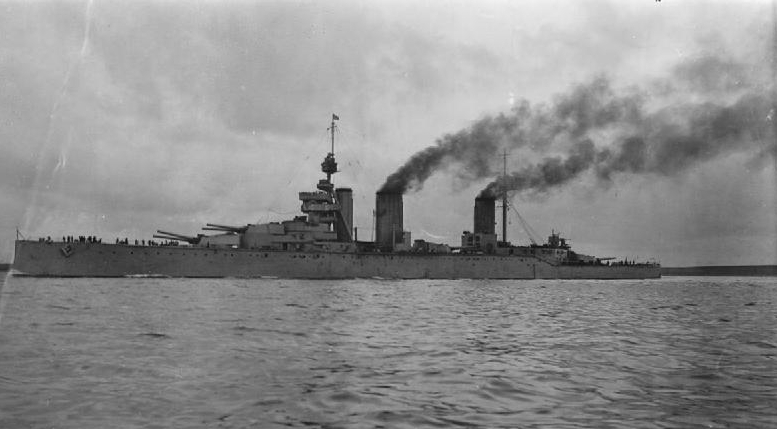
HMS Lion, lead ship of the Lion-class of Royal Navy battlecruisers.
Photo from the Imperial War Museum, via Wikimedia Commons.

  • English ship Lion (1511) was a 36-gun ship of the Royal Scottish Navy captured in 1511 and sold in 1513.
  • English ship Lion (1536) was a 50-gun ship built in 1536 and on the navy list until 1559.
  • English ship Lion (1547) was a Scottish ship captured in 1547 and later lost off Harwich.
  • English ship Lion (1557) was a 40-gun ship, also known as Golden Lion. She was rebuilt four times, in 1582, 1609, 1640 and 1658. After her 1609 rebuild she was renamed Red Lion, but this was reverted to Lion after the 1640 rebuild. She was sold in 1698.

Modern naval ships are considered long-in-the-tooth after 25-30 years of service. HMS Lion (the HMS was not consistently applied to royal ships until the eighteenth century, but let’s just let that slide here) of 1557 was only undergoing her first rebuild/life extension at the point a modern ship would already be under consideration for dismantling. She was still in royal service for three more rebuildings, and was sold (not scrapped) after 141 years of active service. But the Royal Navy was far from done with using this name:

  • HMS Lion (1665) was a 6-gun ketch, also known as Young Lion. She was captured from the Dutch in 1665, sold in 1667, repurchased in 1668 and sunk as a foundation at Sheerness in 1673.
  • HMS Lion (1683) was a fifth rate captured from the Algerians in 1683 and sold the same year.
  • HMS Lion (1702) was a 4-gun stores hoy of 99 tons burthen purchased in 1702. A French privateer captured her off Beachy Head in 1708, but she was recaptured in 1709.[1]
  • HMS Lion (1709 hoy) was a 4-gun hoy launched in 1709. She was wrecked in 1752.[2]
  • HMS Lion (1709) was a 60-gun third rate launched in 1709, rebuilt in 1738 and sold in 1765.

Another longer-service veteran than the vast majority of modern naval ships.

  • HMS Lion (1753) was a transport launched in 1753, hulked in 1775, and sold in 1786.
  • HMS Lion (1763) was a cutter purchased in 1763 and sold in 1771.
  • HMS Lion (1774) was a discovery vessel in service from 1774 to 1785.
  • HMS Lion (1777) was a 64-gun third rate launched in 1777. She was used as a sheer hulk from 1816 and was sold for breaking up in 1837.

One assumes the name was changed before 1781, even though the hull was still in use for long after other ships named HMS Lion were respectively in commission and then out of service with the Royal Navy:

  • HMS Lion (1781) was a schooner purchased around 1781 and sold in 1785.
  • HMS Lion (1794) was a 4-gun vessel, originally a Dutch hoy. She was purchased in 1794 and sold in 1795.
  • HMS Lion (1823) was a schooner in service from 1823 and sold in 1826.
  • HMS Lion (1847) was an 80-gun second rate launched in 1847. She was converted to screw propulsion in 1859 and became a training ship after 1871. She was sold for breaking up in 1905.
  • HMS Lion (1910) was a Lion-class battlecruiser launched in 1910 and sold in 1924.
  • HMS Lion (1939) was to have been a Lion-class battleship. She was laid down in 1939, but work was suspended later that year, and again in 1942. The order was finally cancelled in 1945 and she was broken up on the slipway.
  • HMS Lion (C34) was a Tiger-class cruiser launched in 1944 as the Minotaur-class HMS Defence. She was finally completed to a revised design in 1960. She was placed in reserve in 1964 and was scrapped in 1975.
June 20, 2018

Korea adds a second helicopter carrier, may adapt them to carry F-35 aircraft

Filed under: Asia, Japan, Military — Tags: , , , — Nicholas @ 05:00

At Strategy Page, a look at the Korean and Japanese helicopter carrier ships, including the recently launched ROKS Marado, the second ship of the Dodko class:

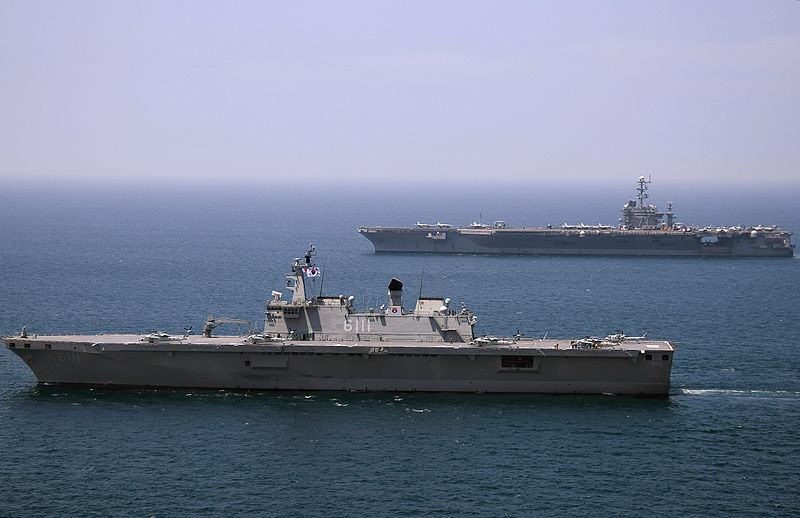
The Republic of Korea Navy amphibious landing ship ROKS Dokdo (LPH 6111) and the aircraft carrier USS George Washington (CVN 73) transit the Sea of Japan (July 27, 2010).
U.S. Navy photo by Mass Communication Specialist 3rd Class Charles Oki via Wikimedia Commons.

During May South Korea launched its second Dokdo class large amphibious ship, the 14,500 ton Marado. The first of these ships, the 14,000 ton LPH (Landing Platform Helicopter) Dokdo entered service in 2007 and the Marado is expected to follow in 2020. In addition to being a bit larger than the first Dokdo, the Marado has a number of new features that enhance its ability to operate as an aircraft carrier. This includes more capable electronics, many of them made in South Korea as well modifications to the flight deck and the hanger deck below.

Both 199 meter long Dokdos are similar in appearance and operation to the larger American amphibious ships. The LPH flight deck can handle helicopters, as well as vertical takeoff jets like the F-35B. The Koreans deny that the ship will be used with these jets, but the capability is there. The LPH normally carries 720 combat troops, a crew of 300, ten tanks, seven amphibious assault vehicle, three towed 155mm howitzers and ten trucks. Dokdos carry fifteen aircraft (two V-22 vertical takeoff transports and 13 helicopters) and two LCAC hovercraft in the well deck for landing troops.

The Marado has a redesigned flight deck that can handle two V-22s at once instead of just one. In addition to a more powerful 3-D surveillance radar for tracking aircraft, Marado has two Phalanx anti-missile systems compared to one Goalkeeper system on Dokdo. South Korea is also going to add a locally developed and manufactured K-SAAM anti-aircraft and anti-missile system. This is similar to the existing U.S. made ESSM but with longer range and an improved guidance system.

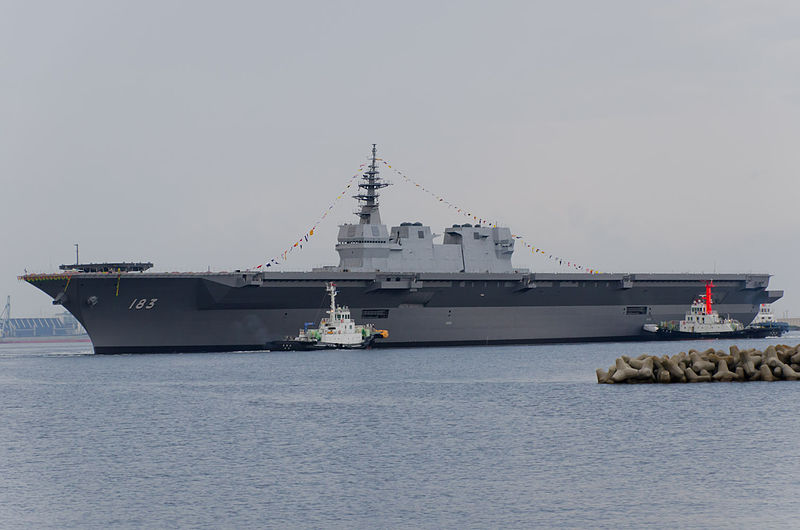
JS Izumo DDH-183, sister-ship of the JS Kaga DDH-184, both helicopter-equipped destroyers, officially.

Meanwhile, neighbor Japan has taken the Dokdo concept a bit farther. In early 2017 Japan put into service a second 27,000 ton “destroyer” (the Kaga, DDH 184) that looks exactly like an aircraft carrier. Actually, it looks like an LPH, an amphibious ship type that first appeared in the 1950s. This was noted when Izumo, the first Japanese LPH, was launched in 2012 (and entered service in 2015). The Izumos can carry up to 28 aircraft and are armed only with two Phalanx anti-missile systems and a launcher with sixteen ESSM missiles for anti-missile and anti-aircraft defense.

[…]

The Izumo is part of a trend. In 2009, Japan launched its second Hyuga class “LPH”. Earlier in 2009, it commissioned the first of these “helicopter-carrying destroyers”. This was the first Japanese aircraft to enter service since 1945. The Hyuga class are 197 meter (610 foot) long, 18,000 ton warships that operates up to eleven (mostly SH-60) helicopters from a full-length flight deck. Although called a destroyer, it very much looks like an aircraft carrier. While its primary function is anti-submarine warfare, the Hyuga will also give Japan its first real power projection capability since 1945. The Hyuga was also the largest warship built in Japan since World War II.

South Korea could adapt their Dokdos to handle a few F-35Bs by making the flight deck more heat resistant and rearranging the hanger deck. South Korea is getting land based F-35As which would enable them to determine if it would be worth the time and money to adapt their LPHs to carry some vertical takeoff F-35Bs. Sometimes peacekeeping missions involve some peacemaking and F-35Bs would help with that.

June 12, 2018

The Goeben & The Breslau – Two German Ships Under Ottoman Flag I THE GREAT WAR On The Road

Filed under: Europe, Germany, History, Middle East, Military, WW1 — Tags: , , , , — Nicholas @ 04:00

The Great War
Published on 11 Jun 2018

How SMS Goeben and SMS Breslau, two German warships in 1914 sailed under Ottoman flag and helped Enver Pasha to get the Ottoman Empire into World War 1.

June 2, 2018

A Safer Berth – HMS Victory

Filed under: Britain, History, Military, Technology — Tags: , — Nicholas @ 02:00

NMRNPortsmouth
Published on Aug 21, 2017

An 18-month programme to re-support the world’s most famous warship HMS Victory sagging under her own weight is now underway.

May 31, 2018

Admiral David Beatty: “There seems to be something wrong with our bloody ships today”

Filed under: Britain, Germany, History, Military, WW1 — Tags: , , , — Nicholas @ 05:00

One of the outcomes of the Battle of Jutland was that naval opinion finally crystalized over the notion of battle cruisers: the loss of three British battle cruisers during the battle (and near-loss of a fourth) proved to most that the design was flawed and that this class of ships should never have sailed into battle against real battleships. A recent post at Naval Gazing begs to differ on this judgement:

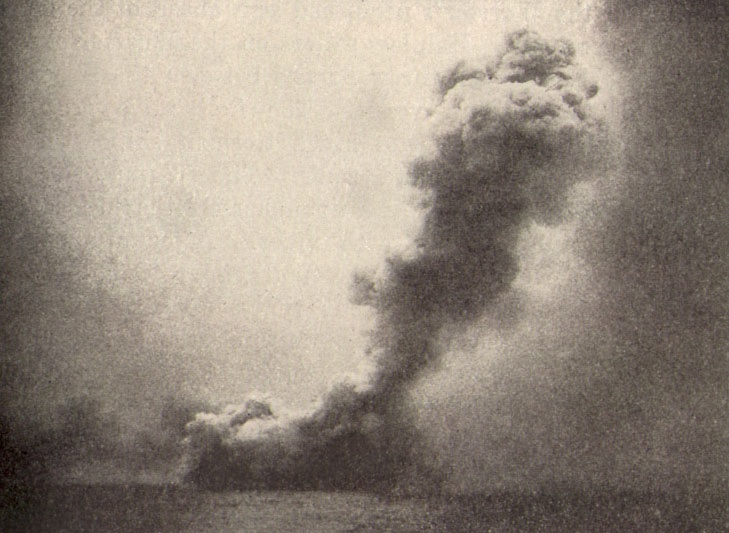
Explosion that sank HMS Queen Mary at the Battle of Jutland, 31 May 1916
Image via Wikimedia Commons.

David Beatty’s famous remark about the destruction of two of his ships by catastrophic magazine explosions during the Battle of Jutland sums up the traditional attitude towards one of the battle’s most famous aspects. Of the 3,326 men aboard the battlecruisers Indefatigable, Queen Mary, and Invincible, only 17 survived. It’s long been believed that the ships themselves were to blame, as they were built with only relatively light armor. Shells supposedly penetrated to the magazines and set them off. Recent research has revealed that this was not the case, and the ships were lost primarily due to defects in operation, not design.

The basic problem with the conventional theory is that no German shell penetrated deep enough into the surviving ships to have been able to set off a magazine if it had hit one. The magazines take up a minority of a battlecruiser’s deck, so if such hits were common, then at least a few of the surviving ships should have seen shells reach their machinery. Instead, German shells were found to detonate with 16-24′ of their first impact with the structure. At the 20° angle the shells were falling at at the time, this puts them no more than 8 feet below the upper deck upon detonation. The only case where shell fragments reached magazine was a hit on Barham at 1758 when fragments from a 12″ shell penetrated the deck over the 6″ magazine. Despite leaving a 12″x15″ hole in the 1″ deck, the fragments had no effect on the powder stored under it.

So is there a different potential cause, one that happened to a surviving ship? A survey of the damage to Beatty’s battlecrusiers reveals a promising candidate. A hit on a turret, such as the one suffered by HMS Lion, could cause a flash to propagate down into the magazine, which would then deflagrate in precisely the manner seen during the battle. A careful examination of Lion‘s damage shows that she came very close to suffering the same fate.

Turret explosions are hardly unknown aboard warships, either as a result of accident or enemy action, and a great deal of care goes into making sure that they don’t set off the magazines. Powder is stored in metal cans or tanks, and flashproof doors and other interlocks are used to make sure that fire does not reach the magazines. Unfortunately, the British had systematically undermined these protections in the search for rate of fire and ammunition capacity, and their magazine practices during the battle can only be described as suicidal.

After the Battle of Dogger Bank, Beatty decided that the reason he was unable to destroy the German battlecruisers was insufficient rate of fire. Not only would opening fire early and firing quickly lead to early hits, but it would also distract the German gunners. However, the British were not particularly confident in their long-range fire control, and began to stuff extra cordite into the handling rooms and other spaces that had been designed to provide flash protection. This was made much worse by a other changes intended to increase rate of fire. Normally, the cordite cases were kept sealed until just before the charges are sent to the gun, but the crews chose to open many of the cases early, take some cordite out of the cases before battle to make it easy to access, and even stored extra charges completely unprotected. In a final effort to make the turrets as dangerous as possible, the majority of the anti-flash safety doors were removed.

The only ship which strongly resisted this trend was Lion, and the efforts of her Gunner, Alexander Grant, deserve most of the credit. When Grant came aboard, he found the situation described above, and quickly reintroduced the traditional magazine safety regulations with the support of Lion‘s captain, Ernle Chatfield. He managed to train the magazine crews to the point where they could provide cordite to the guns faster than the guns could fire it, while observing full safety procedures.

The Battle of Jutland Explained

Filed under: Britain, Germany, History, Military, WW1 — Tags: , , — Nicholas @ 04:00

Ministry of Defence
Published on 25 May 2016

10,000 men. 250 ships. 12 hours. Two sides. The Battle of Jutland – 100 years ago.

May 30, 2018

Decisive Weapons S02E04 – U-Boat Killer: The Anti-Submarine Warship

Filed under: Britain, History, Military, WW2 — Tags: , , — Nicholas @ 04:00

erana19
Published on 25 Jan 2016

1996-1997 BBC documentary series. Series 2, Episode 4.

May 28, 2018

Naval Operations In The Dardanelles Campaign 1915 I THE GREAT WAR On The Road

Filed under: Britain, France, History, Middle East, Military, WW1 — Tags: , , , , — Nicholas @ 04:00

The Great War
Published on 25 May 2018

In our first episode filmed on the former Gallipoli battlefields, Indy and our guide Can Balcioglu explore the naval campaign that preceded the landings at Gallipoli in early 1915.

May 26, 2018

Sir Humphrey debunks the notion of maintaining a “reserve fleet”

Filed under: Britain, Economics, Military — Tags: , , , — Nicholas @ 03:00

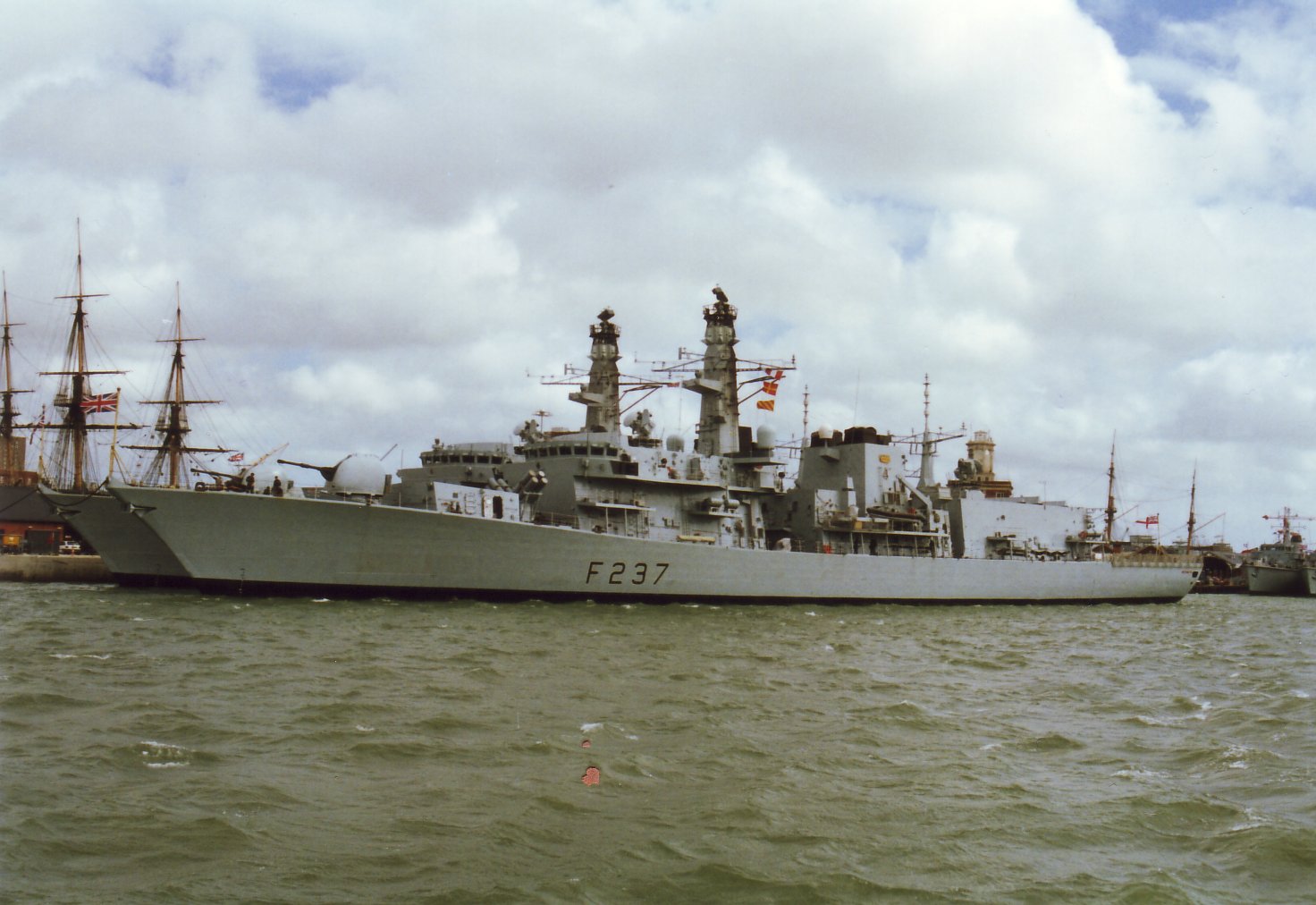
The US Navy keeps a lot of ships around after they’ve been retired from active service (sometimes for decades), and some in the UK are asking if the Royal Navy should do something like that with the soon-to-be-retired Type 23 frigates. Sir Humphrey explains in great detail why this shouldn’t happen:

HMS Westminster (foreground) and HMS Iron Duke, Type 23 frigates of the Royal Navy, in the naval base of Portsmouth, August, 2000.
Image via Wikimedia Commons.

The subject of ‘Reserve Fleets’ is something that often comes up across the internet whenever naval forces are discussed. To many casual observers there is an innate draw to the idea of holding ships back as a contingency against a potential threat. No matter how appealing this idea seems on the surface though, there are a multitude of good reasons why keeping complex warships in reserve at the end of their life is usually a very bad idea.

In broad terms these reasons boil down to four key areas – Maintenance & Material and People & Training. Each of these areas poses a challenge which brought together makes it extremely difficult to consider keeping a ship credible once she has paid off.

Maintenance & Material
The Royal Navy has historically not maintained a large reserve fleet since the 1950s, when the combination of the loss of conscript manpower, the increasing complexity of warships adding to reactivation times and the reality that any global conflict would go nuclear quickly meant that reserve fleets were relatively worthless.

After the late 1950s the RN maintained a ‘Standby Squadron’ that usually comprised several vessels that while not fully active, were kept in reasonable running order. For many years Chatham dockyard functioned as the home of the Squadron, which usually comprised ships drawn from classes still in service, that could be brought up to readiness quickly to replace other vessels at sea. This occurred during both the Cod War and the 1982 Falklands War.

It is not clear when the Standby Squadron was formally discontinued, but it played a key part in the RN force structure into the 1980s. For instance, the 1981 defence review foresaw a number of escorts (possibly 7-8 out of 50) being held in quasi-active status. The RN also maintained other ships in full reserve – such as during the lifetime of the Invincible class when usually one of the three was placed into reserve for a year or two ahead of deep refits.

The key distinction here is that this sort of set up required a heavy investment of resources and manpower to keep the ships maintained and fit for sea. A modern warship is never truly alone during her active life – there are always people onboard to maintain systems and keep watch over her. By contrast ships that decommission and pay off will progressively see less and less people onboard until one day they have been stripped down and become ‘dead ships’, and they will be left to rot until the scrappers take them.

To keep a ship in a salvageable condition, able to be made ready for sea requires a significant amount of maintenance and upkeep. This is something that is costly, requiring regular dockings, inspections and repairs, as well as the cost of keeping the ship preserved and vaguely usable. To put a ship into Reserve with the intention of using her again does not mean she can be forgotten about – quite the contrary, they require regular care and maintenance.

To put a ship into reserve at the end of her life and be certain of using her again would require an additional refit to rectify defects. It would also require regular inspections, support and attention throughout the period in reserve.

For a ship that is likely to be used again, it makes reasonable sense to do this as every pound spent on preventative maintenance is likely to save many more in reactivation costs. For a ship likely to pay off, this makes far less sense – you are spending a lot of money to park a ship and wait for it to be scrapped.

May 15, 2018

French protests over new British submarine in three, two, one…

Filed under: Britain, France, History, Military — Tags: , , — Nicholas @ 03:00

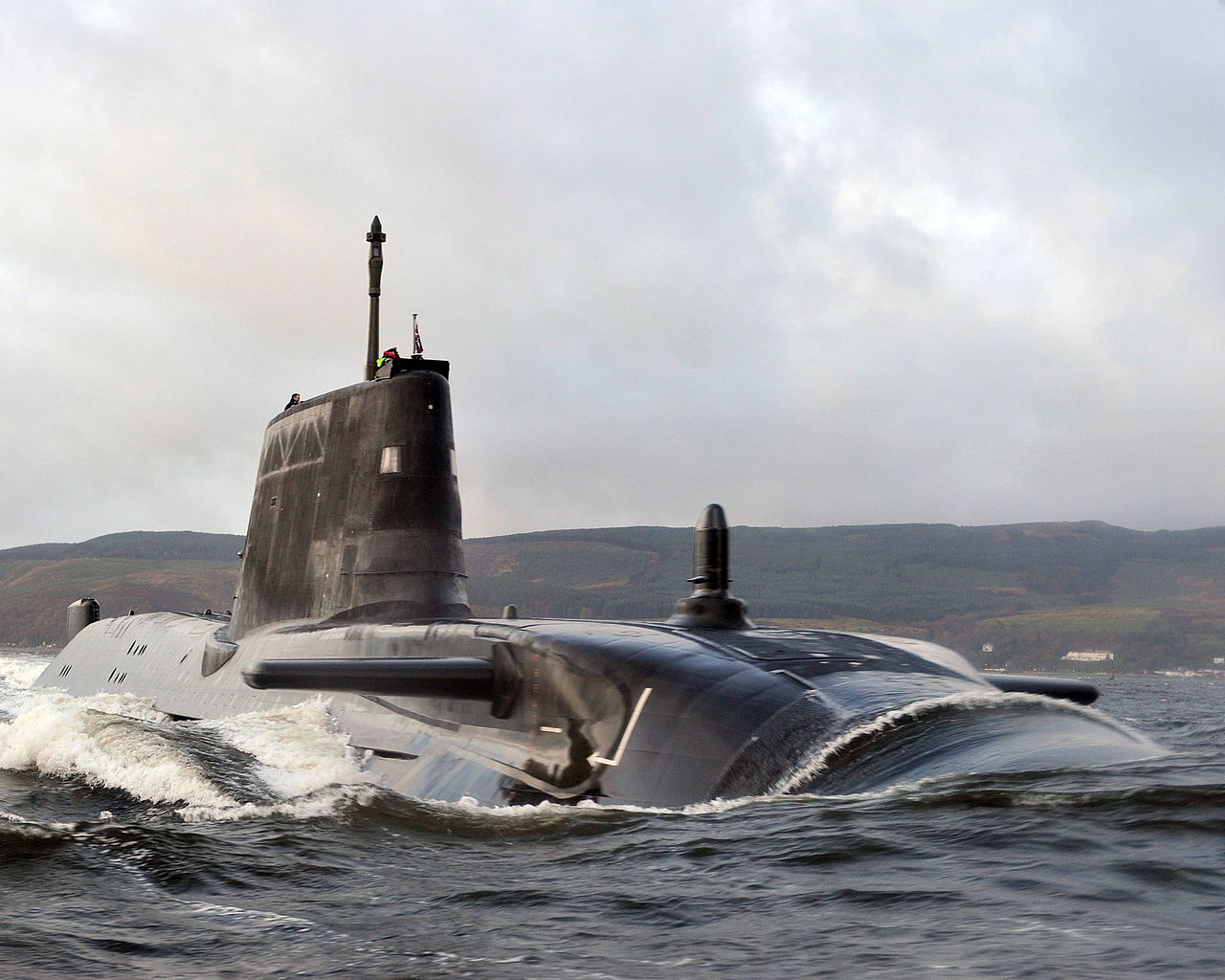
Gareth Corfield helpfully sums up the reasons for the French to take offence after the Royal Navy chose to name the next Astute-class nuclear submarine HMS Agincourt:

HMS Astute (S119), lead ship of her class, sails up the Clyde estuary into her home port of Faslane, Scotland.
MOD photo, via Wikimedia Commons.

The Royal Navy, always keeping up with the times, has named its newest attack submarine HMS Agincourt, after the 1415 battle where an English army beat French troops led by its nobility.

Agincourt the boat is the seventh and final Astute-class attack sub. The nuclear-powered vessels are used primarily to defend British interests from underwater, including seeing off marauding Russian vessels near British waters and also for sneaky-beaky missions of their own into foreign waters.

The £1.5bn submarine is under construction at BAE Systems’ yard in Barrow-in-Furness, Cumbria. Defence equipment minister Guto Bebb joyously declared: “Today’s announcement includes a £60m contract for Rolls-Royce, supporting over 700 jobs here in Derby as the factory continues to make the reactors that will power our state-of-the-art Dreadnought subs into the 2060s.”

And just to rile up any sensitive French souls, he also gives a thumbnail history of the battle the ship will be named for:

The name Agincourt is mildly controversial, inasmuch as it brings to mind the famous victory of King Henry V over France at a time where the English army, which was blundering around the Pas-de-Calais countryside, was largely thought to be on its last legs and cut off from its chances to retreat back home. In the words of the king’s (fictional, thanks to Shakespeare) eve-of-battle speech, it was “we few, we happy few, we band of brothers” up against the very best France had to offer.

Through “yew bow and cloth yard shaft”, as the chroniclers of the day put it, the English and Welsh longbowmen shot a torrent of arrows into the heavily armoured French knights. The arrows’ steel points penetrated the plate armour of the French nobles and the lightly equipped English then set about the bogged-in Frenchmen, whose weighty suits of armour were totally unsuited to the heavy mud of the battlefield.

In today’s world, where the UK and France are close allies and England has given way to the United Kingdom, naming the submarine Agincourt may be seen by some as a bit of an unintentional snub, bringing to mind Henry V’s slaughter of French prisoners of war and the failed negotiations that preceded the battle over Henry’s disputed claim to the title of King of France.

May 14, 2018

China launches the second Type 001 aircraft carrier (Type 001A)

Filed under: China, Military — Tags: , , — Nicholas @ 03:00

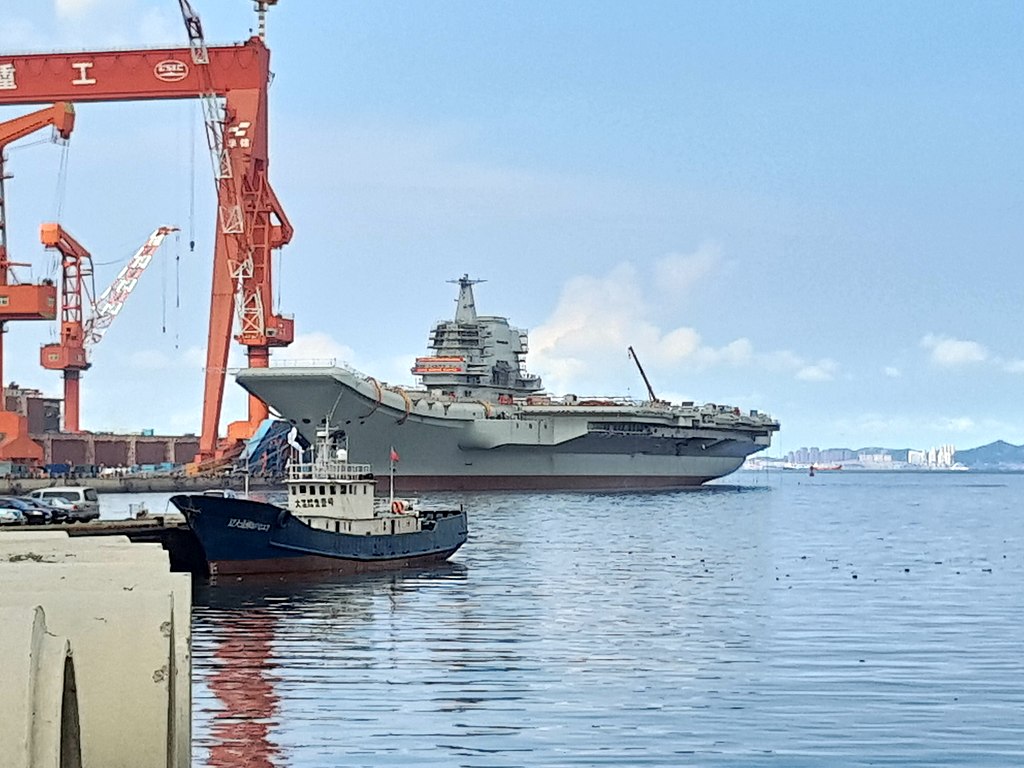
In the New York Times, Steven Lee Myers reports on the newest People’s Liberation Army Navy (PLAN) aircraft carrier departing from Dalian to undergo its initial sea trials:

China’s Type 001A aircraft carrier shortly after launch, 17 August 2017.
Photo via Wikimedia Commons

China launched its first domestically built aircraft carrier to begin sea trials on Sunday, reaching another milestone in the expansion of the country’s navy.

The aircraft carrier, as yet unnamed, left its berth at a shipyard in the northeastern port of Dalian after a blow of its horn and a display of fireworks, according to reports in state news media.

The Chinese Navy — officially the People’s Liberation Army Navy — already has one operational carrier, the Liaoning, which it bought unfinished from Ukraine after the collapse of the Soviet Union. That ship joined the Chinese fleet in 2012 and began its first operations four years later, putting China in the small group of seafaring powers that maintain aircraft carriers, led by the United States, which has 11.

The Liaoning, which appears to serve as a training vessel as much as a combat ship, was the centerpiece of a naval parade of 48 ships attended last month by China’s leader, Xi Jinping. The following week, it led a carrier battle group in live-fire exercises in the Taiwan Strait and in the East China Sea.

Since taking office, Mr. Xi has driven an ambitious effort to modernize the country’s military, reducing the traditional focus on readying the ground forces of the People’s Liberation Army to defend against an invasion of the mainland and increasing the emphasis on technology-dependent naval, air and missile forces.

The new carrier, built by the Dalian Shipbuilding Industry Company, has a similar design to the Liaoning but has been modified and expanded, according to Chinese and foreign experts.

May 11, 2018

The Ostende Raid – Peace of Bucharest I THE GREAT WAR Week 198

Filed under: Britain, Europe, France, Germany, History, Military, WW1 — Tags: , , , , — Nicholas @ 04:00

The Great War
Published on 10 May 2018

Even though the first raid on Ostende and the Raid on Zeebrugge were not entirely successful, the Royal Navy is still determined to block access to the German submarine ports in Belgium. And this week they attack Ostende again. Meanwhile, the Germans are planning their next offensives for late May 1918 even though ten percent of the Western Front army has become a casualty in the offensives this year alone.

May 9, 2018

Royal Navy buys the Terminator … of mines

Filed under: Britain, Military, Technology — Tags: , — Nicholas @ 05:00

At The Register Gareth Corfield updates us on the latest step towards Skynet, uh, Seanet:

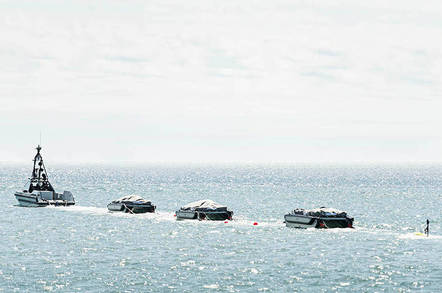
The Navy’s latest robot minesweeper. It’ll blow things up but leave your pint alone, thankfully

The Royal Navy has acquired a search-and-destroy robot boat intended for destroying mines.

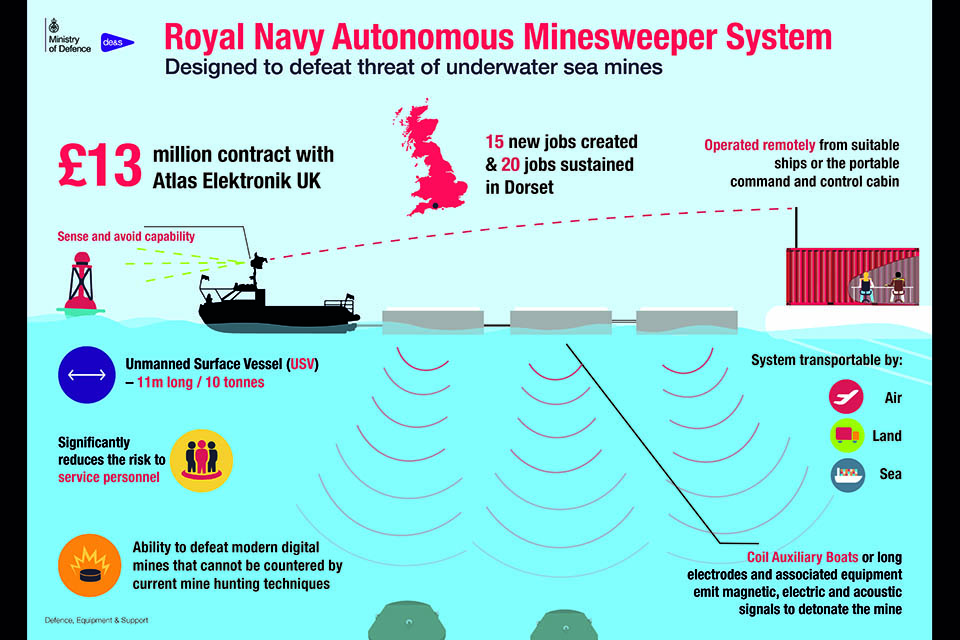
A first for Britain’s naval service, the roboat, built by German firm Atlas Elektronik’s UK subsidiary, drives itself around the high seas towing three auxiliary boats fitted with electro-acoustic transmitters. The transmitters generate pings that trigger modern digital mines at a safe distance from either the roboat flotilla or actual human-carrying shipping.

So far the MoD’s £13m contract with Atlas has netted it one complete boat-with-gear system on an R&D basis, with options available to buy more. The trials boat has just been handed over to the RN following proving of the design’s detect-and-avoid algorithms in what appears to be a live training data-versus-AI comparison exercise.

In maritime terms, the roboats comply with the International Regulations for the Prevention of Collisions at Sea (known as the Colregs – they’re the seagoing version of the Highway Code), though The Register would be most intrigued to see how they cope with scenarios that end up invoking rule 2(b).*

“This autonomous minesweeper takes us a step closer to taking our crews out of danger and allowing us to safely clear sea lanes of explosives, whether that’s supporting trade in global waters and around the British coastline, or protecting our ships and shores,” said defence procurement minister Guto Bebb in the usual canned quote.

* Rule 2, as published (PDF) by the Department for Transport, states: “Construing and complying with these Rules due regard shall be had to all dangers of navigation and collision and to any special circumstances, including the limitations of the vessels involved, which may make a departure from these Rules necessary to avoid immediate danger.”

Update, 14 May: UK Armed Forced Commentary has more information on the unmannned minesweeper system.

12 October 2005 was an historic day for the Royal Navy, because the Hunt class minesweepers HMS Middleton and HMS Ledbury conducted the last evolution at sea involving sweep gear, both the Oropesa mechanical wire system and the combined influence sweep equipment. The Royal Navy at that point had already operated unmanned, remotely controlled sweep systems in 2003 during waterway clearance work in Iraq, notably the opening of Umm Qasr. Under a UOR, a number of Combat Support Boats with remote controls were used to tow the Mini Dyad System (MDS) produced by Australian Defence Industries (ADI) and Pipe Noise Makers. Called Shallow Water Influence Minesweeping System (SWIMS), they were sent ahead of the RN minehunters as precursor sweeps against ground influence mines. The future of MCM was taking the path of stand-off action through unmanned systems and it was felt that the more than 100 years of manned ships sweeping were at an end.

The replacement for the sweep equipment was to come through the Flexible Agile Sweeping Technology, or FAST. The idea was to put two unmanned surface vehicles on the Hunt class vessels by modifying their open, capacious stern area. FAST, however, proved anything but fast, and even though a contract was signed in 2007 by the MOD with the Atlas-QED consortium, comprising Atlas Elektronik UK, QinetiQ and EDO Corporation, the resulting Technology Readiness Demonstrator never made it on the Hunt class. FAST became a test platform that spent the following years doing all sort of trials and demonstrations. Initially intended only for towing sweep kit, it ended up testing remote deployment and recovery of Sea Fox unmanned underwater vehicles, demonstrating that stand off clearance of minefields was possible.

Atlas Elektronik UK continued to work with the MOD and on its own, and eventually developed in-house the ARCIMS (ATLAS Remote Combined Influence Minesweeping System) system, which has enjoyed a first export success in an unnamed Middle East navy and has gone on to become the much delayed replacement for the Hunt’s sweeping capability within the Royal Navy.

An ARCIMS seaframe, but manned, was delivered to the Royal Navy in 2014 for trials and development purposes, and remains in service with the Maritime Autonomous System Trials Team (MASTT) of the Royal Navy as RNMB Hazard.

On 6 march 2015, Atlas received a 12.6 million pounds order from the MOD for a first ARCIMS-derived system, in the unmanned configuration, configured to tow sweeping equipment. The system has now been accepted, and according to MASTT, which has already trialed it extensively, the new boat is called RNMB Hussar.

May 7, 2018

DicKtionary – J is for Junk – Ching Shih

Filed under: China, History, Military — Tags: , , , — Nicholas @ 06:00

TimeGhost History
Published on 6 May 2018

J is for Junk, boat of the Chinese,
For trade and for pleasure, they sailed the blue seas
Some junks were pirates, that ain’t a good thing,
And the queen of them all, was one Madame Ching

Join us on Patreon: https://www.patreon.com/TimeGhostHistory

Written and Hosted by: Indy Neidell
Based on a concept by Astrid Deinhard and Indy Neidell
Directed by: Spartacus Olsson
Produced by: Astrid Deinhard
Executive Producers: Bodo Rittenauer, Astrid Deinhard, Indy Neidell, Spartacus Olsson
Edited by: Bastian Beißwenger

A TimeGhost format produced by OnLion Entertainment GmbH

April 13, 2018

India and the “Quad”

Filed under: Australia, China, India, Japan, Military, Pacific, USA — Tags: , , , , , — Nicholas @ 05:00

At Strategy Page, Austin Bay discusses India’s position, both geographically and militarily with respect to China:

As the Cold War faded, a cool aloofness continued to guide India’s defense and foreign policies. Indian military forces would occasionally exercise with Singaporean and Australian units — they’d been British colonies, too. Indian ultra-nationalists still rail about British colonialism, but the Aussies had fought shoulder to shoulder with Indians in North Africa, Italy, the Pacific and Southeast Asia, and suffered mistreatment by London toffs. Business deals with America and Japan? Sign the contracts. However, in defense agreements, New Delhi distanced itself from Washington and Tokyo.

The Nixon Administration’s decision to support Pakistan in the 1971 Indo-Pakistani War [Wikipedia link] embittered India. Other issues hampered the U.S.-India relationship. Indian left-wing parties insisted their country was a “Third World leader” and America was hegemonic, et cetera.

However, in the last 12 to 15 years, India’s assessments of its security threats have changed demonstrably, and China’s expanding power and demonstrated willingness to use that power to acquire influence and territory are by far the biggest factors affecting India’s shift.

In 2007, The Quad (Quadrilateral Security Dialogue), at the behest of Japan, held its first informal meeting. The Quad’s membership roll sends a diplomatic message: Japan, Australia, America and India. Japan pointed out all four nations regarded China as disruptive actor in the Indo-Pacific; they had common interests. Delhi downplayed the meeting, attempting to avoid the appearance of actively “countering China.”

No more. The Quad nations now conduct naval exercises and sometimes include a quint, Singapore.

The 2016 Hague Arbitration Court decision provided the clearest indication of Chinese strategic belligerence. In 2012, Beijing claimed 85 percent of the South China Sea’s 3.5 million square kilometers. The Philippines went to court. The Hague tribunal, relying on the UN Convention on the Law of the Sea treaty, supported the Filipino position that China had seized sea features and islets and stolen resources. Beijing ignored the verdict and still refuses to explain how its claims meet UNCLOS [Wikipedia link] requirements.

That is the maritime action. India and China also have mountain issues. In 1962, as the Cuban Missile Crisis diverted world attention, the two Asian giants fought the Indo-Chinese War [Wikipedia link] in the Himalayas. China won. The defeat still riles India.

« Newer PostsOlder Posts »

Powered by WordPress