Quotulatiousness

May 14, 2022

Operation Chariot, the “Greatest Raid of All”

Filed under: Books, Britain, France, Germany, History, Military, WW2 — Tags: , , , — Nicholas @ 05:00

The raid on the French port of St. Nazaire in March 1942, codenamed “Operation Chariot” by the British, was one of the most daring and successful special forces operation of the Second World War. In The Critic, Richard Hopton reviews a new history of this operation by Giles Whittell:
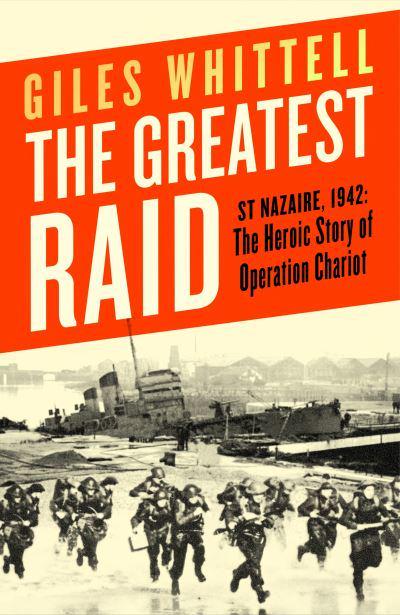
Operation Chariot, the Raid on St Nazaire, has long been known as “The Greatest Raid of All”. The audacity of the plan, the lethal danger of the operation, the inadequacy of the equipment provided, the astonishing courage of the participants and the spectacular success of its primary object have ensured its place in the annals of British martial heroism.

In the early hours of 28 March 1942, a force of 623 commandos and naval personnel stole up the Loire estuary to attack the port of St Nazaire. Leading the force was HMS Campbeltown, a superannuated destroyer acquired from the Americans, which had been converted into a floating bomb by the addition of four tons of high explosive secreted in her bows.

The plan was that she would ram the steel gate of the port’s immense dry dock where the charge would explode, demolishing the dock gate. The commandos would then swarm ashore to attack the dockyard installations, particularly the pumps and winding mechanisms which operated the dry dock. With the dock out of action, Hitler would not risk his battleship Tirpitz in the Atlantic where she could wreak havoc among the convoys supporting the war effort in Britain. This was the immediate, supposed object of the raid.

Giles Whittell’s new book is not the first full-length history of the event. C.E. Lucas-Phillips’s account, The Greatest Raid of All, was published in 1958 followed 40 years later by James Dorrian’s Storming St Nazaire, which remains the most detailed, authoritative account of the operation. In 2013 Robert Lyman published Into The Jaws of Death which told the story of the raid anew, with a greater concentration on the genesis and planning of the operation.

In 2007 Jeremy Clarkson took time away from messing around with cars to make a documentary for the BBC about the raid. The result was an “affectionate and enthralling” piece of television which brought the exploits of the Charioteers — as the men who took part in the raid have always been known — to a wider audience.

Although the ostensible object of the raid was to discourage the Germans from risking the Tirpitz in the Atlantic, it is now known that, by the spring of 1942, the German high command had already decided to keep the battleship moored safely in a distant Norwegian fjord. Accordingly, destroying the dry dock at St Nazaire was, strategically, a futile gesture.
May 13, 2022

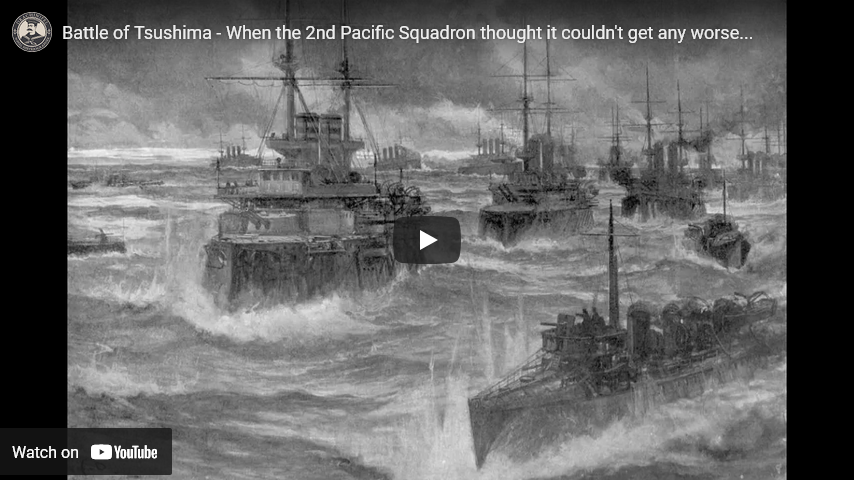
Battle of Tsushima – When the 2nd Pacific Squadron thought it couldn’t get any worse…

Filed under: History, Japan, Military, Russia, Weapons — Tags: , , , — Nicholas @ 02:00

Drachinifel
Published 18 Sep 2019

At long last the 2nd Pacific Squadron’s voyage comes to an end …

Want to support the channel? – https://www.patreon.com/Drachinifel

Want a shirt/mug/hoodie – https://shop.spreadshirt.com/drachini…

Want a medal? – https://www.etsy.com/uk/shop/Drachinifel

Want to talk about ships? https://discord.gg/TYu88mt

Want to get some books? www.amazon.co.uk/shop/drachinifel

Drydock Episodes in podcast format – https://soundcloud.com/user-21912004

Music – https://www.youtube.com/c/NCMEpicMusic

May 9, 2022

Military Civics: The Many Armies of the United States

Filed under: History, Law, Military, USA — Tags: , , , , — Nicholas @ 02:00

The Chieftain
Published 19 Dec 2020

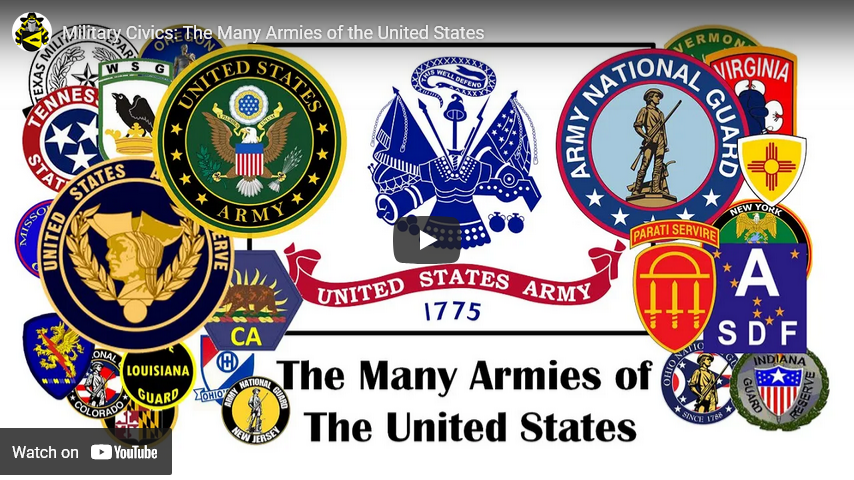
There are just shy of a hundred official land component military organizations in the United States of America, each with their own unique legal structure and chain of command. In this video, I try to break down the details for you. It also seems to have taken several days for someone to observe I have the branches in the wrong sequence, Marines go before Navy.

Improved-Computer-And-Scout Car Fund:
Patreon: https://www.patreon.com/The_Chieftain
Direct Paypal https://paypal.me/thechieftainshat
Subscribestar: https://www.subscribestar.com/the_chi…

May 1, 2022

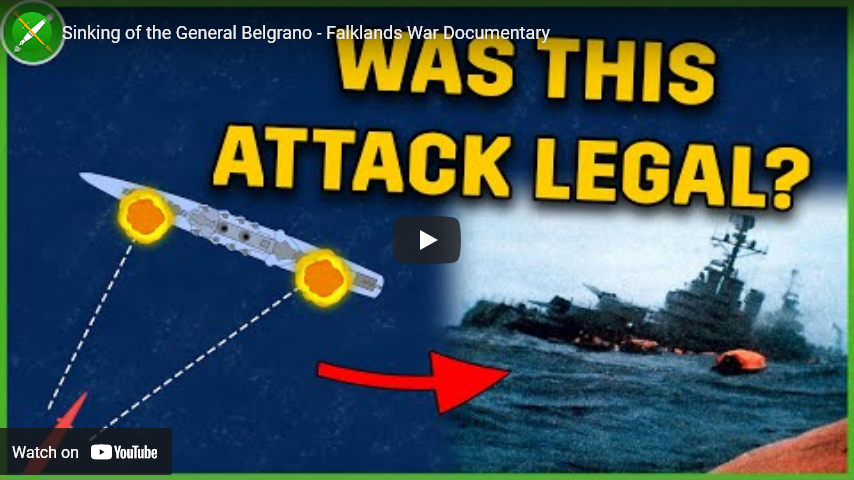
Sinking of the General Belgrano – Falklands War Documentary

Filed under: Americas, Britain, History, Military — Tags: , , , , — Nicholas @ 04:00

Historigraph
Published 30 Apr 2022

Go to https://squarespace.com/historigraph to get a free trial and 10% off your first purchase of a website or domain.

Falklands War series:
[1] Invasion of the Falklands https://youtu.be/BUYp3Wqz00A
[2] Recapture of South Georgia https://youtu.be/4mCZBpX4pxs

To help support the creation of more videos, consider supporting on Patreon:
https://www.patreon.com/historigraph

#FalklandsWar #Historigraph #Belgrano

Come join the historigraph discord: https://discord.gg/ygypfs3BEB

Buy Historigraph Posters here! historigraph.creator-spring.com

This video was sponsored by Squarespace.

► Twitch: https://www.twitch.tv/historigraph
► Second Channel: https://www.youtube.com/channel/UCpIj…
► Twitter: https://twitter.com/historigraph
► Instagram: https://www.instagram.com/historigraph

Sources for the Falklands War Series (so far):

Max Hastings & Simon Jenkins, Battle for the Falklands
https://archive.org/details/battlefor…
Martin Middlebrook, Operation Corporate
Martin Middlebrook, Battle for the Malvinas
Mike Norman, The Falklands War There and Back Again: The Story of Naval Party 8901
Kenneth Privratsky, Logistics in the Falklands War
Sandy Woodward, One Hundred Days
Paul Brown, Abandon Ship
Julian Thompson, No Picnic
John Shields, Air Power in the Falklands Conflict
Edward Hampshire, The Falklands Naval Campaign 1982
Hugh McManners, Forgotten Voices of the Falklands
Cedric Delves, Across an Angry Sea: The SAS in the Falklands War
Rowland White, Vulcan 607
Vernon Bogdanor, “The Falklands War 1982” lecture https://www.youtube.com/watch?v=a9bWw…
Arthur Gavshon, The sinking of the Belgrano https://archive.org/details/sinkingof…
Gordon Smith, Battle Atlas of the Falklands War 1982 by Land, Sea and Air
http://www.naval-history.net/NAVAL198…
Hansard- https://api.parliament.uk/historic-ha…
Recording of Thatcher’s statement to the Commons is from https://www.youtube.com/watch?v=HvbhV…

Music Credits:

“Rynos Theme” Kevin MacLeod (incompetech.com)
Licensed under Creative Commons: By Attribution 4.0 License
http://creativecommons.org/licenses/b…

“Crypto” Kevin MacLeod (incompetech.com)
Licensed under Creative Commons: By Attribution 4.0 License
http://creativecommons.org/licenses/b…

“Stay the Course” Kevin MacLeod (incompetech.com)
Licensed under Creative Commons: By Attribution 4.0 License
http://creativecommons.org/licenses/b…

Other music and SFX from Epidemic Sound

April 28, 2022

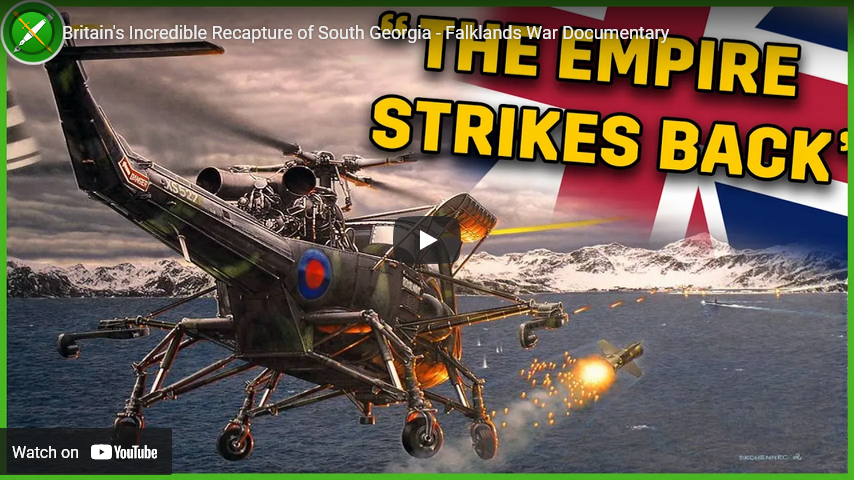
Britain’s Incredible Recapture of South Georgia – Falklands War Documentary

Historigraph
Published 27 Apr 2022

Go to https://squarespace.com/historigraph to get a free trial and 10% off your first purchase of
a website or domain.

In just three weeks after the Argentinian invasion of the Falkland islands, Britain threw together a task force out of thin air, sailed it 8000 miles around the world and started taking its territory back. This is how it happened.

Made with thanks to the Fleet Air Arm Musuem in Yeovilton, Somerset. https://www.fleetairarm.com/

To help support the creation of the rest of the Falklands series, consider supporting on Patreon:
https://www.patreon.com/historigraph

#Falklands40 #Historigraph

Come join the historigraph discord: https://discord.gg/ygypfs3BEB

Buy Historigraph Posters here! historigraph.creator-spring.com

► Twitch: https://www.twitch.tv/historigraph
► Second Channel: https://www.youtube.com/channel/UCpIj…
► Twitter: https://twitter.com/historigraph
► Instagram: https://www.instagram.com/historigraph
Thumbnail credit Daniel Behennec: https://www.naval-history.net/FxDBMis…

Sources for the Falklands War Series (so far):

Max Hastings & Simon Jenkins, Battle for the Falklands
https://archive.org/details/battlefor…
Martin Middlebrook, Operation Corporate
Martin Middlebrook, Battle for the Malvinas
Mike Norman, The Falklands War There and Back Again: The Story of Naval Party 8901
Kenneth Privratsky, Logistics in the Falklands War
Sandy Woodward, One Hundred Days
Paul Brown, Abandon Ship
Julian Thompson, No Picnic
John Shields, Air Power in the Falklands Conflict
Edward Hampshire, The Falklands Naval Campaign 1982
Hugh McManners, Forgotten Voices of the Falklands
Cedric Delves, Across an Angry Sea: The SAS in the Falklands War
Rowland White, Vulcan 607
Vernon Bogdanor, “The Falklands War, 1982” lecture https://www.youtube.com/watch?v=a9bWw…
Arthur Gavshon, “The sinking of the Belgranohttps://archive.org/details/sinkingof…
Gordon Smith, Battle Atlas of the Falklands War 1982 by Land, Sea and Air
http://www.naval-history.net/NAVAL198…
Hansard- https://api.parliament.uk/historic-ha…
Recording of Thatcher’s statement to the Commons is from https://www.youtube.com/watch?v=HvbhV…

Music Credits:

“Rynos Theme” Kevin MacLeod (incompetech.com)
Licensed under Creative Commons: By Attribution 4.0 License
http://creativecommons.org/licenses/b…

“Crypto” Kevin MacLeod (incompetech.com)
Licensed under Creative Commons: By Attribution 4.0 License
http://creativecommons.org/licenses/b…

“Stay the Course” Kevin MacLeod (incompetech.com)
Licensed under Creative Commons: By Attribution 4.0 License
http://creativecommons.org/licenses/b…

Other music and SFX from Epidemic Sound

April 23, 2022

Historic “innovation prizes” (somewhat) debunked

Filed under: Britain, History, Science, Technology — Tags: , , , — Nicholas @ 03:00

In the most recent Age of Invention newsletter, Anton Howes does a bit of heavy lifting to debunk some accreted nonsense about the origins and success of early innovation prizes:

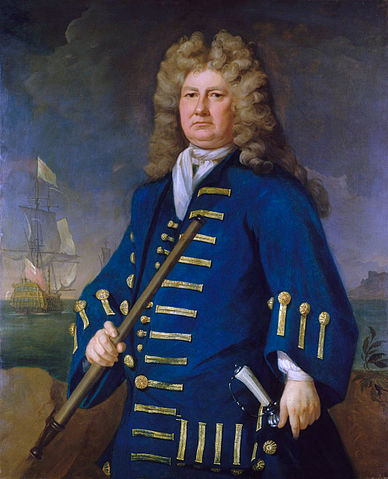
Admiral of the Fleet Sir Cloudsley Shovell (1650-1707).
Portrait by unknown artist from the National Maritime Museum collection via Wikimedia Commons.

Yesterday I had a piece in Works in Progress magazine, on the best ways to design modern innovation prizes — and why many of them fail.

I examined the famous “Longitude Prize” of 1714, and in the process busted some major myths about it. Almost every element of the popular story is wrong — something that experts on the topic like Richard Dunn and Rebekah Higgitt have been going on about for years. The popular story’s hero, John Harrison, often portrayed as an inventor shunned by a haughty scientific establishment, actually received massive amounts of funding from the committee for awarding the prize. The story’s villain, the Astronomer Royal Neville Maskelyne, was no villain at all. And there’s very little evidence that the prize actually incentivised people to innovate. The Board of Longitude, for that matter, ended up more like a grant-giving agency — a kind of navigation-themed DARPA — than just a committee of prize judges.

You can read the full piece here.

So what is the rest of this week’s newsletter about? Well, I’d like to take the chance to bust even more myths about innovation prizes!

Let’s start with a fairly small one, to do with longitude, that I’d missed. Take the narrative about the 1707 naval disaster off the Isles of Scilly, which led to the demise of the wonderfully-named admiral Sir Cloudesley Shovell. The disaster is usually cited as having been the direct cause of the institution of the 1714 reward, and, of course, gives most Youtubers, bloggers, and TV presenters discussing longitude the opportunity to say the name “Sir Cloudesley Shovell”. Who wouldn’t?

I had already been sceptical of the disaster’s relevance to Parliament’s creation of the longitude reward, because of the seven-year delay. I had then noticed, when researching for the piece, that the disaster was hardly mentioned at all by those lobbying for the reward, by those consulted on it, or by the MPs who voted on it. It seemed to be irrelevant as a cause, so I repurposed that part of the popular story to simply use as a general example of a naval disaster caused by not knowing one’s position at sea.

But even my downgrading of its relevance, it turns out, may have been over-generous. Yesterday, after I published my piece, Richard Dunn pointed out to me that not only was the 1707 disaster irrelevant as a cause of the 1714 reward, but that the disaster itself may not have had very much to do with a specific failure to find longitude. It certainly wasn’t singled out as a cause at the time.

As for the actual causes, they were probably compass error, inconsistent charts, and even uncertainty over the fleet’s latitude, not just its longitude. And to the extent that not knowing the fleet’s longitude appears to have been a major part of the problem, it was also related to failures to accurately calculate longitude on land — something that could already be done using existing techniques. The navigational text-books, for example, disagreed on the position of Cape Spartel, in Morocco, from which the fleet departed and took its bearings. As the maritime historian William E. May put it, when he looked into the detail of the fleet’s route and navigational measurements, “the errors in longitudes in the accepted text-books must have introduced a danger just as great as any errors in reckoning the longitude.”

April 18, 2022

Once upon a time, the American military wanted to know precisely nothing about the sex lives of servicemen

Filed under: Health, History, Military, USA — Tags: , , , , — Nicholas @ 05:00

Yet another trip into a far distant past, this time in the US armed forces, long before the Current Year:

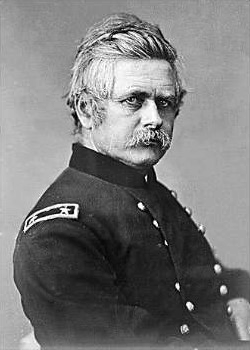
General Edward Ord (1818-1883), the designer of Fort Sam Houston, saw action in the Seminole War, the Indian Wars, and the American Civil War.
Undated photo from before 1883 via Wikimedia Commons.

For much of its history, the American military has had an aversion to hearing in any official way about the sexual conduct of servicemembers. In one of the US Army’s most notorious 19th-century legal conflicts, Captain Andrew Geddes reported from a remote post in Texas that Lieutenant Louis Orleman had been forcing his teenaged daughter to have sex; in a written statement to his commanding officer, Geddes wrote that Orleman “had been having sexual intercourse with her for the past five years, or since she was thirteen years of age, and that he had placed a loaded revolver to her head, threatening that he would blow out her brains if she did not consent to his horrible desires.” Thus informed, then-Brigadier General Edward Ord convened a court-martial — to conduct a trial of Captain Geddes, for putting such an appalling thing in writing.

As Louise Barnett concludes in her book about the trial, “acknowledging the possibility of incest by bringing charges against Orleman would have officially validated and magnified a scandal that would have haunted the Army, and the Department of Texas, for years to come. Fortunately for Orleman, this course of action was unthinkable because incest itself was unthinkable in America in 1879.”

Similarly, a rich and colorful history of the early American navy attempts to count recorded acts of sodomy at sea, and finds them buried in euphemism within official reports of sailor misconduct: “improper conduct too base to mention”, or “filthy conduct”, or “improper conduct on the berth deck”. As the historian James Valle has written, naval courts-martial finding themselves hearing testimony about shipboard sodomy tended to adjourn quickly, or to end testimony and immediately vote to acquit — after which the accused tended to vanish from a ship’s rolls, without explanation, the very next time the ship made port. “Consequently,” Valle concludes, in the early republic “not one navy man was ever convicted of homosexuality by a formal court-martial.” Herman Melville mentioned the unmentionable by writing, in White Jacket, of complaints regarding shipboard acts “from which the deck officer would turn away with loathing.” They didn’t want it to happen, but if it happened, they didn’t want to know about it.

The exceptions are, you know, interesting. In the early years of the Cold War, the sudden arrival of the threat posed by nuclear weapons and the emerging political power of the Eastern Bloc produced a moral panic in which security officials in the federal government hunted communists by looking for homosexuality; the “lavender scare” ran alongside the red scare. And so, as Elizabeth Lutes-Hillman has written, the Cold War military justice system became endlessly obsessed with sexual difference, throwing aside the usual disinclination to take notice of sexual behavior in the ranks: “Courts-martial instead became a performance of military values for the culture at large, setting the boundaries of deviant behavior for the armed forces, and so, to a certain extent, for the American body politic.” To drag that language about the performance of values down to the plane of action, Lutes-Hillman reports the example of the shore patrol in Norfolk, Virginia, which proudly reported in the late-1950s that it had caught 231 sailors in acts of sodomy by drilling holes in the wall of the local YMCA.

Putting all of that together, the American military has mostly preferred to avert its eyes from the sexual behavior of servicemembers, except in moments of transition and political crisis. If the armed forces are really interested in the question of which bed you spent the weekend in, Private Snuffy, something different is happening. For something more than 200 years, the default message from a company commander on Friday afternoon has generally been, “Handle your business, don’t interrupt my weekend with a phone call from a police department, and you’d best be in formation when the flag goes up on Monday morning.” Normal is the view that servicemembers are grown-ups whose intimate matters aren’t military business. Historically, if the armed forces officially have sex on the brain, something has been disrupted; anxiety and disorder outside the military have seeped into the ranks.

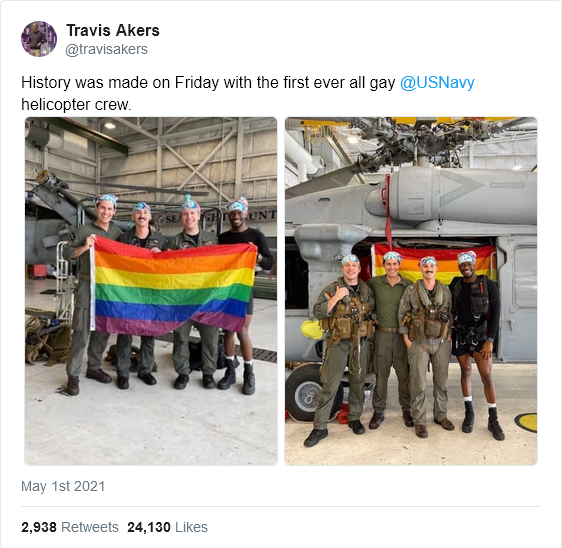
Now. To go back to an example from last year, this:

… suggests a number of obvious questions, starting with how did the United States Navy know this? Is this liberation, or is it intrusion? (BREAKING: The Department of the Navy proudly announces which helicopter pilots are into dudes, and stand by for detailed information on which surface warfare officers are bi-curious. We’re still asking around on that one, so.) It’s like the shore patrol is drilling holes in the wall at the YMCA again, but this time it’s so they can bus in a cheering section. The chain of command is right outside your door, you guys, and we hear what you’re doing in there, and OH MY GOD WE’RE SO PROUD OF YOU DO YOU NEED SOME CONDOMS? The Department of Defense isn’t a regular mom, it’s a cool mom.

April 12, 2022

Last War Patrol of HMS Terrapin

Filed under: Britain, History, Japan, Military, USA, WW2 — Tags: , , — Nicholas @ 06:00

The History Guy: History Deserves to be Remembered
Published April 11, 2022

On her seventh war patrol, in the south Java Sea, the T class British submarine HMS Terrapin and her crew had faced the terror of battle and barely survived. Badly damaged and far from home, sometimes the drama of war is not just in the battle, but in the voyage home.

Check out our new community for fans and supporters! https://thehistoryguyguild.locals.com/

This is original content based on research by The History Guy. Images in the Public Domain are carefully selected and provide illustration. As very few images of the actual event are available in the Public Domain, images of similar objects and events are used for illustration.

You can purchase the bow tie worn in this episode at The Tie Bar:
https://www.thetiebar.com/?utm_campaign=BowtieLove&utm_medium=YouTube&utm_source=LanceGeiger

All events are portrayed in historical context and for educational purposes. No images or content are primarily intended to shock and disgust. Those who do not learn from history are doomed to repeat it. Non censuram.

Find The History Guy at:
New community!: https://thehistoryguyguild.locals.com/
Please send suggestions for future episodes: Suggestions@TheHistoryGuy.net

The History Guy: History Deserves to Be Remembered is the place to find short snippets of forgotten history from five to fifteen minutes long. If you like history too, this is the channel for you.

Awesome The History Guy merchandise is available at:
https://teespring.com/stores/the-history-guy

Script by THG

#history #thehistoryguy #WWII

Experimental video embed from Rumble.com. Please let me know if you have problems viewing this video.

April 4, 2022

The Falklands War — the first postmodern war or the last colonial war?

Filed under: Americas, Britain, History, Media, Military — Tags: , , , , , — Nicholas @ 05:00

Dominic Sandbrook in UnHerd says Britain “needed the Falklands War”:

On the morning of Monday, 5 April 1982, the aircraft carrier Invincible slipped its moorings and eased into Portsmouth Harbour, bound for the South Atlantic. It was barely ten o’clock, yet the shoreline was packed with tens of thousands of flag-waving onlookers, singing and cheering for all they were worth, many of them in tears. From every building in sight flew the Union Jack, while well-wishers brandished dozens of homemade banners: “God Bless, Britannia Rules”, “Don’t Cry for Us, Argentina”. In the harbour, a flotilla of little boats, crammed with spectators, bobbed with patriotic enthusiasm. And as the band played and the ship’s horn sounded, red flares burst into the sky.

It is 40 years now since the outbreak of the Falklands War, one of the strangest, most colourful and most popular conflicts in British military history. Today this ten-week campaign to free the South Atlantic islands from Argentine occupation seems like a moment from a vanished age. But that was how it felt at the time, too: a scene from history, a colossal costume drama, a self-conscious re-enactment of triumphs past.

On the day the Invincible sailed, Margaret Thatcher quoted Queen Victoria: “Failure? The possibilities do not exist.” In the Sun, executives put up Winston Churchill’s portrait. And as the travel writer Jonathan Raban watched the departure of the Task Force on television, he thought it was like a historical pageant, complete with “pipe bands, bunting, flags, kisses, tears, waved handkerchiefs”. He regarded the whole exercise with deep derision, until the picture blurred and he realised that, despite himself, he was crying.

For many people the Falklands War was only too real. There were serious issues and genuine lives at stake, not just for the 1,813 islanders who had woken to find military vehicles roaring down their little streets, but for the tens of thousands of Argentine conscripts and British servicemen who were soon to be plunged into the nightmare of combat. And although polls suggest that about eight out of ten Britons strongly supported it, there were always those who considered it a mistake, a tragedy, even a crime. A certain Jeremy Corbyn thought it a “Tory plot to keep their money-making friends in business”. The novelist Margaret Drabble considered it a “frenzied outburst of dying power”. A far better writer, Argentina’s Jorge Luis Borges, famously called it “two bald men arguing over a comb”. That seems an odd analogy, though, for almost 2,000 blameless sheep farmers, who had no desire to be ruled by a junta that threw dissenters out of helicopters.

One common view of the Falklands campaign is that it was Britain’s last colonial war. But this strikes me as very unpersuasive. When we think of colonial wars, we think of wars of conquest by white men in pith helmets against brown-skinned underdogs. We think of embattled imperialists struggling to stave off a nationalist uprising, or fighting in defence of white settlers against a native majority. But the Falklands War was none of those things. There was no oppressed indigenous majority — except perhaps for the islanders themselves, some of whom had been there since the 1830s. As for the Argentines, their Spanish and Italian surnames were a dead giveaway. Indeed, few countries in the Americas had done a more thorough job of eliminating their original inhabitants.

March 28, 2022

The Battle of Taranto: When Biplanes Crippled a Fleet

Filed under: Britain, Europe, History, Italy, Military, Weapons, WW2 — Tags: , , , — Nicholas @ 02:00

Historigraph
Published 23 Feb 2019

If you enjoyed this video and want to see more made, consider supporting my efforts on Patreon: https://www.patreon.com/historigraph

#BattleOfTaranto #Historigraph

► Twitter: https://twitter.com/historigraph
► Instagram: https://www.instagram.com/historigraph
► My Gaming Channel: https://www.youtube.com/c/Addaway
► My Twitch: https://www.twitch.tv/addaway

March 22, 2022

The LAST Tribal-Class Destroyer — HMCS Haida

Filed under: Cancon, History, Military, WW2 — Tags: , , , , , , — Nicholas @ 06:00

Royal Canadian Navy / Marine Royale Canadienne
Published 21 Mar 2022

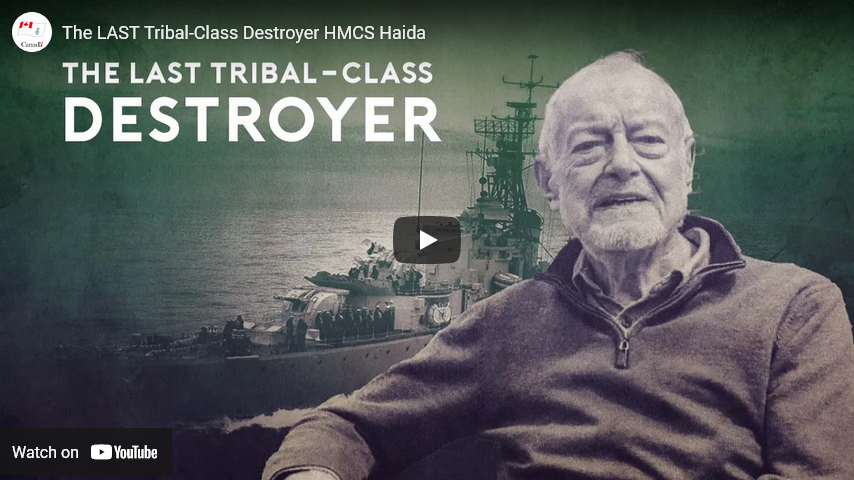
HMCS Haida has a long and distinguished naval career of service during the Second World War, the Korean Conflict and the Cold War, that’s why Canada’s “fightingest ship” is today a National Historic Site and the ceremonial flagship of the Royal Canadian Navy.

BUT … have you heard the rest of the story?

The incredible journey of saving Haida after being decommissioned in 1963 is told as you’ve never heard it before directly from the last survivor of HAIDA Inc., the group responsible for rescuing the aging Tribal-class destroyer from the scrap heap.

March 20, 2022

Canada Carries On — The Fighting Sea Fleas (1944)

Filed under: Britain, Cancon, History, Military, WW2 — Tags: , , , , — Nicholas @ 02:00

PeriscopeFilm
Published 24 Dec 2012

Support Our Channel: https://www.patreon.com/PeriscopeFilm

World War 2 propaganda film narrated by Lorne Greene about Canadian Motor Torpedo Boats crews and their actions. Shows life aboard Motor Torpedo Boats during the Battle of the Atlantic, fending off attacks by German U-Boats and commerce raiders. Motor Torpedo Boat (MTB) was the name given to fast torpedo boats by the Royal Navy and the Royal Canadian Navy. The “Motor” in the formal designation, referring to the use of petrol engines, was to distinguish them from the majority of other naval craft that used steam turbines or reciprocating engines. Produced & Directed by Sydney Newman, and released in 1944.

This film is part of the Periscope Film LLC archive, one of the largest historic military, transportation, and aviation stock footage collections in the USA. Entirely film backed, this material is available for licensing in 24p HD. For more information visit http://www.PeriscopeFilm.com

March 8, 2022

The Battle of Flamborough Head – Nice Ship, I’ll Take It

Filed under: Britain, France, History, Military, USA — Tags: , , , , — Nicholas @ 02:00

Drachinifel
Published 28 Aug 2019

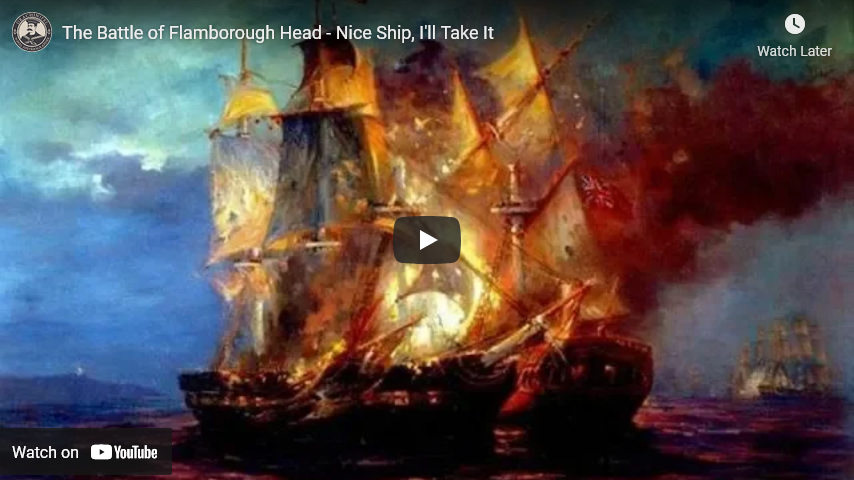
Today we look at John Paul Jones’ most famous battle, where the quality of not giving up no matter the odds shines through in a big way!

Want to support the channel? – https://www.patreon.com/Drachinifel

Want a shirt/mug/hoodie – https://shop.spreadshirt.com/drachini…

Want a medal? – https://www.etsy.com/uk/shop/Drachinifel

Want to talk about ships? https://discord.gg/TYu88mt

Want to get some books? www.amazon.co.uk/shop/drachinifel

Drydock Episodes in podcast format – https://soundcloud.com/user-21912004

March 3, 2022

The Raid on St Nazaire – How to make an explosive entrance

Filed under: Britain, France, Germany, History, Military, WW2 — Tags: , , , , — Nicholas @ 04:00

Drachinifel
Published 23 Feb 2022

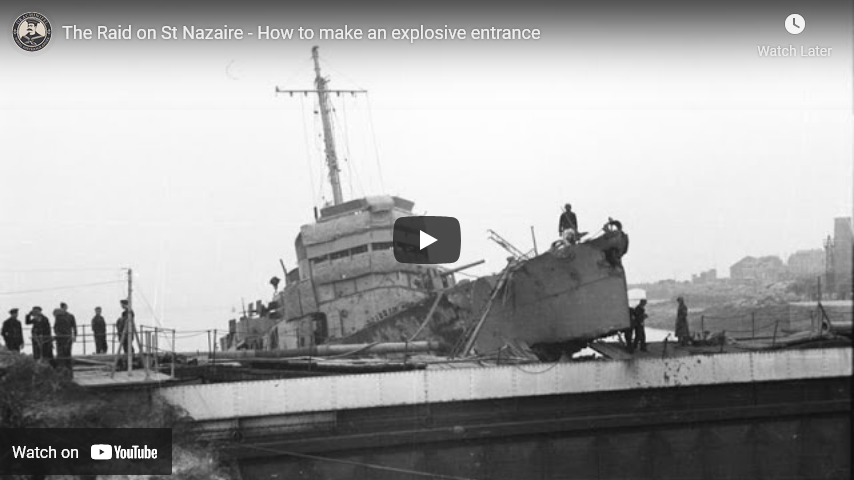
Today we take a look at the famous raid to destroy the Normandie Drydock. With apologies for starting off with the right pronunciation of St Nazaire and slipping back into my old incorrect way later on!

Sources:
www.amazon.co.uk/Storming-St-Nazaire-James-G-Dorrian/dp/0850528070
www.amazon.co.uk/St-Nazaire-1942-Commando-Campaign/dp/1841762318
www.amazon.co.uk/Operation-Chariot-Nazaire-Forces-Operations/dp/1844151166
www.amazon.co.uk/Into-Jaws-Death-Legendary-Saint-Nazaire/dp/1782064478

Free naval photos and more – www.drachinifel.co.uk

Want to support the channel? – https://www.patreon.com/Drachinifel

Want a shirt/mug/hoodie – https://shop.spreadshirt.com/drachini…

Want a poster? – https://www.etsy.com/uk/shop/Drachinifel

Want to talk about ships? https://discord.gg/TYu88mt

Want to get some books? www.amazon.co.uk/shop/drachinifelDrydock

February 18, 2022

Battle of Iwo Jima 1945 – Day by Day

Filed under: History, Japan, Military, Pacific, USA, WW2 — Tags: , , , — Nicholas @ 04:00

Real Time History
Published 17 Feb 2022

Support Real Time History on Patreon: https://patreon.com/realtimehistory

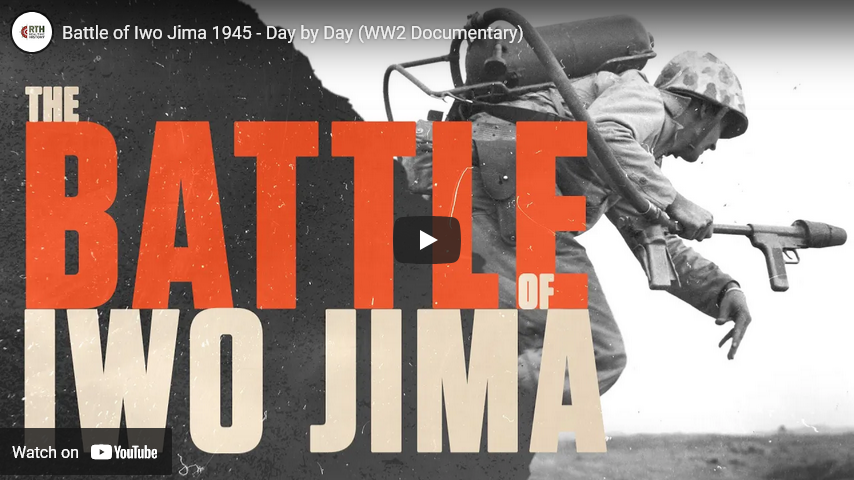
The battle of Iwo Jima in 1945 was one of the most brutal battles of the WW2 Pacific Campaign. The small volcanic island of Iwo Jima had an important strategic position for the US military. But the Japanese Army had learned how to defend in previous hard fought battles on other islands like Guam, Peleliu or Guadalcanal.

Special thanks to Project’44 co-created by Nathan Kehler and Drew Hannen from the Canadian Research and Mapping Association (CRMA). Check out their Iwo Jima map: http://iwojimamap.com/

» THANK YOU TO OUR CO-PRODUCERS
John Ozment, James Darcangelo, Jacob Carter Landt, Thomas Brendan, Kurt Gillies, Scott Deederly, John Belland, Adam Smith, Taylor Allen, Rustem Sharipov, Christoph Wolf, Simen Røste, Marcus Bondura, Ramon Rijkhoek, Theodore Patrick Shannon, Philip Schoffman, Avi Woolf,

» OUR PODCAST
https://realtimehistory.net/podcast – interviews with historians and background info for the show.

» BIBLIOGRAPHY
Akikusa Tsuruji, 17-sai no Iōtō (Tokyo: Bungei Shunjū, 2006)
Allen, Robert E, The First Battalion of the 28th Marines on Iwo Jima: A Day-by-Day History from Personal Accounts and Official Reports, with Complete Muster Rolls, (Jefferson, NC: McFarland & Company, Inc. Publishers, 1999)
Leckie, Robert, The Battle of Iwo Jima, (New York: Random House, 1967)
NHK Shuzaihan, Iōjima Gyokusaisen: Seikanshatachi ga kataru shinjitsu, (Tokyo: NHK Shuppan, 2007)
Rottman, Gordon L & Wright, Derrick, Hell in the Pacific: The Battle of Iwo Jima, (Oxford: Osprey Publishing, 2008)
Sandberg, Walter, The Battle of Iwo Jima: A Resource Bibliography and Documentary Anthology, (Jefferson, NC: McFarland & Company, Inc. Publishers, 2005)
United States Fleet, Headquarters of the Commander in Chief, Navy Department, “Amphibious Operations, Capture of Iwo Jima: 16 February to 16 March 1945” COMINCH P-0012, (17 July 1945)

» OUR STORE
Website: https://realtimehistory.net

» OTHER PROJECTS
16 DAYS IN BERLIN: https://realtimehistory.net/16-days-i…
RHINELAND 45: https://realtimehistory.net/rhineland45
THE GREAT WAR: https://youtube.com/thegreatwar

»CREDITS
Presented by: Jesse Alexander
Written by: Mark Newton, Jesse Alexander
Director: Toni Steller & Florian Wittig
Director of Photography: Toni Steller
Sound: Above Zero
Editing: Toni Steller
Motion Design: Toni Steller, Philipp Appelt
Mixing, Mastering & Sound Design: http://above-zero.com
Maps: Project ’44 https://www.project44.ca/
Research by: Mark Newton
Fact checking: Mark Newton

Channel Design: Battlefield Design

Contains licensed material by getty images
All rights reserved – Real Time History GmbH 2022

From the comments:

Real Time History
8 hours ago
Support Real Time History on Patreon: https://patreon.com/realtimehistory

We hope you liked this surprise episode. Special thanks to Project ’44 and the Canadian Research and Mapping Association for their help with this episode. Their map (http://iwojimamap.com/) was the inspiration for this Iwo Jima documentary. We wanted to try out if we could hook their map data to our motion graphics. Iwo Jima was the perfect test case since it was geographically a limited campaign. As you saw, our idea was a success and we will build on what we learned here for our upcoming Napoleon project.

« Newer PostsOlder Posts »

Powered by WordPress