
Published on 11 Aug 2017
For the fourth in our Top 5 series, Great War Channel presenter Indy Neidell came to The Tank Museum to share his 5 favourite tanks. https://www.youtube.com/TheGreatWar
It’s all about opinions, so please feel free to agree or disagree in the comments below.
Whose Top 5 would you like to see next?
August 21, 2017
Top Five Tanks – Indy Neidell
Comments Off on Top Five Tanks – Indy Neidell
August 16, 2017
Canadian War Museum highlights the six Canadian VCs won at the Battle of Hill 70
On August 15th, 1917, the Canadian Corps began a planned attack on German positions near Lens in northern France, to relieve pressure on the larger British and Imperial operations at Passchendaele. During the vicious fighting around the feature designated as “Hill 70”, the valour of six Canadians was deemed deserving of the highest military honour the British Empire could bestow, the Victoria Cross. From the institution of the medal in 1856, only 96 Canadians have been awarded a VC. David Pugliese reports for the Ottawa Citizen:
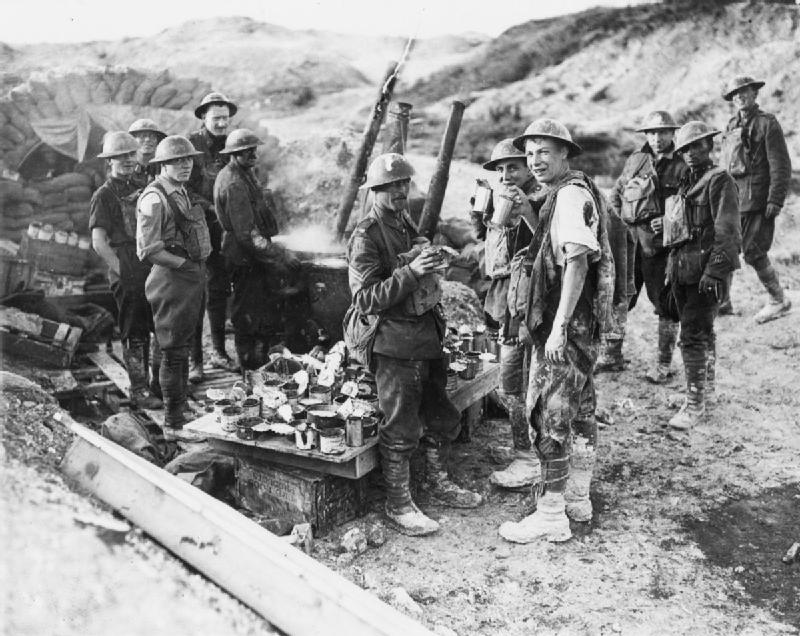
IWM caption : Hill 70 (Lens) 15-25 August: A group of Canadians, standing with mugs at a soup kitchen set up on boards “100 yards from Boche lines” during the push on Hill 70 (via Wikimedia)
The Canadian War Museum is marking the centenary of the Battle of Hill 70 with a special display highlighting the six Canadian soldiers who received Victoria Cross decorations as a result of their courageous actions. The Battle of Hill 70, which includes portraits of the recipients and some of their medals, will be on view from August 15 until Remembrance Day, according to the Canadian War Museum.
“Sir Arthur Currie described the Battle of Hill 70 in August 1917 as ‘altogether the hardest battle in which the Corps has participated,’” Stephen Quick, Director General of the Canadian War Museum, said in a news release. “It’s remarkable that this 11-day battle, fought four months after Vimy Ridge, resulted in six Canadian soldiers of varying backgrounds and ranks being awarded the highest honour for military valour in the British Empire.”
Here the Canadian War Museum also provides details about the battle and the Victoria Cross winners:
The Canadian Corps, under the command of Sir Arthur Currie, launched an attack on the German-held city of Lens in northern France on August 15, 1917. His strategy was to capture the high ground overlooking the town, forcing the enemy to counterattack. This prevented German units from reinforcing formations facing Allied troops struggling to gain ground at Passchendaele in Flanders. By August 25, the Canadians had withstood 21 failed counterattacks and suffered 9,000 casualties at Hill 70, but they had killed, wounded or taken as prisoner about 12,000 Germans. It was a significant and costly tactical victory for the Allies.
The Battle of Hill 70 introduces visitors to Sergeant Frederick Hobson, Corporal Filip Konowal, Private Harry Brown, Private Michael James O’Rourke, Acting Major Okill Massey Learmonth and Sergeant-Major Robert Hill Hanna. They are among only 96 Canadian recipients of the Victoria Cross since its introduction during the Crimean War in 1856.
Comments Off on Canadian War Museum highlights the six Canadian VCs won at the Battle of Hill 70
June 28, 2017
TANKFEST 2017 – At The Tank Museum, Bovington
Published on 27 Jun 2017
Tanks. They’re like big, angry houses.
The Tank Museum: http://www.tankmuseum.org/home
Comments Off on TANKFEST 2017 – At The Tank Museum, Bovington
June 4, 2017
Exploring the Romagne 14-18 Museum in France I THE GREAT WAR Special
Published on 3 Jun 2017
Check out Jean-Paul’s museum or book him as a guide if you want to explore the Verdun or Meuse-Argonnes region: http://www.romagne14-18.com/index.php/de/
This winter we went to the Meuse region in France and explored the battlefield of Verdun and the Meuse-Argonne Offensive. Jean-Paul was our guide there and also showed us his impressive collection of WW1 relics that he all found in the area over the last decades.
Comments Off on Exploring the Romagne 14-18 Museum in France I THE GREAT WAR Special
December 18, 2016
QotD: The new Whitney Museum in New York City
On a recent visit to New York City, I had the opportunity to walk around the exterior of the new Whitney Museum, built at a cost of $442 million. It is a monument of a kind: to the vanity, egotism, and aesthetic incompetence of celebrity architects such as Renzo Piano, and to the complete loss of judgment and taste of modern patrons.
If it were not a tragic lost opportunity (how often do architects have the chance to build an art gallery at such cost?), it would be comic. I asked the person with whom I was walking what he would think the building was for if he didn’t know. The façade — practically without windows — looked as if it could be the central torture chambers of the secret police, from which one half expects the screams of the tortured to emerge. Certainly, it was a façade for those with something to hide: perhaps appropriately so, given the state of so much modern art.
The building was a perfect place from which to commit suicide, with what looked like large diving boards emerging from the top of the building, leading straight to the ground far below. Looking up at them, one could almost hear in one’s mind’s ear the terrible sound of the bodies as they landed on the ground below. There were also some (for now) silvery industrial chimneys, leading presumably from the incinerators so necessary for the disposal of rubbishy art. The whole building lacked harmony, as if struck already by an earthquake and in a half-collapsed state; it’s a tribute to the imagination of the architect that something so expensive should be made to look so cheap. It is certain to be shabby within a decade.
Theodore Dalrymple, “A Monument to Tastelessness: The new Whitney Museum looks like a torture chamber”, City Journal, 2015-04-22.
Comments Off on QotD: The new Whitney Museum in New York City
November 20, 2016
Know your audience, children’s division
M. Harold Page, guest-posting at Charles Stross’s blog:
Little Harry blinks at me through his heavy Sellotaped glasses. “What’s that for?”
“It’s a submachine gun,” I say. “It fires lots of bullets.” I mime. “Bang bang bang!”
I’m helping out on a school trip. Normally I avoid volunteering – it’s too easy for self employed parents to end up as the school’s go-to. However this visit is to Edinburgh Castle and my daughter Morgenstern was very keen I should put in a showing…
So here I am helping to herd 5-year olds through the military museum. Morgenstern is nowhere in sight, but little Harry has latched onto me.
“Oh,” says Harry. He copies my mime and sprays the room. “Bang bang bang bang bang bang bang bang bang bang bang bang bang.”
“Not like that,” I say. “Three round bursts or you’ll run out of bullets. Plus the thing pulls up.” I mime. “So like this: Bang bang bang!… Bang bang bang!”
Solemnly, Harry discharges three imaginary bullets. “Bang bang bang!”
“Right,” I say, “Now, the other side have guns too. You have to use cover… better if you have a hand grenade, of course.”
His blue eyes widen. “What’s a hand grenade?”
So together we have a great time clearing each gallery with imagined grenade, automatic fire and bayonet.
Later on the way back to the bus Harry says, “My Daddy says wars are bad because people get killed…”
Yes, I had in fact spent the afternoon teaching (my best recollection of) World War Two house clearing tactics to the son of a local clergyman and peace activist.
Comments Off on Know your audience, children’s division
June 29, 2016
Tankfest 2016 at the Bovington Tank Museum
Published on 28 Jun 2016
What I did on my holidays by The Mighty Jingles age 46 and a bit. TANKS!
The Tank Museum – http://www.tankmuseum.org/home
Upcoming Events at The Tank Museum:
Tanks in Action – 21 Jul – 02 Sep
Attack of the Daleks – 23/24 Jul
Warfare through the Ages – 06/07 Aug
Tank 100 – 17 Sep
Tank Experience Day – 30 Sep – 01 Oct
Access All Areas – 13 Oct
Comments Off on Tankfest 2016 at the Bovington Tank Museum
May 7, 2016
Tiger Day 2016 at The Bovington Tank Museum
Published on 4 May 2016
This weekend we popped down to the Tank Museum for a spot of big game hunting. Tigers, Leopards, Comets…. okay the analogy starts to break down a bit now…
Comments Off on Tiger Day 2016 at The Bovington Tank Museum
November 2, 2015
The National Air Force Museum of Canada
Elizabeth and I spent the weekend in the Bay of Quinte area, visiting Prince Edward County, Belleville, and Trenton. While we were in Trenton, we stopped in at the National Air Force Museum of Canada. While the Sea King may not be in the collection yet (at least, not in the collection visible to the public), many other Canadian Armed Forces aircraft are, including the prize of the museum, the Handley Page Halifax heavy bomber:
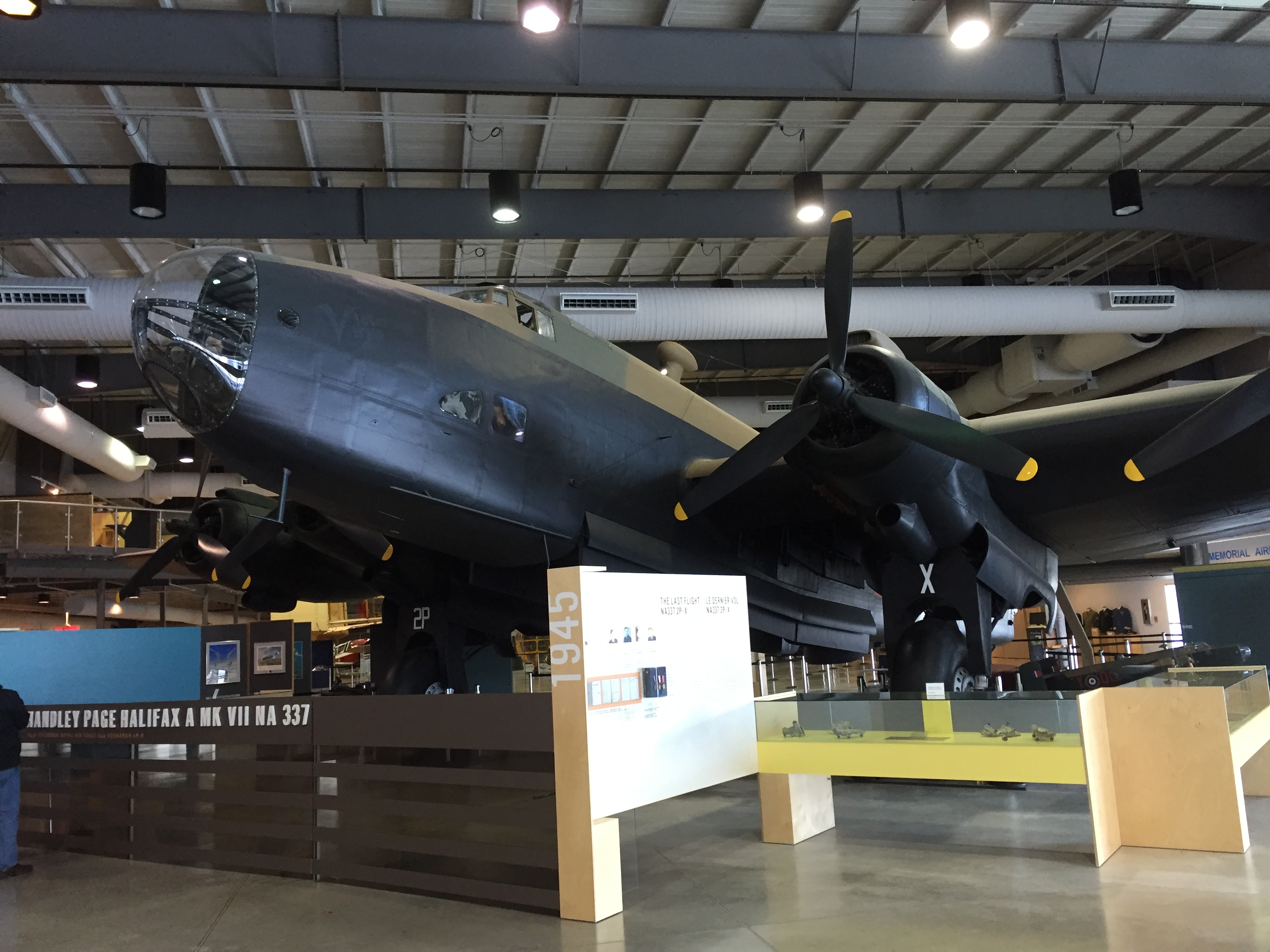
It’s a big enough aircraft that it’s hard to do it justice in a photograph.
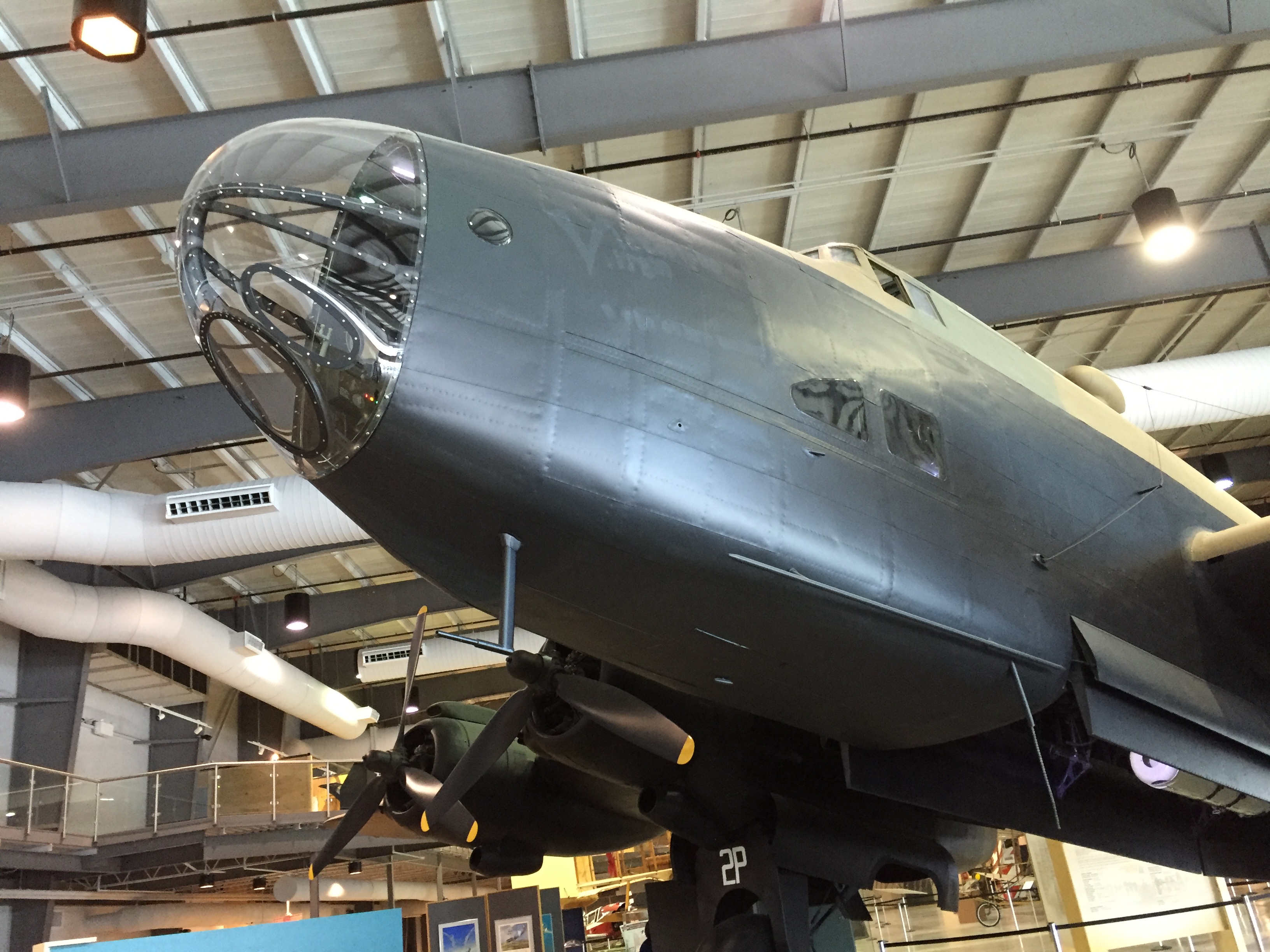
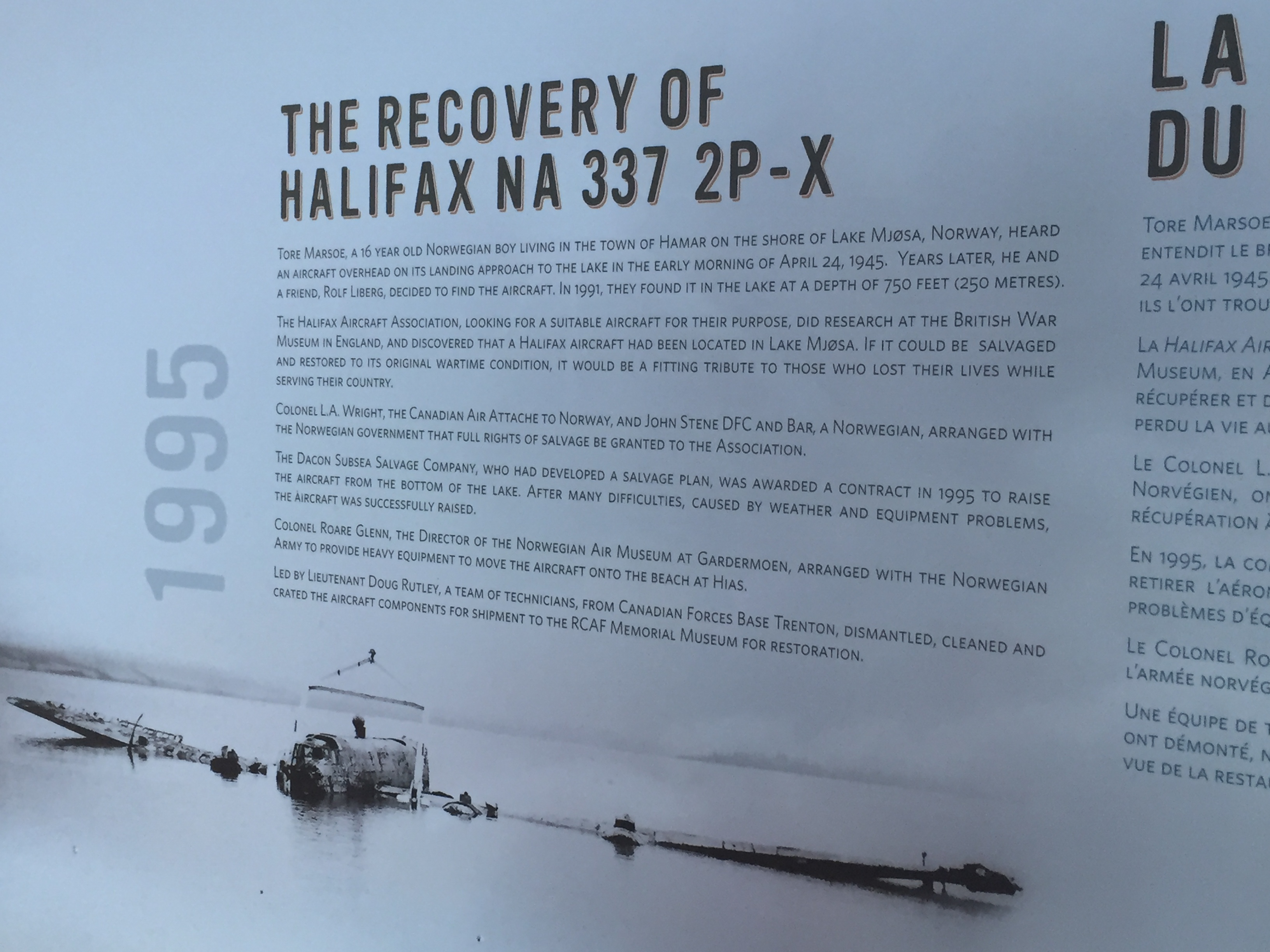
This particular restored aircraft was shot down late in the war on a mission to deliver supplies to Norwegian resistance fighters and later recovered from a Norwegian lake.
Other aircraft in the collection include a replica of the Silver Dart, the first powered aircraft to fly in Canada (February 23, 1909), a replica of the Burgess-Dunne floatplane, the first aircraft purchased for the Canadian military (September, 1914), a CF-86 Sabre, a CF-100 Canuck, a CF-5 Freedom Fighter, a CF-104 Starfighter, a CF-101 Voodoo, a CF-18 Hornet, a CP-107 Argus, a CC-130 Hercules, and a CP-102 Tracker among other aircraft.
Comments Off on The National Air Force Museum of Canada
July 22, 2015
MetCollects—Episode 14: Michael Gallagher on “Everhard Jabach and His Family”
Published on 9 Jun 2015
“What does it take to revive a masterwork?” Michael Gallagher on conserving Charles Le Brun’s Everhard Jabach and His Family
Charles Le Brun (French, 1619–1690). Everhard Jabach (1618–1695) and His Family, ca. 1660. Oil on canvas; 110 1/4 x 129 1/8 in. (280 x 328 cm). The Metropolitan Museum of Art, New York, Purchase, Mrs. Charles Wrightsman Gift, in honor of Keith Christiansen, 2014 (2014.250)
H/T to Open Culture:
Long considered lost, the life-size family portrait of the artist’s friend, a leading banker and art collector, was in sorry shape when the Metropolitan Museum acquired it from a private collection earlier last year.
Gallagher worked for ten months to counteract the various indignities it had suffered, including a re-stretching that left the original canvas severely creased, and a Gilded Age application of varnish that weathered poorly over time.
It’s a painstaking process, restoring such a work to its original glory, requiring countless Q-tips and a giant roller that allowed staffers to safely flip all 9 x 10.75 feet of the massive canvas. Gallagher identifies the last step, a sprayed-on coat of varnish necessary for teasing out the painting’s original luster, as the most nerve-wracking part of the odyssey.
Comments Off on MetCollects—Episode 14: Michael Gallagher on “Everhard Jabach and His Family”
May 21, 2015
The Brunel Museum
Brid-Aine Parnell talks about the Brunels — father, son, and grandson — and their impact on Britain during the industrial revolution:
When you mention Brunel to most people, they think of the one with the funny name – Isambard Kingdom Brunel. A few folks will know that his father Marc Isambard Brunel was the first famous engineering Brunel, but not many will know that Isambard’s own son, Henry Marc Brunel, was also an engineer and finished some of Isambard’s projects after his death.
Between the three of them, the Brunels created landmarks all over the UK; perhaps most famously the Clifton Suspension Bridge, which spans the Avon Gorge, linking Clifton in Bristol to Leigh Woods in Somerset.
That bridge, which Isambard Kingdom Brunel designed and often called his “first child,” wasn’t actually completed until after his death and only came about at all because Isambard was nearly drowned in an accident at the massive project he was working on in London with his father: the Thames Tunnel.
It is this masterpiece of engineering, which invented new methods of tunnelling underground and is why the Brunels are credited with creating underground transportation – and by extension, the modern city itself – that you see if you go along to the Brunel Museum in Rotherhithe, London.
The museum itself is in Marc Brunel’s Engine House, built in 1842, the year before the Thames Tunnel was opened, for the engines that pumped to keep the Tunnel dry. The small exhibition tells the story of the design and construction of the 396-metre-long tunnel, the first to have been successfully built underneath a navigable river. The display panels also detail the innovative tunnelling shield technique invented by Marc and Isambard that’s still used to build tunnels today, although these days it’s machines doing the hard work instead of men. Back then, labourers would spent two hours at a time digging, often while also being gassed and showered with shit.
The River Thames at that time was the sewer of London and the tunnel was constantly waterlogged, leading to a build up of effluent and methane gas. The result was that not only would miners pass out from the gas – even if they didn’t, men who re-surfaced were left senseless after their two-hour shift – but there were also explosions as the gas was set alight by the miners’ candles.
Although it’s a tidy and well-kept little exhibition, it is not really why you come to the museum. You come for the underground chamber below, which was only opened up to the public in 2010 after 150 years of being closed off by the London transportation system. This is the Grand Entrance Hall to the Thames Tunnel, used in Brunel’s day as a concert hall and fairground and now in the process of being turned into a permanent exhibition.
March 6, 2015
ISIS takes sledgehammers and drills to ancient artifacts
This makes me sick to my stomach:


These images and many more are screencapped from a propaganda video released by ISIS, reported by Conflict Antiquities:
It is notable that the Islamic State released this propaganda, to assert their religious purity through their commitment to cultural destruction, immediately after the were exposed for making a deal with Turkey and not destroying Suleyman Shah’s tomb.
Last June, it was rumoured and mistakenly reported that the Islamic State had ‘destroyed ancient masterpieces, including the rare Assyrian winged bull’ at Nineveh Museum. This time, they’ve done it — at Mosul Museum and the Nergal Gate to Nineveh [the Nergal Gate Museum at Nineveh]. You can stream or download the mp4 (or watch it on YouTube/YouTube archive).
But if, like other sensible people, you don’t want to boost the web traffic to their pornography of violence — which they try to advertise as Islamic although they also preserve “heretical”, “idolatrous” things as long as they profit from them — I’ve taken screenshots from the video for verification and analysis. Christopher Jones, at the Gates of Nineveh, has ongoing, historically-informed coverage of this and other destruction, including Assessing the Damage at the Mosul Museum, Part 1: the Assyrian Artifacts.
Comments Off on ISIS takes sledgehammers and drills to ancient artifacts
November 25, 2014
Replica WW1 tanks at the Tank Museum
While they’re not true replica vehicles, the British Mark IV and the German A7V tanks can be seen at the Tank Museum in Bovington:
Uploaded on 11 Jan 2012
The Tank Museum has obtained the tank used in Steven Spielberg’s new World War One blockbuster Warhorse.
The fully operational replica of a British Mk IV tank is set to go on display when the film is released next week, and will also be used in the Dorset based Museum’s tank displays later in the year.
The full sized replica was based on the Museum’s own Mark IV, which was built in 1917. OSCAR award-wining special effects company Neil Corbould Special Effects LTD, whose credits include Saving Private Ryan and Gladiator, visited The Tank Museum in 2010 to take measurements from the vehicle and copy original documents related to the MK IV tank held in the Museum’s Archive.
Published on 30 Nov 2012
The Tank Museum has acquired a working replica of a German First World War tank. See it in action here, alongside our British First World War replica from the film War Horse. For more information, visit www.tankmuseum.org.
Comments Off on Replica WW1 tanks at the Tank Museum
October 8, 2014
Russia’s oldest warship being moved to shipyard for restoration work
From the Wikipedia page:
Aurora (Russian: Авро́ра, tr. Avrora; IPA: [ɐˈvrorə]) is a 1900 Russian protected cruiser, currently preserved as a museum ship in St. Petersburg. Aurora was one of three Pallada-class cruisers, built in St. Petersburg for service in the Pacific Far East. All three ships of this class served during the Russo-Japanese War. The Aurora survived the Battle of Tsushima and was interned under U.S. protection in the Philippines, eventually returned to the Baltic Fleet. The second ship, Pallada, was sunk by the Japanese at Port Arthur in 1904. The third ship, Diana, was interned in Saigon after the Battle of the Yellow Sea. One of the first incidents of the October Revolution in Russia took place on the cruiser Aurora.
[…]
During World War I Aurora operated in the Baltic Sea performing patrols and shore bombardment tasks. In 1915, her armament was changed to fourteen 152 mm (6 in) guns. At the end of 1916, she was moved to Petrograd (the renamed St Petersburg) for a major repair. The city was brimming with revolutionary ferment and part of her crew joined the 1917 February Revolution. A revolutionary committee was created on the ship, with Aleksandr Belyshev elected as captain. Most of the crew joined the Bolsheviks, who were preparing for a Communist revolution.
At 9.45 p.m on 25 October 1917 (O.S.) a blank shot from her forecastle gun signaled the start of the assault on the Winter Palace, which was to be the beginning of the October Revolution. In summer 1918, she was relocated to Kronstadt and placed into reserve.
Comments Off on Russia’s oldest warship being moved to shipyard for restoration work
September 15, 2014
RCAF “raids” air force museum for spare parts
We often joke about the “museum pieces” that the Canadian Armed Forces have to operate, due to very long procurement processes and budget shortfalls, but this is the first time I’ve heard of scavenging spare parts from actual museum displays:
The Ottawa Citizen has learned that in July 2012 air force technicians raided an old Hercules airplane that is on display at the National Air Force Museum of Canada because they needed navigational equipment for a similar aircraft still in use.
The revelation highlights the difficulties military personnel have increasingly faced in keeping Canada’s ancient search-and-rescue planes flying after more than a decade of government promises to buy replacements.
The air force museum is at Canadian Forces Base Trenton, Ont., and boasts a large collection of military aircraft that have been retired and subsequently placed on display.
[…]
“They sort of called (Colton) up and said ‘Hey, we have these two INUs that we can’t use. Do you have any on yours?’ ” Windsor said. “Some of the parts are interchangeable. They just kind of got lucky on that.”
Defence Minister Rob Nicholson’s office defended the air force’s decision to ask a museum for parts to keep its search-and-rescue planes flying.
“The RCAF took the initiative to remove these functional, perfectly good parts and use them effectively,” spokeswoman Johanna Quinney said in an email.
But former head of military procurement Dan Ross said it’s “embarrassing” that the air force has to “cannibalize old stuff that’s in museums” to keep its planes flying.
Update, 16 September: The story triggered a question to the minister in parliament.
NDP defence critic Jack Harris: “Mr. Speaker, the government’s failed plans to replace Canada’s aging search and rescue aircraft hit a new low with the news that the RCAF had to source parts from a 50-year-old plane on display at the National Air Force Museum. It would be funny if it were not for the fact that Canadians rely on the Hercules and Buffalo aircraft to respond to thousands of emergencies every year. Though started by the Liberals in 2002, there will not be replacement planes in operation until 2019, at the earliest.
Does the minister simply expect the RCAF to raid other museums in the meantime?
Defence Minister Rob Nicholson responded: “What the honourable member was referring to was a mistake. When it was discovered, the RCAF took the appropriate measures. That being said, this is the government that has delivered 17 new Hercules transport aircraft, four strategic transports, and 15 Chinook heavy-lift helicopters. How did the NDP vote? The NDP voted against all of these; every dollar for the military is opposed by the NDP.”
Not sure what Nicholson meant by “a mistake.” He didn’t elaborate in the House of Commons.
But it’s different than the earlier response from his office, which acknowledged the scavenging and praised it as taking the “initiative.”
Comments Off on RCAF “raids” air force museum for spare parts


