Quotulatiousness

July 13, 2015

Japan’s cross-dressing WW2 spy in China

Filed under: China, History, Japan, WW2 — Tags: , , , — Nicholas @ 05:00

In The Diplomat, Stephen Joyce reviews Manchu Princess, Japanese Spy: The Story of Kawashima Yoshiko, the Cross-Dressing Spy Who Commanded Her Own Army, a recent book by Phyllis Birnbaum:

Divisive figures often make the most compelling biographical subjects; and Kawashima Yoshiko is no exception. During her life and in death opinions have varied markedly. Loathed by the Chinese as a traitor, extolled by the Japanese for her talents as a spy, more recently she has even become a heroine to the LGBT community.

In Manchu Princess, Japanese Spy: The Story of Kawashima Yoshiko, the Cross-Dressing Spy Who Commanded Her Own Army, Phyllis Birnbaum provides a measured assessment of the fascinating rise and fall of this erratic, narcissistic, cross-dressing, bisexual princess.

Born in 1907 as Aisin Gioro Xianyu, Kawashima Yoshiko was the 14th daughter of Prince Su of the Qing imperial family. Soon after the establishment of the Republic of China in 1912, she was unwillingly sent to Japan to be adopted by family friend Kawashima Naniwa.

Her formative teenage years were spent in Matsumoto being educated in Japanese language and culture. It was not the happiest of upbringings. An attempted suicide and sexual assault by her new father are noted as potentially life-defining events but are hard to verify. Whatever the root cause of her discontent, in 1925 she shaved her head and started wearing men’s clothes.

In 1927 she married a Mongolian prince in a politically convenient union that quickly failed and Yoshiko soon travelled to China to pursue her dream of a honorable return to power for the Qing dynasty, beginning with Manchuria and Outer Mongolia.

With Japan increasingly active in China she soon found herself a raison d’etre: a spy in the service of the Japanese. Several incidents define her status as a spy; all are shrouded in mystery.

[…]

Although it would be hard to argue that she had a major influence over the key events of her time, Kawashima Yoshiko is a superb subject for biography and should interest all lovers of Asian history. And despite living her life in the public and media glare her essential mysteriousness remains—even in death. Did the Chinese Nationalist government execute her (as Kim Bai Fai) in 1948 or, as some would have it, did she escape and live out her last days quiet obscurity? Birnbaum concludes that the latter outcome is questionable, to say the least. Assuming she was indeed executed, her memoirs reveal a wry acceptance of her ultimate fate, despite her life aims lying in tatters.

The sheer wealth of material — autobiographies, Yoshiko’s letters, interviews, press reports, sensationalist magazine articles and official documents — with which to write a biography to some extent serves to cloud rather than illuminate the life of Yoshiko Kawashima. Much like her futile efforts to restore the Qing dynasty in China, any attempt to firmly pin down her real life story and true character seems destined to fail.

June 2, 2015

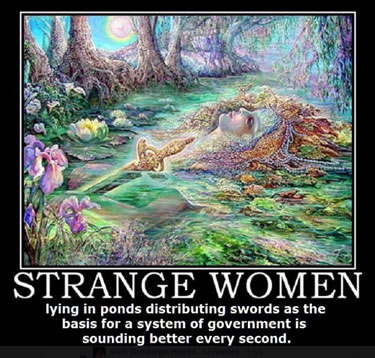
Strange Women

Filed under: Government, Humour — Tags: — Nicholas @ 05:00

StrangeWomen

H/T to Never Yet Melted for the graphic.

May 11, 2015

Nepal’s tragic unpreparedness for disaster

Filed under: Asia, Government — Tags: , , , , , — Nicholas @ 04:00

In The Walrus, Manjushree Thapa explains why Nepal was so badly prepared for the earthquake:

Following the April 25 earthquake, Nepalis have had to learn the value of preparedness in the most painful way possible. In the aftermath, Pushpa Acharya, a Nepali friend at the University of Toronto, observed, “Knowledge was not our problem.” Indeed. We all knew that our country sits on an active fault line, where the subcontinent collided with the Eurasian plate with such force it created the Himalayas. The last big quake took place in 1934. Others have since struck, but none with the force of 1934’s 8.0 or April 25’s 7.9. We knew that a big earthquake was due.

It was our duty to prepare, and though some of us did so individually, as a society we ignored the warnings. In the past ten days, during search and rescue, and then the beginnings of relief, we’ve had to do some hard thinking about how our country could become more responsible going forward. The root problem may seem obvious: Nepal is one of the poorest countries in the world. Its poverty is, however, a symptom of our history of ill governance, and the reason for our national failure to prepare, which has kept us from becoming a functioning democracy.

When the earthquake struck, the country was in a deep and deeply depressing stupor. The governing parties — a coalition of the Nepali Congress Party and the Unified Marxist Leninists — had reached an impasse with Nepal’s thirty-three opposition parties about what kind of constitution to draft. There was no plan for the country as a whole, let alone in the case of an emergency. The drafting of a constitution has preoccupied, confounded, and eluded Nepal’s polity since 2006, when the Maoists ended a ten-year insurgency to join forces with other parties to remove Gyanendra Bir Bikram Shah. Nepal’s king had used the war as an excuse to end a fragile fifteen-year spell of democracy and install his own military-backed rule. A mass movement restored democracy, and the subsequent peace process promised to restructure the country along just and equitable lines through the drafting of a new constitution

May 5, 2015

QotD: Monarchies and republics

Filed under: Britain, Europe, Government, History, Quotations — Tags: , — Nicholas @ 01:00

When I say monarchy I am not talking about the wishy-washy monarchy we pretend to have in the UK. I am talking about real monarchies, monarchies red in tooth and claw, monarchies that can at minimum hire and fire ministers and start wars.

Now, I can almost hear the pedants shouting “But those are precisely the powers the Queen has” To which I say “Only in theory”. Should the Queen or any of her successors ever attempt to actually exercise those theoretical powers they would be out of office in a matter of nano-seconds. Britain is a republic.

When did it become one? I think we can be pretty precise with the dates: sometime between 1642 and 1694. 1642 is the date of the outbreak of the English Civil War, when Charles I tried to impose his idea of absolute monarchy. 1694 is the date William III accepted that his powers were extremely limited. Since then it has been Parliament that makes the laws and votes funding – without which making war becomes extremely difficult.

But think of what happened in that period: four civil wars, one military dictatorship and a foreign invasion.

You think that was bad? Try the French. Between 1789 and 1871 they saw four monarchies, three republics, three foreign invasions and a 20-year war with the rest of Europe.

And now look at what happened in the 20th century. Germany, Russia, Austria-Hungary, China, Turkey, Spain and Portugal all made the same transition from monarchy to republic. I need not dwell on the German or Russian experiences — they are well enough known but all the others follow a similar pattern. China saw a 20-year civil war followed by Mao’s communist regime; Spain, a monarchy, followed by a republic followed by a civil war followed by a dictatorship followed by a monarchy followed by a democratic republic. Even Portugal saw two revolutions, a dictatorship and a series of bloody colonial wars.

The point is that in every case the transition from monarchy to republic is bloody and protracted.

Patrick Crozier, “What caused the First World War? Part V: Monarchies and Republics”, Samizdata, 2015-04-29.

April 16, 2015

QotD: Emperor Franz Joseph

Filed under: Europe, History, Quotations, WW1 — Tags: , , — Nicholas @ 01:00

At the heart of the grandeur was a man who liked plain food, predictable routines, and, for relaxation, hunting and shooting. He was a good Catholic without thinking much about it. Like his fellow sovereigns Nicholas II and Wilhelm II, Franz Joseph loved the military life and almost always appeared in uniform. Like them too he was sent into a rage when the details of army uniforms were wrong. Apart from that, he was invariably courteous to everyone although always conscious of rank. He only shook Margutti’s hand once, to recognize that he had been promoted. (Margutti regretted ever after that no one else at court had seen this momentous gesture.) Franz Joseph found modern art puzzling but his sense of duty took him to public art exhibitions and the opening of important new buildings, especially if they were under royal patronage.” His taste in music ran to military marches or Strauss waltzes and, while he liked the theater and from time to time the prettier actresses, he preferred the old favorites. He did not like unpunctuality, loud laughter or people who talked too much. He had a sense of humor, of a rather basic sort. He had climbed the Great Pyramid in Egypt, he wrote to his wife, Empress Elisabeth, with the help of Bedouin guides. “As they mostly only wear a shirt, when they are climbing, and that must be the reason why English women so happily and frequently like to scale the pyramids.”

Margaret MacMillan, The War That Ended Peace: The Road to 1914, 2013.

April 15, 2015

The Last Tsar – Nicholas II I WHO DID WHAT IN WW1?

Filed under: Europe, History, Russia, WW1 — Tags: , , — Nicholas @ 03:00

Published on 13 Apr 2015

Nicholas II was the last tsar of Russia and the last ruler of the Romanov dynasty. His reign and his command are considered especially inauspicious today. Everything you need to know about Nicholas II of Russia in portrait.

March 10, 2015

Magna Carta in the modern world

Filed under: Britain, Cancon, Government, History, Liberty, USA — Tags: , , , , — Nicholas @ 04:00

Mark Steyn talks about the decline in state observance (and in David Cameron’s case, even awareness) of the significance of Magna Carta:

Real rights are like Magna Carta: restraints on state power. Too many people today understand the word “rights” to mean baubles and trinkets a gracious sovereign bestows on his subjects — “free” health care, “free” community college, “safe spaces” from anyone saying anything beastly — all of which require a massive, coercive state regulatory regime to enforce.

But, to give it is full name, Magna Carta Libertatum (my italics – I don’t think they had ’em back then) gets it the right way round. It was in some respects a happy accident. In 1215, a bunch of chippy barons were getting fed up with King John. In those days, in such circumstances, the malcontents would usually replace the sovereign with a pliable prince who’d be more attentive to their grievances. But, having no such prince to hand, the barons were forced to be more inventive, and so they wound up replacing the King with an idea, and the most important idea of all — that even the King is subject to the law.

In this 800th anniversary year, that’s a lesson worth re-learning. Restraints on state power are increasingly unfashionable among the heirs to Magna Carta: in America, King Barack decides when he wakes up of a morning what clauses of ObamaCare or US immigration law he’s willing to observe or waive according to royal whim; his heir, Queen Hillary, operates on the principle that laws are for the other 300 million Americans, not her. In the birthplace of Magna Carta, a few miles from that meadow at Runnymede, David Cameron’s constabulary leans on newsagents to cough up the names and addresses of troublesome citizens who’ve committed the crime of purchasing Charlie Hebdo.

The symbolism was almost too perfect when Mr Cameron went on TV with David Letterman, and was obliged to admit that he had no idea what the words “Magna Carta” meant. Magna Carta Libertatum: The Great Charter of Liberty. I’m happy to say Mr Cameron’s Commonwealth cousins across the Atlantic in Ottawa are more on top of things: One of the modestly heartening innovations of Stephen Harper’s ministry is that, when immigrants to Canada take the oath of citizenship, they’re given among other things a copy of Magna Carta.

Why? Because everything flows therefrom — from England’s Glorious Revolution to the US Constitution and beyond. It’s part of the reason why the English-speaking world, in contrast to Continental Europe, has managed to sustain its freedoms across the generations.

On the topic of Cameron’s inability to say what Magna Carta translates to in English, Richard Anderson is convinced it was a deliberate ploy by Cameron to downplay his (expensive) educational background:

A Prime Minister of the United Kingdom, a graduate of Eton and Brasenose no less, no more forgets stuff like this then he forgets his wife’s name or his archenemy’s personal weaknesses. He flubbed it on purpose. Boris Johnson, the rather eccentric Tory mayor of London, figured out Davy pretty much from the start:

    Johnson, a classics scholar, said: “I think he was only pretending. I think he knew full well what Magna Carta means. It was a brilliant move in order to show his demotic credentials and that he didn’t have Latin bursting out of every orifice.”

A bit of context is required here. Since the Roman Empire went the way of all flesh Latin has been the language of the European elite. At first this was for practical purposes. For centuries any useful knowledge that had survived after the fall of the Empire in the west was in either in Latin or Greek. But long after Gutenberg, whose revolution made the vernacular languages of Europe important stores of knowledge, Latin remained the mark of a gentleman.

[…]

Mr Cameron is a graduate of Eton, an Old Etonian as they say. What is Eton? It makes Upper Canada College look like a cheap poseur. It is a super private high school that has produced nineteen of Britain’s fifty-three Prime Ministers. Harvard has produced a mere eight American Presidents. The University of Toronto a corporal’s guard of four Canadian PMs. Harold Macmillan, Britain’s snottiest modern PM, once derisively quipped that Mrs Thatcher’s cabinet had more Estonians than Etonians. A meritocratic break from an aristocratic past. At least it seemed at the time. Cameron’s particular team of rivals is decidedly Toff heavy. His Chancellor of the Exchequer, George Osborne, is a descendant of Henry III and his father was a baronet.

And what distinguishes the education of a Toff, even in these fallen times, is a sprinkling of Latin. Two millennia after the Romans decided the British Isles, or at least the warmer bits of it, were worth conquering the language of Cicero is still the mark of the Great and Good. Boris Johnson was perfectly correct. David Cameron almost certainly knew what Magna Carta meant. He was pandering to the lowest common denominator by pretending not to know.

But knowing the meaning of the name of the foundational document of British liberty, and by extension the liberty of the English speaking peoples, isn’t quite like being able to translate Virgil from the original into the Greek. It’s not specialized knowledge and should never be seen as such. This is what every schoolboy should and did know until the day before yesterday. That the Prime Minister of the day should think it politically advantageous to pretend not to know basic historical information is a chilling thought. That he was pandering was disgraceful but hardly shocking. That such pandering would be successful is a condemnation of modern Britain as severe as anything found in the works of Anthony Daniels.

There is stooping to conquer and then there is surrendering to the modern Vandals. David Cameron is the man holding the gate wide open.

February 23, 2015

Do these count as “known unknowns”? Searching for copies of the Magna Carta

Filed under: Britain, History, Law, Liberty — Tags: , , , , — Nicholas @ 02:00

At the Magna Carta Project, Professor Nicholas Vincent recounts how he tracked down a previously unknown copy in Sandwich:

Now, I have often found that the most interesting original records of Magna Carta, as of much else, have gone unnoticed precisely because they are assumed either to be copies rather than originals or because they travel with other less famous documents. Cataloguers, assuming that Magna Carta is much too important to have been overlooked, have very frequently assumed that originals are copies, not from any physical evidence of the fact, but simply because the idea of possessing an unknown Magna Carta has appeared to the cataloguer to be as absurd as suddenly stumbling upon an unknown play by Shakespeare or a unknown canvas by Vermeer. The most famous documents are often the documents that, in their natural habitat, have been least studied. Edgar Allan Poe sums up this situation perfectly in his story “The Purloined Letter”. Poe’s plot here turns on the fact that, if you wish to hide something that everybody else assumes hidden, the best place to hide it is in plain view.

The Hereford Magna Carta of 1217

The Hereford Magna Carta of 1217

I can claim, long before last December, to have found at least three Magna Cartas. All were in plain view. None of them was ‘unknown’, in the sense that they had all previously been listed, albeit in obscure places, either as Magna Cartas or as ‘copies’ of Magna Carta. They were nonetheless ‘unknown’ in the sense that they were either assumed to be ‘copies’ or ‘duplicates’ rather than originals (one of the three 1217 Magna Cartas, and the 1225 Magna Carta in the Bodleian Library in Oxford), or were known locally but without any appreciation that local knowledge had not come to national or international attention (the 1300 Magna Carta preserved in the archives of the borough of Faversham). In one instance (the 1217 Magna Carta now in Hereford Cathedral), it had been catalogued as a royal charter of liberties, but without realizing that these liberties were those otherwise known as ‘Magna Carta’. I vividly remember phoning Hereford Cathedral, in 1989, and asking if I could go down there the following day to see their Magna Carta (for there could be little doubt from the catalogue entry that Hereford’s ‘Charter of liberties 1217’ was a 1217 Magna Carta). I received a very dusty answer. ‘We have no Magna Carta’, I was told, ‘You must be thinking of Mappa Mundi!’. Ignoring this, and ordering up the document by call number, I found myself, the following morning, greeted on Hereford railway station by the canon librarian and the delightful cathedral archivist, Meryl Jancey. Archivists and canon librarians do not generally go to the railway to greet visiting postgraduate students. Short of playing me up Hereford High Street with a brass band, they could not have expressed more joy. And inevitably, their first question was ‘How much is it worth?’.

[…]

The Forest Charter of 1225, British Library Add. Ch. 24712

The Forest Charter of 1225, British Library
Add. Ch. 24712

One other detail before we pass on. Magna Carta as issued in 1215 promised reform not only of the realm as a whole but of the King’s administration of those parts of England placed under ‘forest law’ (i.e. set aside for the King’s hunting, with severe consequences for land use and the preservation of game). In 1217, to answer this demand for reform, King Henry III not only issued a new version of Magna Carta but, as a companion piece, an entirely distinct and smaller charter known as the ‘Forest Charter’. From 1217 onwards, the Forest Charter travelled in the company of Magna Carta, rather as a pilot fish accompanies a shark. It was in order to distinguish between these two documents, bigger and smaller, that as early as 1217 Magna Carta was first named ‘Magna’ (‘the great’). Thereafter, on each successive reissue of Magna Carta, the Forest Charter was also reissued, in 1225, 1265, 1297 and 1300. The Record Commissioners, in their search for original documents, were much less thorough in their treatment of the Forest Charter than they were in their search for its more famous sibling. Blackstone had found only two original Forest Charters, both of them very late. The Record Commissioners knew of only three. By contrast, we now know that at least twelve survive. Some of these turned up fortuitously at the time of my own search for new manuscripts in 2007. Others had resurfaced even more recently.

So it was, that around 4.30am in the morning of 9 December 2014, I decided that a catalogue entry describing a Forest Charter of 1300, might well merit further investigation. Even in the seven years between 2007 (when I compiled my lists for Sotheby’s) and 2014, when I stumbled on the reference to the borough of Sandwich’s Forest Charter, I had found at least three further original Forest Charters previously misidentified or ignored. The earliest of these, of 1225, came to light amongst the muniments of Ely Cathedral, the most recent, of 1300, in the British Library. An original of 1300 at Oriel College seen by Blackstone, reported missing in 2007, had re-emerged safe and sound.

Thanks to modern technology, from Belfast to Maidstone is a mere click of the mouse. At 4.39 Greenwich meantime on the morning of 9 December last year, I sent an email (I have it in front of me) to Dr Mark Bateson. I have known Mark for nearly twenty years, first as an archivist at Canterbury Cathedral (where he was one of those who devised the magnificent catalogue of Canterbury’s medieval charters), and more recently following his transfer to Maidstone. I told him that I had found the reference to a Forest Charter , and as I noted in my email: ‘If this really is the 1300 Sandwich copy of the forest charter, issued under the seal of Edward I, then it is a major find. There are only a handful of such exemplifications still surviving as originals. It would also fundamentally alter our understanding of the way in which the charters of liberties were distributed for the later reissues of Magna Carta. Is there any chance of your taking a sneak preview?’

QotD: Why did people join the First Crusade?

Filed under: Europe, France, History, Middle East, Quotations, Religion — Tags: , , , , — Nicholas @ 01:00

Q: Why did people join the First Crusade?

A: The most common answer in Crusade scholarship — and you can tell I’m not going to accept it — is that the goal was penance and the opportunity to have sins forgiven. That’s not quite enough for me, because whenever we’re able to get as close as we can to knowing medieval warriors it looks like they’re not nearly as concerned with sin and penance and forgiveness as we would expect them to be. The king of France at the time of the Crusade was actually excommunicated because he was in a bigamist marriage. The pope excommunicated him, and he didn’t seem to care.

What I tried to emphasize in my book was that there was a real sense of prophetic mission among a lot of people who answered this call for Crusade. You can’t have a normal war for Jerusalem. That seems to me as true today as it would have been in the 11th century. Jerusalem, from the medieval Christian perspective, was both a city on earth and a city of heaven, and these two places were linked. The idea that the Jerusalem on earth was being dominated by an unbelieving, infidel — in their terminology “pagan” — group was unacceptable. The rhetoric that was associated with the people holding Jerusalem is pretty shocking: Christian men are being circumcised in baptismal fonts, and the blood is being collected! They’re yanking people’s innards out by their belly buttons! This is not normal talk. Hatreds and passions were stirred up. The heart of it, and why it was so successful, was that the call to Jerusalem was felt so strongly.

Virginia Postrel talking to Jay Rubenstein, “Why the Crusades Still Matter”, Bloomberg View, 2015-02-10.

February 14, 2015

Europe in 1899, according to Fred W. Rose

Filed under: Europe, History, Politics — Tags: , , , — Nicholas @ 04:00

Before the modern age of the infographic, artists like Fred W. Rose still had their own idiosyncratic ways to present as much information as they could for a wider audience:

Fred W Rose - Map of Europe in 1899

H/T to Tam for the link.

February 7, 2015

QotD: Revisionist views of Austria-Hungary

Filed under: Europe, History, Quotations, WW1 — Tags: , — Nicholas @ 01:00

A particularly striking example is the sometime Times correspondent (later editor) Henry Wickham Steed. In 1954, Steed declared in a letter to the Times Literary Supplement that when he had left the Austro-Hungarian Empire in 1913, ‘it was with the feeling that I was escaping from a doomed edifice’. His words confirmed what was then the widely held view. Back in 1913, however, he had seen things differently. Though he was an outspoken critic of many features of Habsburg governance, he wrote in that year that he had been unable during ten years of ‘constant observation and experience’ to perceive ‘any sufficient reason’ why the Habsburg monarchy ‘should not retain its rightful place in the European Community’. ‘Its internal crises,’ he concluded, ‘are often crises of growth rather than crises of decay.’ It was only during the First World War that Steed became a propagandist for the dismemberment of the Austro-Hungarian state and an ardent defender of the post-war settlement in Central Europe.

Christopher Clark, The Sleepwalkers: How Europe Went To War In 1914, 2012.

January 25, 2015

Ladies and gentlemen, Her Majesty Queen Elizabeth II

Filed under: Britain, Humour, Middle East — Tags: , , , , — Nicholas @ 05:00

Vox.com‘s Amanda Taub on a memorable visit for then-Crown Prince Abdullah of Saudi Arabia to Britain (and yes, this one is far too good to check):

During their meeting, she gleefully recounted the story of Abdullah’s first visit to Balmoral, her castle in Scotland. It all started innocently enough, with an offer to tour the estate:

    After lunch, the Queen had asked her royal guest whether he would like a tour of the estate. Prompted by his foreign minister the urbane Prince Saud, an initially hesitant Abdullah had agreed. The royal Land Rovers were drawn up in front of the castle. As instructed, the Crown Prince climbed into the front seat of the front Land Rover, his interpreter in the seat behind.

But then, a surprising twist! The Queen herself was Abdullah’s driver:

    To his surprise, the Queen climbed into the driving seat, turned the ignition and drove off. Women are not — yet — allowed to drive in Saudi Arabia, and Abdullah was not used to being driven by a woman, let alone a queen.

And she wasn’t just driving, she was DRIVING, leaving Abdullah a quivering wreck:

    His nervousness only increased as the Queen, an Army driver in wartime, accelerated the Land Rover along the narrow Scottish estate roads, talking all the time. Through his interpreter, the Crown Prince implored the Queen to slow down and concentrate on the road ahead.

That’s right: Queen Elizabeth basically spent an afternoon using her military-grade driving skills to haze the crown prince of Saudi Arabia.

H/T to Damian Brooks for the link.

December 3, 2014

Wilhelm II German Emperor I WHO DID WHAT IN WW1? – Portrait

Filed under: Europe, Germany, History, WW1 — Tags: , , — Nicholas @ 00:03

Published on 1 Dec 2014

Kaiser Wilhelm II (1859-1941), Germany’s last Kaiser, was born in Potsdam in 1859, the son of Frederick III and Victoria, daughter of Queen Victoria. Wilhelm became emperor of Germany in 1888 following the death of Frederick II. During his rule, Germany’s relations with Britain, France and Russia became strained. William was forced to abdicate on 9th November, 1918. He fled the country with the rest of his family and lived in Holland for the rest of his life. Who was Wilhelm II the last emperor of Germany and what was his political and military influence on the Germans decisions during World War I?

October 14, 2014

Hastings, 1066? Think of it as a real-world model of Game of Thrones

Filed under: Britain, Europe, History — Tags: , , , , — Nicholas @ 10:45

In the Telegraph, Dominic Selwood explains the Norman Invasion of 1066 and the many shades of grey (or red) that are missing from the traditional story of the rise of the Normans:

As we wait for the next series of Game of Thrones, I cannot help but think I have seen it all before ­— dynastic families so intermarried that the members’ only loyalty is to self; ambitions so uncompromising that war is the inevitable result; and carnage so total that the threat of defeat is existential. But whenever the story takes me to the throne room in the Red Keep at King’s Landing, all I see is Westminster Abbey — because this is an old, old story.

We like to think that Anglo-Saxon England was brutally cut down in 1066 — unexpectedly — in a battle lasting just one day. To reinforce our assumptions, we still revel in Victorian and Hollywood melodrama stereotypes of dastardly Normans persecuting flaxen Saxons in box-sets of Ivanhoe or Tolkein’s thinly disguised versions set in Middle Earth.

The reality, of course, is far more complex.

[…]

The road to Hastings began ordinarily enough. A man lay dying. As it happened, it was Edward the Confessor. But what marked the event out as singular was that he had failed in one of his key royal responsibilities — he was leaving the world childless. To no one’s surprise, as the end approached, he nominated as heir his brother-in-law, the 46-year-old Earl Harold Godwinson of Wessex.

Harold was the kingdom’s richest noble, and a great military commander who had subjugated Wales in 1063. The Witenagemot promptly proclaimed him king, and Archbishop Stigand of Canterbury crowned him at Edward’s gleaming new Westminster Abbey the following day, the 6th of January 1066, the same day Edward was buried there.

But the dead king’s ineffectual leadership had passed Harold a major headache, as one of Edward’s favourite political strategies had been to promise all sorts of people he would make them his heir. Given his strong attachment to Normandy, it is no surprise that he had, most likely in 1051, promised the throne to Duke William of Normandy, a distant cousin. In fact, Norman sources go further, saying that in 1064 Edward had even sent Harold to Normandy to confirm the arrangement. At the same time, in front of William and on a box of relics, Harold apparently swore a sacred oath to uphold William’s claim to the English throne.

The headache did not end with William. There were other claimants, too. King Harald III “Hardraada” (the ruthless) of Norway had a claim to the throne via an earlier agreement between Harthacnut (king of England and Denmark) and Magnus I (king of Norway and Denmark). Over in Hungary, Edgar the Ætheling had a claim as grandson of King Edmund II “Ironside”. And in exile in Flanders and Normandy, Tostig Godwinson, Harold’s rebellious brother, was nursing a venomous grievance against the Anglo-Saxon establishment.

September 10, 2014

Ruining royal reputations – it didn’t start on Fleet Street

Filed under: Books, Europe, France, History, Media — Tags: — Nicholas @ 00:02

In Maclean’s, Patricia Treble reviews a new book by Jonathan Beckman, called How to Ruin a Queen: Marie Antoinette and the Diamond Necklace Affair:

Three years before revolutionaries toppled Louis XVI and his Austrian-born wife, Marie Antoinette, France was mesmerized with a different tumult. Cardinal Louis de Rohan, scion of one of the nation’s grandest families, was in court, accused of stealing a famously expensive necklace from jewellers who’d created it. He claimed he’d acted at the behest of the queen, who then reneged on paying for the gaudy 2,800-carat piece. The resultant scandal solidified Marie Antoinette’s reputation for unbounded extravagance.

Yet, as Jonathan Beckman, explains in a masterful new account of the diamond necklace affair, nothing is as it appeared. There are fake royals, forged letters and disappearing gems as well as kidnappings, trysts and even a duel involving poisoned pigs. If the tale was fictional, it would be dismissed as an overwrought fantasy, yet in Beckman’s hands, its machinations unfold as an audacious caper that will enthrall readers much as the original events captivated Europe.

« Newer PostsOlder Posts »

Powered by WordPress