Quotulatiousness

March 3, 2020

The bottled water and toilet paper hoarders of 2020

Filed under: Economics, Health, Media — Tags: , , — Nicholas @ 03:00

Arthur Chrenkoff on one of the oddest features of the current infectious disease panic:

“sold out of bottled water?” by Klara Kim is licensed under CC BY-NC-SA 2.0

This is happening alright, and it’s not some isolated incidents; on my Facebook news feed, at least half a dozen posts from friends in Sydney and Brisbane display photos of Venezuela-style empty shelves at their local supermarkets. The fear is real, and so is the hoarding.

OK, I can understand face masks and hand sanitisers walking off the shelves, as these are the crucial tools in containing the spread of the pandemic. Most face masks – as with so many other products in our shops – are made in China and in the current crisis conditions any new and additional supplies won’t make it out of the country, so whatever is already here is it. And it isn’t, as masks have been the first item to disappear from retail outlets from your local pharmacy to a Bunnings store.

I can also understand the non-perishable food supplies. Even though Australia could be quite self-sufficient if need be (minus the out of season imported fruit and veg), possibly people are stocking up not so much in fear the food will run out but out of reluctance to go out in the public in a few weeks’ time should the situation really turn into a zombie apocalypse. In any case, there is nothing wrong with having a well stocked pantry.

Where I start to no longer understand the consumers is bottled water. We are fortunate to live in a developed country where one can safely drink from a tap. There won’t be shortages of drinkable water under any circumstances – except for a complete societal collapse – and coronavirus is not a water-borne pathogen like those causing cholera or typhoid. If you are still paranoid, you can boil your water before ingesting (just make sure you cool it down).

But it’s the toilet paper that really gets me. Trust me, if things go really belly up, toilet paper is the least of your worries. Humanity has survived for tens of millennia without sanitary tissues, and in their absence any paper or rag or even running water will substitute nicely. Food, water, medicines, electricity, to name just four, are much more crucial in a time of crisis or emergency. Again, it’s true that a lot of toilet paper is manufactured in China or generally overseas and so potentially susceptible to shortages if manufacturing and international transport are affected as they are already. But how much toilet paper does your household require to function? Are you expecting you might need the iron rations of your favourite rolls to last for at least a few months? And if you think that you might not be able to restock on toilet paper until later this year, then – let me repeat myself – don’t you think you will have much bigger problems with ensuring your continuing survival to worry about?

As Norman Lewis points out, the worst hysterics are among the “elites”, not us lumpenproles:

Last week, the world stock markets suffered their worst week since the financial crisis in 2008, with $6 trillion wiped from shares and, in some markets, a sell-off at a rate not seen since the Great Depression almost a century ago. Why? Because global investors are in a panic about the potential economic fallout from the coronavirus epidemic.

Many commentators are making the point that this is mad. Ross Clark argues convincingly in the Spectator that the “most dangerous thing about coronavirus is the hysteria”. Philip Aldrick, economics editor of The Times, agrees. He says it is the “panic we should fear more than the virus itself”.

Our appetite for doom and fear of the unknown are offered as explanations for this behaviour. Risk culture and a predisposition to overreacting to threats are also certainly components of what is happening. But there is another equally important element linked to these that is not being raised – that this madness is not being driven by the “low-information”, knuckle-dragging, gullible ignorant masses, but by the information-rich, university-educated and refined global business and government elites.

The contrast between the responses to coronavirus from the elites and ordinary people has been stark. Even as the level of panic in the mainstream reporting around coronavirus has risen, ordinary people have just gotten on with their lives. The supposedly well-informed elites, who often accuse the “dumb” masses of being vulnerable to hysteria and “fake news”, have themselves been prodded into panic. Meanwhile, where they are not in lockdowns, ordinary people are still going to work, commuting, going to bars … They’re simply getting on with their lives, while taking note of the potential risks.

The elites are in free-falling panic; like a herd of wildebeest, panicked by the sight of a predator and rushing blindly across crocodile-infested waters, they have sparked a potential global economic meltdown. Meanwhile, we see stoic common sense, simple but profound wisdom, on the part of the “great unwashed”.


March 1, 2020

The Black Death of the 14th Century

Filed under: Europe, Health, History — Tags: , , , , , , — Nicholas @ 05:00

Ed West looks at what we know of the spread of the worst plague to hit western Europe in the 1300s:

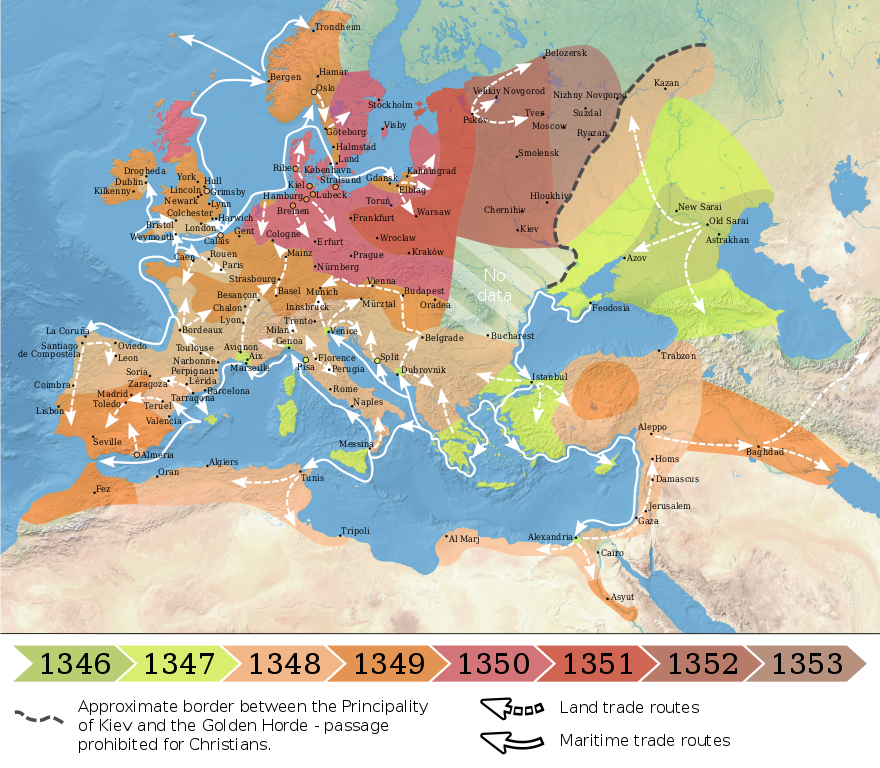
Map showing the spread of the Black Death in Europe between 1346 and 1353.
Map by Flappiefh via Wikimedia Commons.

There had never been a terror like it, and the “Great Mortality” as it was known — and much later, the “Black Death” — has seared itself in the European imagination. It changed the culture and tested the institutions of the time, and as we anxiously await the arrival of another — thankfully far less deadly — contagion from Italy its legacy and impact are worth remembering.

Epidemics have been around as long as civilization. Plaga — from the Greek for “strike” or “hit” — devastated classical Athens in the 5th century BC, when the historian Thucydides nursed sufferers; the Antonine Plague — probably smallpox or measles — killed as many as five million Romans at the empire’s peak. Far more deadly was the Plague of Justinian in the sixth century, which had a toll of 25 million and emptied whole regions of the eastern (Byzantine) Empire. Only in the 21st century did researchers confirm that this was the same illness that would appear eight centuries later — the Bubonic Plague.

Empires were particularly affected by these horrific epidemics, because empires are a form of globalisation — bringing different people into contact with each other and, more dangerously, into contact with other mammals, who act as disease vectors.

Another danger is climate change, which might turn a mild virus into a deadly one, or cause disease-carrying animals to migrate. This is what happened during the 14th century when the northern hemisphere became considerably cooler, soon after the Mongols had created the largest contiguous empire in history.

Genghis Khan’s people have generally received a historical bad press — people are more likely to recall the pyramid of skulls and the Tigris flowing black and red — yet their rule had opened up trade routes, allowing goods and people to cross Asia. Whether brought at the point of a sword or a trade deal, globalisation always brings the new: new cultures, new ideas, new languages and new pathogens.

Yersinia pestis had been living on gerbils and other rodents in central Asia, but unstable climate conditions in 1330s caused the disease to jump onto the rat flea. It was killing people by 1339, and in the mid-1340s Christians first heard of a disease raging in the Islamic world, which some at least took as divine punishment for the crusades.

After two centuries of Holy War this was understandable, yet hatred was not universal and during these conflicts Italian merchants had continually done business with Muslims, much to the Church’s fury. Now this trade, once the source of prosperity and peace, proved deadly: plague reached Europe via the Genovese colony of Caffa on the Black Sea (now Feodosiya, in the Ukraine). In October 1347, four ships escaping the diseased city had turned up in Sicily, condemning Italy to its fate.

February 23, 2020

China’s government and the coronavirus epidemic

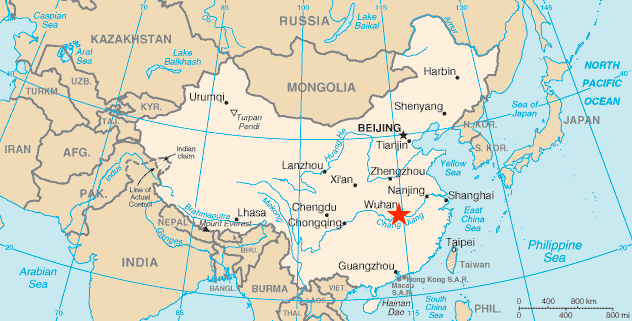
In Quillette, Aaron Sarin shows how the Chinese government has systematically failed to respond adequately to the epidemic which broke out late in 2019in Wuhan and risks “losing the Mandate of Heaven”:

As of this writing, the epidemic’s death toll is still rising, and many of these deaths can ultimately be traced to the paranoid rigidity of the Xi Jinping administration. By late December 2019, doctors in Wuhan were already sounding the alarm over cases of what appeared to them to be SARS. Instead of listening to their warnings, the authorities summoned eight of these doctors for a dressing-down. They were warned of the punishments they could face for “rumour-mongering.” News of their detention was broadcast to tens of millions: a clear message to anyone else who might have been thinking about discussing viruses in public.

The Party’s leaders actually knew enough to be worried by this point — they alerted the World Health Organisation on December 31st — and yet still they hid the truth from the public. This neurotic obsession with secrecy has certainly cost lives. If the medical community had been informed of the outbreak back in December, hospitals could have stockpiled the necessary supplies. But now there are drastic shortages, and patients are dying in hallways and waiting rooms.

Even the critics of authoritarian dictatorship will usually agree that the system beats democracy for sheer efficiency, but the coronavirus debacle has turned that old wisdom on its head. Where we might have expected cold and methodical governance, we have found dithering bureaucrats, unable to take a step in any direction, paralysed by what Xu Zhangrun calls “systemic impotence.” Weeks went by and citizens swarmed in and out of Wuhan, picking up the virus and transporting it to the far corners of the country. Local government officials stayed quiet, wary of the heavy hand of Xi Jinping. On January 23rd, a citywide quarantine was finally announced, but eight long hours passed before it was enacted — time enough for a million or more to flee the city.

The Wuhan lockdown was repeated in other parts of the country (most recently the southern megacity of Guangzhou), and some observers praised the speed with which new hospitals were constructed from scratch. These very visible displays of its power aside, the Party has moved far too slowly at every stage of the crisis. Diagnostic testing required samples to be sent all the way to a laboratory in Beijing, and this delayed the distribution of testing kits to many of the hospitals in Wuhan. Even when testing kits were available, patients still found themselves trapped in a Kafka-esque web of bureaucracy. According to Reuters, the tests have been refused to people who fail to make it through a complex reporting system involving hospital authorities, district authorities, city health authorities, and disease control officials.

None of this should come as a surprise. The cliché about the efficiency of authoritarian systems was always, on closer analysis, something of a low-resolution image. In the old days of the Soviet Union, speedy industrial growth obscured the reality of a fragile system largely devoid of autonomous decision making. During the 1920s, the Communist Party’s state planning committee Gosplan was established with the impressive-sounding mission of creating a series of five-year plans to govern the economy. But over the next 70 years, the vast majority of these plans were radically revised and rewritten, or more frequently ignored altogether in favour of Joseph Stalin’s arbitrary dictates. Indeed, Gosplan actively tried to avoid making decisions at all, because committee members knew Stalin would have them shot and replaced if their ideas produced unwelcome results. In the end, fear saps the efficiency of all authoritarian regimes, and the Chinese Communist Party is no exception.

Li Wenliang has emerged as the most vivid symbol of the Party’s latest failure. Li was one of the Wuhan doctors disgraced for discussing the coronavirus on social media. A few days after his police warning, he contracted the virus himself, and on February 6th he died. It was during the period of Li’s short illness that the Party apparently realised its error and decided to absolve the doctors, but still the central government would accept no blame for the tragedy. Instead, the Supreme Court (which is controlled by the CCP) scolded the local government in Wuhan — an unusual move, no doubt designed to create a scapegoat for surging public anger. The truth is that the city’s officials had been faced with an impossible job. They obediently followed orders, and now they will be punished for it.

February 8, 2020

ESR on the Wuhan coronavirus

Filed under: China, Government, Health, Media — Tags: , — Nicholas @ 05:00

He’s backing away from his — to me unfathomable — earlier belief in the accuracy of official Chinese government statistics:

My willingness to believe the official line didn’t stem from any credulity about what the Chinese government would do if it believed the truth wouldn’t serve. As Communists they are lying evil scum pretty much by definition, and denial would have been politically attractive for as long as they thought they could nip the pandemic in the bud. I thought their incentives had flipped and they would now be honest as a way of assisting their own countermeasures and seeking international help.

My first clue that I was wrong about that came from a friend who is plugged into the diaspora Chinese community. According to him, there is terrifying video being sent from Chinese clans to the overseas branches they planted in the West to prepare a soft landing in case they have to bail out of China. Video of streets littered with corpses. And of living victims exhibiting symptoms like St. Vitus’s Dance (aka Sydenham’s chorea), which means the virus is attacking central nervous systems.

My second clue was the Tencent leak. […] the takeaway is that there is now reason to believe that as of Feb 1st the actual coronavirus toll looked like this: confirmed cases 154023, suspected cases 79808, cured 269, deaths 24589.

Compare that with the Johns Hopkins tracker numbers for today, a week later: Confirmed cases 31207, cured 1733, deaths 638. Allowing for the Tencent leak being roughly one doubling period earlier, the official statistics have been lowballing the confirmed case number by a factor of about 8 and the deaths by a factor of about 80. And then inflating cures by a factor of about 12.

Even given what I’d heard about the video, I might have remained skeptical about the leak numbers if someone (don’t remember who or where) hadn’t pointed out that the ratio between reported cases and deaths has been suspiciously constant in the official Chinese statistics. In uncooked statistics one would expect more noise in that ratio, if only because of reporting problems.

So my present judgment, subject to change on further evidence, is that the Tencent-leak numbers are the PRC’s actual statistics. And that has a lot of grim implications.

January 18, 2020

The innovative 1720s

Filed under: Britain, Health, History — Tags: , , , — Nicholas @ 03:00

In the latest Age of Invention newsletter, Anton Howes says the real Roaring Twenties were back in the eighteenth century:

Last week I called the 1720s an era of schemes. 1720 was the year of the South Sea Company’s crash, as well as the collapse of John Law’s Mississippi Company in France. But the decade saw some oft-neglected innovations too. As I never tire of saying, Britain’s extraordinary acceleration of innovation was about all industries, not just the famous ones of cotton, coal, iron, and steam — a point that the 1720s demonstrate perfectly.

For a start, it was the decade in which smallpox began to be systematically eradicated through inoculation. Lady Mary Wortley Montagu, having observed the procedure in the Ottoman Empire, had her daughter inoculated in London following an outbreak in 1721. The same epidemic prompted the trialling of inoculation in New England, and the reports of these successes provided the statistical evidence for it to be more widely spread. Soon, through Lady Montagu’s aristocratic connections, even the royal children were being inoculated. Inoculation was still dangerous — it was decades before non-deadly cowpox was discovered to also confer immunity to smallpox — but the 1720s marked the beginning of the end for one of humanity’s greatest killers.

[…]

Most famous, however, was the search for longitude. When at sea, it was relatively easy to tell how far north or south you were, but not how far east or west. The implications for navigation were immense. William Whiston, a protégé of Newton, was in 1714 instrumental in lobbying for the creation of a substantial government prize for a solution, and spent much of the following decades trying to win it. His earliest proposal, along with the mathematician Humphrey Ditton, was for ships anchored at fixed locations to essentially shoot fireworks at fixed intervals. By comparing the difference between seeing and hearing the flashes, you might calculate your longitude (it’s actually not that dissimilar to the principle that underlies GPS).

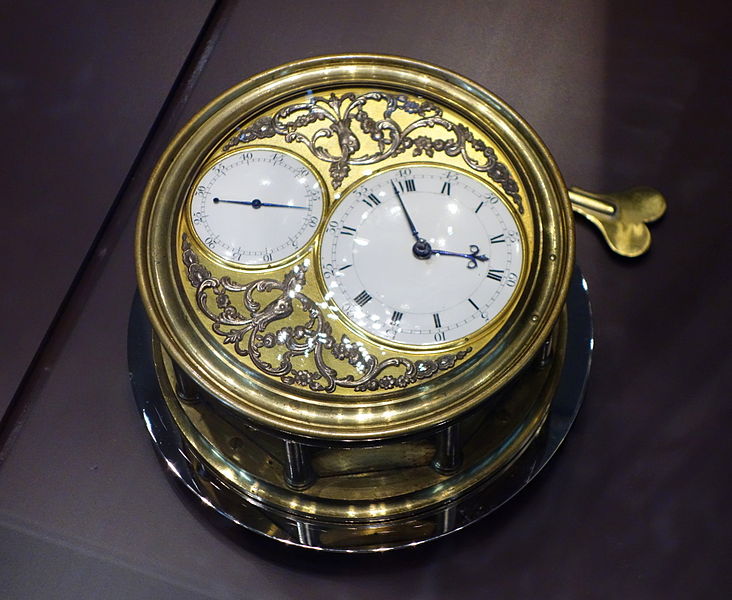
Marine chronometer “Copie No. 18″, Thomas Mudge, Jr., Robert Pennington, Richard Pendleton, et al, London, 1795 – Mathematisch-Physikalischer Salon, Dresden.
Photo by Daderot via Wikimedia Commons.

But unlike with the medical advances, the poets were having none of it. As one of them rather crudely put it:

    The longitude miss’d on
    By wicked Will Whiston;
    And not better hit on
    By good master Ditton.
    So Ditton and Whiston
    May both be bepist on;
    And Whiston and Ditton
    May both be beshit on.

Whiston and the other longitude-searchers also investigated using the earth’s magnetic variation — he produced perhaps the first map with isogonic lines, indicating where compass needles dipped — as well as solar eclipses. And as longitude could be found on land by looking at the eclipses of Jupiter’s moons, he tried to develop telescopes so that they could observe such events on the unsteady sea.

Nonetheless, the solution came from one of George Graham’s friends, the clockmaker John Harrison. Starting in the 1720s, Harrison developed a timekeeping device — the marine chronometer — that would keep its accuracy despite the rocking and rolling and atmospheric changes from being at sea. By comparing your local time with the time at Greenwich shown on the chronometer, you could calculate your longitude. (Though by the time his device came into use in the 1770s, another method had been discovered that involved observing the moon).

And of particular interest to woodworkers who also have historical interests:

While scientific minds sought the longitude, consumer items were also being transformed. In the 1720s, a ship’s carpenter to Jamaica, Robert Gillow, was among the first to import mahogany to Britain, creating a tradition of furniture-making in Lancaster that even the fashion-conscious French would come to regard jealously.

November 29, 2019

England’s early search for new markets

Filed under: Britain, History — Tags: , , , , , , — Nicholas @ 05:00

In the latest installment of Anton Howes’ Age of Invention, he looks at the multiple crises that afflicted England in the mid-sixteenth century and some of the reactions to those setbacks:

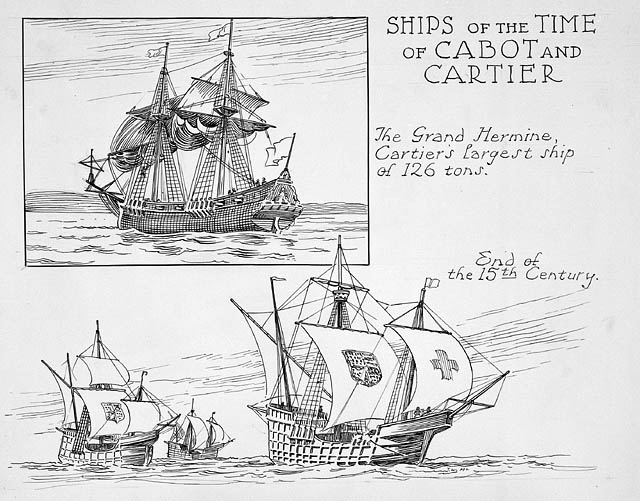
Ships from the period of John Cabot (Giovanni Caboto) and Jacques Cartier.
Illustration by Thomas Wesley McLean (1881-1951) via Wikimedia Commons.

From the 1540s through to the 1560s, [England] was beset by religious uproar, high inflation, hunger, rural and then urban unemployment, a fall-off in its major export trades, and widespread unrest. It was diplomatically isolated too. And I did not even mention the epidemics: the terrifying “sweating sickness” returned in 1551, deadly influenza swept the country in 1557, and in 1563 some 17,000 people in London were reportedly killed by the plague.

Yet, in the face of such problems, innovation in England began to pick up pace. The country, having once been a scientific and technological backwater, began to show signs of catching up. Why?

[…] The fall-off in trade with Europe, for example, seems to have had something to do with spurring the voyages of exploration in search of a north-west and north-east passage to the East Asia. Having lost Antwerp as a place to sell cloth in 1551, the English went in search of an arctic route to northern China and Japan. The expert geographers believed that those regions had a similar climate to that of Antwerp and the surrounding Netherlands, and so reasoned that the Japanese would therefore demand the same kinds of cloth. Although the English expeditions from 1553 onwards did not find a passage to Japan, they did establish trade routes with Russia via the White Sea, and they began to more actively consider the exploration and colonisation of North America. More importantly, with those voyages of exploration came greater experience of navigation, and it was not long before English ships were circumnavigating the globe (Francis Drake in 1577-80). Improvements to navigational techniques and instruments, as well as the ships themselves followed.

So it is tempting to think that necessity was initially the mother of invention, and that the many navigational and shipbuilding improvements of late-sixteenth-century England were its result. But I don’t think that this narrative quite works. I do not believe that necessity was the mother of invention.

For a start, voyages of navigation had already been attempted a number of times, long before the more successful ones in the early 1550s. The first explorers had reputedly gone west from Bristol in 1465, and certainly from 1480. And soon after the announcement of Columbus’s discoveries in the 1490s, the Venetian Zuan Chabotto (aka John Cabot), had sailed from Bristol with Henry VII’s blessing and claimed Newfoundland for both crown and Catholicism. Cabot had even hoped to found a penal colony on his second voyage in 1497, though for some reason the king did not provide the criminals. Throughout the early sixteenth century, the voyages continued. John Rastell, brother-in-law to Thomas More, the famous statesman and author of Utopia, in 1517 went in search of a north-west passage (though he never got beyond Ireland, because his crew decided it would be better to leave him there and sell the ship’s cargo in Bordeaux). Yet another voyage went west with Henry VIII’s support in 1527, but it mostly just found other Europeans — fishing fleets from Spain, Portugal, and France off the coast of Newfoundland (the English had made some catches there in the early 1500s, but apparently could not compete), and the Spanish everywhere else. The expedition made its way down to the Caribbean and then went home, with little to report. So people had already gone off exploring, long before the mid-sixteenth-century English commercial crisis. It suggests that there had already been both a latent supply and demand for such explorations.

January 12, 2019

The role of tyche in the fall of the Roman empire

Filed under: Environment, Europe, History — Tags: , , — Nicholas @ 03:00

Williamson Murray posted this review at The Strategy Bridge back in August, but I don’t recall seeing it linked anywhere. He emphasizes the role of tyche both in the small events and the greater flow of history (tyche is a Greek word meaning luck, chance, or random events that change the course of human activity). In his review, he makes it clear that he feels earlier historians have failed to emphasize just how much tyche impacted the Roman world:

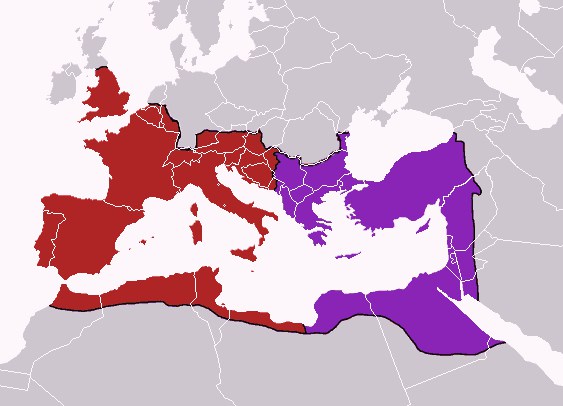
The approximate extent of the Roman empire circa 395AD, when the empire was formally divided into eastern and western zones with joint emperors in Rome and Constantinople.

In The Fate of Rome: Climate, Disease & the End of an Empire, Kyle Harper has presented us with a case study, namely the collapse of the Roman world in the period between the third and sixth centuries CE. Here tyche, in the largest sense, created a perfect storm of disastrous natural events and happenings that brought about the complete collapse of the Western Roman Empire in the fifth century CE, and eventually the ability of the Eastern Roman Empire to control much of the Mediterranean world after the seventh century. These natural events created conditions the Roman world was incapable of understanding, but which nevertheless brought about the collapse of one of the greatest, longest lasting empires in history. What Professor Harper’s book underlines is that the military difficulties that Rome’s generals and soldiers experienced in the period from the third century on were only the surface manifestations of far deeper systemic changes that could not be predicted, but which in combination created a perfect storm. Thus, fate, or more accurately tyche, undermined the best efforts to prevent what turned out to be a disastrous collapse.

The slide to catastrophe began after a period of unparalleled prosperity that had seen the population of Rome grow from approximately 60 million under Emperor Augustus in 33 BC to 75 million in 165 AD. The historian Edward Gibbon would describe the period in the following terms: “If a man were called to fix a period in the history of the world, during which the condition of the human race was most happy and prosperous, he would without hesitation, name” that period. Significantly, archeological and scientific evidence indicates the period from 200 BCE through the mid-point of the second century CE was extraordinarily favorable in terms of its climate for agriculture and the development of an extensive and expansive civilization in the Mediterranean and Western Europe. Combined with the favorable weather was a period of general peace under the empire that, for the most part, removed the generally disastrous role played by war throughout history. Except for one short period of civil wars between the claimants to Nero’s throne (70-71 CE, the year of the three emperors) and the two Jewish rebellions (66-71 CE and 135 CE), Rome fought its wars on the frontiers: the Rhine, the Danube, and Syria.

All that changed in the midst of the rule of the emperor Marcus Aurelius. The traditional narrative suggests that in 165 CE Roman soldiers returning from the campaign against the Parthians in Mesopotamia brought a plague. In fact, the pathogen most probably came through the Red Sea, brought by traders. In the great urban centers of the empire, all closely linked, it found an ideal environment. Given the extent of trade among these urban centers, the smallpox pathogens spread rapidly from urban center to urban center. As Professor Harper points out, “[i]n one sense, the Antonine Plague was a creature of chance, the final unpredictable outcome of countless millennia of evolutionary experimentation. At the same time, the empire — its global connections and fast-moving networks of communications — had created the ecological conditions for the outbreak of history’s first pandemic.” We have no way of knowing how many died, but it was substantial, on the order most probably of what was to occur in the Black Death of the fourteenth century.

Had the Antonine Plague been the only major problem besetting the Romans, the empire would likely have weathered the initial storm without catastrophic results. It was, however, not the only major factor that would affect the long-term health of the empire, based as it was on the slight surpluses that subsistence agriculture produced. Almost concurrently with the Antonine Plague, the weather patterns across the Mediterranean and Europe, reaching into central Asia, began a slow, steady shift that resulted in an average drop in temperature and rainfall. That decline would continue through to the mid-fifth century, which was to see the beginning of an even colder period, what climatologists are now calling the “Late Antique Little Ice Age” — one that was even less favorable to agriculture.

January 9, 2019

The past is a foreign – and very smelly – place

Filed under: Europe, Food, Health, History — Tags: , , , , — Nicholas @ 05:00

We moderns tend to take ordinary public health issues for granted, yet the development of adequate sanitation and improvements in personal hygiene have probably contributed more to eliminate disease and expand human lifespan than any number of medicinal innovations. Marian L. Tupy reminds us just how … aromatic … the past was, and why:

Most of us take modern restrooms for granted, but proper sanitation is a relatively modern phenomenon and is still far too rare in the poorest regions of the world.

The need to keep human and animal waste away from human contact may seem obvious today, but for millennia that was not the case. Before the emergence of the germ theory of disease, and the subsequent public health campaigns and construction of adequate sanitation infrastructure in most of the world, people and waste commingled – with catastrophic results.

Countless millions of people got sick or died from diseases such as diarrhoea, ascariasis (a type of intestinal worm infection), cholera, hepatitis, trachoma, polio, schistosomiasis and so on.

In due deference to our ancestors, it has to be noted that some cultures, such as ancient Rome, paid due attention to cleanliness. The Romans built numerous public baths, which were accessible even to the very poor for a nominal fee, and a sophisticated system of sewers that enabled Rome to grow and reach a population of over 1 million people around the start of the first millennium. That feat would not be replicated in Europe until London and Paris in the 19th century.

In general, however, standards of hygiene tended to be very poor. A typical urban dwelling had a cesspit underneath the house or next to it. That’s where human and kitchen waste accumulated and fermented. Inadequate drainage, irregular emptying and heavy rains could make the cesspit overflow and seep into the house. While discouraged by the city authorities, people often emptied their chamber pots into the streets below.

As Johan Norbeg of the Cato Institute wrote in his 2016 book Progress: Ten Reasons to Look Forward to the Future, “When pedestrians heard the shout of ‘Gardyloo!’ they ran for cover. This phrase, taken from the French for ‘Look out for the water,’ was your only warning that someone was about to throw their waste out of the window.”

In rural areas, people lived with their animals, including chickens and cows, and used both animal and human waste to fertilise their crops – an extremely dangerous practice compounded by the fact that people could go throughout much of their lives without ever washing their hands. That led to epidemics of disease as well as other unsavoury consequences.

December 5, 2018

The Spanish Flu I THE GREAT WAR Epilogue 2

Filed under: Europe, Health, History, Military, WW1 — Tags: , , , — Nicholas @ 04:00

The Great War
Published on 3 Dec 2018

The Spanish flu has quickly spread all over the world since the spring of 1918 and will become the disease that killed more people in a shorter period of time than any other disease in human history.

July 28, 2018

Pellagra – A Medical Mystery – Extra History

Filed under: Food, Health, History, Science, USA — Tags: , , , — Nicholas @ 04:00

Extra Credits
Published on 26 Jul 2018

Pellagra can cause depression, dementia, and diarrhea, eventually leading to death. Dr. Joseph Goldberger was put on the case to crack it.

July 13, 2018

The Gardeners Of Salonica Prepare A New Offensive I THE GREAT WAR Week 207

Filed under: Europe, Greece, Health, History, Military, Russia, WW1 — Tags: , , , , — Nicholas @ 04:00

The Great War
Published on 12 Jul 2018

http://soviethistory.msu.edu/1917-2/destruction-of-the-left/destruction-of-the-left-texts/accounts-in-the-press/

The Macedonian Front has been quite since the recapture of Monastir except for some minor battles like at Skra. But the five nation Army of the Orient wants to change that and is readying a new offensive.

August 13, 2014

Pessimism from the Rational Optimist

Filed under: Africa, Health — Tags: , , , , , , — Nicholas @ 00:02

Matt Ridley is somewhat uncharacteristically concerned about the major Ebola outbreak in west Africa:

As you may know by now, I am a serial debunker of alarm and it usually serves me in good stead. On the threat posed by diseases, I’ve been resolutely sceptical of exaggerated scares about bird flu and I once won a bet that mad cow disease would never claim more than 100 human lives a year when some “experts” were forecasting tens of thousands (it peaked at 28 in 2000). I’ve drawn attention to the steadily falling mortality from malaria and Aids.

Well, this time, about ebola, I am worried. Not for Britain, Europe or America or any other developed country and not for the human race as a whole. This is not about us in rich countries, and there remains little doubt that this country can achieve the necessary isolation and hygiene to control any cases that get here by air before they infect more than a handful of other people — at the very worst. No, it is the situation in Liberia, Sierra Leone and Guinea that is scary. There it could get much worse before it gets better.

This is the first time ebola has got going in cities. It is the first time it is happening in areas with “fluid population movements over porous borders” in the words of Margaret Chan, the World Health Organisation’s director-general, speaking last Friday. It is the first time it has spread by air travel. It is the first time it has reached the sort of critical mass that makes tracing its victims’ contacts difficult.

One of ebola’s most dangerous features is that kills so many health workers. Because it requires direct contact with the bodily fluids of patients, and because patients are violently ill, nurses and doctors are especially at risk. The current epidemic has already claimed the lives of 60 healthcare workers, including those of two prominent doctors, Samuel Brisbane in Liberia and Sheik Umar Khan in Sierra Leone. The courage of medics in these circumstances, working in stifling protective gear, is humbling.

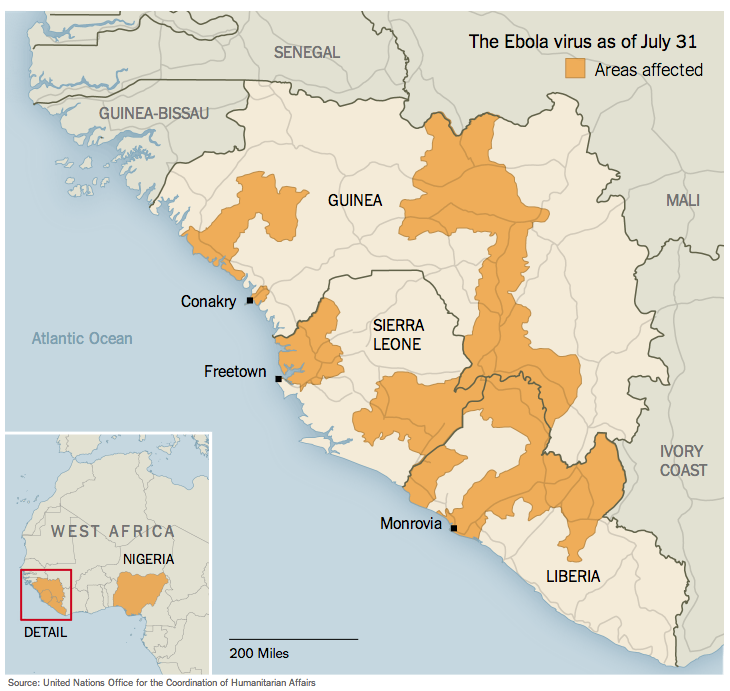
Ebola outbreak in west Africa

« Newer Posts

Powered by WordPress