Quotulatiousness

June 12, 2018

The Goeben & The Breslau – Two German Ships Under Ottoman Flag I THE GREAT WAR On The Road

Filed under: Europe, Germany, History, Middle East, Military, WW1 — Tags: , , , , — Nicholas @ 04:00

The Great War
Published on 11 Jun 2018

How SMS Goeben and SMS Breslau, two German warships in 1914 sailed under Ottoman flag and helped Enver Pasha to get the Ottoman Empire into World War 1.

June 11, 2018

Jay Currie says it’s time to light the Bat Signal for … Brian Mulroney?

Filed under: Business, Cancon, Economics, Government, USA — Tags: , , , , , , — Nicholas @ 05:00

I find it hard to believe that things have gotten to the point that anyone, let alone Jay Currie, is looking to former PM Brian Mulroney to pull Justin’s chestnuts out of the Trumpian fire:

In Canada, more specifically Ontario, the destruction of the auto industry would be a full scale, all hands on deck, disaster. Realistically, the auto sector is Ontario’s largest private sector employer and the largest manufacturing sector. Being priced out of the US market would kill tens of thousands of well-paid jobs.

Trump has taken the measure of Trudeau and his tiny, annoying, Minister of External Affairs, Chrystia Freeland and concluded they are featherweights. Which means that Canada is potentially screwed because Trump has no faith in our leadership. You don’t call people dishonest publicly if you plan to do business with them.

It is unlikely that Trudeau will be aware of just how badly he has failed for a few days. The Canadian media are heavily invested in a narrative which has Justin standing up to the big, bad, Trump. Trudeau’s tone-deaf advisors are, no doubt, revelling in the fact they got lots of “gender” language into the communique.

It will take a few days for the more sober side of the media to realize what peril Trudeau has put us in. And a few more for the geniuses in the PMO to figure out that Trump is not playing the same game as they are.

When they do figure it out the question will arise, “What the fuck do we do now?”

As I am quite sure Butz and his posse read this blog I have a simple suggestion.

Normally, I would have suggested they get in touch with Simon Reisman who negotiated both the Auto-Pact and NAFTA. Alas, Reisman is dead.

Second best by a long shot? Brian Mulroney. A man I have next to no time for but who a) managed to get Canadians onboard for NAFTA, b) was a quite successful Canadian Prime Minister, c) is wired into both Trump World and broad swaths of corporate America.

If Trudeau could get Mulroney to do it Mulroney would be going into the US with a serious, well thought out, everything on the table, pitch. Likely starting with first principles – no tariffs, no subsidies, no non-tariff barriers. Be prepared to dump dairy and end transhipment of Chinese steel. And pitch it to the Trump people as the template for the deals which could be made with the EU, Japan, India and so on. (China is a whole other thing.)

The key point here is that Canada has to move, and move quickly, away from the finger-wagging politics of gender inclusion and climate change to a hard-nosed business approach to getting the best deal we can with an America which is now willing to put its own interests first.

May 6, 2018

Peace and Revolution I BETWEEN 2 WARS I 1919 Part 3 of 4

Filed under: Europe, History, Politics, USA — Tags: , , , , — Nicholas @ 06:00

TimeGhost History
Published on 5 May 2018

The Paris Peace Conference gets underway while the world continues to go up in flames. In 1919 it seems like every corner of the world is plagued by revolutions, strikes, protests, oppression, ethnic violence, massacres, or war.

Join the TimeGhost Army at https://timeghost.tv
or on Patreon: https://www.patreon.com/TimeGhostHistory

Hosted by: Indy Neidell
Written by Spartacus Olsson and Indy Neidell
Directed by: Spartacus Olsson
Produced by: Astrid Deinhard
Executive Producers: Bodo Rittenauer, Astrid Deinhard, Indy Neidell, Spartacus Olsson

A TimeGhost chronological documentary produced by OnLion Entertainment GmbH

April 17, 2018

Yes Prime Minister – Official Secrets – Expelling the Russians

Filed under: Britain, Humour, Politics, Russia — Tags: , — Nicholas @ 02:00

Navyblue95
Published on 29 Dec 2016

April 13, 2018

The Battle of La Lys – Operation Georgette I THE GREAT WAR Week 194

Filed under: Britain, Europe, Germany, History, Military, WW1 — Tags: , , , , , — Nicholas @ 04:00

The Great War
Published on 12 Apr 2018

A year after the US entry into the war, the German Spring Offensive 1918 continues with operations Archangel and Georgette. The Portuguese Expeditionary Corps has to pay the price while the British manage to orderly retreat.

April 10, 2018

France Before WW1 – La Belle Époque? I THE GREAT WAR Special

Filed under: France, History, Military, WW1 — Tags: , , , , — Nicholas @ 04:00

The Great War
Published on 9 Apr 2018

The time between the French defeat against Prussia in the Franco-Prussian War and the outbreak of the First World War is often described as the Belle Époque. But it certainly was a turbulent time for one of the major world powers too.

March 16, 2018

Allied Unified Command On The Horizon I THE GREAT WAR Week 190

Filed under: Germany, History, Military, Russia, WW1 — Tags: , , , , — Nicholas @ 06:00

The Great War
Published on 15 Mar 2018

While Germany is occupying a territory from the Baltics to the Black Sea and planning its huge spring offensive, the Allies are still trying to get behind the idea of a unified command.

March 5, 2018

QotD: Mercantilism

Filed under: Economics, Quotations — Tags: , , , — Nicholas @ 01:00

According to the mercantilist dogma held by nearly all politicians and pundits (and, yes, also by the People), the best possible outcome for any country – call it country A – whose government is negotiating a trade deal is the following: the government of A arranges for the maximum possible number of citizens of A to work the maximum possible number of hours producing goods and services of maximum possible value to be exported to the maximum possible number of foreigners whose governments agree to prevent those foreigners from ever sending in return to the people of country A even as much as a single wooden toothpick.

The optimal trade deal for country A – according to mercantilist dogma – is one that commits the people of A to work for foreigners without compensation. This optimal trade deal, in effect, turns the workers of country A into slaves for foreigners. (Such a deal would have country A workers paid, in real goods and services, absolutely nothing – which is a wage well below the minimum wage that many of the mercantilist leaders, in other contexts, support!)

According to mercantilist dogma, were the diplomats and ‘leaders’ of country A able to negotiate such an outcome, those diplomats and ‘leaders’ would be hailed has having secured a huge and unconditional trade victory of the sort that history has never before witnessed. Country A would be renowned worldwide as the greatest “winner” ever in matters of international trade.

According to mercantilist dogma, it is therefore unfortunate for the people of country A that the diplomats and ‘leaders’ of countries B through X are unwilling to grant such splendid terms to A. The diplomats and ‘leaders’ of countries B through X each would also like to secure such an ideal outcome, as described above, for their countries. But the necessity of compromise prevents any country from winning such an unalloyed and stupendous victory. The result of the compromise for all countries is an imperfect trade deal under which each country reluctantly agrees to receive valuable goods and services from foreigners as the price that must be paid for the privilege of sending domestically produced good and services to foreigners.

Don Boudreaux, “The Idiocy of Mercantilism”, Café Hayek, 2016-06-25.

March 2, 2018

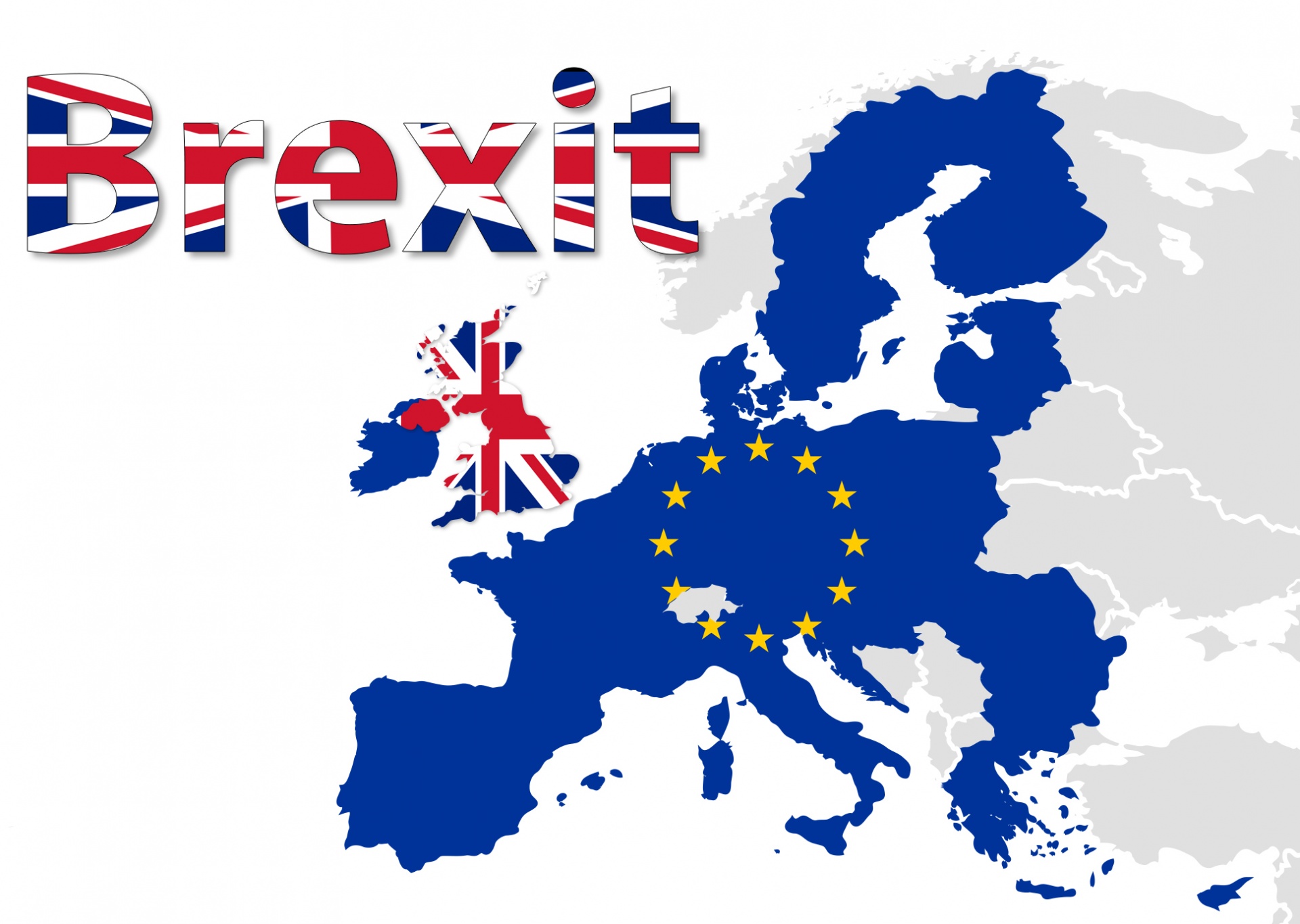
Sean Gabb on the ever-more-likely “hard Brexit” option

Filed under: Britain, Europe, Government, Politics — Tags: , , , , , , , — Nicholas @ 05:00

Sean Gabb hasn’t read the full text of the draft treaty of withdrawal from the European Union, but does offer some general points that do not depend on the details in that document:

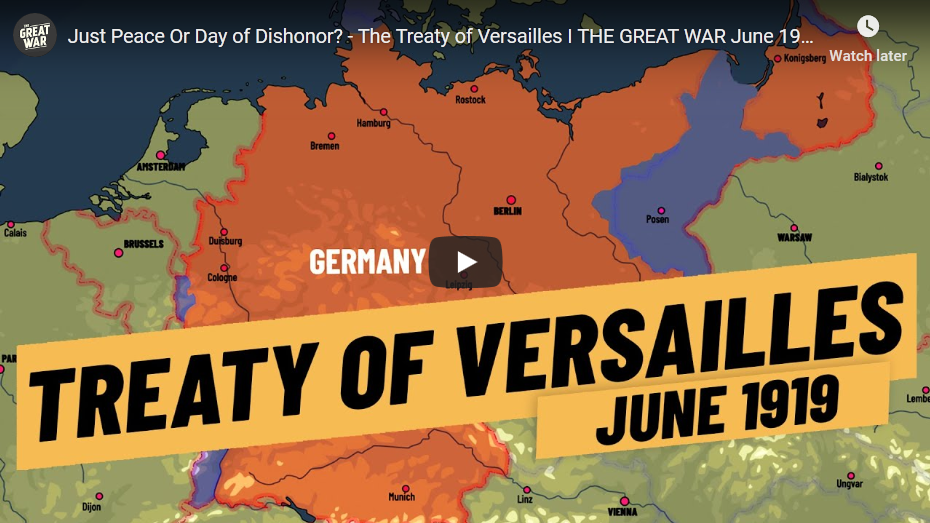
I wish the Referendum had not been called. Nobody in or near power had so much as the vaguest idea of how to leave the European Union. Nearly two years on, nobody still knows what to do or how to do it. The politicians are all incompetent or dishonest, or both. The politicians in charge called an election, and were so sure of winning it that they effectively lost it. The politicians most likely to replace them are probably more incompetent, and certainly more dishonest. The other European powers and the European powers have now had time to recover from their initial shock, and are behaving like that spurned and vindictive wife. Though I repeat that I have not read it, I have no doubt their draft treaty is the modern equivalent of the Versailles Diktat. They are pushing this on us because they want to deter any other member state from trying to leave. I also suspect they are pushing it because, for the past three centuries, they have been repeatedly stuffed by us, and they now want to do some stuffing of their own.

If we accept the draft treaty, or anything like it, we shall have exchanged an equal membership of the European Union for satellite status. We shall have limited control over our internal regulations. We shall have limited control over our borders. We shall have consented to a unification of Ireland on the most humiliating terms. If, unable to negotiate better terms, our leaders tell us that we should stay in after all, that will involve still more humiliation. What little authority we ever had to negotiate opt-outs from inconvenient regulations will have evaporated. We shall be forced to join the Euro and the Schengen Agreement. Any future British “No!” will be met with pitying smiles and firm insistence. I will say nothing about the prospects for civil disorder in this country.

On the bright side, the draft treaty – if as bad as I am told it is – makes everything much simpler that it was. The Tory ultras strike me as no less corrupt and dishonest than everyone else. I think little of the people concerned. But their plan, such as it is, has become the only plan on offer.

Whether she is profoundly stupid is beside the point. Our main problem with Theresa May is that she appears to be unable to make up her mind. Well, I think it was Abba Eban who said that, when everything else has been tried and seen to fail, people will often do the right thing. Here for what they are worth, are my proposals for Mrs May:

  1. Reject the draft treaty without further discussion;
  2. Propose a free trade treaty to cover goods and services, and call for a joint committee to examine how all present and future European regulations can be imposed and verified in this country for those things alone that are exported into the European Union;
  3. Tell the Irish that they can avoid a hard border with Ulster by joining us outside the European Union;
  4. Put up whatever cash may be needed in the short term to keep Ulster from economic collapse;
  5. Tell the Americans that, if they want any kind of future alliance, they should give us their full backing, and be prepared to make an emergency free trade agreement;
  6. Tell everyone to plan for an economic shock next April, and make collective preparations for dealing with it.

By this point, it seems it’d be a major concession on the part of the EU negotiators to agree not to hold the formal signing of the agreement in that railway carriage at Compiègne.

Canada’s foreign policies, in the wake of recent Prime Ministerial mis-steps

Filed under: Cancon, China, Government, India — Tags: , — Nicholas @ 03:00

Ted Campbell suggests that our current foreign policy goals have been seriously undermined by the — shall we say “disappointing” — outcomes of Prime Minister Trudeau’s Chinese and Indian trips:

[Former senior Canadian diplomat David] Mulroney begins by saying that: “The best that can be said about Prime Minister Justin Trudeau’s visit to India is that it may prompt a review, if not a complete rethinking of a Canadian foreign policy that appears to be seriously off the rails. We have some hard lessons to learn … [and] … At the very least, the Prime Minister’s debacle in India should encourage smart people in Ottawa to zero in on what isn’t working.” That’s good thinking. At the end of every major campaign, an especially after campaigns in which things go awry, good military commanders convene a board of senior officers to consider “lessons learned,” in the hope that they will not make the same mistakes next time. sadly, especially today, the lessons learned are all too quickly forgotten even if the analysis was rigorous enough in the first place.

“Most worrying,” David Mulroney says, “is a fundamental and puzzling failure at the level of policy implementation, something that appears to be compounded by the Prime Minister’s own impetuosity. Flying to India before the big meeting with Prime Minister Narendra Modi was in the bag, much like heading off to Beijing on a free-trade themed visit without any reasonable expectation that a deal was doable, exposes Mr. Trudeau to a degree of prolonged public skepticism that comes to define the visit itself.” In other words: Justin Trudeau goes off “half cocked” as we soldier say … not ready for action. That is, I suspect, in part because his team in the Prime Minister’s Office (PMO), was brilliant on the campaign trail in 2015 but is really unqualified to advice the leader of the government of the G7 nation; that poor quality of policy advice matters because Justin Trudeau was, and still is, to be sure, “just not ready” for the job he was handed. But his office campaign team wants to get and keep him in the public eye because that’s part of the 2019 campaign strategy … this time it failed because they really didn’t understand the business at hand.

[…]

But India is not just any country, as Mr Mulroney explains: “India isn’t our friend. It is a rising regional power beset with a range of domestic problems, including serious human rights issues. It takes a prickly approach to global issues that is often at odds with traditional Canadian policies in areas ranging from trade policy to nuclear disarmament … [and, he says] … The Indian diplomats I worked with could be wonderfully pleasant after the official day was done. But, for the most part, they brought a formidably ruthless precision to their pursuit of India’s interests in the world. While they might ultimately agree to grant Canada a concession, this was always a product of hard and often heated negotiations. They never conceded a point because they liked us or because we are home to a large Indo-Canadian community.” Further, he adds that “My experience with Chinese diplomats was entirely similar.” Although never at the same level as Mr Mulroney, I worked in the international arena as a senior officer, especially in one sector (global radio-communications which included arranging for the expansion of mobile communications in the 1990s. My Chinese and Indian colleagues were, indeed, fine men and women but they, just like me, were there ~ Geneva, a lot, but everywhere from Washington, London, Canberra and Tokyo to Beijing ~ defending their interests. “friendship,” even long standing alliances didn’t count for anything. Billions of dollars were at stake, profits and losses would hinge on how we ~ engineers and lawyers and businessmen and soldiers from dozens of countries ~ managed to slice up the radio spectrum to allow these new services to thrive. The Chinese and Indian delegates were just as professional, just as technically qualified, just as hard nosed as the Americans, Brits and Canadians.

“Long before the election of U.S. President Donald Trump,” David Mulroney says, “it should have been clear to us that the world is changing in ways that do not align with traditional Canadian views, interests and values. If we’re smart, the rise of countries like China and India can certainly contribute to our prosperity, and with hard work, we should be able to find common cause on important issues such as global warming … [but, he adds] … the rise of these assertive and ambitious Asian powers will almost certainly challenge global and regional security. Both will also continue to reject traditional Canadian notions about global governance and human rights, and neither will be particularly squeamish about interfering in Canadian affairs.” Sunny ways, feminism and being green don’t count for much; they are very certainly not a sound foundation upon which to build a foreign policy. We have to start thinking about our vital interests in the world ~ about what they are and about how we can and will protect and promote them: that’s the basis of a grand strategy. It was also the kind of thinking that Stephen Harper hated: he wanted to deal with issues incrementally, linking them together, sometimes, into a coherent web but never allowing them to become too important in and of themselves. That was bad enough but I’m persuaded that Justin Trudeau doesn’t think about those “big ideas” at all … because, I fear, they are, simply, quite beyond his comprehension.

February 26, 2018

India’s largest newspaper on Justin Trudeau’s “disaster visit”

Filed under: Cancon, India, Media, Politics — Tags: , , , , — Nicholas @ 03:00

Paul Wells linked to this story in the world’s largest circulation English language newspaper, The Times of India:

Justin Trudeau and family during India visit
Image via NDTV, originally tweeted by @vijayrupanibjp

Canadian prime minister Justin Trudeau’s visit was a disaster that has little parallel in India’s recent diplomatic history. But as the Canadian prime minister returned home on Saturday after almost a week of recurrent diplomatic missteps, ironically, it may have provided the opportunity to reset relations between Canada and India.

On Saturday, Indian government officials were angry at suggestions by Canadian officials that India was responsible for Khalistani terrorist Jaspal Atwal getting a visa to India and used his presence to embarrass Trudeau.

Trudeau, in his meeting with prime minister Narendra Modi, also complained that his visit had been shadowed by a single issue. Atwal got a visa because he was taken off the blacklist some years ago. But he was part of a number of Trudeau’s own events that did not involve the Indian government at all.

A prime ministerial visit to a foreign country for a week with a thin official component is always fraught with danger. In addition, moving the official meetings to the very end of the trip indicated that the government meetings were an after-thought. Most foreign leaders who throw in other events almost always front-load the official meetings, and then go on to business or tourism events.

Here, it was clear from the start that Trudeau came to India to score with his Sikh constituency back home — four out of the six cabinet ministers who travelled with him were Sikh, as were an overwhelming number of MPs who also travelled with him. Until the media barrage in India forced the Canadian side to change tack, Trudeau was not even ready to meet Amarinder Singh, chief minister of Punjab. Even the Canadian high commissioner’s official reception was a celebration of Punjab with the prime minister himself waltzing in on bhangra beats.

February 23, 2018

“…the Trudeaus playing ‘Mr Dressup and Family’ in exotic locations on the taxpayers’ dime isn’t the problem”

Filed under: Cancon, India, Politics — Tags: , , , , , — Nicholas @ 03:00

The press is having a hard time presenting Justin Trudeau’s India trip in a positive light, which clearly pains the teeny-bopper Trudeau fan club that composes a large part of the Canadian media. Ted Campbell sees the trip as a series of wasted opportunities to begin healing the breach between India and Canada:

I’ve taken my time in commenting on the prime minister’s trip to India. To say that I’m very disappointed is to put it mildly … I’m disappointed and a little embarrassed to be a Canadian. But the Trudeaus playing “Mr Dressup and Family” in exotic locations on the taxpayers’ dime isn’t the problem. We have, in fact, a serious problem as far as India is concerned and we, Canada, one of India’s oldest and firmest friends is in danger of being seen as an adversary. That’s a problem and it is, in my mind, a HUGE problem for Canada.

As Vishnu Prakash, former Indian envoy to Canada, told Indian news site The Print on Monday, ““Over the years, the Canadian political establishment, across the spectrum (whether it is the NDP, Conservatives or Liberals) has been mollycoddling Khalistani elements. Under the Trudeau government, this has increased. He had himself appeared on a Khalistani platform in Toronto in April last year.” It, the “mollycoddling Khalistani elements,” has been going on since at least the 1980s, back when Indira Ghandi’s government cracked down (1984) and nearly provoked a civil war and even in 1985 when Air India flight 182 was bombed, almost certainly an attack organized by Canadians, in Canada, as retaliation. Then the governments of the day spent 20 years and over $100 million on an investigation that retired Supreme Court Justice John Major described as a “cascading series of errors” by the government, writ large, including, especially, the RCMP and CSIS. India was not impressed.

India was less impressed when Canadian political parties began to actively court the Canadian the entire Indo-Canadian community but failed to condemn Sikh separatism. Canadians, including Brian Mulroney, Jean Chrétien, Stephen Harper and Justin Trudeau have “explained,” correctly, that people are allowed to support unpopular causes here in Canada, so long as they don’t break our laws, but India, not unreasonably, given Canada’s own history of separatist violence, would like something more. But the Sikh vote is active and “efficient” and all parties want it and that seems, to India, anyway, to mean turning a blind eye to the (disputed) fact assertion that the Khalistan independence movement is centred in and funded from Canada … Prime Minister Trudeau made thing worse, according to The Hindu, when “On April 30, [2017] Mr. Trudeau addressed a parade for ‘Khalsa Day’, which included floats glorifying Sikh militant leaders Jarnail Singh Bhindranwale, Amreek Singh and former General Shahbeg Singh who were killed in the siege of the Golden Temple and Operation Bluestar in June 1984.” That act appears to have crossed a line, leading to what the whole world is now interpreting as a major diplomatic snub […]

The big issue is not the rather gentlemanly snub of Justin Trudeau by India’s highest officials; our prime minister appears more interested in having an all expenses paid vacation with his family than in doing the nation’s business in any event; the real issue is the Canadian political actions that made it politically necessary for Prime Minister Modi to administer that snub at all.

What Canada needs to do now is repair relations with India, and that may require Prime Minister Trudeau to look very, very closely at any ties any of his ministers may have with the Khalistan independence movement, he says there are none, and either making them sever all ties with separatists or severing them from the Liberal cabinet, caucus and even the Party. Andrew Scheer needs to do the same with the Conservatives and Jagmeet Singh needs to speak out for national unity ~ if it’s good for Canada then it’s good for India, too. On this issue, at least, politics should indeed, stop at the water’s edge.

Of course, when you allow things like this to happen, diplomacy becomes a much trickier profession than normal:

In Britain, the Daily Mail published the comments from a lot of Indians who have been offended by Trudeau’s choices of clothing on the visit so far:

Justin Trudeau has been ridiculed on social media by Indians for his ‘tacky’ and over the top outfit choices while on his first visit to their nation as Prime Minister.

While many praised his clothing during the first two days of his trip, patience was wearing thin by the time he attended a Bollywood gala on Tuesday night, before the tide turned against him on Wednesday.

Ministers, authors, journalists and ordinary Indians lined up to mock him on Wednesday, saying his wardrobe was ‘fake and annoying’.

Perhaps taking note of the criticism, the Canadian leader donned a suit on Thursday as he visited Jama Masjid, one of India’s largest mosques.

Leading the criticism was Omar Abdullah, former chief minister of Jammu and Kashmir, who tweeted on Wednesday saying Trudeau’s preening was ‘all just a bit much.’

‘We Indians do not dress like this every day sir, not even in Bollywood.’

Bhaavna Arora, a bestselling Indian author, also chimed in, accusing Trudeau of wearing ‘fancy dress’ and saying she found it ‘fake and annoying’.

Shekhar Gupta, founder of Indian newspaper The Print also mocked the Canadian Prime Minister, accusing him of ‘running a week-long “election campaign” in India in fancy dress.’

February 20, 2018

The EU transition period proposals “are the sort of terms which might be imposed by a victorious power in war on a defeated enemy”

Filed under: Britain, Economics, Europe, Politics — Tags: , , — Nicholas @ 03:00

Martin Howe on the way the European Union “negotiators” are treating the transition period for the UK as a re-run of the Versailles Treaty, with the UK substituted for the Kaiser’s Imperial Germany:

The European Union’s proposals for the UK’s transition period make grim reading. They are the sort of terms which might be imposed by a victorious power in war on a defeated enemy. They are not terms which any self-respecting independent and sovereign country could possibly agree to, even for an allegedly limited period.

Apparently, we must agree to implement every new EU law while having no say or vote; and we shall not be allowed to conclude trade agreements, even to roll over existing agreements which the EU has with other countries so that they continue to apply to us, without the EU’s permission. We must abide by the rulings of a foreign court on which there will no longer be any British representation.

Apparently, an outrageous and demeaning proposal by the Commission that the UK should be subject to extra-judicial sanctions under which the EU could suspend market access rights is now to be “re-worded”. But that would still leave the UK extremely vulnerable to damaging new rules being imposed on us during the transition period by processed in which we would have no vote and no voice. As reported in the Telegraph last week, the EU has plans to use these powers in order to launch regulatory “raids” on financial institutions on British territory and to make rules which will damage the competitiveness of the UK’s financial services industry.

But quite apart from the totally unacceptable terms for the transition period itself which are being proposed by the EU, the EU is seeking to use the transition period deal as a lever to secure damaging long term commitments from the UK. The most damaging of these is the EU’s attempt to lever the Irish border issue in order to force the UK to act as a long term captive market for EU goods exports by pressing for legally binding text that would force us into a long term obligation to comply with EU tariffs and regulations on standards of goods, on the specious ground that it is impossible to have an open border without all tariffs and regulations being the same.

There should be no doubt that being required to follow either EU tariffs or EU standards on goods would be a total disaster for the UK. It would make it difficult or impossible to conduct an independent trade policy, and to negotiate trade agreements with non-EU countries. How could we expect any significant trading partner to be willing to enter into an agreement with us, if we tell them that we cannot grant mutual recognition to their own goods standards because our own are permanently regulated by the EU? And how can subordinating the UK to the vassal status of taking rules on which we have no vote possibly be compatible with the British people’s vote to take back control of our laws and our courts?

January 20, 2018

Day 5 Cuban Missile Crisis – President Kennedy Considers War

TimeGhost
Published on 9 Nov 2017

On Saturday October 20th, 1962, US President John F Kennedy moves to side more with the hawks advising a forceful response to the Cuban Missile Crisis. Meanwhile in Moscow, the Soviets now believe that they deterred the Americans from using force.

January 15, 2018

Khosrau Anushirawan: Trolling Justinian – Extra History – #4

Filed under: History, Middle East — Tags: , , , , , — Nicholas @ 06:00

Extra Credits
Published on 13 Jan 2018

Iran and Rome had agreed to an Eternal Peace, but tensions between them proved too great and Khosrau decided to invade while Justinian’s guard was down. His army swept into Rome practically unopposed, and he made a mockery of Justinian at every opportunity while treating himself to a grand old time pillaging and parading across the Roman border.

« Newer PostsOlder Posts »

Powered by WordPress