Quotulatiousness

November 10, 2018

Emperor Karl’s last attempt for peace, 1917

Filed under: Britain, Europe, France, History, Military, WW1 — Tags: , , , , — Nicholas @ 03:00

Part of a post at Essays in Idleness from last month by David Warren:

As we approach the centenary of the Great Armistice, I see the plastic poppies circulating from the little boxes in the liquor stores. My thoughts turn to war qua war. Though sometimes necessary, it is not a good thing (“bad for children and animals” as the peaceniks say); and given the ambiance of our high-tech weaponry, little heroism is left to raise the tone. Contemporary battles are not confined to the soldiers, as once they could be. The devastation of cities and towns, the routine destruction of infrastructure, the civilian suffering that follows from that, must match or quite exceed ancient incidents of rapine.

While I’ve never thought war should be avoided at all costs, I recognize that the cost is very high. Opportunities for peace should not be overlooked, even while the carnage is in progress.

When, for instance, the newly-enthroned Emperor Karl of Austria-Hungary — “fanatic” Catholic Christian — discreetly proposed a separate peace to the allies in the spring of 1917, his agents were rebuffed, outed, and mocked. The Americans were coming to tilt our fortunes, the Germans were distracted overrunning the Russians, and while the Western Front was in catastrophic stasis, our nationalist politicians could now hope to utterly crush the foe. They would demand unconditional surrender.

The incident haunts my historical imagination. This was a serious opportunity to restore something close to the status quo ante, while resolving casus belli (very much plural) from Belgium and Alsace to Serbia and Constantinople on the principle of sweet reason. Drowned in the gunfire was this Blessed Karl’s expressly Christian plea. In an instant the decision was made, in the West, to persist till millions more were slain, and the conditions were assembled for international violence and totalitarianism through the next seventy years.

The gentlemen I call “the three stooges of the apocalypse” — Wilson, Lloyd George, Clemenceau — were all modern politicians, whose nationalist ideals were now buttressed by the vast democratic constituencies of countries at war, goaded on by the screaming headlines of a paper mass media. They wanted a New Europe, a New World Order, in which antiquated empires and all the sleepy old aristocratic polities would be smashed and replaced — with modern, ethically homogenous, democratic States. The consequences were unforeseeable to them, wrapped in their flags and the rhetoric of liberté, égalité, fraternité.

It was a war to end all wars! … Both the malice and the naivety were astounding.

November 9, 2018

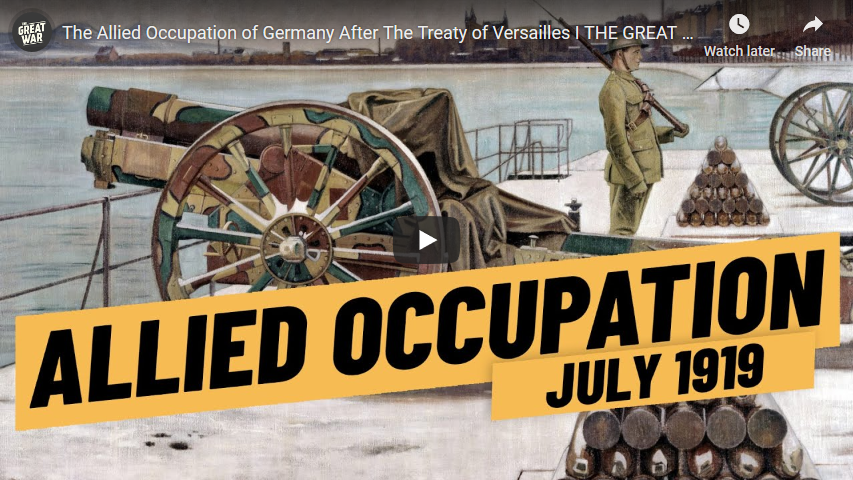
Revolution in Germany – Armistice in Austria I THE GREAT WAR Week 224

Filed under: Europe, Germany, History, Military, USA, WW1 — Tags: , , , , , — Nicholas @ 04:00

The Great War
Published on 8 Nov 2018

Unrest within the German Empire is spreading, resentment against the war, the hunger and the elites is turning into revolutionary action and with a mutiny in Kiel the wheels begin to turn quickly. Austria signs an armistice, the Macedonian Front collapses, Romania might enter the war again and the new German political leaders send a delegation through the lines in France. Their goal: An Armistice.

November 4, 2018

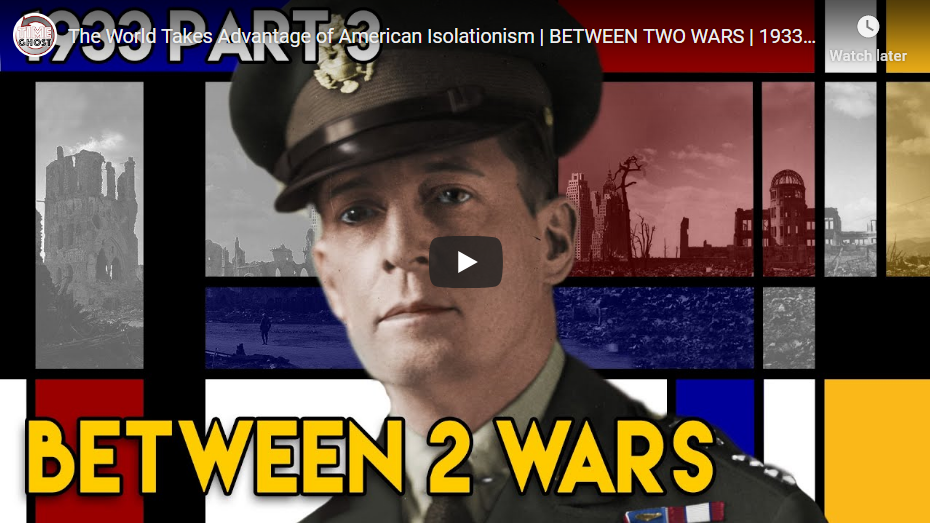
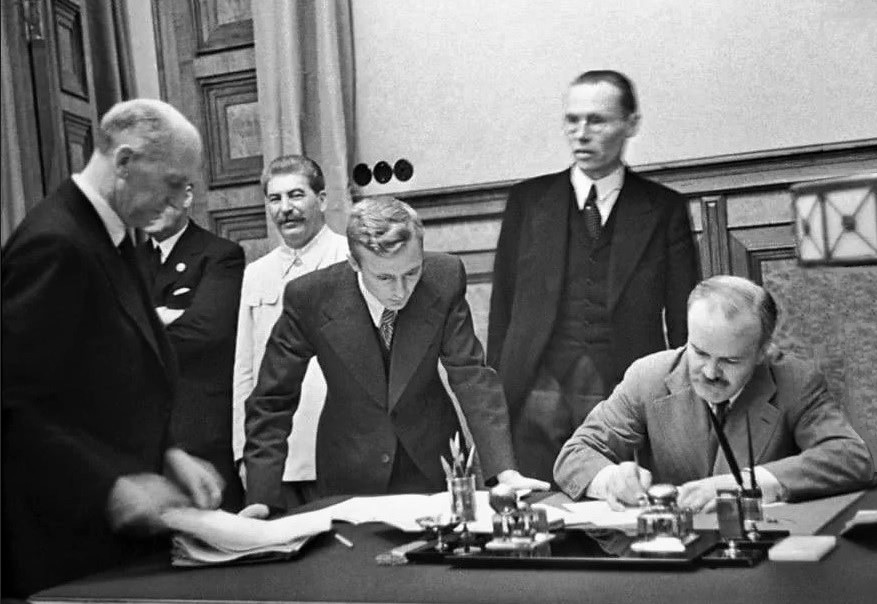
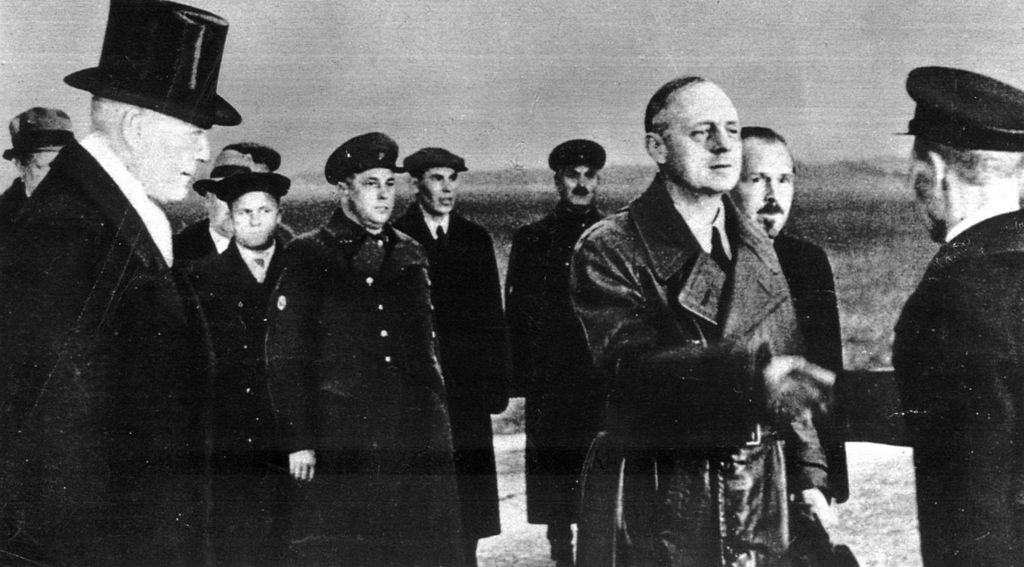
Molotov’s Heel on Finland and Nobody to Fight in the West – WW2 – 010 3 November 1939

Filed under: Britain, Europe, France, Germany, History, Military, Russia, WW2 — Tags: , , , , , , — Nicholas @ 04:00

World War Two
Published on 3 Nov 2018

Ten weeks into World War Two, and the Allied ground forces are bored in France. In North-Eastern Europe, Poland’s suffering has no end and Finland is in the crosshairs of the USSR.

WW2 day by day, every day is now live on our Instagram account @World_war_two_realtime https://www.instagram.com/world_war_t…

Between 2 Wars: https://www.youtube.com/playlist?list…

Join us on Patreon: https://www.patreon.com/TimeGhostHistory
Or join The TimeGhost Army directly at: https://timeghost.tv

Written and Hosted by: Indy Neidell
Produced and Directed by: Spartacus Olsson and Astrid Deinhard
Executive Producers: Bodo Rittenauer, Astrid Deinhard, Indy Neidell, Spartacus Olsson
Research by: Indy Neidell
Edited by: Wieke Kapteijns and Spartacus Olsson

Coloring by Spartacus Olsson and Sarvesh

Archive by Screenocean/Reuters https://www.screenocean.com

A TimeGhost chronological documentary produced by OnLion Entertainment GmbH

October 19, 2018

The Battle of the Selle – Ludendorff Resigns I THE GREAT WAR Week 221

Filed under: Europe, Germany, History, Italy, Military, WW1 — Tags: , , , , — Nicholas @ 04:00

The Great War
Published on 18 Oct 2018

As the Germans are retreating further and further during the Battle of the Selle, Erich Ludendorff – the German Quartermaster General, one half of Germany’s military dictatorship and mastermind behind the last big German offensive in spring 1918 – resigns under pressure by the Kaiser and the Reichstag. The German upper class realizes that their days might be numbered if the war continues in the current form and Austria-Hungary’s Emperor Karl has the same epiphany.

October 15, 2018

Forgotten History: Glade of the Armistice

Filed under: France, Germany, History, Military, WW1, WW2 — Tags: , , , — Nicholas @ 02:00

Forgotten Weapons
Published on 25 Sep 2018

http://www.patreon.com/ForgottenWeapons

Here at a forested railroad crossing outside Compiègne in Picardy, France, two rail cars met in November of 1918 – one with members of the Allied/Entente high commend and ones with representatives of Imperial Germany. They met here to end 5 years of slaughter; the German delegation being presented terms for armistice by the Allies. Faced with no other viable option, they would accept these terms, and the fighting officially ended at the 11th hour of the 11th day or the 11th month of 1918. More than a year would go by before the Treaty of Versailles was fully ratified, but it was here that the decision to end the death was made.

The rail car in which the papers were signed was kept as a monument here, along with a rather pointed monument to the French dead, featuring a slain German Imperial eagle. A large stone message was also put up in the center of the clearing, reading (in translation):

“Here on the 11th of November 1918 succumbed the criminal pride of the German reich, vanquished by the free peoples which it tried to enslave.”

When France signed an armistice with Germany in 1940, Hitler would have those papers signed here as well, in that very same rail car. The car was then taken to Berlin as a trophy, and the monuments here destroyed. The car itself was burned accidentally in 1945, but the monuments were rebuilt by the French following the war, and a sister car is now on display here with many of the original artifacts of the Armistice (which were hidden from the Germans in 1940).

Thanks to Military History Tours for making this video possible!

https://www.miltours.com

If you enjoy Forgotten Weapons, check out its sister channel, InRangeTV! http://www.youtube.com/InRangeTVShow

Contact:
Forgotten Weapons
PO Box 87647
Tucson, AZ 85754

October 5, 2018

Germany’s Reckoning – Bulgarian Armistice I THE GREAT WAR Week 219

Filed under: Europe, Germany, History, Military, WW1 — Tags: , , , , , — Nicholas @ 04:00

The Great War
Published on 4 Oct 2018

The 14 Points: https://en.wikipedia.org/wiki/Fourtee…

While Bulgaria signs the Armistice of Salonika and effectively exits the war as the first of the Central Powers, the Hindenburg Line is broken on the Western Front. It dawns among the German leadership, that an armistice is necessary and in a desperate attempt to secure a more favourable position at the negotiations table, the Kaiser agrees to a “revolution from the top” that gives more political say to the Reichstag.

October 3, 2018

USMCA (aka son-of-NAFTA) – what’s the damage after all?

Filed under: Business, Cancon, Economics, USA — Tags: , , , , , — Nicholas @ 03:00

The most common sentiment from Canadian comments appears to be “meh, it could have been much worse”. That doesn’t mean it’s particularly good, either:

All that cross-border yelling, a solid year of bluster and petulance, dire rhetoric about “stabs in the back” and “special places in hell,” fake deadlines and all-night negotiations, and we end up with pretty much the agreement we started with? All that was required to fix NAFTA, that destroyer of American jobs and pox on its prosperity, the deal Donald Trump memorably complained was “the worst agreement in history,” was to change its name — from North American Free Trade Agreement to US-Mexico-Canada Agreement? Seriously?

Not quite. The result is certainly a far heave from some of the more apocalyptic scenarios we had been entertaining ourselves with. But neither is it the largely unaltered “NAFTA 2.0” of much initial comment. There are substantive changes in there, most of them bad, and not all of them imposed by an overbearing U.S. on an unwilling Canada.

Still, it’s not quite the conflagration we’d been banking on, is it? Trump is the bully in middle school who threatens to take your lunch money, only to settle for a half a slice of your pizza. Or, in this case, 3.6 per cent of it.

That’s the share of the Canadian dairy market to which the U.S. will now have tariff-free access, a slight advance on the 3.25 per cent market share the U.S. had negotiated under the Trans Pacific Partnership — before Trump withdrew from it. (Oh, and “milk price classes 6 and 7” are eliminated, for fans of that dispute. It involves skim milk solids.) There are also some minor increases in tariff-free imports in the other supply-managed sectors: eggs, chicken, cheese and so on. Everything else will face the same triple-digit tariffs, as before.

That’s unfortunate. Supply management is a blight on the Canadian political and economic landscape we could well do without. The NAFTA re-negotiations were an ideal opportunity to bargain it away, as it should have been in the original NAFTA. That it remains more or less intact — even the dairy lobby could manage only a half-hearted jeremiad of imminent lacto-doom in response — is one of the chief disappointments in this agreement.

Still, what did you expect? There was never any chance of these negotiations resulting in a deepening and broadening of NAFTA — not with protectionists on both sides of the table. The only question was whether the status quo protectionists on this side — who wished to preserve all of NAFTA’s existing exemptions — could hold out against the expansionist protectionists on the other, who wished to cut NAFTA into little mercantilist pieces. As it turns out the answer is: surprisingly well.

A quick summary of the winners and losers in this agreement:

Is this a free trade agreement?

No. Unlike NAFTA, this latest agreement makes no pretense to be about free trade (or even freer trade). It’s a protectionist agreement imposed by the U.S. on the other two countries.

Who benefits from the agreement?

The primary beneficiaries of the agreement are labor unions, U.S. dairy farmers, U.S. drug manufacturers, and companies that provide automation for manufacturers (e.g., robot makers).

The agreement will require at least 30 percent of cars (rising to 40 percent by 2023) to be made by workers earning $16 an hour. This will force more cars to be produced in the U.S. and Canada since the typical manufacturing wage in Mexico is only about $5 per hour. The agreement also requires Mexico to make it easier for workers to form unions, which will make them less competitive against more productive unionized workers in the U.S. and Canada.

U.S. dairy farmers will also gain greater access to the Canadian market. Because of new restrictions on how much dairy Canada can export, there is the potential for U.S. dairy to gain a greater market share in foreign countries.

U.S. drug companies will also be able to sell pharmaceuticals in Canada for 10 years (rather than eight) before facing generic competition.

Because the agreement makes human labor in the three countries somewhat more costly, companies that create robots and other automation will likely be the long-term beneficiaries.

Who are the biggest losers in this agreement?

As with almost all protectionist trade agreements, consumers are the ones who will be hurt the most.

As the Washington Post notes, economists and auto experts think USMCA is going to cause car prices in the U.S. to “rise and the selection to go down, especially on small cars that used to be produced in Mexico but may not be able to be brought across the border duty-free anymore.”

Because the restrictions on Canadian steel and aluminum also remain in place, businesses that use those materials in manufacturing will pay inflated prices, and their products will be less competitive on the global market.

September 9, 2018

“This isn’t hardball so much as Calvinball: a game where one player constantly makes up new rules as he goes along”

Filed under: Cancon, Economics, USA — Tags: , , — Nicholas @ 03:00

Andrew Coyne provides a useful set of clues to help ordinary folks understand the NAFTA “negotiations”:

Talks on a renegotiated North American Free Trade Agreement, which at various times in the past days, weeks and months have been said to be on the verge of either a deal or collapse, are now reported to be “progressing slowly.” An agreement was not expected by the end of the day Friday. Some reports said it was not expected till the end of the month. Or maybe December.

In other words, business as usual. Had you read none of the several thousand reports on the negotiations since they began more than a year ago you would be scarcely less informed than the most avid trade watcher. Some points to bear in mind as the talks grind toward their next “deadline”:

No one knows anything. Any number of authoritative commentators have weighed in on the failure of the talks, if they are in fact failing, and who is to blame if they are. But the truth is that unless you were in the room with the negotiators you have no idea what is really going on — assuming even they do. This is not because there have been no leaks or official accounts of the proceedings, but because…

Everyone is lying to you. Many a rookie reporter has had the same experience covering a labour negotiation. The talks are said to be coming “down to the wire,” facing a dramatic “midnight deadline.” Sources close to one side or the other confide there will be “no more concessions,” that a “strike is now unavoidable.”

So the deadline comes and goes and nothing happens: they keep talking. Or else the side that had vowed not to give an inch more caves and cuts a deal. Which is to say that while all sides dutifully proclaim their aversion to “negotiating through the media,” everyone negotiates through the media, all the time. The NAFTA talks are no different.

The NAFTA talks are completely different. There has never been a trade negotiation like this, because there has never been a president, or leader of any major country, like Donald Trump. It isn’t just that he lies all the time, or changes his mind on those occasions when he is not lying.

August 17, 2018

QotD: TINA

Filed under: Cancon, Economics, Politics, Quotations, USA — Tags: , — Nicholas @ 01:00

I believe, and I have alluded to this several times, that we must anchor all our policies in North America. We are, I have said, again more than once, bound by what some wag called TINA²: we are Trapped In North America and There Is No Alternative. (TINA X TINA = TINA²) That’s the crux of it … no matter what some romantics might wish we are and must remain for generations anchored in North America. We are not big enough and rich enough to be powerful enough to face the world on our own, treating the USA as just another great power ~ as, arguably, Australia does. Geography, economics, personal issues ~ we are kith and kin ~ and the power imbalance make us dependent upon America to a degree that some, including me, find unhealthy.

But, until we can grow our population to 100 million, until we can grow up and appreciate that we need substantial hard (military) power in order to promote and protect our vital interests around the globe, until we can become a global free trader, and until America’s decline is more marked then There Is No Alternative … we are Trapped In North America ~ trapped in Donald Trump’s America, for now, anyway.

Ted Campbell, “Anchor, cornerstone or stumbling block?”, Ted Campbell’s Point of View, 2018-07-17.

August 7, 2018

“[Trudeau’s] ideology is jeopardizing 20% of the Canadian economy”

Brandon Kirby on Prime Minister Justin Trudeau’s failing efforts to negotiate with the United States on trade:

Trade with Canada constitutes 2% of America’s GDP and trade with America constitutes a whopping 20% of Canada’s GDP. My home province of New Brunswick finds 50% of its private sector exporting to the U.S. – NAFTA is of vital importance to our economy.

The dwindling efforts of Trudeau’s cabinet to negotiate a deal with the Americans could become his government’s greatest failure. With tariffs already being imposed on steel and aluminum, NAFTA is potentially unraveling before our eyes and along with it, the Canadian economy.

Trudeau’s American counterpart isn’t known for his vocal support of trade and yet he handed Canada everything on a silver platter at the recent G7 summit. He offered to remove all tariffs and subsidies on imports and exports, provided Canada did the same. This is about as fair an offer as one could expect. Trudeau retaliated by insisting Canada had been insulted.

The trouble with Trudeau is precisely that. He was given a talking point. He developed rhetoric rather than substance. Akin to Marco Rubio’s disaster of a debate performance, who refused to go off script even when he was being called out for scripted answers, Trudeau had a talking point. It was a good one, Canadians and Americans died together in the mountains of Afghanistan to bring justice for Americans who died on September 11th. Trump alluded to our tariffs on their dairy farmers as a national security threat. But when Trump acquiesced, Trudeau kept to his talking points and refused to go off script, even when his talking points no longer made sense.

The initial renegotiation began with Trudeau’s government attempting to include a chapter on gender. The Americans weren’t enthusiastic about devoting a significant portion of their time at the negotiations to discussing an unenforceable chapter of the deal, but Trudeau pressed on.

The liberal rationale in the briefing notes was leaked, “Think back 20 years and remember the early discussions of labour and environment in the context of trade agreements.”

Environmental and labour standards were included in the negotiations of decades past because a country that has humane labour standards is at a trade disadvantage to countries that neglect their workers and their environment. Gender doesn’t have any bearing on trade. His ideology is jeopardizing 20% of the Canadian economy.

July 29, 2018

Carving up the Middle East and Preempting Rommel I BETWEEN 2 WARS I 1920 Part 3 of 4

Filed under: Britain, France, History, Middle East — Tags: , , , , , — Nicholas @ 04:00

TimeGhost History
Published on 27 Jul 2018

In 1920 the colonial powers of the British Empire and France reverse course on their commitment to grant independence to the peoples of the Middle East. In a game to grab the oil fields of Arabia, Syria and Mesopotamia, and to control the Suez Canal they tighten their grip on the region, with far ranging consequences that will shape the world well into the 21st century.

Join us on Patreon: https://www.patreon.com/TimeGhostHistory

Hosted by: Indy Neidell
Written and directed by: Spartacus Olsson
Research Contributed by: Jonas Yazo Srouji
Produced by: Astrid Deinhard
Executive Producers: Bodo Rittenauer, Astrid Deinhard, Indy Neidell, Spartacus Olsson

A TimeGhost chronological documentary produced by OnLion Entertainment GmbH

July 22, 2018

Trump and Putin … with all this smoke, there has to be a smoking gun, right?

Filed under: Media, Politics, Russia, USA — Tags: , , , , — Nicholas @ 05:00

Colby Cosh pours cold water on the still-smouldering hopes of the “smoking gun” enthusiasts:

If the president can be found guilty of “Treason, Bribery, or other High Crimes and Misdemeanors” that is another thing, but that would require courtroom-worthy evidence of action, as opposed to indications of presidential doctrine or feeling or even strong hints of compromised personal interest. Trump did behave in Helsinki like someone who is beholden to Russia, or who is anxious for a rapprochement with Putin’s state. Yet he was, and this could not have come as a surprise, quick to try reversing himself later — emphasizing how tough he has been with Russia and how tough he is prepared to continue to be. Grrr!

Since I’m not on a diet of television news, I tend to interpret this as Trumpian “leadership” technique. They are the actions of someone who is convinced that anything can be accomplished by means of erratic emotional style and business-literature verbal tactics. These include cheap personal praise for negotiating opponents, which has become a perfectly foreseeable theme of Trump as a diplomat. (The tactical corollary is that very popular or highly esteemed people are especially vulnerable to outbursts of surprise criticism, and that has been a feature of Trump, too.)

It does not really cost the United States anything for Trump to praise Putin as skilled and strong (as a tyrant, he has been effective at maintaining domestic moral legitimacy, even if judged by the cost in shed blood) or to portray Kim Jong Un as a young man coping with terrible responsibilities. (Trump’s distaste for NATO is more dangerous as rhetoric, but did the other member nations forget for a while that political legitimacy within the United States is a prerequisite for the organization’s existence? If in the long run we devote a little more attention to the necessary housekeeping, Trump may have done the world a service.)

[…] The midterm congressional elections will be held with a long-forgotten fact re-emerging in the American popular consciousness: that much of the president’s power to set foreign policy and foul up trade is actually the property of Congress, and could be reclaimed after a century of careless delegation.

Perhaps some Americans are beginning to consider that it does not matter most whether you are with the good guys in the Trump/anti-Trump drama. Which is not to say you do not want to be one of the good guys. But the opportunity for American millennials, considered as a generation on the cusp of electoral dominance, is not just to kick Trump out, but to renovate the presidency so that the republic can survive having an unsuitable or even compromised person as president. Everybody got that? Are we good? Eyes on the ball, people.

June 17, 2018

Conrad Black – Trump’s not bluffing

In the National Post (but linked from his personal website), Conrad Black warns of the danger of assuming that Trump is just blustering on his trade threats:

Justin Trudeau struck just the right Canadian note of our gentle nature but refusal “to be pushed around,” and he predictably will reap the short-term reward for standing up for the country opposite the ideal American bogeyman, the blustering billionaire president who has been a Garry Trudeau caricature of the Ugly American for 25 years. (It is a very incomplete picture, like most caricatures, but it works for Trump and he often cultivates it.) The boycotts of American goods and holidays will be a bonus to Canada economically and the anti-Trump American media will be along within two weeks to lionize doughty Canada like “Gallant little Belgium” in 1914 and “Plucky Israel” in 1947, and it will strengthen Canada’s always fragile self-regard opposite the United States.

On the other hand, Trump isn’t just a blowhard; all his career he has known how to go for the jugular and his reference to 270-per-cent Canadian tariffs on butter is a valid complaint that threatens to tear the scab off this egregious payoff to the comparatively small number of Quebec dairy farmers who mainly profit from it. The same issue was hammered hard by Martha Hall Findlay when she ran for the federal Liberal leadership in 2013 and by Maxime Bernier when he ran narrowly behind Andrew Scheer for the Conservative federal leadership last year. The issue died down after their unsuccessful campaigns, but if Donald Trump is incited to hammer that theme, he will roil the domestic Canadian political waters and English-French relations in the country generally.

Presumably our trade negotiators will not become so intoxicated by the prime minister’s peppy talk and spontaneous popular boycotts of the U.S. that they forget the correlation of forces. An aroused American administration could do serious damage to Canada’s standard of living, and it could be a tempting tactic to expedite more important negotiations with Mexico and the principal Asian and European powers. The United States is now enjoying three times as great a rate of economic growth as Canada (4.8 to 1.5 per cent), has lower tax rates, 11 times as great an economy, and more unfilled jobs than unemployed people.

Behind the peeling façades of Norman Rockwell and Walt Disney, the United States is a monster, and not always an amiable monster. If Canadians are blinded by their visceral dislike of Donald Trump, as the antithesis of Canadian criteria for likeable public figures, they will be exposed to the ruthless pursuit of the national interest that in his own career propelled him from technical insolvency to immense wealth and celebrity and then, against all odds, to control of a great political party and to the headship of the most powerful country in the world. If these talks blow up, the U.S. doesn’t have to settle for WTO rules; it can impose outright protectionist measures. Justin Trudeau has been agile, and the country has responded admirably. But Canadian policy-makers must understand that they are playing for almost mortal stakes with potentially dangerous protagonists who have no sense of fair play and no interest in what Canada thinks of them.

June 13, 2018

Imagine … a tariff-free world

Filed under: Economics, Government, Politics, USA — Tags: , , , — Nicholas @ 04:00

Danny Chabino on what he calls “Trump’s G7 Surprise”:

In what I consider a brilliant move on the part of Trump and his team, instead of initially discussing what tariffs he would increase if x,y and z didn’t happen or if whichever nation wouldn’t reduce tariffs on whatever industry, he simply raised the simple question of why don’t we just not have tariffs at all? It’s brilliant in the sense that it not only shut down all the anticipated arguments, but also placed the world’s leaders in a position of having to awkwardly defend the very idea of tariffs (and subsidies), and they knew they couldn’t really do that. It highlighted the true intentions of the world’s leaders as representatives of the authoritarian nature of almost every existing government in the world today.

Now, please don’t misunderstand this article as me beaming with a Trump glow. In fact, Trump knew full well no one would take him up on such an offer. I do believe if they had he would have followed through, but his next moves will be ones that I believe are the wrong ones. He will seek to raise tariffs, which has always done more harm to the nation raising the tariffs than it has done good that nation. Trump will do just as he has threatened and hurt his own country;’s economy with new tariffs.

What I do enjoy, though, is that all of the world’s major leaders had to essentially admit that they don’t want their people and their economies to be better off. At least not on their own. They want their people and economies to be dependent upon their leadership and their governments. While everyone at the summit knew that the greatest of outcomes would be for all the world’s most powerful nations to exercise free trade, and that this would benefit the entire world in great proportions, that really wasn’t their aim. Their aim was to gain greater power. What an incredible admission!

When given a golden opportunity to end tariffs and increase freedom and prosperity for most citizens of the world, the world’s leaders instead chose to cling hard to their own designs. The world’s leaders know full well that tariffs hurt their own citizens, but they don’t care. Tariffs have never served the function of creating market efficiency, and they have never helped protect a nation’s economy. Instead, they have always been a means for governments to exercise control over huge parts of their own economies, and where there is control, there is power. Politicians and world leaders seek power. It’s like their drug of choice, and they can never get enough of it.

June 12, 2018

G7 minus one

Justin Raimondo on the well-shared image of Angela Merkel and her associates apparently trying to browbeat Donald Trump at the G-7 meeting (this version from Raimondo’s article):

All the Very Serious People are tweeting and retweeting this “iconic” photo of Trump surrounded by the Euro-weenies, with Angela Merkel seeming to lecture the President while the rest of our faithless “allies” look on. It’s “America Alone” – the visual representation of the internationalist worldview: Trump’s policy of “America First” is “isolating” us, and, according to clueless leftists like Michael Moore, Merkel is now the “leader” of the “free world.”

This last is good news indeed, for if Merkel is the new leader of the “free world” then the stationing of 35,000 US troops in Germany – at a cost of billions annually – is no longer required and we can bring them home. This also means Germany, rather than the US, will be sending troops all over the world to fight “terrorism” – a move that is sure to cause consternation in certain regions with a history of German intervention, but hey, somebody has to do it!

The political class is screaming bloody murder over Trump’s performance at the G-7 meeting in Canada, where he reportedly spent most of the time detailing how much the US was paying for the defense of our vaunted “allies,” not to mention the high tariffs imposed on American goods. He then proposed a “free trade zone” in which member countries would drop all tariffs, subsidies, and other barriers to trade: the “allies” didn’t like that much, either. Nor did the alleged advocates of free trade here in the US give him any credit for ostensibly coming around to their point of view. Which reminds me of something Murray Rothbard said about this issue: “If authentic free trade ever looms on the policy horizon, there’ll be one sure way to tell. The government/media/big-business complex will oppose it tooth and nail.”

Of course the Euro-weenies don’t want real free trade: after all, they practically invented protectionism. What they want is a free ride, at Uncle Sam’s expense, and the reason they hate Trump is because they know the freebies are over. However, what really got the Usual Suspects frothing at the mouth was Trump’s insistence that Russia be readmitted to the G-8:

    “I think it would be good for the world, I think it would be good for Russia, I think it would be good for the United States, I think it would be good for all of the countries in the G-7. I think having Russia back in would be a positive thing. We’re looking to have peace in the world. We’re not looking to play games.”

The “experts” went crazy when he said this: our “allies” are being insulted, they wailed, while our “enemies” are being “appeased.” It’s sedition! Russia! Russia! Russia!

Eric Boehm says that the White House’s justification for imposing tariffs on national security grounds may have been undermined through Trump’s tweets hitting back after what he clearly felt was Justin Trudeau’s hissy fit (although Trudeau didn’t exactly break new ground or say anything radically different in his comments):

The Trump administration has spent months trying to construct a rather flimsy argument that steel and aluminum imports from Canada and other close American allies constitute a national security threat. More than a handy way to drum up public support for trade barriers, the “national security” claim is a crucial bit of the legal rationale for letting the president impose tariffs on those goods without congressional approval.

Then, as he was departing this past weekend’s G7 summit, Trump took to Twitter to air some grievences with Canadian Prime Minister Justin Trudeau. In doing so, the president may have significantly kneecapped that legal argument.

The last sentence of Trump’s tweet is the one that really matters.

The White House slapped a 25 percent tariff on imported steel and a 10 percent tariff on imported aluminum by invoking Section 232 of the Trade Expansion Act of 1962, which gives the president legal authority to impose tariffs without congressional approval when it’s for the sake of national security. That line of argument, outlined by Commerce Secretary Wilbur Ross in a February report, says that America needs aluminum and steel to make weapons of war, and that protecting the domestic steel and aluminum industries is the only way to ensure the country will be able to defend itself if attacked.

That is pretty weak, as I (and others) have written before. But as long as Trump makes that claim — no matter how strained the logic might be — the law seems to be on his side. Invoke “national security” and the president can do what he wants with trade.

Except now Trump seems to have admitted that it’s not about national security at all. His tweet plainly states that “our Tariffs [sic] are in response to his of 270% on dairy!”

Chris Selley points out that up until this eruption, Canadian politicians were still carrying on as if nothing was really at stake (especially Conservative leader Andrew Scheer, who re-swore his allegiance to ultra-protectionist supply management at all costs, and damn actual free trade):

So utterly obsessed are Canadian politicians by the small differences between them that federal Conservative leader Andrew Scheer recently demanded Prime Minister Justin Trudeau explain what he meant when he suggested Canada might be “flexible” on the issue of supply management in the dairy industry, in the face of new demands from Washington. It’s preposterous: you can’t fit a processed cheese slice between the three major party’s total devotion to the dairy cartel.

Because, as we all know, what unites Canadians from coast-to-coast is our universally shared determination to pay significantly higher prices for dairy products, to ensure that Quebec farmers are not overly bothered by pesky competition from uppity foreigners who don’t even speak Joual

« Newer PostsOlder Posts »

Powered by WordPress