
Food Wishes
Published 8 Dec 2011Learn how to make a Roast Smoked Goose Recipe!
Visit http://foodwishes.blogspot.com/2011/1… for the ingredients, more recipe information, and over 650 additional original video recipes! I hope you enjoy this Christmas Roast Smoked Goose Recipe!
December 22, 2023
Roast Smoked Goose – A Christmas Goose Special
Comments Off on Roast Smoked Goose – A Christmas Goose Special
December 20, 2023
Eat Like a Medieval Nun – Hildegard of Bingen’s Cookies of Joy
Tasting History with Max Miller
Published 5 Sept 2023
(more…)
Comments Off on Eat Like a Medieval Nun – Hildegard of Bingen’s Cookies of Joy
December 16, 2023
QotD: British meals – potatoes
It is necessary here to say something about the specifically British ways of cooking potatoes. Roast meat is always served with potatoes “cooked under the joint”, which is probably the best of all ways of cooking them. The potatoes are peeled and placed in the pan all round the roasting meat, so that they absorb its juices and then become delightfully browned and crisp all over. Another method is to bake them whole in their jackets, after which they are cut open and a dab of butter is placed in the middle. In the North of England delicious potato cakes are made of mashed potatoes and flour: these are rolled out into small round pancakes which are baked on a griddle and then spread with butter. New potatoes are generally boiled in water containing a few leaves of mint and served with melted butter poured over them.
George Orwell, “British Cookery”, 1946. (Originally commissioned by the British Council, but refused by them and later published in abbreviated form.)
Comments Off on QotD: British meals – potatoes
December 8, 2023
The Real Betty Crocker’s Pineapple Upside Down Cake
Tasting History with Max Miller
Published 22 Aug 2023
(more…)
Comments Off on The Real Betty Crocker’s Pineapple Upside Down Cake
December 5, 2023
QotD: British meals – the midday meal
The richer classes have their midday meal at one-thirty in the afternoon and call it “luncheon”. At about half-past four in the afternoon they have a cup of tea and perhaps a piece of bread-and-butter or a slice of cake, which they call “afternoon tea” and they have their evening meal at half-past seven or eight, and call it “dinner”. The others, perhaps ninety percent of the population, have their midday meal somewhat earlier – usually about half-past twelve – and call it “dinner”. They have their main evening meal at about half-past six and call it “tea” and before going to bed they have a light snack – for instance cocoa and bread-and-jam – which they call “supper”. The distinction is regional as well as social. In the North of England, Scotland and Ireland many well-to-do people prefer to follow the working-class time scheme, partly because it fits in better with the working day, and partly, perhaps, from motives of conservation: for our ancestors of a century ago also had their meals at approximately these hours.
But though the name and the hour may differ, every British person’s idea of midday meal is approximately the same. We are not here concerned with the quasi-French meals that are served in hotels, but solely with British cookery, and therefore we can leave both soups and hors d’oeuvres out of account. Most British people are inclined to despise both, and do not care for them in the middle of the day. British soups are seldom good, and there is hardly a single one that is peculiar to the British Isles, while even the word “hors d’oeuvre” has no equivalent in the British language. The British midday meal consists essentially of meat, preferably roast meat, a heavy pudding, and cheese. And here one comes upon the central institution of British life, the “joint”: that is, a large piece of meat – round of beef or leg of pork or mutton – roasted whole with its potatoes round it, and preserving a flavour and a juiciness which meat cooked in smaller quantities never seems to attain.
Most characteristic of all is roast beef, and of all the cuts of beef, the sirloin is the best. It is always roasted lightly enough to be red in the middle: pork and mutton are roasted more thoroughly. Beef is carved in wafer-thin slices, mutton in thick slices. With beef there nearly always goes Yorkshire pudding, which is a sort of crisp pancake made of milk, flour and eggs and which is delicious when sodden with gravy. In some parts of the country suet pudding is eaten with roast beef instead of Yorkshire pudding. Sometimes instead of roasted fresh beef there is boiled salt beef, which is always eaten with suet dumplings and carrots or turnips.
[…]
In the second half of the midday meal we come upon one of the greatest glories of British cookery – its puddings. The number of these is so enormous that it would be impossible to give an exhaustive list, but, putting aside stewed fruits, British puddings can be classified under three main heads: suet puddings, pies and tarts, and milk puddings.
[…]
If the midday meal ends with cheese, that cheese will probably be foreign. Some of the cheeses native to Britain are very good, but they are not produced in large quantities and are mostly consumed locally. The best of them is Stilton, a cheese rather the same kind as Roquefort or Gorgonzola, but stronger-tasting and closer in the grain. Wensleydale, a similar but milder cheese, is also very good.
George Orwell, “British Cookery”, 1946. (Originally commissioned by the British Council, but refused by them and later published in abbreviated form.)
Comments Off on QotD: British meals – the midday meal
October 31, 2023
Why Vampires Hate Garlic – A Transylvanian Recipe from 1580
Tasting History with Max Miller
Published 19 Oct 2021
(more…)
Comments Off on Why Vampires Hate Garlic – A Transylvanian Recipe from 1580
October 1, 2023
QotD: Curry
Of course for me, that was sweaty forehead, and under my eyes beading with it, burning lips and the thought that I ought to put a roll of toilet paper in the freezer for later.
In no small part … it is what you are used to. The chili pepper was native to Mexico. It’s not something the Indians were used to … once. But they have made it their own, and added their regional variant to it, making the food they add this foreign spice to very much characteristic of their culture and their cuisine. To them it very much part of what they are. Oddly, it seems expat Indians end up eating even hotter curries than those eaten in the country — fascinating in itself.
This is something millions of non-Indian folk across the world appreciate too. Now-a-days you’ll find many families who are neither culturally nor genetically Indian who have grown up eating curries. Many of them will be very knowledgeable about what a good curry ought to be, and some of them will even prepare it with strict adherence to the methods that good cooks in the Indian subcontinent use, and go to great lengths to get the right ingredients.
Of course: if we’re going to get puerile and talk “cultural appropriation” – it’s worth reminding people that the key ingredient came from Mexico. And, if you bother to start researching many of the other much beloved ingredients – they, as often as not had their origins elsewhere. This is as much part of being human as following these silly fads is. Whenever you look at any so-called cultural appropriation, you’ll find the xyz people actually adopted chunks of that culture from … someone else, and changed it a little to suit themselves. That’s as natural to humans as farting. Some people may do it less than others, but we all do it.
Curry and the world-wide spread of curries, has mostly been a win for the species, outside of the ill-judged dodgy vindaloo eaten after sixteen pints of lager.
Dave Freer, “Curry”, Mad Genius Club, 2019-08-26.
August 26, 2023
QotD: The psychological value of “making”
This makes perfect sense, of course: I don’t have a deep and intimate knowledge of these things because I don’t need one. Still, though, it’s important to have a certain very basic familiarity with how the things around you work — enough, say, to know what to Google when something breaks and how to put the results into practice, or to turn fifteen feet of arching blackberry cane into an actual bush — because it gives you power over your world. The particular powers don’t really matter (it’s easy enough to pay someone else to fix your plumbing or grow your berries); the key is the patterns of thought they engender. There are, for example, apparently some enormous number of people who don’t change the batteries in their beeping smoke detectors. I have no idea whether it’s drug-induced apathy, ignorance of how things work (in the same way that drilling a hole in your wall to hang something seems scary if you don’t know that your wall is
a liejust painted drywall in front of empty space between the studs), or simply a pathological lack of personal agency, but it’s hard to believe you can change anything dissatisfactory about your life if you can’t change a 9V battery.Making and doing things, even when you don’t have to, is practice in believing that you can change your own world. It’s weightlifting for agency. You can outsource the making of your physical world, but social worlds — the arrangement of your family life, your personal relationships, the organizations and institutions you’re involved in — must be created by the participants themselves. A good society would be one where the default “builder-grade” scripts lead to human flourishing, but unfortunately that isn’t ours, so you have to be able to decide on your own changes. Start practicing now: find one little thing about your physical environment that annoys you and fix it. Put the new toilet paper roll actually on the holder. Replace the burned-out lightbulb. Hang the artwork that’s listing drunkenly against the wall. Pull some weeds. And then, once you’ve warmed up a little bit, go and make something new.
Jane Psmith, “REVIEW: The Domestic Revolution by Ruth Goodman”, Mr. and Mrs. Psmith’s Bookshelf, 2023-05-22.
1. They’re oak dining chairs, probably (judging by the construction) about a hundred years old, and they looked a lot better on Facebook Marketplace than in real life. When I showed up to buy them, the sellers turned out to be an elderly couple moving to assisted living in six hours; they admired my baby and showed me pictures of their grandchildren and explained they had inherited the chairs from the wife’s mother, who in turn had gotten them from her friend’s mother, and by this point I couldn’t really say “yeah I can tell” and leave, so home they came. When I took apart the seats to recover them I discovered the original horsehair padding and some extremely questionable techniques applied over the years, but anyway now my chairs have eight-way hand-tied springs and I have some new calluses.
Comments Off on QotD: The psychological value of “making”
July 24, 2023
Flattering our modern selves by throwing shade at our ancestors
David Friedman has encountered a lot of “just so stories” about the customs and practices of earlier cultures and points out that a lot of them are derived from ignorance and arrogance in roughly equal proportion:

My favorite example is the Columbus myth, the idea that the people who argued against Columbus were ignorant flat-earthers who thought his ships would sail off the edge. That is almost the precise opposite of the truth. By the time Columbus set off, a spherical Earth had been the accepted scientific view for well over a thousand years. Columbus’s contemporaries not only knew that the Earth was round, they knew how big around it was, that having been calculated by Eratosthenes in the third century B.C.
By the fifteenth century they also had a reasonably accurate estimate of the width of Asia. Subtracting the one number from the other they could calculate the distance from where Columbus was starting to where Columbus claimed to be going and correctly conclude that it was much farther than his ships could go before running out of food and water. The scientific ignorance was on the side of Columbus and those who believed him; he was claiming a much smaller circumference for the Earth and a much larger width of Asia, hence a much shorter distance from Spain to the far end of Asia. We will probably never know whether he believed his own numbers or was deliberately misrepresenting the geographical facts in order to get funding for his trip in the hope that he would find land somewhere between Spain and Japan, as in fact he did.1
Another example of the same pattern shows up in discussions of medieval cooking, one of my hobbies. Quite a lot of people believe that medieval cooks over spiced their food in order to hide the taste of spoiled meat. A few minutes of thought should be enough to see the consequences for a cook of routinely giving his employer and the employer’s guests food poisoning. Also that, with meat available on the hoof, there was no need to keep it until it spoiled and that it made little sense to save on meat, a local product, at the cost of spices that had to be transported over thousands of miles.
I like to ask people who claim the food was overspiced how they know, given that medieval European recipes almost never give quantities. One possible source for the belief — the overspicing, not the reason for it — is a passage in the introduction to Two Fifteenth Century Cookery Books, a collection published by the Early English Text Society.
Our forefathers, possibly from having stronger stomachs, fortified by outdoor life, evidently liked their dishes strongly seasoned and piquant, as the Cinnamon Soup on p. 59 shews. Pepper, Ginger, Cloves, Garlic, Cinnamon, Galingale, Vinegar, Verjuice, and Wine, appear constantly in dishes where we should little expect them; and even Ale was frequently used in Cookery.
“The cinnamon soup on p. 59” is not a recipe but an entry in a menu, so what the editor is complaining about is not the amount of cinnamon but the fact that it is there at all, and similarly for the rest of his list. That tells us more about English cooking of the 19th century than that of the 15th.
As far as I can tell, there is no evidence that medieval food was overspiced, only that they used spices in different ways than modern European cuisine. I have twice come across evidence on the question. There is a recipe for Hippocras, a spiced wine, in Le Menagier de Paris, a household manual dated to 1490. It is one of the rare recipes with quantities, sugar and spices by the ounce, wine by “quarts of Paris measure”. When I first made it I found the result too sweet and too highly spiced, so cut sugar and spice in half to fit my taste.
Many years later, when I mentioned the recipe in an online discussion, someone asked me whether I had checked the units. I had not, just assumed that a quart was a quart and an ounce an ounce. I was wrong — the period ounce was about an ounce but the quart by Paris measure was about twice our quart. In adjusting the recipe to my taste, I had gotten back to about the original proportions.
1. There is disputed evidence that he visited Iceland and might have heard about the existence of North America there, also speculation that he might have gotten the information from European fishermen. There were European ships harvesting Cod off what is now Newfoundland not long after Columbus, but earlier dates are speculative.
Comments Off on Flattering our modern selves by throwing shade at our ancestors
July 6, 2023
The Devilish History of Deviled Eggs
Tasting History with Max Miller
Published 4 Apr 2023
(more…)
Comments Off on The Devilish History of Deviled Eggs
June 10, 2023
Feeding a Greek Hoplite – Ancient Rations
Tasting History with Max Miller
Published 6 Jun 2023
(more…)
Comments Off on Feeding a Greek Hoplite – Ancient Rations
May 29, 2023
How to Plant a Culinary Herb Garden! DIY Kitchen Garden
Food Wishes
Published 1 Jun 2015[Note, description is from the Food Wishes blog. Chef John’s plant selection is Thyme (English, French, and Lemon), Chives, Italian Parsley, Sage, Oregano (Greek and Italian), Tuscan Blue Rosemary, Basil (Genovese or Sweet), and Spearmint.]
I mentioned several times during this “how to plant your own culinary herb garden” video that I’d give a lot more specific information on the blog, but now that I’m here, I realize there’s not much more to tell you.
Herbs are very easy to grow, and besides basil, which doesn’t like to dry out, they only require occasional watering. Any well-drained soil will work, but your best bet is to grab a bag of ready-to-use planting mix. Feel free to double check with the person at the nursery, but it’s basically potting soil with benefits. And, I did say nursery. Drive the extra mile, and talk to people that just sell plants.
I consider these herbs must-haves, but there are many more varieties you can try. I’ve done things like tarragon and cilantro in the past, and while they are a little more temperamental, they can be successfully cultivated.
Nothing beats being able to go out into the garden, and just take a pinch of this and a pinch of that. When you consider the cost of one of these plants is just a little more than for a single bunch at the market, why not have a few pots around, even if they’re on the windowsill? I hope you plant your garden soon. Enjoy!
NOTE: I’m not a gardening expert, so asking me specific question about soil types and weather issues will result in many a guess. My advice would be to use this video as an inspiration, and then check out some local gardening websites.
Comments Off on How to Plant a Culinary Herb Garden! DIY Kitchen Garden
May 26, 2023
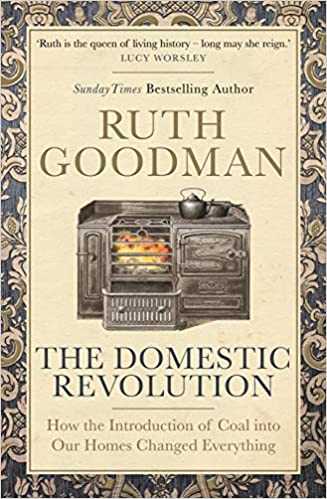
How domestic use of coal transformed Britain
Jane Psmith reviews The Domestic Revolution: How the Introduction of Coal into Victorian Homes Changed Everything by Ruth Goodman:
… Even today, few people record the mundane details of their daily lives; in the days before social media and widespread literacy it was even more dramatic, so anyone who wants to know how our ancestors cleaned, or slept, or ate has to go poking through the interstices of the historical record in search of the answers — which means they need to recognize that there’s a question there in the first place. When they don’t, we end up with whole swathes of the past we can’t really understand because we’re unfamiliar with the way their inhabitants interacted with the physical world.
The Domestic Revolution is about one of these “unknown unknowns”, the early modern English transition from burning wood to coal in the home, and Ruth Goodman may be the only person in four hundred years who could have written it. With exactly the kind of obsessive attention to getting it right that I can really respect, she turned an increasingly intensive Tudor reënactment hobby into a decades-long career as a “freelance historian”, rediscovering as many domestic details of Tudor-era life as possible and consulting for museums and costume dramas. Her work reminds me of the recreations of ancient Polynesian navigational techniques, a combination of research and practical experiments aimed at contextualizing what got remembered or written down, so of course I would love it. (A Psmith review of her How To Be a Tudor is forthcoming.) She’s also starred in a number of TV shows where she and her colleagues live and work for an extended time in period environs, wearing period costume and using period technology1, and because she was so unusually familiar with running a home fired by wood — “I have probably cooked more meals over a wood fire than I have over gas or electric cookers”, she writes — she immediately noticed the differences when she lived with a coal-burning iron range to film Victorian Farm. A coal-fired home required changes to nearly all parts of daily life, changes that people used to central heating would never think to look for. But once Goodman points them out, you can trace the radiating consequences of these changes almost everywhere.
The English switched from burning wood to burning coal earlier and more thoroughly than anywhere else in the world, and it began in London. Fueling the city with wood had become difficult as far back as the late thirteenth century, when firewood prices nearly doubled over the course of a decade or two, and when the population finally recovered from the rolling crises of the fourteenth and fifteenth centuries the situation became dire once again. Wood requires a lot of land to produce, but it’s bulky and difficult to transport by cart: by the 1570s the court of Elizabeth I found it cheapest to buy firewood that had been floated more than a hundred miles down the Thames. Coal, by contrast, could be mined with relative ease from naturally-draining seams near Newcastle-upon-Tyne and sailed right down the eastern coast of the island to a London dock. It already had been at a small scale throughout the Middle Ages, largely to fuel smithies and lime-burners, but in the generation between 1570 and Elizabeth’s death in 1603 the city had almost entirely switched to burning coal. (It had also ballooned from 80,000 to 200,000 inhabitants in the same time, largely enabled by the cheaper fuel.) By 1700, Britain was burning more coal than wood; by 1900, 95% of all households were coal-burning, a figure North America would never match. Of course the coal trade itself had consequences — Goodman suggests that the regular Newcastle run was key in training up sailors who could join the growing Royal Navy or take on trans-Atlantic voyages — and it certainly strengthened trade networks, but most of The Domestic Revolution is driven by the differences in the materials themselves.
The most interesting part of the book to me, a person who is passionately interested in all of human history right up until about 1600, were the details of woodland management under the wood-burning regime. I had, for instance, always assumed that early modern “woodcutters” like Hansel and Gretel’s father were basically lumberjacks chopping down full-grown trees, but actually most trees aren’t killed by removing their trunks. Instead, the stump (or roots, depending on the species) will send up new, branchless shoots, which can be harvested when they reach their desired diameter — anywhere from a year or two for whippy shoots suitable for weaving baskets or fences to seven years for firewood, or even longer if you want thick ash or oak poles for construction. This procedure, called coppicing, also extends the life of the tree indefinitely: an ash tree might live for two hundred years, but there are coppiced ash stools in England that predate the Norman Conquest. (My ignorance here wasn’t entirely chronological provincialism: the pines and other conifers that make up most North American timberland can’t be coppiced.)2 The downside to coppicing is that the new shoots are very attractive to livestock, so trees can also be pollarded — like a coppice, but six or eight feet up the trunk,3 quite a dramatic photo here — which is harder to harvest but means you can combine timber and pasture. This made pollarded “wood pasture” a particularly appealing option for common land, where multiple people had legal rights to its use.4 The woodcutters of the Grimms’ tales probably had a number of fenced coppiced patches they would harvest in rotation, ideally one fell for each year of growth it took to produce wood of the desired size, though a poor man without the upfront capital to support planting the right kind of trees could make do with whatever nature gave him.
There’s plenty more, of course: Goodman goes into great but fascinating detail about the ways different woods behave on the fire (hazel gets going quickly, which is nice for starting a fire or for frying, but oak has staying power; ash is the best of both worlds), the ways you can change the shape and character of your fire depending on what you’re cooking, and the behavior of other regional sorts of fuel like peat (from bogs) and gorse (from heathland). But most of the book is devoted to the differences between burning wood and burning coal, of which there are three big ones: the flame, the heat, and the smoke. Dealing with each one forced people to make obvious practical changes to their daily lives, and in turn each of those changes had second- and third-order consequences that contributed to the profound transformations of the modern period.
The most obvious difference is the fire itself. The flames of wood fires merge together to form a pyramid or spire shape, perfect for setting your pot over: the flames will curl around its nicely rounded bottom to heat it rapidly. Coal, on the other hand, forms “a series of smaller, lower, hotter and bluer flames, spaced across the upper surface of the bed of embers,” suitable for a large flat-bottomed pot. More importantly, though, burning coal requires a great deal more airflow: a coal fire on the ground is rapidly smothered by its own buildup of ash and clinker (and of course it doesn’t come in nice long straight bits for you to build a pyramid out of). The obvious solution is the grate, a metal basket that lifts the coal off the ground, letting the debris fall away rather than clogging the gaps between coals, and drawing cold air into the fire to fuel its combustion. This confines the fire to one spot, which may not seem like a big deal (especially for people who are used to cooking on stoves with burners of fixed sizes) but is actually quite a dramatic change. As Goodman explains, one of the main features of cooking on a wood fire is the ease with which you can change its size and shape:
You can spread them out or concentrate them, funnel them into long thin trenches or rake them into wide circles. You can easily divide a big fire into several small separate fires or combine small fires into one. You can build a big ring of fire around a particularly large pot stood at one end of the hearth while a smaller, slower central fire is burning in the middle and a ring of little pots is simmering away at the far end. You can scrape out a pile of burning embers to pop beneath a gridiron when there is a bit of toasting to do, brushing the embers back into the main fire when the job is done.
In other words, the enormous fireplaces you may have seen in historical kitchens aren’t evidence of equally enormous fires; they were used for lots of different fires of varying sizes, to cook lots of different dishes at the same time. The iron grate for coal, on the other hand, is a fixed size and shape, like a modern burner — though unlike a modern burner the heat is not adjustable. The only thing you can do, really, is put your pot on the grate or take it off.
1. Several of them are streaming on Amazon Prime; I don’t much TV, but I did watch Tudor Monastery Farm with my kids and we all loved it.
2. Some firs can be regrown in a related practice called “stump culture“, which is particularly common on Christmas tree farms, but it’s much more labor-intensive than coppicing.
3. If you live in the southern United States, you’ve probably seen pollarded crape myrtles.
4. Contrary to the impression you may have gotten from the so-called tragedy of the commons, the historical English commons had extremely clearly delineated legal rights. More importantly, these rights all had fabulous names like turbary (the right to cut turves for fuel), piscary (the right to fish), and pannage (the right to let your pigs feed in the woods). I’m also a big fan of the terminology of medieval and early modern tolls, like murage (charged for bringing goods within the walls), pontage (for using a bridge), and pavage (using roads). Since the right to charge these tolls was granted to towns and cities individually, a journey of any length was probably an obnoxious mess of fees (Napoleon had a point with the whole “regulating everything” bit), but you can’t help feeling that “value added tax” is pretty boring by comparison. I suggest “emprowerage”, from the Anglo-Norman emprower (which via Middle English “emprowement” gives us “improvement”) as a much more euphonious name for the VAT. Obviously sales tax should “sellage”. I can do this all day.
Comments Off on How domestic use of coal transformed Britain
May 24, 2023
The Original PB&J from 1901
Tasting History with Max Miller
Published 23 May 2023
(more…)
Comments Off on The Original PB&J from 1901
May 18, 2023
QotD: The unironic joys of British cuisine
Indeed, it would be trivially easy to trace the shifting faultlines of broader political currents through the prism of food. Witness the sudden shift within America’s food culture, as a previous generations’ celebration of the diverse culinary options provided by mass immigration has morphed into stern lectures from diaspora commentators on the vaguely-defined evils of white people appropriating “ethnic” cuisine. In Britain, equally, a slim volume could easily be written on the political import uncomfortably burdened on fish and chips or chicken tikka masala by devotees of mass migration; a cultural theorist could likewise tease apart the “Proper” label now applied to a distinct category of foodstuff — proper pies, proper burgers, proper chips — as a marker of a specific type of middle-class yearning for proletarian authenticity, while maintaining socially acceptable levels of consumption standards. Like the fetishised fry-ups of London caffs in prosperous areas targeting themselves at tracksuit-wearing millennial creatives, the Proper Burger is the self-consciously gentrified football terrace of our national cuisine, a cultural marker of a precisely measurable socioeconomic bracket.
When this dynamic is considered, Britain’s strange relationship with food, and with its own national cuisine, becomes worthy of analysis. Though much mocked by online Americans, presumably inured to the Lovecraftian horrors of their own food culture, British cuisine at its best is hearty, simple fare, showcasing the natural bounty of these islands, our waters rich with fish and seafood (much of it exported abroad to more appreciative consumers), our rain-soaked pastures the nursemaid of the free-range meat and rich dairy goods Britain has excelled in for millennia. At its best, British food displays the worth of good ingredients cooked well — and at its worst, of poor ingredients cooked badly.
Yet the much-vaunted culinary renaissance in British food from the Nineties on, despite the buoyant effect of an endless stream of glossy cookbooks on the publishing industry, does not seem to have had an appreciable effect on the food most of us eat from day to day. Which British office worker does not recognise the moment of weary, grudging submission to the lunchtime meal deal, the limp and soggy sandwich which fuels the nation’s economy? If Britain has a national dish, it is more likely to be the Ballardian misery of the provincial train station panini, simultaneously scorching hot and half-raw, than it is a steaming steak and ale pie, its crust crisp with suet, or a plate of sizzling lamb’s liver fried in butter with farmhouse bacon.
There is, as there is with every aspect of British life, a strong class dynamic to British food. The most fervent appreciators of the frugal peasant dishes of the past, the nation’s only consumers of stewed beef shin or lamb sweetbreads, are more likely to be upper-middle class, middle-aged executives, who by lunching at St John or the Quality Chop House celebrate the forgotten folkways of their own country, than the call centre workers or shop assistants who have replaced our rural and industrial proletariat. Yet who in Britain is immune to the sudden craving for comfort satiable only by a serving of rich cauliflower cheese or of dark and savoury cottage pie, or has not felt the hobbit-like “Why shouldn’t I?” satisfaction of choosing the fry up at a hotel breakfast over the continental pastry selection?
Aris Roussinos, “How Britain eats itself”, UnHerd, 2023-02-03.
Comments Off on QotD: The unironic joys of British cuisine


