
Tasting History with Max Miller
Published Jan 16, 2024What you could tell about someone from their breakfast in Jane Austen’s England, and a recipe for Bath buns as she might have eaten them for her first meal of the day.
Caraway buns topped with glaze, sugar, and caraway, served with butter. Perfect for a Jane Austen inspired breakfast with some hot chocolate
City/Region: England
Time Period: 1769It is a truth universally acknowledged that a person who has recently risen from bed must be in want of breakfast. In Jane Austen’s time, breakfast could be around 8:00 or 9:00 in the morning if you were a manual laborer or servant, or it could be as late as 3:00 or 4:00 in the afternoon if you were upper class.
Jane wrote a letter to her sister Cassandra saying that she wanted to join her on her trip to Bath, but didn’t want to inconvenience their hosts, so she would fill up on bath buns for breakfast. I can see why this would have been a sound strategy. The buns are denser than modern versions, but still soft and very good (they would certainly fill you up). The caraway is present but not overpowering, and they’re sweet but not as sweet as a dessert.
Caraway comfits were candy-coated caraway seeds (think M&Ms), but they don’t use caraway to make them anymore. I mimic them as best I can with caraway seeds and sugar.
To make Bath Cakes.
Rub half a pound of butter into a pound of flour, and one spoonful of good barm, warm some cream, and make it into a light paste, set it to the fire to rise, when you make them up, take four ounces of carraway comfits work part of them in, and strew the rest on the top, make them into a round cake, the size of a French roll, bake them on sheet tins, and send them in hot for breakfast.
— The Experienced English Houskeeper by Elizabeth Raffald, 1769
April 19, 2024
Breakfast in Jane Austen’s England
April 13, 2024
The Legend of the Wiener Schnitzel
Tasting History with Max Miller
Published Jan 9, 2024Variations of wienerschnitzel throughout history and its legendary origin stories, and a recipe for a 19th century version.
Fried breaded veal cutlets served with the traditional lemon wedges and parsley
City/Region: Vienna
Time Period: 1824Breaded and fried meat has been around for a very long time in many places, but it wasn’t until 1893 that we get the first mention of the word wienerschnitzel. Then in the early 20th century, the Austrian culinary scene decided to champion this term to refer to a veal cutlet that is made into a schnitzel, and restaurants in Vienna began specializing in schnitzel.
This recipe predates the term wienerschnitzel, and unlike modern versions it isn’t dredged in flour first. This makes it so that the breading doesn’t puff away from the meat, but the flavor is rich and delicious, just like I remember from my trip to Vienna. If you don’t like veal or don’t want to use it, you can use pork or chicken. It won’t technically be wienerschnitzel, but nobody’s going to judge you. You can also use another fat instead of the clarified butter, but butter gives the best flavor.
(more…)
April 10, 2024
QotD: Aprons
It’s like the thing with the aprons, that science fiction writers older than I think that Heinlein was a sexist, because he has women wearing aprons. Instead of “Everyone who worked with staining liquids and fire wore aprons. Because clothes were insanely expensive, that’s why.” We stopped wearing aprons [because today] a pack of t-shirts at WalMart is $10. Nothing to do with sexism.
Sarah Hoyt, “Teaching Offense”, According to Hoyt, 2019-10-25.
April 6, 2024
The Fake (and real) History of Potato Chips
Tasting History with Max Miller
Published Jan 2, 2024The fake and true history of the potato chip and an early 19th century recipe for them. Get the recipe at my new website https://www.tastinghistory.com/ and buy Fake History: 101 Things that Never Happened: https://lnk.to/Xkg1CdFB
(more…)
March 28, 2024
The History of Fish Sauce – Garum and Beyond!
Tasting History with Max Miller
Published Dec 26, 2023Sweet frittata-like patina of pears with classic ancient Roman flavors and sprinkled with long pepper
City/Region: Rome
Time Period: 1st CenturyThis patina de piris is one of over a dozen recipes for similar dishes in Apicius’ De re coquinaria, a staple for ancient Roman recipes. It would have probably been part of mensa secunda, or second meal. Not a second breakfast, it was the final course in a larger meal and usually consisted of sweets, pastries, nuts, and egg dishes, kind of like a modern dessert course.
I finally made my own true ancient Roman garum in the summer of 2023, from chopped up fish pieces and salt to clear amber umami-laden liquid. There’s no fishiness in this surprisingly sweet dish, just a saltiness and savory umami notes that complements the other very ancient Roman flavors.
As with all ancient recipes, this is my interpretation and you can change things up how you like. I separated my eggs before beating them, but you could just whisk them up whole and add them like that.
(more…)
March 13, 2024
The History of the Chocolate Chip Cookie – Depression vs WW2
Tasting History with Max Miller
Published Dec 5, 2023WWII ration-friendly chocolate chip cookies made with shortening, honey, and maple syrup
City/Region: United States of America
Time Period: 1940sDuring WWII, everyone in the US wanted to send chocolate chip cookies to the boys at the front. With wartime rationing in effect, we get a recipe that doesn’t use butter or sugar, but shortening, honey, and maple syrup instead.
The dough is much softer than the original version, and the cookies spread out a lot more as they bake. They bake up softer than the crunchy originals, with a light pillowy texture. They aren’t as sweet, but still have a really lovely flavor. It kind of reminds me of Raisin Bran, but with chocolate. All in all, I was pleasantly surprised.
Check out the episode to see a side-by-side comparison with the original recipe.
(more…)
March 9, 2024
Salt – mundane, boring … and utterly essential
In the latest Age of Invention newsletter, Anton Howes looks at the importance of salt in history:
There was a product in the seventeenth century that was universally considered a necessity as important as grain and fuel. Controlling the source of this product was one of the first priorities for many a military campaign, and sometimes even a motivation for starting a war. Improvements to the preparation and uses of this product would have increased population size and would have had a general and noticeable impact on people’s living standards. And this product underwent dramatic changes in the seventeenth and eighteenth centuries, becoming an obsession for many inventors and industrialists, while seemingly not featuring in many estimates of historical economic output or growth at all.
The product is salt.
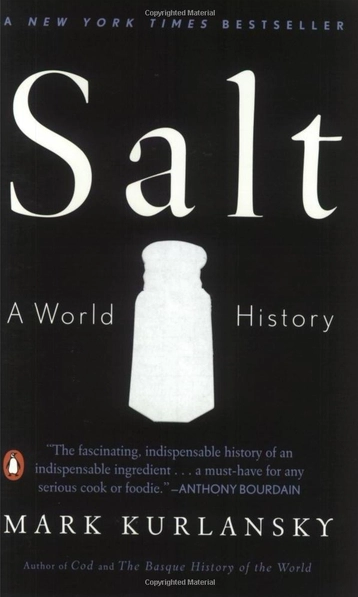
Making salt does not seem, at first glance, all that interesting as an industry. Even ninety years ago, when salt was proportionately a much larger industry in terms of employment, consumption, and economic output, the author of a book on the history salt-making noted how a friend had advised keeping the word salt out of the title, “for people won’t believe it can ever have been important”.1 The bestselling Salt: A World History by Mark Kurlansky, published over twenty years ago, actively leaned into the idea that salt was boring, becoming so popular because it created such a surprisingly compelling narrative around an article that most people consider commonplace. (Kurlansky, it turns out, is behind essentially all of those one-word titles on the seemingly prosaic: cod, milk, paper, and even oysters).
But salt used to be important in a way that’s almost impossible to fully appreciate today.
Try to consider what life was like just a few hundred years ago, when food and drink alone accounted for 75-85% of the typical household’s spending — compared to just 10-15%, in much of the developed world today, and under 50% in all but a handful of even the very poorest countries. Anything that improved food and drink, even a little bit, was thus a very big deal. This might be said for all sorts of things — sugar, spices, herbs, new cooking methods — but salt was more like a general-purpose technology: something that enhances the natural flavours of all and any foods. Using salt, and using it well, is what makes all the difference to cooking, whether that’s judging the perfect amount for pasta water, or remembering to massage it into the turkey the night before Christmas. As chef Samin Nosrat puts it, “salt has a greater impact on flavour than any other ingredient. Learn to use it well, and food will taste good”. Or to quote the anonymous 1612 author of A Theological and Philosophical Treatise of the Nature and Goodness of Salt, salt is that which “gives all things their own true taste and perfect relish”. Salt is not just salty, like sugar is sweet or lemon is sour. Salt is the universal flavour enhancer, or as our 1612 author put it, “the seasoner of all things”.
Making food taste better was thus an especially big deal for people’s living standards, but I’ve never seen any attempt to chart salt’s historical effects on them. To put it in unsentimental economic terms, better access to salt effectively increased the productivity of agriculture — adding salt improved the eventual value of farmers’ and fishers’ produce — at a time when agriculture made up the vast majority of economic activity and employment. Before 1600, agriculture alone employed about two thirds of the English workforce, not to mention the millers, butchers, bakers, brewers and assorted others who transformed seeds into sustenance. Any improvements to the treatment or processing of food and drink would have been hugely significant — something difficult to fathom when agriculture accounts for barely 1% of economic activity in most developed economies today. (Where are all the innovative bakers in our history books?! They existed, but have been largely forgotten.)
And so far we’ve only mentioned salt’s direct effects on the tongue. It also increased the efficiency of agriculture by making food last longer. Properly salted flesh and fish could last for many months, sometimes even years. Salting reduced food waste — again consider just how much bigger a deal this used to be — and extended the range at which food could be transported, providing a whole host of other advantages. Salted provisions allowed sailors to cross oceans, cities to outlast sieges, and armies to go on longer campaigns. Salt’s preservative properties bordered on the necromantic: “it delivers dead bodies from corruption, and as a second soul enters into them and preserves them … from putrefaction, as the soul did when they were alive”.2
Because of salt’s preservative properties, many believed that salt had a crucial connection with life itself. The fluids associated with life — blood, sweat and tears — are all salty. And nowhere seemed to be more teeming with life as the open ocean. At a time when many believed in the spontaneous generation of many animals from inanimate matter, like mice from wheat or maggots from meat, this seemed a more convincing point. No house was said to generate as many rats as a ship passing over the salty sea, while no ship was said to have more rats than one whose cargo was salt.3 Salt seemed to have a kind of multiplying effect on life: something that could be applied not only to seasoning and preserving food, but to growing it.
Livestock, for example, were often fed salt: in Poland, thanks to the Wieliczka salt mines, great stones of salt lay all through the streets of Krakow and the surrounding villages so that “the cattle, passing to and fro, lick of those salt-stones”.4 Cheshire in north-west England, with salt springs at Nantwich, Middlewich and Northwich, has been known for at least half a millennium for its cheese: salt was an essential dietary supplement for the milch cows, also making it (less famously) one of the major production centres for England’s butter, too. In 1790s Bengal, where the East India Company monopolised salt and thereby suppressed its supply, one of the company’s own officials commented on the major effect this had on the region’s agricultural output: “I know nothing in which the rural economy of this country appears more defective than in the care and breed of cattle destined for tillage. Were the people able to give them a proper quantity of salt, they would … probably acquire greater strength and a larger size.”5 And to anyone keeping pigeons, great lumps of baked salt were placed in dovecotes to attract them and keep them coming back, while the dung of salt-eating pigeons, chickens, and other kept birds were considered excellent fertilisers.6
1. Edward Hughes, Studies in Administration and Finance 1558 – 1825, with Special Reference to the History of Salt Taxation in England (Manchester University Press, 1934), p.2
2. Anon., Theological and philosophical treatise of the nature and goodness of salt (1612), p.12
3. Blaise de Vigenère (trans. Edward Stephens), A Discovrse of Fire and Salt, discovering many secret mysteries, as well philosophical, as theological (1649), p.161
4. “A relation, concerning the Sal-Gemme-Mines in Poland”, Philosophical Transactions of the Royal Society of London 5, 61 (July 1670), p.2001
5. Quoted in H. R. C. Wright, “Reforms in the Bengal Salt Monopoly, 1786-95”, Studies in Romanticism 1, no. 3 (1962), p.151
6. Gervase Markam, Markhams farwell to husbandry or, The inriching of all sorts of barren and sterill grounds in our kingdome (1620), p.22
March 2, 2024
The Hindenburg Disaster – Dining on the Zeppelin
Tasting History with Max Miller
Published Nov 28, 2023Decadent vanilla rice pudding with poached pears, chocolate sauce, and candied fruit
City/Region: France
Time Period: 1903Everything about this dish exudes fanciness, and it comes as no surprise. A ride across the Atlantic on the Hindenburg cost around $9,000 in today’s money, and the whole experience was meant to be luxurious. The head chef on the Hindenburg, Xaver Maier, had worked at the Ritz Hotel in Paris, which was still cooking from the recipes of Auguste Escoffier.
The Escoffier recipe for pears condé seems simple enough, until you realize he references about 5 other recipes in total in order to make the dish. It’s a lot of work, but it’s so good. The rice pudding has such an intense vanilla flavor that really elevates it and is the perfect base for the poached pears. Don’t get too much of the rich chocolate sauce or it will overwhelm the other flavors.
Really you could make just the rice pudding and have that be a fancy dessert all on its own if you don’t want to go to all the fuss.
Poires Condé:
Very small pears which are carefully peeled and shaped are most suitable for this preparation. Those of medium size should be cut in half. Cook them in vanilla-flavored syrup then proceed as for Abricots Condé, recipe 4510.
Abricots Condé:
On a round dish prepare a border of vanilla-flavored Prepared Rice for sweet dishes (recipe 4470)— Auguste Escoffier, 1903
February 24, 2024
Feeding Napoleon – Chicken Marengo
Tasting History with Max Miller
Published Nov 21, 2023
(more…)
February 18, 2024
QotD: British meals – sauces
George Orwell, “British Cookery”, 1946. (Originally commissioned by the British Council, but refused by them and later published in abbreviated form.)
February 7, 2024
“China is a food-obsessed society”
If your initial reaction to the headline is to assume this is because of the amazingly unsettled history of mainland China over the last several hundred years and the totally understandable fear of famines, I’m with you, but we’d both be wrong, as John Psmith explains:
One sunny December morning years ago, Jane and I were on holiday in the South of China. Far from the city, a little temple had been hewn out of a seaside grotto so that it partially flooded when the tide came in. We stood inside and gazed up at a statue of 觀音, “Guan Yin”, the lady to whom the temple was dedicated. Her legend originated in India, where she was known as the bodhisattva Avalokitasvara, but she’d been absorbed and appropriated by Chinese folk religion many centuries ago, and in this statue there was no trace to be found of her South Asian origins. A minute or two into our reverie, a local came over to us and, seeing that we looked out of place, helpfully explained in unaccented English, “This is one of the most important Christian goddesses.”
The Chinese are almost as bad as the Romans were about pilfering the deities of their neighbors, so you really can’t blame them when they occasionally get confused about who they stole them from. As with goddesses, so with food: earlier that day a different helpful local had steered us towards a restaurant specializing in “Western cuisine”. The menu listed steaks “French style”, “German style”, and “Barbecue style”. Soup options included minestrone and borscht, both of them with the surprise addition of prawns. Their pride and joy, however, was their breakfast menu which included roughly seventy different varieties of toast. The chef told me that there were restaurants in Europe and America that did not have so many kinds of toast, and beamed with pride when I nodded gravely. One of the diners, delighted to see real living and breathing Westerners in her local Western restaurant, told me: “The thing I love about this place is that it’s so authentic.”
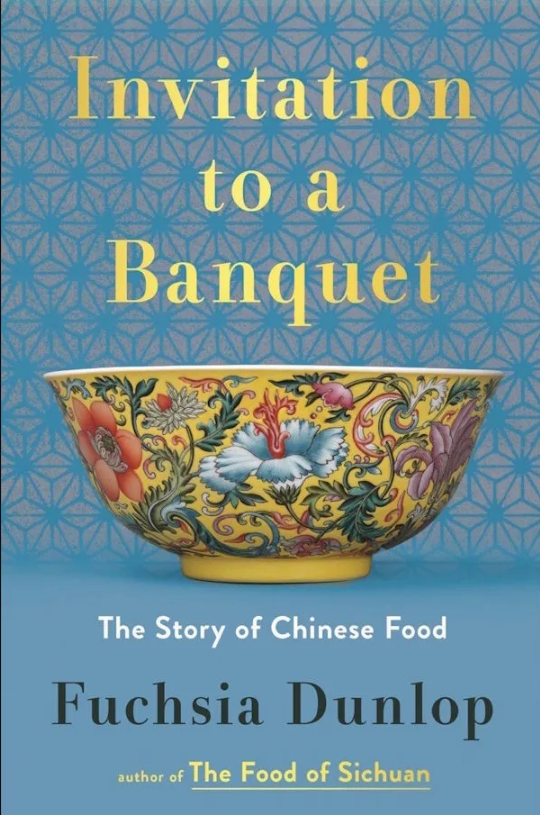
This “Western” restaurant may sound ridiculous to you, but it’s only as ridiculous as most of the “Chinese” restaurants you’ve encountered in the West. First of all, there’s no such thing as “Chinese” food. China is a country, but it’s the size of a continent, and it boasts a culinary diversity which exceeds that of many actual continents. Second, the dishes you encounter in the average Chinese restaurant over here bear about as much resemblance to real Chinese food as the seventy varieties of toast and the barbecue steaks do to French cuisine. “American Chinese food” is an interesting topic in its own right, and there are some good books about it, but now that I’m through the mandatory throat-clearing you have to do when writing about Chinese cuisine for a Western audience, I’m never going to mention it again.
China is a food-obsessed society. People are always talking about their next meal. People talk about it incessantly. The Chinese equivalent of talking about the weather, a way of making polite chitchat with strangers, is to mention a restaurant that you like, or a meal that you’re looking forward to. A standard way of saying “hello” in Mandarin is “你吃饭了吗?” In Cantonese it’s “你食咗飯未呀?” Both of them literally translate as something like “have you eaten yet?” and produce a natural conversational opening to begin immediately discussing food. Perhaps most uncanny to foreigners, Chinese people will sometimes discuss their next meal while they are in the middle of eating a fancy dinner. Dozens of gorgeous little dishes spread around them, chomping or slurping away at exquisite cuisine, and happily chattering about what they plan to eat tomorrow.
None of this is remotely new. If anything, between the Revolution and the famines, Chinese food culture is actually tamer than it used to be.1 We know this from literary and historical accounts, from archeological evidence (China had fancy restaurants about a thousand years before France did), and from the structure of the language itself. They say the Eskimos have an improbable number of words for snow,2 but the Chinese actually do have a zillion words for obscure cooking techniques. What’s more, many of the words are completely different from region to region, which is hardly surprising since the food itself is bewilderingly different from one side of the country to the other.
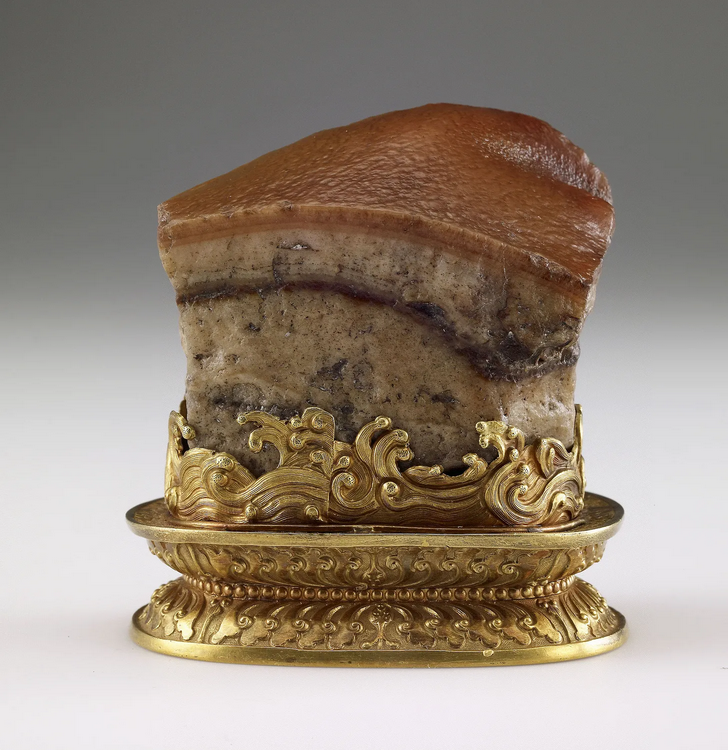
How food-obsessed are the Chinese? One of the most priceless artifacts belonging to the imperial family, the one thing the fleeing Nationalists made sure to grab as communist artillery leveled Beijing, now the most highly-valued object in the National Palace Museum in Taipei is … The Meat-Shaped Stone.3 A single piece of jasper carved into a lifelike hunk of luscious pork belly, complete with crispy skin and layers of subcutaneous fat and meat. Feast your eyes upon it.
1. Ferran Adrià, the legendary chef of El Bulli, once said that Mao was the most consequential figure in the history of cooking because: “[Spain, France, Italy and California] are only competing for the top spot because Mao destroyed the pre-eminence of Chinese cooking by sending China’s chefs to work in the fields and factories. If he hadn’t done this, all the other countries and all the other chefs, myself included, would still be chasing the Chinese dragon.”
2. I once tried searching Google to find out whether Eskimos really have a lot of words for snow. The top results were all places like BuzzFeed and the Atlantic denouncing this as an outmoded racist stereotype … followed by a Wikipedia article patiently explaining that no it’s actually true.
3. The Meat-Shaped Stone is not some weird aberration. The runner-up most valuable items in the museum are a piece of jadeite carved to look like a cabbage and a very fancy cooking vessel.
January 19, 2024
Vienna’s Iconic Chocolate Cake
Tasting History with Max Miller
Published 17 Oct 2023
(more…)
January 8, 2024
Crispy Hashbrowns – You Suck at Cooking (episode 161)
You Suck At Cooking
Published 7 Oct 2023Hashbrowns. Also known as fried potato shreds. Also known as 2D potatoes. Also known as even greasier potato chips. Also known as hashbrowns.
If you’ve never fried before or you want to brush up on the details, check this out
https://food52.com/blog/18669-the-do-…This deep fry safety page is also very good
https://www.bbcgoodfood.com/howto/gui…Basically hot oil can get out of control so you need to monitor your temperature and not let it get too hot. Electric stoves are deceptive in that they can get the oil very hot even at a lower settings, there’s just a longer delay.
RECIPE
Capture potatoes
Apologize to potatoes
Remove outer thermal membrane
Disintegrate potatoes
Rinse potato smithereens or soak them if you want them less starchy
Wrap them in some cheesecloth or a clean dish towel and squeeze the hell out of them (but mainly the water and leave some of the hell)
Cook them in a non stick pan with a tablespoon of oil for around ten minutes so they won’t be medium rare
Let them cool off a bit
Put them in a bowl
For each potato add
1 teaspoon corn starch
1 teaspoon garlic powder
1 teaspoon onion powder
some pepper pepper pepper
Wangjangle
Form into patties or triangles but NO OTHER SHAPES
Heat your oil in a cast iron skillet but not so hot that you burn your house down
Most recipes recommend around 350 degrees Fahrenheit but as long as you get a sizzle going when you put them in it’s hot enough
Fry until the first size is golden brown. Somewhere between 4-8 minutes
Fry the other side until golden brown which is gonna happen faster, probably 5 minutes max
Lay them down on a paper towel and tell them they did a good job
Let them cool or spray a heat resistant gel inside your mouth and eat immediately
(more…)
December 29, 2023
Rubaboo – Pemmican Stew of Canadian Mounties
Tasting History with Max Miller
Published 12 Sept 2023
(more…)
December 27, 2023
Eating like a Lighthouse Keeper from the 1800s
Tasting History with Max Miller
Published 19 Sep 2023
(more…)


