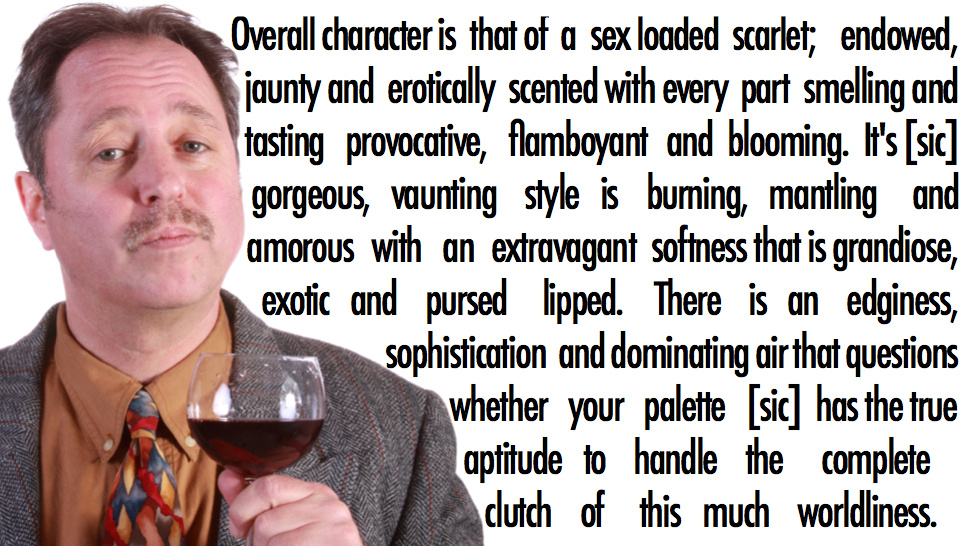
My favourite drink? Vodka soda on the rocks, no lemon. Unpretentious, dependable, easy to slap together, gets the job done. It’s basically the Ford F-150 of cocktails. And clear as rain, so it won’t stain my wife’s dress if some good-time Charlie slaps me on the back at a party. For years, it has been my odourless, tasteless, ten-ounce refuge of gastro-utilitarian sanity in a world full of foodies gone mad.
But those days are over: the vodka soda has gone the way of wine, Scotch, and gourmet hot sauce. Order one at any velvet-rope bar or restaurant, and the waiter follows up by asking your preferred brand of hooch — under the demonstrably false conceit that the human tongue can distinguish between what are effectively different varieties of windshield-wiper fluid.
Last month, when a waiter launched into an especially long list of unpronounceable Russian and Scandinavian words apparently corresponding to fashionable vodka brands, I felt as if I were in a scene from “The Emperor’s New Clothes.” I really can’t tell the difference. Just give me the cheapest one on the list were the words on my lips.
Of course, I said nothing of the sort, because I didn’t want to come off as a rube. So instead, I declared emphatically, “Oh, Grey Goose, please” — recalling at random the last brand I’d seen advertised in an upscale travel magazine.
Moments later, the waiter returned with my drink, and it tasted fine. Which is to say, it tasted exactly like every other vodka soda I had ever tasted — or, indeed, that had ever been tasted by any other human in the history of fermented spud juice.
This, more than anything else, is what I have come to resent about foodie culture: Not just that it is pretentious and expensive. Not just that it makes me feel guilty about the Cheez Whiz sandwiches I put in my kids’ lunch boxes. But that it turns us all into liars.
Jonathan Kay, “Lies My Waiter Told Me: Foodie culture has invaded my vodka soda. It’s time to fight back”, The Walrus, 2015-08-17.
March 29, 2017
QotD: The humble vodka soda
March 25, 2017
If Walls Could Talk The History of the Home Episode 1: The Living Room
Published on 21 Jan 2017
First episode about the Living Room with Lucy Worsley Give a thumbs up for more episodes! 😀
September 3, 2016
QotD: Hunter S. Thompson’s ideal breakfast
Breakfast is the only meal of the day that I tend to view with the same kind of traditionalized reverence that most people associate with Lunch and Dinner.
I like to eat breakfast alone, and almost never before noon; anybody with a terminally jangled lifestyle needs at least one psychic anchor every 24 hours, and mine is breakfast. In Hong Kong, Dallas or at home – and regardless of whether or not I have been to bed – breakfast is a personal ritual that can only be properly observed alone, and in a spirit of genuine excess. The food factor should always be massive: four Bloody Marys, two grapefruits, a pot of coffee, Rangoon crepes, a half-pound of either sausage, bacon or corned beef hash with diced chilies, a Spanish omelette or eggs Benedict, a quart of milk, a chopped lemon for random seasoning, and something like a slice of key lime pie, two margaritas and six lines of the best cocaine for dessert……. Right, and there should also be two or three newspapers, all mail and messages, a telephone, a notebook for planning the next 24 hours, and at least one source of good music….… All of which should be dealt with outside, in the warmth of a hot sun, and preferably stone naked.
Hunter S. Thompson, “Fear and Loathing on the Campaign Trail ’76: Third-rate romance, low-rent rendezvous — hanging with Ted Kennedy, Jimmy Carter, and a bottle of Wild Turkey”, Rolling Stone, 1976-06-03.
May 17, 2016
Green Party policies
In a comment on a post about the leader of the British Green Party stepping down, David Thompson explains why he finds the party’s policies to be distasteful:
Green Party policy […] advocates massive and unbudgeted state spending, crippling eco-taxes, forced “organic” food production, and a deliberate shrinking and discouragement of international trade in order to curb the evils of consumerism. Curiously, they denounce ‘austerity’ (i.e., modest reductions in the growth of public spending), while envisioning a world in which no-one can buy anything too fancy, or from too far afield. And they see no need to retain an army or navy or air force, all of which they dismiss as “unnecessary.”
In policy NY203, the party says its goal is “to see the concept of legal nationality abolished.” Apparently, they want a Citizen’s Income, in which everyone is subsidised simply for being, while abolishing any notion of actual, legal citizenship. They imply that a country, a society, having some control of its borders, however partial, is racist, and that the world and its wives should be free to breeze into Britain and avail themselves of our already overstretched benefits system.
This dissolving of our territorial and cultural boundaries, and the abandonment of our ability to defend ourselves or anyone else, along with uncontrolled mass migration from the shitholes of the Earth, and the subsequent collapse of our welfare infrastructure and general economy, to say nothing of social unrest, riots and other unpleasantness… all of this would, we’re told, create “a world more equal, more balanced.”
And yet they ask, “What are you afraid of, boys?”
I think this may be where entrenched, impervious idiocy becomes… well, something close to evil.
April 11, 2016
QotD: What can a billionaire buy that most people can’t?
In a way most of us don’t really understand how differently we live from even a very short time ago. Read the comments in this excellent piece from Sarah Hoyt.
http://accordingtohoyt.com/2016/01/08/burning-rousseau-in-effigy/#comments
The fact is that right now just about everybody in the Developed nations can afford products that are better and cheaper than anything has ever been made. For instance my car is almost ten years old and has never required major maintenance and the body is as free of exterior rust as when it was new. The computer I’m writing this on is more powerful than ANY computer that you could buy in 1980. The clothes I’m wearing are more durable and sewn better than anything you could buy in 1950. And everything is essentially so cheap that just about everybody can afford it.
The fact is that, because of the constant improvement of manufacturing techniques the difference between the highest quality and lowest quality goods has become essentially nonexistent.
[…]
The great gap in lifestyles due to wealth is by and large gone, which begs the question, what can the wealthy buy with their money? The answer isn’t very pleasant.
What they buy is access and power. You don’t have to look much further than Warren Buffett, George Soros or Tom Steyer to see that. Or the Koch Brothers for that matter. All of these people and other have created large influence building organizations for the sole purpose of influencing the rest of us stupid schmucks to do what they want us to. What they want us to do all too often is to give up the liberties and standard of living that our parents and grandparents worked so hard to build and retreat back to a lifestyle that will not compete with our “betters.” Sorry, but I’m not going for that.
J.C. Carlton, “What Can A Billionaire Buy That Most People Can’t?”, The Arts Mechanical, 2016-03-30.
February 3, 2016
QotD: The wealthy and their status-signalling spending habits
If you want an illuminating example of the fact that there is more to the way that prices work in a free market than can be captured by the pragmatic calculations of cold-eyed util-traders, consider the luxury-goods market and its enthusiastic following among people who do not themselves consume many or any of those goods. One of the oddball aspects of rich societies such as ours is the fact that when people pile up a little bit more disposable income than they might have expected to, they develop a taste for measurably inferior goods and outdated technologies: If you have money that is a little bit obscene, you might get into classic cars, i.e., an outmoded form of transportation; if your money is super-dirty obscene, you get into horses, an even more outmoded form of transportation.
Or consider the case of fine watches: Though he — and it’s a “he” in the overwhelming majority of cases — may not be eager to admit it, a serious watch enthusiast knows that even the finest mechanical timepiece put together by magical elves on the shores of Lake Geneva is, as a timekeeping instrument, dramatically inferior to the cheapest quartz-movement watch coming out of a Chinese sweatshop and available for a few bucks at, among other outlets, Wal-Mart. (To say nothing of the cheap digital watches sold under blister-pack at downscale retailers everywhere, or the clock on your cellphone.) But even as our celebrity social-justice warriors covet those high-margin items — and get paid vast sums of money to help sell them, too — they denounce the people who deal in less rarefied goods sold at much lower profit margins.
If economic “exploitation” means making “obscene profits” — an empty cliché if ever there were one — then Wal-Mart and the oil companies ought to be the good guys; not only do they have relatively low profit margins, but they also support millions of union workers and retirees through stock profits and the payment of dividends into pension funds. By way of comparison, consider that Hermès, the luxury-goods label that is a favorite of well-heeled social-justice warriors of all sorts, makes a profit margin that is typically seven or eight times what Wal-Mart makes, even though, as rapper Lloyd Banks discovered, its $1,300 sneakers may not always be up to the task. If Wal-Mart is the epitome of evil for selling you a Timex at a 3 percent markup, then shouldn’t Rolex be extra-super evil?
Kevin D. Williamson, “Who Boycotts Wal-Mart? Social-justice warriors who are too enlightened to let their poor neighbors pay lower prices”, National Review, 2014-11-30.
January 24, 2016
QotD: There are no Veblen goods at Wal-Mart
People buy Rolex watches for reasons other than their timekeeping excellence, just as people buy Ferraris and horses for reasons other than going to the store to pick up a gallon of milk and a loaf of bread. Economists talk about “Veblen goods,” which are more valued because of their high prices rather than in spite of them, coveted not for their conventional utility but for their exclusivity. Owning a Rolls-Royce isn’t about the car — it’s about you. Which is why you see magazines such as The Robb Report — one of those glossies full of “bland advertisements for being wealthy,” as the novelist William Gibson put it — for sale in places such as Wal-Mart, where the typical customer is not actually in the market for a yacht or Kiton overcoat. If you’ve ever seen the heartbreaking sight of a young woman stopping a Wal-Mart checker three-fourths of the way through ringing up her purchases — because she does not have enough money to pay for what’s left in her cart — then you can be pretty sure that what’s going in her sack is more or less the opposite of Veblen goods.
Ironically, the anti-Wal-Mart crusaders want to make life worse for people who are literally counting pennies as they shop for necessities. Study after study has shown that Wal-Mart has meaningfully reduced prices: 3.1 percent overall, by one estimate — with a whopping 9.1 percent cut to the price of groceries. That comes to about $2,300 a year per household, savings that accrue overwhelmingly to people of modest incomes, not to celebrity activists and Ivy League social-justice crusaders.
Ultimately, these campaigns are exercises in tribal affiliation. The Rolex tribe, and those who aspire to be aligned with it, signal their status by sneering at the Timex tribe — or by condescending to it as they purport to act on its behalf, as though poor people were too stupid to know where to find the best deal on a can of beans. Or call it the Trader Joe’s tribe vs. the Wal-Mart tribe, the Prius tribe vs. the F-150 tribe.
Kevin D. Williamson, “Who Boycotts Wal-Mart? Social-justice warriors who are too enlightened to let their poor neighbors pay lower prices”, National Review, 2014-11-30.
January 19, 2016
Non-conspicuous consumption of quality
Don Boudreaux on the amazingly thin line that now separates many of the quality consumption goods of the ultra-rich from the nearly as high quality goods of ordinary North American consumers:
This list includes also non-prescription pain relievers, most other first-aid medicines and devices such as Band-Aids, and personal-hygiene products such as toothpaste, dental floss, and toilet paper. (I once saw a billionaire take two Bayer aspirin – the identical pain reliever that I use.) This list includes also gasoline and diesel. Probably also contact lenses.
A slightly different list is one drawn up in response to this question: When can median-income consumers afford products that, while not as high-quality as those versions that are bought by the super-rich, are nevertheless virtually indistinguishable – because they are quite close in quality – to the naked eye from those versions bought by the super-rich? On this list would be most clothing. For example, an ordinary American man can today afford a suit that, while it’s neither tailor-made nor of a fabric as fine as are suits that I suspect are worn by most billionaires, is nevertheless close enough in fit and fabric quality to be indistinguishable by the naked eye from expensive suits worn by billionaires. (I suspect that the same it true for women’s clothing, but I’m less expert on that topic.)
Ditto for shoes, underwear, haircuts, corrective eye-wear, collars for dogs and cats, pet food, household bath towels and ‘linens,’ tableware and cutlery, automobile tires, hand tools, most household furniture, and wristwatches. (You’d have to get physically very close to someone wearing a Patek Philippe – and you’d have to know what a Patek Philippe is – in order to determine that that person’s wristwatch is one that you, an ordinary American, can’t afford. And you could stare at that Patek Philippe for months without detecting any superiority that it might have over your quartz-powered Timex at keeping time.) Coffee. Tea. Beer. Wine. (There is available today a large selection of very good wines at affordable prices. These wines almost never rise to the quality of Chateau Petrus, d’yquem, or the best Montrachets, but the differences are often quite small and barely distinguishable save by true connoisseurs.)
I’ve made this point about the wines before (I’ve tasted each of those wines, but don’t believe the price difference justifies buying them over nearly-as-good equivalents that lack the prestige factor), but Don is talking a much wider range of goods and services where there’s barely any real quality difference between “ordinary” and what the very richest among us can obtain.
January 14, 2016
Conspicuous consumption, firearms division
Cabot Guns is planning to forge a matching pair of 1911 pistols from a fragment of a meteorite:
It may have plummeted to Earth over prehistoric Namibia, but the Gibeon meteorite has had quite a bit of interaction with modern humans. In the years since it was found in 1836, fragments of the giant space rock have been formed into just about everything: from jewelry, to knives, to works of art. Now, a luxury firearms company in Pennsylvania plans to build a mirror-image pair of pistols from a 35-kilogram (77-lb) piece.
Tentatively called the “Big Bang Pistol Set,” the builds will be a first for Cabot Guns, a company that specializes in 1911-style firearms. “We wanted to raise the bar again,” says founder and President Rob Bianchin. “The pistol set will be a modern work of functional art.” Cabot rolled out pistol grips constructed from meteorite several years ago (pictured below), but the new set will be formed completely from the interstellar metal – something that has (according to the team) never been done before.
We estimate that the original, uncut fragment, which Cabot acquired from a private meteorite collector, would fetch around $110,294 at auction. Once completed, the company hopes to get anywhere from $500,000-$1,000,000 for the pair of pistols. “Meteorite is hardly an optimum material for firearms, so numerous technical matters have been overcome to construct the pistols using advanced aerospace techniques to make the pistols fully functional,” explains Bianchin. “The construction of each component has been a science experiment but we are confident they will be fully completed.”
H/T to ESR for the link.
January 10, 2016
The aircraft carrier as status symbol
While I was offline, Colby Cosh discussed the status signalling power of the modern aircraft carrier:
Aircraft carriers are such fascinating objects. With the exception of manned spacecraft, there is probably nothing that signifies national prestige quite as boldly as a flattop. It is almost the best single marker you can identify of the difference between states properly called “powers” and those that are just — well, will I be forgiven for saying “Canadas”? They attract enormous amounts of attention and analysis from military experts and amateur opinionators.
And, in a sense, this is disproportionate nearly to the point of self-evident unreason. The age of battles between aircraft carrier groups began with the commencement of the fight in the Coral Sea: May 4, 1942. It pretty much ended when the Americans sent four Japanese carriers to the bottom at Midway, 30 days later.
Since that abbreviated epoch, the countries capable of operating aircraft carriers have mostly avoided hot wars with each other. American ones have the run of the seas and find no trouble. Others constantly leave their owners wondering if they are worthwhile.
Perhaps this means that on the whole carriers have done their job. But a constant theme in their history is the fear that they make nice fat targets for the weaker side in a conflict. India’s carrier Vikrant played a key role in blockading Bengal during the 1971 war over Bangladeshi independence, but the Indian Navy was nervous about a seemingly foreordained single combat with Pakistan’s diesel submarine Ghazi (formerly USS Diablo), and got lucky when it sank in an apparent accident. The U.K., whose remaining scraps of empire pose a unique defence problem, sent a carrier, HMS Hermes, to the Falklands — and then the Royal Navy held it off, wincing all the while, at the edge of the theatre, barely within Harrier range of the islands.
Hermes is still on duty today as INS Viraat, a successor to Vikrant; one of the interesting things about carriers is that, as with submarines, their lives will often have two acts in different navies. That is the case with China’s existing, first aircraft carrier, the Liaoning. She was christened Riga in Soviet days and inherited by independent Ukraine as Varyag. A Hong Kong travel agency bought the hull, claiming it intended to turn it into a floating casino. (Getting the ship out of the Black Sea under the nose of Turkey might otherwise have been tricky, and wasn’t easy anyway.)
December 14, 2015
QotD: Veblen goods
… the point about a Veblen Good is not that sales rise when prices do. Rather, it’s that a Veblen Good is desirable because it is expensive. It is a way of showing that you can afford to buy something expensive. That you can afford something expensive is a sign of social status (well, it is in our society, where having lots of money and thus being able to buy something expensive is a sign of social status. It’s possible to imagine other societal forms which don’t include this).
The archetypal example was certain of the Vanderbilt women who would have diamonds implanted into their backs, where they would be visible to people at parties given the low cut backs of dresses at the time. The point of such implantations simply being to show that one had enough money (and perhaps little enough sense in a pre-antibiotic era) to have a diamond implanted over one’s spine. There’s a story that Mick Jagger had a diamond implanted into one of his teeth for the same sort of reason at one point (removed when it promoted caries).
The point being that a Veblen Good does signal something, and as such the greater the price the more desirable the ability to transmit that signal. But it doesn’t go as far as stating that the more the price rises then the higher sales go.
Tim Worstall, “Being Quoted In The New York Times Is Great But…”, Forbes, 2014-11-22.
November 1, 2015
QotD: Germany’s class system
As a trader, I am inclined to think the German will, unless his temperament considerably change, remain always a long way behind his Anglo-Saxon competitor; and this by reason of his virtues. To him life is something more important than a mere race for wealth. A country that closes its banks and post-offices for two hours in the middle of the day, while it goes home and enjoys a comfortable meal in the bosom of its family, with, perhaps, forty winks by way of dessert, cannot hope, and possibly has no wish, to compete with a people that takes its meals standing, and sleeps with a telephone over its bed. In Germany there is not, at all events as yet, sufficient distinction between the classes to make the struggle for position the life and death affair it is in England. Beyond the landed aristocracy, whose boundaries are impregnable, grade hardly counts. Frau Professor and Frau Candlestickmaker meet at the Weekly Kaffee-Klatsch and exchange scandal on terms of mutual equality. The livery-stable keeper and the doctor hobnob together at their favourite beer hall. The wealthy master builder, when he prepares his roomy waggon for an excursion into the country, invites his foreman and his tailor to join him with their families. Each brings his share of drink and provisions, and returning home they sing in chorus the same songs. So long as this state of things endures, a man is not induced to sacrifice the best years of his life to win a fortune for his dotage. His tastes, and, more to the point still, his wife’s, remain inexpensive. He likes to see his flat or villa furnished with much red plush upholstery and a profusion of gilt and lacquer. But that is his idea; and maybe it is in no worse taste than is a mixture of bastard Elizabethan with imitation Louis XV, the whole lit by electric light, and smothered with photographs. Possibly, he will have his outer walls painted by the local artist: a sanguinary battle, a good deal interfered with by the front door, taking place below, while Bismarck, as an angel, flutters vaguely about the bedroom windows. But for his Old Masters he is quite content to go to the public galleries; and “the Celebrity at Home” not having as yet taken its place amongst the institutions of the Fatherland, he is not impelled to waste his, money turning his house into an old curiosity shop.
Jerome K. Jerome, Three Men on the Bummel, 1914.
October 18, 2015
Playboy‘s biggest market today
Colby Cosh on why the Playboy brand is so attractive to the Chinese market:
… Playboy was once an important cultural force; and what are Chinese men and women buying when they buy jewelry or clothing with the Playboy bunny on it? They are buying a small stake in an anti-puritan, worldly vision of the good life. Hugh Hefner’s “Playboy philosophy,” which he used to set out in windy essays sandwiched between the pictorials, is still considered good for a laugh decades later. But every magazine does express a philosophy, whether or not it chooses to yammer on about doing so, and Playboy’s epicureanism was a powerful one. It practically amounted to a guarantee to the customer: if you bought Playboy, the only uplift you were at risk of encountering would involve lingerie, not morality.
When you were done being titillated by an issue of the magazine, the ads and the articles about stereos and cigars and cocktails were there to linger as an aftertaste, making a subtle but sharp imprint on one’s endocrine system. It is hard for us to appreciate what this kind of thing means in a strongly collectivist, egalitarian society. People who visited the old Soviet bloc, and who saw what blue jeans or heavy-metal cassettes did to the brains of the people there, will have some idea. It is an enigma of 20th-century history: stuff that seems trivial to a Western consumer somehow encodes a message of choice and private aspiration that can never be expressed as powerfully as an explicit proposition.
July 3, 2015
“People with money have alternatives”
Frances Woolley on the hidden advantages even a modest amount of money can provide:
Less often observed is that wealth itself generates consumption benefits, even if one never spends a dime of it.
I own a 12 year old Toyota Matrix. The front fender has collided with one too many snow banks, and is now held together with string. The exhaust system has seen better days. It breaks down occasionally. But overall it’s very cheap to run.
If I was poor, it would be tough having an old, unreliable car. The unexpected, yet inevitable, major repairs would be a financial nightmare. $750 to repair the clutch. $200 to fix the axle seal. If the car broke broke down, and I couldn’t get to work, I might lose my job.
But because I’m financially secure, I can afford a cheap car. I can self-insure against financial risks: unexpected repair costs, taxi fares, rental cars, and so on. I can afford to get my car towed. If it was beyond repair, I could get another car tomorrow.
The real value of having $10,000 in the bank isn’t $200 in interest income, or the stuff $200 in interest income might buy. $10,000 in the bank creates a little bit of room to take risks. One could call it the “implicit value of self-insurance generated by own capital.” It’s the comfort of being rich (or having rich relatives). It’s real. It’s valuable. But it wouldn’t be taxed if Canada had a consumption tax.
Admittedly, the insurance value of having wealth isn’t taxed under an income tax either. But at least under an income tax some of the return on wealth is taxed, so there is, at least potentially, some shifting of the tax burden onto those with wealth.
The greatest freedom money offers is the freedom to walk away. Your bank doesn’t offer you unlimited everything with no monthly fees? Walk away. There’s always someone else who wants your money. Your phone plan is too expensive? Walk away (o.k., that may not be the best example).
People with money have alternatives, which makes their demand for goods and services elastic. Food may or may not cost more in poor areas. But a rich person can shop at Value Village if he chooses. A poor person may not be able to afford expensive purchases which save money in the long run, like bread machines or high efficiency appliances or pressure cookers. Consumption taxes aim to tax the amount of stuff people actually consume. But if poor people pay a higher price for their stuff than rich people, is a system that taxes only consumption spending, without taking into account the ability to command consumption wealth conveys, fair?
May 21, 2015
QotD: Silicon Valley hypocrisies
The point of reviewing these hypocrisies is not to suggest that the rich profit-makers of Silicon Valley are any greedier or more cutthroat than the speculators of Wall Street or the frackers of Texas, but merely that they are judged by quite different standards. Cool — defined by casual dress, hip popular culture, and the loud embrace of green energy, gay marriage, relaxation of drug laws, and other hot-button social issue — means that one can live life as selfishly as he pleases in the concrete by sounding as communitarian as he can in the abstract. Buying jet skis is as crass a self-indulgence as buying an even more expensive all-carbon imported road bike is neat.
If Silicon Valley produced gas and oil, built bulldozers, processed logs, mined bauxite, or grew potatoes, then the administration, academia, Hollywood, and the press would damn its white-male exclusivity, patronization of women, huge material appetites, lack of commitment to racial diversity, concern for ever-greater profits, and seeming indifference to the poor. But they do not, because the denizens of the valley have paid for their indulgences and therefore are free to sin as they please, convinced that their future days in Purgatory can be reduced by a few correct words about Solyndra, Barack Obama, and the war on women.
Practicing cutthroat capitalism while professing cool communitarianism should be a paradox. But in Silicon Valley it is simply smart business. The more money you make, any way you can make it, the more you can find ways of contextualizing it. At first these Silicon Valley contradictions were amusing, then they were grating, and now they are mostly just pathetic.
Victor Davis Hanson, “The Valley of the Shadow: How mansion-dwelling, carbon-spewing cutthroat capitalists can still be politically correct”, National Review, 2014-07-22.